

When it comes to nurturing the land, every drop of water counts. Whether you’re a seasoned farmer or just starting out, it’s crucial to understand that the way you irrigate your crops can have a profound impact on both the yield and the environment. Let’s dive into the world of irrigation systems, specifically furrow and solar drip irrigation, and unpack which system might be the best for your specific crop needs.
Key Takeaways
Furrow irrigation is cost-effective and suitable for various row crops, but it requires careful management.
Solar drip irrigation offers precise water delivery and can significantly reduce water usage.
Choosing the right irrigation system depends on crop type, soil conditions, and environmental factors.
While furrow irrigation is traditional, solar drip systems represent a sustainable future in farming.
Understanding both systems’ advantages and limitations is key to making an informed decision.

Essential Elements of Furrow Irrigation
Furrow irrigation is a tried and tested method that has been quenching the thirst of crops for centuries. This technique involves creating shallow channels, or furrows, along the field’s length between crop rows. Water is then directed to flow down these furrows, soaking into the soil to reach the plant roots. It’s a simple yet effective way to water your crops, but it’s not without its nuances.
The Basics of Furrow Irrigation
Let’s break it down. Furrow irrigation is all about gravity. You create furrows and let water run through them, seeping into the ground as it goes. It’s a system that doesn’t need fancy technology, which means it’s accessible to farmers everywhere. But don’t be fooled by its simplicity—getting it right requires a keen eye and a solid understanding of your land.
Most importantly, the efficiency of furrow irrigation hinges on how well you can control the flow of water. Too much water and you’ll waste this precious resource and potentially harm your crops. Too little, and your crops will be left thirsty, affecting their growth and your harvest.
Furrow Irrigation is Best for What Crops
Furrow irrigation isn’t one-size-fits-all. It’s best suited for crops planted in rows, such as corn, cotton, and potatoes. These crops benefit from the even distribution of water that furrows can provide, as long as the furrows are well managed. It’s also a good match for crops that don’t like wet leaves, as the water is delivered directly to the soil.
Considerations for Implementing Furrow Irrigation
Before you start digging those furrows, you need to consider a few things:
The slope of your land: A gentle slope helps water flow, but too steep and you’ll have erosion.
Soil type: Sandy soils drain quickly, while clay holds onto water, affecting how you manage irrigation.
Crop type: Some plants love a good soak, while others prefer drier feet.
- Therefore, understanding your land and crops is crucial in making furrow irrigation work for you.
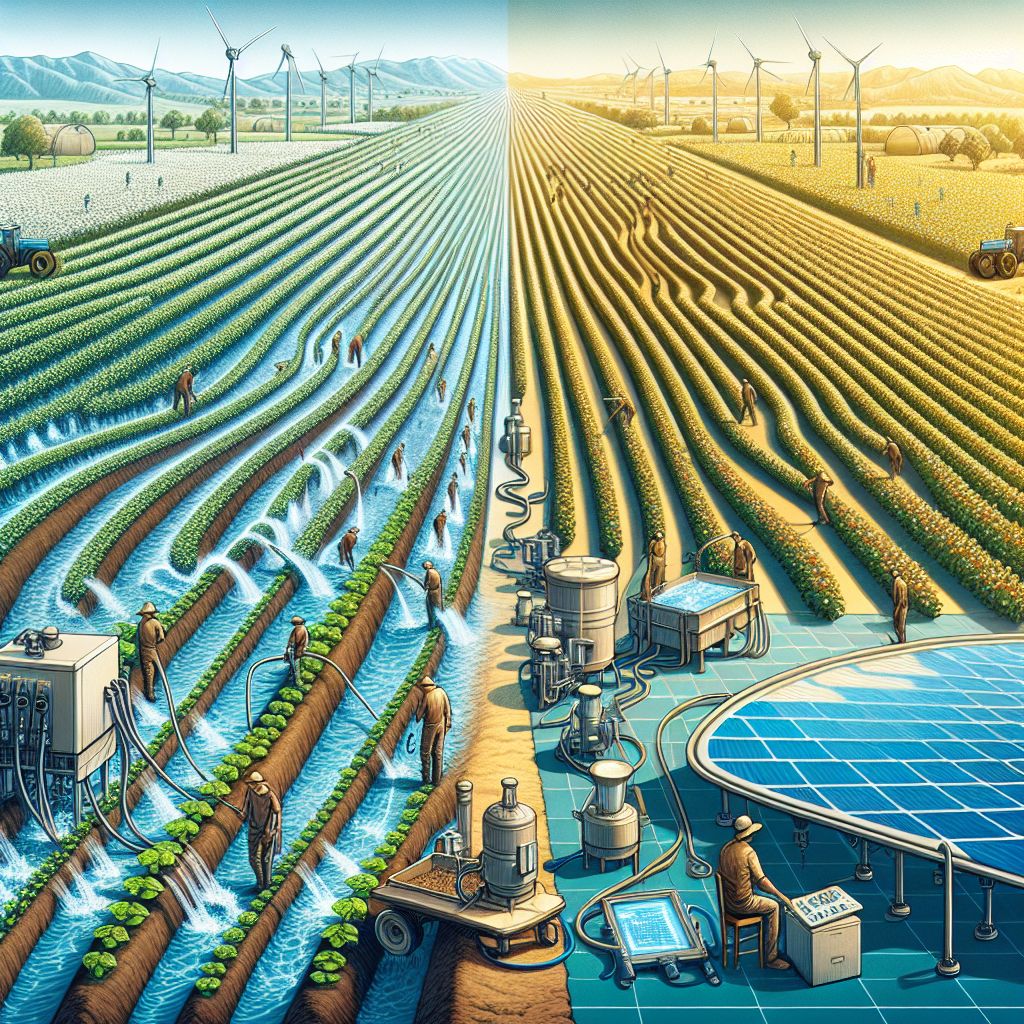
Furrow Irrigation: The Simple Truth About the Good and the Bad
So, what’s the verdict on furrow irrigation? It’s time to weigh the pros against the cons. To understand how it stacks up against modern methods, consider the economics of using a solar irrigation system in commercial farming.
Advantages of Furrow Irrigation for Row Crops
Furrow irrigation comes with a bag full of benefits, particularly for crops that require efficient watering solutions.
It’s cost-effective, requiring minimal investment in infrastructure.
The simplicity of the system makes it easy to understand and implement.
It’s adaptable to a wide range of environmental conditions.
These advantages make furrow irrigation a go-to for many farmers around the world.
Disadvantages of Furrow Irrigation in today’s World
But let’s not gloss over the drawbacks:
It can be labor-intensive, needing constant supervision and adjustment.
Water efficiency can be low if not managed correctly, leading to waste and runoff.
There’s potential for soil erosion if the water flow is not properly controlled.
This below table is comparing the pros and cons of using a solar-powered drip irrigation system versus a furrow irrigation system:
|
Criteria |
Solar Drip Irrigation System |
Furrow Irrigation System |
|---|---|---|
|
Water Efficiency |
High – Drip irrigation is very efficient, delivering water directly to the root zone and minimizing evaporation and runoff. 1, 2, 4 |
Low – Furrow irrigation is less efficient, with significant water loss through evaporation and runoff. 1 |
|
Energy Efficiency |
High – Solar power provides a renewable, sustainable energy source with no fuel costs. 2, 3 |
Low – Furrow irrigation often relies on fossil fuel-powered pumps, which are less efficient and have higher operating costs. 1 |
|
Installation Cost |
Higher – Requires investment in solar panels, pumps, and drip irrigation infrastructure. 2, 3 | Lower – Furrow irrigation has a simpler, less expensive setup. It can be labor-intensive though. 1 |
|
Maintenance |
Moderate – Solar panels and drip lines require some maintenance, but less than fossil fuel-powered systems. 2, 3 |
Lower – Furrow irrigation has fewer mechanical components to maintain. 1 |
|
Flexibility |
High – Drip irrigation can be used on uneven terrain and irregular field shapes. 4 |
Moderate – Furrow irrigation works best on flat, evenly sloped fields. 1 |
|
Environmental Impact |
Low – Solar power is renewable and clean, with no greenhouse gas emissions. 2, 3 |
Higher – Furrow irrigation can lead to soil erosion and water pollution from runoff. 1 |
|
Suitability for Small Farms |
High – Solar drip irrigation is well-suited for smallholder farmers. 2, 3 |
Moderate – Furrow irrigation may be more practical for larger-scale farms. 1 |
Besides that, in a world where water conservation is becoming increasingly important, these downsides are significant. That’s where solar drip irrigation comes into play.

Understanding Solar Drip Irrigation Systems
Solar drip irrigation systems offer a sustainable and efficient solution for watering plants in a variety of agricultural settings. By harnessing the power of the sun and delivering water directly to the roots of plants, these systems can help reduce water wastage, lower energy costs, and promote healthy plant growth. As the world faces increasing challenges related to water scarcity and climate change, solar drip irrigation systems represent a promising step towards a more sustainable and resilient future for agriculture.
Benefits of Solar Drip Irrigation in Water Conservation
Switching gears to solar drip irrigation, we’re talking about a game-changer in water conservation. This system delivers water directly to the base of the plant, drop by drop, through emitters placed along a tube. It’s precision farming at its best. The benefits? Tremendous. You’ll see a dramatic reduction in water use because you’re giving your plants exactly what they need, where and when they need it. No more, no less. Plus, by using solar power, you’re harnessing the sun’s energy, making your irrigation system work for you without tapping into the grid or your wallet for energy costs.
Disadvantages of Solar Drip Irrigation Overall
However, solar drip irrigation isn’t without its challenges. The initial setup can be more costly than furrow irrigation due to the need for specialized equipment like solar panels, batteries, and the drip tubing itself. Also, if not installed or managed correctly, you might face issues like clogged emitters or uneven water distribution. And let’s not forget, it requires a level of technical know-how to maintain and repair, which might be daunting for some.
Optimizing Solar Drip Irrigation for Different Crop Types
But don’t let that deter you. Solar drip irrigation can be optimized for a variety of crops. The key is to adjust the system to the specific water needs of each plant. For example, leafy greens might require frequent, light watering, while fruit trees will benefit from deeper, less frequent irrigation. By tailoring the system to the crop, you can maximize both water efficiency and yield.
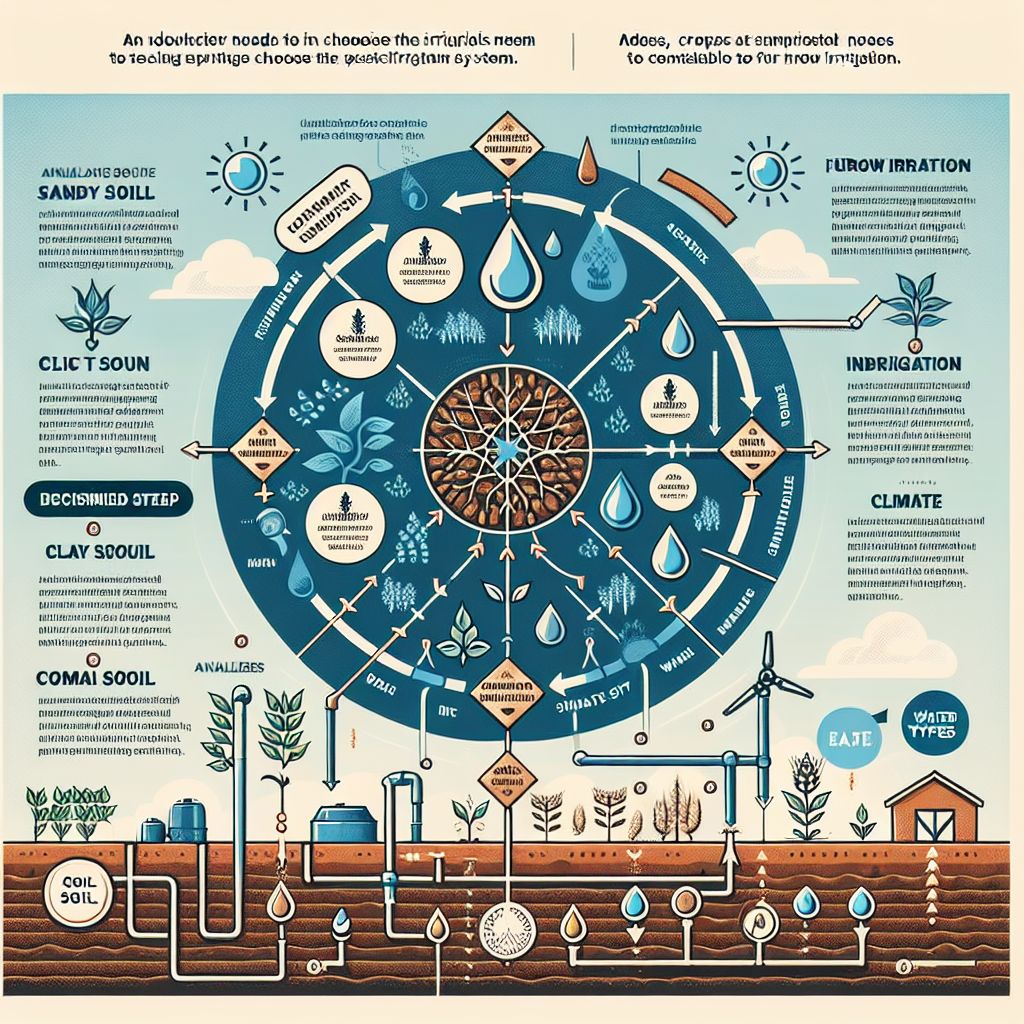
Analyzing Crop-Specific Needs
When deciding on an irrigation system, it’s crucial to analyze the specific needs of your crops. Different plants have different water requirements, and meeting these needs efficiently is the cornerstone of sustainable farming.
Water Requirements of Various Crops
Let’s get specific. Crops like rice are thirsty and need a lot of water, while wheat can do with less. Understanding these needs is the first step in choosing the right irrigation system. You wouldn’t use a hose to fill a cup when a dropper will do, right? The same logic applies to irrigating crops—match the system to the crop’s thirst.
Soil Type and its Role in Irrigation System Selection
Soil type also plays a critical role. Sandy soils drain quickly and might benefit more from drip irrigation, which provides a steady supply of water. Clay soils, on the other hand, retain water longer and might be better paired with furrow irrigation, which allows for less frequent watering. The bottom line: know your soil as well as you know your crops.
Climate Influences on Irrigation Choices
Climate is the final piece of the puzzle. Hot, dry climates will evaporate water quickly, so drip irrigation can help minimize loss. In cooler, wetter climates, furrow irrigation might suffice as the soil stays moist longer. It’s all about adapting to the environment you’re working with.

Maximizing Efficiency with the Right Irrigation System
Efficiency is the name of the game in sustainable agriculture. The goal is to grow the healthiest crops with the least input, conserving resources for future generations. Learn more about solar-powered irrigation to enhance crop yield and health.
Cost-Benefit Analysis of Irrigation Systems
A cost-benefit analysis is a must when choosing an irrigation system. Here’s the deal: while furrow irrigation might be cheaper up front, solar drip systems could save you money in the long run through reduced water and energy costs. Crunch the numbers to see which system aligns with your financial and environmental goals.
Combining Furrow and Drip Systems for Enhanced Results
But why choose just one? Combining furrow and solar drip systems can sometimes give you the best of both worlds. You might use furrow irrigation for less sensitive crops and reserve solar drip for high-value plants that need precise watering. This hybrid approach can optimize resource use and boost yields.
Transitioning from Traditional Practices to Modern Irrigation Solutions
Transitioning from traditional to modern irrigation solutions can be daunting, but it’s a step forward in sustainable farming. Start small if you need to, perhaps by introducing solar drip to a portion of your farm and scaling up as you see the benefits. Remember, every step towards more efficient water use is a step in the right direction for our planet.

Deploying Best Practices for Irrigation Management
Now, having the right system is one thing, but managing it effectively is another. Let’s talk best practices.
Monitoring and Adjusting Irrigation Schedules
Monitoring and adjusting your irrigation schedules are key. Crops will have different water needs at different stages of growth, and the weather will play its part too. Keep a close eye on these factors and be ready to tweak your irrigation schedule accordingly. A well-timed adjustment can make all the difference in water conservation and crop yield.
Maintenance Tips to Extend the Life of Your Irrigation System
Maintenance is vital to ensure your irrigation system runs smoothly for years to come. For furrow irrigation, regularly check the channels for blockages or erosion and repair any damage promptly. With solar drip irrigation, clean the filters and check the emitters for clogs. It’s also essential to inspect the solar panels and batteries to ensure they are functioning correctly. A well-maintained system not only lasts longer but also runs more efficiently, saving you time and money in the long run.
The Importance of Irrigation System Audits
Periodically, it’s wise to conduct an irrigation system audit. This involves checking the system’s performance and ensuring it’s operating at peak efficiency. Look at water distribution uniformity, the rate of application, and energy use if applicable. An audit can highlight issues you may not have noticed and guide you towards adjustments that can lead to significant savings and better crop health. Think of it as a health check-up for your irrigation system.
Conclusion:
Choosing between furrow and solar drip irrigation systems comes down to understanding your farm’s specific needs. Both systems have their merits and can be highly effective when used correctly. If you prioritize water efficiency, sustainability, and have the budget for a higher initial investment, a solar drip irrigation system is the better choice. However, if you are looking for a lower initial cost, simpler setup, and have adequate water supply, furrow irrigation might be more suitable. Consider your specific circumstances and goals to make the best decision.
FAQs
Which Crops Are Best Suited for Furrow Irrigation?
Row crops like corn, potatoes, and cotton thrive with furrow irrigation. This method is also beneficial for crops that are sensitive to moisture on their leaves, as it delivers water directly to the soil and roots.
Remember, the key to success with furrow irrigation is proper management. You need to ensure that the water flow is consistent and the furrows are well-maintained to prevent erosion and water wastage.
Can Solar Drip Irrigation Systems Be Used in Any Climate?
Yes, solar drip irrigation systems are versatile and can be used in various climates. They are especially beneficial in areas with limited water resources or where water conservation is a priority. The system’s efficiency in delivering water directly to the plant roots makes it ideal for both hot, dry regions and cooler climates.
How Do I Determine the Most Cost-Effective Irrigation System for My Farm?
To determine the most cost-effective irrigation system, consider both the initial investment and long-term operational costs. Furrow irrigation may have lower upfront costs, but solar drip irrigation can offer savings through reduced water and energy use over time. Calculate the potential return on investment for each system based on your specific crop yields and resource prices.
It’s also wise to consider the labor required for each system and the potential for automation, which can save time and labor costs in the long run.
What Are the Long-term Benefits of Investing in a Solar Drip Irrigation System?
The long-term benefits of investing in a solar drip irrigation system include:
Significant water savings, as the system delivers water directly to the plant roots.
Reduced energy costs, thanks to the use of solar power.
Increased crop yields and quality, as plants receive a consistent and precise amount of water.
Improved soil health, as the risk of erosion and nutrient leaching is minimized.
These benefits contribute to a more sustainable and profitable farming operation.
Are There Any Government Incentives for Sustainable Irrigation Practices?
Many governments offer incentives for farmers to adopt sustainable irrigation practices. These can include grants, low-interest loans, tax breaks, or cost-sharing programs. Check with your local agricultural extension service or government agriculture department to learn about available programs that could help offset the costs of transitioning to more sustainable irrigation systems like solar drip irrigation.







Leave a Reply