


-
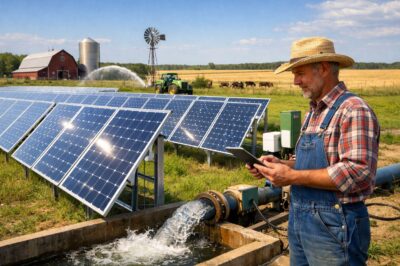
Bifacial Solar Panels Benefits, Composition & Agricultural Uses
Bifacial solar panels capture reflected light from the ground, boosting energy output by up to 30%. Monocrystalline silicon and glass-glass designs dominate, with efficiencies of 20-23%. Perfect for agrivoltaic systems, they enable farmland to double as power producers while accommodating crops or grazing livestock…
-
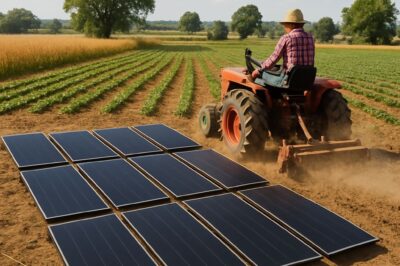
Thin Film Solar Panels Materials & Benefits for Farmers
Thin film solar panels, made from materials like CdTe and CIGS, offer flexible, lightweight, and cost-effective energy solutions for farms. They excel in low-light conditions, making them ideal for barns and greenhouses. Discover which material suits your farm’s specific needs…
-
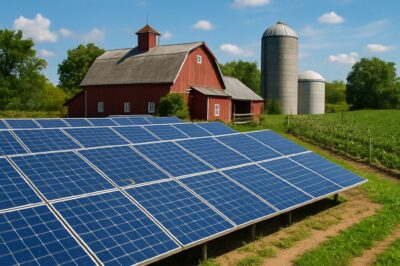
Polycrystalline Solar Panels Benefits, Composition & Agricultural Applications
Polycrystalline solar panels offer budget-friendly performance with efficiency rates of 13-17%, and warranties up to 30 years. Popular in agricultural sectors, these panels pair well with agrivoltaic systems, providing energy while optimizing land use. Discover how emerging technologies are enhancing their efficiency and durability for various applications…
-
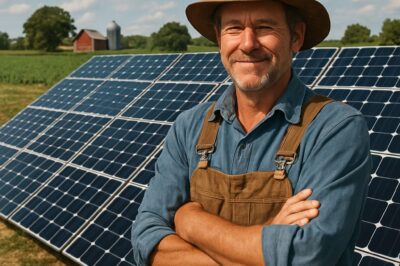
Monocrystalline Panels for Farmers: Benefits in Farm Operations & Optimal Use
Running a farm requires managing energy-intensive systems, impacting profits. Monocrystalline solar panels offer a solution by reducing energy costs by 40-60% while providing long-term reliability. With 17-22% efficiency and space-efficient design, they are ideal for farms balancing crop production with energy generation…
-
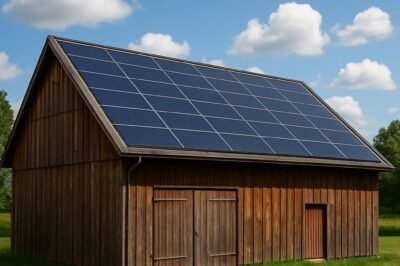
Thin-Film Solar Panels Benefits for Farm Operations Over Other Types
Thin-film solar panels offer a lighter and more heat-tolerant solution for farm operations, especially on older barn roofs. They outperform traditional crystalline panels with better real-world output, easier installation, and lower costs, making them ideal for the unique challenges of agricultural settings…
-
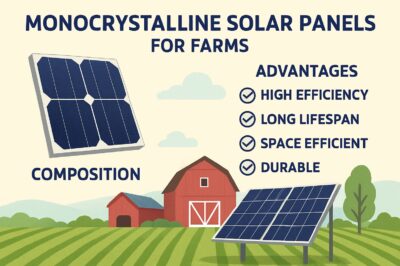
Monocrystalline Solar Panels for Farms: Composition & Advantages
Monocrystalline solar panels offer exceptional efficiency, converting sunlight into electricity at rates of 17% to 22%. Ideal for farms with high power demands, they degrade slowly and maximize energy output. Discover how this technology suits agricultural needs and the cost tradeoffs involved…
-
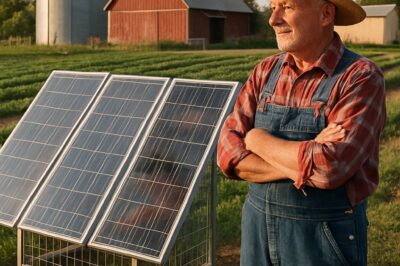
Bifacial Solar Panels Benefits, Advantages & Farm Operations vs Other Panels
Bifacial solar panels capture sunlight from both sides, generating 10% to 30% more energy than traditional panels. Key factors influencing their efficiency include ground reflectivity and mounting height. Ideal for farms with open ground, their innovative design maximizes output, especially when conditions are optimized…
-
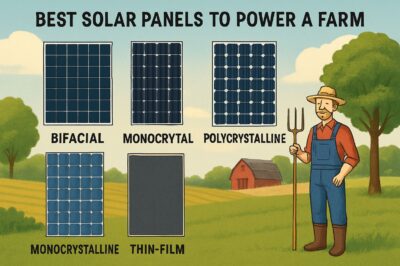
Best Solar Panels a Farmer to Power His Farm: Bifacial, Monocrystalline, Polycrystalline, Thin Film
Explore the best solar panels for farm applications: Bifacial for extra energy, Monocrystalline for limited space, Polycrystalline for cost-effectiveness, and Thin-film for weight-sensitive roofs. Discover which panels fit your farm’s specific needs and optimize energy production without exceeding your budget…
-
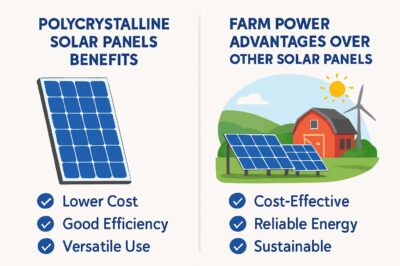
Polycrystalline Solar Panels Benefits & Farm Power Advantages Over Other Solar Panels
Polycrystalline solar panels offer farmers the perfect blend of cost-efficiency and performance, with 15-20% lower costs than monocrystalline and superior heat tolerance. These panels pay for themselves in just 5-7 years, making them an ideal choice for various farm applications, from irrigation to cold storage…
-
The Darkside of Using a Solar Power to Run a Farmer Operations
Solar power promises reduced costs for farms, but it often traps farmers with high upfront expenses and long contracts. Utility-scale installations can alter soil health and restrict land use. Agrivoltaics provides a balanced solution, but crucial complexities are often omitted from sales pitches for quick sign-ups…
Follow Us
Categories
- General Solar Information 267
- Solar Irrigation 125
- Solar Panels 174
- Technology 113
Featured Posts

Optimizing Solar Generation for Farm Efficiency

Solar Irrigation for Farmers: Drip Lines vs. Sprinkler Systems

Solar Panel Calculator: Determine the Number of Panels Needed for Farm Irrigation

Choosing The Right Solar Panels For An Agricultual Irrigation System

Solar-Powered Water Pump Integration: Streamline Farm Operations with Efficient Energy Solutions
