
Article-At-A-Glance
- Solar power can reduce farm energy costs by up to 70%, but high upfront costs, long payback periods, and restrictive lease contracts can trap farmers in deals that hurt more than they help.
- Utility-scale solar installations can permanently alter soil health, compact farmland, and lock farmers into 25+ year contracts that limit how they use their own land.
- Agrivoltaics — growing crops and generating solar power on the same land — offers a smarter middle ground that most solar salespeople never mention.
- Growing Solar Mist provides expert commentary and resources for farmers navigating the complex realities of solar adoption in agriculture.
- Before signing any solar lease, farmers need to understand the hidden fees, environmental risks, and long-term land implications that don’t show up in the initial pitch.
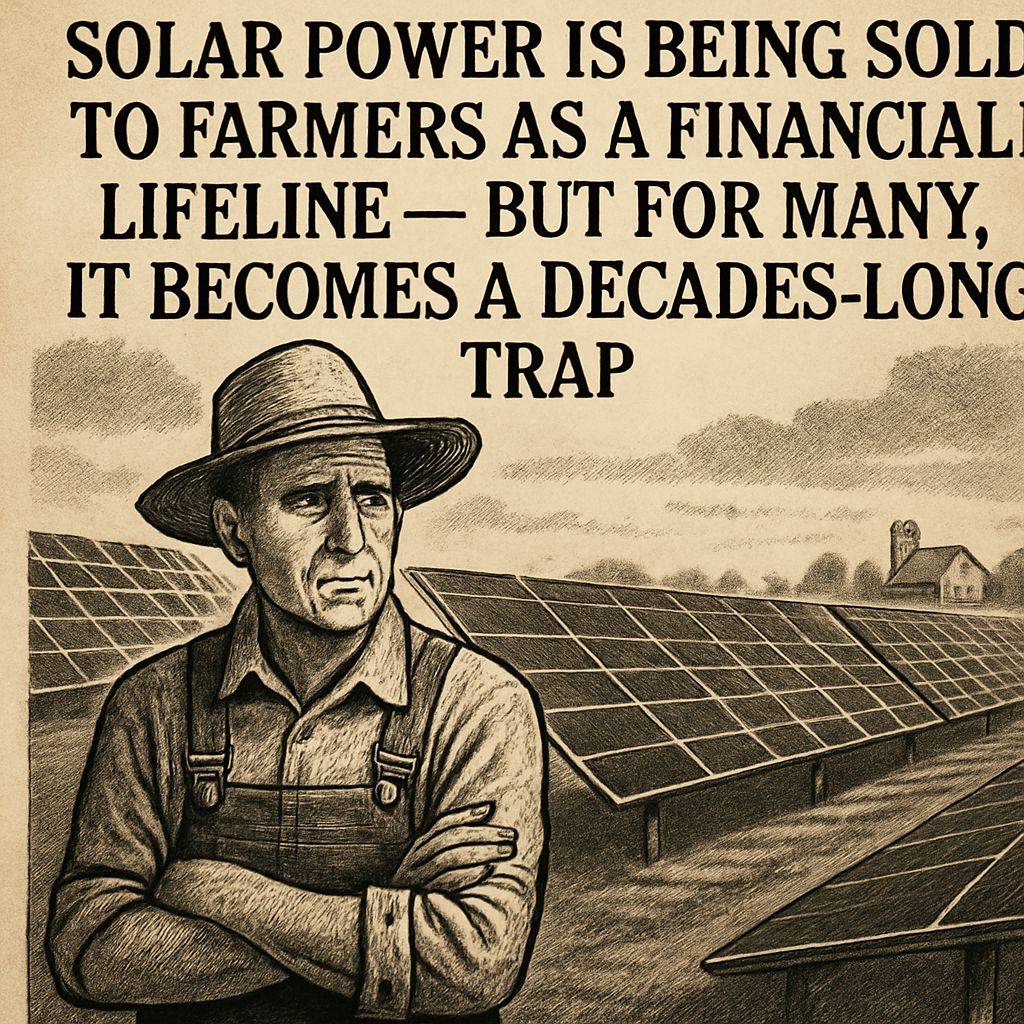
Solar power is being sold to farmers as a financial lifeline — but for many, it becomes a decades-long trap.
The pitch sounds straightforward: install solar panels, cut your energy bills, and even earn income by leasing your land to developers. On paper, it’s a win-win. In practice, the story is far more complicated. Farmers across the country are discovering that once the contracts are signed and the panels go in, the control they thought they had over their land quietly disappears. Resources like Growing Solar Mist have been tracking these developments closely, offering farmers a more complete picture of what solar adoption actually looks like on working agricultural land.
This isn’t an argument against solar energy. It’s a case for going in with your eyes open.
The Real Financial Burden of Going Solar on a Farm
The financial case for solar on farms is real — but it’s rarely as clean as the brochure suggests. Energy savings, tax credits, and lease income are all genuine possibilities. What often goes unmentioned are the conditions attached to each of those benefits, and how quickly the math can shift when you factor in the full picture.
High Upfront Costs That Strain Farm Budgets
A commercial-grade solar installation on a mid-size farm can run anywhere from $100,000 to over $500,000 depending on system size and configuration. For operations already managing tight margins, that kind of capital outlay isn’t just uncomfortable — it can be destabilizing. While federal investment tax credits (ITC) currently offer a 30% deduction under the Inflation Reduction Act, accessing that benefit still requires having the capital upfront or taking on significant debt. Loans and financing options exist, but they come with interest rates that quietly erode the projected savings over time.
The equipment itself isn’t the only cost. Site preparation, grid interconnection fees, permitting, and installation labor all add to the final number. Farmers who receive quotes based on panel costs alone are often blindsided when the true project cost lands 20–40% higher than expected.
Solar Systems Can Take 5–10 Years to Pay for Themselves
Even under favorable conditions, most farm solar installations carry a payback period of 5 to 10 years. That window depends heavily on how much energy the farm consumes, local utility rates, net metering policies in the state, and how much sun the region actually receives. In areas with aggressive net metering — where utilities pay fair rates for excess power fed back to the grid — payback can trend toward the shorter end. In states where net metering has been scaled back or eliminated, those projections fall apart quickly. For more information on the financial benefits of solar panels for farmers, click here.
- Energy consumption: Higher farm energy use means faster payback — but also a larger, more expensive system required upfront.
- Local utility rates: Farms in high-rate utility zones benefit more from solar offsets than those in low-cost energy regions.
- Net metering policy: State-by-state rules determine whether excess energy earns fair compensation or next to nothing.
- Sun hours per day: NREL data shows usable solar irradiance ranges from under 4 peak sun hours per day in the Pacific Northwest to over 6 in the Southwest — a difference that dramatically affects system output.
- Financing structure: Cash purchases yield the best ROI; loans and leases significantly extend or eliminate the payback benefit.
Multi-generational farms face a particular challenge here. A 7-year payback period looks different to a farmer in their late 50s than it does to a developer running spreadsheets from an office. When the farm’s future depends on decisions made today, a decade-long financial recovery period carries real risk.
Hidden Fees in Solar Lease and Power Purchase Agreements
Solar leases and Power Purchase Agreements (PPAs) are marketed as zero-cost entry points into solar — no upfront investment required. What they actually represent is a long-term financial commitment with terms heavily written in the developer’s favor. Annual escalator clauses, which increase the rate farmers pay for the power their own panels generate by 1–3% per year, can result in costs that exceed local utility rates within 10 to 15 years. Early termination penalties frequently run into the tens of thousands of dollars, making it nearly impossible to exit the agreement without serious financial damage.
Farmland Lost to Solar Is Rarely Recovered
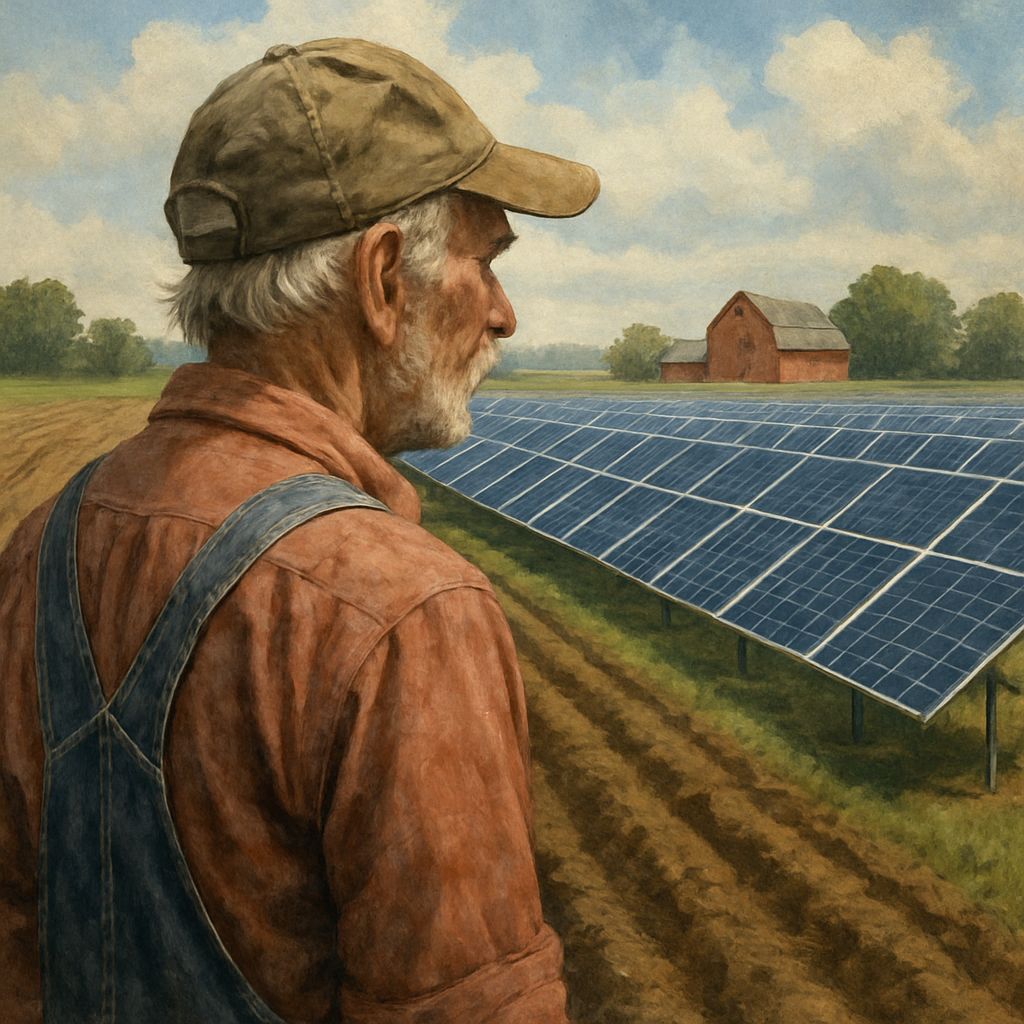
Industry Reality Check: According to reporting by Fast Company, solar development in the United States is increasingly targeting productive agricultural land. While developers often claim installations are built on marginal or low-yield soil, generational cropland is being converted to solar arrays at a rate that is drawing concern from agricultural researchers, rural economists, and farming advocacy groups alike. Once that land enters a 25–35 year solar lease, it effectively exits agricultural production for the duration — and sometimes permanently. For farmers looking to maximize savings and profit, exploring the financial benefits of solar panels can be a double-edged sword.
The loss of farmland to solar development isn’t just a land-use statistic. It represents the erosion of productive agricultural capacity that took generations to build. Soil that has been cultivated, amended, and carefully managed over decades doesn’t simply resume its former productivity once panels are removed.
What makes this particularly difficult is the speed at which these decisions get made. Developers approach landowners with polished financial presentations, tight signing timelines, and projections that emphasize income while minimizing the permanence of the commitment. Many farmers report feeling pressured to decide before they had the chance to fully consult legal or agricultural advisors.
The long-term implications for agricultural communities extend well beyond individual farm operations. When productive land leaves cultivation, local grain elevators, equipment dealers, input suppliers, and seasonal labor markets all feel the downstream effects. Rural economies built around active farming operations begin to hollow out as more acres shift to solar generation.
How Utility-Scale Solar Permanently Alters Soil Health
- Altered water infiltration: Panel arrays concentrate rainfall runoff along panel edges, creating erosion channels and uneven moisture distribution across the soil profile.
- Reduced microbial diversity: Shading from panels reduces the surface temperature and light exposure that drive biological activity in the top layers of soil, disrupting microbial communities essential to long-term fertility.
- Vegetation changes: Shaded zones beneath panels favor shade-tolerant and invasive plant species over the managed vegetation or crop residue that supports soil structure.
- Loss of organic matter cycling: Without active crop rotation or cover cropping beneath arrays, organic matter inputs drop significantly, reducing soil carbon over time.
- Compaction from installation: Heavy equipment used during installation — including concrete pier drivers and cable trenching machinery — creates compaction layers that can persist for years even after equipment is removed.
These aren’t theoretical concerns raised by solar skeptics. They are documented soil science outcomes observed on sites where large-scale solar has been installed and studied. The degree of impact varies depending on installation design, vegetation management practices, and whether agrivoltaic principles are applied — but the baseline risk to soil health is real and measurable.
Restoration after a solar lease ends is possible in some cases, but it is neither quick nor inexpensive. Soil remediation, recompaction treatment, and reestablishing organic matter levels can take years of intentional management before land returns to pre-installation productivity — if it ever fully does.
For farmers whose identity and livelihood are tied to the quality of their soil, this is not a minor footnote. It is a fundamental threat to what they are passing on to the next generation.
Compaction and Degradation Beneath Panel Arrays
Heavy installation machinery — concrete pier drivers, trenching equipment, and supply trucks — creates subsurface compaction that restricts root growth and water movement long after the construction crews leave. Even when vegetation is maintained beneath the panels, the compacted layer beneath the surface limits what that land can produce if it ever returns to crop cultivation. On clay-heavy soils, this compaction can be particularly severe and particularly difficult to reverse. However, some farmers are finding ways to boost crop growth even with solar panel installations.
Long-Term Lease Contracts Lock Farmers Out of Their Own Land
A 25 to 35-year solar lease is, in practical terms, a generational commitment. A farmer who signs at 45 is committing land that their children or grandchildren will inherit — under terms negotiated by a developer whose primary interest is maximizing energy output, not preserving agricultural flexibility. Most lease agreements include automatic renewal clauses, meaning the land can remain under solar use for 50 years or more unless the landowner takes active steps to exit — steps that typically carry significant financial penalties. To explore more about this issue, read about solar impacts on rural landscapes.
Solar Power Cannot Keep a Farm Running on Its Own
One of the most persistent myths in the solar sales conversation is that a farm can simply “go solar” and achieve meaningful energy independence. The reality is that farms are among the most energy-demanding and energy-variable operations in any industry. Irrigation pumps, grain dryers, cold storage, milking equipment, ventilation systems, and lighting all draw significant and often unpredictable loads that a solar system — particularly one without substantial battery storage — cannot reliably meet on its own.
Solar generation is inherently intermittent. Output drops during cloud cover, falls to zero at night, and varies seasonally in ways that frequently misalign with peak farm energy demand. Grain drying season, for example, often coincides with shorter fall days and reduced solar irradiance — precisely when a solar-dependent operation would be most exposed to energy shortfalls. For farmers looking to maximize efficiency, exploring solar panels’ financial benefits can be a worthwhile consideration.
The gap between solar output and actual farm energy demand is almost always filled by the grid — which means farmers who go solar rarely achieve the energy independence they were promised, and instead find themselves managing a more complex dual-dependency on both their solar system and their utility provider.
Why Farms Need Consistent Power That Solar Cannot Always Guarantee
Farms don’t run on averages — they run on demand. When a milking system needs to cycle at 4 a.m., when irrigation pumps need to run during a heat event, or when a grain dryer needs to operate continuously through a wet harvest week, the power has to be there. Solar cannot make that guarantee. Unlike a utility grid that delivers consistent voltage around the clock, solar generation is a variable resource that peaks midday, drops sharply on overcast days, and disappears entirely after sunset.
The mismatch between when solar produces and when farms consume is more significant than most pre-sale assessments acknowledge. Poultry houses require continuous ventilation regardless of cloud cover. Dairy operations run on fixed milking schedules tied to animal biology, not sun position. Vegetable cold storage must maintain precise temperatures 24 hours a day. For each of these systems, even a brief power interruption creates consequences that range from financial loss to animal welfare violations. A solar system without robust backup simply cannot be the sole power source for any serious farm operation.
The Problem With Energy Storage on a Farm Scale
Battery storage is frequently offered as the solution to solar’s intermittency problem — and in residential settings, it works reasonably well. On a farm, the math changes dramatically. A typical agricultural operation may draw 50 to 200 kilowatt-hours or more per day depending on the enterprise. Storing even one day’s worth of backup power requires battery systems that can cost $50,000 to $200,000 or more, on top of the solar installation itself. That cost is rarely part of the initial proposal farmers receive. For more information on how solar panels can benefit farmers, check out the financial benefits of solar panels for farmers.
Beyond cost, battery systems carry their own maintenance demands and limited lifespans. Most lithium-ion battery storage systems used in commercial applications carry a usable life of 10 to 15 years before significant capacity degradation occurs — meaning a farm investing in storage today should expect to replace those systems at least once, possibly twice, within the life of a 25-year solar contract. That replacement cost is almost never factored into the financial projections presented during the sales process.
What Happens to Critical Farm Systems During Low-Light Periods
Extended low-light periods — overcast weeks in winter, smoke from regional wildfires, or simply seasonal changes in sun angle — can reduce solar output by 50 to 80% for days at a time. For farms that have reduced their grid connection in favor of solar reliance, these periods expose serious vulnerabilities in their energy supply.
The systems most at risk during these periods are exactly the ones farms can least afford to lose. Grain stored in temperature-sensitive facilities can spoil. Livestock ventilation failures can become life-threatening within hours in warm weather. Irrigation systems that fail during critical crop development windows can result in total yield loss for that planting. These are not edge-case scenarios — they are the predictable consequences of over-relying on an intermittent energy source without adequate backup infrastructure in place.
Farm System
Power Demand
Consequence of Outage
Solar Reliability Risk
Dairy Milking Equipment
High / Continuous
Animal health impact, milk loss
High — fixed schedule, no flexibility
Grain Dryer
Very High / Seasonal
Crop spoilage, total yield loss
High — peak demand in low-sun season
Poultry Ventilation
High / Continuous
Flock mortality within hours
Critical — zero tolerance for interruption
Cold Storage
Moderate / Continuous
Produce spoilage, food safety violation
High — requires 24/7 stable power
Irrigation Pumps
High / Seasonal
Crop stress, yield reduction
Moderate — daytime demand aligns better
Lighting (Barns/Greenhouses)
Low-Moderate
Reduced productivity, safety risk
Low-Moderate — manageable with storage
The Ripple Effect on Rural Communities
When a farm stops farming, the economic impact doesn’t stay at the property line. Agricultural operations are deeply embedded in the economic fabric of rural towns, and when productive land shifts to solar generation, the businesses and jobs that depended on active farming quietly begin to disappear.
How Large Solar Projects Reduce Local Agricultural Business Activity
A working farm is a consistent economic engine. It purchases seed, fertilizer, fuel, equipment parts, veterinary services, and custom hire labor from local businesses year after year. When that farm converts 300 acres to a solar lease, those purchases don’t shift — they disappear. The equipment dealer loses a service account. The feed supplier loses a regular order. The local co-op loses a member who was moving grain through their elevator. None of those economic relationships are replaced by the solar installation, which is typically managed by an out-of-area developer using centralized supply chains and remote monitoring systems.
This isn’t speculation about what might happen — it’s a pattern already playing out in communities across the Midwest and Southeast where utility-scale solar development has accelerated. Local business owners near large solar projects consistently report reduced agricultural commerce in the years following installation. The farm is still there on the map. It’s just no longer farming — and that distinction matters enormously to every business that depended on it.
Fewer Farms in Production Means Fewer Jobs in Rural Towns
Agricultural employment extends well beyond the farm gate. Truck drivers hauling grain, mechanics servicing combines, agronomists scouting fields, seasonal harvest workers, and processing facility employees all depend on active farm production to sustain their livelihoods. A solar installation requires a fraction of that labor — typically a small maintenance crew visiting periodically — and generates no ongoing demand for the agricultural supply chain that supports rural employment.
Rural population decline is already a pressing challenge in farming communities across the country. When large solar projects remove productive farms from the local economy, they accelerate that decline by eliminating the employment base that keeps young families in rural areas. The long-term demographic consequence of widespread agricultural land conversion to solar is a rural landscape with fewer people, fewer businesses, and fewer of the community institutions — schools, churches, local governments — that depend on a critical mass of residents to survive.
Environmental Drawbacks Most Solar Salespeople Won’t Mention
Solar energy is widely — and correctly — promoted as a cleaner alternative to fossil fuels for electricity generation. But that clean energy narrative tends to focus exclusively on the operational phase of a solar panel’s life, ignoring what happens before the panels generate their first watt and what happens after they stop. For farmland specifically, the environmental ledger of large-scale solar has entries that rarely make it into the developer’s pitch deck.
Toxic Materials Inside Solar Panels and End-of-Life Disposal Problems
Standard photovoltaic solar panels contain materials that are far from environmentally benign. Lead, cadmium, and selenium are present in many panel types, along with various chemical compounds used in manufacturing that require careful handling throughout the panel’s life cycle. During normal operation on a structurally sound installation, these materials are effectively contained. The problem emerges at end of life — and with the first generation of large-scale commercial solar installations now approaching the end of their operational lifespan, that problem is becoming impossible to ignore.
The United States currently lacks a comprehensive national framework for solar panel recycling or disposal. Most decommissioned panels end up in landfills, where the toxic materials they contain can leach into surrounding soil and groundwater over time. For farmers who host solar installations on their land, the question of who bears responsibility for panel disposal at the end of a lease term is often addressed in fine print that assigns that cost — and that environmental liability — back to the landowner. Before signing any solar agreement, farmers should have an attorney examine exactly what the decommissioning clause commits them to.
How Panel Runoff Can Contaminate Surrounding Farmland
When rainfall hits solar panels, it doesn’t simply pass through — it picks up surface residues and concentrates into high-volume runoff streams along panel edges. On panels that have been exposed to industrial fallout, pesticide drift, or that contain trace chemical residues from manufacturing, that runoff carries contaminants directly into the soil immediately downslope of the array. Studies examining soil and water quality near large solar installations have found elevated concentrations of certain trace metals in runoff-affected zones, raising questions about the impact on neighboring cropland and water sources. For farmers interested in the financial aspects, solar panels can also offer financial benefits despite these environmental concerns.
The geometry of large panel arrays also fundamentally changes how water moves across a landscape. Natural infiltration patterns are disrupted as rainfall that would normally be distributed across a vegetated field surface is instead concentrated into narrow runoff channels. On sloped terrain, this can accelerate erosion at the panel edge, creating gullies that extend into neighboring crop fields over time. These are not problems that show up immediately after installation — they develop gradually over years, making them easy to overlook until the damage is already significant.
Smarter Solar Alternatives That Don’t Sacrifice Farmland
The case against careless solar adoption on farmland is not a case against solar itself. The technology is real, the environmental benefits of transitioning away from fossil fuels are meaningful, and farmers deserve access to energy solutions that genuinely serve their operations. The problem isn’t solar — it’s the way utility-scale solar development has been positioned as the only or obvious path, when in fact there are approaches that deliver real energy benefits without requiring farmers to surrender their most valuable asset.
The most effective solar strategies for farming operations share a common principle: they work with the farm rather than replacing it. That means prioritizing installations that complement agricultural activity, that use land already committed to non-production purposes, and that keep the farmer in control of both their energy and their land. It also means being honest about what solar can and cannot realistically replace in a farm’s energy profile, and designing systems accordingly rather than oversizing to maximize developer returns.
Farmers exploring solar should approach the decision the same way they approach any major capital investment — with independent advice, realistic projections based on actual energy audits, and a clear understanding of every term in every document before anything is signed. The right solar solution for a working farm looks very different from the proposals that arrive uninvited in the mailbox, and finding it requires asking questions that most solar developers would prefer you didn’t think to ask. For those interested in maximizing savings and profit, exploring the financial benefits of solar panels can be a great starting point.
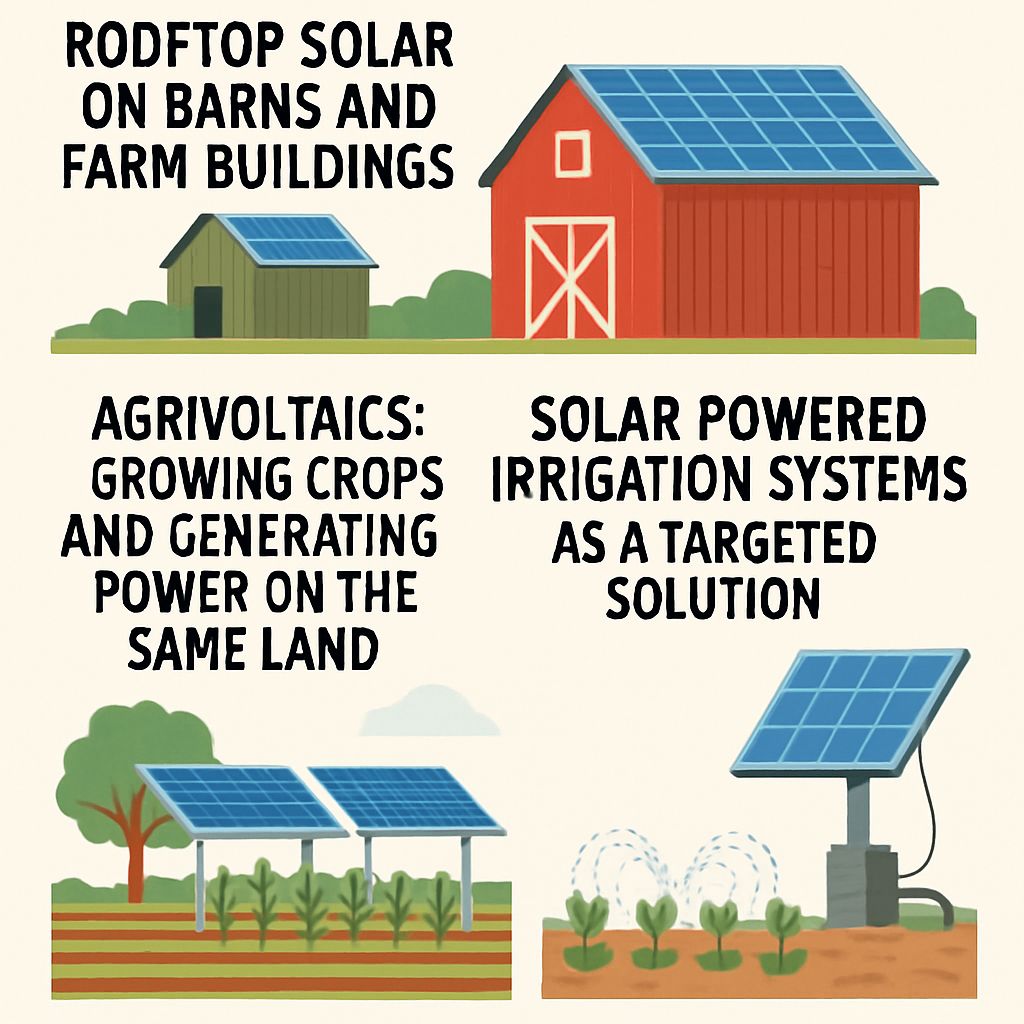
Rooftop Solar on Barns and Farm Buildings
The most overlooked solar opportunity on most farms is already sitting right above the farmer’s head. Barn rooftops, equipment storage buildings, processing facilities, and grain bin structures represent thousands of square feet of south-facing surface area that can host solar panels without displacing a single acre of productive cropland. A standard 100-foot by 40-foot barn roof can accommodate a 30 to 40 kilowatt system — enough to meaningfully offset the energy consumption of most small to mid-size farm operations without touching the ground below. Additionally, some farmers are exploring innovative ways to increase strawberry growth under solar panels.
Rooftop installations also carry a fundamentally different risk profile than ground-mounted utility-scale systems. The farmer retains full ownership of the equipment, retains full use of their land, and is not bound by a developer’s lease agreement. Federal investment tax credits apply equally to rooftop systems, and many states offer additional incentives specifically for agricultural building solar installations. The upfront cost is real, but the payback math is cleaner — and the farmer keeps control of every variable in the equation.
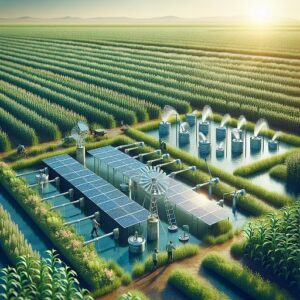
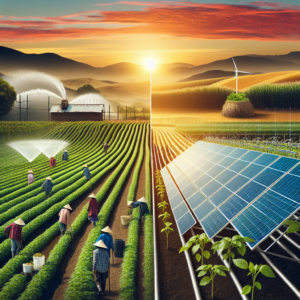
Agrivoltaics: Growing Crops and Generating Power on the Same Land
Agrivoltaics is one of the most promising developments in sustainable agriculture — and one of the least discussed in mainstream solar conversations. The concept is straightforward: design solar installations so that crops and panels share the same land simultaneously, rather than competing for it. By elevating panels higher off the ground, widening row spacing, and selecting appropriate crops for the partially shaded environment beneath, farmers can generate meaningful solar energy without removing land from agricultural production. Research from institutions including the University of Massachusetts and Oregon State University has shown that certain crops — including lettuce, spinach, peppers, and various herbs — actually benefit from the partial shade agrivoltaic systems provide, reducing heat stress and water demand during peak summer months.
The dual-use model also creates a more financially resilient operation. Rather than choosing between crop income and solar lease income, agrivoltaic farmers capture both revenue streams from the same acreage. Water use under agrivoltaic systems has been shown to decrease by up to 29% for certain crops due to the shading effect, which carries significant long-term value in drought-prone regions. This is the version of solar farming that serves agriculture — not one that replaces it. Any farmer being approached by a solar developer should ask specifically why agrivoltaic design wasn’t proposed before accepting a standard ground-mount agreement that removes land from production entirely.
Solar-Powered Irrigation Systems as a Targeted Solution
For farms where irrigation is the dominant energy expense, solar-powered pumping systems offer one of the highest-return, lowest-risk solar applications available. Direct-drive solar irrigation systems — where panels power pumps during daylight hours without requiring battery storage — are particularly well-suited to agricultural use because solar output and irrigation demand naturally align. The sun shines strongest when crops need water most. Systems like the Grundfos SQFlex and Lorentz PS2 series are purpose-built for agricultural pumping applications, are designed to operate reliably in remote field locations, and can be scaled to match specific field acreage and crop water requirements without the complexity or cost of a full-farm solar installation. This targeted approach delivers real, measurable energy savings where farms typically need it most — without the land commitments, lease risks, or infrastructure complexity that come with utility-scale solar development.
Solar Can Work on Farms — But Only With Eyes Wide Open
Solar power is not inherently bad for farming. The technology is real, the potential savings are real, and when implemented thoughtfully — through rooftop installations, agrivoltaic systems, or targeted applications like solar irrigation — it can genuinely strengthen a farm’s financial and environmental resilience. The danger lies not in the panels themselves but in the contracts, the compromises, and the permanent decisions being made under time pressure without full information. A solar installation designed around the farm’s actual needs, installed on land already committed to non-production uses, and owned outright by the farmer represents a genuinely sustainable choice. A 30-year utility lease that removes productive cropland from agriculture and hands long-term control to an outside developer is something else entirely.
The most important thing any farmer can do before engaging seriously with any solar proposal is slow down. Get an independent energy audit. Have a qualified agricultural attorney review any lease or PPA before signing. Talk to other farmers who have gone through the process — both those who are satisfied and those who regret it. Understand exactly what your land will look like, and what it will be worth, in 25 years under the terms being offered. Solar can be a powerful tool in a sustainable farming operation. But like any powerful tool, it causes serious damage when it’s used carelessly or by someone whose interests don’t align with yours.
Frequently Asked Questions
Farmers considering solar raise many of the same questions, and they deserve straight answers — not the filtered version that shows up in a developer’s FAQ section.
Can a farm run entirely on solar power?
In practical terms, very few farms can run entirely on solar power without remaining connected to the utility grid. The combination of solar’s intermittent output and farms’ continuous, variable energy demand means that even a well-designed solar system typically offsets a significant portion of energy use rather than replacing it entirely. Farms with lower and more predictable energy loads — small market gardens, hobby farms, or operations with minimal mechanical equipment — can get closer to full solar self-sufficiency, particularly when paired with battery storage.
Larger commercial operations with energy-intensive systems like grain dryers, large-scale irrigation, or climate-controlled livestock housing will almost always need grid backup regardless of solar system size. The goal of “going off-grid” is rarely achievable or even financially rational at farm scale. A more realistic and useful target is meaningful energy cost reduction — typically 40 to 70% of annual electricity costs — while maintaining grid connection as a reliable backup for high-demand and low-sun periods.
How long does it take for solar panels to pay off on a farm?
The honest answer is: it depends enormously on variables that most solar sales presentations deliberately simplify. Payback periods for farm solar installations typically range from 5 to 15 years, with the most common range falling between 7 and 10 years for owned systems in moderate sun regions with average utility rates. Systems acquired through leases or PPAs may never “pay off” in the traditional sense — because the farmer never owns the equipment and savings are partially absorbed by lease payments.
The variables that most significantly affect payback speed include the farmer’s actual energy consumption relative to system size, the local utility rate and net metering compensation structure, state and federal incentives applied at installation, and whether the system is purchased outright, financed, or leased. An independent solar assessment using 12 months of actual utility bills — not developer estimates — is the only reliable starting point for projecting real payback timelines.
It’s also worth noting that panel degradation affects long-term returns. Most solar panels degrade at approximately 0.5% per year in output capacity, meaning a system producing 100 kilowatts today will produce roughly 87.5 kilowatts in 25 years. Financial projections that don’t account for this degradation curve will overstate long-term savings — and many of the projections farmers receive at the sales stage do exactly that.
What happens to farmland after a solar lease ends?
When a solar lease expires, the theoretical outcome is panel removal and land restoration. The practical reality is more complicated. Most lease agreements include provisions that allow developers to extend or renew the lease, often with relatively short notice windows that make it difficult for landowners to plan for the land’s return to agricultural use. When panels are removed, the land that remains has typically experienced compaction from installation equipment, altered drainage patterns from years of concentrated panel runoff, reduced organic matter from limited vegetation management, and in some cases, soil contamination from panel materials or herbicide use beneath arrays.
Returning that land to productive crop cultivation requires intentional soil remediation — cover cropping, tillage to break compaction layers, organic matter inputs, and in some cases professional soil testing to assess chemical status. That process takes time and money, neither of which the lease agreement typically provides for. Farmers should insist on a funded decommissioning bond in any solar lease agreement — a financial instrument held in escrow that ensures restoration costs are covered by the developer rather than falling entirely on the landowner when the lease concludes.
Are there solar options that don’t require giving up cropland?
Yes — and they are often the better choice for working farms. Rooftop solar on existing agricultural buildings uses no additional land and delivers direct energy savings to the farm’s own operations. Agrivoltaic systems are designed specifically to allow crop production and solar generation to coexist on the same acreage. Solar-powered irrigation and livestock watering systems can be installed at field edges or on fence lines with minimal land impact. Farmers are not limited to choosing between a utility-scale ground-mount lease and no solar at all — that false binary is a sales tool, not a reflection of what the technology actually makes possible.
Do solar panels damage the soil underneath them?
Under utility-scale ground-mount installations, yes — soil impacts are well-documented and can be significant. The degree of damage depends on installation design, vegetation management practices, soil type, and whether agrivoltaic principles were incorporated into the system layout. Poorly managed installations that use herbicides to suppress vegetation beneath panels and that allow concentrated runoff to erode panel-edge soils can cause serious, long-lasting degradation.
Compaction from installation equipment is one of the most consistent and damaging impacts. Heavy machinery used to drive panel support posts and trench cable conduits creates subsurface compaction layers that restrict root growth and water infiltration. On clay-dominant soils, these layers can persist for a decade or more without active remediation. Research has documented measurable differences in soil bulk density, pore structure, and biological activity between compacted installation zones and undisturbed reference soils on the same properties.
The good news is that thoughtful installation design can substantially reduce these impacts. Using driven rather than poured concrete foundations minimizes soil disturbance. Maintaining active vegetation cover beneath panels — particularly with diverse native or pollinator-friendly plant mixes — supports soil biology and reduces erosion. Agrivoltaic designs that allow crop cultivation beneath elevated panels preserve the most soil function of all. The soil damage associated with solar is not inevitable — it is the result of installations designed to maximize energy output and developer profit without adequate regard for agricultural land quality.
Farmers evaluating solar proposals should ask specifically how the developer plans to manage soil compaction, vegetation, and drainage during and after installation. A developer who cannot give specific, detailed answers to those questions is a developer who has not designed the project with the farm’s long-term soil health in mind — and that is a significant red flag regardless of how attractive the lease terms appear on the surface.

Leave a Reply