

Key Takeaways:
- Agrivoltaics combines solar energy production with crop farming on the same land, meaning farmers don’t have to choose between generating power and growing food.
- Partial shade from solar panels can actually increase yields for certain crops like blueberries, lettuce, and other shade-tolerant plants by reducing heat stress and water loss.
- Farmers can generate a second income stream by selling electricity back to the grid while continuing to farm — a powerful financial buffer against volatile crop markets.
- Not every crop or farm layout is ideal for agrivoltaics — the right panel configuration and crop selection make all the difference, and we break that down in detail below.
- Real-world pilot projects have already demonstrated that merging solar infrastructure with active farmland boosts both land efficiency and environmental sustainability.
Farmers are generating electricity and growing more food on the exact same land — at the same time.
It sounds counterintuitive, but mounting evidence from research institutions and real-world agrivoltaic projects confirms it works. The concern that solar panels would simply eat into productive farmland is giving way to a more nuanced reality: when panels are installed correctly, crops can thrive beneath and between them. Agrivoltaic systems are at the forefront of this agricultural shift, offering farmers a smarter way to use every acre they own.
Solar Panels Can Actually Grow More Crops, Not Less
The assumption has always been that covering farmland with solar panels means sacrificing yield. Agricultural organizations raised valid concerns when solar developers started acquiring farmland — and those concerns aren’t entirely unfounded. Poorly planned solar installations can absolutely displace productive agriculture.
But agrivoltaics flips that narrative. Studies have found that strategically placed solar panels create microclimatic conditions that benefit specific crops. The partial shade reduces thermal stress during peak summer heat, the panels slow soil moisture evaporation, and the resulting growing environment can push yields higher than open-field conditions — not lower. This isn’t a theoretical promise. It’s documented in multiple crop trials across different climates and growing systems, such as increased broccoli yields.

What Is Agrivoltaics?
Agrivoltaics — sometimes written as agrophotovoltaics — is the practice of combining solar photovoltaic (PV) energy production with agricultural activity on the same parcel of land. The term blends “agriculture” and “photovoltaics,” and the concept is straightforward: instead of using land exclusively for farming or exclusively for solar, you do both simultaneously. This innovative approach is transforming agriculture by providing sustainable energy solutions, as explored in how solar power is transforming agriculture.
How Dual-Use Land Works in Practice
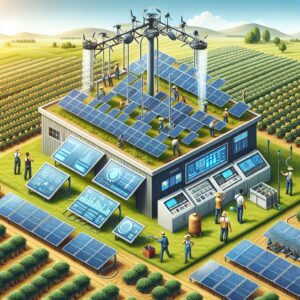
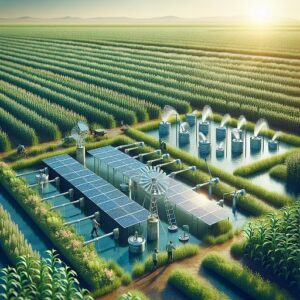
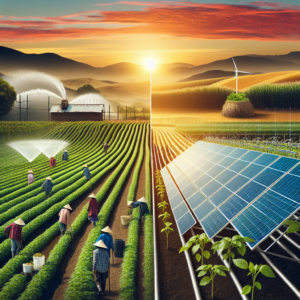
In a standard agrivoltaic setup, solar panels are mounted above or alongside crops at heights and spacings that allow sunlight to reach the plants below while still capturing enough solar irradiance to generate meaningful electricity. The panels are typically elevated higher than conventional ground-mount systems — often 2 to 5 meters above ground — so that farm equipment can pass underneath. Crops grow in the spaces between panel rows, and in many configurations, directly beneath the panels themselves. For instance, certain crops thrive under solar panels, benefiting from the unique microclimate they create.
The USDA has outlined three primary configurations used in agrivoltaic systems: elevated fixed panels over crops, vertical bifacial panels installed in crop rows, and solar panels integrated into greenhouse or polytunnel structures. Each serves different farming needs, climates, and crop types.
Why Agrivoltaics Is Different from Traditional Solar Farming
Traditional solar farms prioritize maximum energy output. Panels are packed as tightly as panel-to-panel shading allows, land is typically cleared of vegetation, and agricultural use is essentially eliminated. Agrivoltaics deliberately sacrifices some energy density to preserve — and enhance — agricultural productivity. It’s a fundamentally different design philosophy, and that distinction matters enormously for land-use policy, farmer income, and food security.
How Solar Panels Boost Crop Growth
The mechanisms behind improved crop performance under solar panels are well-documented and come down to three core environmental changes: reduced heat stress, better moisture retention, and the formation of a protected microclimate.
Partial Shade Reduces Crop Stress
Many crops don’t actually perform best in full, uninterrupted sunlight — particularly during hot summers. Photosynthesis in plants like lettuce, spinach, kale, and blueberries becomes less efficient once temperatures exceed certain thresholds. Solar panels intercept a portion of direct solar radiation before it reaches the crop canopy, effectively cooling the growing environment. Research on blueberry cultivation under agrivoltaic panels found measurable improvement in fruit quality and plant stress indicators compared to unshaded rows.
This isn’t about depriving plants of light. It’s about filtering excess radiation that causes cellular damage and reduces photosynthetic efficiency. For shade-tolerant and semi-shade-tolerant crops, that filter is genuinely beneficial.
Lower Soil Temperatures Retain More Moisture
Solar panels block direct solar radiation from hitting the soil surface, which significantly reduces evapotranspiration — the combined loss of water through soil evaporation and plant transpiration. Studies on agrivoltaic systems have shown measurable reductions in soil water loss beneath panel arrays compared to open-field controls. For farmers in water-stressed regions, this translates directly into lower irrigation demand and reduced operating costs.
Cooler, more consistently moist soil also supports healthier root development and microbial activity. Those are the foundational conditions for strong plant growth, and agrivoltaics creates them passively — without additional inputs or infrastructure.
Protected Microclimates Extend Growing Seasons
Perhaps the most underappreciated benefit of agrivoltaic systems is their ability to moderate the growing environment across seasons. Panels buffer crops against temperature extremes in both directions — reducing heat load in summer and providing mild frost protection during shoulder seasons. This moderating effect can extend the productive growing window for certain crops, adding weeks to a growing season that would otherwise be cut short by late spring frosts or early fall freezes.
- Reduced wind exposure beneath panel arrays lowers physical crop damage and further reduces moisture loss
- Lower UV radiation reaching the crop canopy can reduce sunscald on sensitive fruits and leafy vegetables
- Buffered nighttime temperatures help protect against early frost events in transitional seasons
- Stable humidity levels beneath panels reduce plant stress during drought conditions
Four Ways to Install Solar Panels on Farmland
The installation method determines everything — which crops can grow, how equipment moves through the field, how much energy is generated, and whether the system actually works for your specific farm. Georgia Tech researcher Yang You has outlined the primary approaches, and the USDA’s agrivoltaics guidance reinforces these as the main configurations currently in use. For farmers looking to increase fresh herb growth, understanding these methods is crucial.
1. Fixed Vertical or Tilted Panels for Partial Crop Shading
Fixed panels — either tilted at the optimal angle for solar capture or installed vertically as bifacial units — are the most straightforward agrivoltaic configuration. They’re stationary, mechanically simple, and relatively low-cost compared to tracking systems. Vertical bifacial panels are particularly effective when installed in north-south oriented rows within crop fields, capturing morning light on one face and afternoon light on the other while casting a moving shadow band across the crop rows between them. This dynamic shading pattern distributes light interception more evenly across the growing area than static tilted panels, which tend to create fixed shade zones.
2. Tracking Systems That Follow the Sun
Single-axis tracking systems rotate solar panels throughout the day to follow the sun’s arc across the sky, maximizing energy capture compared to fixed installations. In an agrivoltaic context, this dynamic movement also means the shadow pattern cast across crops shifts continuously — preventing any single strip of land from being permanently shaded. This is a meaningful advantage for crops that need more consistent light exposure. The tradeoff is cost and mechanical complexity: tracking systems require more maintenance and a higher upfront investment than fixed configurations.
3. Elevated Panels That Allow Tractor Access
Elevated agrivoltaic systems mount panels high enough above the ground — typically between 2 and 5 meters — that standard farm equipment can operate freely underneath them. This is the configuration most compatible with existing farming operations because it doesn’t require farmers to abandon their machinery or change their cultivation methods significantly. Tractors, harvesters, and irrigation equipment move through the field just as they would without the panels overhead.
The structural requirements for elevated systems are more demanding than ground-mount solar, which increases installation costs. Taller support posts, stronger racking hardware, and deeper foundations are needed to handle wind loads at height. However, for farms running large-scale crop operations, the ability to maintain full mechanized farming beneath the array is often worth the premium.
Crops grown directly beneath elevated panels receive diffused, filtered light rather than direct sunlight. For shade-tolerant varieties — leafy greens, herbs, certain berries — this is often no disadvantage at all. For row crops like corn or wheat that require high light intensity, panel spacing and height must be carefully calculated to ensure adequate photosynthetically active radiation (PAR) reaches the crop canopy throughout the growing season.
4. Solar-Integrated Greenhouse Structures
Solar-integrated greenhouses embed photovoltaic panels directly into the roof or wall structures of growing facilities. Semi-transparent thin-film panels or strategically spaced opaque panels replace conventional glazing in sections of the greenhouse envelope, generating electricity while allowing a controlled fraction of sunlight to pass through to crops below. This approach is particularly powerful for high-value horticultural crops — tomatoes, peppers, cucumbers, and specialty herbs — where the controlled environment already commands a premium growing setup.
The engineering challenge is balancing energy generation against light transmission. Too many opaque panels and crop yields drop. Too few and the energy output doesn’t justify the added structural cost. Purpose-built agrivoltaic greenhouse designs now address this with wavelength-selective panels that filter specific portions of the solar spectrum — capturing energy from wavelengths plants don’t use efficiently for photosynthesis while transmitting the red and blue light that drives plant growth most effectively.

Solar Panel Types Best Suited for Agricultural Use
Choosing the right panel technology matters as much as choosing the right installation configuration. Each panel type brings a different combination of efficiency, cost, durability, and physical characteristics that affect how well it performs in an agricultural environment. For insights into which crops thrive under solar panels, consider how panel choice can impact agricultural productivity.
Farms are not rooftops. Panels installed in agrivoltaic systems face specific challenges — humidity, dust, fertilizer drift, and the need to withstand decades of outdoor exposure while remaining structurally sound above active crop fields. The panel technology you choose needs to hold up in that environment while delivering the energy output that makes the system financially viable.
Monocrystalline Silicon Panels: High Efficiency for Space-Limited Farms
Monocrystalline silicon panels are cut from a single continuous silicon crystal, which gives them the highest energy conversion efficiency of any mainstream panel type — typically ranging from 17% to 22% in current commercial products. For farms where available land area is limited or where maximizing energy output per square meter is a priority, monocrystalline panels deliver the most power from the smallest footprint. They perform well in high-temperature conditions and maintain output more consistently across varying light levels than polycrystalline alternatives, making them a reliable choice for elevated or fixed-tilt agrivoltaic arrays.
Polycrystalline Silicon Panels: A Cost-Effective Middle Ground
Polycrystalline panels are manufactured by melting multiple silicon fragments together, a simpler process that results in a lower per-watt cost but also a slightly lower efficiency — typically 13% to 17%. For large-scale agrivoltaic installations where total system cost is a primary constraint, polycrystalline panels can make a system financially viable that monocrystalline pricing would put out of reach.
The efficiency gap between monocrystalline and polycrystalline panels has narrowed significantly over the past decade. On a large farm with ample land, that difference in panel efficiency is often less important than upfront cost — and polycrystalline systems can still generate substantial electricity revenue to offset farm operating expenses.
- Lower upfront cost per watt makes large installations more accessible for mid-scale farm operations
- Widely available through established supply chains with proven long-term reliability data
- 15% to 17% efficiency is adequate for most agrivoltaic configurations where panels are spread across large areas
- Slightly higher temperature sensitivity than monocrystalline, which matters in regions with extreme summer heat
For most mid-scale agrivoltaic projects where budget is the primary constraint, polycrystalline panels represent a practical, proven choice with a well-understood performance profile over a 25-year system lifespan. Additionally, there are best crops that thrive under solar panels which can further enhance the efficiency and yield of these projects.
Thin-Film Panels: Flexible but Lower Output
Thin-film photovoltaic panels are manufactured by depositing one or more layers of photovoltaic material — typically cadmium telluride (CdTe) or copper indium gallium selenide (CIGS) — onto a substrate. This process produces panels that are lighter and more flexible than crystalline silicon alternatives, with efficiencies that typically range from 10% to 13% in commercial products.
Thin-Film Panel Quick Reference
Technology: Cadmium Telluride (CdTe) / CIGS
Typical Efficiency: 10% – 13%
Best Use Case: Solar greenhouse integration, curved or non-standard structures
Key Advantage: Lightweight, flexible form factor
Key Limitation: Lower output per square meter requires more surface area
Agricultural Fit: Strong for greenhouse roofing; less ideal for elevated open-field arrays
The lower efficiency of thin-film panels means more surface area is needed to generate the same amount of electricity as a crystalline silicon system. In open-field agrivoltaic applications where maximizing energy output per land unit is important, this is a meaningful disadvantage. However, in solar greenhouse applications where panels are integrated into existing roof structures rather than mounted on dedicated racking, the flexible form factor and diffuse-light performance characteristics of thin-film panels can make them an excellent fit.
Thin-film panels also perform relatively well in diffuse light conditions — overcast days, early mornings, and late afternoons — which makes them a reasonable choice for climates with frequent cloud cover where crystalline panels lose more of their output advantage.
Bifacial Panels: Double-Sided Energy Capture
Bifacial solar panels generate electricity from both their front and rear faces. The front captures direct solar irradiance in the conventional way, while the rear captures light reflected off the ground surface beneath the panel — known as albedo light. In agricultural settings, this reflected light comes from the crop canopy, bare soil, or mulch beneath the array, and the amount of energy captured from the rear face depends significantly on the reflectivity of whatever surface lies below.
For agrivoltaic applications, bifacial panels are particularly well-suited to vertical installation configurations. Vertically mounted bifacial panels installed in east-west rows capture direct morning light on one face and direct afternoon light on the other, providing a dual-peak energy generation profile that aligns well with common farm electricity demand patterns — early irrigation runs and evening equipment charging.
The energy gain from the rear face of a bifacial panel in an agricultural setting typically adds 5% to 30% additional output compared to a monofacial panel of equivalent size, depending on ground reflectivity and installation geometry. Over a 25-year system lifespan, that additional generation compounds into significant additional revenue or energy cost savings. For more insights, explore how solar power is transforming agriculture.
Here is a comparison table of the four best solar panel types for agricultural use — focusing on features, efficiency, and suitability for farms.
|
Solar Panel Type |
Efficiency Range |
Cost per Watt (Approx.) |
Key Advantages for Agriculture |
Limitations |
Best Farm Applications |
|---|---|---|---|---|---|
|
Monocrystalline Panels |
17–22% 1 |
$0.90–$1.50 2 |
High efficiency, compact design, long lifespan, performs well in all climates |
Higher upfront cost |
Space-limited farms, rooftops, and irrigation systems 1 |
|
Polycrystalline Panels |
13–17% 3 |
$0.70–$1.00 3 |
Lower cost, durable, long lifespan, strong in direct sunlight |
Requires more space, less efficient in cloudy conditions | |
|
Thin-Film Panels |
10–13% 5 |
$0.50–$0.90 2 |
Lightweight, flexible, better low-light/shaded performance |
Lower efficiency, shorter lifespan |
Greenhouses, barns, shaded or irregular terrain 5 |
|
Bifacial Panels |
18–22% 6 |
$1.00–$1.60 6 |
Captures light from both sides, high energy yield, great for reflective surfaces like grass or soil |
Higher cost, more complex installation |
Agrivoltaics (dual-use with crops), open-field installations 6 |
These four types of solar panels represent the most effective options for agricultural operations, allowing farmers to select between high efficiency (monocrystalline, bifacial) and lower-cost scalability (polycrystalline, thin-film) depending on land availability, sunlight exposure, and budget.
Financial Benefits for Farmers
The financial case for agrivoltaics is built on two pillars: reducing what farmers spend on energy and creating a new income stream from electricity production. Either benefit alone would be worth considering. Together, they represent a meaningful shift in how a farm generates and retains revenue across its operating year. For more information, explore how solar power is transforming agriculture.
Farm energy costs have climbed steadily alongside broader electricity price increases. Irrigation pumps, grain dryers, refrigeration units, lighting, and processing equipment all draw from the grid — and those bills compound across a full growing season. Agrivoltaic systems address that cost pressure directly while simultaneously unlocking a revenue source that doesn’t depend on crop prices, weather patterns, or market volatility.
Protection Against Rising Energy Costs
On-site solar generation offsets grid electricity consumption in direct proportion to system output. Every kilowatt-hour produced by farm-mounted panels is a kilowatt-hour the farm doesn’t purchase from a utility provider at market rates. As electricity prices continue to rise, the value of that offset grows — meaning an agrivoltaic system installed today becomes more financially valuable over time without any additional investment.
Energy Cost Offset Example
A mid-scale vegetable farm running irrigation pumps, pack-house refrigeration, and lighting draws an estimated 180,000 kWh annually. A 120 kW agrivoltaic system in a moderate-sun region generating approximately 150,000 kWh per year offsets roughly 83% of that consumption — eliminating the majority of the farm’s annual electricity bill and locking in that saving for the life of the system.
The financial protection this provides goes beyond simple cost reduction. Grid electricity prices are variable and subject to utility rate increases, demand charges, and time-of-use pricing structures that can make farm energy bills unpredictable. Solar generation is effectively a fixed-cost energy source once the system is installed — the fuel (sunlight) is free, and the main variables are system maintenance and inverter replacement over the panel’s 25 to 30-year lifespan.
Net metering policies in many regions allow farm solar systems to export surplus electricity to the grid during peak generation periods and draw from the grid when generation is low — effectively using the utility grid as a free battery. This further reduces the complexity and cost of managing on-farm energy supply and demand.
New Revenue from Energy Production
Beyond cost offsets, agrivoltaic systems can generate direct revenue through electricity sales, feed-in tariff programs, and renewable energy certificate (REC) markets. The specifics vary by region and utility structure, but the core opportunity is the same: the farm produces a commodity — electricity — that has consistent, predictable market demand regardless of weather, crop disease, or commodity price cycles.
- Feed-in tariffs pay a fixed rate per kilowatt-hour for electricity exported to the grid, providing predictable long-term income
- Net metering credits offset future electricity bills with surplus generation, effectively banking solar output for later use
- Power purchase agreements (PPAs) allow farms to sell electricity directly to buyers at negotiated rates without navigating spot markets
- Renewable Energy Certificates (RECs) can be sold separately from the electricity itself, creating an additional revenue layer from the environmental attribute of clean energy generation
- Agricultural solar lease arrangements allow farmers to lease land sections to solar developers while retaining farming rights — generating income with minimal operational involvement
The income diversification this creates is genuinely significant for farm financial resilience. A farm that generates 20% to 40% of its gross revenue from electricity sales is substantially less exposed to the price volatility that makes purely crop-dependent operations financially precarious.
When combined with the reduced input costs from lower energy bills, the total financial impact of a well-designed agrivoltaic system can meaningfully improve farm-level profitability — without requiring the farmer to increase acreage, take on additional labor, or introduce new crop risks.

Environmental Impact of Agrivoltaic Farming
Agrivoltaics delivers environmental benefits that extend well beyond the individual farm. Solar energy generation produces no greenhouse gas emissions during operation, and when that generation displaces grid electricity sourced from fossil fuels, the carbon reduction impact is immediate and measurable. A single mid-scale agrivoltaic system generating 150,000 kWh annually can offset a substantial volume of carbon emissions — without removing a single acre from food production.
Water conservation is arguably the most critical environmental contribution agrivoltaic systems make in agricultural regions already under hydrological stress. The reduced evapotranspiration beneath panel arrays means less groundwater extraction for irrigation — a meaningful benefit in regions where aquifer depletion and river flow restrictions are already limiting farm operations. Less irrigation water needed means less energy consumed pumping it, compounding the efficiency gains across the system.
- Reduced carbon emissions from on-site renewable generation displacing fossil fuel grid electricity
- Lower irrigation water demand through reduced soil evaporation beneath panel arrays
- Decreased chemical runoff as healthier, more moisture-stable soils require fewer corrective inputs
- Improved pollinator habitat when ground cover beneath panels is managed with native flowering plants
- Reduced land clearing pressure by maximizing productivity of land already in agricultural use
The pollinator habitat opportunity deserves particular attention. Agrivoltaic installations that incorporate native wildflower ground cover beneath panel arrays have shown measurable improvements in local pollinator populations — a direct benefit to surrounding crop yields that depend on insect pollination. This co-benefit costs little to implement and addresses one of the most pressing ecological concerns in modern agriculture: the decline of wild and managed pollinator species.
Is Agrivoltaics Right for Your Farm?
Not every farm is an ideal candidate for agrivoltaics — and recognizing that upfront saves considerable time, money, and frustration. The system works best when the right crop types, land characteristics, financial structure, and local policy environment align. When they do, the results are compelling. Forcing the installation can create operational problems that outweigh the benefits, but when done correctly, solar power can transform agriculture.
Best Crop Types for Agrivoltaic Systems
Shade-tolerant and semi-shade-tolerant crops consistently outperform sun-demanding varieties in agrivoltaic configurations. Leafy greens — lettuce, spinach, kale, Swiss chard, and arugula — are among the strongest performers, responding well to the filtered light and reduced heat stress beneath panel arrays. Blueberries have been specifically documented in research trials as benefiting from partial shading under agrivoltaic panels, with improved fruit quality and reduced plant stress markers. Herbs including basil, cilantro, and mint also adapt well to reduced direct sunlight conditions.
Root vegetables such as carrots, beets, and radishes perform adequately beneath panels when spacing allows sufficient light penetration. Pasture and forage crops grow successfully in the inter-row spaces of elevated agrivoltaic systems, and several projects have demonstrated that combining livestock grazing with solar panels — sometimes called agri-solar — is a highly practical dual-use configuration requiring minimal crop management complexity. High-light-demand crops like corn, sunflowers, and most cereal grains are generally poor candidates for dense panel configurations but can work in widely-spaced elevated systems designed to preserve high direct irradiance at canopy level.
Key Factors to Assess Before Installing Panels
Before committing to an agrivoltaic installation, there are several farm-specific variables that determine whether the system will perform as expected and deliver the financial returns that make it worthwhile.
- Solar resource availability: The number of peak sun hours your location receives annually determines system energy output — a fundamental driver of financial viability
- Land slope and orientation: South-facing slopes in the northern hemisphere maximize panel energy capture; steep terrain complicates racking installation and increases structural costs
- Crop light requirements: Match your existing or planned crops to the shading profile of the panel configuration you’re considering before committing to a design
- Equipment clearance needs: Determine the height and width requirements of your existing farm machinery before specifying panel mounting heights and row spacing
- Grid connection capacity: Local utility interconnection availability and costs can significantly affect system economics, particularly for larger installations planning to export surplus power
- Available incentives and policy support: Federal investment tax credits, state-level agricultural solar incentives, and utility net metering policies vary substantially and directly affect system payback period
Working with an agrivoltaic system designer who has specific agricultural experience — not just solar installation experience — is critical at this stage. The panel configurations that maximize energy output are not always the configurations that best serve the farming operation, and finding the right balance requires someone who understands both sides of that equation.

Is Using Solar Power a Smart Long-Term Farming Strategy?
The honest answer is yes — but only when it’s implemented with the full agricultural context in mind. Solar power adopted purely as an energy cost reduction tool, with panels installed on marginal or non-productive land, is a straightforward financial decision that carries relatively low risk. Agrivoltaics — integrating panels directly into active crop production systems — requires more careful planning but delivers a broader set of benefits that compound over a 25 to 30-year system lifespan.
The long-term farming environment is trending in a direction that makes solar investment increasingly sensible. Energy costs are rising. Water scarcity is intensifying pressure on irrigation-dependent operations. Climate variability is increasing the value of buffered growing microclimates. And land use pressure means farmers who can produce both food and energy from the same acre are positioned more favorably than those who can only do one or the other. Agrivoltaics doesn’t solve every challenge modern farmers face, but it addresses several of the most persistent ones simultaneously — and that’s a rare quality in any agricultural technology.
Frequently Asked Questions
Farmers exploring agrivoltaics for the first time consistently run into the same core questions. The answers below cut through the noise and give you the direct, practical information needed to evaluate whether this approach makes sense for your operation.
Do solar panels reduce crop yields?
Solar panels do not automatically reduce crop yields — and for many crop types, they improve them. Research has documented yield increases in shade-tolerant crops like lettuce, blueberries, and leafy greens grown beneath agrivoltaic panel arrays, driven by reduced heat stress, lower soil moisture evaporation, and more moderate growing temperatures. Yield reductions occur when panel configurations are poorly matched to crop light requirements — specifically when shade-intolerant, high-light-demand crops like corn are grown under dense panel arrays that restrict too much direct sunlight. The relationship between panels and yield is not inherently negative; it depends entirely on crop selection and system design. For more insights on how solar power is transforming agriculture, you can explore sustainable energy solutions.
What crops grow best under solar panels?
Shade-tolerant and semi-shade-tolerant crops consistently perform best in agrivoltaic systems. Top performers include leafy greens such as lettuce, spinach, kale, and Swiss chard; small fruits including blueberries and strawberries; culinary herbs like basil, mint, and cilantro; and root vegetables such as carrots, radishes, and beets. Pasture grasses and forage crops also adapt well to the inter-row spaces of elevated panel systems, making agrivoltaics a strong fit for mixed crop-livestock operations. High-light crops — corn, wheat, sunflowers — are best matched to widely-spaced elevated panel configurations designed to maintain high canopy-level irradiance.
How tall are elevated agrivoltaic solar panels?
Elevated agrivoltaic solar panels are typically mounted between 2 and 5 meters above ground level, with the specific height determined by the clearance requirements of farm equipment operating beneath the array. Standard tractor-mounted equipment generally requires a minimum clearance of approximately 4 meters for comfortable operation. Installations designed for hand cultivation or smaller mechanized equipment can be mounted lower, reducing structural costs. The support posts, racking hardware, and foundation systems for elevated agrivoltaic mounts are more robust — and more expensive — than conventional ground-mount solar because of the increased height and the wind load those taller structures must withstand.
Can small farms benefit from agrivoltaics?
Yes — small farms can benefit from agrivoltaics, though the financial structure of the system typically looks different from large-scale installations. Smaller systems generate less total electricity, which reduces the potential revenue from grid export but can still deliver meaningful energy cost offsets for on-farm consumption. High-value specialty crop operations — market gardens, berry farms, herb growers — are particularly well-suited to small-scale agrivoltaics because the crops they grow tend to be good candidates for partial shading and the per-acre value of their production justifies the investment in more sophisticated growing infrastructure. Grant programs, agricultural solar incentives, and cooperative purchasing arrangements have made small-farm agrivoltaic installations increasingly accessible in recent years. For instance, herb growers can see increased yields under solar panels.
How does solar power help farmers cut energy costs?
Solar power reduces farm energy costs through direct offset of grid electricity consumption. Every kilowatt-hour generated on-site by a farm solar system is a kilowatt-hour the farm doesn’t purchase from its utility provider. For energy-intensive operations running irrigation pumps, refrigeration, grain drying equipment, or processing machinery, this offset can eliminate a substantial portion of the annual electricity bill — in some cases more than 80% of total grid consumption, depending on system size and farm energy demand profile.
Net metering arrangements amplify this benefit by allowing surplus solar generation to flow back to the grid during peak production periods, earning credits that offset electricity costs during lower-generation periods such as winter months or cloudy stretches. This effectively uses the utility grid as a storage mechanism, smoothing out the seasonal variability in solar output without requiring the farm to invest in battery storage infrastructure.
Over a 25 to 30-year system lifespan, the cumulative energy cost savings from a farm solar installation can far exceed the initial capital investment — particularly as grid electricity prices continue to rise over that period. The financial protection solar provides against future utility rate increases is one of the most compelling long-term arguments for farm solar investment, independent of any revenue generated from electricity sales or incentive programs. To explore agrivoltaic solutions tailored to your farm’s specific needs and scale, connect with specialists who understand both solar technology and agricultural production.

Leave a Reply