
Article At A Glance
- Leafy greens like lettuce, spinach, and kale consistently yield 10-30% more when grown under solar panels compared to open fields, especially during hot summer months.
- Agrivoltaic systems — the practice of combining solar energy production with agriculture — can reduce crop water consumption by 14-29%, making farming more resilient in drought-prone regions.
- Not every crop thrives under panels; matching shade tolerance to your specific panel configuration is the most important factor in agrivoltaic success.
- Japan currently leads the world with over 2,000 agrivoltaic farms growing more than 120 different crop varieties under solar installations.
- Land-use efficiency increases by 60-70% in agrivoltaic systems, making them one of the smartest dual-use strategies available to modern sustainable farmers.
Growing food and generating clean energy on the same plot of land isn’t a futuristic concept — it’s happening right now, and the results are turning heads in the sustainable agriculture world. 8760 Solar has been at the forefront of exploring how agrivoltaic systems unlock new possibilities for farmers looking to maximize their land’s potential without sacrificing yield or energy output.
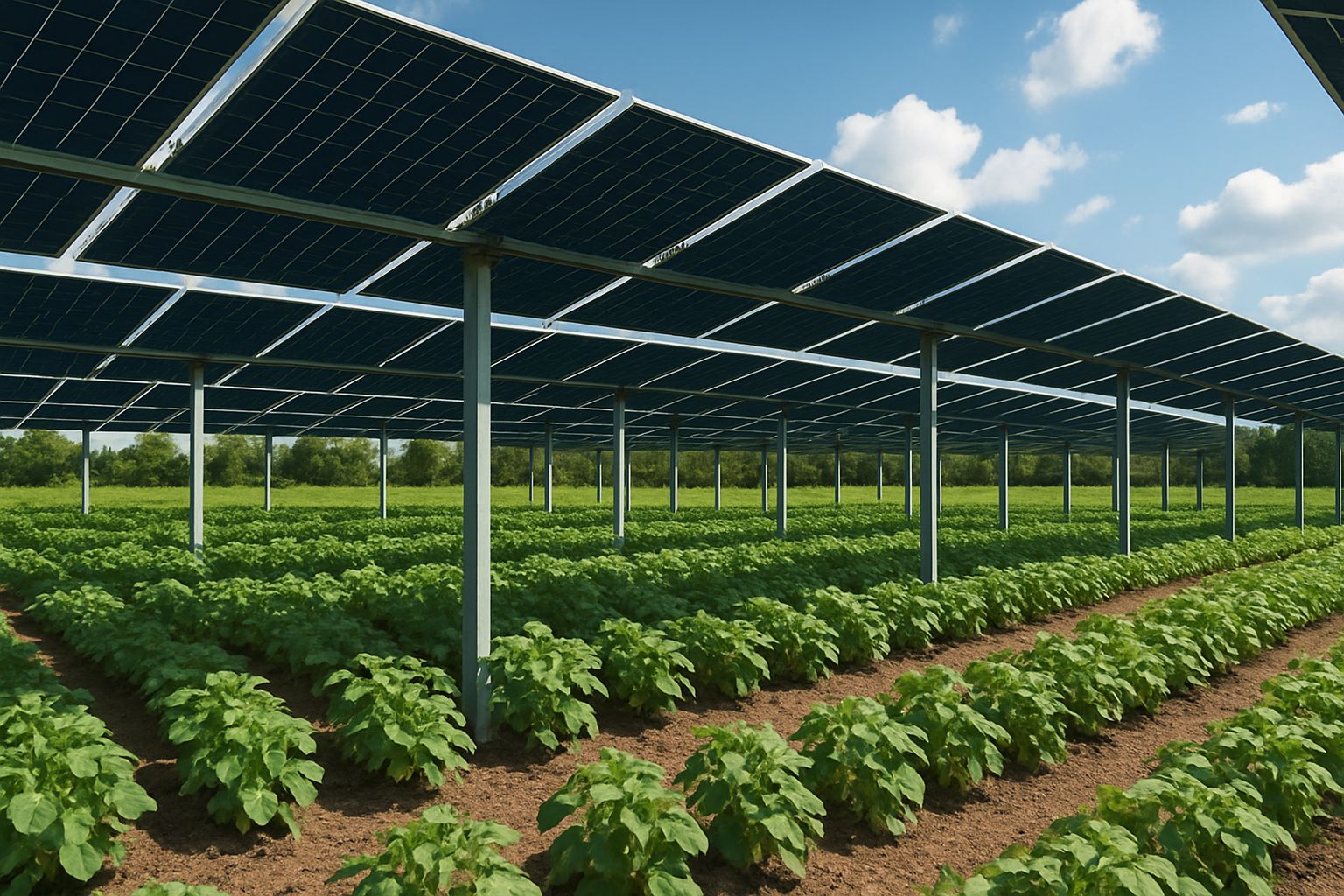
The idea is elegantly simple: mount solar panels at a height that allows crops to grow beneath them, creating a shared environment where both systems benefit each other. What makes this exciting isn’t just the energy savings — it’s the discovery that certain crops actually prefer growing under panels.
Leafy Greens and Root Vegetables Yield 10-30% More Under Solar Panels
The numbers don’t lie. Shade-tolerant crops grown beneath solar arrays consistently outperform their open-field counterparts, particularly during peak summer heat. Studies on agrivoltaic systems show leafy greens demonstrating yield increases of 10-30% compared to crops grown in full sun exposure — a result driven by reduced heat stress, better moisture retention, and a more stable microclimate. Root vegetables and berries follow closely behind, with measurable improvements in both yield consistency and fruit or root quality.
This isn’t a minor improvement — it’s a fundamental shift in how we can think about land productivity. A single acre running an agrivoltaic system produces more food value and more energy value than the same acre used for just one purpose.
Why Solar Panels Create the Perfect Growing Environment
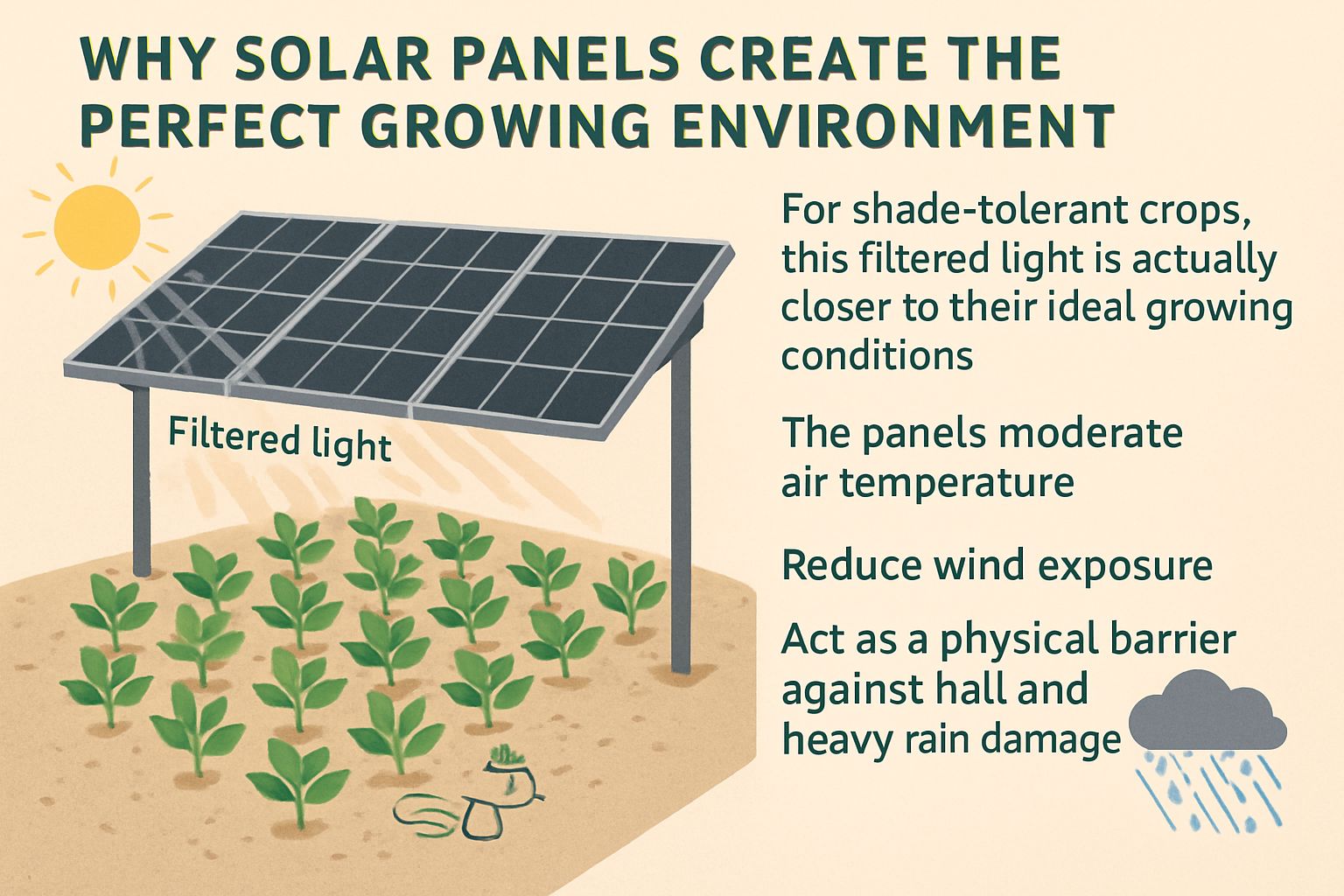
Solar panels do something unexpected when positioned above a crop field: they become environmental regulators. The panels intercept intense direct sunlight, diffusing it into softer, more consistent light conditions below. For shade-tolerant crops, this filtered light is actually closer to their ideal growing conditions than unobstructed full sun. Beyond light management, the panels moderate air temperature, reduce wind exposure, and act as a physical barrier against hail and heavy rain damage.
How Partial Shade Reduces Heat Stress on Crops
Heat stress is one of the leading causes of crop failure and reduced yield in open-field agriculture. When temperatures spike, plants divert energy away from growth and fruit production into survival responses — wilting, early bolting in leafy greens, and poor fruit set in vegetables. The partial shade created by solar panels directly interrupts this stress cycle. By reducing the intensity of solar radiation hitting the plant canopy, panel shade keeps leaf surface temperatures lower, allowing crops to maintain productive photosynthesis rates even during the hottest parts of the day.
Water Retention Improvements of 15-30% Under Panel Coverage
One of the most compelling practical benefits of agrivoltaic farming is what happens to water. The shade cast by solar panels dramatically slows soil surface evaporation — the process responsible for significant irrigation water loss in open fields. Research across multiple climate zones has shown water savings between 14-29% depending on the specific crop and local conditions. In regions where water scarcity is already a pressure point for farmers, this efficiency gain isn’t just economically valuable — it’s a resilience strategy.
The panels also intercept rainfall, creating a more controlled distribution of water to the soil below. Combined with reduced evaporation, this means the soil under an agrivoltaic system stays moist longer between irrigation cycles, reducing the frequency and volume of water applications needed to maintain healthy crops.
Stable Soil Temperature and Moisture Conditions
Root development is directly tied to soil temperature stability. Wild swings between daytime heat and nighttime cold stress root systems and create inconsistent growing conditions that show up as irregular sizing, cracking, and variable maturation times in root crops. Solar panels act as an insulating layer above the soil, dampening these temperature extremes and creating a more consistent underground environment.
Stable soil moisture compounds this benefit. When evaporation is slowed and temperature swings are moderated, the soil maintains a more uniform moisture profile throughout the day. This is particularly important for crops like carrots and beets, where consistent moisture directly translates to more uniform root development and reduces the risk of splitting or bolting.
Beyond just the soil, the overall microclimate under a well-designed agrivoltaic array creates conditions that traditional open-field farming simply cannot replicate without significant infrastructure investment. You’re essentially getting climate modification as a byproduct of energy production.
- Reduced heat stress: Panel shade keeps canopy temperatures lower during peak heat hours
- Lower evaporation rates: Soil stays moist longer, cutting irrigation needs by up to 29%
- Physical crop protection: Panels shield plants from hail, heavy rain, and wind damage
- Stable soil conditions: Moderated temperature swings improve root development and consistency
- Extended growing seasons: Cooler conditions delay bolting in cool-season crops
1. Lettuce
Lettuce is the poster crop of agrivoltaic farming — and for good reason. As a naturally shade-tolerant plant, lettuce responds to the diffused light conditions under solar panels with faster, more consistent growth. The cooler microclimate beneath the panels mimics the conditions lettuce evolved to prefer, resulting in more tender leaves, better color development, and a significantly extended harvest window compared to full-sun growing.
Why Partial Shade Prevents Bolting
Bolting — the process where lettuce prematurely sends up a seed stalk in response to heat — is the number one quality killer in warm-season lettuce production. Once a lettuce plant bolts, the leaves turn bitter and the plant becomes commercially unusable. The shade provided by solar panels directly suppresses the heat trigger that initiates bolting, keeping plants in their vegetative, harvestable state weeks longer than open-field counterparts. For farmers, this means more harvests per season and a dramatically reduced risk of crop loss during summer heat events. Learn more about the benefits of solar panels for farmers.
Longer Growing Season and Higher Yield Potential
The combination of bolt suppression and heat stress reduction extends the productive season for lettuce by several weeks on either end of the traditional growing calendar. Paired with the documented 10-30% yield increase seen in agrivoltaic systems, lettuce under solar panels represents one of the highest-return crop choices available to farmers considering a dual-use land strategy.
2. Spinach
Spinach shares many of lettuce’s shade-tolerant characteristics but brings its own set of advantages to an agrivoltaic setup. Like lettuce, spinach is a cool-season crop that struggles in high heat — but its dense leaf structure and faster growth cycle make it an exceptionally productive option under panels. The moderated temperatures and consistent soil moisture created by solar arrays align almost perfectly with spinach’s preferred growing conditions.
Spinach grown under panels tends to produce darker, more nutrient-dense leaves compared to full-sun crops, a quality improvement driven by the plant’s response to lower light intensity — it produces more chlorophyll to compensate, which concentrates nutrients and deepens leaf color.
How Shade Eliminates Heat Stress in Spinach
Spinach becomes bitter and bolts rapidly when exposed to sustained temperatures above 75°F (24°C). In open fields during summer, this effectively ends the spinach season for most temperate climates. Under solar panels, the shading effect keeps air and soil temperatures low enough to extend spinach production well into summer months that would otherwise be impossible for quality production. This season extension alone can represent a significant revenue increase for market gardeners and commercial spinach producers.
3. Kale
Kale is one of the most resilient leafy greens available, and it translates that resilience into exceptional performance in agrivoltaic systems. Its naturally robust structure handles the variable light conditions under panels without the bolting sensitivity of lettuce or spinach, making it a reliable performer across a wider range of panel configurations and densities. Farmers working with older or more densely packed panel arrays — where light levels may be lower — will find kale to be a forgiving and productive choice.
The flavor profile of kale also improves under partial shade conditions. Reduced light intensity slows the development of some of the more bitter glucosinolate compounds, producing leaves with a milder, more palatable flavor — a quality difference that commands premium prices at farmers markets and through direct-to-consumer sales channels.
4. Broccoli
Broccoli is a cool-season crop that has traditionally been challenging to grow through summer in warm climates. The heat sensitivity of its developing heads — where even brief high-temperature exposure causes yellowing and loose, poor-quality florets — makes it a natural fit for the temperature-moderated environment under solar panels.
How Filtered Sunlight Improves Color and Moisture Retention
Broccoli heads develop best under consistent, moderate light conditions — exactly what solar panels provide. The diffused light reduces the intensity of UV radiation hitting the developing florets, which slows the chlorophyll breakdown that causes yellowing. The result is tighter, deeper green heads with better shelf life and visual appeal. At the same time, the moisture-retentive soil conditions under panels keep broccoli plants hydrated through critical head development stages, reducing the hollow stem and loose floret problems that plague heat-stressed plants.
5. Carrots
Carrots are a root crop that rewards consistency above almost everything else. Inconsistent moisture, temperature swings, and compacted soil are the three biggest causes of forked, cracked, and misshapen carrots in open-field production. Agrivoltaic systems directly address two of those three factors — and when combined with good soil preparation, the growing environment under solar panels produces some of the most uniform, well-developed carrot yields a farmer can achieve.
The shade from panels also slows the soil surface from crusting over — a common problem in direct-sun fields that creates a physical barrier for emerging carrot seedlings. This alone can significantly improve germination rates and stand establishment, which is the foundation of any successful carrot crop.
Why Consistent Soil Conditions Produce More Uniform Growth
When soil temperature and moisture fluctuate dramatically between day and night or between rain and dry periods, carrot roots respond by growing erratically — splitting to chase moisture, forking to avoid hard soil layers, or developing rough, cracked skin. Under solar panels, the moderated soil environment keeps these variables in a much tighter range. Farmers consistently report more uniform sizing, smoother skin, and higher pack-out percentages from agrivoltaic carrot plots compared to open-field production in the same season.
How Panel Shade Reduces Evaporation Around Root Crops
- Slower surface evaporation keeps the top 2-4 inches of soil moist — the critical zone for germination and early root development
- Reduced soil crusting improves seedling emergence rates and reduces the need for mechanical cultivation
- More stable moisture profiles throughout the soil column mean roots grow straight down rather than sideways in search of water
- Lower irrigation frequency reduces the risk of overwatering, which can cause root splitting and fungal disease
These moisture benefits compound over the growing season. Early-stage carrots establish more reliably, mid-season growth is more consistent, and late-season roots mature without the cracking and splitting that often comes with moisture fluctuations in the final weeks before harvest. The end result is a higher percentage of marketable product per row foot — a metric that directly impacts profitability for market gardeners and commercial producers alike.
It’s worth noting that carrot varieties with shorter maturity windows — like Nantes or Chantenay types — tend to show the most pronounced improvements in agrivoltaic systems. Their compact root structure responds especially well to the stable soil environment, producing dense, sweet roots with excellent color development.
The economics here are compelling too. Carrots are a high-volume, lower-margin crop in most markets, meaning small improvements in pack-out percentage and yield consistency have an outsized impact on the bottom line. Reducing irrigation costs by 14-29% while simultaneously improving marketable yield is a combination that makes agrivoltaic carrot production worth serious consideration for any market-scale operation.
If you’re farming in a region with hot, dry summers and clay-heavy soils, the case for growing carrots under solar panels becomes even stronger. The dual benefits of heat buffering and moisture retention directly counteract the two most challenging aspects of summer carrot production in those conditions.
6. Beets and Radishes
Beets and radishes are two of the most reliable performers in agrivoltaic systems, and they’re particularly well-suited to farmers who are just getting started with solar panel cropping. Both crops have short maturity windows — radishes can be harvest-ready in as little as 25 days — which means you can run multiple succession plantings under your panels within a single growing season and accumulate real performance data quickly.
For beets specifically, the stable soil moisture environment under panels directly addresses the most common quality problem in open-field production: internal white rings caused by uneven growth rates triggered by moisture fluctuations. Under panels, beets develop more uniformly, producing roots with consistent color development all the way through and a sweeter flavor profile driven by steadier sugar accumulation during growth. Radishes benefit similarly, developing crisper texture and more predictable sizing when soil conditions stay consistent through their rapid development cycle.
7. Tomatoes
Tomatoes in agrivoltaic systems represent a more nuanced story than leafy greens or root crops — but the results, when the system is configured correctly, are impressive. Tomatoes are full-sun crops by nature, so they require careful panel spacing and height management to ensure they receive enough direct light for strong fruit set. When that balance is achieved, however, the moderated temperature and moisture environment under panels unlocks some of the best tomato quality a farmer can produce.
Why Tomatoes Are Identified as a Top Agrivoltaic Performer
Tomatoes suffer dramatically under sustained high heat. When temperatures exceed 95°F (35°C), pollen becomes non-viable and fruit set effectively stops — a phenomenon called heat-induced blossom drop that can eliminate entire harvest windows during summer heat waves. The temperature buffering effect of solar panels keeps conditions below this critical threshold more consistently than open fields during peak summer heat, directly protecting the fruit-setting process that determines total yield.
Research and field reports from agrivoltaic operations identify tomatoes as high-priority candidates because of their value per unit area and their sensitivity to exactly the climate variables that solar panels moderate. A system that protects tomato crops through two or three heat events per season can recover its infrastructure costs through yield protection alone — before accounting for the energy revenue generated by the panels above. For more insights on this topic, check out crops that thrive under solar panels.
How Moderated Temperatures Boost Tomato Yields
Beyond blossom drop protection, cooler growing temperatures under panels reduce the incidence of blossom end rot — a calcium deficiency disorder triggered not by actual calcium scarcity in the soil but by irregular water uptake caused by heat stress and inconsistent moisture. By moderating both temperature and soil moisture simultaneously, agrivoltaic systems address blossom end rot at its root cause rather than requiring the supplemental calcium sprays that open-field growers often rely on.
The practical outcome is more consistent fruit development across the entire plant, better sizing uniformity, and lower rates of cosmetic defects — all of which translate directly into higher pack-out percentages and stronger returns at market. For farmers interested in optimizing their operations, exploring solar panel power solutions can be a beneficial step.
8. Strawberries
Strawberries are one of the most economically exciting crops for agrivoltaic systems, combining high market value with a growth profile that genuinely benefits from solar panel shade. As a naturally woodland-edge plant, the strawberry evolved under partial canopy cover — which means the dappled light conditions created by solar panels are closer to the strawberry’s native environment than the full-sun monoculture fields where they’re typically grown commercially. For farmers interested in maximizing their crop yield, understanding the key elements of farm solar panel systems can be essential.
The combination of heat protection, physical weather shielding, and moisture retention that solar panels provide maps almost perfectly onto strawberry’s key vulnerability points. Sunburn on developing fruit, heat stress during flowering, and soil moisture inconsistency are the three most common quality and yield issues in commercial strawberry production — and agrivoltaic systems address all three simultaneously.
Strawberries also benefit from the physical protection that panel structures provide against birds and some insect pressure. While not a replacement for dedicated pest management, the partial enclosure effect of a well-designed agrivoltaic structure reduces exposure to some of the most damaging pest species that target ripening strawberry fruit in open fields.
- Heat stress protection during critical flowering and fruit-set windows
- Reduced sunburn on developing and ripening fruit surfaces
- Consistent soil moisture supporting uniform fruit sizing and sugar development
- Physical weather protection from hail and heavy rainfall damage
- Partial reduction in bird and insect pest pressure on ripening fruit
Protection From Sunburn and Heat Stress
Strawberry fruit sunburn — the white or pale yellow bleaching that appears on fruit exposed to intense direct sun — is a significant quality issue in warm-climate production, often rendering 10-20% of a crop unmarketable in peak summer conditions. The diffused light environment under solar panels eliminates this problem almost entirely, allowing fruit to develop full color and flavor without the surface damage that degrades visual appeal and shelf life.
Improved Fruit Quality Under Partial Shade
One of the more surprising findings from agrivoltaic strawberry production is the impact on sugar content and flavor intensity. When strawberries develop under partial shade with consistent soil moisture, they tend to accumulate sugars more steadily and evenly than fruit grown under intense sun with fluctuating water availability. The result is fruit with deeper, more complex flavor — a quality premium that commands higher prices at farmers markets and through direct sales.
Color development also improves under panels. Without the bleaching effect of intense UV radiation, strawberries develop deeper, more uniform red pigmentation across the entire fruit surface. This visual quality difference is immediately apparent to consumers and drives stronger sales in any direct-market context.
For small-scale and specialty producers targeting premium markets, the quality improvements in agrivoltaic strawberry production may be more financially significant than the yield increase alone. Selling deeply colored, intensely flavored strawberries at a premium price point to farmers market customers who can see and taste the difference is a market positioning strategy that agrivoltaic production directly enables.
9. Mushrooms
Mushrooms represent perhaps the most intuitive fit for agrivoltaic systems of any crop on this list. As organisms that evolved in shaded forest environments, mushrooms require low light levels, high humidity, stable temperatures, and protection from direct sunlight — a description that reads almost identically to the microclimate created under a well-configured solar array.
The shaded, moisture-retentive environment under solar panels eliminates many of the environmental control challenges that make mushroom cultivation expensive and technically demanding in open or conventional greenhouse settings. Growers who have struggled with temperature and humidity management in traditional mushroom houses often find the natural regulation provided by a solar array reduces both infrastructure requirements and energy costs for climate control.
- Oyster mushrooms — fast-growing, high-yield, tolerant of variable humidity levels
- Shiitake mushrooms — premium market value, ideal for log-based cultivation in shaded conditions
- Wine cap mushrooms (Stropharia) — ground-cultivated, excellent for wood chip beds between panel rows
- Lion’s mane mushrooms — specialty market premium, performs well in stable low-light environments
The economic case for mushrooms in agrivoltaic systems is compelling. Specialty mushrooms command some of the highest per-pound returns of any crop that can be produced on a small footprint, and the low-light requirement means they can be grown in the deepest shade zones under panels where other crops would struggle — effectively monetizing growing space that would otherwise be unproductive. Learn more about crops that thrive under solar panels.
Why the Shaded Microclimate Suits Mushroom Cultivation
Direct sunlight is actively harmful to most edible mushroom species during their fruiting stage. UV radiation damages developing fruiting bodies, causing discoloration, reduced yields, and quality degradation. The shade provided by solar panels creates a natural UV barrier that protects fruiting mushrooms without requiring the shade cloth, greenhouse coverings, or indoor growing infrastructure that conventional mushroom operations depend on.
Humidity retention under panels further supports mushroom development. As soil moisture evaporates slowly in the shaded environment, it creates a naturally elevated relative humidity in the air directly beneath the panels — often maintaining the 80-95% humidity levels that mushroom fruiting bodies require without supplemental misting systems. For growers in humid climates, this natural humidity management can make outdoor agrivoltaic mushroom production viable with minimal additional infrastructure investment.
10. Fresh Herbs
Fresh herbs are an underutilized opportunity in agrivoltaic systems, and for market gardeners focused on high-value crops, they deserve serious attention. Many of the most commercially valuable culinary herbs — including cilantro, parsley, chervil, and mint — are naturally shade-tolerant and actually produce better quality leaf material under reduced light intensity than in full sun. The cooler, more humid microclimate under solar panels slows the essential oil volatilization that causes herbs to lose flavor intensity in hot, open-field conditions, resulting in more aromatic, flavorful product that commands premium prices.
The financial case for herbs in agrivoltaic systems is particularly strong when you consider the value per square foot. Specialty culinary herbs can generate significantly more revenue per unit area than most vegetable crops, and their short production cycles allow for multiple harvests per season. For farmers who are evaluating which crops to establish under new solar installations, fresh herbs often offer the fastest path to positive cash flow while longer-term crops like strawberries and perennial vegetables become established. Additionally, understanding the benefits of solar panels for farmers can further enhance the decision-making process.
Which Herbs Perform Best in Agrivoltaic Systems
Not all herbs respond equally well to reduced light conditions. The strongest performers in agrivoltaic setups are herbs that naturally grow in dappled or partial shade in their native environments. Cilantro benefits enormously — its tendency to bolt in heat is directly suppressed by panel shade, extending the harvest window significantly. Parsley produces denser, more deeply colored leaves under panels. Mint thrives in the moist, shaded conditions and can become highly productive, though its spreading habit requires management. Chervil, often overlooked commercially, is almost perfectly suited to agrivoltaic conditions and commands strong prices in specialty and restaurant markets. Basil requires more careful placement — it needs warmth and some direct light — but in configurations where panels allow morning sun and afternoon shade, it can produce excellent quality through summer heat events that would normally damage open-field crops.
How to Choose the Right Crop for Your Solar Setup
The single most important decision in agrivoltaic farming isn’t which crop is theoretically best — it’s which crop is best for your specific system. Panel height, spacing, orientation, local climate, soil type, and existing market relationships all shape which crops will genuinely thrive and deliver economic returns in your setup. Getting this matching process right from the beginning saves you from the frustration of investing in a crop that struggles simply because it was planted under the wrong configuration. For more information on optimizing your setup, consider exploring the key components of a farm solar panel system.
Match Shade Tolerance to Your Panel Configuration
Panel density is the primary variable that determines light levels at the crop canopy below. A sparse array with wide panel spacing and elevated mounting height — common in purpose-built agrivoltaic systems — can allow 40-60% of ambient light to reach the ground, opening up a much wider range of viable crops including fruiting vegetables like tomatoes and peppers. A denser, lower array — more typical of retrofitted or energy-optimized installations — may only transmit 20-30% of ambient light, which shifts the optimal crop list firmly toward deep shade-tolerant species like leafy greens, mushrooms, and certain herbs. Measure your actual light transmission before committing to a crop plan. For more insight, check out 5 crops that thrive under solar panels.
Why High-Value Specialty Crops Recover Investment Costs Fastest
The economics of agrivoltaics favor crops with high per-unit market value. Specialty mushrooms, fresh herbs, strawberries, and premium salad greens generate more revenue per square foot than commodity crops like grain corn or soybeans — and that revenue differential is what makes the additional infrastructure investment in a dual-use system financially viable for most operations. Farmers who plant high-value specialty crops in their agrivoltaic systems consistently report faster return on investment timelines than those who try to fit conventional commodity crops into the system.
Climate Zone Considerations for Crop Selection
Your climate zone shapes the benefit equation differently depending on where you farm. In hot, arid regions — USDA zones 8 through 11 — the heat buffering and water retention benefits of solar panel shade are most pronounced, and crops like lettuce, spinach, and strawberries gain the most dramatic performance improvements compared to open-field production. In cooler, more temperate zones — zones 5 through 7 — the temperature moderation effect is smaller, but moisture retention and physical weather protection remain significant advantages, particularly for extending the shoulder seasons in spring and fall.
In humid subtropical and tropical climates, the fungal disease pressure that comes with high moisture under panels becomes a management consideration that shapes crop selection. Crops with good airflow between plants and natural disease resistance — like kale, certain mushroom species, and vigorous herbs — perform more reliably than dense, low-growing crops that can trap humidity at the soil surface. Tailoring your crop list to both your light levels and your climate’s specific challenges is the difference between an agrivoltaic system that underperforms and one that consistently delivers on its potential.
Land-Use Efficiency Increases 60-70% With Agrivoltaic Systems
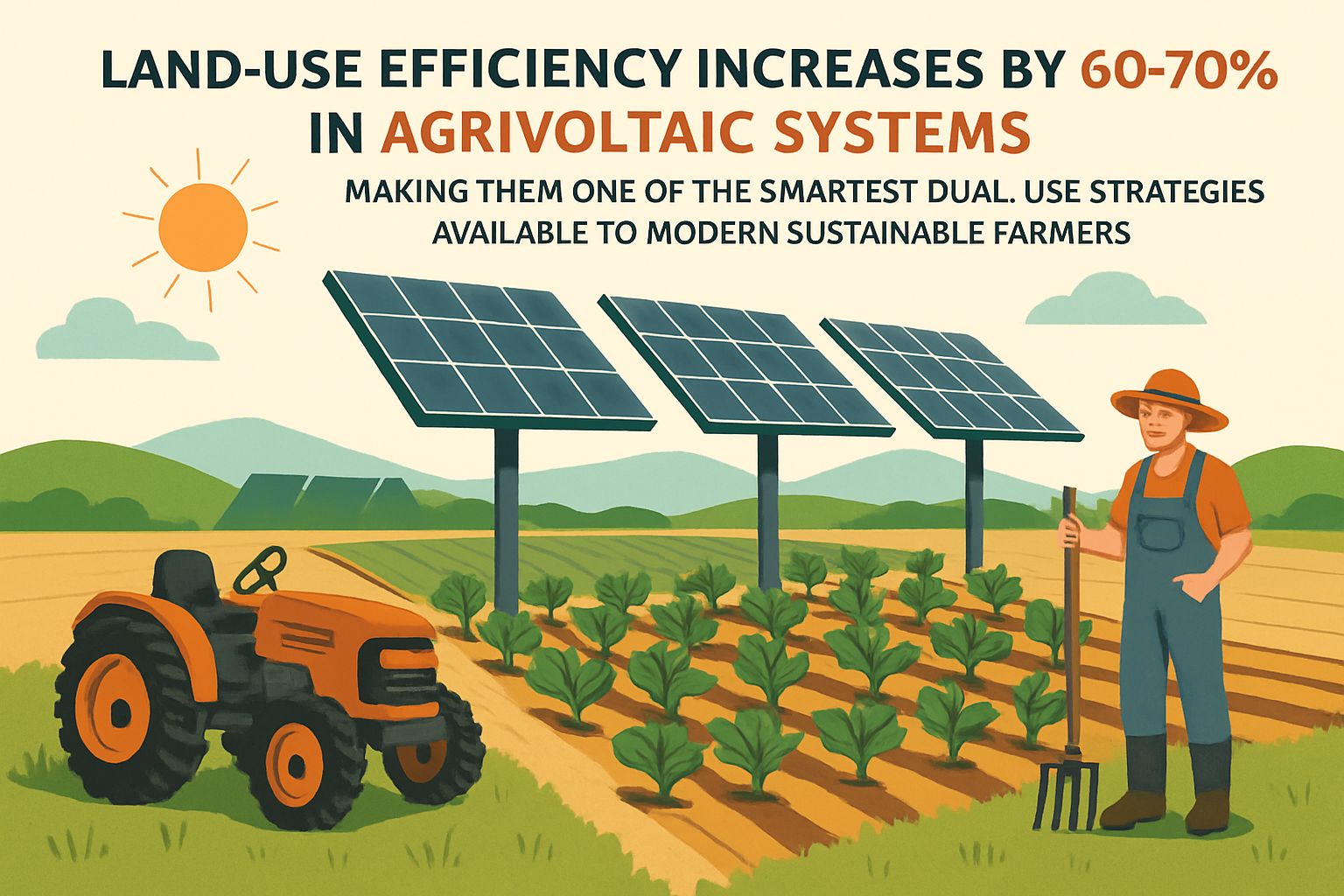
When researchers measure the combined output of food and energy from an agrivoltaic system against the separate land area that would be required to produce the same amounts of each independently, the efficiency gain is striking: well-designed agrivoltaic systems achieve 60-70% greater land-use efficiency than single-purpose land use. This metric — known as the Land Equivalent Ratio — captures the true value of dual-use farming in a way that single-output comparisons miss entirely. For sustainable agriculture advocates, this number represents one of the most compelling arguments for agrivoltaics as a mainstream farming strategy: more food, more energy, and more ecological function from every acre of land put into production.
Frequently Asked Questions
If you’re exploring agrivoltaics for the first time, these are the questions that come up most consistently — answered directly based on current research and field experience.
What Is Agrivoltaics and How Does It Work?
Agrivoltaics is the practice of co-locating solar photovoltaic energy production and agricultural crop production on the same land area simultaneously. Solar panels are mounted at sufficient height and spacing to allow crops to grow beneath them, while the panels generate electricity above. The system creates a shared microclimate where both operations benefit — crops receive shade, temperature moderation, and moisture retention, while the vegetation below creates an evaporative cooling effect that can improve solar panel efficiency by reducing panel surface temperatures by 8-10°F during peak heat hours.
Do Solar Panels Produce Enough Shade for Crops to Grow Underneath?
Yes — and in many cases, the shade produced is actually the ideal amount for shade-tolerant crops. The percentage of light transmitted to the ground beneath panels depends on panel density, tilt angle, mounting height, and spacing. Purpose-built agrivoltaic arrays are typically designed to transmit 30-60% of ambient light, which falls within the optimal growing range for leafy greens, root vegetables, berries, herbs, and mushrooms. Even denser configurations that transmit less light support productive mushroom cultivation and deep shade-tolerant herb production. For farms looking to optimize energy use, solar panel system components are key elements in farm operations.
Which Crops Should Beginners Start With in an Agrivoltaic System?
For farmers new to agrivoltaic production, starting with fast-cycling, shade-tolerant crops is the most practical approach. Radishes are an ideal first crop — their 25-30 day maturity window means you can complete multiple growing cycles in a single season and quickly observe how your specific panel configuration affects plant development. Lettuce and spinach are equally strong starting points, offering clear visual feedback on how the system’s microclimate is performing and delivering saleable product within 45-60 days of planting.
Once you’ve run one to two seasons with fast-cycling greens and developed a feel for your system’s light levels, temperature patterns, and moisture behavior, you’ll have the practical knowledge base to confidently expand into higher-value crops like strawberries, specialty mushrooms, or premium herbs. Starting simple isn’t about thinking small — it’s about building the site-specific understanding that makes every subsequent crop decision more informed and more profitable. For more information on integrating solar solutions, check out solar panel power solutions for farms.
Does Growing Crops Under Solar Panels Affect Energy Output?
- Evaporative cooling from vegetation reduces panel surface temperatures by 8-10°F, which can increase energy output compared to panels over bare ground
- Taller panel mounting heights required for crop access do not meaningfully reduce energy generation
- Wider panel spacing in agrivoltaic configurations reduces total panel density per acre but is offset by per-panel efficiency gains from cooling
- Dust and soiling reduction from vegetated ground cover beneath panels keeps panel surfaces cleaner than bare soil installations
The relationship between crops and solar panel performance is more positive than most people expect. Rather than competing with energy production, the living plant material beneath panels actively supports it through the cooling mechanism described above. Research has consistently shown that panels mounted over vegetated surfaces in agrivoltaic systems outperform equivalent panels mounted over bare or gravel-covered ground in warm climates.
The practical implication is that the agricultural component of an agrivoltaic system isn’t just economically neutral from an energy perspective — it’s actively beneficial. Farmers and landowners considering agrivoltaic installations can approach the crop component as an enhancement to their energy investment rather than a trade-off against it.
This dynamic is particularly pronounced in hot, sunny climates where panel overheating is a meaningful efficiency concern. In those environments, the cooling effect of crops growing below panels can translate into measurable annual energy production gains — turning what seems like a compromise between food and energy into a genuine win-win outcome for both systems operating simultaneously on the same land.
How Much Water Can You Save by Growing Crops Under Solar Panels?
Research across multiple climate zones and crop types has documented water savings of 14-29% in agrivoltaic systems compared to equivalent open-field production. The primary mechanism is reduced soil evaporation — the shade cast by panels dramatically slows moisture loss from the soil surface, keeping the root zone hydrated longer between irrigation events. Secondary benefits come from reduced plant transpiration rates driven by lower air temperatures and wind speeds under the panel canopy.
In practical terms, a 20% reduction in irrigation water use across a multi-acre agrivoltaic operation represents significant cost savings in both water purchasing and pumping energy — savings that compound over every growing season the system operates. In regions where water access is restricted by cost, availability, or regulatory allocation, this efficiency gain can be the deciding factor in whether a farming operation remains viable through drought years.
For sustainable agriculture advocates, the water dimension of agrivoltaics may be its most important long-term contribution. As climate change continues to intensify drought frequency and severity across major agricultural regions, farming systems that produce the same or greater food output with significantly less water aren’t just economically attractive — they’re a critical part of building agricultural resilience for the decades ahead. Growing crops under solar panels is one of the most immediately actionable steps a farmer can take toward that goal.
If you’re ready to explore how agrivoltaic systems can work on your land, 8760 Solar provides expert guidance on designing solar installations that maximize both energy production and agricultural potential for your specific property and goals.


Leave a Reply