

Key Takeaways
Solar panels can provide shade for farm animals, reducing heat stress and improving their overall well-being.
Using solar-powered irrigation systems can ensure a consistent water supply, even in remote areas.
Solar technology reduces dependency on fossil fuels, promoting sustainable farming practices.
Farmers can save on energy costs by utilizing solar power for irrigation and other farm needs.
Implementing solar panels on farms can enhance biodiversity and improve land use efficiency.
The Impact of Solar Panels for Farm Animals
Solar panels are more than just a tool for generating electricity. When integrated into farming, they can significantly impact the well-being of farm animals. By providing shade and supporting sustainable irrigation systems, solar panels can transform how we approach animal welfare on farms.
Introduction to Solar Panels in Farming
Farming has traditionally relied on natural resources, and with the increasing demand for sustainability, solar panels have emerged as a vital component. Solar panels can be strategically placed to maximize sunlight capture, converting it into energy that powers various farm operations. This renewable energy source not only cuts costs but also reduces environmental impact.
Most importantly, the introduction of solar panels into farming is a step towards energy independence. Farmers can harness the sun’s power to run irrigation systems, ensuring that their crops and animals have the water they need, regardless of the weather conditions.
Basic Concept of Using Solar Panels to Help Farm Animals
Solar panels can be used to create a more comfortable environment for farm animals. By providing shade, they help reduce heat stress, which is crucial during hot weather. Animals like cows, sheep, and goats benefit greatly from shaded areas as it allows them to graze comfortably and stay hydrated.
Besides that, solar panels can power irrigation systems, ensuring a steady water supply. This is particularly beneficial in remote areas where traditional power sources may be unreliable. By using solar energy, farmers can maintain consistent water availability, promoting healthier livestock.
Benefits for Using a Solar Irrigation System for Farm Animals
Implementing a solar irrigation system offers numerous advantages. Firstly, it ensures that water is available even in off-grid locations. This means that farms situated in remote areas can still provide their animals with the necessary hydration.
Secondly, solar irrigation systems are cost-effective. While the initial setup may require an investment, the long-term savings on energy costs are substantial. Farmers can divert these savings to other areas of their operations, enhancing overall farm productivity.
Moreover, using solar power aligns with sustainable practices. It reduces the farm’s carbon footprint, making it an eco-friendly choice. By adopting solar technology, farmers contribute to environmental conservation while ensuring the welfare of their animals.
Here’s a table discussing how solar panels can benefit livestock:
|
Benefit |
Description |
|---|---|
|
Shade Provision |
Solar panels installed in pastures provide necessary shade for livestock during hot summer months, helping to decrease body temperatures in the afternoons. 2, 3 |
|
Improved Land Use |
Agrivoltaic systems allow for both renewable energy production and livestock grazing on the same piece of land, increasing overall land efficiency. 2, 3 |
|
Increased Farm Income |
Farmers can generate additional income by selling solar energy to electric cooperatives while maintaining livestock operations. 3 |
|
Expanded Grazing Area |
Livestock owners can enter grazing contracts with solar site owners, effectively increasing pasture acreage without purchasing or renting additional land. 2, 3 |
|
Water Retention |
Soil shaded by solar panels may retain more moisture, potentially improving pasture quality for grazing animals. 2, 3 |
|
Reduced Energy Costs |
Installing solar panels on farmland can decrease a farm’s energy expenses, indirectly benefiting livestock operations. 2, 3 |
|
Sustainable Practices |
Combining solar energy with livestock farming contributes to more sustainable agricultural practices. 1 |
|
Dual-Purpose Land Use |
Solar panels allow for both energy production and calf-raising on the same acreage, maximizing land utility. 1, 2 |
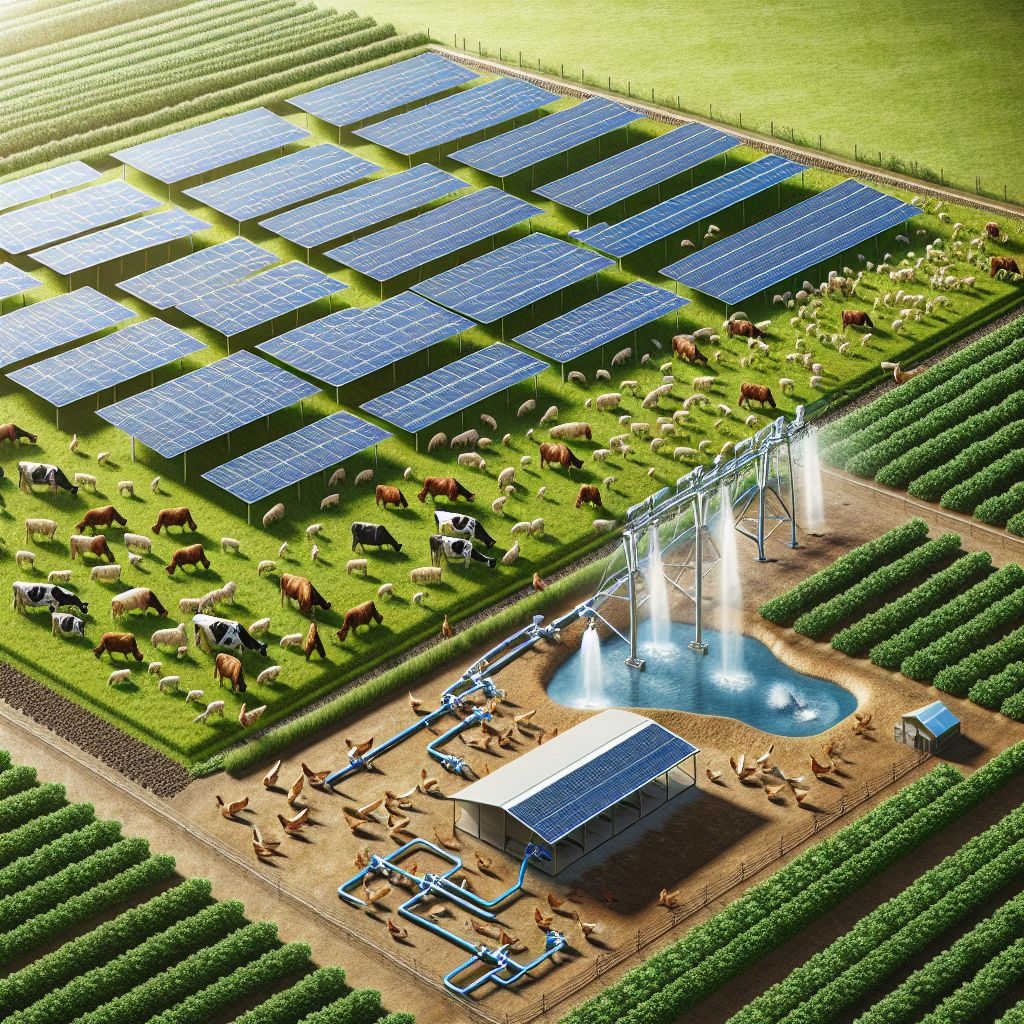
Improved Animal Welfare Through Shade and Water Access
The integration of solar panels with irrigation systems represents a step towards a more compassionate and sustainable agricultural landscape. By providing essential shade and enhancing water availability, farmers can significantly improve the welfare of livestock while promoting eco-friendly energy practices. As we reflect on the future of farming, it is clear that investing in renewable resources not only benefits our planet but also fosters the well-being of the animals we raise. In a world where agricultural challenges continue to grow, innovative solutions like solar-powered irrigation systems will pave the way for healthier animals and a more sustainable farming future.
Providing Necessary Shade for Livestock
Livestock, particularly in regions with extreme temperatures, can suffer from heat stress, which adversely affects their health and productivity. Shade plays a critical role in providing relief from the harsh sun, and solar panels can offer a practical solution. By strategically placing solar panels across grazing areas, farmers can create shaded zones that provide livestock the respite they need to stay cool during the hot months.
Moreover, shade can promote better feed intake and weight gain, as animals are less likely to seek shelter elsewhere or expend energy trying to cool themselves. Enhanced comfort also leads to improved overall well-being and reduces the risk of sunburn or heat-related ailments, contributing to healthier, more productive animals.
Enhancing Water Availability Through Solar Irrigation for Farm Animals
Access to clean, fresh water is crucial for farm animals, directly impacting their health, growth, and reproduction. Traditional irrigation methods can be inefficient and subject to reliance on uncertain energy sources. However, integrating solar panels with irrigation systems ensures a reliable supply of water using renewable energy.
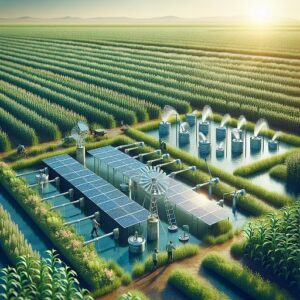
Solar-powered irrigation systems can pump water from wells, reservoirs, or other sources directly to where it’s needed on the farm. This capability not only saves time and labor but also ensures that animals have consistent access to water throughout the day. Additionally, solar irrigation can be adapted to provide water to multiple pastures, allowing for better grazing management, and reducing soil degradation and overgrazing in specific areas.
Energy Independence and Sustainable Practices
Implementing solar panels on farms offers an avenue to energy independence. By harnessing the sun’s power, farmers can reduce their reliance on fossil fuels and mitigate the rising costs of energy. This transition to renewable energy sources aligns with sustainable farming practices that prioritize animal welfare, ecological balance, and waste reduction.
Aside from the direct benefits to livestock, using solar energy can lower the operational costs of running farms, allowing farmers to reinvest those savings into better animal care, enhanced veterinary services, and improved feed quality. In essence, embracing technology such as solar panels and innovative irrigation systems can create a win-win situation for both farmers and their animals.

Case Studies on Solar Panels and Animal Welfare
Real-world examples highlight the transformative impact of solar panels on farm animal welfare. These case studies provide insights into how farmers have successfully integrated solar technology to improve the conditions for their livestock.
One such case is a dairy farm in California that installed solar panels to provide shade for its cows. The panels not only generated electricity but also created a cooler environment, reducing heat stress among the cattle. As a result, the farm reported a significant increase in milk production and a decrease in veterinary costs.
Successful Implementations and Results
Several farms have implemented solar panels with impressive results. For instance, a sheep farm in Texas used solar panels to power its irrigation system, ensuring a steady supply of water even during drought conditions. This move not only improved the health of the sheep but also enhanced the quality of the pasture.
A poultry farm in Iowa integrated solar panels to maintain optimal temperature and humidity levels in its chicken coops. This led to healthier chickens and higher egg production.
In Australia, a cattle ranch utilized solar panels to operate water pumps, providing consistent access to drinking water for the livestock. This innovation reduced the ranch’s reliance on traditional power sources and lowered operational costs.
These examples demonstrate that solar technology can be tailored to meet the specific needs of different farms, improving animal welfare and farm productivity.
Importantly, these successful implementations showcase the adaptability of solar solutions in diverse agricultural settings. Farmers have found that with the right approach, solar panels can be a game-changer for animal welfare.
Challenges Faced and Overcome
While the benefits are clear, integrating solar panels into farm operations does come with challenges. Farmers often face initial financial hurdles due to the cost of installation. However, many have overcome this by accessing government grants and subsidies designed to promote renewable energy use in agriculture.
Lessons Learned from Other Farmers
Farmers who have successfully integrated solar panels emphasize the importance of proper planning and consultation. Engaging with experts to design a system tailored to the farm’s specific needs can make a significant difference. Additionally, considering the local climate and geography is crucial to maximize the efficiency of solar installations.
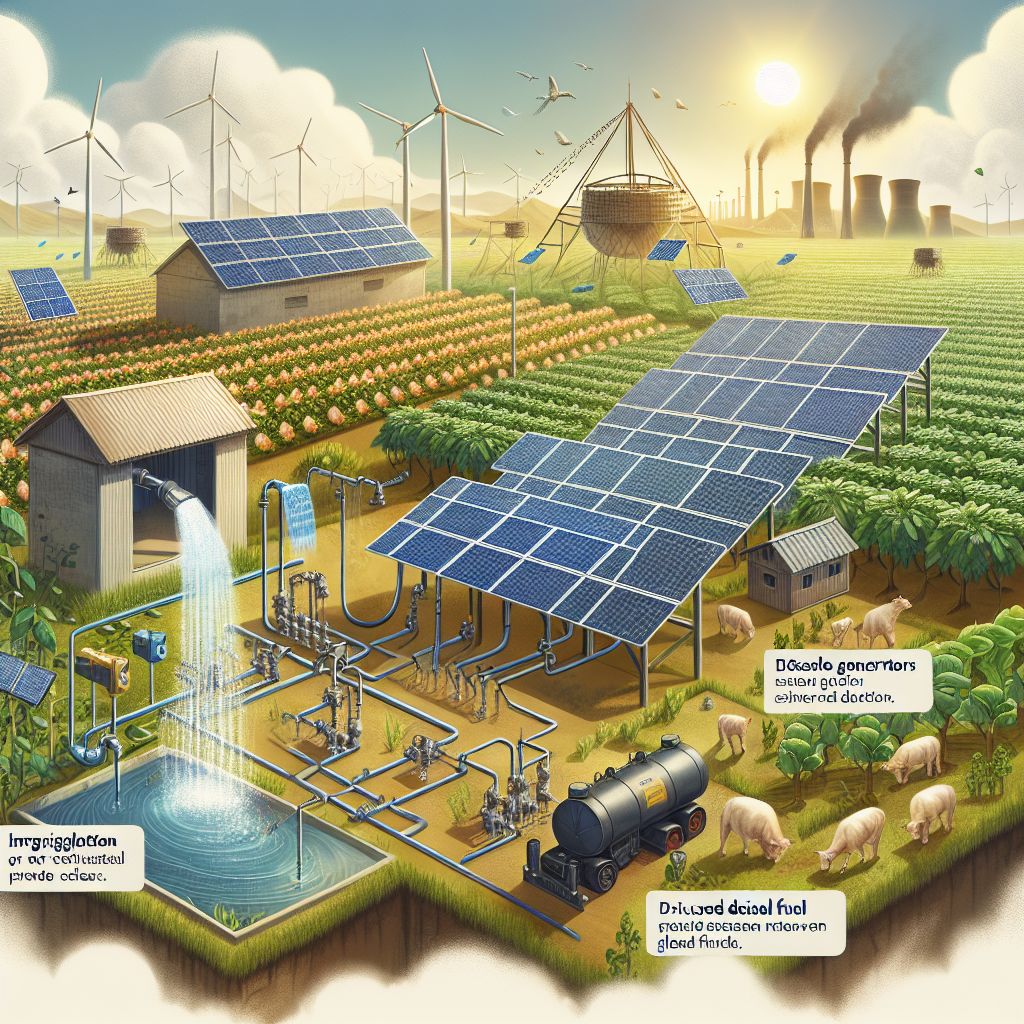
Environmental Benefits of Using Solar Panels and Irrigation
Beyond the immediate advantages for farm animals, solar panels and irrigation systems offer significant environmental benefits. By reducing reliance on fossil fuels, these technologies contribute to a more sustainable farming practice.
Decreased Carbon Footprint with Renewable Energy
Solar panels generate clean energy, which significantly reduces a farm’s carbon footprint. By replacing diesel generators and other fossil fuel-based energy sources, farms can lower their greenhouse gas emissions. This shift is crucial in the fight against climate change and aligns with global efforts to reduce carbon emissions.
Moreover, the transition to renewable energy can enhance a farm’s reputation as an environmentally responsible operation, potentially attracting eco-conscious consumers.
Improved Land Use and Biodiversity
Solar panels can be strategically placed to optimize land use. By utilizing areas that are not suitable for crops, such as rooftops or non-arable land, farmers can make better use of their available space. This approach not only maximizes energy production but also preserves arable land for agriculture.
Water Conservation Techniques
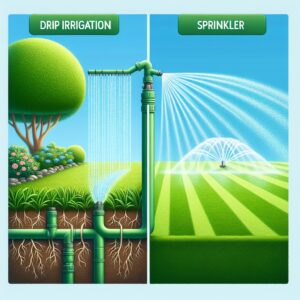
Solar-powered irrigation systems promote water conservation by allowing precise control over water distribution. This technology can be programmed to deliver water at optimal times, reducing waste and ensuring that crops and animals receive the right amount of hydration. For more insights, explore how solar panels benefit agriculture.
In addition, solar irrigation systems can be equipped with sensors to monitor soil moisture levels, further enhancing water efficiency. These systems help farmers adapt to changing climate conditions and safeguard their resources for future use.
Conclusion and Future Outlook
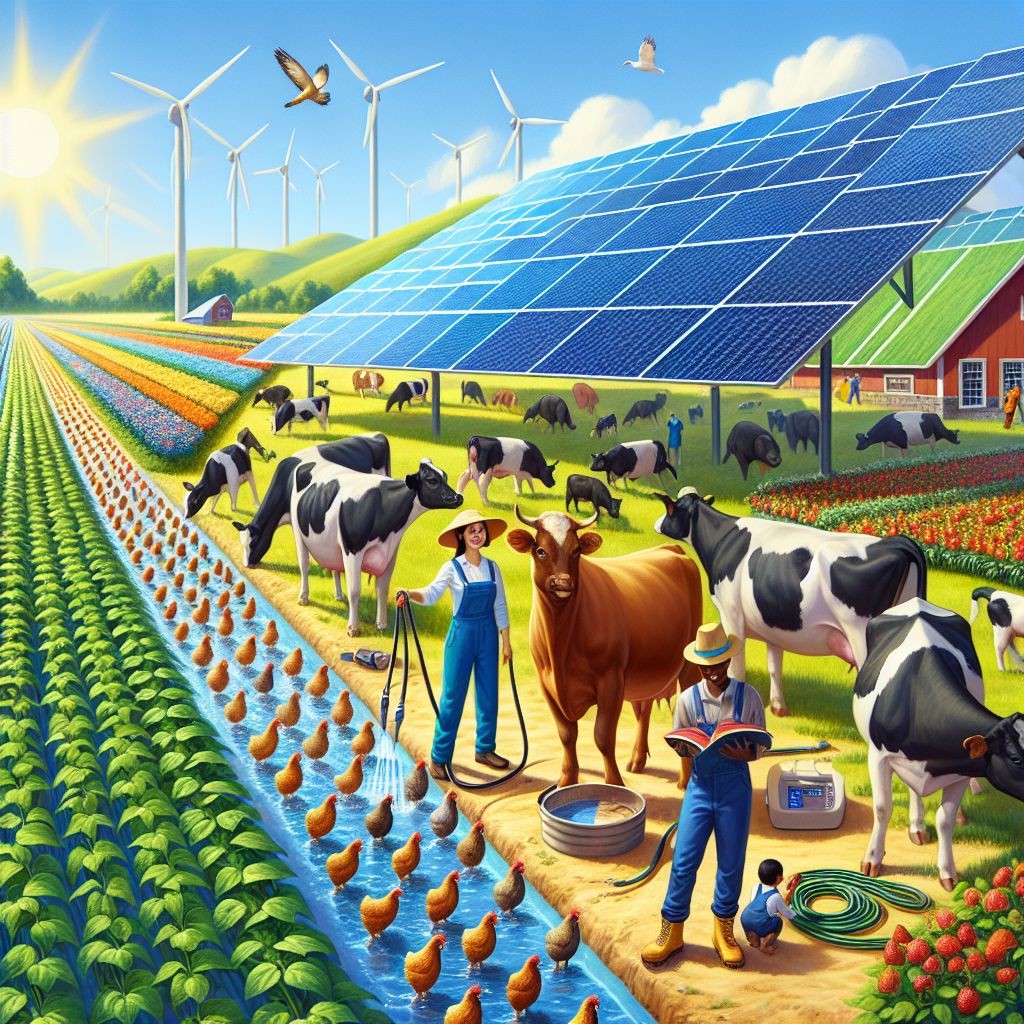
In conclusion, solar panels offer a multitude of benefits for farm animals and the environment. By providing shade and powering irrigation systems, they improve animal welfare and promote sustainable farming practices. The transition to solar energy is not only a cost-effective solution but also an environmentally responsible choice.
Looking ahead, the future of farming lies in embracing renewable technologies. As solar technology continues to advance, it will become increasingly accessible and efficient, paving the way for more farms to adopt these sustainable practices.
Farmers are encouraged to explore the potential of solar panels on their operations. By doing so, they contribute to a more sustainable agricultural industry and ensure the well-being of their livestock.
Summarizing the Benefits of Using Solar Irrigation Systems with Farm Animals
Solar irrigation systems provide a myriad of benefits to farm animals and the environment. By utilizing solar panels, farms can offer shade to livestock, reducing heat stress and improving their overall health. These systems ensure a consistent water supply, even in remote areas, enhancing animal welfare. Additionally, the use of solar power cuts down on energy costs and reduces reliance on fossil fuels, promoting sustainable farming practices. Implementing solar panels also supports biodiversity and efficient land use, contributing to a more eco-friendly agricultural industry.
The Future of Farming with Solar Technologies
The future of farming is bright with the integration of solar technologies. As advancements in solar technology continue, it will become more accessible and efficient, enabling more farms to adopt these sustainable practices. The shift towards renewable energy not only benefits the environment but also enhances farm productivity and animal welfare.
Farmers who embrace solar technology are paving the way for a more sustainable agricultural industry. By investing in solar panels, they ensure the well-being of their livestock and contribute to global efforts to combat climate change. The transition to solar energy represents a significant step forward in creating a more resilient and sustainable farming sector.
Encouragement for Sustainable Practices
Farmers are encouraged to explore the potential of solar panels on their operations. By doing so, they not only improve the welfare of their animals but also contribute to a more sustainable agricultural industry. Solar technology offers a cost-effective and environmentally responsible solution that aligns with the growing demand for sustainability in farming.
Adopting solar panels is an investment in the future, ensuring that farms remain productive and resilient in the face of changing climate conditions. By embracing renewable energy, farmers can lead the charge towards a more sustainable and environmentally conscious agricultural sector.
Frequently Asked Questions (FAQ)
As farmers consider integrating solar technology into their operations, several questions may arise. Below are some of the most common inquiries and their answers.
How do solar panels influence the farm animals’ living conditions?
Solar panels can significantly improve farm animals’ living conditions by providing shade and reducing heat stress. This allows animals to maintain a healthy body temperature, leading to better overall health and productivity. Additionally, solar-powered irrigation systems ensure a consistent water supply, further enhancing animal welfare.
What are the long-term cost implications for farmers?
While the initial installation of solar panels may require an investment, the long-term savings on energy costs are substantial. By reducing reliance on traditional power sources, farmers can lower their operational expenses and allocate resources to other areas of their operations. Over time, the cost savings and environmental benefits make solar technology a worthwhile investment.
Are there specific types of farms that benefit more?
Farms in remote areas or regions with high solar exposure stand to benefit significantly from solar technology. These farms can leverage solar power to maintain a consistent water supply and reduce energy costs. However, solar panels can be tailored to meet the needs of various farm types, making them a versatile solution for enhancing sustainability and productivity.
What other aspects on a farm can adding solar panels help a farmer’s efficiency?
In addition to providing shade and powering irrigation systems, solar panels can support various farm operations. They can be used to power equipment, lighting, and other essential functions, reducing reliance on grid electricity. This not only cuts costs but also ensures that farms remain operational even in the event of power outages, enhancing overall efficiency and resilience. Learn more about solar panels for farms and how they contribute to sustainability.
By exploring the potential of solar technology, farmers can improve their operations and contribute to a more sustainable agricultural industry. The benefits of solar panels extend beyond energy savings, offering a comprehensive solution for enhancing farm productivity and animal welfare.


Leave a Reply