
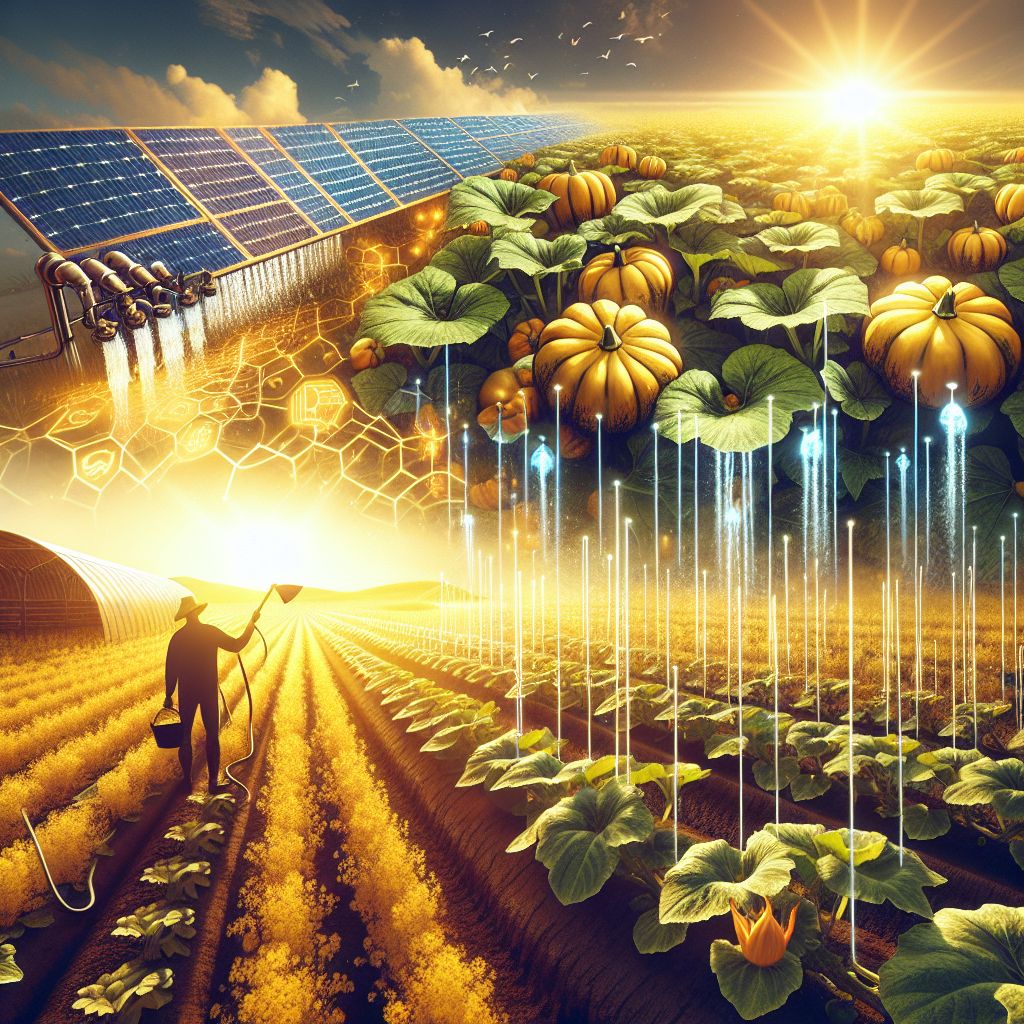
Picture the sun’s rays not only feeding your squash plants, but also running the system that provides them with water. Solar-powered irrigation is a revolutionary tool for squash farmers looking to grow their crops in an eco-friendly manner. It’s a cutting-edge method to guarantee your squash flourishes, while also lowering energy bills and shrinking your carbon footprint. Before we dive into the specifics of solar-powered irrigation for squash cultivation, let’s start with some quick, practical tips.
Key Takeaways
Solar-powered irrigation systems can greatly lower energy costs over time.
Selecting the right type of solar panel is key to the efficiency of your irrigation system.
Drip irrigation is often the most water-efficient method for growing squash.
Investing in solar-powered irrigation could result in long-term savings and sustainability for your farm.
Government incentives may be available to help cover the initial cost of solar installations.

Why You Should Pair Solar Panels with an Irrigation System
Firstly, why should you consider solar? Essentially, it comes down to efficiency and sustainability. By harnessing the sun’s power, you can run your irrigation system without using the grid or consuming fossil fuels. This decision not only benefits the planet but also saves you money in the long term.
Green Solutions for Sustainable Squash Farming
Being a squash farmer, you are already in sync with the natural cycles. By using solar-powered irrigation, you can get even closer to these natural cycles. Solar panels harness clean energy straight from the sun, meaning you are not adding to greenhouse gas emissions. This sustainable practice makes sure you are doing your bit for the environment while growing a plentiful squash harvest.
Using Solar Power to Cut Down on Long-Term Operational Expenses
Let’s get down to brass tacks. Yes, the initial investment in solar panels can be steep, but the long-term savings are even steeper. Once your solar irrigation system is up and running, the energy from the sun is basically free. This means you can cut down or even cut out your monthly energy bills, freeing up more money to invest back into your farm and less money going toward utility costs.
Improving Energy Autonomy for Squash Farmers
Being reliant on the grid for your energy requirements means you’re subject to volatile energy costs and power disruptions. Solar power provides you with a degree of autonomy that’s liberating. With a solar-powered irrigation system, you can keep your squash crop’s watering routine uninterrupted, no matter what.
Now that we’ve gone over the reasons, let’s explore the methods of solar-powered irrigation for squash.
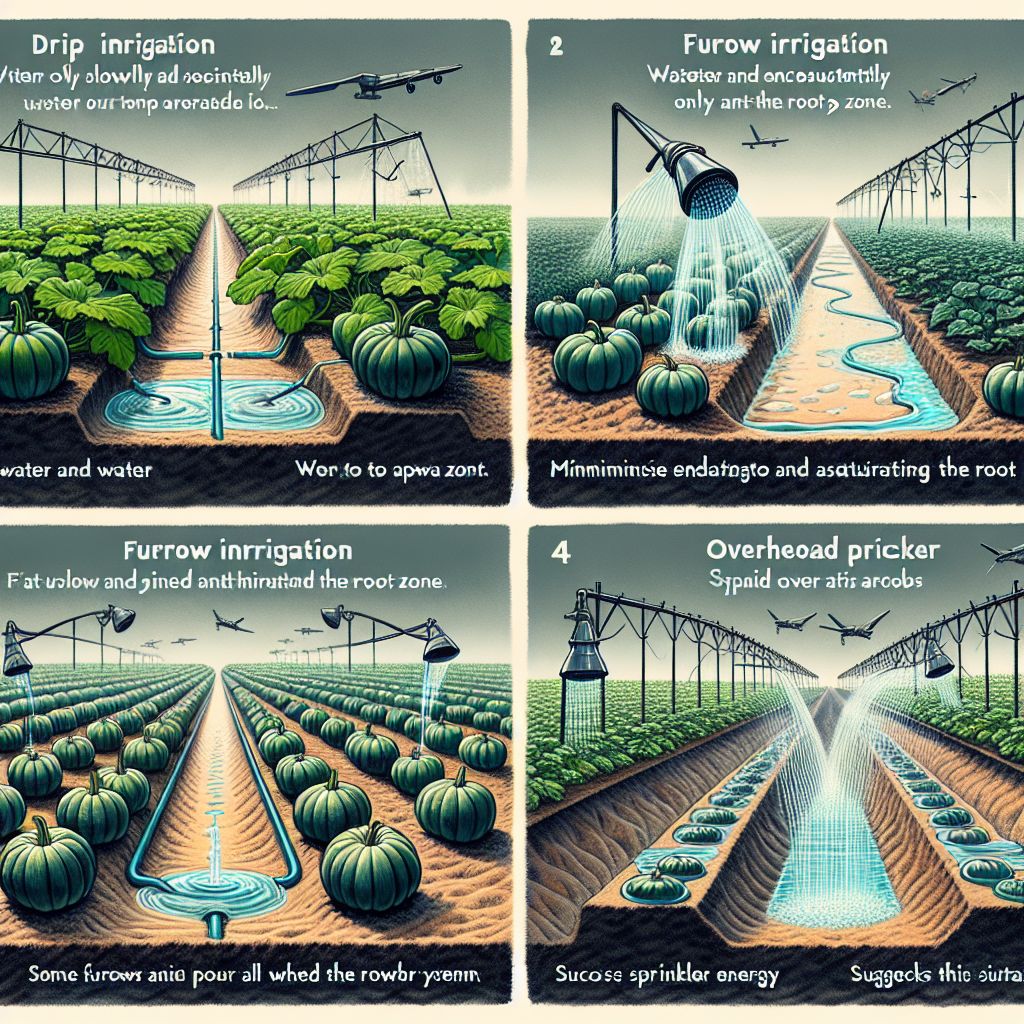
Different Ways to Irrigate Squash
There’s no one right way to water your squash. The best method for you will depend on your farm’s unique soil, weather, and layout. Here are some of the best ways to water squash.
Advantages of Using Drip Irrigation for Squash
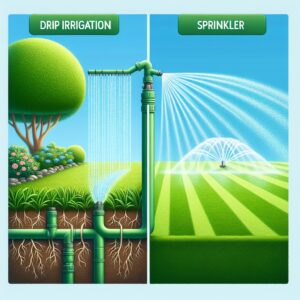
Drip irrigation is similar to a slow, consistent rainfall that only lands where your plants require it the most. It’s a very effective method to hydrate your squash because it reduces evaporation and runoff. Here’s why you should think about it:
Ensures water is delivered to the root zone, where it is most required.
Minimizes the risk of leaf diseases that can result from overhead watering.
Enables accurate water management, saving this vital resource.
Maximizing Water Usage with Furrow Irrigation
Furrow irrigation is the process of creating small ditches along the rows of your squash plants. Water travels through these furrows, soaking into the ground and reaching the roots. Furrow irrigation can be an effective technique, even though it is not as accurate as drip irrigation, particularly if it is managed properly to prevent water waste.
For example, a squash farmer discovered that by making furrows a little deeper and lining them with a thin layer of plastic, they could cut their water use by 20% compared to conventional furrow irrigation methods.
Keep in mind that the effectiveness of any irrigation method is enhanced when it is powered by solar energy, making your efforts twice as effective.
The Case for Overhead Sprinkler Irrigation
Overhead sprinkler systems might not be as efficient as drip or furrow methods, but they can still be useful. They’re especially helpful for germinating seeds or when you need to water a large area fast. If you choose sprinklers, make sure to use them during the cooler parts of the day to reduce evaporation.
Here is a table showing the pros and cons of different irrigation systems a farmer can use on a farm:
|
Irrigation System |
Pros |
Cons |
|---|---|---|
|
Drip Irrigation |
– High water efficiency (90%+). 1 |
– High initial cost. 4 |
|
Sprinkler Irrigation |
– Relatively inexpensive to install. 5 |
– Lower efficiency than drip (60-80%). 1 – Wets foliage, increasing disease risk. 6 |
|
Furrow/Surface Irrigation |
– Very low efficiency (50-60%). 1 |
Choosing the Right Irrigation System for Your Squash Farm
The ideal irrigation system for your squash farm will largely depend on your specific situation. You’ll need to consider factors like your soil type, the size of your farm, your local climate, and the amount of labor you have available. In many instances, a combination of drip irrigation and a well-planned solar power system can provide the most efficient and sustainable solution.
Now that we just looked at irrigation systems, let’s take a peek at solar panels
Best Solar Panels for Your Squash Farm’s Irrigation System
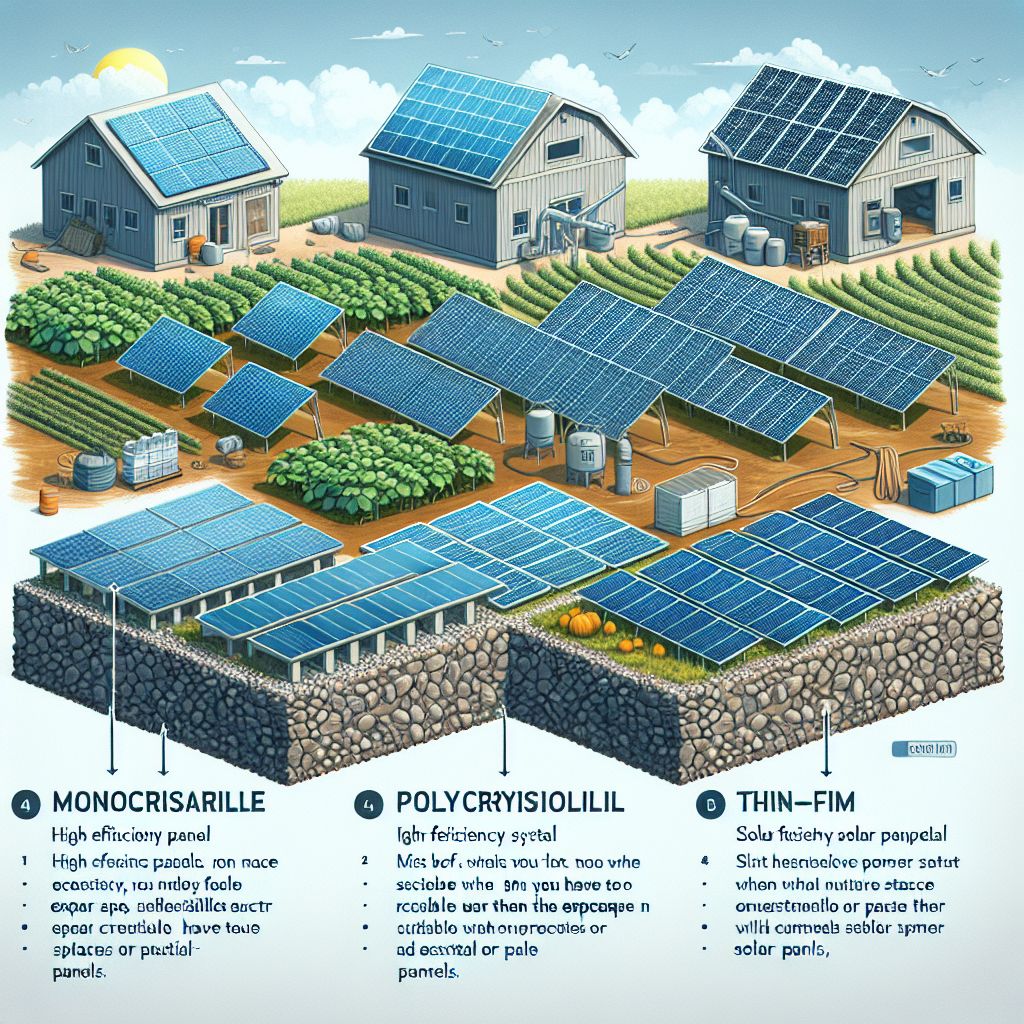
It’s vital to select the correct solar panels for your irrigation system to ensure it’s efficient and cost-effective. There are three primary types of solar panels you should think about: monocrystalline, polycrystalline, and thin-film. Each one has its own benefits and is appropriate for various scenarios.
Monocrystalline Panels: High Efficiency and Long Life
Monocrystalline solar panels are famous for their high efficiency and long life. They are made from single-crystal silicon, which provides better electron flow and thus more electricity generation. They are a great choice if you have limited space, as fewer panels will be needed to meet your energy needs.
Polycrystalline Panels: Budget-friendly and Dependable
Polycrystalline panels are constructed from numerous silicon crystals and are generally less expensive than monocrystalline panels. While they have a somewhat lower efficiency, they are still a dependable choice for solar irrigation systems, particularly if you have extra space to install more panels.
More affordable and budget-friendly compared to monocrystalline panels.
Performs well in various weather conditions.
Blue tint and speckled look due to the multiple silicon crystals used.
When choosing between monocrystalline and polycrystalline panels, think about the size of your farm, your budget, and the amount of sunlight your area gets.
Thin-Film Solar Panels: Flexibility in Installation
Thin-film solar panels are light and bendable, which makes them simple to install on a range of surfaces. If your squash farm has unconventional spaces or structures, they could be a good choice. However, they are typically less efficient and have a shorter lifespan than crystalline silicon panels.
Here is a table showing the pros and cons of using different types of solar panels with an irrigation system on a farm:
|
Panel Type |
Pros |
Cons |
|---|---|---|
|
Monocrystalline Panels |
– High efficiency (15-22%), producing more power per square foot. 1, 2, 4 | |
|
Polycrystalline Panels |
– Lower upfront cost than monocrystalline. 1, 2 |
– Lower efficiency and shorter lifespan than monocrystalline. 2, 4 |
|
Thin-Film Solar Panels |
– Lowest upfront cost. 1, 2 |
– Lowest efficiency (7-13%). 2, 4 |
Which Solar Panel is Ideal for Squash Farming?
When it comes to squash farming, the competition for the best solar panel is a close one between monocrystalline and polycrystalline panels. Monocrystalline panels are more efficient and last longer, making them a sound investment if you can afford the initial cost. On the other hand, polycrystalline panels provide a more budget-friendly option for solar irrigation, offering dependable performance. The final decision will depend on your budget, the size of your farm, and your energy requirements.
However, keep in mind that the ideal solar panel is the one that fulfills your unique farming requirements and aligns with your sustainability objectives. Each squash farm is distinct, and its solar solution should be as well.
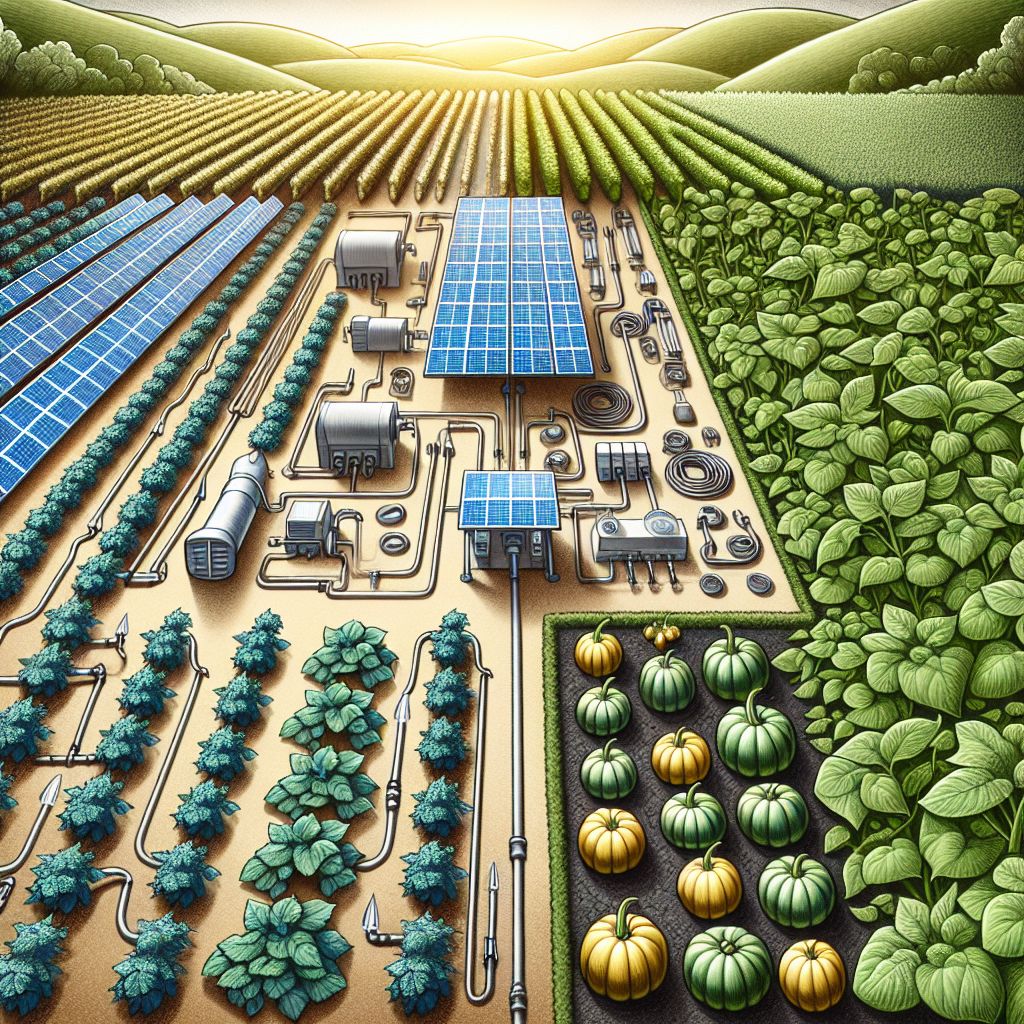
Comparing the Costs and Efficiency of Solar and Traditional Irrigation Systems for Growing Squash
Choosing between a solar-powered irrigation system and a traditional one for your squash farm is a big decision. Here’s a breakdown of the costs and efficiencies to help you make the best choice.
Understanding the Initial Cost and Lifespan of Systems
Solar irrigation systems may require a larger initial investment than traditional systems, but they can provide substantial savings in the long run. Solar panels can last for 25 years or even longer, and the money saved on energy bills can be significant. Traditional systems may have a lower initial cost, but they also have ongoing costs for fuel or electricity.
Examining the Water Conservation and Crop Yield
Implementing a solar-powered irrigation system, especially when used in conjunction with drip irrigation, can result in significant water conservation. This efficiency not only saves water but can also increase the yield of squash because it delivers water directly to the roots of the plants.
Unseen Environmental Impact of Traditional Energy
In addition to the immediate monetary expense, the environmental cost of traditional energy sources must be taken into account. The use of fossil fuels leads to the release of greenhouse gases and climate change, which could impact your squash farm over time. Solar energy, on the other hand, is a clean and renewable source of power that helps to safeguard the environment and the future of agriculture.
Here is a table comparing the cost and efficiency of an irrigation system with and without solar panels:
|
Aspect |
Without Solar Panels |
With Solar Panels |
|---|---|---|
|
Initial Cost | ||
|
Operating Cost |
Very low or zero fuel/electricity costs after installation. 1, 4 | |
|
Efficiency |
Depends on energy source efficiency. 4 |
Depends on solar radiation, temperature, system design. 1, 4 |
|
Environmental Impact |
Higher carbon footprint. 1 |
Lower carbon footprint, renewable energy. 1 |
|
Location Flexibility |
Limited to grid-connected or fuel access areas. 3 |
Can be used in remote off-grid areas. 3 |
|
Maintenance | ||
|
Lifespan |
Shorter for fuel-based systems. 1 | |
|
Long-term Costs |
Higher due to recurring fuel/electricity bills. 1 |
Lower total 20-year costs by 50-60% compared to traditional systems. 1 |
|
Government Incentives |
Generally none |
Many governments provide tax credits, subsidies for solar irrigation. 1 |

Which Solar Panels and Irrigation Systems are the Best for Squash Farmers
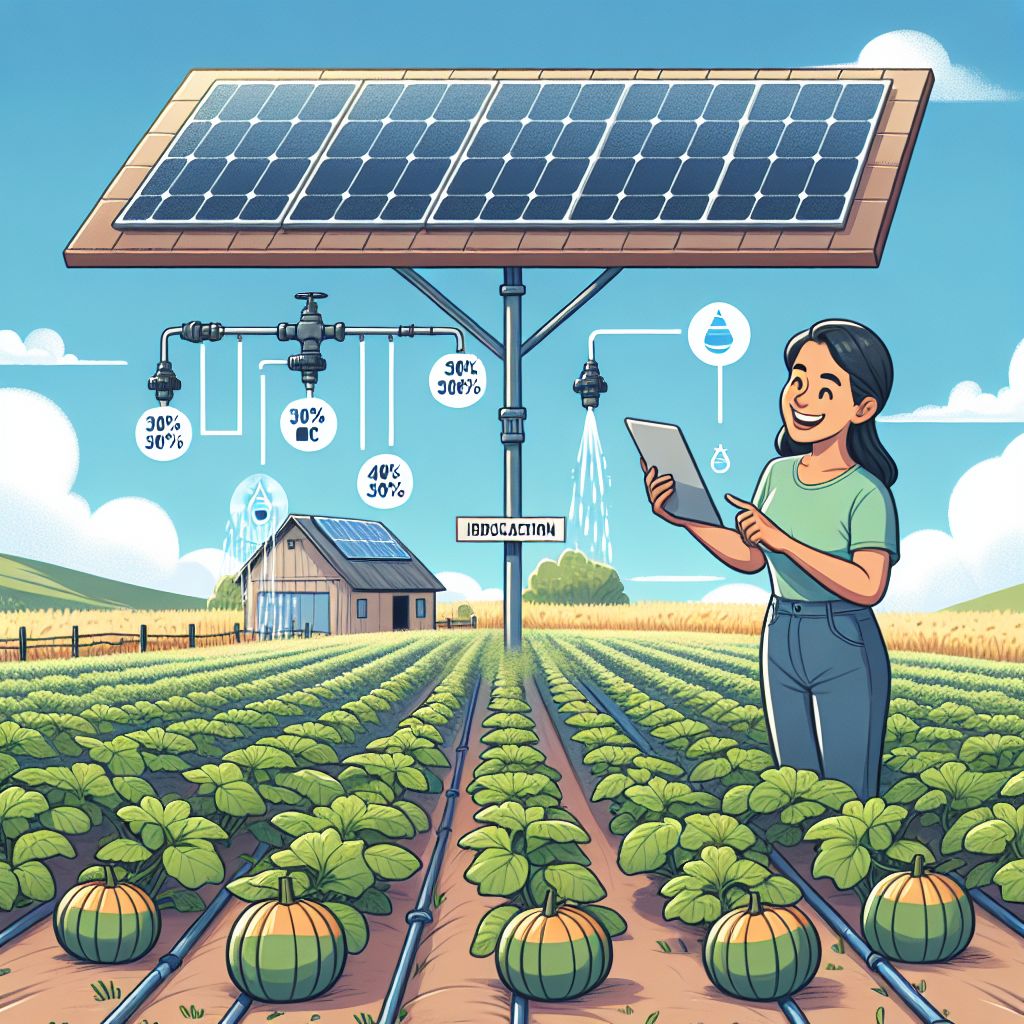
When you look at all the different types of solar panels and irrigation methods, some combinations are obviously better than others. For example, drip irrigation works really well with high-efficiency solar panels like monocrystalline for growing squash.
Using Drip Irrigation with Monocrystalline Solar Panels
By pairing these two, you’re able to provide water straight to the roots of your squash plants in the most effective way possible while also using the least amount of energy. The high efficiency of monocrystalline panels ensures that even when there’s not much sunlight, your irrigation system should still have enough power to function properly.
Conclusion: Should a Squash Farmer Consider Solar-Powered Irrigation?
After looking at all the angles, it’s clear that incorporating solar power into your squash farm’s irrigation system is a wise choice. The long-term cost savings, improved efficiency, and environmental benefits make it a sound investment. While the initial setup may seem intimidating, the reward in terms of sustainability and financial savings is obvious.
Ultimately, the decision to use solar energy isn’t just about saving money. It’s about taking care of the land and ensuring its health for future generations. When you choose to use solar-powered irrigation, you’re choosing a more sustainable and resilient form of farming that will benefit you for many years.
Considering the Advantages and Disadvantages: A Recap
Deciding to utilize solar-powered irrigation on your squash farm is a decision that should not be taken lightly. There are many benefits to consider, such as the potential for long-term cost savings, the ability to increase crop yield through efficient water use, and the satisfaction of knowing you are doing your part to help the environment. However, there are also potential drawbacks to consider, such as the initial investment required and the need to learn and maintain a new technology.
Testimonials from Squash Farmers: Actual Instances
“The results of installing solar panels and a drip irrigation system have been amazing. I’ve reduced my water usage by 30% and my energy costs have dropped by 40%. It’s really amazing to see the impact it’s had,” says Maria, a squash farmer from California. Her experience is similar to many farmers who have transitioned to solar irrigation.
The Long Game: Considering More Than Just Initial Expenses
When you think about the initial costs of setting up a solar-powered irrigation system, don’t forget about the long-term benefits. You’ll be saving money on utilities, reducing your dependence on non-renewable energy, and potentially increasing your crop yield. All of these things can help make your farm more profitable and sustainable.
Frequently Ask Questions:
Here are some typical questions you might have about using solar-powered irrigation to grow squash.
What is the water requirement for a squash farm?
On average, a squash farm requires about 1 to 1.5 inches of water every week during the growing season. This can change based on the climate and soil conditions. The use of drip irrigation can help control and lower water usage by directly providing water to the roots of the plants.
Is it necessary to maintain solar panels regularly?
Generally, solar panels are low maintenance. All you need to do is clean them regularly to remove dust and debris. This small time investment ensures that they continue to produce energy efficiently.
Do solar irrigation systems work when it’s cloudy?
Indeed, solar irrigation systems do work on overcast days, but they might not generate as much energy as they would on a bright day. A lot of these systems have batteries that save energy for use when the sun isn’t shining as brightly, guaranteeing that they’ll work consistently.
Take John, an Arizona farmer, for instance. He discovered that his solar irrigation system still had enough reserve power to water his squash crops non-stop, even on cloudy days.
Does the government provide incentives for farmers who use solar energy?
Yes, the government often provides incentives for farmers who decide to use solar energy. These incentives can come in the form of tax credits, rebates, and grants, which can help reduce the initial cost of installing solar panels.
The Rural Energy for America Program (REAP) in the United States provides financial aid to agricultural producers and small businesses in rural areas for the installation of renewable energy systems and improvements to energy efficiency.
When can I expect a return on my investment in a solar irrigation system?
It can differ, but a solar irrigation system usually pays for itself in 4 to 8 years. After that, the savings on energy bills are all gravy, and that’s not even taking into account the less tangible benefit of doing your part for the environment.
To sum up, switching to solar-powered irrigation for your squash farm is not just a move towards embracing modern technology; it’s a giant leap towards a greener future. By understanding the systems and techniques available, and with the help of available incentives, you can make an informed decision that benefits your farm, your wallet, and the planet. It’s a triple win situation that’s worth considering for any environmentally aware farmer looking to make a positive impact.

Leave a Reply