
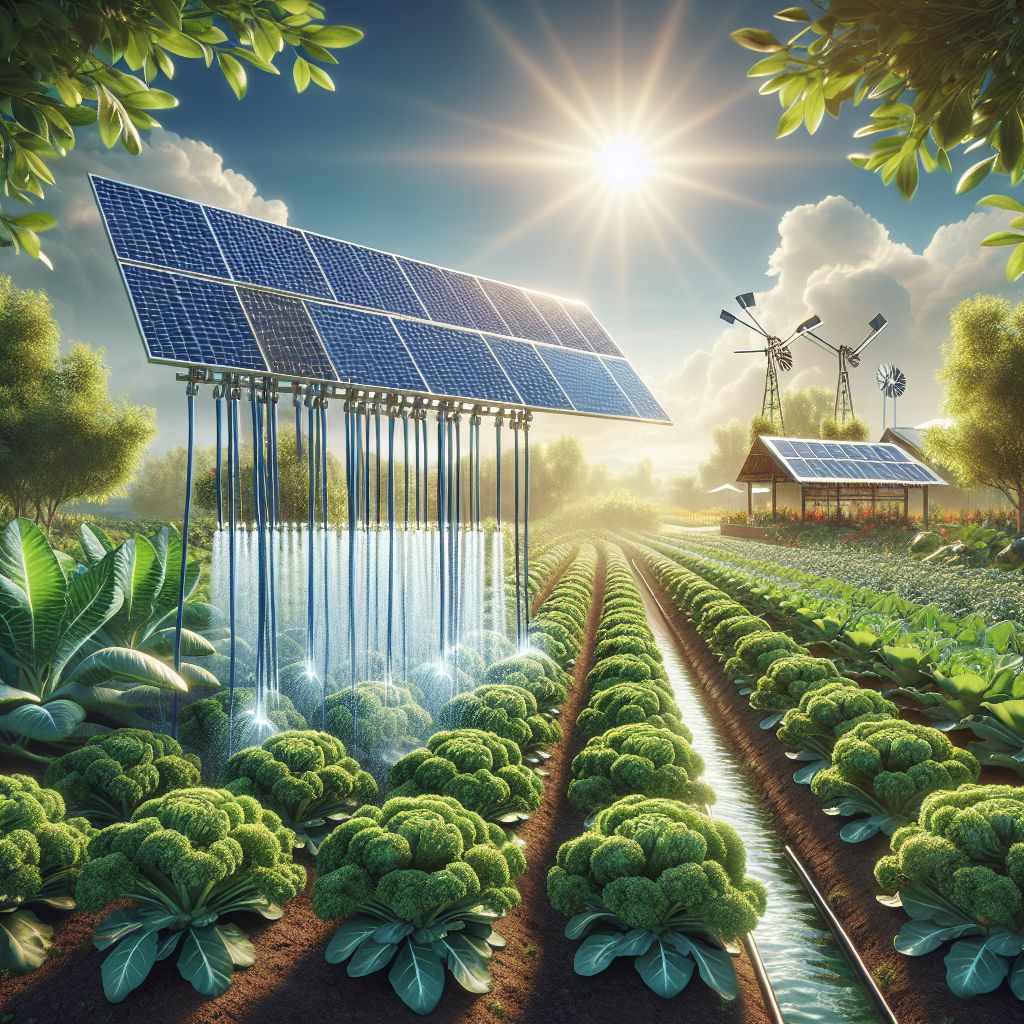
When it comes to nurturing your farm, choosing the right irrigation system is like picking the perfect pair of gloves – it needs to fit just right. Now, imagine if those gloves could also help the planet and save you money in the long run. That’s where solar-powered irrigation systems come into play, especially when you’re growing something as wholesome as kale. Let’s dig into why harnessing the sun’s power for watering your greens are a bright idea.
Key Takeaways
Solar-powered irrigation systems can significantly reduce energy costs and carbon footprint.
Drip irrigation powered by solar energy is particularly effective for kale, providing just the right amount of water directly to the roots.
Monocrystalline solar panels are highly efficient for farm use, but polycrystalline and thin-film panels also have their own advantages.
The initial cost of solar irrigation can be offset by long-term savings and various government incentives.
Combining solar panels with the right irrigation method can lead to increased yield and efficiency for kale farmers.

Why You Should Use Solar Panels with an Irrigation System
Most importantly, as gardeners, we have a responsibility to our environment. Using solar panels for irrigation is a step towards sustainable farming. It’s not just about being eco-friendly; it’s about being cost-effective too. Solar panels cut down on your electricity bills and, because they can last for decades, they’re a solid investment for the future of your garden.
Understanding the Basics of Solar Irrigation
Let’s start with the basics. Solar irrigation systems use photovoltaic (PV) panels to capture sunlight and convert it into electricity. This electricity then powers a pump that draws water from your source and delivers it to your kale plants. It’s a clean, renewable energy source that ensures your greens get their water without any carbon emissions.
Environmental Benefits: Going Green with Your Kales
By choosing solar-powered irrigation, you’re not only watering your plants, but you’re also nurturing the planet. You’re reducing your reliance on fossil fuels and minimizing your carbon footprint. It’s a win-win for your garden and the environment.
Moreover, kale thrives when it’s grown with care for the earth. It’s a hardy plant, sure, but when you use clean energy to support its growth, you’re ensuring it’s as organic and eco-friendly as can be.
Long-term Cost Savings of Solar-Powered Systems
While the upfront cost of a solar irrigation system may seem daunting, the long-term savings are substantial. Solar panels require little maintenance, and the reduction in your utility bills will continue for as long as the sun shines down on your kale patch.
Independence from Grid Power and Fuel
Imagine a power outage on a scorching summer day. With a solar-powered irrigation system, your kale won’t even notice. These systems provide you with independence from the grid, ensuring that your plants are always getting the water they need, no matter what.
Increase in Energy Security for Farm Operations
For those with larger kale operations, energy security is key. Solar irrigation systems are reliable; they protect you from the volatility of energy prices and ensure that your irrigation needs are met without interruption.
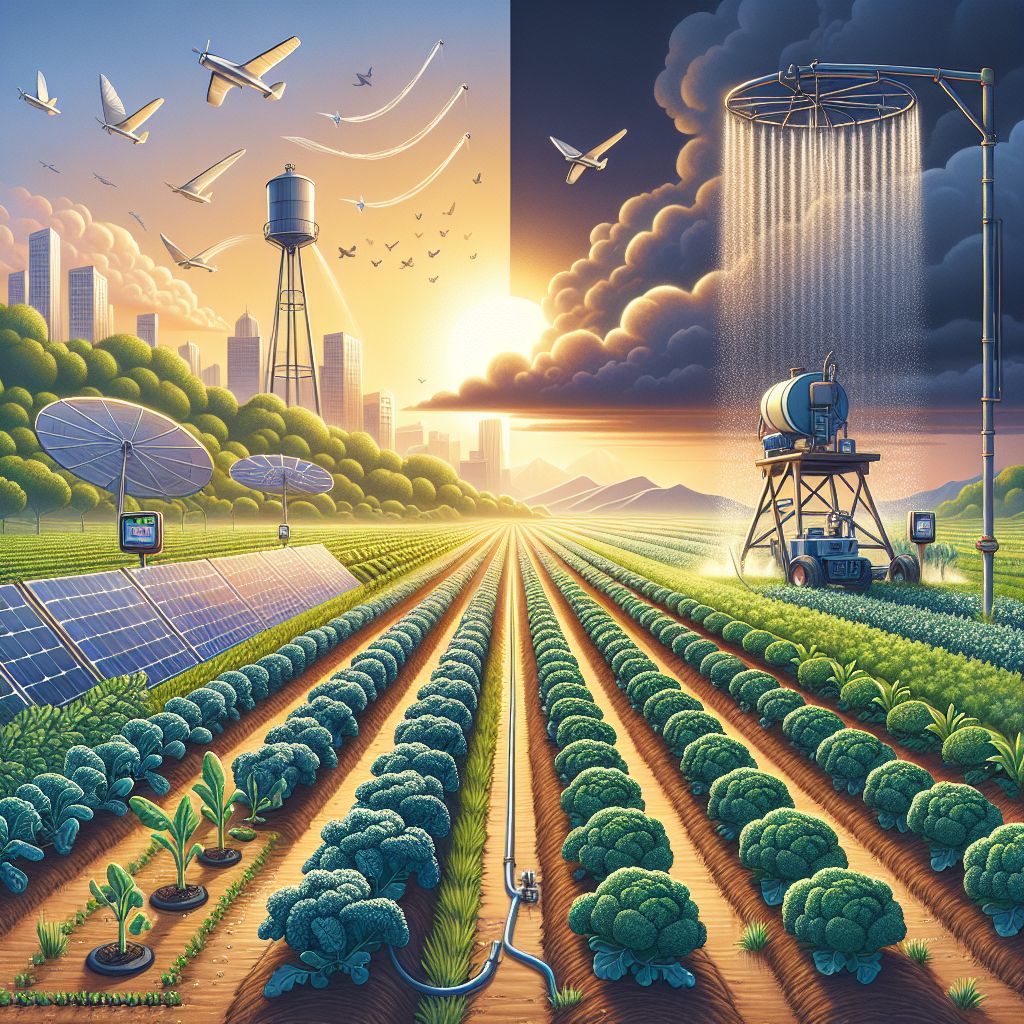
Top Irrigation Methods for Kale Farming
Now, let’s talk about getting water to your kale. There are two main methods: drip and sprinkler irrigation. Both can be powered by solar energy, but they work quite differently.
Overview of Drip versus Sprinkler Irrigation
Drip irrigation delivers water directly to the base of your plants, minimizing waste. Sprinkler systems, on the other hand, cover a wider area and can be great for larger gardens. Your choice depends on the size of your kale patch and your specific gardening needs.
Advantages of Drip Irrigation for Kale
Water Efficiency: Delivers water directly to the roots, reducing evaporation.
Targeted Watering: Minimizes weed growth by only watering the areas that need it.
Reduced Disease Risk: Keeps foliage dry, lowering the chance of disease.
Drip irrigation is especially good for kale because it provides a steady supply of water to the roots, promoting healthy growth without overwatering.
Efficiency of Sprinkler Systems in Kale Farming
Sprinkler systems are more suitable for larger areas. They can water your entire kale crop at once, which is great if you’re running a bigger operation. Just be mindful of the timing – early morning or late afternoon is best to reduce water loss through evaporation.
Timing and Frequency of Watering Kale
Kale likes consistent moisture. Whether you’re using a drip or sprinkler system, aim to water your plants early in the morning. This gives the water a chance to soak into the soil before the heat of the day and ensures your kale gets a good drink.
Mulching and its Role in Water Conservation
Pair your irrigation system with mulch. Mulching around your kale plants will keep the soil moist longer, meaning you’ll need to water less frequently. It’s a simple yet effective way to conserve water and keep your kale happy.
Now that we looked at top irrigation systems, let’s take a look at how you will power them with solar panels.
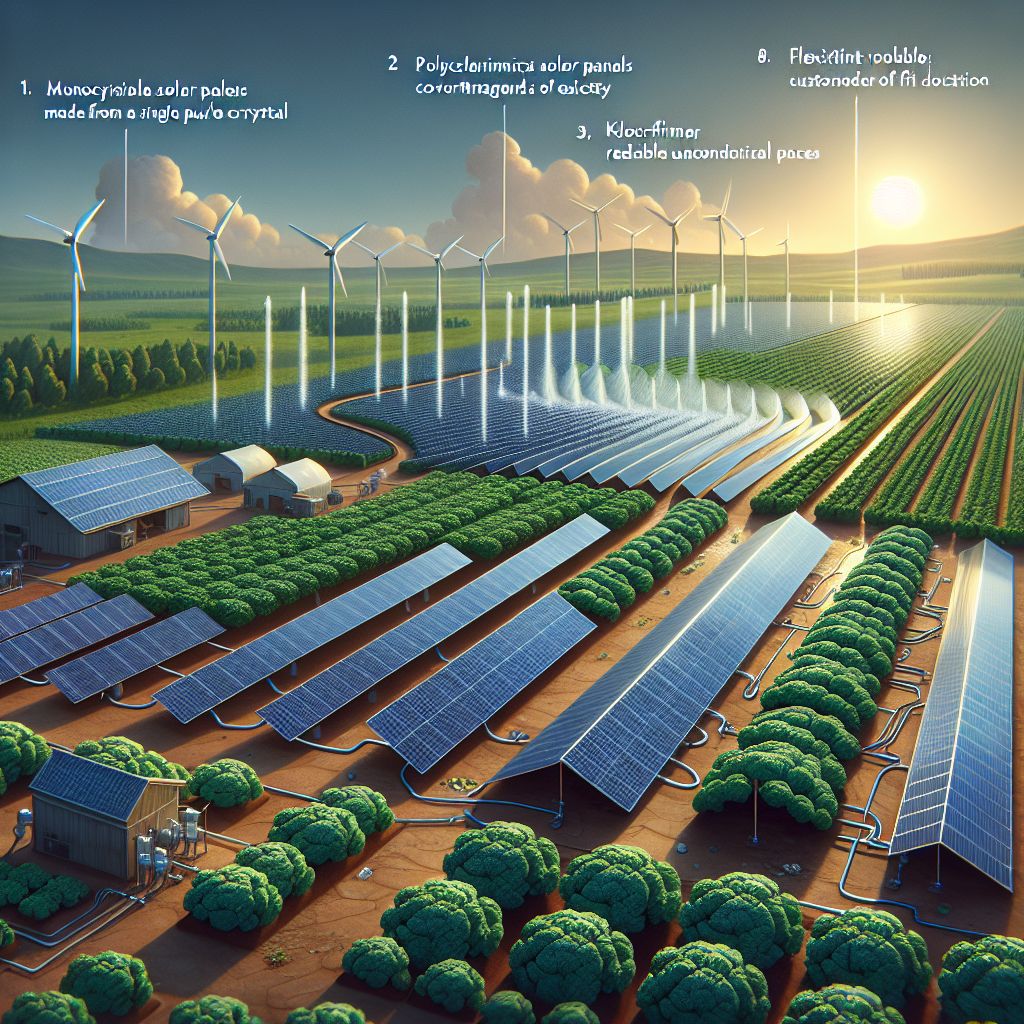
Top Solar Panels for Your Kale Farm’s Irrigation system
Monocrystalline Panels: Efficiency Meets Longevity
When it comes to solar panels, monocrystalline is the top-tier choice for gardeners who are serious about efficiency and durability. These panels are made from a single, pure silicon crystal, which allows them to convert more sunlight into electricity than other types. They’re a bit pricier upfront, but they make up for it with their long lifespan and the amount of power they can produce.
For your kale, this means a reliable source of energy to power your irrigation system, even on days when the sun plays hide and seek behind the clouds. Plus, they’re sleek and take up less space, which is always a bonus when you’re trying to keep your garden both functional and beautiful.
Polycrystalline Panels: Affordable and Reliable
Polycrystalline solar panels are the go-to for gardeners looking for a balance between cost and performance. Made from fragments of silicon melted together, these panels are a bit less efficient than their monocrystalline counterparts but come with a more accessible price tag.
They’re a solid choice for kale farmers who have a bit more space to spare, as you might need a few more panels to match the power output of monocrystalline panels. But don’t worry, they’ll still keep your watering system running smoothly and sustainably.
Thin-Film Solar Panels: Flexibility in Installation
Thin-film solar panels are the rebels of the solar panel world. They’re lightweight, flexible, and can be installed on a variety of surfaces that might not be suitable for traditional panels. This can be a game-changer for kale gardens with unconventional spaces.
However, they’re not quite as efficient as monocrystalline or polycrystalline panels and have a shorter lifespan. But if you’re looking for an easy-to-install, adaptable option, thin-film panels are worth considering.
Here is a table showing the pros and cons of using different types of solar panels with an irrigation system on a farm:
|
Panel Type |
Pros |
Cons |
|---|---|---|
|
Monocrystalline Panels |
– High efficiency (15-22%), producing more power per square foot. 1, 2, 4 | |
|
Polycrystalline Panels |
– Lower upfront cost than monocrystalline. 1, 2 |
– Lower efficiency and shorter lifespan than monocrystalline. 2, 4 |
|
Thin-Film Solar Panels |
– Lowest upfront cost. 1, 2 |
– Lowest efficiency (7-13%). 2, 4 |
The choice depends on factors like budget, space constraints, climate, and expected lifespan. Monocrystalline panels offer the best long-term performance but at a higher upfront cost. 1, 2, 4
Factors to Consider When Choosing Solar Panels
When deciding on the best solar panels for your kale farm’s irrigation system, consider these key factors:
Efficiency: How well the panel converts sunlight into electricity.
Cost: The initial investment and long-term savings.
Space: The amount of area you have available for panel installation.
Lifespan: How long the panels will last before they need to be replaced.
What is the Best Solar Panel for a Kale Farmer to Use?
The best solar panel for a kale farmer really depends on individual needs. If efficiency and longevity are your top priorities, and you have the budget for it, go for monocrystalline panels. If you’re looking to save some money upfront and have plenty of space, polycrystalline is a great choice. For those with unique installation needs, thin-film panels offer the flexibility you might require.
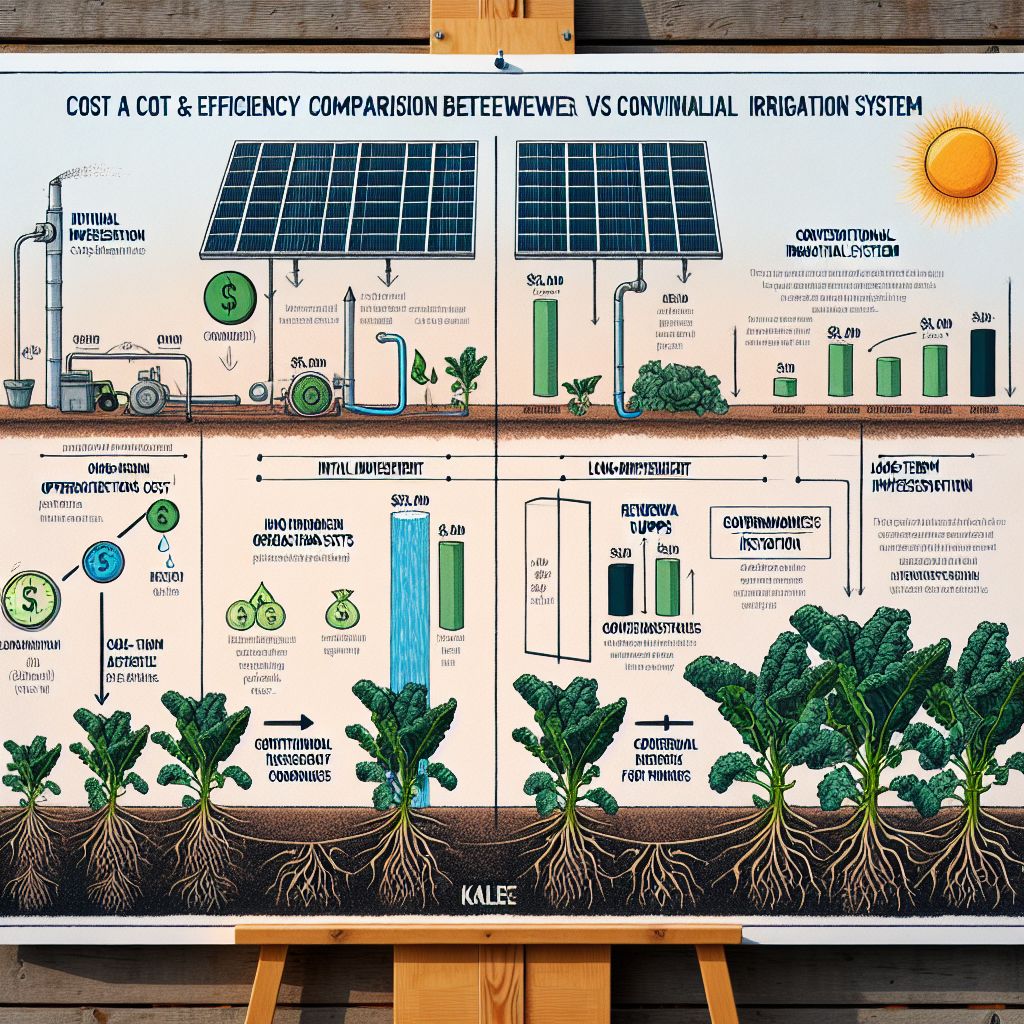
Cost and Efficiency Comparison: Solar Irrigation Systems Versus Conventional Irrigation Systems for Growing Kale
Initial Investment Comparison
Let’s talk numbers. Solar irrigation systems typically cost more upfront compared to conventional systems – think a few thousand dollars, depending on the size of your garden. Conventional systems might only set you back a few hundred. But remember, with solar, you’re investing in a long-term solution that will pay off over time.
Operational Costs Over Time
After the initial setup, the cost to run a solar irrigation system is pretty much zero, since the sun’s energy is free. Conventional systems, on the other hand, will have ongoing costs as they rely on electricity or fuel to run the pumps.
Yield Output: Solar versus Conventional
Studies have shown that consistent and efficient watering can lead to higher yields in kale crops. Solar irrigation systems provide just that – a steady, reliable source of water. With conventional systems, power outages or fuel shortages could disrupt your watering schedule, potentially affecting your harvest.
Government Incentives and Subsidies for Renewable Energy Use
Don’t forget to factor in government incentives when calculating costs. Many regions offer rebates, tax breaks, or subsidies for installing renewable energy systems, which can significantly lower the initial investment for solar irrigation.
Breaking Down the Return on Investment (ROI) between the 2 Systems
So, what’s the ROI like? Solar systems may have a higher upfront cost, but the long-term savings on operational expenses can lead to a break-even point in as little as 5 to 10 years. After that, it’s all savings, baby! Conventional systems might be cheaper at the start, but they’ll keep taking a bite out of your wallet for as long as you use them.
Here is a table comparing the cost and efficiency of an irrigation system with and without solar panels:
|
Aspect |
Without Solar Panels |
With Solar Panels |
|---|---|---|
|
Initial Cost | ||
|
Operating Cost |
Very low or zero fuel/electricity costs after installation. 1, 4 | |
|
Efficiency |
Depends on energy source efficiency. 4 |
Depends on solar radiation, temperature, system design. 1, 4 |
|
Environmental Impact |
Higher carbon footprint. 1 |
Lower carbon footprint, renewable energy. 1 |
|
Location Flexibility |
Limited to grid-connected or fuel access areas. 3 |
Can be used in remote off-grid areas. 3 |
|
Maintenance | ||
|
Lifespan |
Shorter for fuel-based systems. 1 | |
|
Long-term Costs |
Higher due to recurring fuel/electricity bills. 1 |
Lower total 20-year costs by 50-60% compared to traditional systems. 1 |
|
Government Incentives |
Generally none |
Many governments provide tax credits, subsidies for solar irrigation. 1 |
Best Combination of Solar Panels and Irrigation Systems: Most Efficient for Kale Farmers
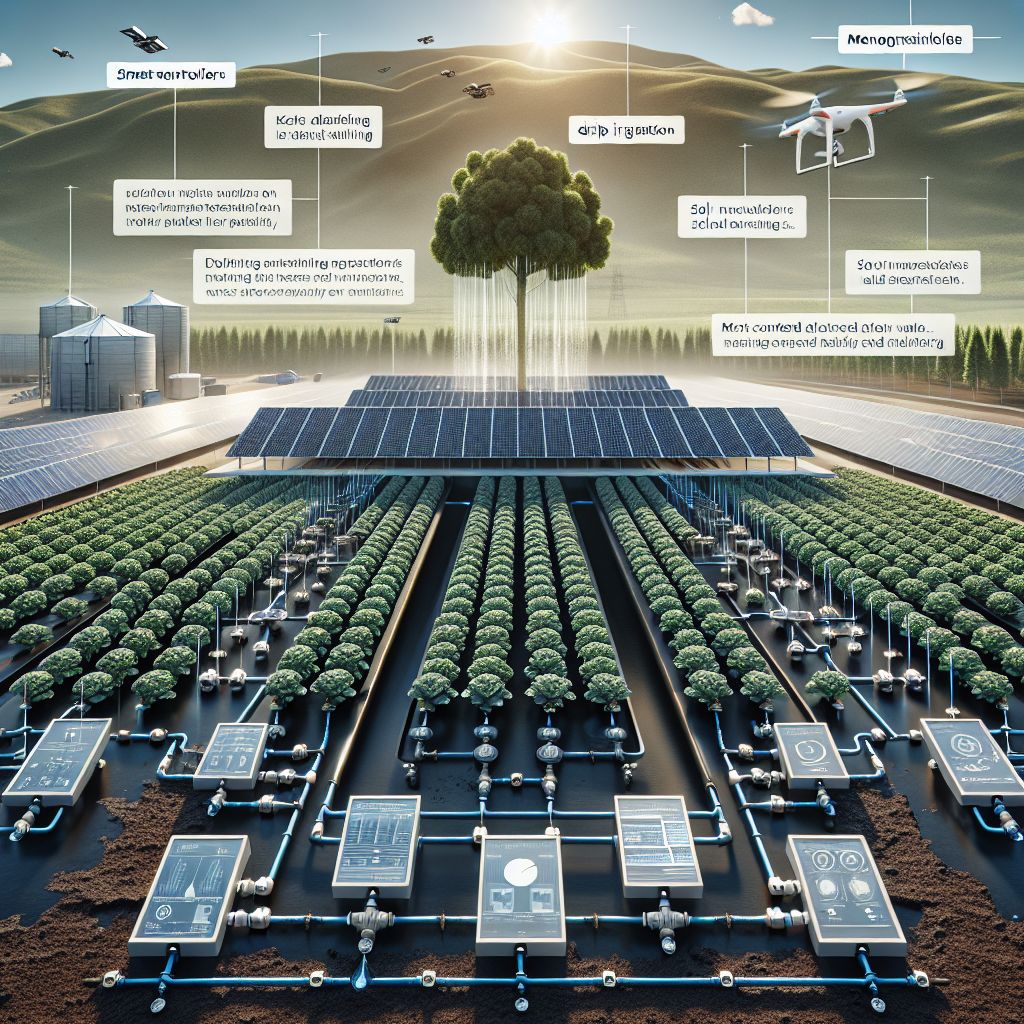
Most Efficient combination: Monocrystalline Solar Panels with Drip Irrigation Systems
If you want the crème de la crème for your kale, pair monocrystalline solar panels with a drip irrigation system. This duo offers top-notch efficiency and ensures that your kale gets the perfect amount of water right at its roots, without any waste.
Drip systems are about 90-95% efficient at delivering water to your plants, and when powered by the sun, you’re looking at an environmentally friendly powerhouse for your garden.
Case Studies: Effective Solar and Irrigation Systems in Use
“Take Farmer Joe, for example. After switching to a solar-powered drip irrigation system, he saw a 20% increase in his kale yield and saved thousands on his water bill. Plus, he’s proud to be doing his part for the planet.”
Emerging Technologies in Solar Irrigation
As technology advances, so do our options for solar irrigation. Innovations like smart controllers that adjust watering based on weather forecasts and soil sensors are making systems even more efficient. These technologies help ensure that not a drop of water or a ray of sunlight is wasted, providing your kale with the optimal growing conditions.
Another emerging technology is the use of drones for monitoring crop health and soil moisture levels. This can help you pinpoint exactly where water is needed and where it’s not, making your solar-powered irrigation system even more effective.
And let’s not forget about the potential of battery storage. By storing excess solar energy, you can power your irrigation system even when the sun isn’t shining, ensuring your kale gets consistent watering, day or night.
Conclusion: Is it a Smart Decision to Add Solar-Power to an Irrigation System for a Kale Farmer?
If you’re a kale farmer looking to cut costs, reduce your environmental impact, and ensure a reliable water supply for your crops, adding solar power to your irrigation system is a smart move. It’s an investment in the future of your farm and the planet.
With the variety of solar panels available, and the advancements in irrigation technology, there’s never been a better time to go solar. The initial costs are offset by the long-term savings and the peace of mind that comes from knowing your farm is powered by clean, renewable energy.
And remember, the benefits of solar-powered irrigation extend beyond just your wallet and your conscience. They reach into the very soil where your kale grows, ensuring that every leaf is as green and sustainable as the energy that nourishes it.
The Verdict: Weighing Up the Pros and Cons
Let’s break it down. On the pro side, solar-powered irrigation systems offer cost savings over time, independence from the grid, and a reduced carbon footprint. On the con side, the upfront costs can be significant, and you’ll need to ensure your system is properly sized and installed for your specific needs.
But when you weigh the long-term benefits against the initial investment, the scales tip heavily in favor of solar power. Plus, with the added bonus of government incentives, it’s an even more appealing option for eco-conscious kale farmers.
Personal Accounts from Kale Farmers Who’ve Made the Switch
“Since I’ve switched to solar irrigation, my kale is thriving, and my energy bills have plummeted. It’s one of the best decisions I’ve made for my farm,” says Mary, a kale farmer from California.
Stories like Mary’s are becoming more common as farmers around the world recognize the advantages of solar-powered irrigation systems. The satisfaction of growing a sustainable crop while saving money is a powerful motivator.
Future Outlook: Trends in Solar-Powered Agriculture
The future is bright for solar-powered agriculture. As more farmers adopt renewable energy solutions, we’ll likely see even more innovative technologies and systems designed to make solar irrigation even more efficient and accessible.
With growing awareness of the importance of sustainable farming practices, solar-powered irrigation could soon become the standard rather than the exception. And as the technology becomes more affordable, even small-scale kale gardeners can join the movement.
Frequently Asked Questions (FAQ)
How Do Solar-Powered Irrigation Systems Work?
Solar-powered irrigation systems use solar panels to convert sunlight into electricity. This electricity then powers a pump that draws water from a source—like a well or a pond—and delivers it to your crops. It’s a clean and efficient way to water your plants using renewable energy.
Can Solar Irrigation Systems Work in Cloudy Climates?
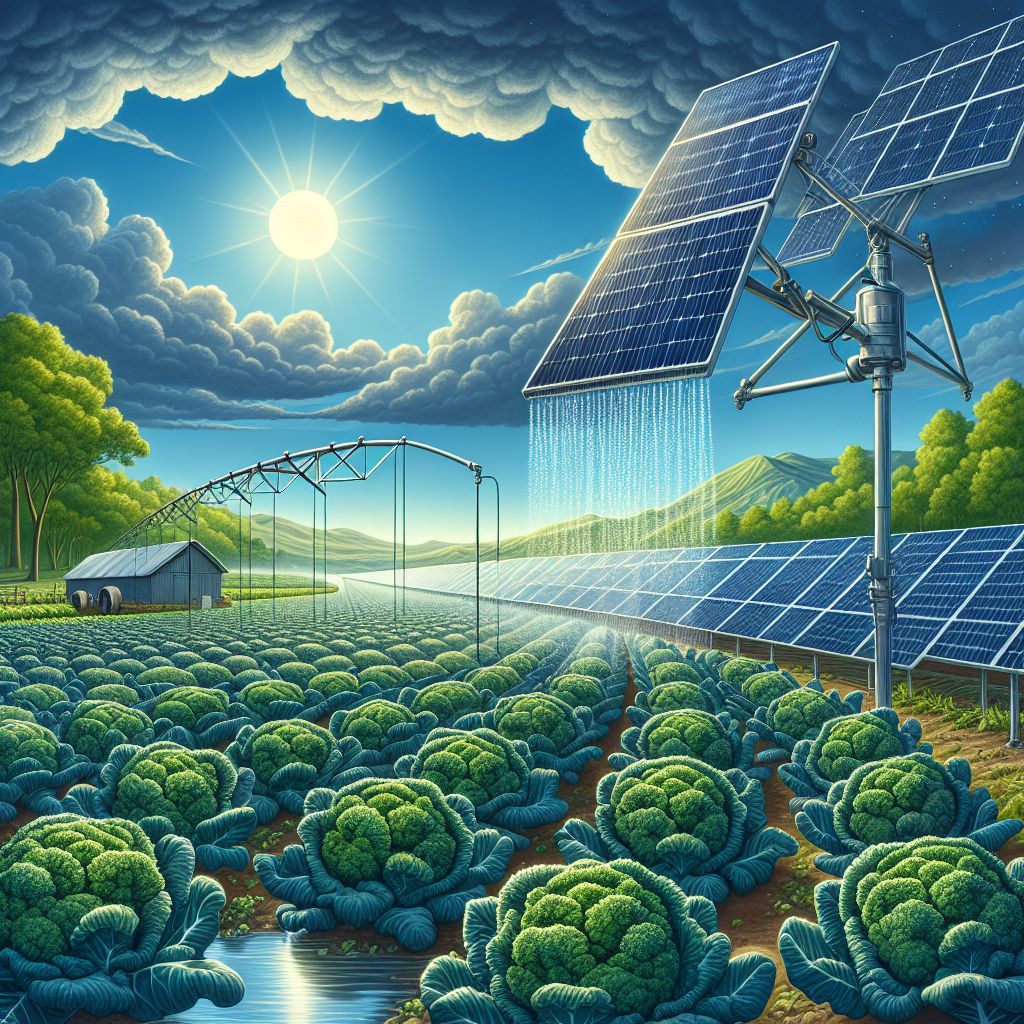
Yes, solar irrigation systems can work in cloudy climates. While they’re most efficient under direct sunlight, solar panels can still generate electricity on overcast days. Plus, with battery storage, you can store excess energy on sunny days to use when the clouds roll in.
Efficiency varies with cloud cover but is still functional.
Battery storage can provide a consistent energy supply.
Consider a hybrid system with a backup power source if your area has frequent cloudy days.
It’s all about planning and making sure your solar-powered irrigation system is designed for your specific climate and needs.
What is the Lifespan of a Solar-Powered Irrigation System?
The lifespan of a solar-powered irrigation system can vary, but generally, solar panels are warrantied for 20-25 years. The pumps and other equipment may have shorter lifespans, but with proper maintenance, your system can keep your kale garden green for many years to come.
Are There Any Special Maintenance Requirements for Solar Irrigation Systems?
While solar irrigation systems require relatively low maintenance, there are a few things you’ll need to keep an eye on:
Cleaning the solar panels regularly to ensure maximum efficiency.
Checking the batteries, if you have them, to ensure they’re holding a charge.
Inspecting pumps and irrigation lines for any signs of wear or damage.
By staying on top of these simple tasks, you can keep your system running smoothly.
How Can I Calculate the Size of the Solar Array Needed for My Farm?
To calculate the size of the solar array needed for your farm, you’ll need to consider several factors:
The amount of water your kale crops need.
The efficiency of your irrigation system.
The amount of sunlight your location receives on average.
From there, you can work with a solar provider to determine the number of panels you’ll need to meet your watering needs. They’ll help you crunch the numbers and design a system that’s just right for your farm.







Leave a Reply