
Article-At-A-Glance
- Solar-powered irrigation systems can reduce farm energy costs by up to 30% while increasing water efficiency by 20% — making them one of the smartest investments in modern agriculture.
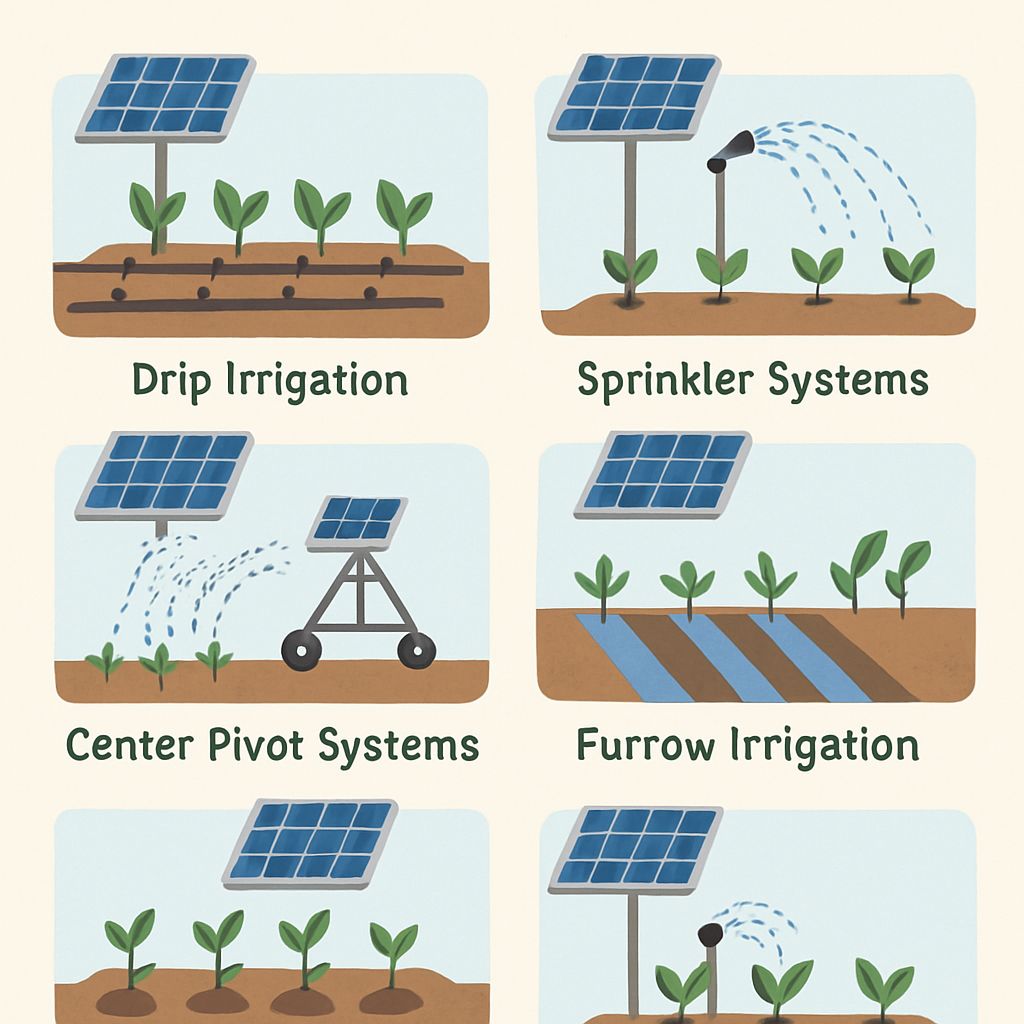
- Five irrigation types work effectively with solar power: drip irrigation, sprinkler systems, center pivot systems, furrow irrigation, and micro-sprinklers — each suited to different crops and field sizes.
- The upfront cost of a solar irrigation system varies significantly by farm size, but federal incentives like the USDA REAP grant and the Investment Tax Credit (ITC) can dramatically reduce that barrier.
- DC pumps run directly off solar panels without an inverter, making them simpler and cheaper for most small-to-mid-size solar irrigation setups.
- Battery storage isn’t always necessary — keep reading to find out when you actually need it and when it’s just an added expense.
Solar-powered irrigation is one of the most practical ways to cut farm operating costs while future-proofing your water management strategy.
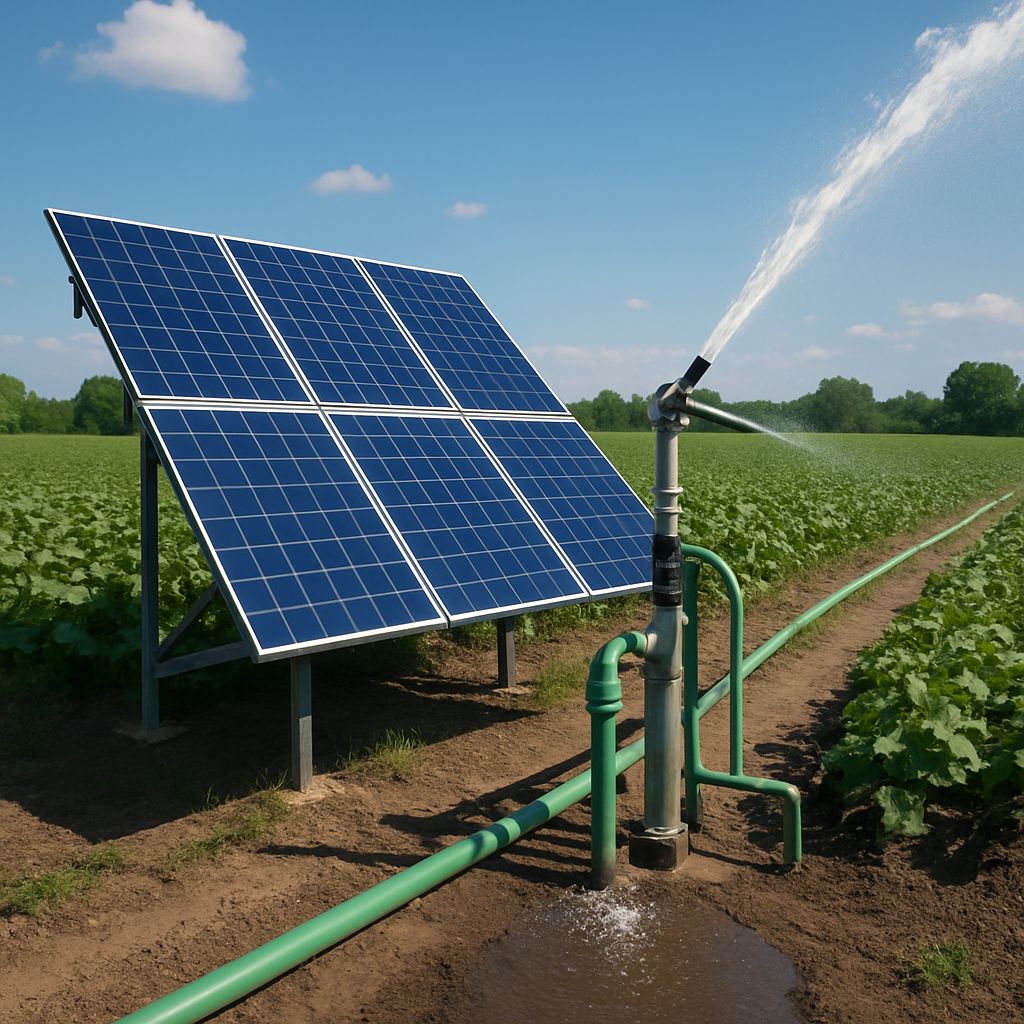
Irrigation pumps are typically the single largest energy consumer on any farm. They run constantly during growing season, and in remote or off-grid locations, that energy cost can be punishing. Growing Solar Mist covers this intersection of solar and irrigation in depth, providing farmers with the tools to make informed decisions about their energy setup. The core idea is straightforward: replace grid electricity or diesel fuel with photovoltaic (PV) solar panels that convert sunlight directly into the power your pumps need.
What makes solar irrigation especially compelling isn’t just the savings — it’s the independence. Farms in areas with unreliable grid access or high utility rates stand to benefit the most. And with modern solar panels achieving 18–22% efficiency, even a modest array can handle serious irrigation demands.
Solar Can Power Your Irrigation System — Here’s What You Need to Know
A solar irrigation system isn’t complicated in concept, but it does require the right components matched to the right application. At minimum, you need solar panels, a pump, a controller, and water delivery infrastructure. Depending on your setup, you may also need a battery bank, an inverter, and mounting hardware. Each component plays a specific role, and undersizing any one of them creates bottlenecks that hurt performance.
The biggest misconception farmers have is that solar irrigation only works for small plots. That’s not true. Large-scale operations running center pivot systems covering hundreds of acres have successfully transitioned to solar, using arrays in the 200kW range to power both pumps and automated controls. The key is accurate load calculation before you buy anything.
5 Types of Irrigation Systems Farmers Power with Solar Panels
Solar power can drive virtually any irrigation method, giving farmers the flexibility to match their watering strategy to their specific crops, soil conditions, and field layout. These are the five most effective solar-compatible systems in use today.
Quick Comparison: Solar-Powered Irrigation Types
Irrigation Type
Best For
Energy Demand
Solar Compatibility
Drip Irrigation
Row crops, orchards, vegetables
Low
Excellent
Sprinkler Systems
Large open fields, pastures
Medium–High
Good
Center Pivot
Large-scale grain/commodity crops
High
Good with large array
Furrow Irrigation
Row crops, gravity-fed fields
Low–Medium
Very Good
Micro-Sprinklers
Orchards, vineyards, nurseries
Low–Medium
Excellent
1. Drip Irrigation
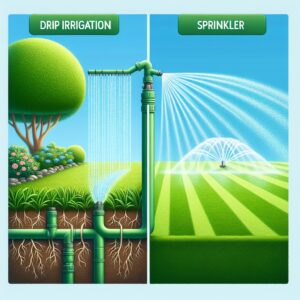
Drip irrigation is the most energy-efficient pairing with solar power. Water is delivered directly to the root zone through a network of low-pressure tubes and emitters, which means your pump doesn’t need to generate high pressure to do its job. A small solar array can maintain consistent flow throughout the day, and the slow, targeted delivery reduces evaporation losses dramatically — making it the top choice for vegetable growers and orchardists looking to stretch every drop.
2. Sprinkler Systems
Sprinkler systems require more energy than drip setups because of the higher operating pressures involved. However, advances in low-pressure sprinkler nozzle technology have made solar-powered sprinkler irrigation increasingly viable even for mid-sized farms. A zone-based approach — where different field sections irrigate sequentially rather than all at once — is the smarter strategy here. It reduces peak power demand, allowing you to run a smaller, less expensive solar array without sacrificing coverage.
Pro Tip: Running sprinkler zones sequentially instead of simultaneously can reduce your peak power requirement by 40–60%, directly lowering the size and cost of the solar array you need.
For large open pastures or grain fields where drip infrastructure isn’t practical, solar-powered sprinklers remain a reliable and increasingly affordable solution. The important thing is sizing your solar array to the actual peak load of your most demanding zone, not the total system load.
3. Center Pivot Systems
Center pivot systems are the heavy lifters of agricultural irrigation — and yes, solar can power them. These systems rotate around a central point, covering circular areas that can span hundreds of acres. The energy demand is high, with commercial-scale pivots requiring arrays in the range of 100kW to 200kW or more. A documented case saw a 200kW solar array power both the irrigation pumps and controls for a large pivot operation, delivering a 20% increase in water efficiency and a 30% reduction in energy costs, with a projected payback period of 7 years.
4. Furrow Irrigation
Furrow irrigation channels water along the base of crop rows through shallow trenches. It’s one of the older irrigation methods but remains common for row crops like corn, cotton, and potatoes. Because it often relies on gravity to move water downslope, pump energy demands can be relatively modest — making it a natural fit for solar. Solar-powered pumps can lift water from a reservoir or groundwater source and feed it into the furrow network with minimal infrastructure complexity.
5. Micro-Sprinklers
Micro-sprinklers sit between drip emitters and full-scale sprinkler heads in terms of coverage and energy use. They’re widely used in orchards, vineyards, and nursery operations where broader root zone coverage is needed but full-pressure sprinklers would be wasteful. Their moderate energy demand pairs cleanly with solar, and the targeted delivery pattern keeps water use efficient. For perennial crops like citrus, almonds, or grapevines, a solar-powered micro-sprinkler setup offers an excellent balance of coverage, efficiency, and operating cost.
Core Components of a Solar-Powered Irrigation System
Understanding what goes into a solar irrigation system helps you make smarter purchasing decisions and avoid costly mistakes. Every component has a job, and they all need to work together efficiently.
The foundation is your solar panel array, which captures sunlight and converts it to DC electricity. That power flows through a charge controller (which regulates voltage and protects your batteries if you have them) and then to your pump — either directly in a DC system or through an inverter in an AC system. Sensors and smart controllers can sit on top of this to automate the whole operation based on soil moisture readings, weather data, and scheduled irrigation windows.
Solar Panels and How Much Power You Actually Need
Modern agricultural solar panels typically operate at 18–22% efficiency, and the number of panels you need depends entirely on your pump’s power draw and your daily irrigation hours. Start by identifying your pump’s wattage rating, then calculate how many hours per day you need to run it. Divide total daily watt-hours by your location’s average peak sun hours to get your required solar array capacity. Always add a 20–25% buffer to account for panel degradation, shading, and efficiency losses in wiring and controllers.
DC Pumps vs. AC Pumps for Solar Irrigation
Pump Type
Power Source
Requires Inverter?
Best Use Case
Cost Level
DC Pump
Direct solar (DC)
No
Small-to-mid farms, off-grid
Lower
AC Pump
Inverted solar (AC)
Yes
Large farms, existing AC infrastructure
Higher
DC pumps are the simpler, more cost-effective choice for most solar irrigation setups. They run directly off the solar panels without needing an inverter, which eliminates a component, reduces energy conversion losses, and lowers your upfront cost. They work best for small-to-mid-size operations or any farm that’s fully off-grid.
AC pumps make more sense when you already have existing AC irrigation infrastructure you want to integrate with solar, or when your system is large enough that AC motor efficiency advantages outweigh inverter costs. For new installations being designed from scratch, DC is usually the smarter starting point.
The choice between DC and AC also affects your maintenance profile. DC systems have fewer components to fail and are generally easier for farmers to troubleshoot without an electrician on call — an important practical advantage in remote agricultural settings where downtime during peak irrigation season has real consequences.
Battery Storage: Do You Actually Need It?
Battery storage is one of the most debated components in solar irrigation design, and the honest answer is: it depends on how and when you irrigate. If your crops need water during daylight hours and your solar resource is strong, you can run a batteryless direct-coupled system that operates only when the sun is shining — and that’s perfectly adequate for many farms. Adding batteries introduces significant upfront cost, maintenance requirements, and replacement cycles that may not be justified by the operational benefit. For more information on the benefits of LiFePO4 batteries in solar panels, check out this guide.
That said, batteries make sense in specific scenarios. If your irrigation schedule requires early morning or evening watering — common in hot climates where daytime irrigation causes evaporation loss — a battery bank lets you store midday solar production and deploy it on your schedule. They’re also valuable in regions with inconsistent sunlight or where a single missed irrigation window could damage high-value crops. For most row crop and grain operations, batteries are optional. For premium fruit, vegetable, or nursery operations, they’re often worth the investment.

“Solar Powered Irrigation Systems: Types …” from growingsolarmist.com and used with no modifications.
How Much Does a Solar Irrigation System Cost?
Cost is the first question most farmers ask, and the range is wide because no two farms have identical energy needs. A small off-grid drip system for a few acres can be assembled for under $3,000, while a large-scale center pivot operation with a 200kW solar array can run $150,000 or more before incentives. The variables that drive cost include pump size, daily runtime requirements, whether battery storage is included, mounting infrastructure, and the complexity of your control systems.
What matters more than the upfront number is the total cost of ownership over 20–25 years — which is the realistic lifespan of a quality solar panel system. When you factor in eliminated electricity bills, reduced diesel consumption, lower maintenance costs compared to combustion engines, and available incentives, the economics shift dramatically in solar’s favor for most medium-to-large operations.
Typical Cost Range by Farm Size
Farm Size
System Type
Estimated Cost (Before Incentives)
Estimated Payback Period
1–5 acres
DC drip or micro-sprinkler
$1,500 – $5,000
2–4 years
5–50 acres
Sprinkler or drip with controller
$8,000 – $35,000
4–6 years
50–200 acres
Center pivot or large sprinkler
$40,000 – $100,000
5–8 years
200+ acres
Large array, multi-zone system
$100,000 – $250,000+
6–10 years
These figures represent installed system costs including panels, mounting, pump, controller, wiring, and basic commissioning. Battery storage, if included, can add 20–40% to the system cost depending on capacity. Grid interconnection fees, site preparation, and permitting are additional variables that differ by location.
For farmers in remote areas currently running diesel-powered pumps, the savings calculation is even more compelling. Diesel fuel costs are volatile, require on-site storage, and involve engine maintenance that solar simply doesn’t. The transition to solar eliminates all of that operational overhead in one move.
Payback Period and Long-Term Savings
The documented case of a large pivot operation using a 200kW solar array is instructive here. That farm achieved a 30% reduction in energy costs and a 20% improvement in water efficiency, with a projected payback period of 7 years. After that breakeven point, the energy the system produces is essentially free — and solar panels routinely continue producing at 80% or better efficiency 25 years after installation.
Smaller systems payback even faster. A well-designed 5-acre drip irrigation system powered by a modest solar array in a high-sun region can pay for itself in as little as 2–3 years, after which the farmer is effectively irrigating at zero energy cost for the remaining life of the panels. That’s a structural competitive advantage that compounds over time.
Financial Incentives That Make Solar Irrigation More Affordable
The true cost of a solar irrigation system is rarely the sticker price. Federal, state, and agency-level programs exist specifically to reduce the barrier to entry for agricultural solar, and stacking multiple incentives is both legal and common practice among experienced farm operators. Learn more about how farm solar panels power equipment with renewable energy.
- USDA REAP Grant: Covers up to 50% of eligible project costs for renewable energy systems on agricultural operations
- Federal Investment Tax Credit (ITC): Currently offers a significant percentage credit on solar installation costs for business and agricultural use
- MACRS Accelerated Depreciation: Allows farmers to depreciate solar assets over 5 years, reducing taxable income significantly in early years
- State-Level Rebates and Grants: Vary by state but can add thousands more in savings — many western and agricultural states have strong programs
- NRCS Environmental Quality Incentives Program (EQIP): Can fund irrigation efficiency upgrades including solar components as part of conservation practice plans
Understanding which incentives you qualify for before you purchase is critical. The combination of a REAP grant covering up to 50% of costs plus the federal ITC can make a system that initially looks cost-prohibitive suddenly become a straightforward financial decision. Work with your local USDA service center and a qualified solar installer who has agricultural experience to map out your full incentive picture before signing any contracts. For additional insights on solar solutions, explore the benefits of LiFePO4 batteries for solar panels in farming.
The incentive landscape changes periodically with federal budget cycles and energy policy shifts. Programs that are available today may be reduced or restructured in future years, which is one of the strongest arguments for moving sooner rather than later on a solar irrigation upgrade.
Many farmers also overlook state-level programs entirely, assuming federal incentives are the only option. In reality, states like California, Arizona, Colorado, and Nebraska have agricultural energy programs that can contribute meaningfully to the total incentive stack — sometimes adding another 10–20% on top of federal benefits.
USDA REAP Grants and Guaranteed Loans
The Rural Energy for America Program (REAP) is administered by the USDA and is specifically designed to help agricultural producers and rural small businesses adopt renewable energy systems. Grants through REAP can cover up to 50% of eligible project costs, and guaranteed loans through the same program can finance an additional portion of the remainder. This makes REAP the single most impactful program available to most U.S. farmers considering solar irrigation.
Applications are accepted on a rolling basis, but funding is competitive and finite each fiscal year. Preparing a strong application with clear energy audit data, project cost documentation, and expected savings calculations significantly improves approval odds. Many USDA service centers have energy specialists who can assist with the application process at no cost to the farmer, helping them explore options like solar panels for farm equipment.
Federal Investment Tax Credit (ITC)
The federal Investment Tax Credit applies to solar energy systems installed on agricultural operations and allows farmers to claim a credit directly against their federal tax liability — not just a deduction. This is a dollar-for-dollar reduction in taxes owed, making it one of the most financially impactful incentives available. The credit applies to the full installed cost of the system, including panels, inverters, mounting hardware, and installation labor. Consult a tax professional with agricultural energy experience to ensure you’re capturing the full credit correctly.
Accelerated Depreciation Benefits
Under the Modified Accelerated Cost Recovery System (MACRS), solar energy equipment qualifies for a 5-year depreciation schedule — significantly faster than the actual useful life of the system. This allows farm operations structured as businesses to front-load their tax deductions in the early years of ownership, when cash flow investment in a new system is highest. In the first year alone, bonus depreciation provisions can allow an even larger immediate deduction depending on current tax law. For more information on how solar energy can benefit farm operations, explore how solar panels power farm equipment with renewable energy.
When stacked with REAP grants and the ITC, accelerated depreciation can dramatically compress the effective payback period of a solar irrigation investment. A system with a theoretical 7-year payback before incentives can realistically reach breakeven in 3–4 years when all three mechanisms are applied correctly — making solar irrigation one of the highest-return capital investments available to working farmers today.
How to Match Your Solar System to Your Irrigation Needs
Getting the sizing right is the difference between a system that performs flawlessly for 25 years and one that constantly underdelivers or wastes money on oversized capacity. The process starts not with solar panels, but with a clear understanding of what your irrigation system actually demands.
Calculate Your Pump’s Energy Demand First
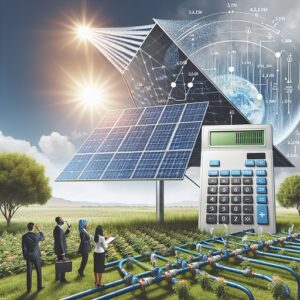
Your pump’s power requirements are the non-negotiable foundation of your solar system design. Start with the pump’s rated wattage or horsepower — 1 horsepower equals approximately 746 watts. Multiply that by your required daily runtime in hours to get your total daily watt-hour demand. For example, a 5-horsepower pump (3,730 watts) running 6 hours per day needs 22,380 watt-hours (22.4 kWh) of energy daily. That number, divided by your location’s average peak sun hours, gives you the minimum solar array capacity required — before applying the 20–25% design buffer for real-world efficiency losses.
Factor in Peak Sun Hours for Your Region
Peak sun hours aren’t the same as daylight hours — they represent the number of hours per day when solar irradiance averages 1,000 watts per square meter, which is the standard measurement used to calculate panel output. The American Southwest consistently delivers 6–7 peak sun hours daily, while the Midwest averages 4.5–5.5, and the Pacific Northwest can drop to 3.5–4.5 in winter months. These numbers directly affect how large your solar array needs to be. A farm in Arizona needs fewer panels to generate the same daily energy as an identical farm in Oregon — a critical variable that changes your total system cost significantly.
Use NREL’s PVWatts Calculator (a free tool from the National Renewable Energy Laboratory) to look up average peak sun hours for your specific location and month-by-month solar production estimates. Designing your system around your worst-month solar resource — rather than the annual average — ensures your irrigation needs are covered even in low-production periods. This conservative design approach is standard practice for agricultural solar systems where missing an irrigation window has real crop consequences.
Scaling Your System as Your Farm Grows
One of the underappreciated advantages of solar irrigation is modularity. Unlike a diesel generator or grid connection, which requires a large upfront infrastructure commitment, a solar array can be expanded incrementally as your operation grows. Start with the capacity you need now, design your mounting structure and electrical infrastructure with future expansion in mind, and add panels and pump capacity as your acreage or crop mix changes. A well-designed system from the start — with appropriately sized conduit, junction boxes, and inverter capacity — makes future expansion straightforward and cost-effective rather than requiring a full system redesign. For more information on the benefits of solar power for farming, you can explore this usage guide.
Solar Irrigation Works Even When the Sun Goes Down
The most common objection to solar irrigation is what happens at night or during cloudy stretches. The answer depends on how your system is designed. For farms that irrigate during daylight hours, a direct-coupled batteryless system is completely adequate — the pump runs when the sun shines and stops when it doesn’t, which aligns naturally with daytime evapotranspiration cycles when crop water demand is highest. Many successful solar irrigation operations run exactly this way, with zero battery infrastructure and zero compromises on crop health.
When nighttime or early-morning irrigation is genuinely necessary, battery storage or a hybrid grid-tied system solves the problem cleanly. A battery bank stores excess solar production during peak sun hours and releases it on demand after dark. Alternatively, a grid-tied hybrid system draws from utility power only when solar production falls short — meaning your solar array covers the vast majority of your energy use while the grid acts as a seamless backup rather than your primary source. Either approach maintains irrigation reliability without sacrificing the economic benefits of solar as your primary power source.

“Solar Irrigation Systems: What Every …” from growingsolarmist.com and used with no modifications.
Solar Irrigation Is the Practical Choice for Farms
The evidence across farm size, crop type, and geography consistently points in the same direction: solar-powered irrigation reduces operating costs, increases energy independence, and improves long-term farm resilience. With federal incentives capable of cutting upfront costs by 50% or more, payback periods measured in years rather than decades, and panel systems that reliably produce power for 25 years or longer, the financial case is no longer marginal — it’s compelling. The 20% improvement in water efficiency and 30% reduction in energy costs documented in large pivot operations aren’t outliers; they represent what properly designed solar irrigation systems routinely deliver.
For farms still running diesel pumps or paying high utility rates for irrigation electricity, every growing season without solar represents a real, quantifiable cost that compounds over time. The technology is proven, the incentives are in place, and the long-term economics are straightforward. The practical question isn’t whether solar irrigation makes sense — it’s how quickly you can implement it and start redirecting those energy dollars back into your operation. Learn more about solar panel backup batteries to ensure continuous power supply.
Frequently Asked Questions
Farmers considering solar irrigation tend to have the same core questions, and the answers are more straightforward than most expect. The technology is mature, the components are widely available, and the sizing and design process follows a clear, repeatable methodology that doesn’t require an engineering degree to understand.
Solar Irrigation: Quick-Reference FAQ Summary
Question
Short Answer
Can solar power a center pivot?
Yes — arrays of 100kW–200kW+ handle large pivots
What about cloudy days?
Design for worst-month output; batteries or grid backup fill gaps
How long does the system last?
20–25+ years for panels; pumps 10–15 years with maintenance
Do I need grid connection?
No — but hybrid grid-tied systems offer seamless backup
Most efficient pairing with solar?
Drip irrigation — lowest energy demand, highest water efficiency
Can solar panels fully power a large-scale center pivot irrigation system?
Yes. Large-scale center pivot systems can be fully powered by solar arrays sized appropriately to the pivot’s energy demand. Commercial pivot operations typically require arrays in the 100kW to 200kW range, and documented installations have achieved this successfully while delivering measurable improvements in both energy cost and water efficiency.
The critical factor is accurate load calculation before system design. Center pivots have high starting current demands in addition to their running load, so your solar array and any associated inverter or motor drive equipment must be specified to handle both. Working with a solar installer who has specific experience in agricultural center pivot applications — not just residential or commercial solar — is essential for getting this right the first time.
What happens to my solar irrigation system during cloudy days or winter months?
Solar panels continue producing electricity on cloudy days — typically at 10–25% of their rated output depending on cloud density. For most irrigation applications, this reduced output means slower pump operation rather than complete shutdown. Designing your system around your location’s worst-month peak sun hours, rather than the annual average, ensures your system meets irrigation demands even in low-production periods.
For farms that need reliable irrigation through extended low-light periods, a battery storage bank or grid-tied hybrid configuration provides the operational continuity you need. Many farmers in northern climates also simply schedule their heaviest irrigation demand for the summer months when solar production is at its peak — a natural alignment that makes solar irrigation particularly well-suited to seasonal cropping patterns.
How long do solar-powered irrigation systems last?
Quality solar panels carry 25-year performance warranties and routinely continue producing at 80% or better of their original rated output at that age. Pump lifespan varies by type and application — DC submersible pumps typically last 10–15 years with proper maintenance, while surface pumps may have similar or longer service lives depending on operating conditions. The overall system infrastructure, including mounting hardware, wiring, and controllers, generally matches or exceeds the panel lifespan when properly installed. This long service life is a core reason the total cost of ownership calculation so strongly favors solar over diesel or grid-dependent alternatives.
Do I need grid connection as a backup for my solar irrigation system?
No — many solar irrigation systems operate completely off-grid and perform reliably without any utility connection. This is especially common for farms in remote locations where grid connection would require expensive infrastructure extension. Off-grid solar irrigation systems are typically designed with either battery storage or conservative oversizing of the solar array to maintain performance through low-production periods.
That said, a grid-tied hybrid system offers the best of both worlds for farms that already have utility access. Your solar array covers the overwhelming majority of your irrigation energy needs, and the grid provides seamless backup only when production falls short — such as during extended cloudy periods or unusually high-demand situations. This approach eliminates the cost of a large battery bank while still capturing most of the economic benefit of solar as your primary power source.
Which irrigation system type is most efficient when paired with solar power?
Drip irrigation is the most efficient pairing with solar power by a significant margin. It operates at low pressure, which minimizes pump energy demand, and delivers water directly to the root zone with minimal evaporation loss. The combination of low energy input and high water-use efficiency makes drip irrigation the top choice for farmers who want to maximize the return on both their solar and water resources simultaneously.
Micro-sprinklers are a close second, offering broader coverage than drip while still maintaining moderate energy demands that pair well with reasonably sized solar arrays. They’re the preferred choice for orchards and perennial crops where root zone geometry makes drip emitter placement more complex.
For large-scale commodity operations where drip infrastructure isn’t economically practical across hundreds of acres, solar-powered center pivot systems represent the best available option — delivering significant energy cost reductions even if water efficiency per acre doesn’t match drip levels. The right choice ultimately depends on your crop, field size, soil type, and water source, but in almost every case, there’s a solar-compatible irrigation solution that makes both agronomic and financial sense for your specific operation.
Growing Solar Mist helps farmers navigate the full journey from solar system sizing to irrigation integration — visit their site to explore resources built specifically for agricultural solar applications.

Leave a Reply