

Key Takeaways
Solar-powered irrigation systems can significantly reduce water and energy use, essential for growing radishes sustainably.
Drip irrigation is the most water-efficient method for radish cultivation, delivering water directly to the roots.
Monocrystalline solar panels are a highly efficient option for powering farm irrigation systems.
Integrating solar power into irrigation can lead to long-term cost savings despite the initial investment.
The best solar irrigation system for radishes depends on farm size, budget, and specific crop needs.
Why Combine Solar Panels with an Irrigation System
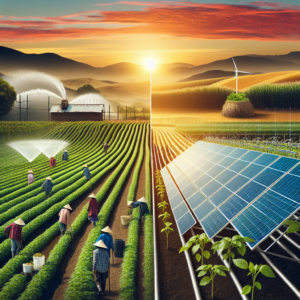
Let’s talk about synergy, the kind that can turn your radish farm into a model of sustainability. Combining solar panels with an irrigation system isn’t just a fancy tech upgrade—it’s a smart move towards eco-friendly farming. Why? Because it harnesses the sun’s power to fuel the watering process, cutting down on electricity bills and reducing reliance on non-renewable energy sources.
Understanding the Synergy Between Solar Energy and Water Management
It’s like a dance between the sun and water, each step carefully coordinated for maximum effect. Solar panels capture sunlight and convert it into electricity. This energy then powers your irrigation system, pumping water to your thirsty radishes. But it’s not just about saving power—it’s about precision. With solar-powered systems, you can time the irrigation to the exact needs of your crops, reducing water waste. And since radishes are particularly sensitive to water levels, precision is key.
Most importantly, this synergy means that on sunny days, when your radishes need more water due to higher evaporation rates, your solar panels will likely be generating more energy—perfect for meeting increased irrigation demands. It’s a win-win!
Example: A radish farmer in California reduced her water usage by 30% after switching to a solar-powered drip irrigation system, highlighting the potential for significant resource savings.
Environmental Benefits of Solar-Powered Irrigation
Here’s the scoop on environmental benefits: solar-powered irrigation systems contribute to a healthier planet. They reduce the carbon footprint of farming by replacing fossil fuels with clean solar energy. Also, by using water more efficiently, they protect local waterways from the runoff of fertilizers and pesticides, which is crucial for maintaining ecosystems.
Economic Incentives for Integrating Solar Technology in Agriculture
Now, let’s talk money. Solar-powered irrigation may require an upfront investment, but the long-term savings on utility bills are significant. Plus, there are often government incentives, rebates, and tax breaks for farmers who choose to go green with solar technology. This financial support can make the switch to solar more affordable and appealing.
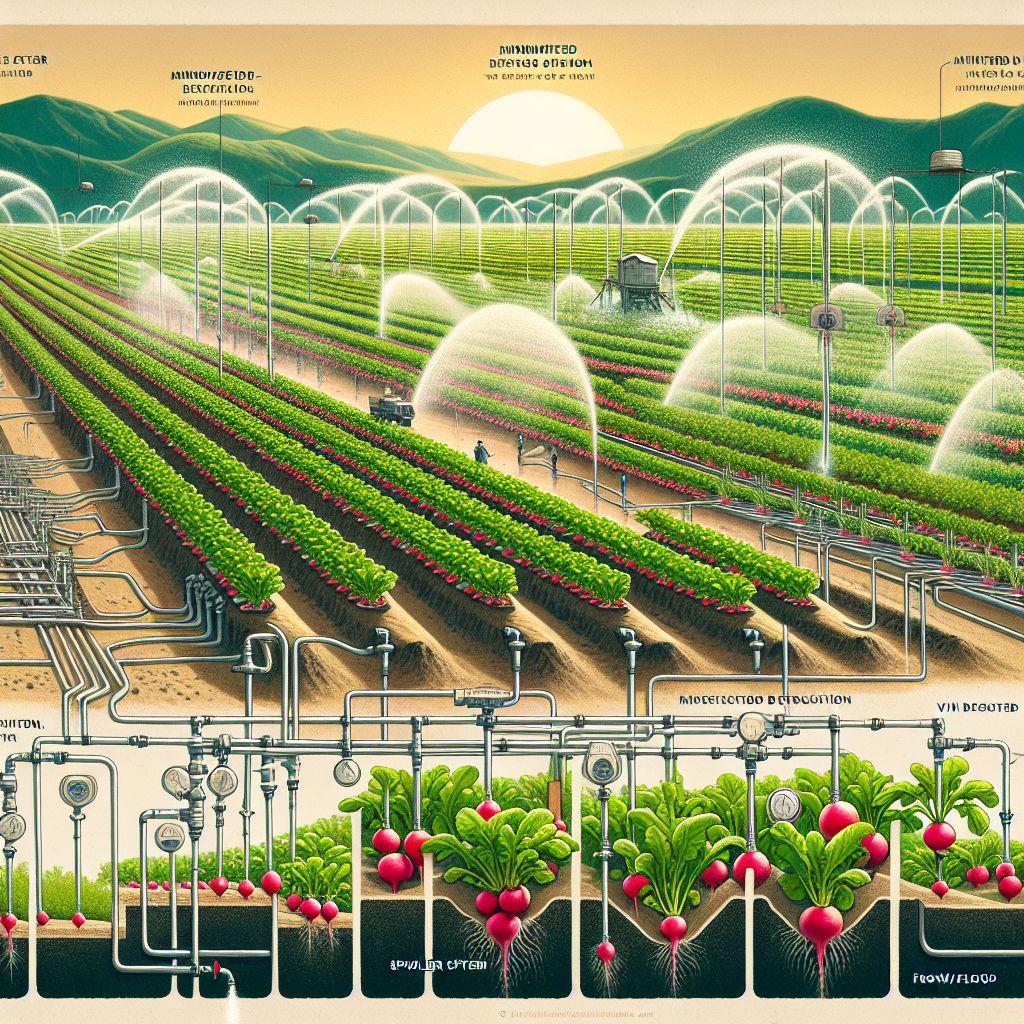
Different Irrigation Systems Used to Grow Radishes on a Farm
Radishes are a bit picky when it comes to watering. Too little, and they get woody; too much, and they might crack. That’s why choosing the right irrigation system is crucial for a bountiful harvest.
Exploring Drip Irrigation: Maximizing Water Efficiency for Radishes
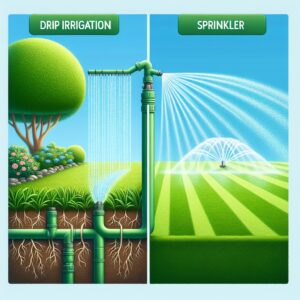
Drip irrigation is like giving your radishes a personal water bottle that they can sip from throughout the day. It delivers water slowly and directly to the root zone, where it’s needed most. This method minimizes evaporation and runoff, making it the most efficient option, especially in areas with water scarcity.
- Install drip lines along the rows of radishes.
- Set timers to water at the coolest parts of the day to reduce evaporation.
- Adjust flow rates to meet the specific needs of your radish variety.
Sprinkler Systems: Providing Uniform Water Distribution for Radish Crops
Sprinkler systems are like rain on demand for your radish field. They can cover large areas and provide a uniform distribution of water. While they’re not as efficient as drip systems, they can still be a good choice if set up and timed correctly.
For instance, watering in the early morning reduces water loss to evaporation. And by adjusting the sprinkler heads to avoid paths and non-crop areas, you’re ensuring every drop goes where it’s needed.
Furrow and Flood Irrigation: A Classic Approach to Modern Agriculture
Then there’s the old-school method—furrow and flood irrigation. It’s like filling a bathtub for your radishes, letting them soak up water from the ground. While it’s less expensive to set up, it’s also less efficient and can lead to soil erosion and nutrient runoff.
Here is a table summarizing the pros and cons of different irrigation systems for growing radishes:
|
Irrigation System |
Pros |
Cons |
|---|---|---|
|
Drip Irrigation |
– Efficient water usage, minimizes evaporation and runoff. 1, 3, 4 |
– Initial installation can be expensive. 1, 3 |
|
Sprinkler/Overhead |
– Inexpensive to install. 1, 4 |
– Promotes foliar diseases on pepper plants. 1, 4 |
|
Furrow/Flood |
– Simple system, low installation cost. 1, 3 |
– Very high water usage. 1, 3 |
The table highlights that drip irrigation has advantages for water efficiency and disease prevention for radishes but requires more upfront costs. Sprinklers are inexpensive but can lead to foliar diseases. Furrow irrigation is simple but very water-intensive. 1, 2, 3, 4
Evaluating Irrigation System Options: Which One Suits Your Radish Farm?
When it comes down to it, the best irrigation system for your radish farm depends on a few factors:
Size of your farm: Drip systems are great for small to medium-sized operations, while sprinklers can cover larger areas.
Soil type: Sandy soils drain quickly and may benefit more from drip irrigation, while clay soils hold water longer and could work with sprinkler systems.
Water availability: If water is scarce, go for the most efficient system—drip irrigation.
Budget: Consider the initial setup costs versus long-term savings on water and energy.
Choosing the right system is about balancing these factors to find the sweet spot for your farm’s needs. Remember, the goal is to grow juicy, crunchy radishes while being kind to the planet and your wallet.
Switching gears, let’s dive into the types of solar panels you can integrate with your irrigation system to ensure those radishes get the best care possible.
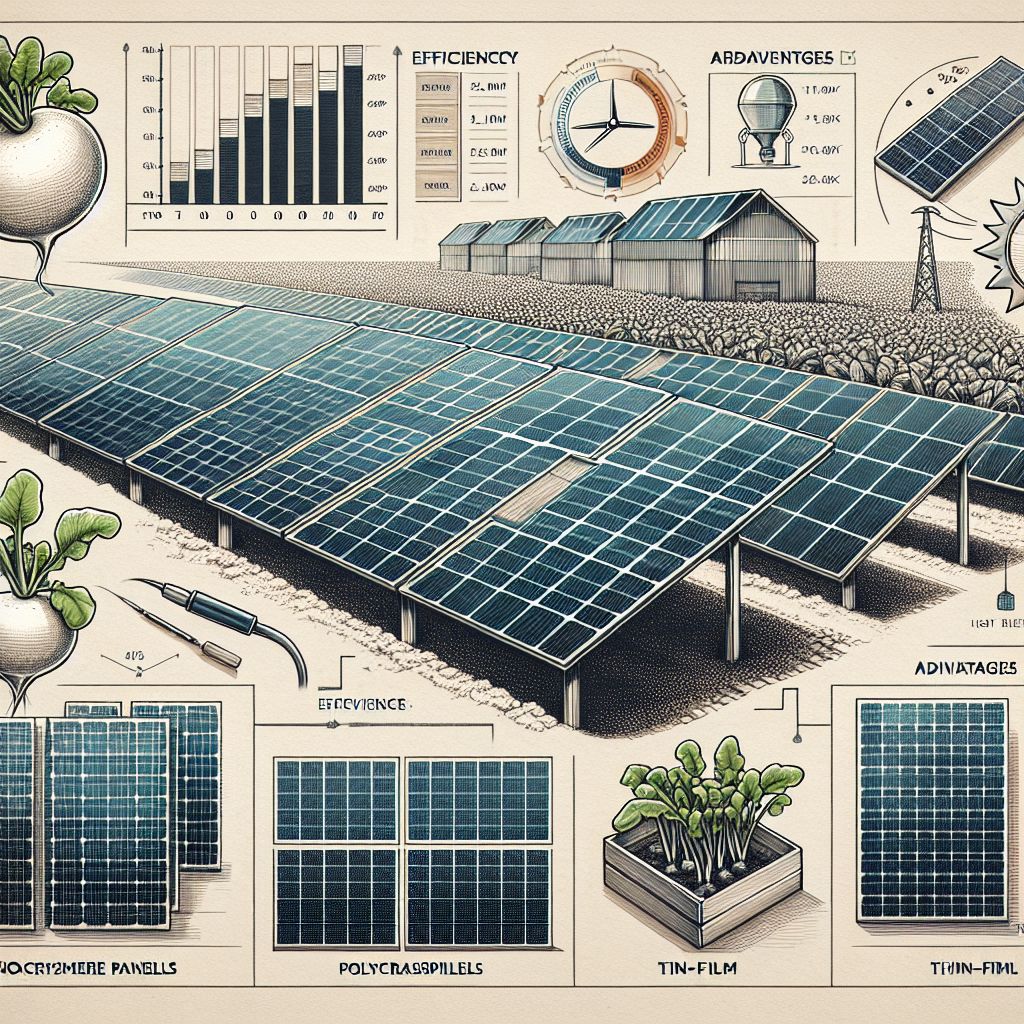
Different Solar Panels You Can Add to the Irrigation System to Grow Radishes on a Farm
Choosing the right type of solar panel is essential for maximizing efficiency and meeting the energy demands of your irrigation system. Here’s a rundown of the most common solar panels used in agriculture:
Monocrystalline Panels: The Efficient Choice for Growing Radishes on a Farm
Monocrystalline solar panels are top-notch when it comes to efficiency. They’re made from single-crystal silicon, which means they can convert more sunlight into electricity than other types. They’re sleek, they last longer, and they perform better in low-light conditions, which is great for early mornings or cloudy days when your radishes still need watering. For more information on solar-powered solutions in agriculture, check out our comprehensive guide on solar irrigation system components for efficient farming.
Polycrystalline Panels: Budget-Friendly
Polycrystalline solar panels are the go-to for farmers watching their pennies. Made from fragments of silicon melted together, these panels are less expensive and still offer decent efficiency. They might take up more space than monocrystalline panels, but they’ll get the job done without breaking the bank.
Thin-Film Solar Panels: Flexible Installation Options
Thin-film solar panels are the rebels of the solar world. They’re made by layering photovoltaic material on a substrate. These panels are lightweight, flexible, and can be installed on a variety of surfaces. They’re less efficient than mono- and polycrystalline panels, but they work well in high-temperature environments, which can be a big plus depending on your farm’s location.
Right below is a table looking at all the different solar panel options:
|
Solar Panel Type |
Efficiency Range |
Advantages |
Disadvantages |
|---|---|---|---|
|
Monocrystalline |
17-22% |
Highest efficiency, space-saving, long lifespan. 2 | |
|
Polycrystalline |
15-17% |
Lower efficiency, requires more space. 2 | |
|
Thin-Film |
10-13% |
Lightweight, flexible, good temperature coefficient. 2 |
Lowest efficiency, requires large area. 2 |
Monocrystalline panels provide the highest efficiency in a compact area but at a higher upfront cost (2, 3). Polycrystalline panels offer a balance of efficiency and cost (2, 3). Thin-film panels have lower efficiency but perform better in high temperatures (2). The optimal choice depends on factors like available space, budget, local climate conditions, and specific irrigation requirements for growing radishes.
Now, let’s wrap this up with a key decision:
Selecting the Right Solar Panel for Your Irrigation Needs
Choosing the right solar panel boils down to your farm’s specific conditions and your goals. Consider these factors:
How much sun does your farm get throughout the year?
What’s the size of the area you need to cover with solar panels?
How much energy does your irrigation system require?
What’s your budget for the initial investment?
Answering these questions will guide you to the solar panel that fits your farm like a glove, ensuring your radishes get the care they need while you do your part for the planet.
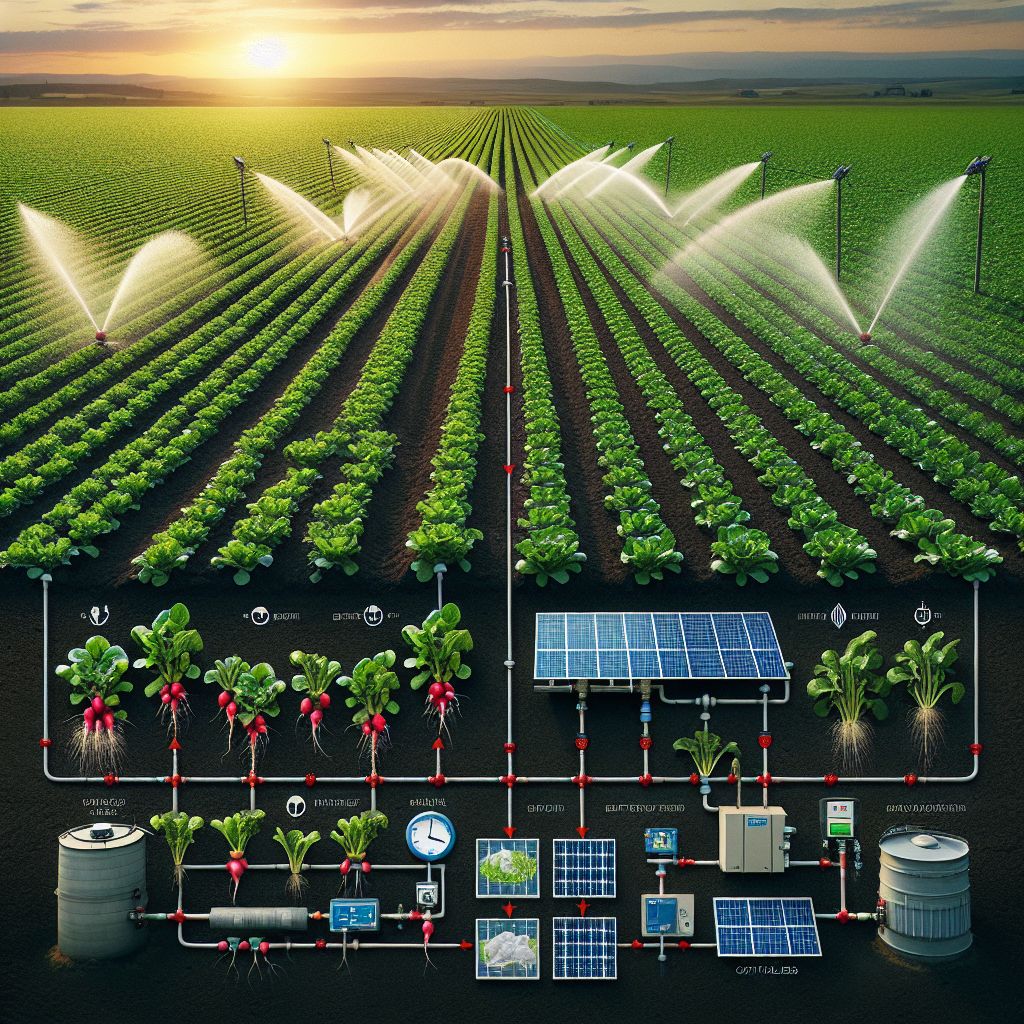
Cost and Increased Efficiency in Growing Radishes: Solar Irrigation Systems Versus Regular Irrigation Systems
Let’s talk turkey—or rather, radishes and dollars. When it comes to solar irrigation systems, the initial setup might make you gulp. But hold on, because the long-term efficiency gains are where the magic happens.
Breaking Down the Costs: Upfront Investment and Long-Term Savings
Sure, you’ll need to shell out some cash at the start. Solar panels, batteries, controllers, and the irrigation system itself come with price tags. But think of it as planting a seed that’ll grow into a money tree. Solar energy slashes your electricity bills, and efficient water use means lower water bills and healthier crops—leading to better sales. Plus, maintenance costs for solar systems are relatively low, so once you’re set up, you’re set for a while.
Here’s the breakdown:
Solar panels: $0.70 to $1.50 per watt
Irrigation system components: $300 to $10,000, depending on the size and complexity
Installation: Varies, but can often be reduced with DIY approaches
Performance Analysis: Does Solar Really Outperform Traditional Methods?
In a word: Yes. Solar-powered irrigation systems are more efficient than traditional methods because they use renewable energy and can be fine-tuned to deliver water exactly when and where it’s needed. This precision conserves water—a precious resource—and ensures your radishes don’t suffer from too much or too little hydration.
Real-Life Savings: Farmers’ Testimonials on Switching to Solar Irrigation
One farmer reported cutting his water usage by 40% after installing a solar-powered drip irrigation system. His radishes were healthier, and his water bills were lower—a clear win-win scenario.
So, when you’re weighing the costs, remember to factor in these long-term benefits. It’s not just about the money you’ll save; it’s also about the positive impact you’ll have on the environment and the sustainability of your farming practices.
This table compare the pros and cons of solar-powered irrigation systems and conventional irrigation systems:
|
Aspect |
Conventional Irrigation System |
Solar-Powered Irrigation System |
|---|---|---|
|
Pros |
No ongoing energy costs, uses free solar power. 5 | |
|
Simple installation and maintenance. 1 |
Environmentally friendly, reduces carbon footprint. 3 | |
|
Reliable water supply even during power outages. 5 | ||
|
Long lifespan of solar panels (25-30 years). 5 | ||
|
Cons | ||
|
Susceptible to power outages. 5 |
Requires some technical knowledge for installation/maintenance. 3, 4 | |
|
Environmental impact from energy use. 3 |
Risk of over-abstraction of groundwater if not managed properly. 3, 4 | |
|
Potential for water waste/inefficiency. 1 |
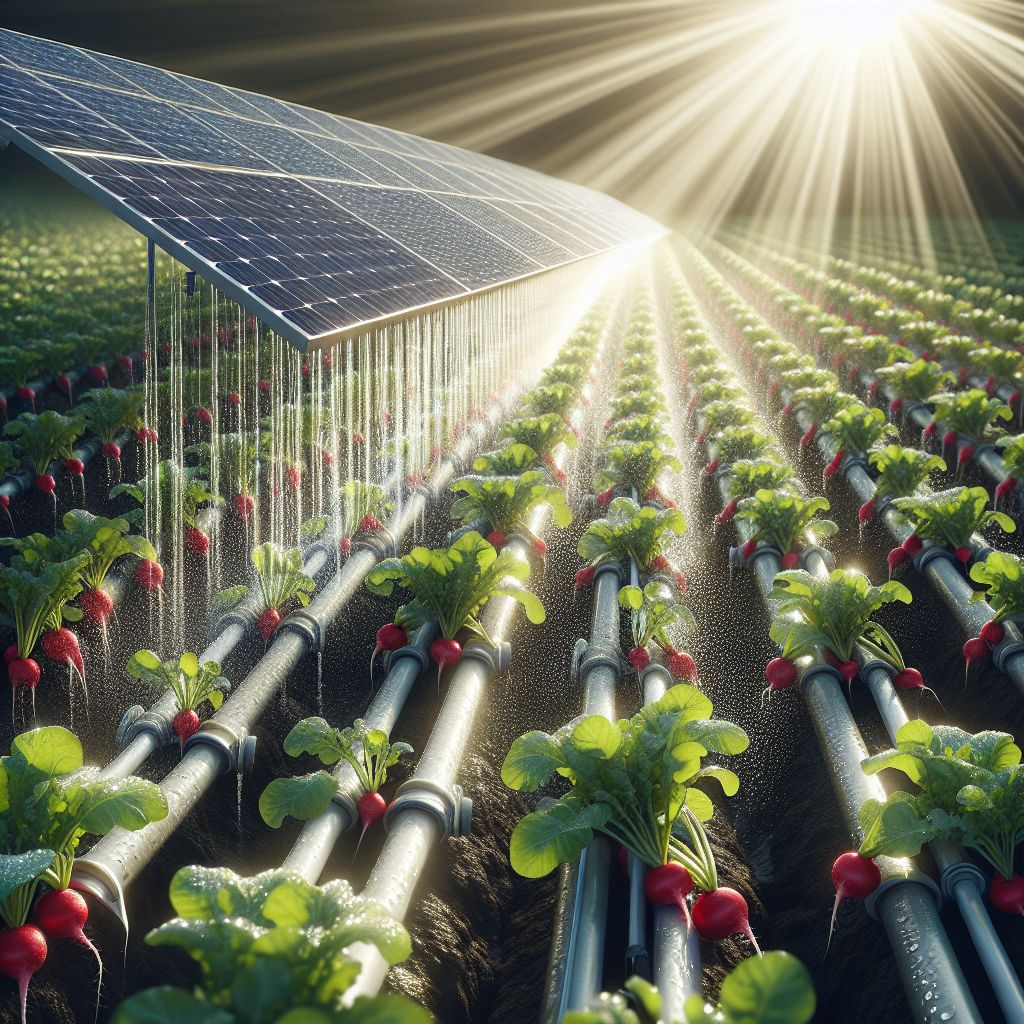
What is the Most Efficient Combination: Solar Panels and Irrigation Systems for a Radishes Farmer
Finding the most efficient combination of solar panels and irrigation systems is like finding the perfect recipe for a delicious dish. It takes a bit of experimentation, but once you’ve got it, you’re golden.
Identifying the Optimal Setup for Solar Panels and Irrigation Technology
To nail the perfect setup, you’ll want to consider growing and irrigating radishes economically.
The specific water needs of your radish crop at different growth stages
The average sunlight your farm receives, factoring in seasonal changes
The efficiency and capacity of the solar panels you’re considering
The type of irrigation system that best suits your soil and radish variety
It’s a balancing act, but when you hit that sweet spot, you’ll see your radishes—and your savings—flourish.
Remember, the most efficient setup isn’t just about the equipment. It’s also about how you manage it. Regularly checking your irrigation system for leaks, monitoring soil moisture levels, and adjusting your watering schedule based on weather forecasts are all part of the equation.
Case Studies: Successful Radish Farms Using Solar-Powered Irrigation
Take the case of a farm in Arizona, where scorching summers are the norm. By adopting solar-powered drip irrigation, they managed to cut water usage by half while boosting their radish yield by 25%. The farm’s success is a testament to the efficiency of combining solar power with precision irrigation, ensuring that every drop of water is used to its fullest potential.
Another inspiring story comes from a small-scale radish grower in Oregon who installed solar panels on an unused section of land. The energy generated now powers a sprinkler system that maintains optimal soil moisture levels, leading to a dramatic decrease in water consumption and energy costs. These real-world examples show that solar-powered irrigation systems are not just a concept but a practical solution for modern farming challenges.
Expert Tips: Getting the Most Out of Your Investment with the Right Solar Panel and Irrigation System Combination
When it comes to maximizing the return on your investment, it’s all about choosing the right combination of solar panels and irrigation system for your specific situation. Here are some expert tips:
Start by assessing your farm’s sun exposure and select a solar panel type that aligns with your region’s climate.
Match the capacity of your solar power system with the energy needs of your irrigation setup to ensure consistent operation.
Regularly maintain both your solar panels and irrigation system to prevent any disruptions in performance.
All the facts seem to point to using monocrystalline solar panels in conjunction with a drip irrigation system to achieve the best balance between cost and efficiency. The panels are a dependable source of power, while the drip system ensures the water goes right to the lettuce’s roots, reducing both evaporation and runoff.
It’s also wise to stay updated on the latest technology advancements in both solar power and irrigation systems. Innovations are always on the horizon, and staying informed could lead to even more savings and efficiency gains.
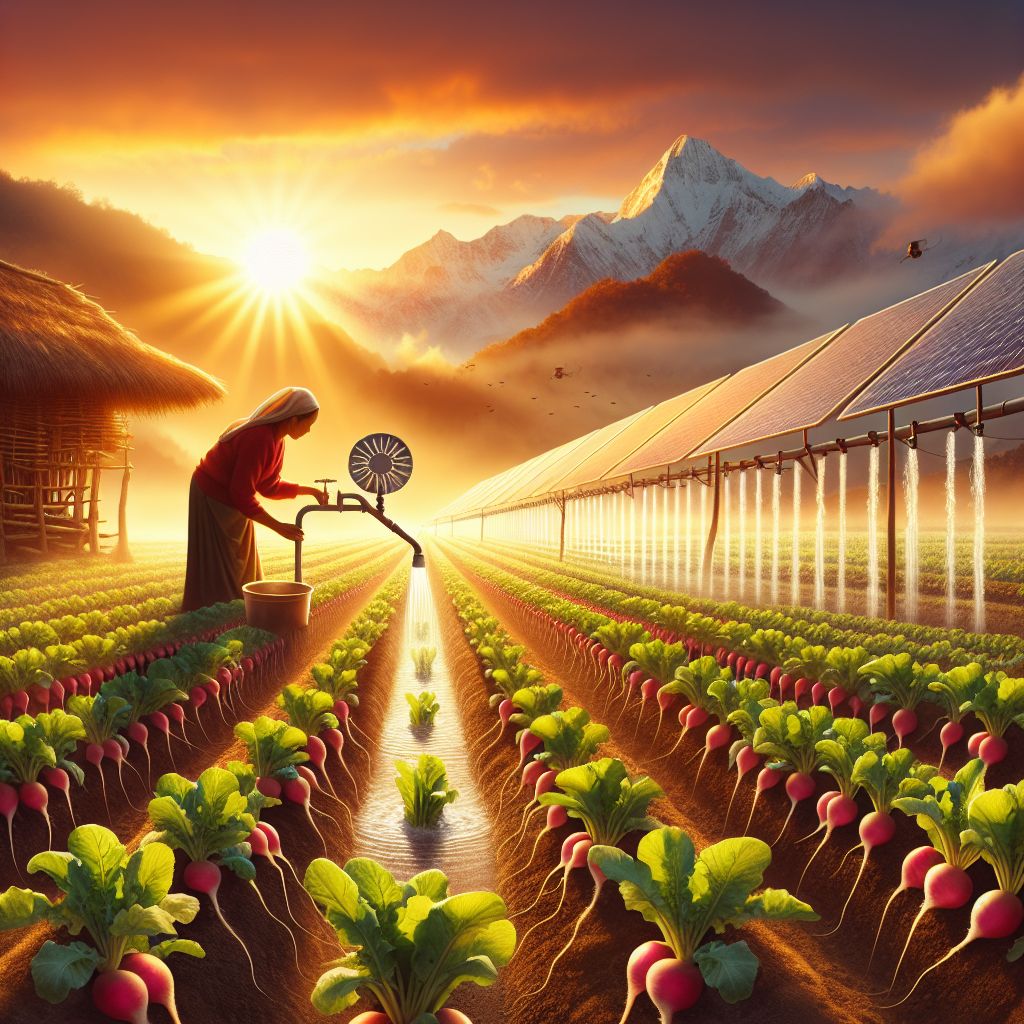
Conclusion: Having an Irrigation System is a Good Choice for a Radish Farmer, is Adding Solar-Power to it a Smart Decision?
Yes, absolutely. Integrating solar power into your radish farm’s irrigation system is a smart decision that aligns with both economic and environmental goals. The initial investment pays off with reduced water and energy bills, improved crop yields, and a smaller carbon footprint. As the world leans more towards sustainability, taking this step not only prepares your farm for the future but also sets an example for responsible agriculture practices.
Frequently Asked Questions (FAQ)
How Does Solar-Powered Irrigation Impact the Growth of Radishes?
Solar-powered irrigation can lead to more consistent soil moisture levels, which is crucial for the growth of radishes. By providing regular, targeted watering, you can avoid common problems like cracking or woodiness, leading to a higher quality crop. Additionally, the use of clean energy contributes to a healthier environment for all forms of life on the farm.
Is Solar-Powered Irrigation Cost-Effective for Small-Scale Farms?
Yes, it can be. While the upfront costs might seem daunting, small-scale farms often find that solar-powered irrigation systems pay for themselves over time through savings on water and electricity. Additionally, the scalability of solar systems means that they can start small and expand as the farm grows or as more funds become available.
Furthermore, smaller operations can benefit from government incentives, which can significantly reduce the initial investment. It’s important to research local grants, tax credits, and rebate programs that support renewable energy initiatives on farms.
Can Existing Irrigation Systems be Easily Converted to Solar Power?
Many existing irrigation systems can be retrofitted to run on solar power. The key is to install a solar electric system that can provide enough power for the irrigation pump. It might require some adjustments and additional equipment, but it’s certainly possible and has been successfully implemented by numerous farms around the world.
What Maintenance is Required for a Solar-Powered Irrigation System?
Maintenance for a solar-powered irrigation system generally includes cleaning the solar panels to ensure maximum sunlight absorption, checking batteries if used, and ensuring that the irrigation equipment such as hoses, drippers, or sprinkler heads are in good working condition. It’s relatively straightforward and can often be done by the farm staff, with periodic check-ups by a professional.
Are There Government Incentives for Adopting Solar Irrigation Systems?
Many governments offer incentives for adopting renewable energy solutions, including solar irrigation systems. These can come in the form of tax credits, rebates, or grants. The specifics vary by location and change over time, so it’s important to consult with local authorities or renewable energy experts to understand what incentives are currently available.



Leave a Reply