
Article-At-A-Glance
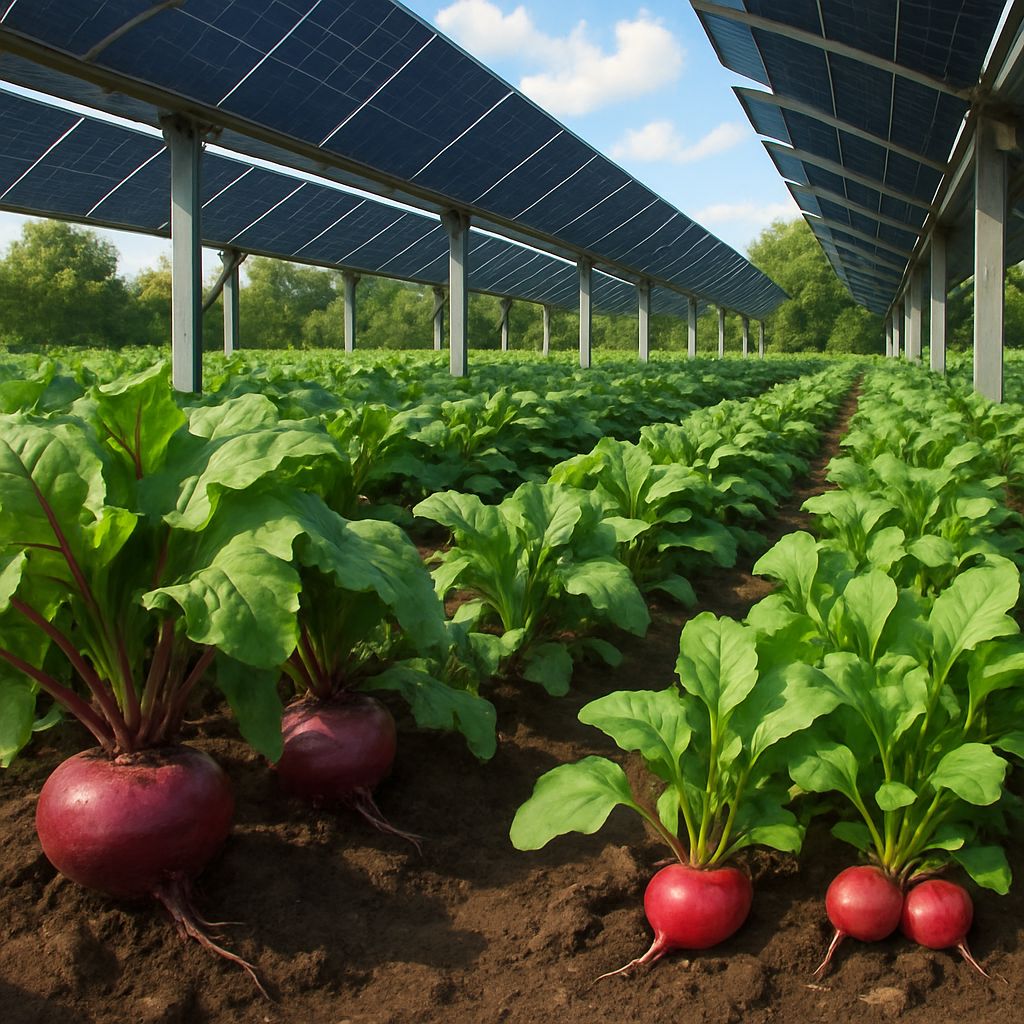
- Beets and radishes are among the top-performing root crops in agrivoltaic systems, benefiting from partial shade, reduced heat stress, and better moisture retention.
- Cornell University researchers tested radishes and radicchio between solar panel rows on a farm near Albany, NY — revealing critical timing insights every grower needs to know.
- Agrivoltaic farming can increase land-use efficiency by up to 70% compared to keeping solar and agriculture completely separate.
- Fall planting under solar panels stunted radish growth in Cornell’s 2024 trials — spring planting is the clear winner for root crops in short-season climates.
- The right panel height, row spacing, and seasonal timing are the three variables that determine whether your agrivoltaic beet or radish crop thrives or underperforms.
Solar Panels and Crop Rows Can Work Together to Boost Your Yield
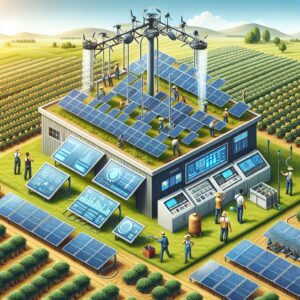
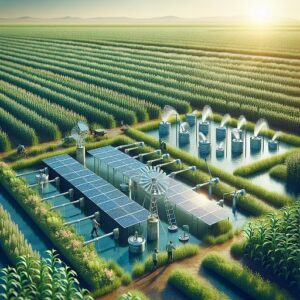
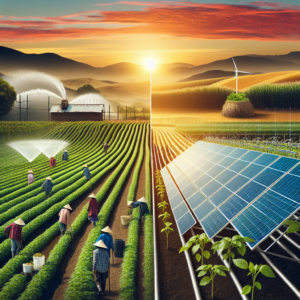
Agrivoltaics — growing crops beneath solar panels — is one of the most practical dual-use strategies available to modern farmers, and beets and radishes may be its best-kept secret.
The concept is straightforward: solar panels capture energy from above while shade-tolerant root crops grow in the microclimate below. But the results go far beyond simply sharing space. Reduced heat stress, improved moisture retention, and more uniform growing conditions can measurably improve root crop quality and yield. For farmers looking to maximize every acre, this approach is worth serious attention. 8760 Solar provides an in-depth look at which crops perform best in these systems, making it a valuable resource for anyone exploring agrivoltaics.
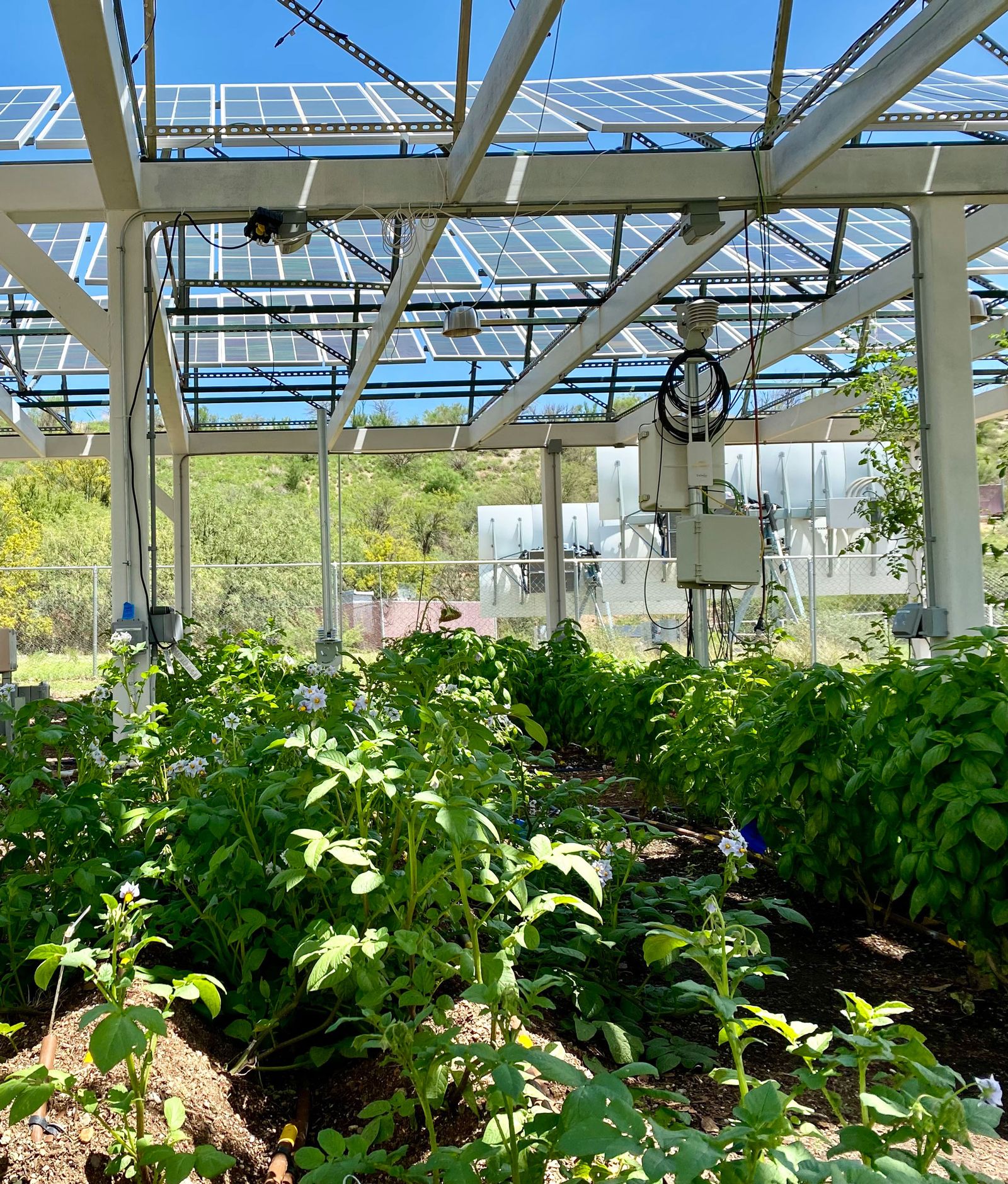
“null” from www.wired.com and used with no modifications.
Why Beets and Radishes Thrive Under Solar Panels
Root crops like beets and radishes are naturally well-suited to the conditions created beneath solar arrays. Unlike fruiting crops that need maximum direct sunlight to set fruit, root vegetables do much of their productive work underground. The leaf canopy above ground simply drives photosynthesis — and it does not need full sun to do that effectively.
Partial shade from solar panels reduces peak temperatures at the soil surface, limits evaporation, and softens the intensity of light hitting the foliage. For beets and radishes, this combination directly addresses the two most common causes of poor root quality: heat stress and irregular soil moisture.
How Partial Shade Reduces Heat Stress on Root Crops
Heat is the enemy of root development in both beets and radishes. When soil temperatures climb too high, radishes bolt — sending up flowering stalks instead of developing the edible root. Beets exposed to prolonged heat stress produce woody, fibrous roots with reduced sugar content.
Solar panels act as a passive heat buffer. The shade they cast during the hottest parts of the day — typically mid-morning through mid-afternoon — keeps the soil cooler and more stable. This is especially valuable during summer months in temperate climates, where unshaded fields can reach surface temperatures that actively damage root crops.
Research from agrivoltaic trials consistently shows that shaded growing zones under panels maintain lower ambient temperatures compared to open-field controls. For root crops specifically, this translates to longer productive growing windows before bolting or heat damage occurs.
Moisture Retention Under Panels Supports Root Development
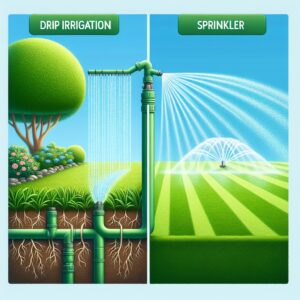
Solar panels intercept rainfall and create zones of reduced direct sun exposure, both of which slow soil evaporation. For beets and radishes, consistent soil moisture is non-negotiable — irregular watering causes cracking in beet roots and pithy, hollow cores in radishes. The microclimate beneath panels naturally moderates these moisture swings, reducing irrigation demand by as much as 20 to 30% compared to open-field production according to agrivoltaic system data.
How Reduced Light Intensity Prevents Common Root Crop Defects
Beets grown under direct, intense sunlight are more prone to uneven development and surface cracking. The diffused light environment under solar panels produces more uniform photosynthetic activity, which supports steadier, more consistent root expansion. The result is rounder, more uniform beets with fewer surface defects — a meaningful quality improvement for both fresh market and storage crops.
What Cornell’s Agrivoltaic Research Tells Us About Beets and Radishes
Cornell University is one of the leading institutions actively testing agrivoltaic crop production in real-world farm conditions. Their ongoing research program, conducted at a solar farm near Albany, New York owned and operated by Greenbacker, is generating some of the most specific and actionable data available on root crops grown between solar panel rows.
The research is published in the journal Environmental Research Food Systems and represents one of the first structured, multi-season studies of its kind in the northeastern United States — a region with distinct seasonal limitations that make timing absolutely critical. For farmers in this region, understanding the benefits of solar panels can be crucial for optimizing agricultural productivity.
Radishes Grown Between Solar Panel Rows: What the Data Shows
In Cornell’s 2024 trials, radishes and radicchio were planted in the roughly 20 feet of space between solar panel rows. The research team found that both crops were affected by shade patterns created during early morning and late afternoon hours — times when the sun’s low angle caused the panels to cast longer shadows across the planting rows. This highlights the benefits of solar panels for farmers in optimizing crop growth.
Radishes were particularly sensitive to this reduced light exposure. The early morning and late afternoon shading stunted overall growth, pointing to a clear lesson: total daily light hours matter as much as light intensity when growing root crops under panels. A system that blocks too much cumulative light — especially in already low-light seasons — will undercut yield regardless of how well the microclimate performs otherwise. For more insights, explore the impact of solar farm shade on crop yields.
Why Fall Planting Stunted Growth in the Albany Trial
The 2024 fall planting at the Albany site revealed a critical limitation that any farmer considering agrivoltaics in the northeastern U.S. needs to understand. As daylight hours shortened through September and October, the solar panels compounded the already-diminishing light availability. Radishes, which need consistent daily light exposure to drive root development, received significantly less usable sunlight than they would have in an open field during the same period. For farmers exploring solar-powered solutions, understanding solar irrigation systems can be beneficial in mitigating some of these challenges.
The combination of shorter days, lower sun angles, and panel shading created a light deficit that the crops simply could not overcome. Radish roots were smaller and less developed than expected, and the radicchio showed similarly stunted growth. The takeaway is not that agrivoltaics fails for root crops — it is that season selection is as important as crop selection when designing an agrivoltaic system.
What the Next Round of Cornell Experiments Is Testing in 2025
- Strawberries, which are low-growing and shade-tolerant, making them strong candidates for under-panel production
- Raspberries, which benefit from filtered light and reduced heat stress during fruiting
- Winter wheat, testing whether grain crops can achieve viable yields in partially shaded conditions
- Continued root crop trials with adjusted seasonal timing based on 2024 findings
The 2025 Cornell research program is expanding beyond radishes and radicchio, broadening the dataset for farmers who want to match the right crop to the right system. Strawberries and raspberries are particularly interesting additions because they represent perennial crops that could deliver long-term returns without replanting costs each season. For more information, check out this article on soil benefits beneath solar panels.
Winter wheat is the most ambitious addition to the trial lineup. If grain crops can achieve acceptable yields under partial panel shade, it would dramatically expand the range of farms that could benefit from agrivoltaic systems — including large-scale commodity operations that currently have little economic incentive to explore dual-use land arrangements.
What Cornell’s evolving research makes clear is that agrivoltaics is not a one-size-fits-all system. It is a framework that rewards careful planning, seasonal awareness, and crop selection based on your specific panel configuration and climate zone. The Albany trials are building exactly the kind of location-specific, peer-reviewed data that farmers need to make confident decisions.
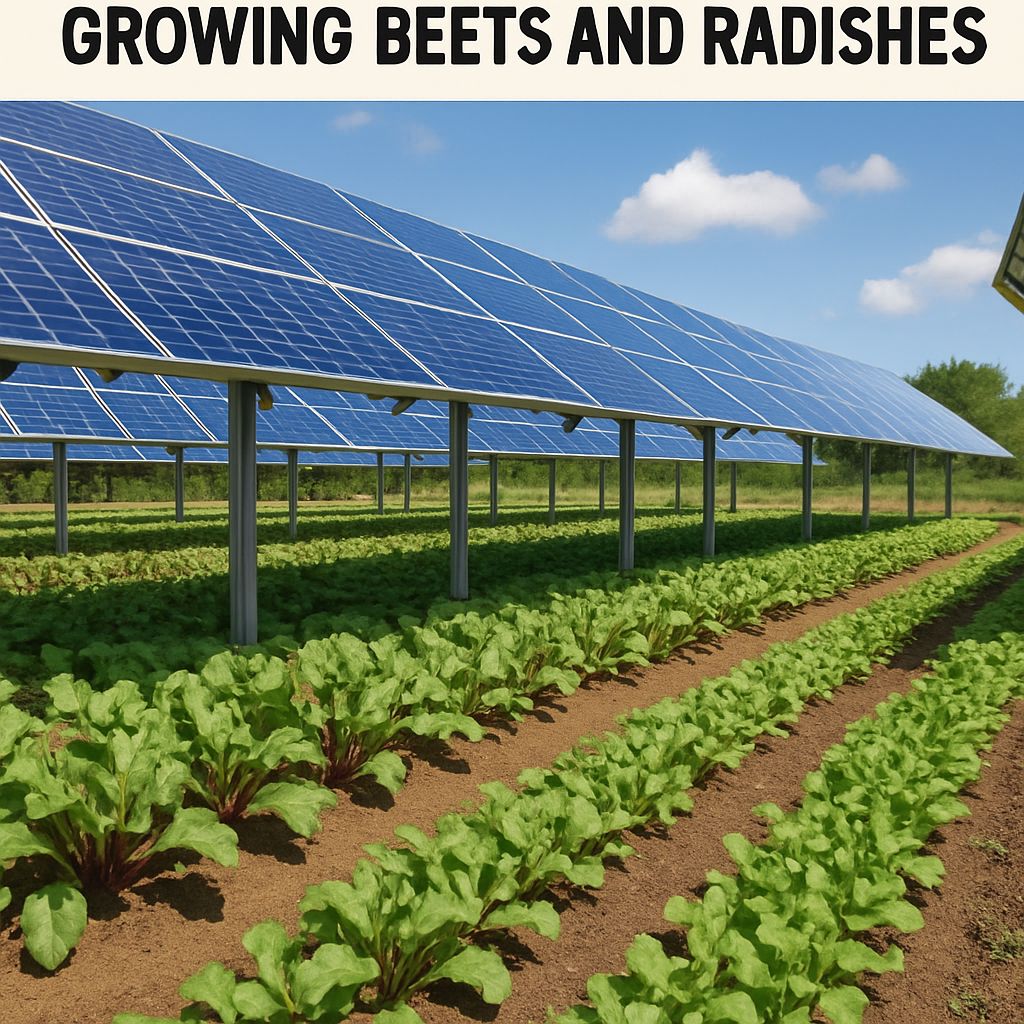
The Right Solar Panel Setup for Growing Beets and Radishes
Getting the panel configuration right is the single most important infrastructure decision in an agrivoltaic system. Panel height, row spacing, and orientation all directly shape the light environment your beets and radishes will grow in. A poorly designed layout can create excessive shade that limits yield, while an optimized setup enhances the microclimate without sacrificing meaningful solar energy output.
The goal is not to minimize shade — it is to manage it. Beets and radishes need enough direct and diffused light to complete root development, but they benefit from the temperature and moisture buffering that moderate shade provides. Striking that balance starts with two specific design variables: row spacing and panel height.
Ideal Row Spacing to Balance Light and Shade
Cornell’s Albany research site uses approximately 20 feet of space between solar panel rows. This spacing is wide enough to allow meaningful crop production while still maintaining functional solar array density. For beets and radishes specifically, this spacing supports adequate light penetration during mid-day hours when the sun is high enough to clear panel edges and reach the soil below.
Narrower row spacing — anything under 12 to 15 feet — creates persistent shade zones that are too deep for root crop production in most temperate climates. Wider spacing above 25 feet begins to reduce the microclimate benefits that make agrivoltaics advantageous in the first place. The 18 to 22-foot range consistently emerges as the practical sweet spot for root vegetables based on current trial data.
Panel Height Requirements for Root Crop Access and Airflow
Panel mounting height affects both the light angle reaching crops and the practical ability to access rows for planting, maintenance, and harvest. Panels mounted at a minimum of 6 to 8 feet above ground level allow for adequate airflow beneath the array, reducing humidity buildup that can promote fungal disease in dense root crop plantings. Higher mounting at 10 to 12 feet improves equipment access for mechanized farms but increases installation costs. For small to mid-scale operations growing beets and radishes by hand or with compact equipment, the 7 to 9-foot range offers the best balance of microclimate performance and practical access.
Solar Panel Types Best Suited for Agricultural Use
Not every solar panel type performs equally well in an agrivoltaic context. The choice of panel technology affects energy output, cost, and in some configurations, the quality of light that reaches crops below. Understanding the three main panel categories helps farmers and landowners make infrastructure decisions that serve both energy generation and crop production goals. For those interested in irrigation systems powered by solar panels, it’s important to consider how these systems integrate with your chosen solar technology.
Monocrystalline Silicon Panels: High Efficiency for Space-Limited Farms
Monocrystalline silicon panels are the highest-efficiency option currently available at commercial scale, converting sunlight to electricity at rates typically between 20 and 23%. For agrivoltaic systems where maximizing energy output per square foot matters — particularly on smaller farms where land area is limited — monocrystalline panels allow wider row spacing while maintaining strong energy production. This wider spacing directly benefits root crops like beets and radishes by improving light penetration to the growing zone below. For more information on solar-powered systems, explore our guide on solar irrigation system costs.
Polycrystalline Silicon Panels: A Cost-Effective Middle Ground
Polycrystalline panels offer efficiency ratings in the 15 to 17% range at a meaningfully lower upfront cost than monocrystalline options. For large-scale agrivoltaic installations where total system cost is a significant factor, polycrystalline panels can make the economics work more easily. The trade-off is that lower efficiency at the same energy output target requires either more panels or denser spacing — which can increase shading in the crop rows below if the layout is not carefully designed.
Thin-Film Panels: Flexible but Lower Output
Thin-film solar panels, including cadmium telluride and copper indium gallium selenide varieties, offer flexibility in mounting configurations and perform comparatively better in diffused light conditions than crystalline silicon panels. Their efficiency ratings typically fall between 10 and 13%, which means more surface area is required to match the output of crystalline alternatives.
For agrivoltaic applications, thin-film panels have one specific advantage worth noting: their better performance in low-light and overcast conditions means they continue generating meaningful energy on the cloudy days when panel shade is less of a concern for crops below. This makes them potentially well-suited for climates with high cloud cover frequency.
That said, the lower energy density of thin-film panels makes them a difficult fit for most commercial agrivoltaic operations where both energy revenue and crop yield need to justify the land use. They remain a viable niche option for specific climates and small-scale experimental installations.
Bifacial Panels: Double-Sided Energy Capture
Bifacial panels capture sunlight from both their front and rear surfaces, collecting direct radiation from above and reflected light from the ground or mulch below. In agrivoltaic installations, this dual-capture capability is particularly valuable. University of Arizona research found that agrivoltaic bifacial panels produced approximately 3% more electricity annually than identical panels mounted over bare soil, with efficiency gains reaching up to 9% during peak summer months. That energy surplus comes directly from the transpiration and reflected light generated by the crops growing beneath them — a genuine symbiotic relationship between the panels and the plants.
- Front-side efficiency: Comparable to standard monocrystalline panels at 18-22%
- Rear-side gain: Additional 5-30% energy yield depending on ground reflectivity
- Best ground cover pairing: Light-colored mulch or reflective soil amendments maximize rear-side capture
- Structural note: Requires mounting that allows light to reach the rear surface — standard flush mounts don’t work
- Long-term value: Higher upfront cost offset by superior lifetime energy output in dual-use farm settings
The key installation requirement for bifacial panels in an agrivoltaic context is ensuring the mounting system holds panels high enough and at an angle that exposes the rear surface to reflected ground light. This aligns naturally with the six-foot minimum elevation already required for tomato production, making bifacial panels a particularly clean fit for this type of system. For more information on related systems, explore the solar irrigation system cost guide.
Here is a comparison table of the four best solar panel types for agricultural use — focusing on features, efficiency, and suitability for farms.
|
Solar Panel Type |
Efficiency Range |
Cost per Watt (Approx.) |
Key Advantages for Agriculture |
Limitations |
Best Farm Applications |
|---|---|---|---|---|---|
|
Monocrystalline Panels |
17–22% 1 |
$0.90–$1.50 2 |
High efficiency, compact design, long lifespan, performs well in all climates |
Higher upfront cost |
Space-limited farms, rooftops, and irrigation systems 1 |
|
Polycrystalline Panels |
13–17% 3 |
$0.70–$1.00 3 |
Lower cost, durable, long lifespan, strong in direct sunlight |
Requires more space, less efficient in cloudy conditions | |
|
Thin-Film Panels |
10–13% 5 |
$0.50–$0.90 2 |
Lightweight, flexible, better low-light/shaded performance |
Lower efficiency, shorter lifespan |
Greenhouses, barns, shaded or irregular terrain 5 |
|
Bifacial Panels |
18–22% 6 |
$1.00–$1.60 6 |
Captures light from both sides, high energy yield, great for reflective surfaces like grass or soil |
Higher cost, more complex installation |
Agrivoltaics (dual-use with crops), open-field installations 6 |
These four types of solar panels represent the most effective options for agricultural operations, allowing farmers to select between high efficiency (monocrystalline, bifacial) and lower-cost scalability (polycrystalline, thin-film) depending on land availability, sunlight exposure, and budget.
Seasonal Timing Makes or Breaks Your Agrivoltaic Harvest
Cornell’s Albany trials demonstrated conclusively that when you plant matters as much as what you plant. The same radish variety that struggles under panels in a fall planting can perform well in spring when day length, sun angle, and temperature all align to support root development. For farmers in the northeastern U.S. and similar short-season climates, building your agrivoltaic planting calendar around seasonal light availability — not just frost dates — is the planning shift that separates successful harvests from disappointing ones.
Why Spring Planting Outperforms Fall for Radishes Under Panels
Spring is the optimal planting window for radishes in agrivoltaic systems, and Cornell’s data from the Albany trials makes the reason clear. As days lengthen from April through June, the sun’s arc climbs higher in the sky, reducing the angle at which panel shadows fall across crop rows. The result is more usable mid-day light reaching the soil surface — exactly what radishes need during their 25 to 30-day root development window. Learn more about the benefits of solar panels for farmers.
Spring planting also aligns the radish growing period with rising soil temperatures, which accelerates germination without pushing into the heat extremes of mid-summer. Panels provide just enough thermal buffering in spring to keep soil conditions stable while the days are still warming. This creates a protected microclimate that open fields simply cannot replicate during the same period.
Seasonal Planting Guide for Root Crops Under Solar Panels
Spring (March–May): Best window for radishes. High sun angle improves light penetration through panel rows. Soil temps rising steadily. Panels buffer late frost risk and moderate daytime heat.
Early Summer (June): Viable for beets. Panels reduce peak heat stress during the hottest hours. Moisture retention under panels reduces irrigation frequency.
Late Summer (August): Second radish planting possible in some climates. Declining day length requires careful monitoring. Works best in regions south of New York.
Fall (September–October): High-risk window for root crops under panels in northeastern U.S. Shorter days plus panel shading creates compounded light deficit. Cornell’s 2024 trials showed stunted radish and radicchio growth in this window.
The practical implication for farmers is straightforward: anchor your agrivoltaic root crop calendar around spring as the primary planting season. If your climate and panel configuration allow a second planting in late summer, treat it as a bonus rather than a core production window until you have site-specific data to support it.
How Short Growing Seasons Like New York’s Affect Your Planning
New York state and similar northeastern climates present a specific challenge for agrivoltaic farming: the productive growing window is compressed between late spring frosts and early fall temperature drops. When you add the light-limiting effect of solar panels during shoulder seasons, that window narrows further. Radishes, with their short 25 to 30-day maturity timeline, are actually well-positioned to fit multiple plantings into a compressed season — but only if the first planting goes in early enough to avoid the low-angle shading that plagued Cornell’s fall trial.
Beets require 50 to 70 days to maturity, which means a single well-timed spring planting is the realistic target for most northeastern agrivoltaic operations. Targeting a transplant or direct-seed date in late April to mid-May positions beets to complete root development before the hottest weeks of July — and well before fall light levels begin to drop. Farmers who plan their agrivoltaic calendar around these biological timelines, rather than simply matching their open-field schedule, will consistently outperform those who treat the panel environment as interchangeable with a standard field.
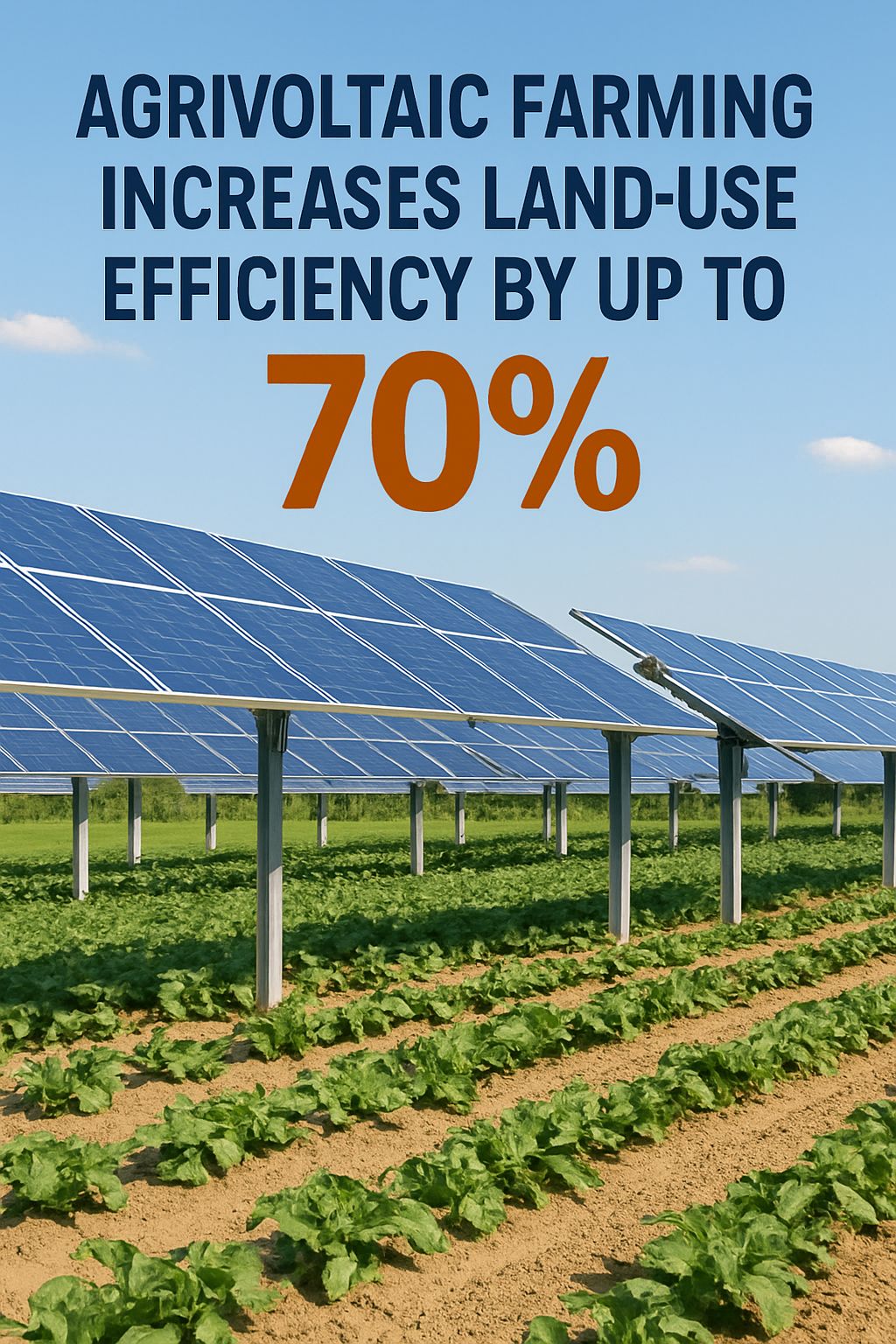
Agrivoltaic Farming Increases Land-Use Efficiency by Up to 70%
One of the most compelling arguments for agrivoltaic systems is not about crop quality or water savings — it is about raw land productivity. Combining solar energy generation with active crop production on the same footprint can increase the effective output of a given land area by up to 70% compared to dedicating that same acreage exclusively to either use. For farmers operating under land cost pressure or working with limited acreage, this efficiency gain has direct economic implications. Learn more about the benefits of solar panels for farmers.
The math works because solar panels and root crops are not competing for the same resource in the same way. Panels harvest energy from light hitting their upper surface. Beets and radishes harvest diffused and transmitted light below, while also benefiting from the microclimate the panels create. The land underneath an array that would otherwise sit as mowed grass or bare soil becomes productive agricultural ground — generating food revenue alongside energy revenue from the same installation.
Frequently Asked Questions
Here are the most common questions farmers and landowners ask when considering growing beets and radishes in an agrivoltaic system.
Can Beets Really Grow Well Under Solar Panels?
Yes. Beets are one of the better-suited root crops for agrivoltaic production. They are shade-tolerant compared to fruiting crops, and the partial shade environment created by solar panels directly addresses two of the biggest challenges in open-field beet production: heat stress and inconsistent soil moisture.
The reduced light intensity under panels produces more uniform root development, which means rounder, more consistently sized beets with fewer surface cracks. For fresh market growers where cosmetic quality affects price, this is a tangible benefit rather than just a theoretical one.
The key requirement is getting the seasonal timing right. Beets planted in late April to mid-May in northeastern climates will have enough daily light hours to complete root development well before fall light levels begin to drop. Pair that timing with a panel row spacing of at least 18 feet, and beets are a reliable agrivoltaic crop.
How Much Space Do You Need Between Solar Panel Rows to Grow Root Crops?
Cornell’s Albany research site uses approximately 20 feet between panel rows, and that spacing serves as a practical benchmark for root crop production. The 18 to 22-foot range consistently supports adequate light penetration for beets and radishes during spring and early summer planting windows. Spacing below 12 to 15 feet creates persistent shade that is too deep for productive root crop development in most temperate climates.
Does Shade from Solar Panels Reduce Radish Yield?
It depends heavily on timing and panel configuration. Cornell’s 2024 fall trial showed that shade from solar panels compounded the natural light deficit of shorter fall days, stunting radish root development. However, the same shading effect during spring planting — when day length is increasing and sun angles are higher — does not produce the same result.
|
Planting Season |
Panel Shade Effect on Radishes |
Expected Outcome |
|---|---|---|
|
Spring (Apr–May) |
Moderate, manageable shade |
Normal to improved yield |
|
Early Summer (Jun) |
Minimal mid-day shade |
Strong yield, heat buffering benefit |
|
Late Summer (Aug) |
Increasing afternoon shade |
Variable, climate-dependent |
|
Fall (Sep–Oct) |
Compounded light deficit |
Stunted growth (per Cornell 2024) |
The consistent finding across agrivoltaic research is that shade itself is not the problem — mistimed shade is. Radishes grown under panels during periods of naturally high light availability perform comparably to or better than open-field crops. Radishes grown under panels when ambient light is already marginal face a compounded disadvantage that is difficult to overcome through variety selection or soil management alone.
The practical rule: if you would not expect strong radish performance in an open field due to low light or shortening days, do not expect the panel environment to compensate. Plan your planting windows around periods when light is abundant, and let the panels do their job moderating temperature and moisture rather than asking them to overcome a seasonal light deficit they cannot fix. For more insights on how solar panels affect soil conditions, explore additional resources.
What Season Is Best for Growing Radishes Under Solar Panels?
Spring is the best season for growing radishes under solar panels, specifically the window from late March through May in most temperate climates. During this period, day length is increasing, sun angles are climbing, and mid-day light penetration through panel rows is at its seasonal best for the spring crop cycle.
A secondary planting in early June is viable in most northeastern and mid-Atlantic climates. By that point, soil temperatures are warm enough for fast germination and the sun is near its highest angle of the year, maximizing the light that reaches crop rows between panels. Radishes planted in early June can be harvested in early July, leaving the bed available for a beet succession planting or a cover crop through the rest of summer. Farmers interested in maximizing their yield can explore solar-powered irrigation systems to enhance their planting strategies.
Avoid fall planting as a primary production strategy in short-season climates until site-specific data from your own system justifies it. Cornell’s 2024 Albany trial is the clearest available evidence that fall root crop production under panels in northeastern climates carries significant yield risk. Use spring plantings to build your production base, and treat any fall experimentation as a secondary trial rather than a core income source.
Do Agrivoltaic Systems Work in Short-Season Climates Like New York?
Yes, agrivoltaic systems work in short-season climates, but they require tighter planning than in longer-season regions. The Cornell research program is being conducted specifically in New York state, which validates the approach for northeastern conditions. The key is aligning crop selection and planting timing to the available productive window — which in New York runs roughly from late April through early September for most root crops.
Radishes are particularly well-suited to short-season agrivoltaic production because their 25 to 30-day maturity timeline allows multiple harvests within a single growing season. A farmer in New York could realistically complete two spring radish successions and begin a beet crop before mid-summer heat sets in — all within the same panel footprint.
The 2025 Cornell trials expanding into strawberries, raspberries, and winter wheat will generate additional data specific to northeastern growing conditions. As that research matures, short-season farmers will have an increasingly robust dataset to guide crop selection, panel configuration, and seasonal timing decisions for their own agrivoltaic operations. For now, spring-planted radishes and beets represent the most evidence-backed starting point for any northeastern farmer exploring this system.
If you’re ready to explore whether agrivoltaics is the right fit for your operation, 8760 Solar offers detailed guidance on designing solar systems that support both energy generation and crop production goals.



Leave a Reply