

Key Takeaways
The energy costs of solar-powered irrigation systems can be significantly reduced, with initial investments ranging from $1,000 to $10,000 depending on system size and complexity.
These systems are green, reducing carbon footprints by using renewable energy sources.
Solar irrigation systems require little maintenance, ensuring long-term reliability and reduced operational costs.
Proper site assessment and planning are crucial for maximizing the efficiency and effectiveness of solar-powered irrigation systems.
Case studies show that solar irrigation can improve livestock health and productivity by providing a consistent water supply.
Solar Power Irrigation for Livestock: Benefits & Best Practices
Introduction to Solar-Powered Livestock Irrigation
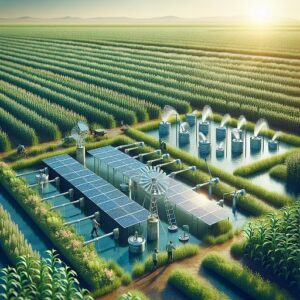
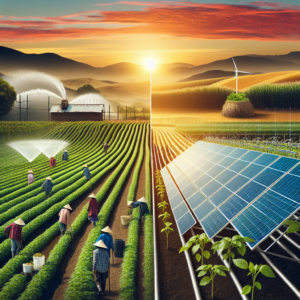
Solar power irrigation for livestock is a game-changer in sustainable farming. By harnessing the sun’s energy, farmers can ensure a steady water supply for their animals, even in remote areas. This method not only cuts down on energy costs but also promotes environmental sustainability. Let’s dive into why solar-powered irrigation is becoming the go-to solution for livestock farmers.
Why Option for Solar Power in Livestock Irrigation
Opting for solar power in livestock irrigation isn’t merely about cost savings—it’s about building a more sustainable and dependable farming operation. Solar-powered systems are especially useful in regions where conventional power sources are inconsistent or non-existent. By harnessing solar power, farmers can guarantee their livestock always have fresh water at their disposal, which is vital for their health and productivity.

The Benefits of Solar Power Irrigation for Livestock
There are many reasons why livestock farmers are drawn to solar power irrigation, from its environmental friendliness to the savings it can offer. The benefits are significant.
Benefits to the Environment
Solar energy is an eco-friendly, renewable energy source that can greatly reduce the emission of greenhouse gases. By making the change to solar power irrigation, farmers can lower their carbon footprint and do their part in creating a healthier planet. This change not only helps the environment but also improves the sustainability and reputation of the farm.
Cost Savings over Traditional Methods
One of the main reasons to transition to solar power is the money saved. Traditional irrigation systems can be pricey to operate, particularly in remote areas where fuel and electricity are costly. Solar-powered systems, in contrast, have low operating costs once they’re installed. The initial investment can be anywhere from $1,000 to $10,000, but the long-term savings are considerable.
Reliability and Low Maintenance
One of the most notable characteristics of solar-powered irrigation systems is their dependability. Instead of depending on fuel or electricity like conventional systems, solar systems use the sun’s energy, which is plentiful and cost-free. Furthermore, these systems require very little maintenance, which reduces the amount of time and money spent on repairs and maintenance. This dependability ensures that livestock always has access to water, which is critical for their health and survival.
Improved Health and Productivity of Livestock
Regular water supply is a necessity for livestock health. Irrigation systems powered by solar energy offer a dependable source of water, guaranteeing that animals remain hydrated and healthy. This regular water supply can result in enhanced productivity, as healthy animals are more likely to flourish and produce superior yields. Consequently, this can increase the total profitability of the farm.
Here’s a table showing the more benefits of using solar power irrigation with livestock:
|
Benefit |
Description |
|---|---|
|
Cost Reduction |
Solar energy drastically reduces the costs of livestock watering compared to traditional fuel or grid-powered systems. 2, 4, 6 |
|
Energy Independence |
Farmers become less reliant on the grid or fossil fuels, especially beneficial in remote areas with limited access to electricity. 1, 4, 6 |
|
Environmental Friendliness |
Solar-powered systems produce no greenhouse gas emissions or harmful pollutants, reducing the environmental impact. 1, 4, 6 |
|
Low Maintenance |
Solar panels have a long lifespan (up to 25 years) and require minimal maintenance, making them a durable solution. 1, 4, 6 |
|
Reliability |
Solar pumps provide a consistent and reliable water supply, crucial for livestock health and well-being. 1 |
|
Seasonal Alignment |
Solar pump output aligns well with livestock water needs – higher production in summer when demand is highest. 1 |
|
Remote Area Accessibility |
Makes watering possible in remote pastures where grid electricity is unavailable. 4 |
|
No Fuel Costs |
Once installed, there are no ongoing fuel costs, unlike with diesel or gasoline-powered pumps. 4 |
|
Versatility |
Can be used for various livestock watering needs, including cattle, sheep, and other farm animals. 1 |
|
Potential for Expansion |
Solar-powered systems are easily upgradable and can be customized based on changing farm needs. 2, 6 |

Selecting the Right Solar Panel for Your Irrigation System
Choosing the right solar panel for your solar-powered irrigation system is essential. There are three main types of solar panels to choose from: monocrystalline, polycrystalline, and thin-film. Each type has its own benefits and is ideal for different farming requirements. For more information, you can refer to this guide on solar-powered livestock watering systems.
Monocrystalline Solar Panels: A Compact and Efficient Solution
Monocrystalline solar panels are recognized for their superior efficiency and longevity. They are constructed from a single crystal framework, which allows them to convert a higher percentage of sunlight into electricity than other types of panels. This makes them an excellent choice for farms with limited space, as they can generate the same amount of power with fewer panels.
Monocrystalline solar panels are renowned for their superior efficiency and longevity. Their single crystal structure design enables them to transform more sunlight into electricity than other models. This is particularly advantageous for farms with limited space, as they can produce the same amount of power with fewer panels.
Polycrystalline Solar Panels: An Affordable Energy Solution
Polycrystalline solar panels are made from a collection of different silicon crystals, making them less efficient than their monocrystalline counterparts but also more budget-friendly. This makes them a cost-effective choice for farmers who want to introduce solar-powered irrigation without having to make a substantial initial investment. They perform well in areas with a lot of sunlight and are a common choice for many farming applications.
Thin-Film Solar Panels: A Flexible and Versatile Choice
Thin-film solar panels are created by layering one or more photovoltaic materials onto a base material. While they may not be as efficient as their crystalline counterparts, they make up for it in flexibility and versatility. Thin-film panels are lightweight and can be installed on a variety of surfaces, which makes them a good fit for farms with unconventional layouts or structures. They also perform better in shade and high temperatures, which can be a plus in certain environments.
Here is a table showing the pros and cons of using different types of solar panels with an irrigation system on a farm:
|
Panel Type |
Pros |
Cons |
|---|---|---|
|
Monocrystalline Panels |
– High efficiency (15-22%), producing more power per square foot. 1, 2, 4 | |
|
Polycrystalline Panels |
– Lower upfront cost than monocrystalline. 1, 2 |
– Lower efficiency and shorter lifespan than monocrystalline. 2, 4 |
|
Thin-Film Solar Panels |
– Lowest upfront cost. 1, 2 |
– Lowest efficiency (7-13%). 2, 4 |
What is the Best Solar panel You can Use with an Irrigation System
When deciding on the perfect solar panel for your irrigation system, you should take into account factors like efficiency, price, the space you have available, and the environmental conditions. Each kind of panel has its own benefits and can be customized to fit the unique needs of your farm. The most efficient solar panel is the Polycrystalline Solar Panels: For more information, you can refer to this Solar Panels for Farms Irrigation System: Efficiency & Setup Guide

Best Practices for Implementing Solar Power Irrigation
Setting up a solar-powered irrigation system isn’t something you can do on a whim. It requires careful thought and planning. But, if you follow the best practices, you can make sure your system works well and provides a dependable source of water for your livestock.
Site Assessment and Planning
Before you jump in and start installing a solar-powered irrigation system, you need to do a thorough site assessment. This means figuring out how much sunlight your farm gets, looking for any potential shading problems, and deciding where the solar panels should go. With good planning, you can make your system as efficient as possible and make sure it provides enough water for your livestock.
During the site evaluation and planning phase, you should take the following steps into account:
Find out the average number of sunlight hours your area gets each day.
Look for any potential obstacles that might cause shade, like trees or buildings.
Figure out the best orientation and tilt angle for your solar panels.
Work out how much water your livestock needs and make sure your system can provide it.
Picking the Right Solar Pump System
It’s really important to pick the right solar pump system to make your irrigation setup work. There are all sorts of solar pumps you can choose from, including surface pumps, submersible pumps, and floating pumps. Each one has its own benefits and works best for different water sources and depths.
When deciding on a solar pump system, take these considerations into account:
Water source: Decide if you’re going to pump water from a well, pond, or river.
Water depth: Select a pump that can accommodate the depth of your water source.
Flow rate: Make sure the pump can provide the necessary flow rate to satisfy the water needs of your livestock.
Power requirements: Align the pump’s power needs with the output of your solar panels.
Installation Recommendations and Suggestions
Correct installation is crucial to the efficiency and durability of your solar-powered irrigation system. Adhere to these recommendations for a successful installation:
Make sure to place your solar panels where they’ll get the most sunlight throughout the day.
Secure the panels well so they can withstand wind and weather.
Use the right wiring and connectors to hook up the solar panels to the pump system.
Put in a storage tank or reservoir to hold water when there’s not much sunlight.
Check the system thoroughly to make sure it’s working right and can provide enough water for your livestock.
Maintenance and Troubleshooting
Solar-powered irrigation systems don’t need much upkeep, but it’s still important to check them regularly to make sure they’re working as well as they can. Keep an eye on the following things:
Regularly check solar panels for dirt, debris, or damage and clean as necessary.
Review the wiring and connections for any signs of wear or corrosion.
Keep an eye on the pump’s performance and address any issues immediately.
Make sure the storage tank or reservoir is clean and free of contaminants.
If you run into any issues with your system, refer to the manufacturer’s guidelines or get help from a professional. Regular upkeep and immediate troubleshooting will help prolong the life of your system and ensure a consistent water supply for your livestock. For more detailed information, you can refer to this guide on solar-powered livestock watering systems.

Case Studies and Real-world Examples
Let’s take a look at some examples and case studies to get a clearer picture of the effectiveness of solar-powered irrigation systems. These experiences underline the advantages and triumphs of using solar irrigation in farming.
Tomlinson Ranch: Montana Success Story
Located in a remote area of Montana, Tomlinson Ranch struggled with providing a steady water supply for their livestock due to unreliable power sources. They decided to install a solar-powered irrigation system to take advantage of the abundant sunlight in the region. This move not only cut down on their energy costs but also provided a consistent water supply for their livestock. As a result, the health and productivity of their animals improved.
How Does Solar Power Stack Up Against Other Renewable Energy Sources?
Though solar power is a common choice for irrigation, there are other renewable energy sources to consider, such as wind and hydro. Each has its own strengths and is best suited to different environments and conditions.
Wind Energy: Windmills can produce electricity for irrigation systems, particularly in places where the wind blows consistently. However, they need frequent upkeep and may not be as dependable as solar power in some areas.
Water Power: Miniature hydroelectric systems can pump water in places with running water. These systems are extremely efficient but are restricted to places with adequate water flow.
In conclusion, solar power continues to be the most flexible and widely usable renewable energy source for irrigation, providing a combination of efficiency, dependability, and cost-effectiveness.
Final Thoughts and Suggestions
For livestock farmers seeking to improve sustainability, cut costs, and boost the health and productivity of their animals, solar-powered irrigation systems are a persuasive choice. The advantages are evident, from substantial cost reductions and minimal maintenance to environmental benefits and dependability.
If you’re a farmer thinking about making the switch, I suggest carrying out a comprehensive site evaluation, selecting the most suitable solar panel and pump system, and adhering to the recommended procedures for installing and maintaining the system. In this way, you can ensure your solar-powered irrigation system is as efficient and effective as possible.
Upcoming Trends and Breakthroughs in Solar Water Pumping Systems
The future of solar-powered irrigation is bright, thanks to continuous technological innovations and advancements. A key trend to watch out for is the incorporation of smart technology, which enables farmers to remotely monitor and control their irrigation systems through their smartphones or computers. This technology can lead to optimal water usage, minimize waste, and guarantee that livestock always have water.
There is also the thrilling advancement of hybrid systems that merge solar power with other forms of renewable energy, such as wind or hydro, to increase dependability and efficiency. These systems can consistently supply water, even under fluctuating weather conditions, further advancing the sustainability of livestock farming.
Promoting Solar-Powered Irrigation Systems Among Livestock Farmers
For livestock farmers to embrace solar-powered irrigation systems, they need to be educated and supported. They should be provided with information about the benefits of these systems and how best to use them. Guidance should also be given on incentives and funding opportunities available.
Financial incentives, grants, and subsidies from governments and agricultural organizations can greatly encourage the use of solar-powered irrigation by helping to offset the upfront costs. Furthermore, providing training and resources can help farmers understand how to use the technology and make them feel more comfortable with making the transition. For example, solar-powered irrigation for growing sesame has shown significant benefits in terms of efficiency and cost-effectiveness.
If we all pull together, we can encourage those who farm livestock to take on solar power and make the future of farming more sustainable and prosperous.
Frequently Asked Questions (FAQ)
What amount of sunlight is required for a solar water pumping system to function effectively?
On average, solar water pumping systems need at least 4-6 hours of direct sunlight each day to work effectively. However, the specific amount of sunlight required can change based on the size of the system, the kind of solar panels used, and the water needs of your livestock.
What kind of startup costs am I looking at?
The startup costs for a solar-powered irrigation system can run anywhere from $1,000 to $10,000, depending on the size and complexity of the system. These costs cover everything from solar panels to pumps to wiring and installation. While the initial outlay may seem steep, the money saved on energy and maintenance in the long run makes it a sound investment.
Does the government offer any incentives for setting up solar-powered irrigation systems?
Indeed, numerous governments provide incentives, grants, and subsidies to promote the use of solar-powered irrigation systems. These incentives can greatly lower the initial cost of investment, making it more economically viable for farmers to transition to solar power. Contact your local agricultural or energy department to learn about the programs available in your area. For more information, you can also explore solar-powered irrigation systems for growing crops.
How does the performance of solar-powered systems stack up against traditional methods?
When it comes to reliability and efficiency, solar-powered irrigation systems often come out on top compared to traditional methods, especially in remote locations. They offer a steady supply of water without requiring fuel or grid electricity, which cuts down on operational costs and lessens their environmental footprint. Plus, solar systems need very little maintenance, which boosts their performance and lifespan even more.
What if there’s not enough sun for a few days?
If there isn’t enough sunlight for a few days, solar irrigation systems may not pump as much water. To solve this problem, you could install a storage tank or reservoir to store water when the sun is shining for use when it’s cloudy. Some systems can also be paired with backup power sources like batteries or generators to make sure water is always available.

Leave a Reply