
Key Takeaways
- Monocrystalline solar panels offer 17-22% efficiency ratings, making them ideal for farms with limited installation space
- These premium panels require 20-30% less surface area than polycrystalline alternatives to generate the same power output
- With a 25+ year lifespan and minimal degradation, monocrystalline panels provide reliable long-term energy solutions for agricultural operations
- Farmers can achieve 50-75% reductions in operational energy costs through properly sized monocrystalline solar installations
- BigWit Energy’s solar solutions are specifically designed to maximize farm efficiency while working within space constraints
Farmers today face the dual challenge of rising energy costs and limited usable space for solar installations. The solution? Monocrystalline solar panels that deliver maximum power generation from minimal surface area. These high-efficiency panels have become the gold standard for agricultural operations where every square foot matters.
Why Farm Space Matters When Installing Solar Panels
Agricultural operations present unique challenges for solar implementation. Unlike residential installations where aesthetics might be prioritized, or commercial installations with flat, unused rooftops, farms must balance energy production with land that could otherwise generate revenue through crops or grazing. This space limitation makes efficiency the critical factor in farm solar decisions.
Many farmers discover too late that inadequate planning for space efficiency leads to compromised systems that fail to meet their energy needs or require sacrificing too much productive land. BigWit Energy’s agricultural specialists recommend conducting thorough space-to-energy assessments before selecting panel types to avoid these costly mistakes.
Real Farm Energy Needs vs. Available Installation Space
The average working farm requires between 25-100 kWh of electricity daily depending on operation type and size. Traditional polycrystalline panels would require approximately 1,500-2,000 square feet of installation space to meet these needs. Monocrystalline panels, by contrast, can generate the same output using just 1,200-1,600 square feet—a space savings that can mean thousands in additional annual farm revenue from land that remains productive.
The High Cost of Inefficient Solar Solutions
Choosing less efficient panels might seem economical initially but creates significant long-term consequences. Lower efficiency panels require more mounting hardware, additional wiring, increased labor costs, and more land dedicated solely to energy production. For farm operations where every acre generates potential income, these hidden costs can quickly erode any upfront savings. The premium paid for monocrystalline efficiency typically pays for itself within 3-5 years through space optimization alone.
How Weather Patterns Affect Farm Solar Performance
Agricultural settings expose solar installations to diverse and often harsh weather conditions. Monocrystalline panels demonstrate superior performance in low-light conditions compared to alternatives, generating up to 15% more electricity during overcast days. This performance advantage means consistent power production even during early morning hours when irrigation systems often require the most energy. Additionally, their enhanced heat tolerance allows efficient operation even during summer temperature spikes, when many farm operations reach peak energy demand for cooling and refrigeration.
Monocrystalline Panels: What Makes Them Different
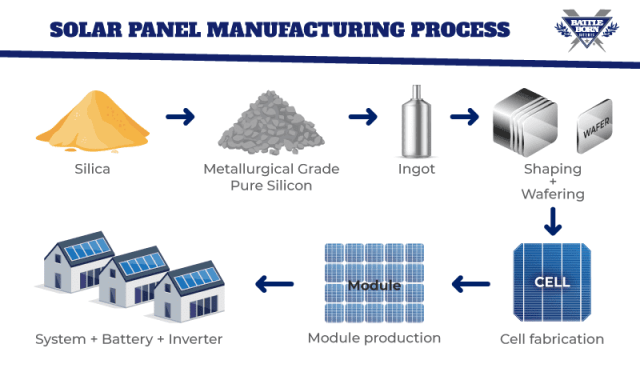
Not all solar panels are created equal. The manufacturing process and materials used in monocrystalline panels result in fundamental differences that directly impact farm installations. Understanding these distinctions helps explain why their premium price is justified for agricultural applications where space and reliability are paramount concerns.
Single-Crystal Silicon: The Secret to Higher Efficiency
The superior performance of monocrystalline panels stems from their construction using single-crystal silicon ingots. Unlike polycrystalline panels made from fragmented silicon crystals melted together, monocrystalline panels feature a continuous crystal structure that allows electrons to flow more freely. This unimpeded electron movement results in higher electricity generation from the same amount of sunlight. For farms, this translates to approximately 20-30% more power production from the same roof or ground space compared to standard panels.
17-22% Efficiency Rating: What This Means for Your Farm
The efficiency rating of monocrystalline panels directly impacts a farm’s solar installation footprint. With conversion rates between 17-22%, these panels transform nearly a quarter of all captured sunlight into usable electricity—significantly outperforming the 15-17% efficiency typical of polycrystalline alternatives. For a 30kW system that might power a medium-sized dairy operation, this efficiency difference reduces the required installation area by approximately 400 square feet. That’s valuable space that remains available for agricultural production or future expansion.
Lifespan of 25+ Years: Long-Term Reliability
Monocrystalline panels typically guarantee power production for 25-30 years, with many installations continuing to perform well beyond this period. Most manufacturers guarantee at least 80% of original output after 25 years, compared to the faster degradation rates seen in less expensive alternatives. This durability is particularly valuable in agricultural settings where equipment must withstand dust, pollen, temperature fluctuations, and occasional wildlife interference. The extended lifespan significantly improves lifetime value calculations, often making monocrystalline panels the most economical option despite higher initial costs.
Premium Black Appearance: Form Meets Function
The distinctive uniform black appearance of monocrystalline panels isn’t just aesthetically pleasing—it serves practical purposes in agricultural applications. The darker surface absorbs more light energy across the spectrum, improving performance during dawn and dusk hours when many farm operations are actively running. Additionally, the sleek design reduces dust accumulation compared to panels with more surface texture. For installations visible to the public, such as farm stores or agritourism operations, the professional appearance of monocrystalline panels can enhance the property’s modern, sustainable image.
Here is a table summarizing the advantages and disadvantages of using monocrystalline solar panels to power a farm’s operations:
|
Pros |
Cons |
|---|---|
|
High Efficiency: Monocrystalline panels have efficiency rates between 17-22%, maximizing energy production per square foot. 1, 3 |
High Upfront Cost: These panels are more expensive than alternatives like polycrystalline panels. 1, 3 |
|
Space-Saving: Their compact design allows farms to generate more power with fewer panels, ideal for limited installation areas. 3 |
Performance Drop in High Temperatures: Efficiency can decrease slightly in very hot conditions. 1 |
|
Durability and Longevity: Often come with warranties of 25 years or more, ensuring long-term reliability. 1, 3 |
Fragility: Panels require careful handling during installation and maintenance. 1 |
|
Low Maintenance: Minimal upkeep is needed, with predictable operational costs over time. 1 |
Shading Sensitivity: Performance drops significantly if part of the panel is shaded, requiring strategic placement. 1 |
|
Environmental Benefits: Solar energy eliminates greenhouse gas emissions and reduces reliance on fossil fuels. 1, 3 |
Weather Dependency: Energy generation depends on sunlight, making battery storage essential during cloudy or rainy periods. 1, 3 |
|
Ideal for Irrigation Systems: Peak energy production aligns with high irrigation needs during hot, dry periods. 1 |
Cleaning Requirements: Regular cleaning is necessary to maintain efficiency, which may require additional labor. 1 |
|
Government Incentives: Rebates and tax credits can offset installation costs significantly. 3 |
Initial Investment Barrier: Despite incentives, upfront costs can still be prohibitive for some farmers. 3 |
Monocrystalline solar panels are an excellent choice for farms seeking high energy efficiency and long-term sustainability. However, their higher initial cost and sensitivity to shading may require careful planning to maximize their benefits.

“Solar Panels Impact Farm Profit …” from growingsolarmist.com and used with no modifications.
Space-Saving Benefits for Agricultural Properties
Farm operations face unique space constraints unlike residential or commercial solar installations. Agricultural businesses must balance energy production with land that generates direct revenue through crops or livestock. Monocrystalline panels offer specific space advantages that make them particularly suitable for the farm environment, allowing operations to maximize both energy production and traditional agricultural output.
Fewer Panels Needed for the Same Energy Output
The high efficiency of monocrystalline technology translates directly to panel count reductions. A typical 50kW system using standard panels might require 150-170 panels, while the same capacity system using monocrystalline technology needs only 120-140 panels. This 20% reduction significantly decreases installation footprint while maintaining power production targets. For farmers, this means less agricultural land sacrificed to energy production or more capacity installed within available roof space. The reduced panel count also streamlines installation, minimizes potential failure points, and simplifies maintenance procedures.
Flexible Mounting Options for Limited Roof Space
Farm buildings often have complex roof designs with dormers, ventilation systems, and varied orientations that complicate solar installations. Monocrystalline panels’ higher efficiency allows for creative mounting configurations that work around these obstacles while still achieving energy goals. Installations can prioritize optimal roof sections facing south while minimizing panels on less ideal exposures. Some manufacturers even produce rectangular monocrystalline panels specifically designed for narrow roof sections commonly found on agricultural outbuildings, enabling installations where standard dimensions wouldn’t fit.
Dual-Use Installations: Solar and Crops Together
Innovative agrivoltaic installations allow certain crops to grow beneath elevated monocrystalline panels, creating dual-purpose land use that maximizes returns per acre. Research has shown that shade-tolerant crops like lettuce, broccoli, and certain berries can thrive in the partial shade created by properly spaced solar arrays. The panels’ high efficiency means fewer units are needed, allowing for wider spacing that permits adequate light penetration to crops below. Some livestock operations have similarly discovered that solar installations can provide beneficial shade for animals while generating power, creating multiple value streams from the same land area.
“Solar Panels Impact Farm Profit …” from growingsolarmist.com and used with no modifications.
Cost vs. Value: Making the Investment Work
Agricultural solar investments require careful financial analysis beyond simple payback calculations. While monocrystalline panels command a premium price, their efficiency advantages create value opportunities that aren’t immediately obvious. Smart farmers evaluate these systems based on total lifetime returns rather than focusing exclusively on initial price points.
Higher Upfront Costs Explained
Monocrystalline panels typically cost 15-20% more than polycrystalline alternatives at initial purchase. This price premium stems from a more refined manufacturing process that creates pure silicon ingots rather than melted crystal fragments. The precision cutting techniques required to produce uniform cells without waste also contribute to higher production costs. However, when calculated on a cost-per-watt basis over the entire system lifespan, monocrystalline panels often deliver superior value, especially when factoring in their space efficiency advantages for revenue-generating farmland.
Long-Term ROI Calculations for Farm Operations
Agricultural businesses should evaluate solar investments beyond simple payback periods. A comprehensive ROI analysis includes factors like panel degradation rates, maintenance requirements, and the opportunity cost of land usage. When these variables are properly accounted for, monocrystalline installations typically achieve breakeven points between 6-8 years, with profit generation continuing for decades thereafter. The higher efficiency ratings mean these systems often generate 10-15% more total lifetime electricity per dollar invested compared to less expensive alternatives.
For a typical 50kW farm installation, this efficiency advantage translates to approximately $35,000-$50,000 in additional electricity production over a 25-year period. This calculation doesn’t even account for the value of land that remains available for agricultural use due to the smaller installation footprint.
Available Agricultural Solar Incentives and Tax Credits
Several financial incentives can substantially reduce the effective cost of monocrystalline installations for qualified agricultural operations. The federal Investment Tax Credit currently allows farmers to deduct 30% of solar system costs from their tax liability. Many states offer additional agricultural solar incentives, including property tax exemptions, sales tax exemptions, and performance-based incentives that pay for each kilowatt-hour generated. Some utility companies provide specific agricultural rebates that recognize the grid benefits of distributed rural power generation. These combined incentives can reduce effective system costs by 40-60%, dramatically improving return on investment calculations.
Financing Options for Small and Medium-Sized Farms
Innovative financing solutions have emerged specifically for agricultural solar installations. USDA REAP (Rural Energy for America Program) grants can cover up to 25% of eligible project costs for qualifying rural businesses. Agricultural-focused solar leases allow farmers to install systems with little or no money down while still capturing tax benefits through carefully structured agreements. Some states offer low-interest or zero-interest loan programs specifically for farm energy improvements. By combining these financing options with the superior performance of monocrystalline technology, even small family farms can implement systems that significantly reduce operational costs.

“Best Solar Panels for Farms …” from growingsolarmist.com and used with no modifications.
Ideal Farm Applications for Monocrystalline Panels
The high efficiency and reliability of monocrystalline panels make them particularly well-suited for critical farm operations where consistent power is essential. These premium panels excel in applications where performance reliability directly impacts farm productivity and profitability. Understanding the most beneficial deployment scenarios helps farmers prioritize initial installations to maximize return on investment.
Powering Irrigation Systems and Water Pumps
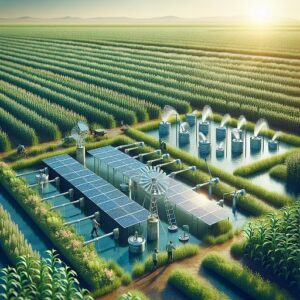
Irrigation represents one of the most energy-intensive aspects of many farming operations. Monocrystalline panels can directly power variable frequency drive (VFD) pumps, reducing or eliminating electricity costs for water delivery. The panels’ superior performance in partial shade conditions enables consistent operation even when morning irrigation is needed before full sunlight is available. Advanced systems can integrate with soil moisture sensors to automatically trigger irrigation only when needed, further optimizing energy usage. For remote fields without grid connections, monocrystalline-powered pumps eliminate the need for diesel generators and their associated fuel costs and maintenance requirements.
Climate Control for Barns and Greenhouses
Maintaining optimal temperatures in livestock buildings and growing environments requires significant energy input. Monocrystalline panels can power ventilation fans, heating systems, and cooling equipment with the reliability needed for sensitive agricultural environments. The panels’ excellent performance during summer heat ensures cooling systems maintain function during critical high-temperature periods when animals or plants are most vulnerable. Their space efficiency allows installations directly on barn or greenhouse roofs, converting otherwise unused surface area into productive energy generation while keeping valuable ground space available for agricultural use. To learn more about how solar panels can impact farm profits, check out this article on solar panels’ benefits.
Equipment Charging Stations and Workshop Power
Modern farms increasingly rely on electric equipment that requires regular charging. Dedicated monocrystalline installations can create charging stations for electric utility vehicles, battery-powered tools, and monitoring equipment. These high-efficiency panels ensure consistent power availability even during variable weather conditions. Workshop operations with power tools, welding equipment, and maintenance facilities can similarly benefit from dedicated solar power that reduces operational costs. The reliability of monocrystalline technology means critical repair and maintenance activities won’t be compromised by power fluctuations or outages. Learn more about the energy cost savings for farmers using solar panels.
Cold Storage and Processing Facilities
Post-harvest operations often require energy-intensive refrigeration and processing equipment. Monocrystalline panels provide the consistent high output needed to power these critical systems that directly impact product quality and market value. Their superior performance during hot weather—precisely when cooling demands are highest—makes them ideal for refrigeration applications. Battery storage systems paired with monocrystalline panels can provide backup power protection for critical cold storage, preventing costly product losses during grid outages. For value-added processing operations, reliable solar power reduces production costs, improving profit margins on finished agricultural products.
The Farmers Residence
The farmhouse itself represents a significant energy consumption point on many agricultural properties. Monocrystalline panels installed on residence rooftops provide reliable power for household needs while maintaining aesthetic appeal. Their space efficiency allows complete household power generation from limited roof area, often with capacity to spare for farm operations. Modern net metering arrangements enable excess residential solar production to offset farm operational costs during periods of low household consumption.
For farms that include agritourism components or farm stays, the visible commitment to renewable energy through premium solar installations can enhance marketing appeal to environmentally conscious visitors. The sleek black appearance of monocrystalline panels presents a more professional aesthetic than alternative technologies, complementing the farm’s public image.
Farm Success Stories: Real Results with Monocrystalline
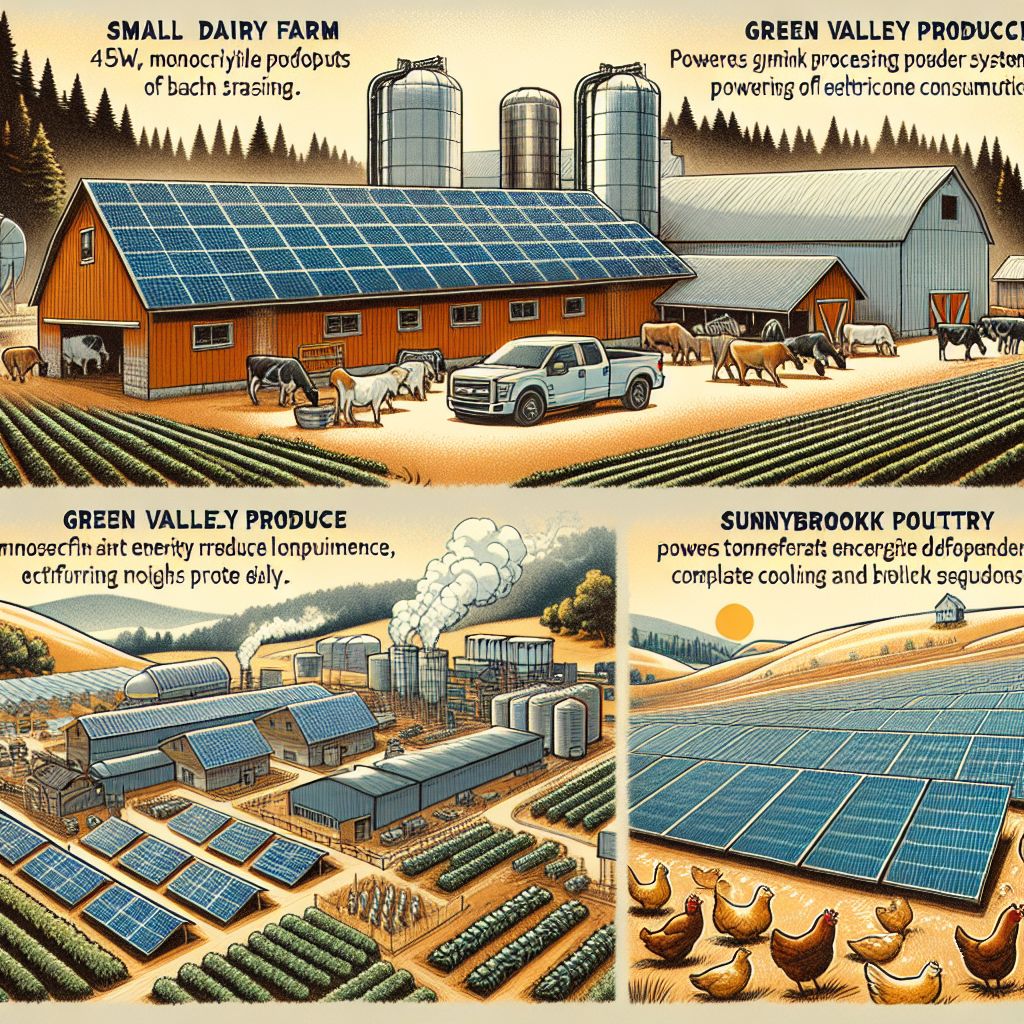
The theoretical advantages of monocrystalline technology translate into measurable real-world benefits for agricultural operations across diverse sectors. These case studies demonstrate how farmers have leveraged high-efficiency solar to transform their energy economics while maintaining or expanding productive capacity.
Small Dairy Farm Cuts Energy Costs by 75%
Hillcrest Dairy in Wisconsin installed a 45kW monocrystalline system to power their milk cooling, pasteurization, and packaging operations. The high-efficiency panels fit entirely on existing barn rooftops, requiring no dedicated ground space. Despite the northern latitude and seasonal weather variations, the system generates approximately 54,000 kWh annually, offsetting 75% of the operation’s electrical consumption. The dairy’s cooling equipment draws maximum power during summer months when solar production peaks, creating a natural alignment between generation and consumption patterns.
The installation qualified for both federal tax credits and a state-specific agricultural energy grant, reducing the effective system cost by 55%. With these incentives applied, the system achieved complete payback in just 4.8 years while significantly improving the operation’s cash flow by reducing monthly utility expenses. The 25-year warranty provides confidence that these savings will continue for decades to come.
Vegetable Operation Powers Entire Cold Chain
Green Valley Produce, a mixed vegetable farm in California’s Central Valley, installed a 75kW monocrystalline system specifically designed to power their cooling and refrigeration equipment. The high-temperature performance of monocrystalline technology ensures consistent output even during 100°F+ summer days when cooling demands are highest. The system generates sufficient electricity to maintain optimal temperatures from harvest through packing and shipping, improving produce quality and reducing spoilage by an estimated 15%.
Poultry Farm Achieves Energy Independence
Sunnybrook Poultry integrated a 120kW monocrystalline system with battery storage to achieve complete energy independence for their broiler operation. The high-efficiency panels, coupled with strategic energy management, power ventilation, lighting, automated feeding systems, and temperature control for six large houses. The reliability of monocrystalline technology ensures consistent power for critical life-support systems regardless of grid conditions. The farm reports significant improvement in bird health metrics since implementing the system, attributing the gains to more consistent environmental conditions now that power limitations have been eliminated.
Making the Right Choice for Your Farm’s Future
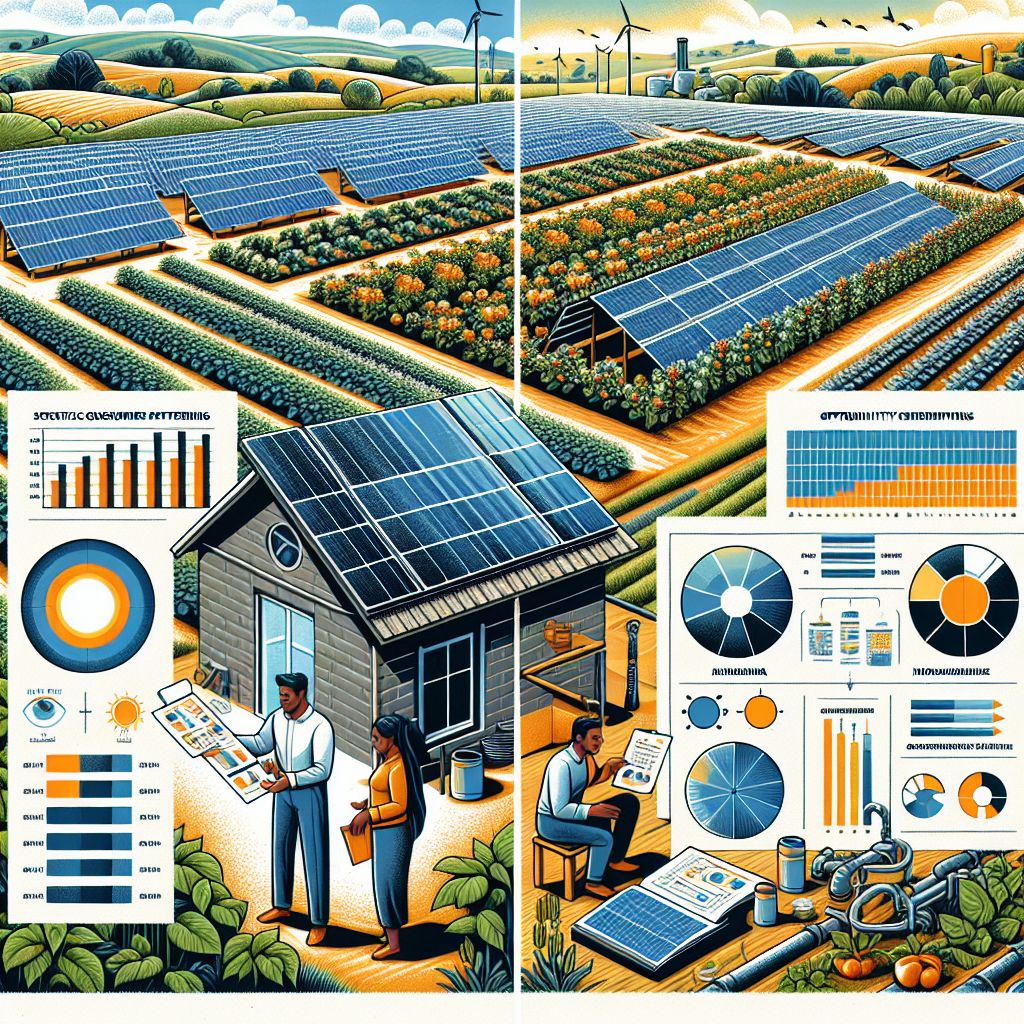
Selecting the optimal solar technology requires careful evaluation of your specific agricultural operation’s needs, space constraints, and energy requirements. While monocrystalline panels offer compelling advantages for many farm applications, the decision should be based on thorough analysis rather than general recommendations. Consider working with agricultural energy specialists who understand both solar technology and farming operations to develop a customized solution that maximizes both energy production and agricultural productivity.
Start with a comprehensive energy audit to identify your operation’s specific consumption patterns and opportunities for efficiency improvements before sizing your system. Evaluate available installation locations based on both solar exposure and impact on agricultural activities. Consider future expansion plans and design systems that can scale as your operation grows. Remember that the highest return on investment typically comes from powering your most energy-intensive and financially important operations first, rather than attempting to offset 100% of consumption immediately.
Frequently Asked Questions
Farm operators considering solar investments often have specific questions about how monocrystalline technology applies to their unique agricultural context. These answers address the most common concerns and provide practical guidance for implementation decisions.
The following information is based on real-world agricultural installations and performance data rather than theoretical specifications, ensuring practical relevance for working farms.
How many monocrystalline panels do I need to power a typical farm operation?
The number of panels required varies significantly based on your operation type, energy consumption patterns, and climate zone. As a general guideline, dairy operations typically require 7-10 watts of solar capacity per gallon of daily milk production. Poultry operations generally need 0.5-0.75 watts per bird. Irrigation-intensive crop production might require 1.5-2.5 kW per acre, depending on water requirements and pumping depth.
For a more precise estimate, review 12 months of utility bills to determine your average daily consumption in kilowatt-hours, then divide by your location’s solar production factor (typically 4-6 hours of equivalent full production per day) and the panel wattage. For example, a farm using 100 kWh daily in a location with 5 hours of productive sunlight would need approximately 20 kW of capacity, typically requiring 50-60 monocrystalline panels rated at 350-400 watts each.
Can monocrystalline panels withstand harsh farm conditions like dust and extreme weather?
Modern monocrystalline panels are specifically engineered to withstand agricultural environments. Quality panels feature tempered glass surfaces that resist impact from hail up to 1 inch in diameter, withstand wind loads of 140+ mph when properly mounted, and include sealed junction boxes with IP67 or higher ratings to prevent moisture intrusion. While dust accumulation can temporarily reduce efficiency, most installations in agricultural settings experience only 3-5% output reduction between seasonal cleanings, and natural rainfall provides adequate cleaning in many regions.
What maintenance is required for monocrystalline panels on a farm?
Monocrystalline installations require minimal maintenance compared to most farm equipment. A typical maintenance schedule includes:
Seasonal Maintenance Checklist:
Spring: Visual inspection, clean panels if dusty, check for winter damage
Summer: Monitor production vs. expectations, clear vegetation that may cause shading
Fall: Clean panels before winter, check roof attachments and seals
Winter: Remove snow accumulation if more than 4 inches, inspect for ice dam issues
The solid construction and lack of moving parts make monocrystalline panels one of the most maintenance-free investments on a working farm. Annual electrical inspections of connections and inverters are recommended, but panel maintenance itself is generally limited to occasional cleaning in particularly dusty regions. Most agricultural installations operate for decades with only periodic inspection and cleaning.
For systems with batteries or tracking mounts, additional maintenance requirements apply to those components rather than the panels themselves.
How do monocrystalline panels compare to polycrystalline for agricultural use?
In agricultural applications, monocrystalline panels offer several specific advantages over polycrystalline alternatives. Their higher efficiency (17-22% vs. 15-17%) reduces space requirements by approximately 20%, preserving valuable productive land. Monocrystalline panels typically maintain better performance in high-temperature conditions, with temperature coefficients around -0.35% per degree Celsius compared to -0.40% for polycrystalline, making them more suitable for unshaded farm installations that may reach high surface temperatures.
The longer lifespan and slower degradation rate of monocrystalline technology (typically 0.5% annual decline vs. 0.7% for polycrystalline) provides better alignment with long-term farm planning horizons and infrastructure investments. While monocrystalline panels cost 15-20% more initially, their superior production and longevity generally deliver better lifetime value for agricultural operations where land productivity and system reliability directly impact business performance.
Can I install monocrystalline panels myself or do I need a specialized contractor?
While farmers possess considerable mechanical skills, solar installations involve specialized electrical work and safety considerations that typically require professional expertise. Most agricultural insurance policies and incentive programs require professional installation by certified contractors. Self-installation may void manufacturer warranties and complicate interconnection agreements with utility companies. Additionally, proper system design requires sophisticated modeling of energy production, structural loading calculations, and compliance with electrical codes specific to solar systems.
The most successful approach is often a hybrid model where farmers handle preparatory work like mounting structure installation or trenching for cables, while certified solar professionals complete the specialized electrical connections and system commissioning. This approach leverages farm labor resources while ensuring critical components meet safety and performance standards. Agricultural solar specialists can also provide valuable guidance on incentive applications, utility interconnection requirements, and system monitoring implementation.
For agricultural operations looking to maximize energy production while minimizing space usage, monocrystalline solar panels represent the premium choice that delivers tangible operational benefits. Their superior efficiency, longevity, and performance in challenging conditions make them particularly well-suited to the unique demands of farm environments. With proper planning and implementation, these high-performance systems can transform farm energy economics while supporting sustainable agricultural practices for decades to come.


Leave a Reply