
Main Points
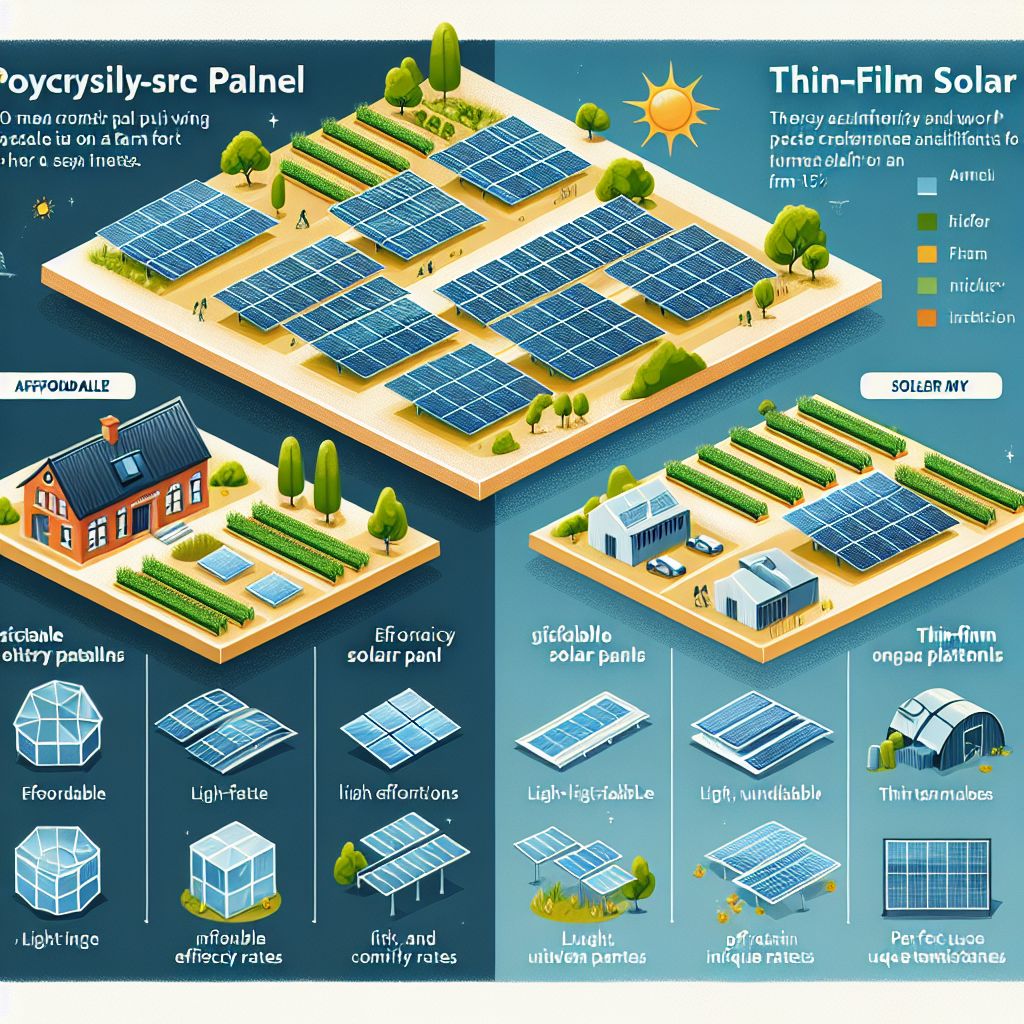
- Polycrystalline panels are generally less expensive, with a price range of $0.70 to $1.00 per watt.
- Thin-film panels are light and flexible, making them perfect for unique installations.
- Polycrystalline panels provide higher efficiency rates, usually around 15-17%.
- Thin-film panels work better in low-light conditions and high temperatures.
- The right panel for you depends on your farm’s particular energy needs, space, and budget.
Understanding Solar Panel Options for Farmers
As a farmer, you’re constantly searching for ways to improve your operations and make them more sustainable. One great way to do this is through solar energy. But with all the choices available, how do you determine which type of solar panel is best for your farm? Let’s look at the two most common options: thin-film and polycrystalline panels. Knowing the differences between these can help you make a decision that will benefit your farm for a long time.
The Significance of Solar Panels for Farmers
Solar panels are not simply a fashionable energy alternative. They generate a renewable energy supply that can drastically cut electricity expenses and environmental harm. For farmers, this translates to more money to put back into other parts of the farm. Furthermore, solar panels provide energy autonomy, enabling you to run your farm in remote areas that don’t have grid access.
Moreover, installing solar panels can increase your property’s worth. They offer an eco-friendly energy alternative that appeals to green-minded consumers. Above all, harnessing solar power aids in lowering carbon emissions, leading to a greener world for our descendants.
Getting to Know the Difference: Thin-film and Polycrystalline
There are many types of solar panels to choose from, but thin-film and polycrystalline panels are among the most popular. Each type has its own list of pros and cons, which makes them a better fit for certain uses. Knowing these differences is key to choosing the right panel for your farm’s particular needs.
Thin-film panels are popular for their lightness and flexibility, which makes them a breeze to install on a variety of surfaces. Polycrystalline panels are noted for their efficiency and robustness. They are usually more cost-effective and provide a nice equilibrium between performance and price.
What are Thin-film Solar Panels?
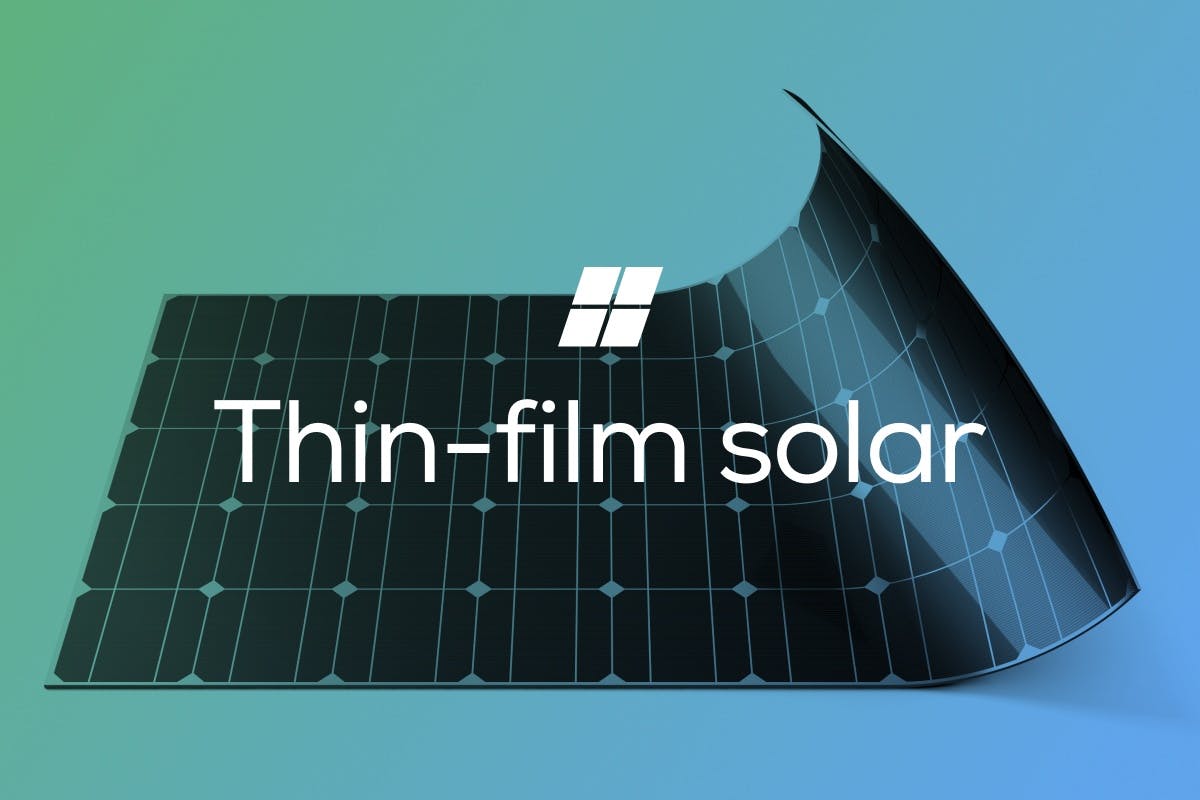
Thin-film solar panels are a common option for many farmers because they are flexible and light. They are created by placing one or more thin layers of photovoltaic material onto a substrate. This makes them perfect for installations where weight and flexibility are important factors.
Thanks to their special makeup, thin-film panels can be fitted on a wide range of surfaces, including ones that are curved or irregular. This makes them a brilliant option for non-standard installations where conventional panels may not work. For farmers looking to enhance efficiency, thin-film panels can also be part of boosting farm’s irrigation system efficiency.
What they’re made of and how they work
Thin-film solar panels are made from a variety of materials, such as cadmium telluride (CdTe), amorphous silicon (a-Si), and copper indium gallium selenide (CIGS). Each of these materials has unique characteristics that affect how well the panel works and how efficient it is.
CdTe panels are popular due to their affordability and easy manufacturing process, while a-Si panels have a reputation for performing well in low light. CIGS panels are more efficient but tend to be pricier.
Pros and Cons for Farmers
Thin-film solar panels have numerous benefits for farmers. They are light, which makes them easy to put up on a range of surfaces. Their flexibility means they can be put up on curved or irregular surfaces, giving more options for where they can be installed.
On the other hand, thin-film panels usually don’t perform as well as polycrystalline panels. This means they need more room to generate the same amount of power. They do a good job in low light, but they may not be the best option if space is tight. If you’re considering solar solutions for your farm, you might want to explore how solar panels boost farms’ irrigation system efficiency.
Perfect Uses in Agriculture
Thin-film solar panels work best in situations where traditional solar panels are too heavy or inflexible. They can be used on barn roofs or greenhouses where the structure might not be strong enough to support traditional panels. They can also be used for portable solar solutions in remote locations, such as powering irrigation systems or electric fences.
These panels are great in places with a lot of clouds or high heat, where they can sometimes do better than regular panels. This makes them a good choice for farms in many different kinds of weather.

Understanding Polycrystalline Solar Panels
Polycrystalline solar panels are another common choice for farmers who want to take advantage of solar energy. These panels are recognized for their combination of cost and efficiency, making them a sensible selection for numerous farming uses. Their sturdy nature and demonstrated performance make them a mainstay in the solar industry.
How They’re Made
The production of polycrystalline panels involves melting silicon crystals and pouring them into a mold to create a block. This block is then sliced into wafers, which are used to create the solar cells. This process is less wasteful than that of monocrystalline panels, which is one reason why they’re more affordable.
They are made in a way that gives them a signature blue color and a slightly lower efficiency rate than monocrystalline panels. But, they are still very efficient, especially in places with a lot of sun. For farmers looking to enhance their solar systems, learning how solar panels increase the efficiency of a farm can be beneficial.
Polycrystalline panels are typically more uniform in appearance due to their manufacturing process, and they are usually cheaper, which makes them available to more farmers.
Advantages and Disadvantages for Farming
There are several benefits to farmers using polycrystalline panels:
- Economical: Generally, they cost between $0.70 and $1.00 per watt, which makes them a good choice for large installations.
- Hard-wearing: They are recognized for their durability and long life.
- Effective: They provide efficiency rates of about 15-17%, which is adequate for most agricultural requirements.
On the other hand, they do have some disadvantages:
- Space requirements: They need more space than monocrystalline panels to produce the same amount of energy.
- They are slightly less efficient in low-light conditions compared to thin-film panels.
Despite these disadvantages, their affordability and long lifespan make them a great option for farms with plenty of space.
Typical Agricultural Applications and Advantages
Polycrystalline panels are a popular choice for extensive solar farms, where space is not a limiting factor. They are perfectly suited for energizing farm activities such as water pumps, grain dryers, and other equipment. Their robustness means they can endure severe weather conditions, making them a dependable option for prolonged usage.
Moreover, farmers commonly use these panels alongside battery storage systems to guarantee a consistent power source, even during overcast days or at night, for uninterrupted farm activities.

Thin-film vs Polycrystalline: A Side-by-Side Comparison
Choosing between thin-film and polycrystalline solar panels requires you to weigh several factors, such as efficiency, price, longevity, and installation versatility. Both types have their pros and cons, and the right one for you will depend on your particular needs and situation.
Differences in Efficiency
Polycrystalline panels usually have a higher efficiency rate, between 15-17%. This means they are more effective at converting sunlight into electricity than thin-film panels, which usually have efficiencies of around 10-12%. For more insights on how solar panels boost farm’s irrigation system efficiency, explore this detailed guide.
Still, thin-film panels have better performance in high temperatures and low-light conditions, which can make them more efficient in certain environments. So, the efficiency of each panel type can change depending on the specific conditions of your farm.
Price Concerns for Agricultural Operations
For the majority of farmers, price is a key factor in selecting solar panels. Polycrystalline panels are typically less expensive, with prices ranging from $0.70 to $1.00 per watt. As a result, they are a common choice for large installations where the budget is a limiting factor. Additionally, understanding how solar panels can increase the efficiency of a farm can further influence purchasing decisions.
Thin-film panels might cost more per watt, but their flexible and lightweight design can lower installation costs, particularly in unique or difficult installations.
Sturdiness and Resistance to Weather
Polycrystalline panels have a reputation for being sturdy and able to endure severe weather, which makes them a good fit for farms in regions with harsh climates. They are also less likely to be damaged by physical impacts, like hailstones.
Size and Versatility of Installation
Thin-film panels are more versatile in terms of installation because they are lightweight and flexible. They can be installed on a variety of surfaces, even ones that are not suitable for conventional panels. This makes them perfect for unique applications and unconventional installations.
The table below compares thin-film and polycrystalline solar panels, focusing on their suitability for agricultural use.
|
Feature |
Thin-Film Solar Panels |
Polycrystalline Solar Panels |
|---|---|---|
|
Cost |
More affordable than monocrystalline panels but slightly more expensive than thin-film. 6, 7 | |
|
Efficiency |
Lower efficiency (around 10%-12%) but performs better in low-light conditions. 2, 3 |
Moderate efficiency (15%-17%), suitable for areas with abundant sunlight. 5, 6 |
|
Durability |
Highly resistant to harsh weather conditions, including extreme heat and humidity. 1, 2 |
Durable but less tolerant to extreme heat compared to thin-film panels. 6 |
|
Space Requirements |
Requires more surface area due to lower efficiency, but can be integrated into existing farm structures. 2, 3 |
Requires more space compared to monocrystalline panels but works well in open areas. 6, 7 |
|
Flexibility |
Lightweight and flexible; can be installed on uneven terrain or raised above crops for dual land use. 1, 2 |
Rigid and heavier; requires stable mounting systems like ground or roof mounts. 6 |
|
Performance in Shade |
Performs well under partial shading or cloudy conditions, ensuring consistent energy output. 2, 3 |
Less effective under shading; requires unobstructed sunlight for optimal performance. 6 |
|
Temperature Coefficient |
Better performance in high temperatures; less efficiency loss as temperatures rise. 2, 3 |
Efficiency decreases more noticeably in high temperatures compared to thin-film panels. 6 |
|
Environmental Impact |
Lower environmental impact due to minimal material usage and sustainable production methods. 2, 3 |
Moderate environmental impact, with less waste during manufacturing compared to monocrystalline panels. 6 |
|
Best Applications |
Ideal for farms needing lightweight panels integrated into irrigation systems or dual-use setups. 1, 2 |
Suitable for farms with large open spaces requiring cost-effective energy solutions for irrigation and machinery. 5, 7 |
Key Takeaways for Farmers
- Thin-Film Solar Panels:
Best for farms with uneven terrain or shaded areas.
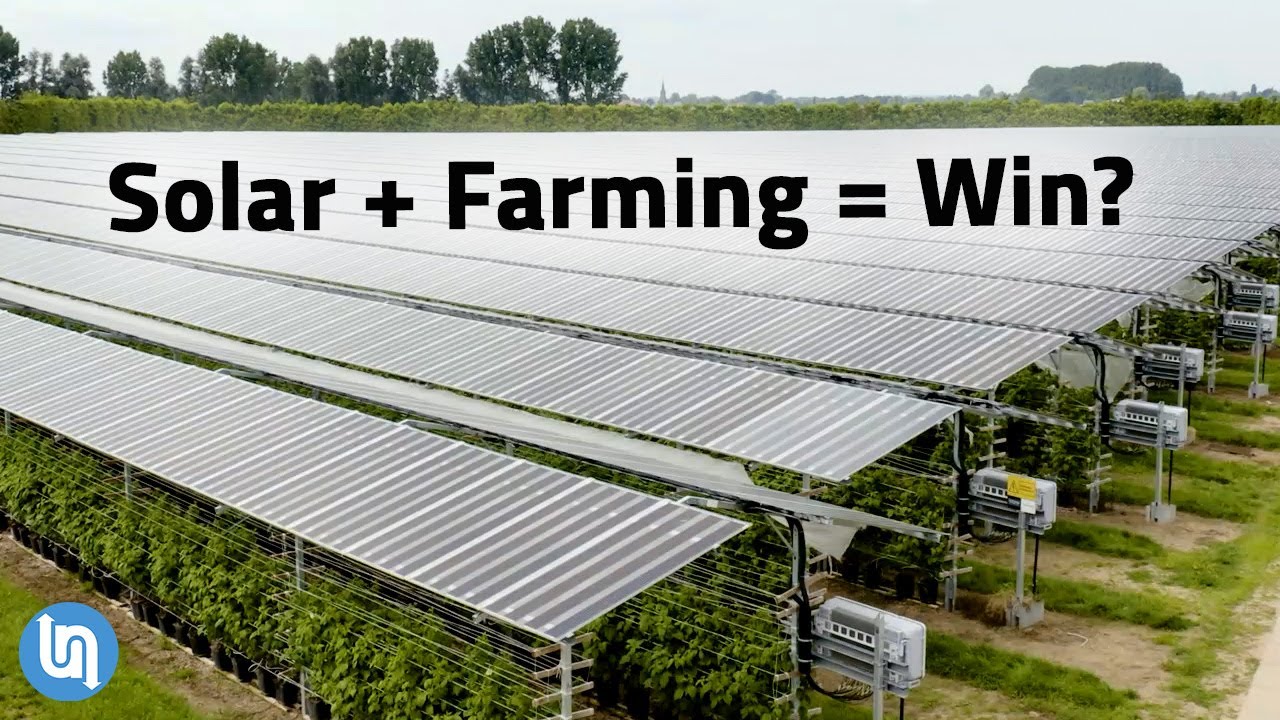
Suitable for dual-use setups, such as combining crop production and solar energy generation.
Ideal for farms in regions with variable weather conditions or high temperatures.
- Polycrystalline Solar Panels:
Great for farms with abundant sunlight and large open spaces.
Cost-effective option for powering irrigation systems, lighting, and machinery.
Reliable choice for moderate climates with consistent sunlight.
Farmers should choose thin-film panels if flexibility, shade tolerance, and integration into existing farm setups are priorities. Polycrystalline panels are better suited for cost-conscious farmers with ample space and consistent sunlight.
Things Farmers Should Keep in Mind When Picking Solar Panels
Choosing solar panels for your farm isn’t as simple as picking the first one you see. You need to think about a few things to make sure you’re getting the best one for your situation. You should think about how much energy you need, how much space you have, and what your long-term goals are for sustainability. This will help you make a good decision.
Moreover, knowing how your local weather affects solar efficiency can help you decide between thin-film and polycrystalline panels.
We’ll take a closer look at these factors.
Assessing Energy Requirements and Farm Infrastructure
First, evaluate your farm’s energy requirements. Take into account your farm’s total energy use and identify where solar energy can be most effectively utilized. This will assist you in determining the size and type of solar panel system you require.
Moreover, you should check your farm’s infrastructure to make sure it can handle the installation of solar panels. Think about the structural integrity of roofs and other possible installation locations, as these factors can influence how solar panels boost your farm’s efficiency.
Evaluating the Available Area
One of the main factors to consider when choosing solar panels is the amount of space you have available. Polycrystalline panels, for instance, need more room because they are less efficient than monocrystalline panels. If you’re short on space, you might want to consider thin-film panels. They’re flexible and can be installed on just about any surface.
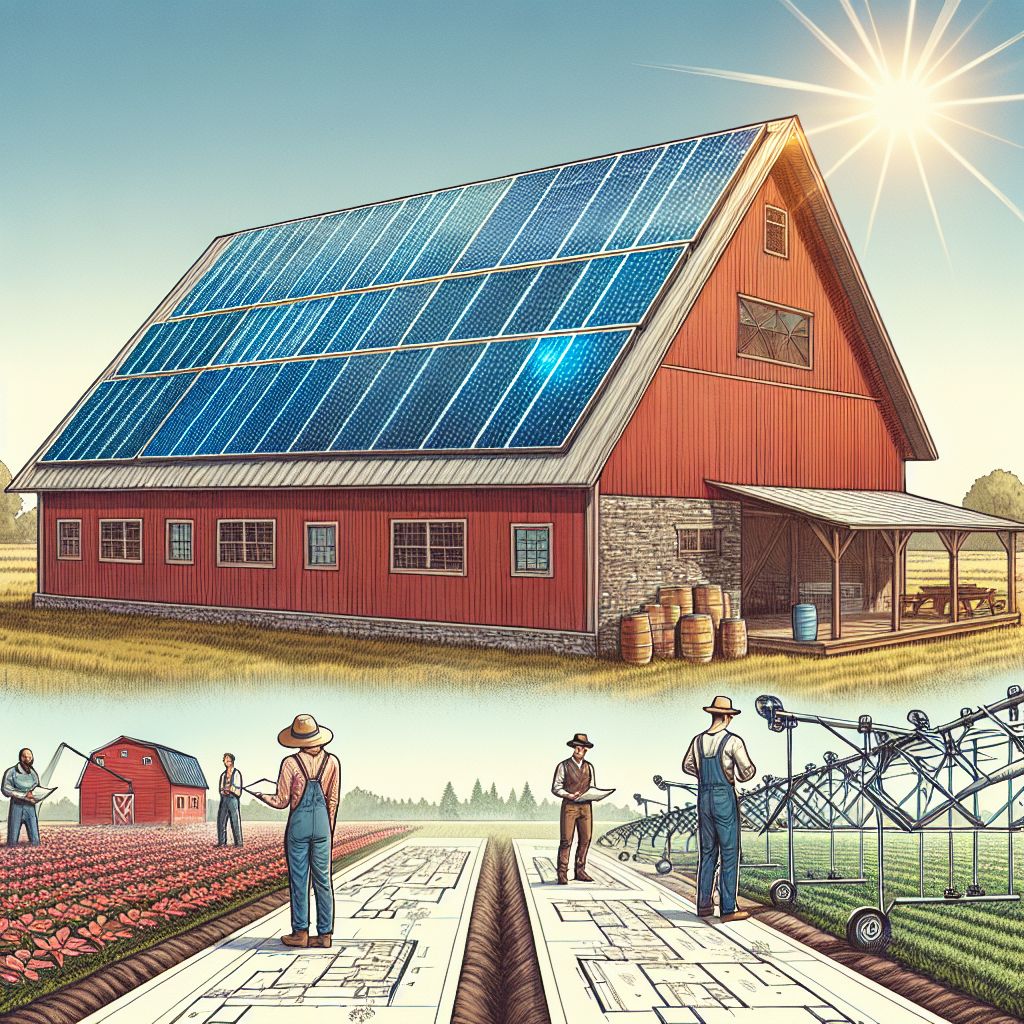
For instance, a farmer who has a large barn roof may choose polycrystalline panels to optimize energy production, while a farmer with limited space may select thin-film panels due to their flexibility.
Think about the space you have available on your farm and how different types of panels could fit into your existing setup.
By taking the time to assess these factors, you can select the solar panel system that is the best fit for your farm and that will provide the greatest return on your investment.
Thinking About Long-term Sustainability
When selecting solar panels, it’s crucial to think about long-term sustainability. This includes the environmental impact of the panels and their ability to decrease your farm’s carbon footprint. Also, consider the long-term cost savings and return on investment of different types of panels.
By placing importance on sustainability, you can make sure your farm stays green and economically sound for the foreseeable future.
How Local Weather Affects Solar Efficiency
Your local weather can greatly affect how well your solar panels work. For example, thin-film panels usually work better in hot temperatures and low-light conditions than polycrystalline panels do. This makes them a good option for farms in areas where it’s often cloudy or very hot. In contrast, polycrystalline panels are very efficient in sunny conditions, making them great for places that get lots of sun.
Practical Uses and Suggestions
Both thin-film and polycrystalline panels have proven to be successful in farm settings, each providing its own advantages. Having a grasp of these uses can assist you in making an informed decision about which solar panels to install on your farm.
Examples of Successful Implementations
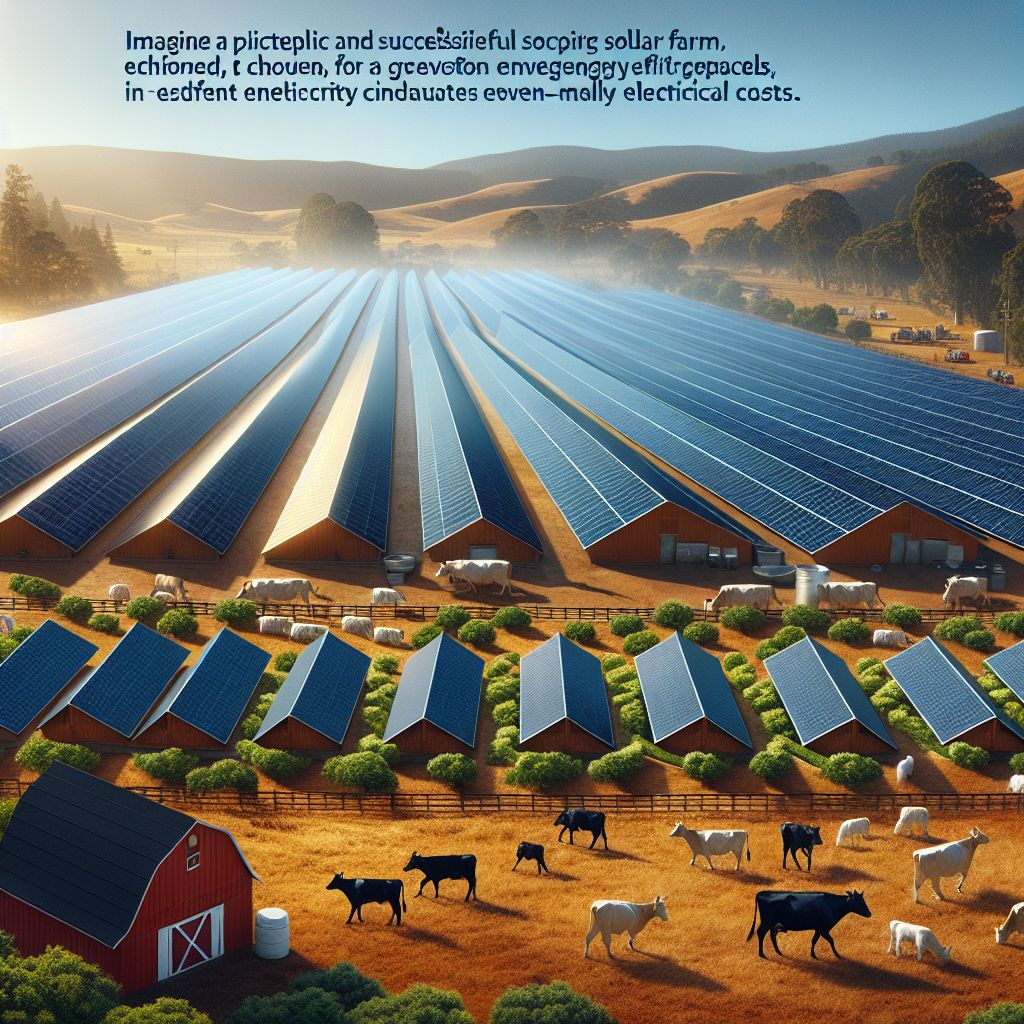
Take, for example, a dairy farm in California that chose polycrystalline panels because of their high efficiency and cost-effectiveness. With plenty of space available, the farm installed a large solar array that significantly lowered electricity costs, enabling the farmer to reinvest the savings into growing the business.
Farmers looking to invest in solar panels have two main options to consider: thin-film and polycrystalline solar panels. Each type has its own advantages and disadvantages, which can significantly impact energy efficiency and cost-effectiveness. For a comprehensive understanding of the pros and cons of polycrystalline and thin-film solar panels, it is essential to evaluate factors such as installation space, climate conditions, and budget.
What the Pros Suggest for Various Kinds of Farms
Polycrystalline panels are frequently suggested for large-scale farms with ample space, as they offer a good balance between cost and efficiency. They are perfect for powering large-scale activities like irrigation systems and machinery.
Alternatively, for farms with restricted area or those that need installation on non-traditional surfaces, thin-film panels are a versatile and efficient solution. They are particularly useful in areas with difficult climates, ensuring a steady energy output even in suboptimal conditions.
Final Thoughts on Top Choices for Farmers
When it comes to picking the right solar panels for your farm, there are a lot of factors to consider, such as your energy requirements, the amount of space you have, your budget, and the climate in your area. Both thin-film and polycrystalline panels have their own set of benefits, making them a good fit for different types of farming needs. Additionally, you might want to explore how solar panels can boost your farm’s irrigation system efficiency as part of your decision-making process.
By taking these factors into account and seeking advice from solar energy professionals, you can choose the solar panel system that best suits your farm’s unique needs, guaranteeing long-term viability and cost-effectiveness.
Concluding Main Points
Polycrystalline panels are usually less expensive and more efficient, making them perfect for large installations with plenty of space. Thin-film panels, while not as efficient, offer flexibility and perform better in difficult climates. Ultimately, the best choice depends on the specific needs and circumstances of your farm.
Wrapping Up on Future Energy Strategies
With the global shift to renewable energy, solar panels are a smart investment for farmers who want to cut costs and lessen their environmental footprint. By selecting the right solar panel and looking ahead, you can make sure your farm stays green and lucrative for many years.
Thin-film or Polycrystalline Solar Panels: Which is Best for Farmers?
In the end, choosing between thin-film and polycrystalline panels will depend on a number of different factors, including how solar panels can increase the efficiency of a farm:
- Space availability: Polycrystalline panels need more space, whereas thin-film panels are flexible.
- Climate: Think about your local weather conditions and how they might affect the performance of your panels.
- Budget: Polycrystalline panels are usually cheaper, but the cost of installation can vary.
- Installation surface: Thin-film panels can be installed on many different types of surfaces.
By considering these factors, you can make a decision that is right for your farm’s energy needs and budget.
Frequently Asked Questions (FAQ)
These are some typical questions that farmers often ask when they’re thinking about getting solar panels for their farms:
- What sets thin-film and polycrystalline panels apart?
- How do weather conditions influence these solar panels?
- Which kind of panel is more economical in the long term?
- Are there any governmental incentives for farmers to set up solar panels?
- How can I properly maintain solar panels on a farm?
What sets thin-film and polycrystalline panels apart?
The main differences are in their makeup, efficiency, and how flexible they are to install. Polycrystalline panels are more efficient and cost-effective, but thin-film panels are more flexible and perform better in challenging climates.
How do weather conditions impact these solar panels?
Thin-film panels are more effective in hot temperatures and low-light situations, which makes them ideal for regions with a lot of cloud cover. Polycrystalline panels, on the other hand, perform better in sunny conditions, offering higher efficiency levels. For farmers, understanding the impact of wildlife on solar panels is also crucial to ensure optimal performance and longevity.
Which panel type is more cost-efficient in the long term?
Polycrystalline panels are usually more budget-friendly and effective, making them cost-efficient for large-scale setups. However, thin-film panels may lower setup costs in special applications, potentially providing long-term cost savings.
Do farmers receive government incentives for installing solar panels?
Absolutely! There are several government incentives available to farmers who install solar panels, including tax credits, rebates, and grants. Be sure to contact your local government and energy providers to learn about the specific programs offered in your area.
What’s the best way to keep solar panels working well on a farm?
Keeping up with maintenance is key to making sure your solar panels work their best. You should clean your panels every so often to get rid of dust and other things that might have gotten on them, check for any damage, and make sure all the electrical parts are working right. Having a professional come out to inspect your solar panels can help you find and fix any problems early on.


Leave a Reply