

Article-At-A-Glance: Solar Farming Revolution
- Solar-powered farm tools can reduce operational costs by up to 70% compared to traditional fuel-powered equipment
- Modern solar irrigation systems can effectively water up to 5 acres on a single sunny day without grid electricity
- Electric fencing powered by solar panels provides 24/7 livestock security without monthly utility bills
- Solar-powered hand tools eliminate fuel costs while reducing emissions and noise pollution on the farm
- The latest generation of solar tractors can operate for 8+ hours on a single charge with performance comparable to diesel models
The farming landscape is changing rapidly as climate concerns and rising energy costs push agriculture toward sustainable solutions. Solar-powered farm tools represent the perfect intersection of practical efficiency and environmental stewardship. By harnessing the sun’s energy, farmers can significantly reduce operational expenses while minimizing their carbon footprint. Growing Solarmist has been at the forefront of tracking these innovations, showing how solar technology is transforming modern agriculture from niche to mainstream.
What once seemed futuristic is now increasingly commonplace on progressive farms across the country. The technology has matured beyond experimental prototypes to commercially viable tools that deliver real-world results. Let’s explore the most effective solar-powered solutions available today and how they’re revolutionizing farm operations.
10 Game-Changing Solar Farm Tools That Pay For Themselves
The transition to solar-powered farm equipment isn’t just environmentally responsible—it’s economically savvy. Modern solar tools offer impressive returns on investment through reduced fuel costs, minimal maintenance requirements, and longer operational lifespans. The initial investment is offset by years of essentially free energy, creating significant long-term savings.
Many farmers report breaking even on their solar investments within 2-5 years, after which the equipment continues to deliver value for decades. With governmental incentives and tax credits available in many regions, the financial case for solar farming has never been stronger.
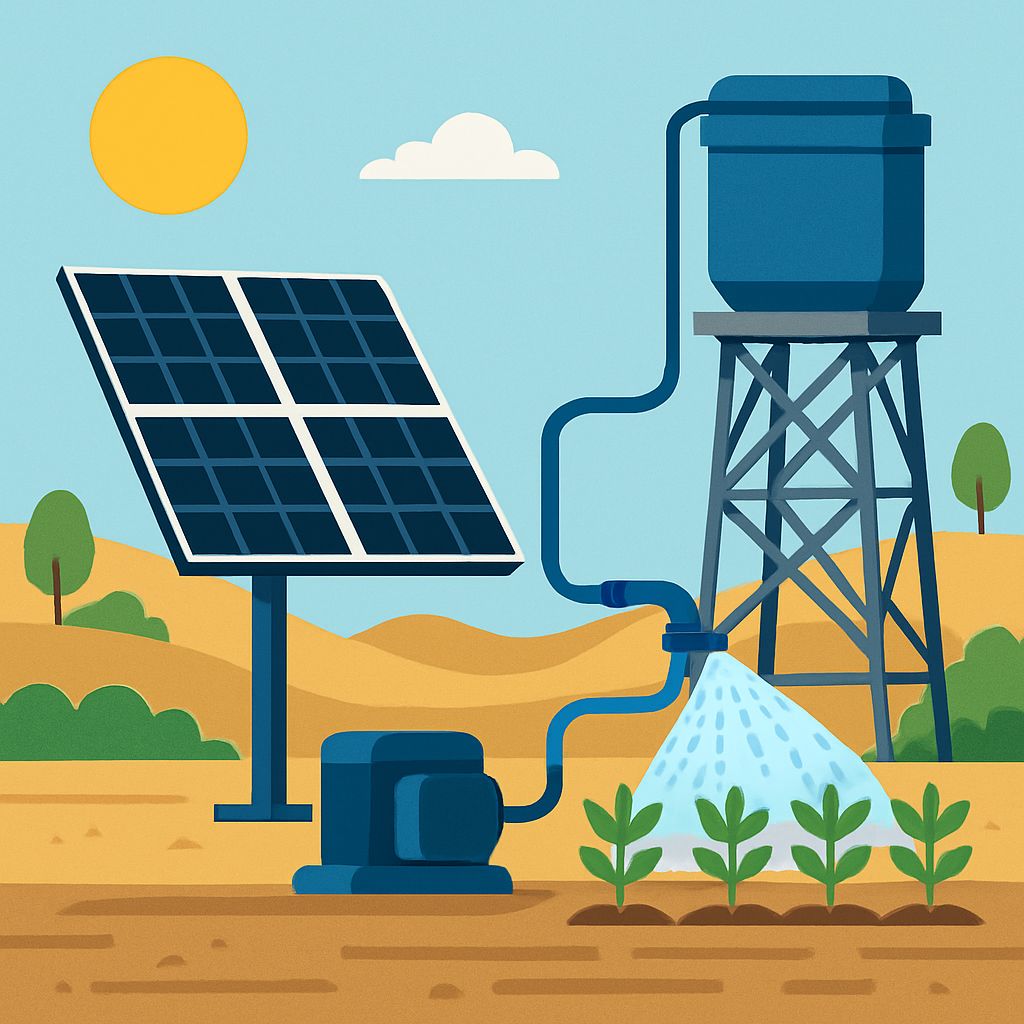
Solar Irrigation Systems: The Ultimate Water & Money Saver
Irrigation represents one of the most energy-intensive aspects of farming, making it the perfect candidate for solar conversion. Solar irrigation systems eliminate the need for grid electricity or diesel generators, providing reliable water delivery even in remote locations. These systems can be scaled from small market gardens to extensive commercial operations, with options suitable for every budget and requirement.
Modern solar pumps can move between 500 and 50,000 gallons of water daily, depending on system size and available sunlight. The elimination of fuel costs creates immediate operational savings, while the reduced maintenance requirements compared to gas-powered pumps further enhance the economic benefits.
Direct Solar Pump Systems vs. Battery-Backed Options
When selecting a solar irrigation system, one fundamental choice is between direct-drive and battery-backed configurations. Direct solar pumping systems operate only while the sun shines, making them ideal for daytime irrigation needs or filling storage tanks that can then be used for gravity-fed irrigation. These systems are simpler, less expensive, and require minimal maintenance, but they cannot operate during cloudy periods or at night without supplemental power.
Battery-backed systems include energy storage components that collect excess solar power during peak sunlight hours for use during low-light periods or after dark. While these systems offer greater flexibility in irrigation scheduling, they come with higher initial costs and more complex maintenance requirements. The batteries typically need replacement every 5-7 years, adding to the long-term operational expenses.
Smart Controllers That Maximize Water Efficiency
The effectiveness of solar irrigation isn’t just about the power source—it’s equally about intelligent water management. Modern solar irrigation systems incorporate smart controllers that optimize water usage based on real-time conditions. These controllers can integrate soil moisture sensors, weather forecasts, and evapotranspiration data to make informed irrigation decisions.
The most advanced systems adjust watering schedules automatically based on plant needs, soil conditions, and weather patterns. Some can be monitored and controlled remotely via smartphone apps, allowing farmers to manage irrigation from anywhere. This precision approach typically reduces water usage by 30-50% compared to traditional irrigation methods while improving crop health through more consistent moisture levels.
- Motion-sensing capability adjusts water flow based on real-time conditions
- Remote monitoring via smartphone apps allows on-the-go management
- Programmable timers optimize watering schedules for different crop zones
- Integration with weather forecasting prevents unnecessary watering before rain
- Flow meters detect leaks or blockages, preventing water waste
Installation Tips for Different Farm Layouts
The effectiveness of a solar irrigation system depends heavily on proper installation and configuration. For flat terrain, centralized pump systems with distribution lines offer the most efficient solution. These systems can be positioned to maximize sun exposure while minimizing the distance water must travel to reach crops.
For hilly terrain or irregularly shaped fields, distributed systems with multiple smaller pumps may prove more effective. This approach reduces the energy needed to overcome elevation changes and allows for more precise zone control. When planning installation, consider seasonal sun angles, potential shading from trees or structures, and access requirements for maintenance.
Electric Fencing Made Simple With Solar Power
Livestock management becomes significantly more flexible with solar-powered electric fencing. These systems eliminate the need for lengthy extension cords or regular battery replacements, making rotational grazing and remote pasture management more practical. A quality solar fence energizer can secure areas up to 30 miles in circumference, depending on the model and conditions. For more on integrating solar technology into farming, explore efficient farm operations using solar panels.
The primary components include solar panels, a charge controller, battery storage, and the fence energizer unit. Most systems can operate for 2-3 weeks without direct sunlight, providing reliable security even during cloudy periods. Installation is straightforward, with most units being portable enough to move between pastures as needed.
Why Solar Fencing Outperforms Traditional Systems
Solar electric fencing offers distinct advantages over both conventional electric and traditional fencing options. Unlike grid-connected electric fences, solar systems eliminate monthly electricity costs and can be placed anywhere, regardless of proximity to power lines. This flexibility enables optimal pasture rotation strategies that would be impractical with fixed fencing.
Compared to traditional wire or wood fencing, solar electric options provide superior cost-effectiveness, especially for large areas. The reduced material requirements and simpler installation translate to savings of 40-60% per linear foot. Additionally, solar fences are easily reconfigured as farm needs change, providing long-term adaptability that fixed barriers cannot match.
Best Models for Different Livestock Types
The ideal solar fencing solution varies significantly based on the livestock being contained. For cattle and horses, systems with 5,000-7,000 volts and lower pulse frequency work effectively. These larger animals require fewer joules per mile but need robust physical construction to withstand potential impacts.
For smaller animals like sheep and goats, fencing systems with higher pulse frequencies and multiple lower wires are necessary to prevent escapees. Predator protection often requires dual-purpose systems that discourage both contained animals from leaving and predators from entering. The Gallagher S400 and Premier Solar IntelliShock 60 consistently earn top ratings for versatility across different livestock applications.
Expert Tip: When selecting solar electric fencing, match your joule rating to both the length of fence and the animal being contained. As a rule of thumb, use 1 joule per mile for cattle, 0.75 joules per mile for horses, and 0.5 joules per mile for sheep and goats. For predator protection, increase these values by 50%.
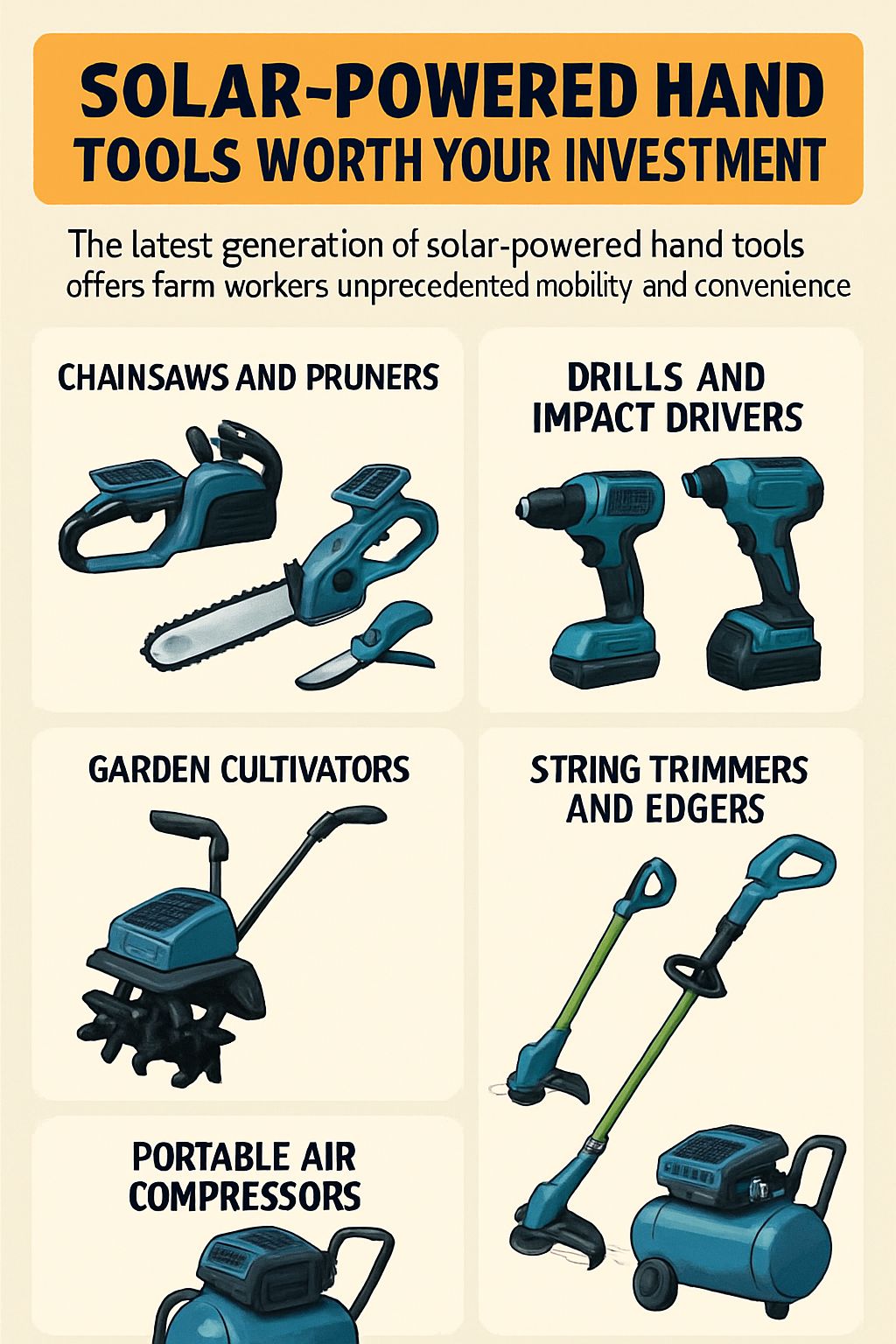
Solar-Powered Hand Tools Worth Your Investment
The latest generation of solar-powered hand tools offers farm workers unprecedented mobility and convenience. From pruners and drills to string trimmers, these tools eliminate the limitations of extension cords and the maintenance headaches of gas-powered alternatives. Most operate on rechargeable batteries that can be powered directly from solar charging stations, creating a truly sustainable workflow.
While the initial investment may exceed that of conventional tools, the elimination of fuel costs typically results in full cost recovery within 2-3 seasons of regular use. Beyond the economic benefits, workers consistently report preferring these tools for their reduced noise, absence of fumes, and lighter weight compared to gas-powered counterparts.
1. Chainsaws and Pruners
Solar-rechargeable chainsaws and pruners have revolutionized orchard management and woodlot maintenance. Modern models like the STIHL MSA 220 C-B offer runtime comparable to gas models when paired with solar charging stations, while eliminating emissions and significantly reducing noise. For precision work, the Makita XMU04Z pruning shears provide up to 500 cuts per charge on branches up to 1-inch in diameter.
Battery interchange capabilities between different tools from the same manufacturer maximize the utility of each solar-charged battery. Most professional-grade models now feature rapid charging options that can restore 80% capacity within 30-45 minutes of solar exposure, minimizing downtime during busy workdays.
2. Drills and Impact Drivers
From fence repairs to equipment maintenance, cordless drills and impact drivers recharged through solar power stations have become indispensable on modern farms. The Milwaukee M18 FUEL series offers torque ratings comparable to corded models while providing the versatility needed for field repairs. Solar charging stations like the Goal Zero Yeti 500X can recharge multiple tool batteries throughout the workday using portable solar panels.
For farms with established workshop areas, permanent solar charging stations can be integrated with tool storage systems, ensuring batteries are always ready when needed. This approach eliminates the frustration of discovering depleted batteries at critical moments while reducing dependence on grid electricity.
3. Garden Cultivators
Small-scale cultivation becomes more efficient with solar-rechargeable tillers and cultivators. These lightweight tools are ideal for precision weeding between rows, greenhouse work, and maintaining smaller garden plots. The Ryobi 40V Cultivator can cover approximately 1,600 square feet per charge while requiring significantly less physical effort than manual cultivation.
4. String Trimmers and Edgers
Boundary maintenance and precision trimming around sensitive plants benefit tremendously from solar-powered string trimmers. These tools maintain perfect balance between power and precision, with modern models offering adjustable power settings to match the specific task. The EGO Power+ ST1521S provides up to 45 minutes of continuous operation per charge, easily handling a full day’s trimming when supported by solar charging capabilities.
5. Portable Air Compressors
Solar-rechargeable air compressors have transformed field equipment maintenance by enabling tire inflation and pneumatic tool operation anywhere on the farm. Models like the DEWALT FLEXVOLT 60V MAX can inflate tractor tires in minutes while operating entirely off-grid. These versatile tools eliminate time-consuming trips to service stations for basic maintenance tasks. For more on integrating solar solutions into farm operations, check out efficient farm operations with solar panels.
The New Generation of Solar Tractors and UTVs
Perhaps the most significant revolution in solar farming comes from the emergence of viable electric tractors and utility vehicles powered by solar energy. These machines challenge the long-held belief that serious agricultural work requires fossil fuels. With impressive torque characteristics and increasingly practical operational ranges, solar-electric farm vehicles are becoming legitimate alternatives to conventional equipment.
The economics increasingly favor electric options as fuel prices rise and battery technology improves. Most electric tractors feature modular battery systems that can be swapped quickly during peak work periods, eliminating lengthy recharge downtime. While the upfront investment remains higher than diesel equivalents, operational costs are typically 70-80% lower over the equipment lifespan. For farmers interested in sustainable practices, exploring sustainable irrigation methods can further enhance efficiency and reduce costs.
FarmDroid FD20: Autonomous Weeding and Seeding
The FarmDroid FD20 represents the cutting edge of solar-powered agricultural autonomy. This fully autonomous robot handles both precision seeding and mechanical weeding operations without human intervention. Powered entirely by onboard solar panels, it can operate continuously during daylight hours, methodically covering up to 20 acres per week depending on crop spacing and field conditions.
The robot’s GPS precision allows it to operate with sub-centimeter accuracy, eliminating both seed waste and the need for chemical herbicides. Early adopters report labor savings of up to 95% for weeding operations and significantly improved crop uniformity due to precise seed placement. While the €75,000 price point represents a significant investment, farms typically recoup costs within 2-3 growing seasons through labor savings and yield improvements.
Dutch E-Horse: Zero-Emission Field Work
The Dutch E-Horse represents an innovative approach to small-scale farming with its compact electric tractor design. Powered by a combination of solar charging stations and battery packs, this nimble machine excels in market gardens, vineyards, and specialty crop operations where maneuverability matters more than raw horsepower. Its 20kW electric motor delivers instant torque that outperforms many diesel tractors in the same size class.
With a modular battery system allowing for quick swaps, the E-Horse can work continuously through peak seasons. The standard configuration includes a dedicated solar charging station that can fully recharge batteries in approximately 4-6 hours of good sunlight. Users consistently report operating costs at just 15-20% of comparable diesel tractors when factoring in fuel, maintenance, and projected lifespan.
Retrofit Options for Existing Farm Vehicles
For farmers not ready to replace their entire fleet, retrofit electric conversion kits offer a compelling middle ground. Companies like Electric Tractor Corporation and Solectrac provide conversion services that transform existing tractors to electric power while preserving the familiar chassis and controls. These conversions typically cost 30-50% less than purchasing new electric equipment while delivering most of the same benefits.
The retrofit process generally takes 1-2 weeks and includes installing electric motors, battery systems, and controllers. Most conversions include provisions for solar charging integration, allowing the equipment to operate primarily on solar power. While older implements and PTOs remain fully compatible, operators gain the advantages of reduced noise, zero emissions, and lower operating costs.

Solar-Powered Barn Solutions That Boost Efficiency
Beyond field equipment, solar technology is transforming farm buildings into energy-independent operation centers. Barn rooftops provide ideal mounting locations for solar panels, with their large, unobstructed surfaces and optimal sun exposure. A properly designed solar barn system can power lighting, climate control, automated feeding systems, and security equipment without drawing from the grid.
Ventilation Systems That Run Without Grid Power
Livestock comfort and health depend heavily on proper ventilation, particularly in confined housing systems. Solar-powered ventilation offers consistent air exchange without the vulnerability of grid-dependent systems. The Big Ass Fans Powerfoil X series, when coupled with solar power, can move up to 85,000 cubic feet of air per minute while operating entirely on renewable energy.
Advanced systems incorporate temperature and humidity sensors to automatically adjust airflow based on conditions, maximizing animal comfort while minimizing energy consumption. During power outages, these systems continue functioning, preventing the potentially catastrophic consequences of ventilation failure in densely housed animal operations.
Lighting Options for Improved Animal Welfare
Solar-powered LED lighting systems dramatically reduce energy consumption while improving light quality for both livestock and workers. Modern agricultural LEDs consume up to 80% less electricity than traditional lighting while producing more natural spectrum illumination. Systems like the Once AgriShift provide species-specific lighting that can enhance production, improve animal welfare, and reduce stress behaviors.
Automated light controllers can simulate natural daylight patterns or implement specific light schedules known to improve productivity in different species. With battery backup capabilities, solar lighting ensures animals never experience the stress of sudden darkness during grid failures.
Feed Distribution Automation
Feeding operations represent one of the most labor-intensive aspects of livestock management. Solar-powered feed distribution systems automate this process, ensuring precise rations delivered on optimal schedules. The Lely Vector system, when powered by solar, can prepare and distribute custom feed mixes for different animal groups throughout the day without human intervention.
These systems typically reduce feed waste by 5-10% through precise portion control while improving animal performance through more frequent feeding of fresh rations. The labor savings alone often justify the investment, with most farms reporting 15-20 hours of saved labor weekly per 100 animals.
Weather Stations and Monitoring Equipment
Data-driven decision making transforms farming outcomes, and solar-powered monitoring stations make continuous data collection practical even in remote locations. These systems track crucial variables including soil moisture, temperature, humidity, wind speed, and rainfall. The Davis Instruments Vantage Pro2 Solar represents the gold standard for farm weather monitoring, providing commercial-grade accuracy with zero operating costs. For those interested in optimizing irrigation systems, consider exploring solar panels benefits for furrow irrigation systems.
By integrating monitoring data with farm management systems, operations can optimize irrigation scheduling, frost protection measures, and harvest timing. The resulting efficiency improvements typically reduce water usage by 20-30% while improving crop quality through more precise management interventions. For more information on enhancing farm operations, explore the benefits of solar-powered farming equipment.
Real-Time Field Condition Tracking
Beyond central weather stations, distributed sensor networks powered by small solar panels provide granular data on field conditions across the farm. These sensors monitor soil moisture at multiple depths, soil temperature, and even nutrient levels in some advanced systems. The Monnit ALTA wireless sensor platform offers solar-powered options that can transmit data for years without maintenance.
This continuous monitoring enables micromanagement of irrigation zones, early detection of developing issues, and precise application of inputs only where needed. Farms implementing these systems routinely report input savings of 15-25% while maintaining or improving yields through more targeted interventions. Learn more about solar-powered farming equipment that can enhance these efficiencies.
Frost and Drought Alert Systems
Weather extremes pose some of the greatest risks to crop production. Solar-powered alert systems provide early warnings for critical conditions, allowing proactive protection measures. The Onset HOBO RX3000 system can monitor temperature inversions that precede frost events and trigger automated alerts to farmers’ phones, providing crucial lead time for frost protection measures.
Similarly, drought stress detection through soil moisture monitoring allows for timely irrigation intervention before crops suffer lasting damage. These early warning capabilities often make the difference between salvaging a crop and total loss during extreme weather events.
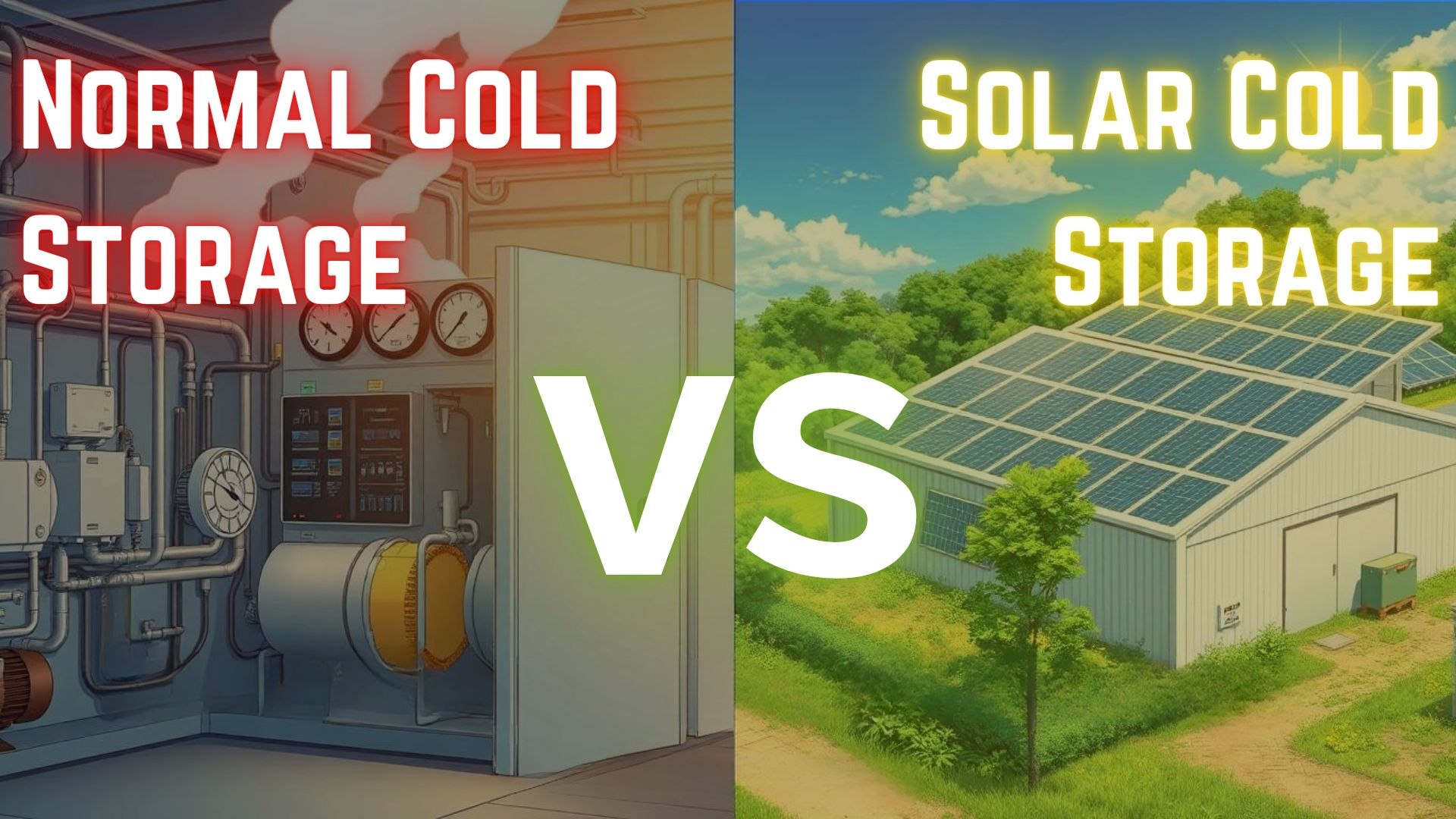
Cold Storage and Processing Equipment
Extending harvest value through proper storage and processing represents a significant opportunity for farm profitability. Solar-powered cold storage and processing equipment enable these activities even in locations without reliable grid connections. The ColdAcre Solar Cold Storage Container provides 320 cubic feet of refrigerated space powered entirely by rooftop solar panels, extending produce shelf life by weeks or even months.
Solar Refrigeration for Produce Preservation
Solar-powered refrigeration systems have evolved dramatically in recent years, now offering practical solutions for on-farm cold storage. These systems typically use DC compressors that run directly from solar panels during daylight hours, cooling thermal mass that maintains temperature overnight. The SunDanzer DCF225 provides 8 cubic feet of freezer space or 15 cubic feet of refrigeration using only 630Wh of electricity daily—easily supplied by a modest solar array.
For larger operations, walk-in coolers with solar thermal backup can maintain safe temperatures for days without grid power. These hybrid systems provide peace of mind during grid outages while significantly reducing operating costs during normal conditions.
Mobile Processing Units for Remote Areas
Value-added processing becomes possible anywhere with solar-powered mobile processing equipment. These units typically mount on trailers or in shipping containers, providing processing capabilities that travel to the product rather than vice versa. The Solar Mobile Juicing Station developed by Farm Hack can process up to 100 gallons of fruit juice daily using only solar power, creating shelf-stable products directly in the field.
Similar systems exist for small-scale grain processing, egg washing and grading, and basic meat processing. By eliminating transportation costs and processing delays, these solar-powered units significantly enhance product quality while improving farm profitability.
Drones and Field Robots: The Future Is Here
Perhaps no technology better represents the future of farming than solar-powered autonomous systems. From aerial drones to ground-based robots, these tools extend human capabilities while reducing labor requirements. The DJI Agras T30 agricultural drone can spray up to 40 acres daily when supported by solar charging stations, performing precision applications that would require multiple workers with backpack sprayers.
Crop Monitoring and Disease Detection
Early detection of crop issues dramatically improves management outcomes. Solar-powered drones equipped with multispectral cameras can identify plant stress up to two weeks before it becomes visible to the human eye. The Sentera PHX agricultural drone operates from solar charging stations to provide regular crop health assessments across entire farms, identifying specific areas requiring intervention.
The resulting data enables highly targeted management responses, applying treatments only where needed rather than treating entire fields. Most farms report input reductions of 30-60% when implementing precision applications based on drone scouting data.
Solar-Powered Pest Management Systems
Integrated pest management becomes more effective with solar-powered monitoring and intervention tools. Automated insect traps like the Trapview system use solar power to operate cameras that count and identify pest species, creating early warning systems for potential outbreaks. When thresholds are exceeded, solar-powered spot treatment applicators can target affected areas without blanket spraying.
For larger pests, devices like the Bird Gard Solar Pro emit predator calls and distress signals to protect crops without chemicals. These systems operate autonomously for years with minimal maintenance, providing continuous protection with zero operating costs after initial installation.
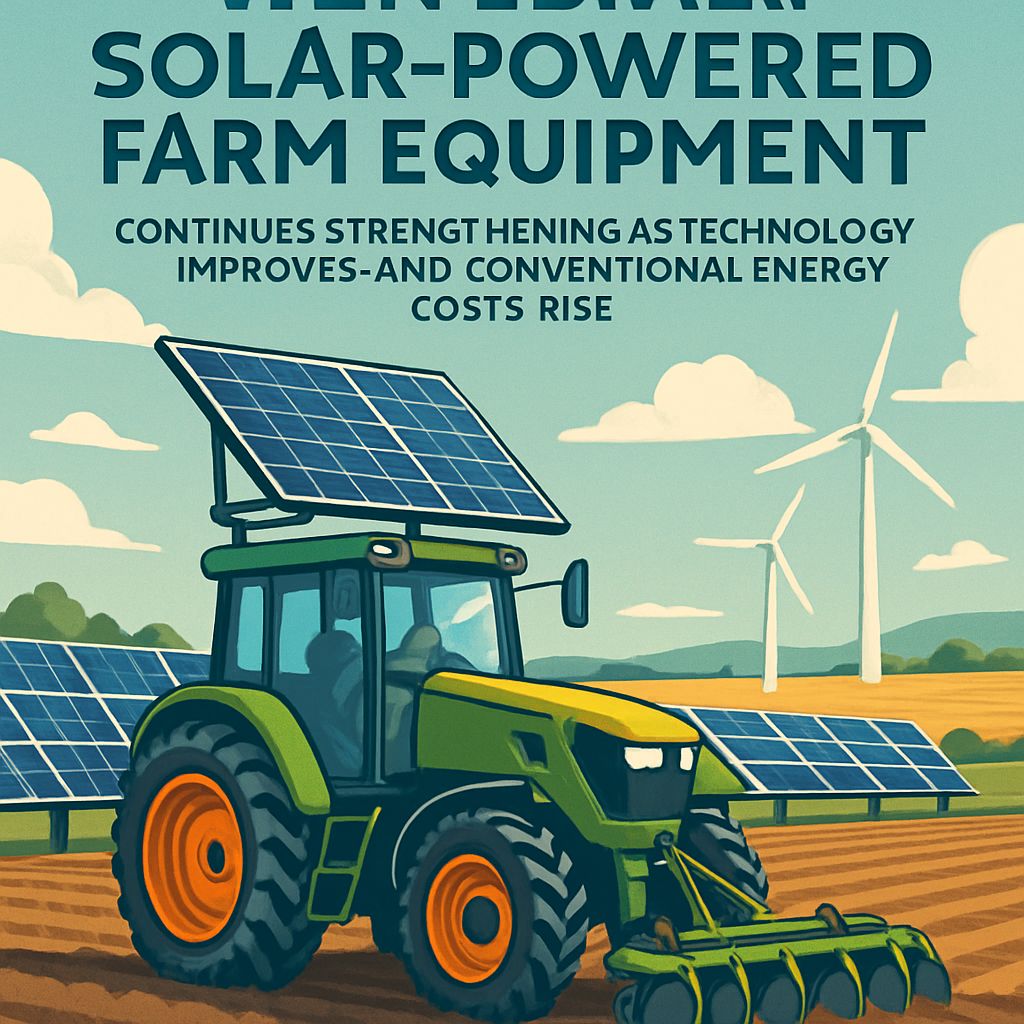
Cost Analysis: When Will You Break Even?
The financial case for solar-powered farm equipment continues strengthening as technology improves and conventional energy costs rise. While upfront investments typically exceed conventional alternatives by 20-50%, the elimination of fuel costs and reduced maintenance requirements create compelling long-term economics.
Most solar-powered irrigation systems reach break-even within 3-5 years, while hand tools and smaller equipment often pay for themselves in 2-3 years of regular use. Larger investments like solar tractors generally require 5-7 years to reach parity, though this timeline shortens significantly when factoring in available incentives and rising fuel costs.
The most compelling financial cases often come from integrated systems where multiple farm operations leverage shared solar infrastructure. By spreading the investment across several applications, farms can accelerate payback periods while creating resilience against both energy price volatility and supply disruptions.
|
Equipment Category |
Typical Payback Period |
20-Year Savings vs. Conventional |
Key Factors Affecting ROI |
|---|---|---|---|
|
Irrigation Systems |
3-5 years |
$15,000-$50,000 |
Water requirements, fuel costs, distance from grid |
|
Hand Tools |
2-3 years |
$5,000-$15,000 |
Frequency of use, fuel prices, labor efficiency |
|
Electric Fencing |
1-2 years |
$3,000-$20,000 |
Fence length, distance from power, rotation frequency |
|
Tractors/UTVs |
5-7 years |
$50,000-$200,000 |
Annual hours of use, diesel prices, maintenance needs |
|
Barn Systems |
4-6 years |
$25,000-$100,000 |
Energy consumption, utility rates, backup requirements |
Small Farm ROI Calculator
To accurately assess potential returns on solar investments, small farms should consider multiple factors beyond simple equipment costs. These include current energy expenses, labor requirements, equipment maintenance history, and available tax incentives. The National Renewable Energy Laboratory’s PVWatts Calculator provides location-specific solar production estimates, while the USDA’s REAP program offers guidance on agricultural-specific incentives.
For a typical 50-acre diversified farm, converting key operations to solar power often yields $5,000-$15,000 in annual savings through reduced fuel purchases, lower maintenance costs, and decreased labor requirements. These savings compound over time as conventional energy prices continue rising while solar operating costs remain essentially fixed.
Available Tax Credits and Agricultural Grants
The financial equation for solar farm equipment improves substantially when accounting for available incentives. The federal Investment Tax Credit currently offers a 26% credit for qualifying solar investments, while USDA’s Rural Energy for America Program (REAP) provides grants covering up to 25% of project costs and loan guarantees for the remainder. Many states offer additional incentives, creating the potential for 50-75% of project costs to be offset through combined programs.
Maintenance Costs Compared to Conventional Equipment
One of the most significant yet often overlooked advantages of solar-powered equipment is dramatically reduced maintenance requirements. Electric motors typically contain 90% fewer moving parts than internal combustion engines, eliminating entire categories of maintenance including oil changes, fuel filters, spark plugs, and carburetor adjustments.
Solar panels themselves require minimal maintenance beyond occasional cleaning, with most manufacturers guaranteeing at least 80% of original output after 25 years of service. Battery systems represent the primary maintenance concern for solar equipment, with replacement typically required every 5-10 years depending on battery chemistry and usage patterns.
When factoring maintenance into lifetime cost calculations, solar-powered equipment typically costs 60-70% less to maintain than conventional alternatives over a 10-year period. This advantage becomes particularly pronounced in remote locations where service calls for conventional equipment involve significant travel expenses.
Your Farm’s Solar Transition Plan
Transitioning to solar-powered farm equipment works best as a planned, phased process rather than an overnight conversion. Most successful implementations begin with smaller, high-use tools that offer quick returns, gradually expanding to larger systems as experience and confidence grow. This measured approach allows for learning and adaptation while spreading capital investments across multiple seasons.
Start Small: The Essential First Purchases
The ideal starting points for most farms include solar-powered fencing, basic hand tools, and small irrigation systems. These applications offer quick installation, minimal complexity, and fast payback periods, typically delivering positive returns within 1-2 growing seasons. They also provide valuable experience with solar technology fundamentals without requiring major infrastructure changes or significant technical expertise.
Scaling Up: Building an Integrated System
As comfort with solar technology increases, farms can progressively integrate larger and more sophisticated equipment into their operations. A logical progression often includes adding monitoring systems, expanding irrigation capacity, and incorporating solar charging stations for larger equipment. This phased approach allows each addition to build upon existing infrastructure, maximizing efficiency while minimizing redundant investments.
- Phase 1: Hand tools, fencing, and small irrigation (Years 1-2)
- Phase 2: Monitoring systems, expanded irrigation, basic barn systems (Years 2-3)
- Phase 3: Solar charging infrastructure for larger equipment (Years 3-4)
- Phase 4: Transitioning primary equipment to electric with solar charging (Years 4-7)
- Phase 5: Advanced autonomous systems and comprehensive integration (Years 7-10)
This graduated implementation allows farms to build expertise while spreading capital expenditures across multiple years. It also provides flexibility to adjust plans as technology evolves and new options become available.
When planning solar integration, consider starting with operations furthest from existing power infrastructure, as these typically offer the fastest returns. Similarly, prioritize applications with high daily use patterns, as these accumulate operational savings more rapidly than occasionally used equipment. For more information, explore how efficient farm operations can benefit from solar integration.
Document energy usage patterns before installation to establish baseline comparisons and verify performance after implementation. This data-driven approach helps identify both successes and areas needing refinement, enabling continuous optimization of the system as it expands.
Training Staff on New Technology
The human element remains crucial for successful technology transitions. Comprehensive training ensures staff understand both the operation and maintenance requirements of new solar equipment. The most effective training programs combine formal instruction with hands-on practice periods, allowing workers to develop confidence before depending on the equipment for critical tasks.
Consider designating a “solar champion” within your team—someone with particular interest in the technology who can become the in-house expert and troubleshooter. This person can liaison with equipment suppliers, coordinate maintenance schedules, and help train new staff members as your operation grows.
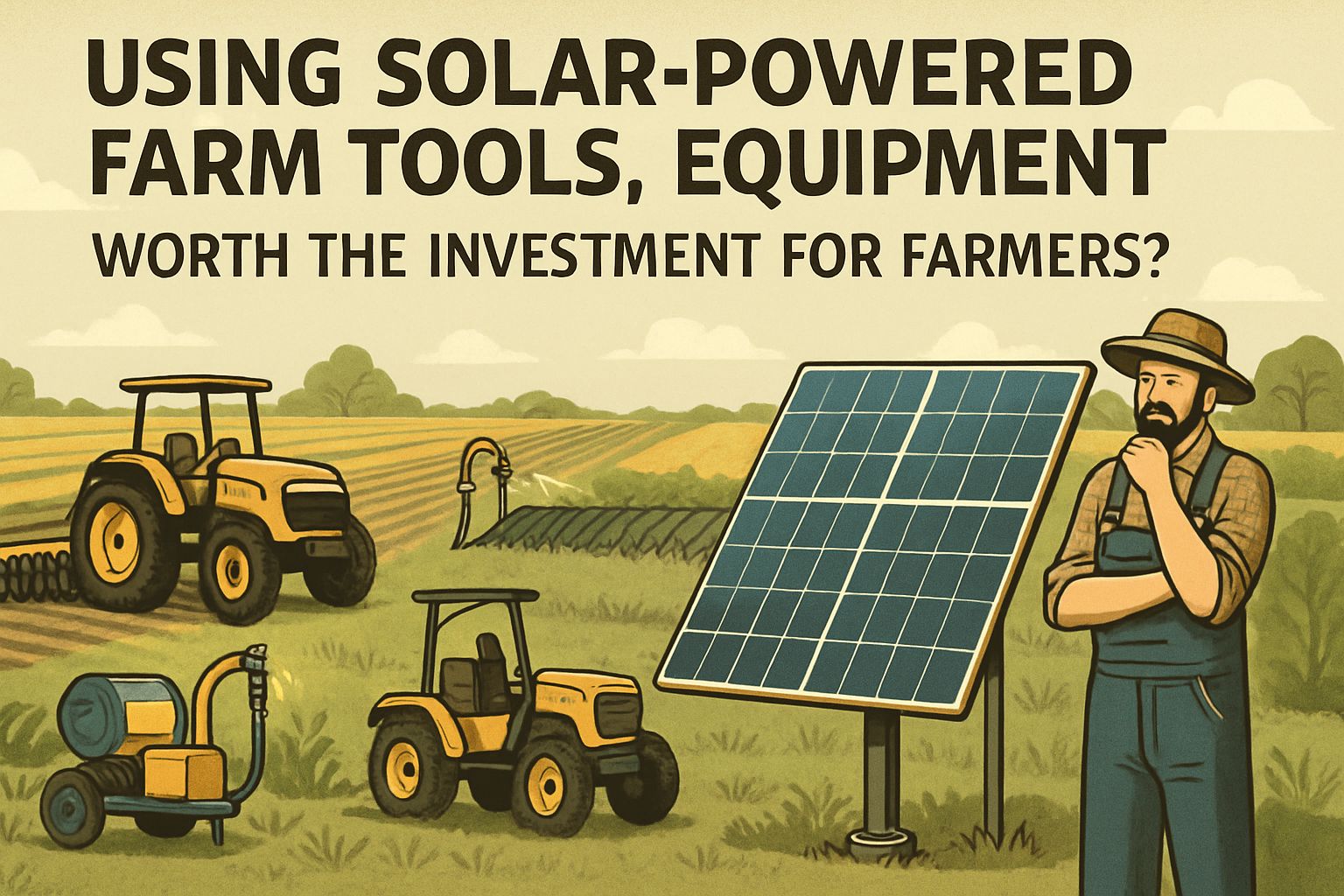
Conclusion: Is Using Solar-Powered Farm Tools, Equipment Worth the Investment for Farmers
The evidence overwhelmingly supports solar-powered farm equipment as both economically viable and operationally advantageous. Beyond the clear environmental benefits, these technologies deliver tangible advantages in operational flexibility, reduced maintenance requirements, and long-term cost stability. As conventional energy prices continue their volatile trajectory, the financial case for solar farming strengthens daily.
For forward-thinking farmers looking toward the next decade and beyond, solar-powered equipment represents not merely an alternative but an imperative. Those who embrace these technologies now gain both immediate benefits and strategic positioning for a future where energy self-sufficiency becomes increasingly valuable. The question is no longer whether farms should transition to solar power, but how quickly and comprehensively they can implement this transformation.
Frequently Asked Questions
As solar farm equipment transitions from novelty to necessity, many practical questions arise about implementation, performance, and economics. The following answers address the most common concerns based on real-world experiences from working farms.
How long do solar panels on farm equipment typically last?
Modern solar panels used in agricultural applications typically carry warranties of 25-30 years, guaranteeing at least 80% of original output at the end of that period. In practice, many panels continue functioning at acceptable levels well beyond their warranty periods, with some early installations from the 1980s still operating at 70-75% of original capacity after 40+ years of service. For more insights on solar technology in agriculture, check out this article on solar panels for farm vehicles.
The actual lifespan depends significantly on environmental conditions, with panels in dusty environments requiring more frequent cleaning to maintain optimal performance. Physical damage represents the most common cause of premature failure, though most agricultural-grade panels now feature tempered glass and reinforced frames specifically designed to withstand farm conditions.
Can solar-powered farm tools work in cloudy regions?
Solar equipment remains viable even in regions with frequent cloud cover, though system sizing requirements increase to compensate for reduced sunlight hours. Farms in cloudy regions typically install 25-40% more panel capacity than those in sunny areas to achieve equivalent performance. Battery storage also becomes more important, allowing energy harvested during sunny periods to support operations during extended cloudy stretches.
Germany—a country not known for abundant sunshine—leads Europe in agricultural solar adoption, demonstrating the technology’s viability in less-than-ideal conditions. Their success stems from appropriate system sizing and strategic implementation focusing first on applications with the highest return potential regardless of climate conditions.
What maintenance do solar farm tools require compared to gas-powered options?
Solar-powered equipment requires significantly less maintenance than conventional alternatives, eliminating entire categories of service needs. Electric drive systems typically have 90% fewer moving parts than internal combustion engines, with no oil changes, fuel filters, spark plugs, or carburetors requiring attention.
- Solar panels: Periodic cleaning (1-4 times yearly depending on dust conditions) and annual connection inspection
- Batteries: Monitoring of charge levels, periodic equalization charges for lead-acid types, and replacement every 5-10 years
- Electric motors: Bearing inspection every 3-5 years, occasional brush replacement in certain motor types
- Controllers and inverters: Annual inspection of connections and cooling systems
- Structural components: Checking mounting hardware tightness annually
The simplified maintenance regime translates to approximately 70-80% less maintenance time and expense compared to fossil-fuel-powered equipment. This advantage becomes particularly significant for remote operations where service calls involve substantial travel time and expense.
Many farmers report that the predictability of solar equipment maintenance represents an additional benefit. Unlike combustion engines that can fail unexpectedly, solar system maintenance follows predictable schedules with few emergency interventions required.
Are there special insurance considerations for solar farm equipment?
Most farm insurance policies can accommodate solar equipment with minor modifications, though explicit coverage confirmation is essential. The primary considerations include appropriate valuation of the equipment, coverage for both physical damage and potential business interruption, and clarity regarding warranty interactions.
For larger installations, specialized renewable energy insurance products often provide more comprehensive coverage tailored to solar systems’ unique characteristics. These policies typically include provisions for production losses due to equipment damage, not just the equipment value itself.
Some insurance providers offer premium discounts for farms with solar backup systems, recognizing the reduced risk profile associated with energy independence. Especially for operations with climate-controlled livestock facilities or cold storage requirements, the resilience provided by solar backup can translate to quantifiable risk reduction from an insurer’s perspective.
How do I calculate the right size solar system for my farm’s needs?
Proper sizing begins with a comprehensive energy audit documenting current consumption patterns for each operation you plan to convert to solar power. Track actual fuel and electricity usage over at least one full production cycle, noting seasonal variations and peak demand periods. This baseline establishes minimum capacity requirements for replacement solar systems.
For off-grid applications, system capacity should exceed average daily requirements by 30-50% to account for cloudy periods and ensure consistent performance. Battery storage typically needs to cover 3-5 days of normal operation without recharging to provide sufficient autonomy during adverse weather conditions. For more information on solar-powered farming solutions, check out this article on solar-powered farming equipment.
Rather than attempting to size one comprehensive system for the entire farm, most operations benefit from targeted solutions for specific applications. This modular approach allows for prioritizing high-return investments first while maintaining flexibility for future expansion. Consulting with an agricultural solar specialist can provide valuable guidance for optimizing system configuration based on your specific production patterns and regional solar conditions.
Solar-powered farm tools have revolutionized the way farmers manage their operations. By harnessing the power of the sun, these tools not only reduce energy costs but also promote sustainable farming practices. For instance, integrating solar panels with irrigation systems can significantly enhance water management efficiency. To explore the best options for integrating solar panels with sprinkler irrigation systems, farmers can make informed decisions that benefit both their crops and the environment.







Leave a Reply