

Key Takeaways
- Installing solar panels on farms can cut electricity costs by up to 70%, providing significant savings on energy expenses.
- Solar power is a sustainable energy source, reducing greenhouse gas emissions and contributing to environmental conservation.
- Solar installations can utilize underused or less productive land, maximizing the utility of available space without disrupting farming activities.
- Farmers should conduct an initial energy assessment to determine the appropriate size and type of solar system needed.
- Professional solar installers can streamline the process, ensuring compliance with all regulations and optimizing system performance.
The Importance of Solar Energy for Farms
Farming has always been an energy-intensive endeavor. From running irrigation systems to maintaining climate-controlled environments for livestock, the energy demand is substantial. That’s where solar energy comes in as a game changer. By installing solar panels, farms can significantly reduce their energy costs while contributing to a cleaner environment. Let’s dive into why solar energy is a crucial component for modern farms.
Why Farms Benefit from Solar Power
Farms stand to gain immensely from solar power. One of the most compelling reasons is cost savings. Energy costs can eat up a significant portion of a farm’s budget. By harnessing the sun’s power, farms can produce their own electricity, slashing these costs considerably.
Besides financial benefits, solar energy also provides energy independence. Farms often operate in rural areas where power outages can be more frequent. Solar panels offer a reliable power source, ensuring that essential farm operations continue uninterrupted.
Moreover, the installation of solar panels can enhance the farm’s sustainability profile. Consumers are increasingly conscious of the environmental impact of their food sources. By adopting solar energy, farms can appeal to this growing market segment.
Environmental and Economic Advantages
Solar energy is not just about saving money; it’s also about protecting the planet. By reducing reliance on fossil fuels, solar power helps decrease greenhouse gas emissions, thus combating climate change. This is a significant environmental advantage that aligns with global efforts to create a more sustainable future. For more information on how solar panels can be installed effectively, visit EnergySage’s solar panel installation guide.
Economically, solar installations can increase the value of farm properties. As energy costs rise, having a self-sufficient energy source becomes an attractive feature for potential buyers or investors. Furthermore, many regions offer incentives and tax breaks for solar installations, making it a financially savvy decision.
“By investing in solar energy, farmers not only save money but also contribute to a healthier planet. It’s a win-win situation for both the economy and the environment.”
Maximizing Land Use with Solar Installations
One of the unique advantages of solar installations on farms is the ability to make use of underutilized land. Solar panels can be installed on rooftops, over parking areas, or on otherwise unproductive land, ensuring that every square foot of the farm is used efficiently.
This approach not only maximizes land use but also allows farmers to diversify their income. Some farms even lease their land to solar companies, generating additional revenue while still maintaining agricultural production on the rest of their land.
Moreover, innovative solutions like agrivoltaics, which combine agriculture and solar power, are emerging. These systems allow crops to grow under solar panels, providing shade and reducing water evaporation, all while generating energy. It’s a perfect example of how technology can enhance traditional farming practices.
Getting Started with Solar Installation
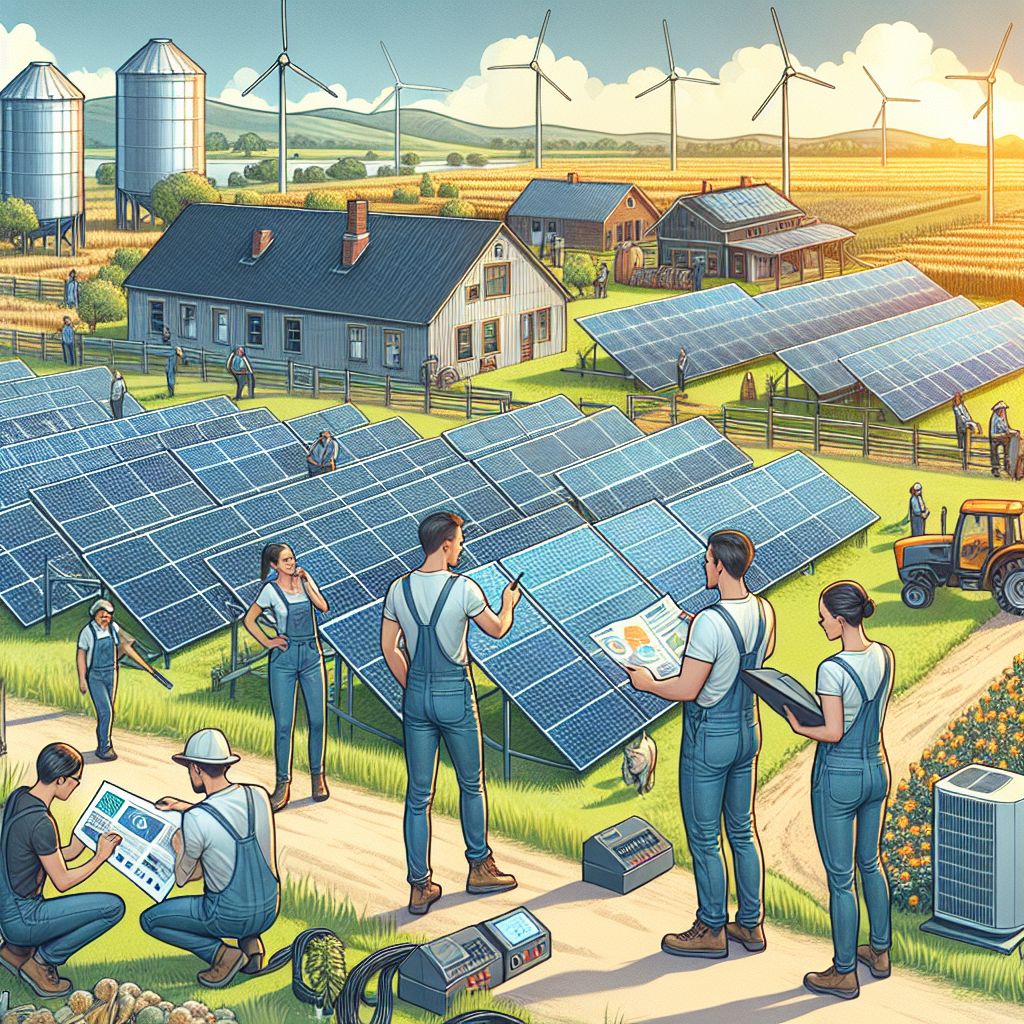
Embarking on the journey to solar energy can seem daunting, but with the right guidance, it becomes a manageable and rewarding process. The first step is understanding your farm’s energy needs and assessing how solar power can meet those needs.
Performing an Initial Energy Assessment
Before installing solar panels, it’s crucial to perform an energy assessment. This involves analyzing your current energy usage to determine the size and type of solar system you’ll need. Start by reviewing your electricity bills to understand your average consumption. This data will help you and your solar provider design a system that meets your needs.
Consider factors such as peak energy usage times, potential future energy needs, and any energy efficiency improvements you might implement. This comprehensive assessment ensures that your solar installation is tailored to your specific requirements.
Additionally, evaluate the available space for solar panels. The location, angle, and shading of the installation site can significantly impact the system’s efficiency. A professional assessment can help identify the best spots for maximum sunlight exposure.
Selecting the Right Solar Products
Once you have a clear understanding of your energy needs, the next step is selecting the right solar products. There are various types of solar panels and inverters available, each with its own advantages.
When choosing solar panels, consider factors such as efficiency, durability, and warranty. High-efficiency panels may have a higher upfront cost but can generate more power in a smaller area. Durability is also crucial, especially in agricultural settings where equipment may be exposed to harsh weather conditions.
Here’s a table comparing the different solar panel you can use to power a farm:
|
Solar Panel Type |
Efficiency |
Cost per Watt |
Pros |
Cons |
|---|---|---|---|---|
|
Monocrystalline |
17-22% |
$1.00 – $1.50 |
– Highest efficiency. 1, 3 |
– Most expensive option. 1, 3 |
|
Polycrystalline |
13-17% |
$0.90 – $1.20 |
– Lower cost than monocrystalline. 1, 3 |
– Slightly lower efficiency. 1, 3 |
|
Thin-Film |
10-13% |
$0.70 – $1.00 |
– Lowest cost. 1, 3 |
– Lowest efficiency. 1, 3 |
Monocrystalline panels are highly efficient and durable, making them ideal for high-performance irrigation systems that require consistent power output. Their higher cost is often offset by their superior performance in the long run 3.
Polycrystalline panels offer a good balance between cost and efficiency, making them suitable for medium-scale irrigation projects. They perform well in most conditions and are a popular choice for many agricultural applications 3.
Thin-film panels, while less efficient, are more affordable and flexible. They can be a good option for portable irrigation systems or installations where weight is a concern. Their lower efficiency means you may need more panels to achieve the same power output as crystalline options 3.
The Role of Professional Solar Installers
While it might be tempting to attempt a DIY solar installation, hiring professional solar installers is highly recommended. They bring expertise and experience to the table, ensuring that your system is installed correctly and safely.
Professional installers are familiar with local regulations and can handle the necessary permits and paperwork. They also provide valuable advice on system design and placement, optimizing your solar installation for maximum efficiency.
Furthermore, many solar companies offer maintenance and monitoring services, ensuring that your system operates at peak performance for years to come. This peace of mind is invaluable, especially for busy farmers who have numerous other responsibilities.

Step-by-Step Solar Installation Guide
Embarking on a solar installation project for your farm can be both exciting and daunting. However, with a structured approach, you can navigate this process smoothly and efficiently. Here’s a detailed step-by-step guide to help you through the installation journey.
The first step in any solar installation is thorough planning. This involves understanding your energy needs, the layout of your farm, and the potential challenges you might face. Once you’ve completed the initial assessment and selected your solar products, it’s time to move on to the actual installation process.
Before any physical work begins, ensure that all necessary permits and approvals are in place. This is a crucial step, as failing to comply with local regulations can result in fines or delays. Work closely with your solar installer to ensure that all paperwork is handled correctly.
- Plan your installation timeline, considering factors such as weather conditions and availability of installers.
- Ensure that all permits and approvals are obtained before starting the installation.
- Coordinate with your solar provider to schedule delivery of equipment and materials.
- Prepare the installation site, ensuring it is clean and accessible.
Once these preliminary steps are complete, you can proceed to the actual installation. This involves several key stages, each requiring attention to detail and precision. For more insights on how solar panels can increase farm efficiency, explore additional resources available.
Site Preparation Essentials
Proper site preparation is critical for a successful solar installation. This step involves clearing the installation area of any debris or obstructions that could interfere with the placement of solar panels. If you’re installing panels on a rooftop, ensure that the roof is in good condition and can support the additional weight.
For ground-mounted systems, the land should be leveled and free of vegetation. This ensures that the mounting structures are stable and the panels are positioned correctly to capture maximum sunlight.
Mounting the Solar Panels Correctly
Once the site is prepared, the next step is to install the mounting structures. These structures are designed to hold the solar panels in place and can be either fixed or adjustable. Fixed mounts are simpler and less expensive, while adjustable mounts allow for seasonal adjustments to optimize sunlight capture.
After the mounts are securely in place, the solar panels are attached. This step requires precision to ensure that the panels are angled correctly and securely fastened. Proper alignment is crucial for maximizing energy production.
Wiring and Electrical Connections
With the panels mounted, the next phase involves wiring and electrical connections. This step should always be performed by a qualified electrician or solar installer, as it involves connecting the panels to an inverter and integrating the system with your farm’s electrical infrastructure.
The inverter is a vital component, as it converts the direct current (DC) produced by the solar panels into alternating current (AC) that can be used by your farm’s electrical systems. Proper wiring ensures that the system operates safely and efficiently.
After the wiring is complete, the system must be thoroughly tested to ensure that all components are functioning correctly. This includes checking the electrical connections, verifying the inverter’s operation, and ensuring that the panels are generating power as expected.
Testing Your Solar System Before Use
Before your solar system can go live, it needs to undergo a series of tests to ensure everything is functioning correctly. This includes checking for any electrical faults, ensuring that the inverter is working properly, and verifying that the system is generating the expected amount of power. For more insights on how solar panels can enhance efficiency, read about increasing farm efficiency with solar panels.
These tests are crucial for identifying any issues before the system is fully operational. A professional installer will have the necessary tools and expertise to conduct these tests thoroughly, ensuring that your solar panels provide maximum benefits and cost savings for farmers.
Connecting to the Electric Grid Safely
The final step in the installation process is connecting your solar system to the electric grid. This allows you to sell excess power back to the grid, further reducing your energy costs. However, this step requires coordination with your local utility company to ensure compliance with grid connection requirements.
Once connected, your solar system will be fully operational, providing your farm with a sustainable and cost-effective energy source. Regular monitoring and maintenance will ensure that your system continues to operate at peak efficiency.
This table below shows a comprehensive step-by-step guide for solar installation on your farm:
|
Step |
Description |
|---|---|
|
1. Site Assessment |
Evaluate your property’s solar potential, considering factors like sunlight exposure, topography, and existing infrastructure. 1, 5 |
|
2. Energy Audit |
Conduct a thorough analysis of your farm’s energy consumption to determine the appropriate system size. 4 |
|
3. System Design |
Work with solar professionals to create a layout that maximizes sun exposure and energy production. 7 |
|
4. Permitting and Approvals |
Obtain necessary permits from local authorities and approvals from relevant organizations. 4, 5 |
|
5. Equipment Selection |
Choose appropriate solar panels, inverters, and other components based on your farm’s needs and budget. 7 |
|
6. Site Preparation |
Clear the installation area, level the terrain, and prepare foundations for the solar array. 5 |
|
7. Mounting System Installation |
Install the support structures or racks that will hold the solar panels. 2 |
|
8. Panel Installation |
Mount the solar panels onto the prepared structures, ensuring proper alignment and security. 2, 7 |
|
9. Electrical Wiring |
Connect the panels to inverters and your farm’s electrical system. 4, 10 |
|
10. Inverter Setup |
Install and configure the inverters to convert DC power from the panels to usable AC power. 4 |
|
11. Battery Installation (if applicable) |
Set up battery storage systems for off-grid or hybrid setups. 3 |
|
12. Grid Connection |
Connect the solar system to the power grid, working with your local utility company. 7 |
|
13. System Testing |
Conduct thorough performance tests to ensure all components are functioning correctly. 7 |
|
14. Final Inspection |
Schedule and pass final inspections by relevant authorities. 4 |
|
15. Monitoring Setup |
Install and configure monitoring systems to track your solar farm’s performance. 3 |
This guide provides a comprehensive overview of the solar installation process for your farm. Remember that while DIY installation can be cost-effective, professional installation ensures safety, efficiency, and often comes with warranties (6). Always prioritize safety and consult with experts, when necessary, throughout the installation process.
Maintaining and Optimizing Solar Panels
After installation, the focus shifts to maintaining and optimizing your solar panels. Regular maintenance is crucial for ensuring that your system continues to operate efficiently and effectively over its lifespan.
Maintenance tasks are generally straightforward and can often be performed by the farm owner. However, professional maintenance services are also available for more comprehensive inspections and repairs.
Most importantly, keep an eye on your system’s performance through monitoring tools provided by your solar installer. These tools can help you track energy production and identify any potential issues early on. For more insights into enhancing your farm’s efficiency, explore solar panel benefits and methods.
Regular Cleaning for Maximum Efficiency
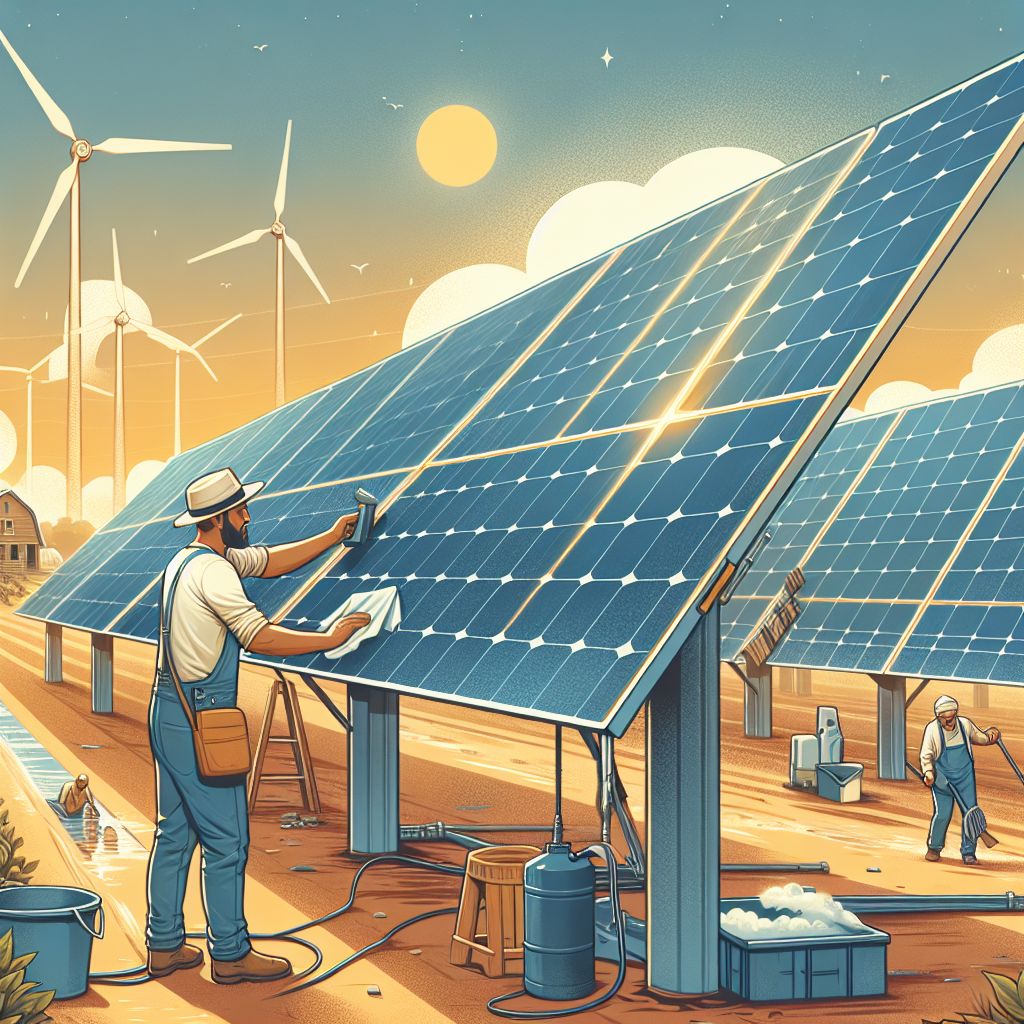
One of the simplest yet most effective maintenance tasks is regular cleaning of the solar panels. Dust, dirt, and debris can accumulate on the panels, reducing their efficiency. Cleaning them with water and a soft brush can help maintain optimal performance. For more information on how solar panels can increase farm efficiency, explore the benefits and methods available.
Identifying and Troubleshooting Common Issues
Despite your best efforts, issues may occasionally arise. Common problems include reduced energy output, inverter malfunctions, or wiring issues. Familiarizing yourself with these common issues and their solutions can help you address them promptly.
For instance, if you notice a drop in energy production, check for any shading on the panels or debris that may have accumulated. If the issue persists, contact your solar provider for assistance.
By staying proactive with maintenance and addressing issues promptly, you can ensure that your solar system remains a reliable and efficient energy source for your farm for many years to come. For more insights on how to increase farm efficiency with solar panels, explore our detailed guide.
Upgrades and Advances in Solar Technology
Solar technology is continually evolving, bringing new advancements that can further benefit farms. Recent innovations focus on improving efficiency and reducing costs, making solar power more accessible than ever.
For instance, bifacial solar panels are becoming increasingly popular. These panels capture sunlight from both sides, increasing energy production without requiring additional space. Such technology is particularly beneficial for farms with limited installation areas.
Real Farm Case Studies
To truly understand the impact of solar energy on farms, let’s look at some real-life examples. These case studies highlight the transformative power of solar installations and offer valuable insights for other farmers considering this sustainable energy source.
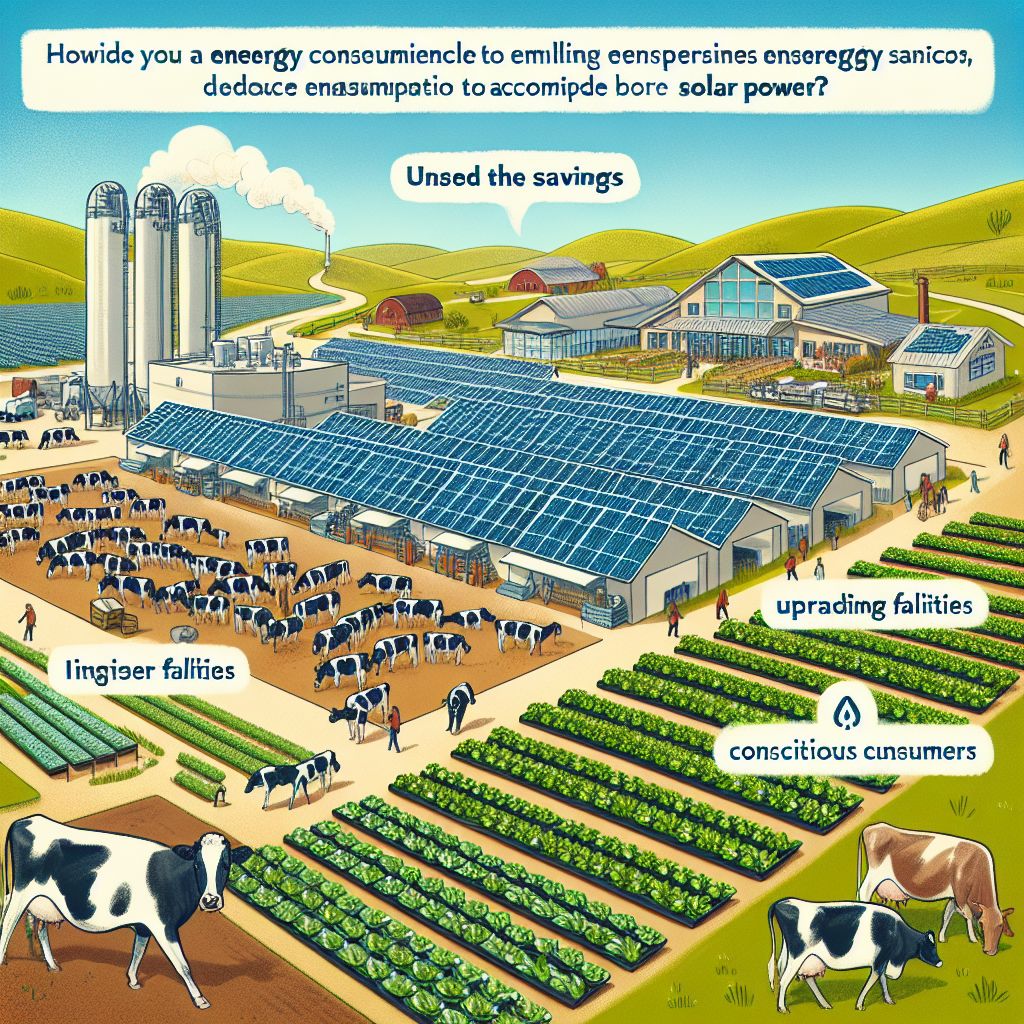
One such example is a dairy farm in California that installed a solar system to power its milking operations. The farm saw a 60% reduction in electricity costs, allowing them to reinvest savings into expanding their herd and improving facilities. For more insights on how solar panels can help cut operational costs in agriculture, check out this article.
Another inspiring story comes from a vegetable farm in Florida. By installing solar panels, the farm not only cut energy costs but also used the savings to invest in more efficient irrigation systems, enhancing crop yields.
“Our solar panels have not only reduced our energy bills but also allowed us to reinvest in our farm’s growth and sustainability. It’s been a game-changer for us.”
Successful Solar Installations: Learning from Others
Learning from the experiences of other farmers can provide valuable guidance for those considering solar installations. Success stories demonstrate the tangible benefits of solar power and offer practical tips for optimizing installations.
For instance, many farmers emphasize the importance of working with experienced solar providers who understand the unique needs of agricultural operations. They also highlight the value of regular maintenance to ensure the longevity and efficiency of the solar system. Additionally, exploring solar panel options in agriculture can significantly cut operational costs.
Positive Impacts Observed Post-Installation
The positive impacts of solar installations extend beyond financial savings. Many farms report increased energy independence, allowing them to operate more sustainably and efficiently. This independence is particularly valuable during peak energy usage periods or in areas prone to power outages.
Additionally, solar installations often enhance a farm’s environmental profile, attracting environmentally conscious consumers and potential business partners. This alignment with sustainable practices can open new market opportunities and strengthen a farm’s reputation.
Conclusion and Final Thoughts
Installing solar panels on farms is a strategic decision that offers numerous benefits, from significant cost savings to enhanced sustainability. By harnessing the power of the sun, farmers can reduce their environmental impact while improving their bottom line.
Summarizing the Benefits for Farmers
Solar energy provides a reliable, cost-effective power source that can transform farm operations. With the right planning and execution, solar installations can lead to substantial savings, increased energy independence, and a stronger environmental profile.
Moreover, by maximizing land use and leveraging technological advancements, farmers can optimize their solar systems for even greater benefits. This makes solar power an attractive and viable option for farms of all sizes.
Encouraging the Transition to Solar Power
As we look to the future, the transition to solar power represents a critical step toward sustainability. By embracing solar energy, farmers can play a vital role in creating a cleaner, greener world. The journey may require careful planning and investment, but the rewards are well worth the effort.
Frequently Asked Questions (FAQ)
As you consider installing solar panels on your farm, you may have several questions. Here are some common queries and their answers to help guide your decision-making process.
How much can a farm save by installing solar panels?
The savings from solar panels can vary based on the size of the installation and the farm’s energy usage. However, many farms report savings of 50-70% on their electricity bills, translating to thousands of dollars annually.
What are the steps for maintenance of farm solar panels?
Regular maintenance involves cleaning the panels to remove dust and debris, checking for any damage, and ensuring that all electrical connections are secure. It’s also beneficial to have a professional inspection periodically to address any potential issues.
Are there specific solar panel types better suited for farms?
While all solar panels can be used on farms, some types, like bifacial panels, offer advantages in certain settings. Consider your farm’s specific needs and consult with a solar provider to choose the best option.
Another consideration is the durability of the panels, especially if they’re exposed to harsh weather conditions. Look for panels with robust warranties and proven performance in agricultural environments.
How long does the solar installation process take on average?
The timeline for solar installation can vary based on the project’s complexity and size. Generally, the process takes between one to three months from initial consultation to final connection to the grid. For farmers looking to increase farm efficiency with solar panels, understanding this timeline is crucial for planning purposes.
This timeline includes planning, permitting, installation, and testing. Working with an experienced solar provider can help streamline the process and minimize delays.
What permits are required for solar installations on farms?
The specific permits required can vary by location, but generally include building permits and electrical permits. Your solar provider should be familiar with local regulations and handle the permitting process on your behalf.
It’s essential to ensure that all necessary permits are in place before beginning the installation to avoid any legal issues or delays. Understanding government incentives for farmers can also aid in the process.







Leave a Reply