

Key Takeaways
- Installing solar panels on farms can reduce energy costs by up to 75%.
- Solar panels provide a reliable energy source, especially in remote areas.
- Using solar energy can increase farm property value by making it more sustainable.
- Farmers can access government incentives to lower the cost of solar panel installation.
- Solar power enhances agricultural efficiency through reduced carbon emissions and improved energy independence.
The Role of Solar Panels in Enhancing Farm Efficiency
Solar panels are revolutionizing the way farms operate by providing a sustainable and cost-effective energy solution. As energy demands increase, farmers are turning to solar power to improve efficiency and reduce costs. But why is solar power such a game-changer for agriculture? It’s simple: solar panels harness the sun’s energy, which is abundant and free, transforming it into electricity to power farm operations.
Introduction to Solar Energy in Agriculture
In agriculture, solar energy is increasingly being recognized as a viable solution for powering farms. Farmers have traditionally relied on conventional energy sources, which are not only costly but also environmentally damaging. By switching to solar power, farms can significantly lower their carbon footprint while securing a stable energy supply. This change is not only beneficial for the environment but also for the farmers’ bottom line.
“Solar energy can provide up to 100% of a farm’s electricity needs, drastically reducing reliance on the grid.”
Moreover, solar panels offer a degree of energy independence, which is crucial for farms located in remote areas where power outages can disrupt operations. The adoption of solar technology ensures that farmers can continue their work without interruptions, leading to more consistent productivity and efficiency.
Immediate Benefits of Solar Adoption
The benefits of adopting solar panels on farms are immediate and tangible. One of the most significant advantages is the reduction in energy costs. Solar panels can cut electricity bills by a substantial margin, allowing farmers to allocate their resources more effectively. Additionally, solar energy contributes to a cleaner environment by reducing greenhouse gas emissions associated with traditional energy sources.
Besides cost savings, solar panels also provide farmers with a reliable and predictable source of energy. This reliability is crucial during peak farming seasons when energy demands are high. With solar power, farmers can ensure that their operations run smoothly, regardless of external factors affecting the energy grid.
How Can Solar Panels Enhance a Farm’s Efficiency?
Solar panels enhance farm efficiency in several ways. Firstly, they provide a consistent energy supply that powers essential farm equipment and machinery. This consistency is vital for maintaining productivity levels and preventing downtime. Additionally, solar energy can be used to power irrigation systems, ensuring that crops receive adequate water supply without incurring high energy costs.
Furthermore, solar panels can be integrated with modern agricultural technologies, such as precision farming tools. These tools rely on electricity to monitor and manage crop health, soil moisture, and other critical factors. By using solar power, farmers can optimize these systems, leading to better resource management and increased crop yields.
Solar panels can significantly enhance a farm’s efficiency in multiple ways. Here’s a table discussing how solar panels can improve farm operations:
|
Aspect |
Enhancement |
|---|---|
|
Energy Costs |
Reduces operating costs by providing free electricity after initial investment. 3 |
|
Energy Independence |
Protects against fluctuations in energy prices and provides energy security. 2 |
|
Land Use Efficiency |
Enables dual use of land for both energy production and agriculture, increasing overall land productivity. 4 |
|
Livestock Welfare |
Provides shade for animals, potentially improving their health and productivity. 1, 4 |
|
Crop Production |
Can maintain or even increase overall agricultural production in some cases. 4 |
|
Water Conservation |
Panels can help retain soil moisture, potentially leading to more water-efficient farming. 4 |
|
Environmental Impact |
Produces clean, renewable energy, reducing the farm’s carbon footprint. 5 |
|
Diversified Income |
Creates an additional revenue stream for farmers through energy production. 3 |
|
Farm Operations |
Can power various farm equipment, irrigation systems, and structures. 2, 6 |
|
Soil Health |
May improve soil quality and contribute to biodiversity. 5 |
Solar panels offer numerous benefits to farms, from cost savings and increased efficiency to improved environmental sustainability and diversified income streams. By integrating solar energy into their operations, farmers can create more resilient and productive agricultural systems.

Cost Reduction Through Solar Integration
One of the primary motivations for farmers to switch to solar energy is the potential for cost reduction. By integrating solar panels into their operations, farmers can significantly lower their monthly energy expenses. This reduction in costs allows farmers to invest in other areas of their business, such as upgrading equipment or expanding their operations.
Lower Monthly Energy Bills
Solar panels can drastically reduce monthly energy bills for farms. By generating their own electricity, farmers can decrease their reliance on the grid and the associated costs. This reduction is particularly beneficial for farms with high energy demands, such as those operating large-scale irrigation systems or processing facilities.
Moreover, the savings from lower energy bills can be redirected towards other operational costs, enhancing the farm’s overall financial health. For instance, farmers can use these savings to purchase better-quality seeds, invest in new technologies, or improve their infrastructure.
- Solar panels can reduce electricity costs by up to 75%.
- Energy savings can be reinvested into farm operations.
- Solar power reduces dependency on fluctuating energy prices.
Long-Term Financial Savings
Beyond immediate cost savings, solar panels offer long-term financial benefits. Once installed, solar panels require minimal maintenance and can last for decades, providing a steady supply of free energy. This longevity translates into substantial savings over time, making solar energy a wise investment for any farm.
Additionally, farmers can benefit from government incentives and tax breaks designed to encourage renewable energy adoption. These incentives can significantly offset the initial cost of solar panel installation, making it more accessible for farmers.

Cost Reduction Through Solar Integration
One of the primary motivations for farmers to switch to solar energy is the potential for cost reduction. By integrating solar panels into their operations, farmers can significantly lower their monthly energy expenses. This reduction in costs allows farmers to invest in other areas of their business, such as upgrading equipment or expanding their operations.
Lower Monthly Energy Bills
Solar panels can drastically reduce monthly energy bills for farms. By generating their own electricity, farmers can decrease their reliance on the grid and the associated costs. This reduction is particularly beneficial for farms with high energy demands, such as those operating large-scale irrigation systems or processing facilities.
Moreover, the savings from lower energy bills can be redirected towards other operational costs, enhancing the farm’s overall financial health. For instance, farmers can use these savings to purchase better-quality seeds, invest in new technologies, or improve their infrastructure.
- Solar panels can reduce electricity costs by up to 75%.
- Energy savings can be reinvested into farm operations.
- Solar power reduces dependency on fluctuating energy prices.
Long-Term Financial Savings
Beyond immediate cost savings, solar panels offer long-term financial benefits. Once installed, solar panels require minimal maintenance and can last for decades, providing a steady supply of free energy. This longevity translates into substantial savings over time, making solar energy a wise investment for any farm.
Additionally, farmers can benefit from government incentives and tax breaks designed to encourage renewable energy adoption. These incentives can significantly offset the initial cost of solar panel installation, making it more accessible for farmers.

Eco-Friendly Farming Practices
Solar panels contribute to eco-friendly farming practices by reducing the carbon footprint of agricultural operations. By generating clean energy, farms can minimize their reliance on fossil fuels, which are a significant source of greenhouse gas emissions.
Adopting solar energy aligns with sustainable farming goals, promoting environmental stewardship and conservation. This shift towards greener practices is not only beneficial for the planet but also enhances the farm’s reputation among environmentally conscious consumers.
Reduction in Carbon Footprint
One of the most significant environmental benefits of solar panels is the reduction in carbon emissions. Traditional energy sources, such as coal and natural gas, release large amounts of CO2 into the atmosphere. In contrast, solar energy produces no emissions during operation.
By transitioning to solar power, farms can drastically reduce their carbon footprint, contributing to global efforts to combat climate change. This reduction is particularly important for large-scale farms, which have a more substantial environmental impact.
Utilizing Renewable Resources
Solar energy is a renewable resource, meaning it is abundant and sustainable. Unlike fossil fuels, which are finite and depleting, solar power relies on the sun, an inexhaustible energy source. By utilizing this renewable resource, farms can ensure a sustainable energy supply for the future.
Moreover, using renewable energy sources like solar power supports broader environmental goals, such as reducing dependency on non-renewable resources and promoting energy conservation. This shift to renewable energy is a crucial step towards achieving long-term sustainability in agriculture.
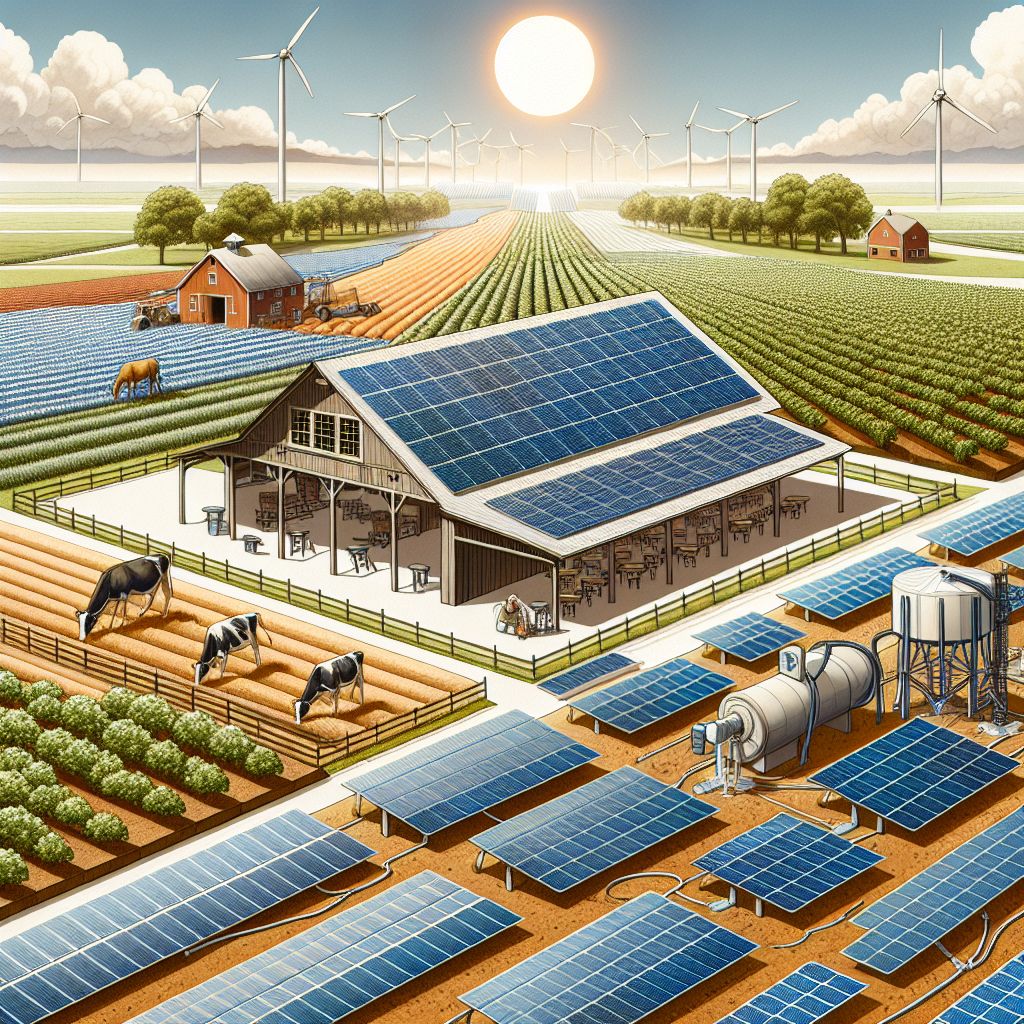
Methods to Implement Solar Panels on Farms
Implementing solar panels on farms involves several methods, each suited to different farm structures and energy needs. By choosing the right method, farmers can maximize the efficiency and effectiveness of their solar energy systems.
Some common methods include roof-mounted solar panels, ground-mounted solar arrays, and solar-powered irrigation systems. Each of these options offers unique benefits and considerations, allowing farmers to tailor their solar installations to their specific requirements.
Roof-mounted Solar Panels
Roof-mounted solar panels are an excellent option for farms with available roof space. By installing panels on rooftops, farmers can utilize existing structures without taking up valuable land area. This method is particularly beneficial for farms with large barns or storage facilities.
Besides conserving land space, roof-mounted panels are also less prone to damage from animals or farm machinery. This positioning ensures that the panels are safely out of the way while still capturing optimal sunlight for energy generation.
Ground-mounted Solar Arrays
Ground-mounted solar arrays are ideal for farms with ample open space. These systems are installed on the ground, allowing for larger installations that can generate more energy. Ground-mounted arrays are versatile and can be positioned to capture the most sunlight throughout the day.
While they require more space than roof-mounted systems, ground-mounted arrays offer the advantage of scalability. Farmers can start with a smaller system and expand as their energy needs grow, providing flexibility and future-proofing their energy solutions.
Solar-Powered Irrigation Systems
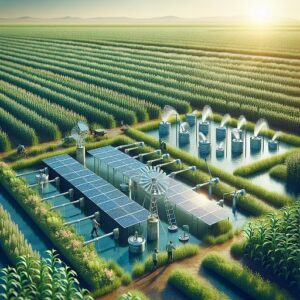
Irrigation is a critical component of farming, and solar-powered irrigation systems offer a sustainable solution. These systems use solar energy to power water pumps, reducing reliance on grid electricity or diesel generators.
By utilizing solar-powered irrigation, farmers can ensure a consistent water supply for their crops, even in remote locations. This method not only reduces energy costs but also supports efficient water management, which is essential for maximizing crop yields.
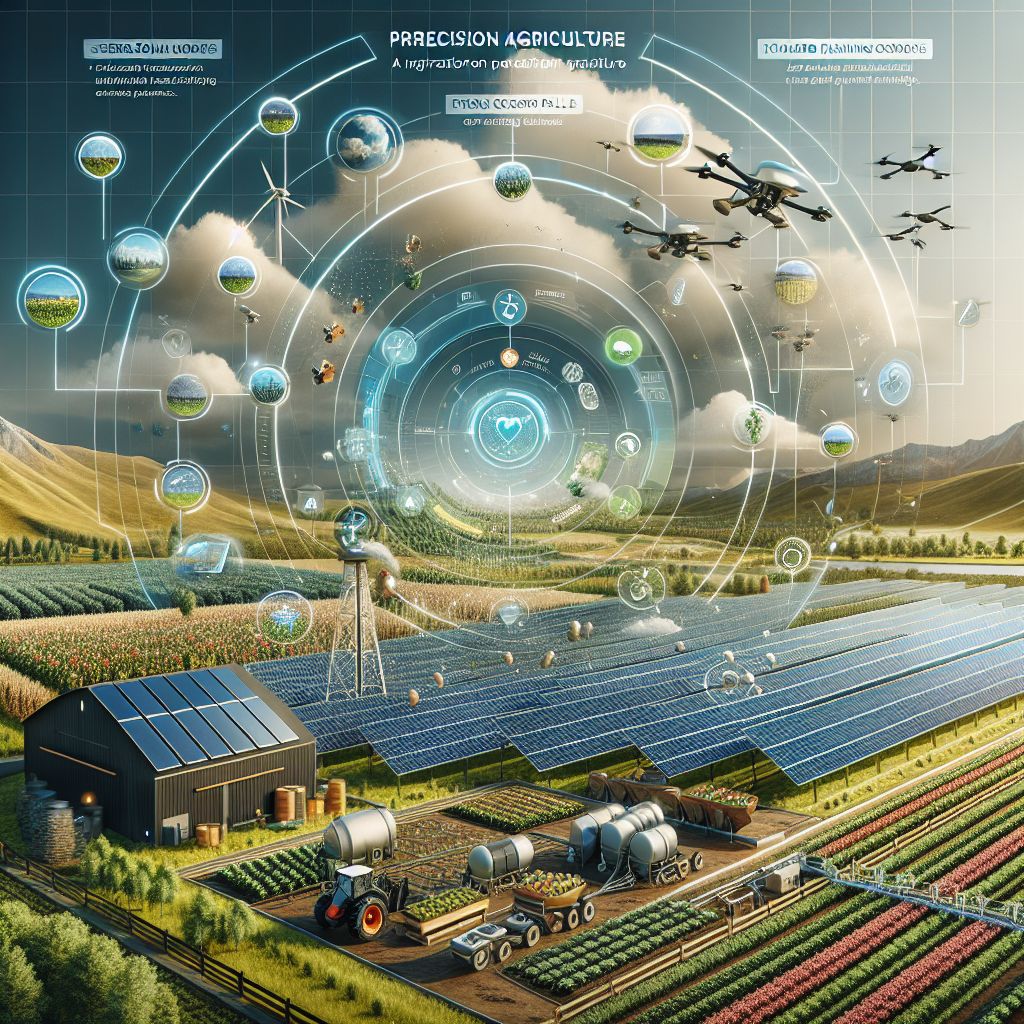
Integration of Solar Panels with Precision Agriculture
Precision agriculture involves using technology to optimize farming practices, and solar panels can play a crucial role in this integration. By providing a reliable energy source, solar power enables the use of advanced monitoring and automation systems.
These systems can enhance farm efficiency by providing real-time data on crop health, soil conditions, and weather patterns. With solar energy, farmers can power these technologies without incurring high energy costs, allowing for more precise and informed decision-making.
- Solar panels support precision farming tools by providing reliable energy.
- Real-time data from precision agriculture systems can improve crop management.
- Solar energy reduces the operational costs of advanced farming technologies.
Choosing the Correct Solar Panels for the Integration
Selecting the right solar panels is crucial for successful integration with precision agriculture. Factors to consider include panel efficiency, durability, and cost. High-efficiency panels can generate more energy in limited space, making them ideal for farms with restricted areas.
Durability is also essential, as panels need to withstand environmental conditions such as wind, rain, and temperature fluctuations. By choosing robust panels, farmers can ensure a long-lasting energy solution that supports their precision agriculture systems.
Cost is another consideration, and farmers should evaluate the return on investment for different panel options. While high-efficiency panels may have a higher upfront cost, their long-term energy savings can offset this expense, making them a worthwhile investment.
Here’s a table comparing the different solar panels a farmer can use to power his farm:
|
Solar Panel Type |
Efficiency |
Cost per Watt |
Pros |
Cons |
|---|---|---|---|---|
|
Monocrystalline |
17-22% |
$1.00 – $1.50 |
– Highest efficiency. 1, 3 |
– Most expensive option. 1, 3 |
|
Polycrystalline |
13-17% |
$0.90 – $1.20 |
– Lower cost than monocrystalline. 1, 3 |
– Slightly lower efficiency. 1, 3 |
|
Thin-Film |
10-13% |
$0.70 – $1.00 |
– Lowest cost. 1, 3 |
– Lowest efficiency. 1, 3 |
Monocrystalline panels are highly efficient and durable, making them ideal for high-performance irrigation systems that require consistent power output. Their higher cost is often offset by their superior performance in the long run 3.
Polycrystalline panels offer a good balance between cost and efficiency, making them suitable for medium-scale irrigation projects. They perform well in most conditions and are a popular choice for many agricultural applications 3.
Thin-film panels, while less efficient, are more affordable and flexible. They can be a good option for portable irrigation systems or installations where weight is a concern. Their lower efficiency means you may need more panels to achieve the same power output as crystalline options 3.
Enhancing Monitoring and Automation Systems
Solar panels can enhance monitoring and automation systems by providing a consistent and renewable energy source. This energy supply allows farmers to implement advanced technologies that require reliable power, such as sensors, drones, and automated equipment.
- Sensors can monitor soil moisture, nutrient levels, and crop health.
- Drones can provide aerial imagery for assessing field conditions.
- Automated equipment can optimize planting, harvesting, and irrigation processes.
By integrating solar energy with these systems, farmers can improve the efficiency and effectiveness of their operations. This integration supports better resource management and can lead to increased productivity and profitability.
Optimizing Water Usage and Crop Yield
Solar panels can also help optimize water usage and crop yield through precision agriculture techniques. By powering irrigation systems and monitoring tools, solar energy ensures that crops receive the right amount of water at the right time.
This precision in water management not only conserves water resources but also enhances crop growth and yield. With solar-powered systems, farmers can achieve a balance between water use and crop needs, leading to healthier plants and higher productivity.

The Added Value of Solar-Powered Farms
Solar-powered farms are not just about reducing energy costs; they offer added value that extends beyond financial savings. By integrating solar energy, farms can enhance their overall property value and appeal to a broader market. This added value is crucial in today’s competitive agricultural industry, where sustainability and eco-friendliness are increasingly prioritized.
Moreover, solar-powered farms can serve as a model for sustainable agriculture, demonstrating the benefits of renewable energy to other farmers and the community. This leadership role can further enhance the farm’s reputation and attract more business opportunities.
Boosting Property Value
Installing solar panels can significantly increase a farm’s property value. Properties with renewable energy systems are often viewed as more sustainable and efficient, making them more attractive to potential buyers. This increased marketability can result in higher property prices and faster sales.
Furthermore, as energy costs continue to rise, farms with solar installations are better positioned to maintain stable operational costs, further enhancing their value. This stability is a key selling point for buyers looking for long-term investments in agriculture.
Capturing Environmentally Conscious Consumers
Today’s consumers are more environmentally conscious than ever, and they are increasingly seeking out products and services that align with their values. By adopting solar energy, farms can appeal to this growing market segment, capturing environmentally conscious consumers who prioritize sustainability.
This appeal can lead to increased sales and customer loyalty, as consumers are more likely to support businesses that demonstrate a commitment to environmental responsibility. By showcasing their sustainable practices, farms can differentiate themselves from competitors and build a strong brand reputation.
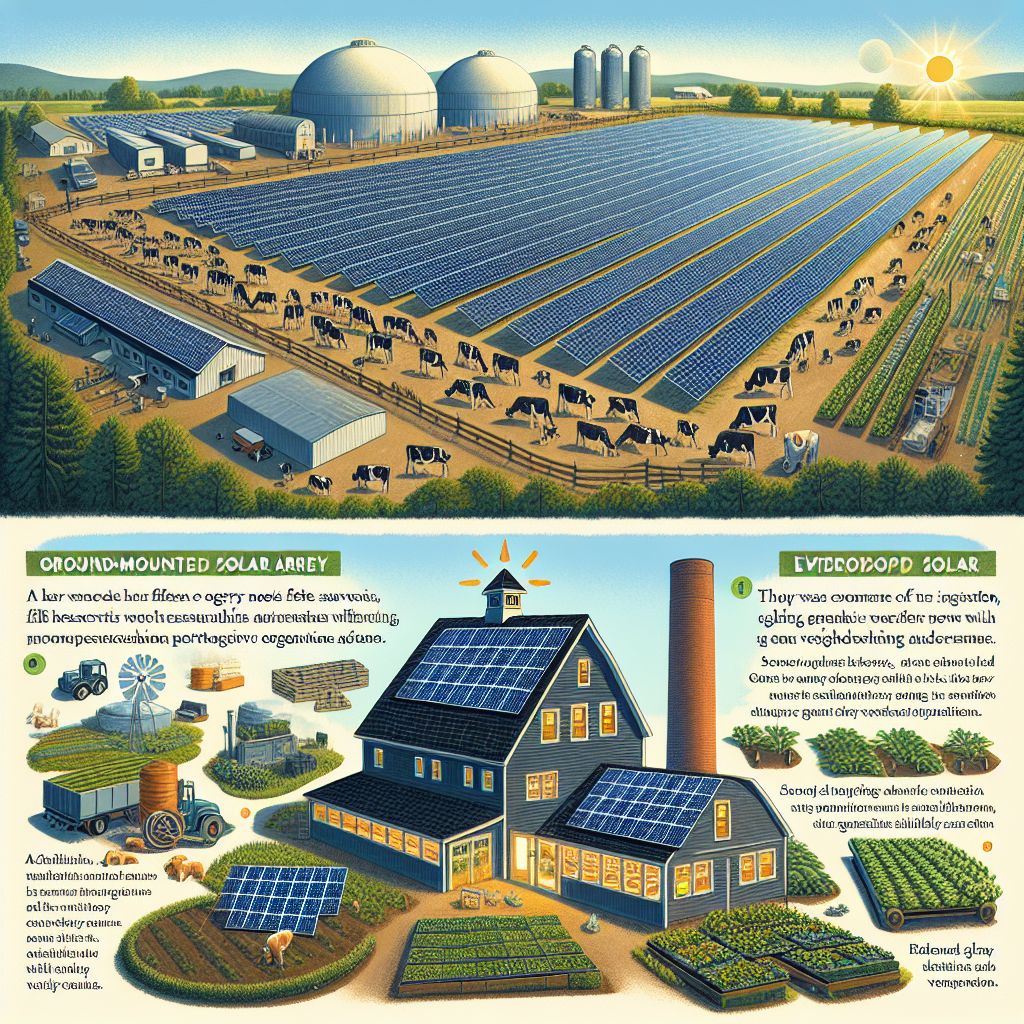
Succeeding with Solar: Real-World Examples
Real-world examples of farms successfully integrating solar energy demonstrate the tangible benefits of this transition. These case studies highlight how solar power can transform farm operations, reduce costs, and enhance sustainability.
By examining these examples, other farmers can gain valuable insights and inspiration for their own solar energy projects. These success stories serve as a testament to the potential of solar power in agriculture and encourage broader adoption of renewable energy solutions.
Case Study 1: Farm Energy Transformation
In California, a large-scale dairy farm decided to invest in solar panels to reduce its reliance on the grid. The farm installed a ground-mounted solar array, which now provides 80% of its energy needs. This transition has resulted in substantial energy cost savings and has allowed the farm to allocate more resources towards improving animal welfare and production processes.
The farm’s commitment to sustainability has also enhanced its reputation, attracting new business opportunities and partnerships with environmentally focused organizations. This case study illustrates how solar energy can lead to both financial and operational improvements for farms.
Case Study 2: Small Farm Innovation
A small organic vegetable farm in Vermont implemented a roof-mounted solar system to power its operations. Despite its limited space, the farm optimized its available roof area to generate sufficient energy for its irrigation systems, greenhouse lighting, and refrigeration units.
The solar installation has enabled the farm to maintain its organic certification by reducing its carbon footprint and reliance on non-renewable energy sources. Additionally, the farm has seen an increase in demand from local consumers who value sustainable and eco-friendly products.

Conclusion
Solar panels are transforming the agricultural landscape by providing a sustainable and cost-effective energy solution for farms. By adopting solar energy, farmers can reduce operational costs, enhance efficiency, and contribute to environmental sustainability. The added value of solar-powered farms extends beyond financial savings, offering increased property value and appeal to environmentally conscious consumers.
As demonstrated by real-world examples, solar energy can lead to significant improvements in farm operations and profitability. By investing in solar panels, farmers can position themselves as leaders in sustainable agriculture and secure a competitive advantage in the market.
Frequently Asked Questions (FAQ)
Many farmers have questions about integrating solar panels into their operations. Here are some of the most common inquiries and answers to help guide the decision-making process. For more insights, check out the benefits of solar power in agriculture.
How do solar panels improve farm operations?
Solar panels provide a reliable and renewable energy source, reducing energy costs and ensuring a consistent power supply. This reliability allows farmers to maintain productivity and efficiency, even during peak seasons or energy fluctuations.
What are the initial costs of installing solar panels on a farm?
The initial cost of solar panel installation varies depending on the size and type of the system. On average, farmers can expect to pay between $15,000 and $50,000 for a solar installation. However, government incentives and tax breaks can significantly reduce these costs.
How long do solar panels typically last on a farm?
Solar panels are designed to last for 25 to 30 years, with minimal maintenance required. This longevity ensures a steady supply of renewable energy and long-term cost savings for farmers.
Can solar panels provide enough energy for a large farm?
Yes, solar panels can be scaled to meet the energy needs of large farms. By installing ground-mounted arrays or combining multiple systems, farmers can generate sufficient electricity to power all aspects of their operations.


Leave a Reply