

Key Takeaways
- Off-grid solar systems allow farms to generate their own power, reducing reliance on traditional energy sources.
- Solar panels, batteries, inverters, and charge controllers are essential components of an off-grid solar system.
- Solar energy can significantly reduce energy costs and enhance environmental sustainability for farms.
- Initial setup costs can be high, but long-term savings and energy independence are key benefits.
- Proper energy management is crucial for maintaining a reliable power supply on an off-grid farm.
Off-Grid Farming with Solar Power: Can You Run It?
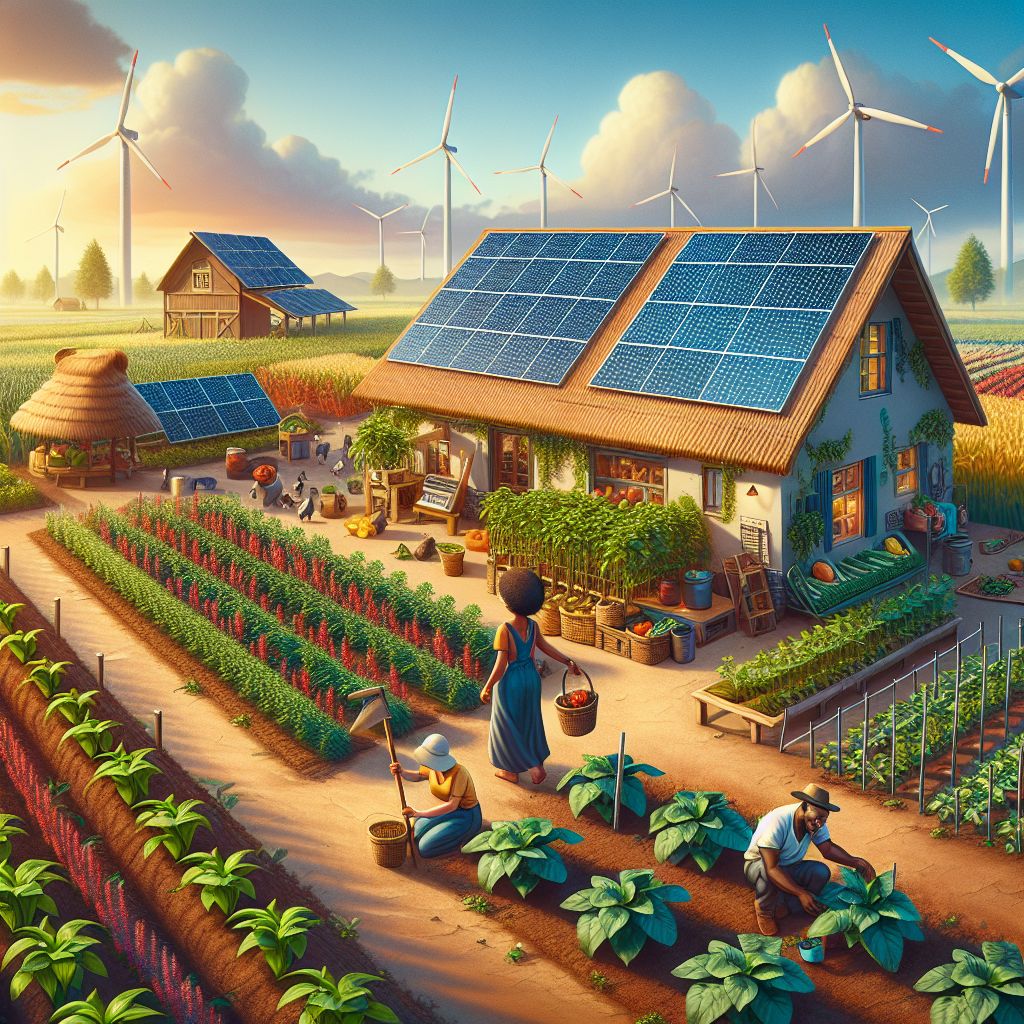
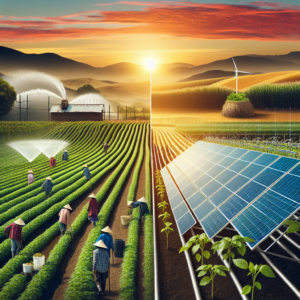
Imagine running a farm where you’re not worried about electricity bills or power outages. This is possible with off-grid solar farming, which not only cuts costs but also promotes environmental sustainability. Let’s explore how you can harness the power of the sun to transform your farm into a self-sufficient powerhouse.
What is Off-Grid Farming
Off-grid farming refers to agricultural practices that operate independently of the main power grid. By using renewable energy sources like solar power, farmers can generate their own electricity, making them self-reliant and less vulnerable to power outages and rising energy costs. This approach is particularly beneficial for farms located in remote areas, where access to the main grid can be challenging or expensive.
How Solar Power Transforms Farming
Solar power is a game-changer for farming, offering a clean and renewable energy source that can power everything from irrigation systems to refrigeration units. By installing solar panels, farmers can capture sunlight and convert it into electricity. This energy can be used immediately or stored in batteries for later use, ensuring a consistent power supply even during cloudy days or at night.
Beyond the Grid: Sustainable Energy Solutions
Adopting off-grid solar systems not only provides energy independence but also contributes to a more sustainable future. By reducing reliance on fossil fuels, farms can lower their carbon footprint and promote environmental conservation. This shift towards renewable energy is crucial for combating climate change and preserving natural resources for future generations.
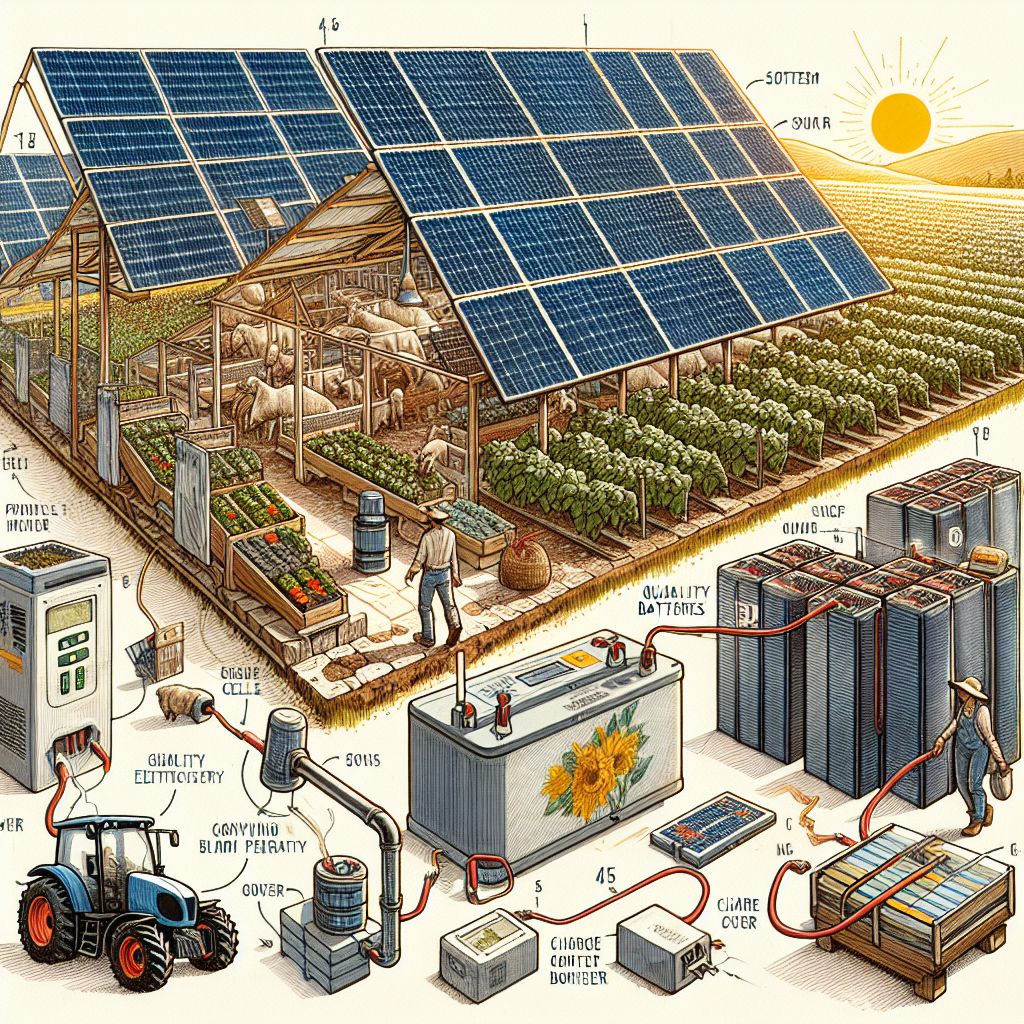
When considering off-grid solar systems, it’s important to understand the main components involved and how they work together to provide a reliable power supply. Let’s delve into the details of these components and their roles in an off-grid solar system.
Main Components of Off-Grid Solar Systems
Investing in an off-grid solar system can be a significant step forward for a farmer on an off-grid farm. By understanding the key components and carefully planning your system, you can harness the power of the sun to reduce your reliance on traditional energy sources, lower your operating costs, and create a more environmentally friendly future for your farm. Let’s take a look at some of these components that make up an off-grid solar system.
Solar Panels and How They Work
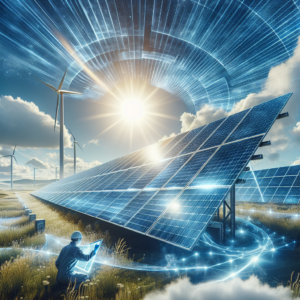
Solar panels are the heart of an off-grid solar system. They capture sunlight and convert it into electricity through photovoltaic cells. The efficiency of these panels depends on factors like their size, orientation, and the amount of sunlight they receive. It’s essential to choose the right type and number of panels to meet your farm’s energy needs. For more insights, explore how to increase farm efficiency with solar panels.
For example, a small vegetable farm may require fewer panels compared to a large livestock operation. The key is to assess your energy consumption and plan accordingly to ensure a sufficient power supply throughout the year.
“A small vegetable farm may require fewer panels compared to a large livestock operation. The key is to assess your energy consumption and plan accordingly to ensure a sufficient power supply throughout the year.”
Here’s a table comparing the different solar panel you can use in with an off-grid solar systems:
|
Solar Panel Type |
Efficiency |
Cost per Watt |
Pros |
Cons |
|---|---|---|---|---|
|
Monocrystalline |
17-22% |
$1.00 – $1.50 |
– Highest efficiency. 1, 3 |
– Most expensive option. 1, 3 |
|
Polycrystalline |
13-17% |
$0.90 – $1.20 |
– Lower cost than monocrystalline. 1, 3 |
– Slightly lower efficiency. 1, 3 |
|
Thin-Film |
10-13% |
$0.70 – $1.00 |
– Lowest cost. 1, 3 |
– Lowest efficiency. 1, 3 |
Monocrystalline panels are highly efficient and durable, making them ideal for high-performance irrigation systems that require consistent power output. Their higher cost is often offset by their superior performance in the long run 3.
Polycrystalline panels offer a good balance between cost and efficiency, making them suitable for medium-scale irrigation projects. They perform well in most conditions and are a popular choice for many agricultural applications 3.
Thin-film panels, while less efficient, are more affordable and flexible. They can be a good option for portable irrigation systems or installations where weight is a concern. Their lower efficiency means you may need more panels to achieve the same power output as crystalline options 3.
Importance of Battery Storage
Batteries are crucial for storing the electricity generated by solar panels. This stored energy can be used during periods of low sunlight, such as at night or on cloudy days, ensuring a continuous power supply. The capacity and type of battery you choose will depend on your farm’s energy needs and budget. For more information on how to increase farm efficiency with solar panels, consider exploring additional resources.
Investing in high-quality batteries is essential for maintaining a reliable off-grid solar system. Although the initial cost may be high, the long-term benefits of energy independence and cost savings make it a worthwhile investment.
Role of Inverters and Charge Controllers
Inverters and charge controllers are vital components of an off-grid solar system. Inverters convert the direct current (DC) electricity generated by solar panels into alternating current (AC) electricity, which is used by most household appliances. Charge controllers regulate the flow of electricity from the solar panels to the batteries, preventing overcharging and extending battery life.
Choosing the right inverter and charge controller is crucial for optimizing your solar system’s performance and ensuring a stable power supply. With the right components in place, you can enjoy the benefits of solar power and achieve energy independence for your farm.
Role of Inverters and Charge Controllers
Inverters and charge controllers play a critical role in the smooth operation of an off-grid solar system. Inverters are responsible for converting the direct current (DC) electricity produced by solar panels into alternating current (AC), which is the type of electricity used by most farm equipment and household appliances. Without a reliable inverter, the energy harnessed from the sun would be unusable for most practical applications on the farm.
Charge controllers, on the other hand, manage the flow of electricity from the solar panels to the batteries. They ensure that the batteries are charged correctly and prevent overcharging, which can significantly reduce battery lifespan. By maintaining optimal charging conditions, charge controllers help prolong the life of your batteries and improve the overall efficiency of your solar power system.

Benefits of Solar Power in Farming
Solar power offers numerous benefits to farmers looking to enhance their operations and reduce their environmental impact. By harnessing the sun’s energy, farmers can enjoy cost savings, increased sustainability, and a more reliable power supply.
Reducing Energy Costs
One of the most significant advantages of solar power is the potential for substantial energy cost savings. By generating your own electricity, you can significantly reduce or even eliminate your reliance on expensive grid power. This is especially beneficial for farms located in remote areas where energy costs can be prohibitive. To learn more about how solar panels can increase farm efficiency, explore the benefits and methods of using solar panels.
Over time, the savings on energy bills can offset the initial investment in solar panels and related equipment. Many farmers find that the return on investment is well worth the upfront costs, especially when considering the long-term financial benefits.
Promoting Environmental Sustainability
Solar power is a clean, renewable energy source that produces no harmful emissions. By transitioning to solar energy, farms can significantly reduce their carbon footprint and contribute to environmental conservation efforts. This shift towards renewable energy is crucial for combating climate change and preserving natural resources for future generations.
Furthermore, solar power helps reduce the reliance on fossil fuels, which are finite and environmentally damaging. By investing in solar energy, farmers can play a pivotal role in promoting sustainability and protecting the planet.
Ensuring Reliable Energy Supply
Farms that rely on grid power can be vulnerable to outages, which can disrupt operations and lead to significant losses. With an off-grid solar system, farmers can ensure a consistent and reliable power supply, regardless of external factors. This independence from the grid provides peace of mind and allows farmers to focus on their work without worrying about power interruptions. For more information on how solar energy can cut operational costs, read about solar panels in agriculture.

Practical Applications of Solar Energy in Agriculture
Solar energy can be applied in various ways to enhance agricultural operations. From powering irrigation systems to providing refrigeration for crops, solar power offers versatile solutions for modern farming challenges.
By integrating solar energy into everyday farming practices, farmers can improve efficiency, reduce costs, and promote sustainability. Let’s explore some of the most common applications of solar energy in agriculture.
- Using solar power for irrigation systems
- Refrigeration to prevent crop spoilage
- Lighting and heating greenhouses
Using Solar for Irrigation
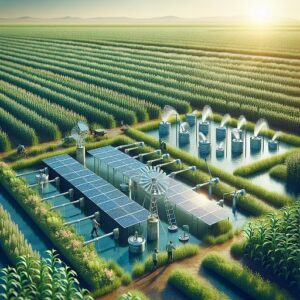
Irrigation is essential for maintaining healthy crops, but it can also be energy-intensive. By using solar-powered pumps, farmers can efficiently water their fields without relying on grid electricity. This not only reduces energy costs but also allows for greater flexibility in managing water resources.
Refrigeration to Prevent Crop Spoilage
Proper refrigeration is crucial for preserving the quality of perishable goods. Solar-powered refrigeration systems provide an eco-friendly solution for keeping produce fresh and preventing spoilage. This is particularly important for farms located in remote areas where traditional refrigeration may not be feasible.
Lighting and Heating Greenhouses
Greenhouses require adequate lighting and heating to support plant growth, especially during colder months. Solar energy can be used to power LED lights and heating systems, creating an optimal environment for crops while minimizing energy consumption.
By implementing these solar-powered solutions, farmers can enhance their operations, reduce costs, and contribute to a more sustainable future.
Challenges of Off-Grid Farming with Solar
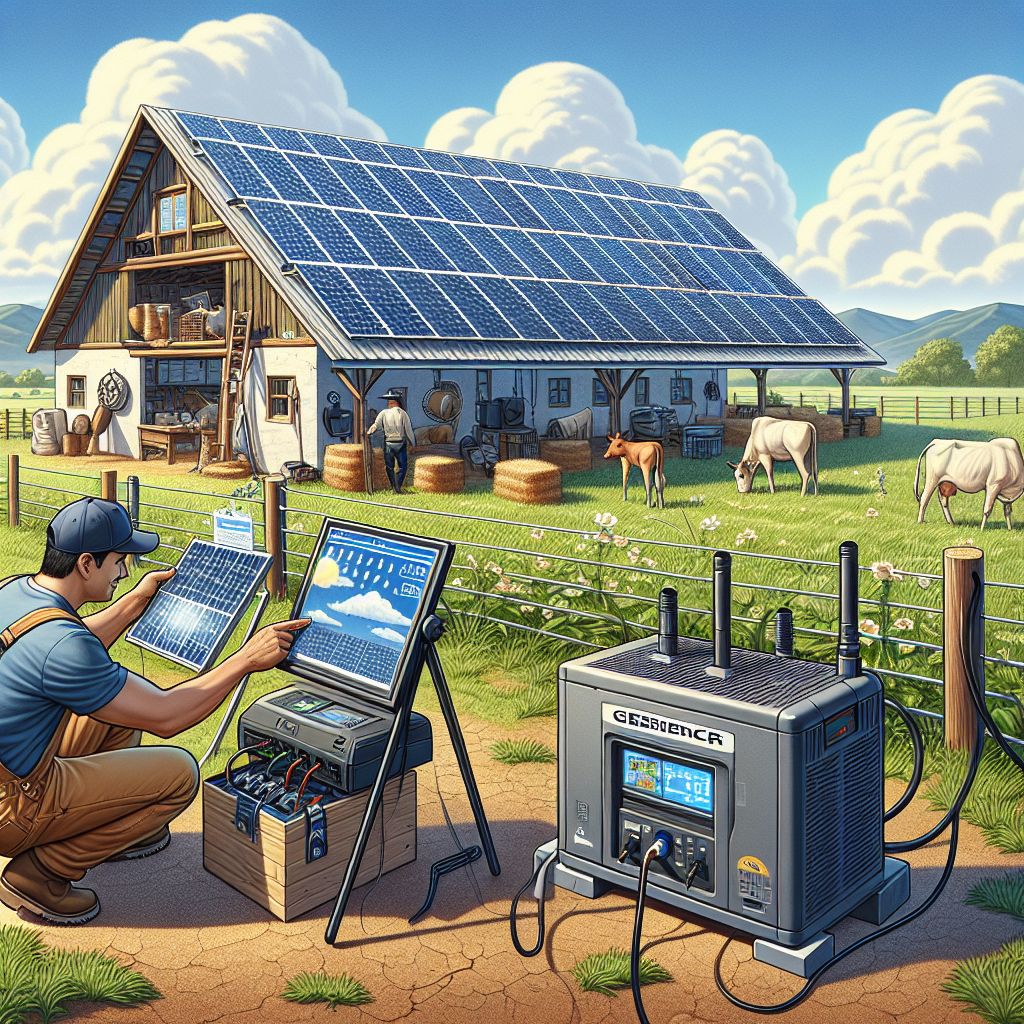
While solar power offers numerous benefits, there are also challenges to consider when transitioning to an off-grid system. Understanding these challenges is crucial for making informed decisions and ensuring a successful implementation. For more insights, explore how to increase farm efficiency with solar panels.
Initial Setup and Installation Costs
The initial investment required for setting up an off-grid solar system can be significant. Costs include purchasing solar panels, batteries, inverters, and other equipment, as well as installation expenses. However, many farmers find that the long-term savings on energy bills outweigh these initial costs.
Additionally, government incentives and grants may be available to help offset some of the expenses associated with transitioning to solar power. It’s essential to research and take advantage of these opportunities to reduce the financial burden.
Powering the Farm During the Night or Stormy Days
One of the primary challenges of solar power is its dependence on sunlight. During nighttime or cloudy days, solar panels may not generate enough electricity to meet the farm’s needs. To address this issue, a reliable battery storage system is essential for storing excess energy generated during sunny periods.
By investing in high-capacity batteries, farmers can ensure a consistent power supply even when sunlight is limited. Additionally, backup generators may be considered as an extra precaution to maintain operations during extended periods of low solar output.
Weather Dependence and Seasonal Variability
The efficiency of solar panels can be affected by weather conditions and seasonal changes. In areas with long winters or frequent cloudy days, solar power generation may be reduced. Farmers must plan for these variations and adjust their energy management strategies accordingly.
Using weather forecasts and historical data can help farmers anticipate and prepare for periods of low solar output. This proactive approach ensures a stable power supply and minimizes disruptions to farm operations.
Maintenance and System Longevity
Regular maintenance is essential for keeping an off-grid solar system running smoothly. This includes cleaning solar panels, inspecting wiring and connections, and monitoring battery health. Proper maintenance ensures optimal performance and extends the lifespan of the system.
While maintenance requires time and effort, the long-term benefits of a reliable and efficient solar power system make it a worthwhile investment for any farm seeking energy independence.
Strategies for Effective Energy Management
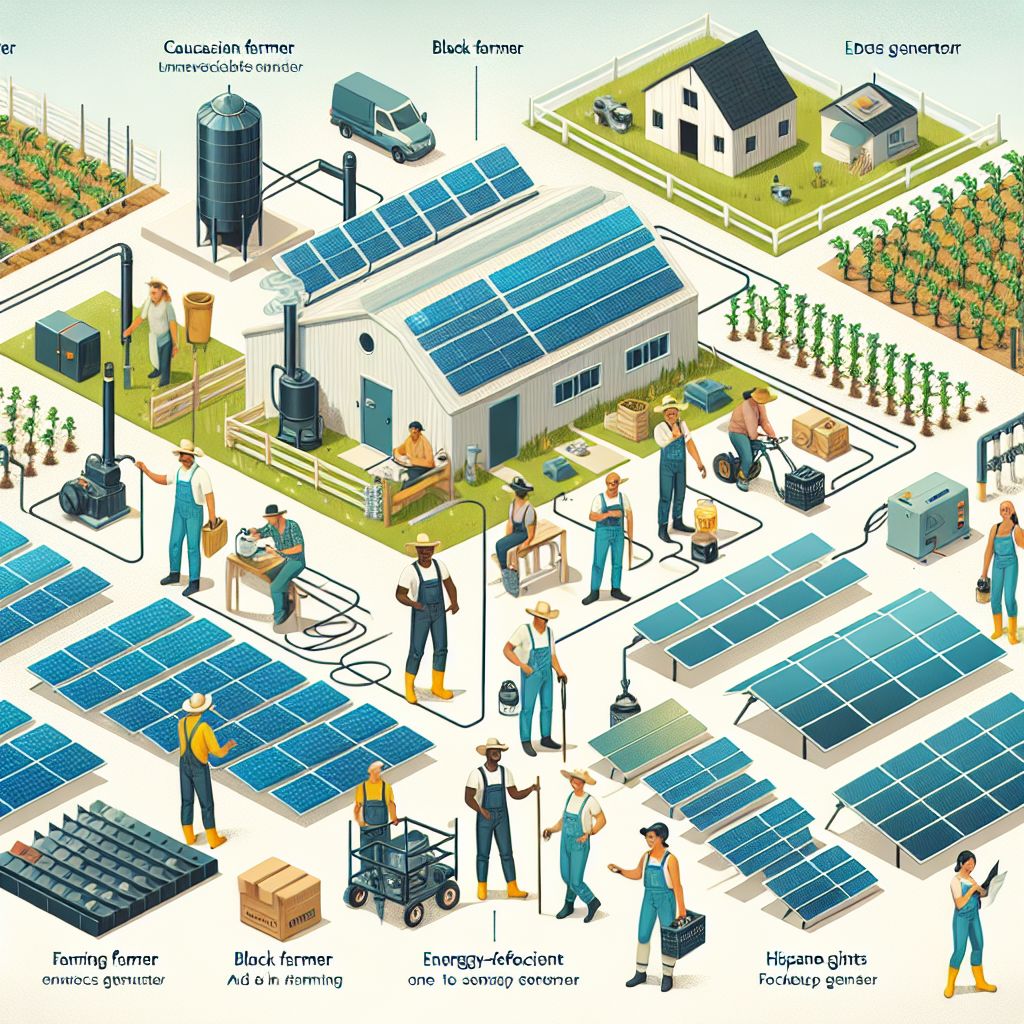
Managing energy consumption is crucial for maximizing the benefits of an off-grid solar system. By implementing effective energy management strategies, farmers can optimize their power usage and ensure a reliable supply. For more insights on increasing farm efficiency, explore the benefits and methods of using solar panels.
Here are some key strategies for effective energy management on an off-grid farm:
Monitoring and Optimizing Energy Usage
Regularly monitoring energy consumption allows farmers to identify areas where efficiency can be improved. This includes tracking the performance of solar panels, batteries, and inverters to ensure they are operating at peak efficiency.
By using energy-efficient equipment and practices, farmers can reduce overall energy demand and make the most of their solar power system. Implementing smart energy management systems can also help automate and optimize energy usage, further enhancing efficiency and reliability.
Using Energy-Efficient Equipment
Investing in energy-efficient equipment is one of the simplest ways to enhance the performance of your off-grid solar system. Equipment like energy-efficient pumps, LED lighting, and high-efficiency motors consume less power, allowing you to make the most of your solar energy supply. This not only helps in reducing overall energy consumption but also extends the life of your solar system by minimizing strain on the components.
Most importantly, energy-efficient equipment can significantly lower your operational costs over time. By choosing appliances and machinery that use less energy, you can ensure that your farm remains sustainable and cost-effective in the long run. For instance, integrating solar panels in agriculture can be a great way to cut down on energy expenses.
Backup Generators: Are They Necessary?
- Backup generators can provide an additional layer of security for your energy supply.
- They are particularly useful during extended periods of low sunlight or system maintenance.
- Generators should be seen as a temporary solution, not a primary power source.
While solar power and battery storage are usually sufficient for most off-grid farms, having a backup generator can be a wise precaution. It ensures that you have an alternative power source during unexpected situations, such as prolonged cloudy weather or equipment failures. However, relying too heavily on generators can negate the environmental benefits of solar power, so they should be used sparingly and strategically.
Consider a generator as a backup plan rather than a necessity. By optimizing your solar system and implementing effective energy management strategies, you can minimize the need for additional power sources.
Case Studies of Successful Off-Grid Farms
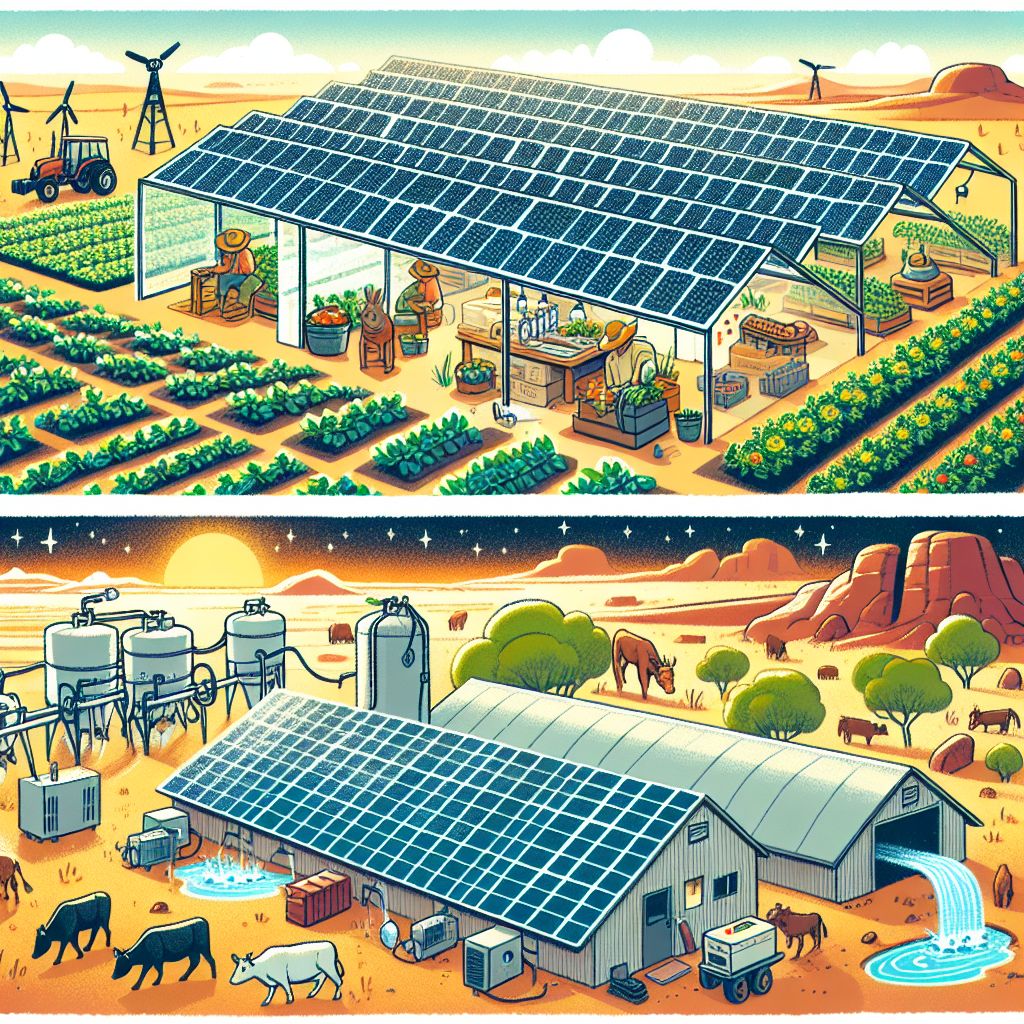
To truly understand the potential of off-grid solar farming, it’s helpful to look at real-world examples of farms that have successfully implemented these systems. These case studies highlight the diverse applications of solar power and demonstrate its impact on agricultural operations.
Small Scale Vegetable Farm Implementations
Take the example of a small vegetable farm in rural California. By installing a modest off-grid solar system, the farm was able to power its irrigation pumps and greenhouse lighting without relying on the grid. This not only reduced energy costs but also allowed the farm to operate independently, even during power outages. Learn more about how solar panels can cut operational costs for farms.
The farm’s owner reported a significant decrease in operational expenses and an increase in crop yields, thanks to the reliable and consistent power supply. This case illustrates how even small-scale farms can benefit from solar power, enhancing both sustainability and profitability.
Large Scale Livestock Operations
On a larger scale, a cattle ranch in Texas implemented an off-grid solar system to power its water pumps and refrigeration units. The ranch faced frequent power outages, which affected its operations and livestock health. By transitioning to solar power, the ranch ensured a stable energy supply, improving the overall efficiency of its operations. Learn more about how solar panels can increase farm efficiency.
The ranch’s owner noted that the initial investment was quickly offset by the savings on energy bills and reduced losses due to power disruptions. This case highlights the potential of solar power to transform large-scale agricultural operations and promote energy independence.
Innovative Solutions in Remote Areas
In remote areas where access to the grid is limited, off-grid solar systems provide a lifeline for agricultural communities. A farm in the Australian outback, for instance, utilized solar power to run its entire operation, from irrigation to refrigeration. The system’s reliability allowed the farm to thrive despite its isolated location.
This example demonstrates how innovative solar solutions can empower farmers in remote areas, providing them with the tools they need to succeed and sustain their operations independently.
Conclusion: Can You Run an Off-Grid Farm with Solar Power?
Running an off-grid farm with solar power is not only possible but increasingly practical for many farmers. By harnessing the sun’s energy, you can achieve energy independence, reduce costs, and promote environmental sustainability. However, it’s essential to carefully evaluate your farm’s energy needs and goals to ensure a successful transition.
Evaluating Your Energy Needs and Goals
Before implementing an off-grid solar system, assess your current energy consumption and identify areas where efficiency can be improved. Consider your long-term goals, such as expanding your farm or integrating new technologies, to determine the appropriate system size and components.
Consulting with solar energy experts can provide valuable insights and help tailor a solution that meets your specific needs and objectives.
Considering Long-Term Sustainability
While the initial investment in solar power can be significant, the long-term benefits of energy independence and environmental sustainability make it a worthwhile endeavor. By committing to renewable energy, you’re investing in the future of your farm and contributing to a more sustainable world.
Ultimately, running an off-grid farm with solar power requires careful planning, commitment, and a willingness to embrace new technologies. With the right approach, you can transform your farm into a self-sufficient, sustainable operation.
Frequently Asked Questions
As more farmers explore the potential of off-grid solar farming, several common questions arise. Here are some of the most frequently asked questions and their answers:
How much does it cost to set up an off-grid solar system for a farm?
The cost of setting up an off-grid solar system varies depending on the size of the farm, energy needs, and the components used. Generally, a small system may cost between $10,000 to $30,000, while larger systems can range from $50,000 to $100,000 or more. It’s important to consider long-term savings and potential government incentives when evaluating costs.
What are the maintenance requirements for solar panels?
Solar panels require minimal maintenance, primarily involving regular cleaning to remove dirt and debris. It’s also important to inspect the system periodically to ensure all components are functioning correctly. Proper maintenance can extend the life of your solar system and maximize its efficiency.
Can solar panels generate enough power during cloudy days?
While solar panels are less efficient on cloudy days, they can still generate some electricity. To ensure a consistent power supply, it’s crucial to have a reliable battery storage system to store excess energy produced during sunny periods. This stored energy can be used during times of low solar output.
Is government financial support available for solar installations?
Many governments offer financial incentives, grants, and tax credits to support the adoption of renewable energy, including solar power. These programs can significantly reduce the cost of installing an off-grid solar system. It’s important to research available options and take advantage of these opportunities to offset expenses.
How can I determine the right system size for my farm’s needs?
- Assess your current energy consumption and identify areas for improvement.
- Consider future goals, such as farm expansion or new technologies.
- Consult with solar energy experts for tailored advice and recommendations.
- Evaluate potential government incentives and financial support options.
- Plan for seasonal variations and weather-dependent energy output.
By carefully considering these factors, you can determine the optimal system size and components for your farm, ensuring a successful transition to off-grid solar power.

Leave a Reply