

Key Takeaways
Solar-powered irrigation systems can significantly reduce water and energy costs for kidney bean farmers.
Monocrystalline solar panels are the most efficient but come at a higher initial cost.
Drip irrigation is the most water-efficient method for kidney beans, reducing water wastage by up to 50%.
Initial setup costs for solar irrigation can be high, but long-term savings and environmental benefits outweigh these costs.
Proper maintenance of solar panels and irrigation systems ensures durability and efficiency over many years.
Why You Should Use Solar Panels with an Irrigation System for Growing Kidney Beans
As a farmer, you’re always looking for ways to make your operations more efficient and sustainable. One of the most effective ways to achieve this is by using solar panels to power your irrigation system. Solar-powered irrigation systems are not only environmentally friendly but also cost-effective in the long run. Let’s dive into why you should consider this option for your kidney bean farm.
Environmental Benefits
First and foremost, using solar panels for irrigation reduces your carbon footprint. Traditional irrigation systems often rely on electricity from fossil fuels, which contribute to greenhouse gas emissions. By switching to solar power, you harness the energy from the sun, a renewable resource, to power your irrigation system.
Besides that, solar-powered systems can be used in remote areas where access to the electrical grid is limited or non-existent. This makes it easier for farmers in rural locations to manage their irrigation needs without relying on diesel generators or other non-renewable energy sources.
Economic Impact and Cost Savings
While the initial investment for a solar-powered irrigation system can be high, the long-term savings are substantial. You’ll save on electricity or fuel costs, which can be a significant portion of your farm’s operating expenses. Over time, these savings will offset the initial costs and lead to a more profitable farming operation.
Moreover, many governments offer incentives and subsidies for adopting renewable energy solutions. These financial aids can further reduce the initial setup costs, making solar-powered irrigation an even more attractive option.
Improved Crop Yields
Efficient irrigation is crucial for maximizing crop yields. Solar-powered systems can be integrated with advanced irrigation techniques like drip or sprinkler systems to ensure your kidney beans get the right amount of water at the right time. This precision in watering not only improves crop yields but also enhances the quality of the beans.
Drip irrigation delivers water directly to the plant roots, minimizing water wastage.
Sprinkler systems can cover larger areas and are ideal for fields with uneven terrain.
Case Studies of Successful Implementation
Several farmers have already reaped the benefits of switching to solar-powered irrigation systems. For example, John Smith, a kidney bean farmer in California, saw a 30% increase in his crop yields after implementing a solar-powered drip irrigation system. He also reduced his water usage by 40%, leading to significant cost savings.
“Switching to a solar-powered irrigation system was the best decision I ever made for my farm. Not only did it save me money, but it also made my operations more sustainable,” says John Smith.
These real-world examples demonstrate the tangible benefits of adopting solar-powered irrigation systems for growing kidney beans.
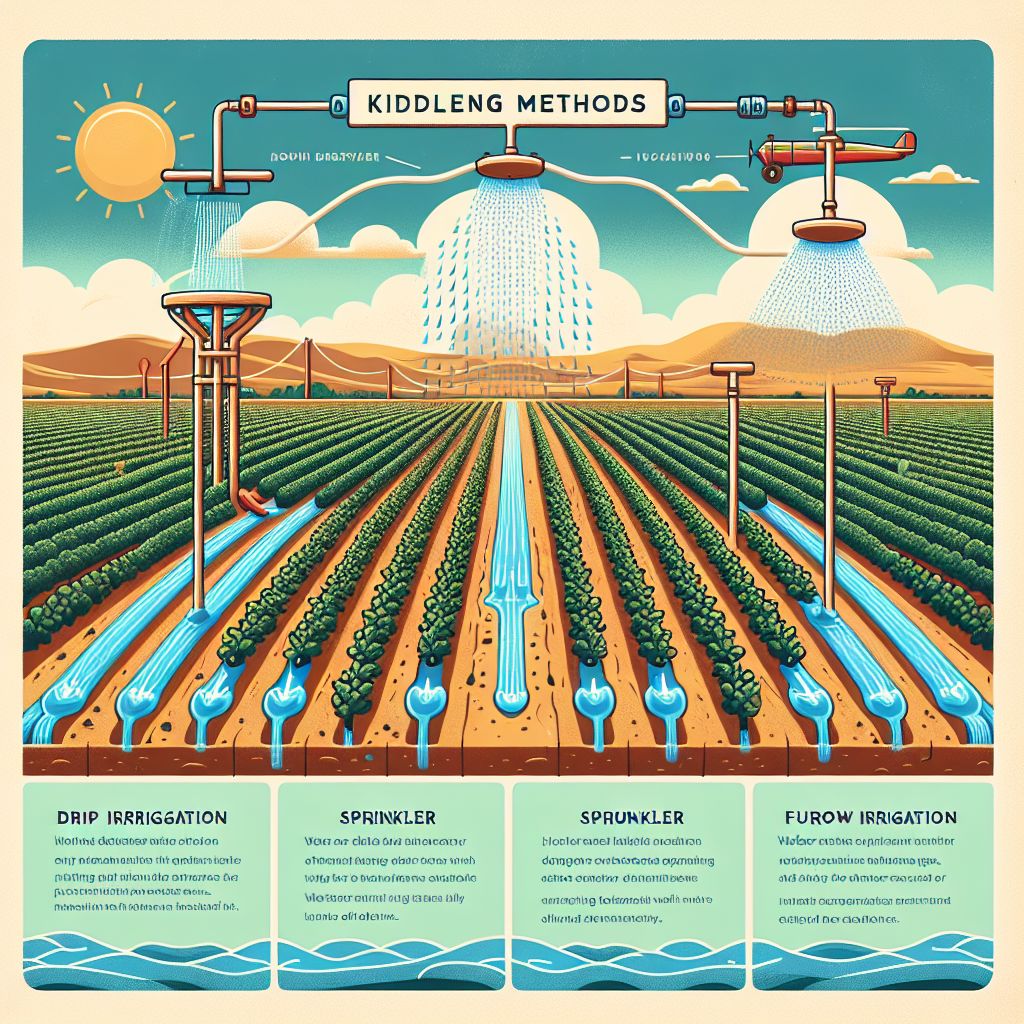
Top Irrigation Methods Used by Kidney Bean Farmers
Choosing the right irrigation method is crucial for the success of your kidney bean farm. Different methods offer varying levels of efficiency and suitability depending on your farm’s specific conditions. Here are the top irrigation methods used by kidney bean farmers:
Drip Irrigation
Drip irrigation is one of the most efficient methods for watering kidney beans. This system delivers water directly to the plant’s root zone through a network of tubes and emitters. The water is released slowly, allowing it to seep into the soil and reach the roots without much evaporation.
This method is particularly useful in arid regions where water conservation is essential. By minimizing water wastage, drip irrigation ensures that your kidney beans get the necessary moisture without overwatering, which can lead to root diseases.
Sprinkler Irrigation
Sprinkler irrigation is another popular method among kidney bean farmers. This system uses sprinklers to distribute water evenly across the field, mimicking natural rainfall. It is ideal for fields with uneven terrain or where other irrigation methods are not feasible.
However, sprinkler systems can be less efficient than drip irrigation in terms of water usage. The water is sprayed into the air, which can lead to evaporation losses, especially in hot and windy conditions.
Furrow Irrigation
Furrow irrigation involves creating small channels along the rows of crops and allowing water to flow through these furrows. This method is relatively simple and inexpensive to set up, making it a popular choice for small-scale farmers. Learn more about solar-powered irrigation for growing cauliflower and other crops.
|
Method |
Pros |
Cons |
|---|---|---|
|
Drip Irrigation |
Highly efficient, reduces water wastage, ideal for arid regions |
Higher initial setup cost, requires regular maintenance |
|
Sprinkler Irrigation |
Even water distribution, good for uneven terrain |
Higher water usage, potential for evaporation losses |
|
Furrow Irrigation |
Simple and inexpensive, easy to set up |
Less efficient, can lead to waterlogging |
Subsurface Irrigation
Delivers water directly to the root zone through buried pipes.
Minimizes evaporation and surface runoff.
Requires precise installation and regular maintenance.
Subsurface irrigation is highly efficient but can be more complex to install and maintain. It involves burying pipes below the soil surface to deliver water directly to the plant roots. This method minimizes evaporation and surface runoff, ensuring that the plants receive adequate moisture. For more information, you can explore solar-powered irrigation systems for growing celery.
What is the Best Irrigation System for Growing Kidney Beans
When it comes to choosing the best irrigation system for growing kidney beans, there is no one-size-fits-all solution. The ideal system depends on various factors, including the size of your farm, soil type, water availability, and budget. However, drip irrigation is generally considered the most efficient method for kidney beans due to its water-saving capabilities and ability to deliver moisture directly to the plant roots.

Top Solar Panels for Your Kidney Bean Farmers Irrigation System
Choosing the right solar panels is crucial for the efficiency and success of your irrigation system. The type of solar panel you select will determine the amount of energy generated and, consequently, the performance of your irrigation setup. Let’s explore the different types of solar panels available and their suitability for kidney bean farming.
Monocrystalline Solar Panels
Monocrystalline solar panels are known for their high efficiency and durability. They are made from a single crystal structure, which allows them to convert more sunlight into electricity compared to other types of panels. This makes them ideal for farms where space is limited but high energy output is needed. For more information on setting up solar panels for farms, check out this setup guide.
These panels also have a longer lifespan, often exceeding 25 years, which means they can provide a reliable energy source for your irrigation system over the long term. However, they come with a higher initial cost, which can be a consideration for budget-conscious farmers.
Polycrystalline Solar Panels
Polycrystalline solar panels are made from multiple silicon crystals, making them less efficient than monocrystalline panels. However, they are more affordable and still offer a decent level of efficiency. These panels are a good option for larger farms where space is not a constraint, and you can install more panels to compensate for the lower efficiency.
While they may not last as long as monocrystalline panels, polycrystalline panels can still provide a cost-effective solution for powering your irrigation system, especially if you are looking to balance performance with budget.
Thin-Film Solar Panels
Thin-film solar panels are lightweight and flexible, making them easy to install on various surfaces. They are less efficient than both monocrystalline and polycrystalline panels but can be a good option for farms with specific installation needs or those looking for a low-cost entry into solar power.
These panels have a shorter lifespan and may require more frequent replacements, but their lower cost and ease of installation can make them an attractive choice for some farmers. For more information, check out this guide on solar panels for farm irrigation systems.
Here is a table showing the pros and cons of using different types of solar panels with an irrigation system on a farm:
|
Panel Type |
Pros |
Cons |
|---|---|---|
|
Monocrystalline Panels |
– High efficiency (15-22%), producing more power per square foot. 1, 2, 4 | |
|
Polycrystalline Panels |
– Lower upfront cost than monocrystalline. 1, 2 |
– Lower efficiency and shorter lifespan than monocrystalline. 2, 4 |
|
Thin-Film Solar Panels |
– Lowest upfront cost. 1, 2 |
– Lowest efficiency (7-13%). 2, 4 |
When choosing the right solar panels for your farm, consider the balance between cost, efficiency, and durability. Monocrystalline panels offer the best performance but at a higher price, while polycrystalline and thin-film panels provide more budget-friendly options with varying levels of efficiency.
Criteria for Choosing the Best Solar Panels
To ensure you select the best solar panels for your kidney bean farm, consider the following criteria:
Efficiency: Higher efficiency panels will generate more electricity from the same amount of sunlight, making them ideal for space-constrained farms.
Cost: Balance the initial investment with long-term savings. Higher efficiency panels may cost more upfront but can save money in the long run through reduced energy costs.
Durability: Look for panels with a long lifespan and good warranty to ensure reliable performance over many years.
Installation Needs: Consider the ease of installation and whether the panels can be easily integrated into your existing farm infrastructure.
What is the Best Solar Panels to Use for Farming Kidney Beans
For most kidney bean farmers, monocrystalline solar panels are the best choice due to their high efficiency and long lifespan. While they come with a higher initial cost, the long-term benefits in terms of energy savings and reliable performance make them a worthwhile investment.
However, if budget constraints are a significant factor, polycrystalline panels offer a good balance between cost and efficiency. For specific installation needs or lower initial costs, thin-film panels can also be considered, keeping in mind their lower efficiency and shorter lifespan.
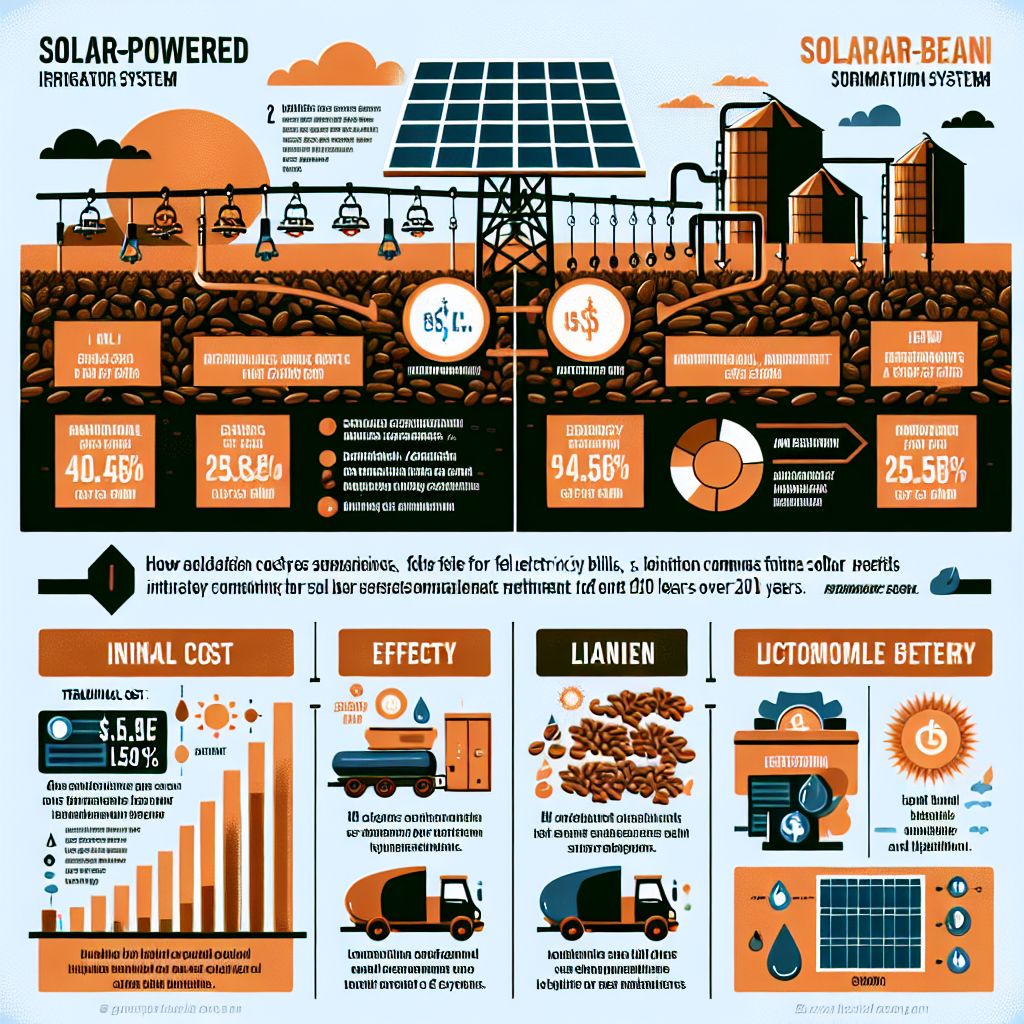
Cost and Efficiency Comparison: Solar Irrigation Systems Versus Traditional Irrigation Systems for Growing Kidney Beans
When deciding between solar-powered and traditional irrigation systems, it’s essential to consider both the initial installation costs and the long-term operational expenses. Let’s break down these costs and compare the energy efficiency and maintenance requirements of each system.
Here is a table comparing the cost and efficiency of an irrigation system with and without solar panels:
|
Aspect |
Without Solar Panels |
With Solar Panels |
|---|---|---|
|
Initial Cost | ||
|
Operating Cost |
Very low or zero fuel/electricity costs after installation. 1, 4 | |
|
Efficiency |
Depends on energy source efficiency. 4 |
Depends on solar radiation, temperature, system design. 1, 4 |
|
Environmental Impact |
Higher carbon footprint. 1 |
Lower carbon footprint, renewable energy. 1 |
|
Location Flexibility |
Limited to grid-connected or fuel access areas. 3 |
Can be used in remote off-grid areas. 3 |
|
Maintenance | ||
|
Lifespan |
Shorter for fuel-based systems. 1 | |
|
Long-term Costs |
Higher due to recurring fuel/electricity bills. 1 |
Lower total 20-year costs by 50-60% compared to traditional systems. 1 |
|
Government Incentives |
Generally none |
Many governments provide tax credits, subsidies for solar irrigation. 1 |
Initial Installation Costs Between Both Systems
Installing a solar-powered irrigation system involves several components, including solar panels, inverters, water pumps, and the irrigation system itself. The initial setup cost can range from $10,000 to $30,000, depending on the size of your farm and the specific equipment chosen. For more information on efficient watering techniques, check out solar irrigation for growing cantaloupes.
In contrast, traditional irrigation systems powered by electricity or diesel generators typically have lower initial costs, ranging from $5,000 to $15,000. However, these systems come with ongoing fuel or electricity expenses, which can add up over time.
Long-term Operational Costs Comparisons
One of the significant advantages of solar-powered irrigation systems is the reduction in long-term operational costs. Once installed, solar panels generate free electricity from the sun, eliminating the need for ongoing fuel or electricity expenses. This can lead to substantial savings over the system’s lifespan.
Traditional systems, on the other hand, incur continuous costs for fuel or electricity. These expenses can fluctuate based on market prices, making it challenging to predict and budget for long-term operational costs.
Energy Efficiency of Each System
Solar-powered irrigation systems are highly energy-efficient, converting sunlight directly into electricity to power the water pumps. This direct conversion minimizes energy losses and ensures a steady supply of power, even in remote locations.
Traditional systems, particularly those powered by diesel generators, are less energy-efficient. They involve multiple energy conversion steps, each with associated losses, leading to lower overall efficiency and higher operating costs.
Maintenance and Durability
“Proper maintenance of solar panels and irrigation systems ensures durability and efficiency over many years.”
Solar panels require minimal maintenance, primarily involving regular cleaning and occasional inspections to ensure optimal performance. Most panels come with warranties of 25 years or more, providing long-term reliability.
Traditional systems, especially those using diesel generators, require more frequent maintenance, including fuel management, engine servicing, and parts replacement. These ongoing maintenance needs can add to the overall operational costs and downtime. For an alternative, consider solar irrigation systems which can significantly reduce these costs.
|
System Type |
Initial Cost |
Operational Cost |
Maintenance |
|---|---|---|---|
|
Solar-Powered |
$10,000 – $30,000 |
Low (free solar energy) |
Minimal (cleaning, inspections) |
|
Traditional |
$5,000 – $15,000 |
High (fuel/electricity costs) |
Frequent (fuel, engine servicing) |
Considering these factors, solar-powered irrigation systems offer a more sustainable and cost-effective solution for kidney bean farmers in the long run. The higher initial investment is offset by significant savings in operational costs and reduced maintenance requirements.
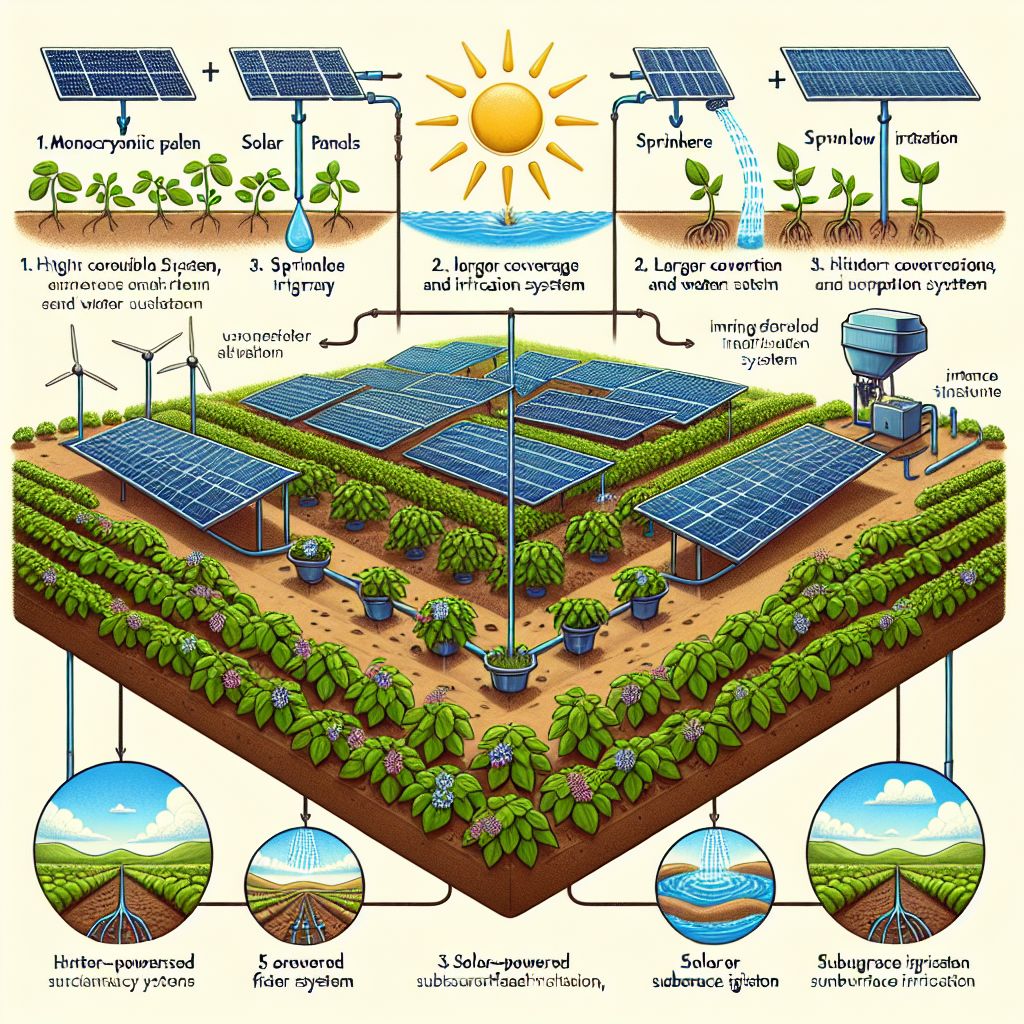
Which Combination of Solar Panels and Irrigation Systems make the Most Efficient System for Your Kidney Bean Farm
The efficiency of your irrigation system depends on the right combination of solar panels and irrigation methods. Let’s explore the best pairings to maximize the benefits for your kidney bean farm.
Best Combination: Monocrystalline Solar Panels and Drip Irrigation
Monocrystalline solar panels paired with drip irrigation offer the highest efficiency and water conservation. The high energy output of monocrystalline panels ensures a reliable power supply for the drip irrigation system, which delivers water directly to the plant roots with minimal wastage.
This combination is ideal for arid regions or farms with limited water resources, as it maximizes water use efficiency and reduces evaporation losses. Drip irrigation’s precision in delivering water to the root zone ensures that your kidney beans get the exact amount of water they need, promoting healthier growth and higher yields.
Optimal Pairings: Monocrystalline Solar Panels and Sprinkler Irrigation
For farms with uneven terrain or larger fields, pairing monocrystalline solar panels with a sprinkler irrigation system can be highly effective. The high efficiency of the panels ensures sufficient power for the sprinklers, which distribute water evenly across the field.
This setup is suitable for areas where water conservation is essential, but the terrain or crop layout makes drip irrigation less feasible. Sprinkler systems can cover a larger area and are easier to install in fields with varying topography, making them a versatile option for many kidney bean farmers.
Combining Solar Panels with Furrow Irrigation
Furrow irrigation can also benefit from solar power, especially in regions where traditional energy sources are scarce or expensive. By using solar panels to power the water pumps, you can create a more sustainable and cost-effective furrow irrigation system.
While furrow irrigation is less efficient than drip or sprinkler systems, it can still be a viable option for small-scale farmers or those with specific field conditions. The key is to ensure that the solar-powered pumps are adequately sized to meet the water flow requirements of the furrows.
Subsurface Irrigation with Solar Power
Subsurface irrigation systems, which deliver water directly to the root zone through buried pipes, can also be powered by solar panels. This method minimizes evaporation and surface runoff, making it highly efficient in terms of water use.
However, subsurface irrigation requires precise installation and regular maintenance to ensure the buried pipes remain unobstructed. The combination of solar power and subsurface irrigation is best suited for farms with well-established irrigation infrastructure and the ability to manage the maintenance requirements. For more information, read about irrigation systems you can connect to solar panels.

Conclusion: Is it a Smart Decision to Add Solar-Power to an Irrigation System for Your Kidney Bean Farm
Adding solar power to your irrigation system is a smart decision for many reasons. It offers significant long-term cost savings, reduces your carbon footprint, and provides a reliable energy source even in remote locations. However, the initial investment and specific maintenance requirements must be carefully considered. For more information, check out this guide on irrigation systems you can connect to solar panels.
By choosing the right combination of solar panels and irrigation methods, you can create a highly efficient and sustainable system that benefits both your farm and the environment.
Summary of Benefits
Solar-powered irrigation systems offer numerous benefits, including:
Significant reduction in water and energy costs.
Enhanced crop yields and quality due to precise watering.
Reduced carbon footprint and reliance on fossil fuels.
Increased sustainability and resilience in remote areas.
Long-term reliability and minimal maintenance requirements.
Challenges and Considerations
While the benefits are substantial, there are also challenges to consider, such as understanding the efficiency and setup of solar panels for irrigation systems.
High initial setup costs for solar panels and irrigation systems.
Need for regular maintenance and monitoring to ensure optimal performance.
Potential for reduced efficiency in cloudy or rainy conditions.
Requirement for proper planning and installation to maximize benefits.
Final Recommendations
For kidney bean farmers looking to adopt a sustainable and cost-effective irrigation system, solar-powered solutions offer a compelling option. By carefully selecting the right combination of solar panels and irrigation methods, you can maximize the benefits and ensure long-term success for your farm.
Consider starting with a small pilot project to test the system’s effectiveness before scaling up. Take advantage of government incentives and subsidies to reduce initial costs, and ensure you have a maintenance plan in place to keep the system running smoothly.
Frequently Asked Questions (FAQ)
What is the lifespan of a solar-powered irrigation system?
The lifespan of a solar-powered irrigation system can vary, but most solar panels come with warranties of 25 years or more. With proper maintenance, the entire system, including the water pumps and irrigation components, can last for several decades.
Regular inspections and cleaning of the solar panels, along with timely maintenance of the irrigation system, will ensure long-term reliability and efficiency.
How much sunshine do I need for a solar-powered irrigation system?
Solar-powered irrigation systems require adequate sunlight to generate the necessary electricity. Most systems are designed to work efficiently with 4-6 hours of direct sunlight per day. However, they can still function on cloudy days, albeit at reduced efficiency.
It’s essential to assess your farm’s solar potential before investing in a solar-powered irrigation system. Consider factors such as the average sunlight hours, shading from trees or buildings, and seasonal variations in sunlight. For more information, check out this guide on solar-powered irrigation for growing beets.
Are there any government subsidies for solar-powered irrigation?
Many governments offer incentives and subsidies to encourage the adoption of renewable energy solutions, including solar-powered irrigation systems. These financial aids can significantly reduce the initial setup costs and make the transition to solar power more affordable.
Check with your local agricultural or energy departments to find out about available subsidies, grants, and low-interest loans for solar-powered irrigation projects.
How do I maintain solar panels in my farm?
Maintaining solar panels on your farm involves regular cleaning to remove dust, dirt, and debris that can reduce their efficiency. Use a soft brush or cloth and water to clean the panels, avoiding abrasive materials that could scratch the surface. For more detailed information, refer to this solar panels for farms guide.
Additionally, inspect the panels and wiring periodically for any signs of damage or wear. Ensure that the panels are securely mounted and free from shading by overgrown vegetation or other obstructions. For more information, you can refer to our guide on solar-powered irrigation for growing green beans.
Can solar-powered irrigation systems work during cloudy or rainy days?
Yes, solar-powered irrigation systems can still work during cloudy or rainy days, although their efficiency will be reduced. Most systems are designed to store excess energy generated on sunny days in batteries, providing a backup power source during periods of low sunlight.
It’s essential to size your solar panel array and battery storage correctly to ensure a consistent power supply for your irrigation needs, even during less favorable weather conditions.







Leave a Reply