

In the world of agriculture, one of the most crucial elements to consider is irrigation. It’s not just about watering the plants; it’s about effectively managing our water resources to grow crops such as millet. Now, let’s discuss a revolutionary tool in this area: solar irrigation systems. These systems are not only beneficial for the environment, but they are also a wise decision for the farmers’ budget.
Why should you choose solar power for your farm’s irrigation system? Let’s explore the reasons.
Key Takeaways
Solar irrigation systems can dramatically lower energy expenses and dependence on non-renewable energy sources.
Adopting solar energy for irrigation can result in long-term economic benefits for farmers.
Various types of solar panels, like monocrystalline and polycrystalline, can be paired with different irrigation systems to maximize efficiency.
Solar-powered irrigation systems are an eco-friendly solution that saves water and encourages biodiversity.
Despite the potentially higher upfront cost, the efficiency and cost savings of solar irrigation make it a worthwhile investment for millet cultivation.

The Benefits of Pairing Solar Panels with an Irrigation System
Imagine your farm not being dependent on fluctuating energy costs. Solar panels turn sunlight directly into electricity, which can then power your irrigation system. This translates to free energy from the sun, and less concern about increasing utility bills. However, the benefits extend beyond just cost savings.
Getting Ahead by Going Green: Solar Power and Sustainability
When you go solar, you’re showing that you’re invested in the health of the planet. Solar power is a clean, renewable energy source that has a much lower environmental impact than fossil fuels. This not only helps you reduce your carbon footprint, but it also sends a positive message to your community.
Energy Freedom: Less Reliance on the Grid
One more advantage of going solar? You’re not as reliant on the grid. This freedom means you’re protected from power outages and energy price increases. In addition, if you generate more energy than you use, you may even be able to sell it back to the grid.
Financial Advantages of Solar Irrigation in the Long Run
Although solar panels can be pricey to install, the savings over time are substantial. Solar panels typically last for 25 to 30 years, so you’ll be cutting down on energy costs for many years. Most importantly, with energy costs on the rise, your savings could grow over time.
Environmental Impact: Conserving Resources and Promoting Biodiversity
Implementing solar panels for irrigation isn’t just about water conservation. It’s about preserving the natural habitats that surround your farm. By using less water and energy, you’re also protecting the homes of local wildlife, contributing to a healthier environment.

Different Watering Systems for Cultivating Millet on a Farm
Let’s now discuss how to provide water to your millet crops. There are several watering techniques, each with its own advantages.
Getting Started with Surface Irrigation
Surface irrigation is the traditional way of watering crops. Water is allowed to flow over the soil surface by gravity to wet the plants. It’s straightforward and inexpensive but can be inconsistent and wasteful if not done right.
Drip Irrigation: The Ultimate Water Saver
Drip irrigation is another option. This method supplies water directly to the roots of the plant. It’s like each millet plant has its own water supply, so there’s no waste. It’s highly efficient, which can help you conserve water and save money.
Even Water Distribution with Sprinkler Irrigation
Sprinkler systems are like creating your own rainstorm. Water is piped to sprinklers that spray it over your crops. It’s a bit like the sprinkler you might use in your yard, but on a much larger scale. This method is great for covering large areas evenly.
Subsurface Irrigation: The Hidden Gem
Subsurface irrigation may not be as obvious, but it is just as efficient. In this method, water is provided directly to the roots, beneath the surface. It’s a sneaky way to hydrate your plants without losing any water to evaporation.
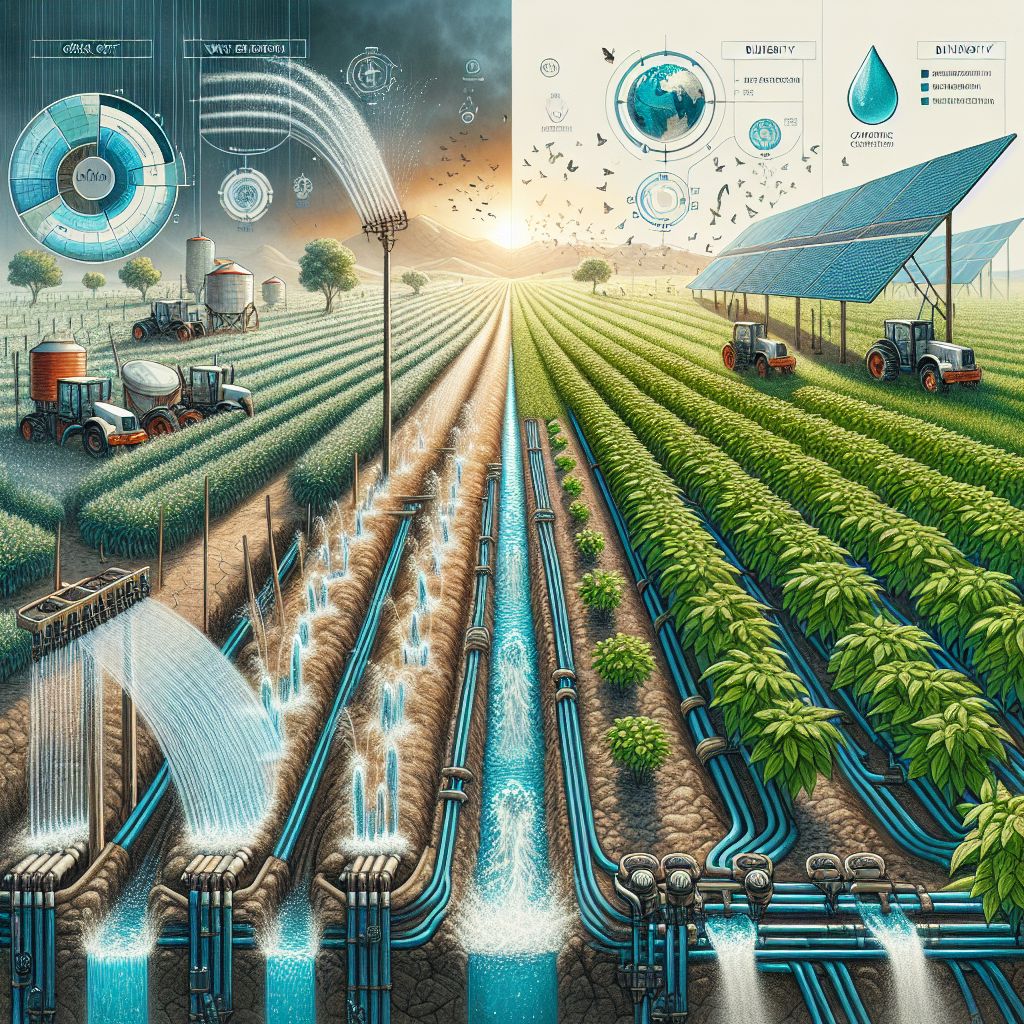
Comparing the Cost and Efficacy of Old (Furrow, Sprinkler) and New (Drip) Irrigation Systems for Millet Cultivation on a Farm
Despite the fact that all irrigation systems have the same goal, they are not all created equal in terms of cost and efficacy. While traditional methods such as furrow and sprinkler systems have been in use for many years, modern methods such as drip irrigation are frequently more efficient.
Breaking Down Initial Investment Costs
Let’s cut to the chase. Traditional systems might be more affordable to set up, but they aren’t always efficient in water usage. Drip systems, however, might have a higher initial cost but can help you conserve water and money over time.
Water Usage and Efficiency Comparison
When it comes to watering, efficiency is everything. Traditional systems can often lead to a lot of wasted water due to evaporation and runoff. Drip systems, on the other hand, deliver water straight to the roots of the plant, significantly reducing waste. This means you can use less water and still grow the same amount of millet.
Evaluating Durability and Lifespan
You can’t overlook maintenance. Although conventional systems are usually less complex and more straightforward to fix, they are more susceptible to issues such as blockages and waterlogging. Drip systems, when properly maintained, generally have a longer lifespan and fewer problems.
Effects on Harvest Volume and Grain Quality
And of course, we can’t forget about your millet! Effective watering can result in improved harvest volumes and superior quality grains. With drip irrigation, you’re less likely to give your crops too much or too little water, which means your plants will be more satisfied and healthier.
Okay, we’ve covered quite a bit in this article. But there’s still more to learn about solar irrigation systems for millet cultivation, such as the different kinds of solar panels available and how to incorporate them into your irrigation system. Keep an eye out for more useful information and practical advice to help you make your farm more sustainable and productive.
Let’s turn our attention to the solar panels, the beating heart of the solar irrigation system. These panels are the heavy lifters, soaking up the sun and turning it into the energy that drives the whole system. But remember, not all solar panels are the same, and the kind you pick can greatly affect how efficient your system is.

Choosing the Right Solar Panels for Your Millet Farm’s Irrigation System
When it comes to picking solar panels for your irrigation system, you want to make sure you choose ones that are not only affordable but also efficient in your farm’s specific conditions. Here are your options.
Monocrystalline Panels: Top Pick for Efficiency
Monocrystalline solar panels are renowned for their high efficiency and longevity. They are made from a single, pure crystal structure, which enables them to generate more power even in limited spaces. If you’re after top-tier performance and you have the budget for it, these are the panels to go for.
Polycrystalline Panels: Budget-Friendly and Reliable
Polycrystalline panels, which are constructed from several crystal fragments, provide a more budget-friendly option. Although they don’t offer the same level of efficiency as monocrystalline panels, they provide a good compromise between performance and cost. They’re a good option if you’re looking to save on initial costs without giving up too much in terms of efficiency.
Thin-Film Panels: Versatile and Light
Thin-film solar panels are unique in their construction. They are created by applying a layer of photovoltaic material to a base. These panels are light, bendable, and work well in dim light. They are also more resistant to high temperatures than standard panels.
- Monocrystalline panels are the most efficient but are also the most expensive
- Polycrystalline panels are a cost-effective option that still offers reliable performance.
- Thin-film panels are versatile and work well on non-traditional surfaces.
Right below is a table looking at all the different solar panel options:
|
Solar Panel Type |
Efficiency Range |
Advantages |
Disadvantages |
|---|---|---|---|
|
Monocrystalline |
17-22% |
Highest efficiency, space-saving, long lifespan. 2 | |
|
Polycrystalline |
15-17% |
Lower efficiency, requires more space. 2 | |
|
Thin-Film |
10-13% |
Lightweight, flexible, good temperature coefficient. 2 |
Lowest efficiency, requires large area. 2 |
|
Portable Solar Panel Systems |
Varies based on panel type |
Designed for irrigation needs, easy to move and relocate. 1, 3 | |
|
Hybrid Solar Panels |
Varies based on components |
Can combine solar with other energy sources like wind, increased reliability. 4 |
More complex system, higher cost. 4 |
Monocrystalline panels provide the highest efficiency in a compact area but at a higher upfront cost (2, 3). Polycrystalline panels offer a balance of efficiency and cost (2, 3). Thin-film panels have lower efficiency but perform better in high temperatures (2). Portable solar panel irrigation systems allow flexibility in placement and relocation as needed (1). Hybrid systems increase reliability by combining solar with other renewable sources but add complexity (4). The optimal choice depends on factors like available space, budget, local climate conditions, and specific irrigation requirements for the millet.
Choosing the Right Panel: Polycrystalline vs. Monocrystalline vs Thin-Film
So, how do you decide which type of panel to go with? Here are some factors to consider:
Efficiency: Monocrystalline panels are the most efficient, followed by polycrystalline, and then thin-film.
Cost: Thin-film panels are usually the least expensive, with polycrystalline in the middle and monocrystalline at the higher end.
Space: If you have limited space, monocrystalline panels are the best choice because of their high efficiency.
Once you’ve chosen your solar panels, the next step is installation. Proper installation is key to maximizing the energy you get from the sun.
Setting Up Your Solar Panels for Maximum Sunlight
For your solar panels to work most efficiently, they should be placed where they can get the most sun. If you’re in the northern hemisphere, this generally means pointing them south. They should also be tilted at the right angle, which depends on your latitude, and you should make sure no shade is falling on them.
It might seem intimidating to connect your solar panels to your irrigation system, but it’s actually a simple task. To turn the DC electricity that the panels produce into AC electricity that can run your pumps, you’ll need a solar inverter.
Linking Solar Panels to Current Irrigation Systems
For those who already have an irrigation system, you can add solar panels with a few modifications. You have to check if your irrigation system’s pump can handle the power output of your solar panels. This could mean you have to replace your current pump with one that is ready for solar power.
Understanding Government Subsidies and Incentives for Solar Energy
One of the most appealing aspects of transitioning to solar energy is the fact that numerous governments provide incentives and subsidies to help reduce the initial expenses. These can be in the form of tax credits, rebates, or even grants. It’s important to investigate what’s available in your region, as this can make solar energy much more cost-effective.

Comparing Costs and Efficiency: Traditional Irrigation Systems and Solar Irrigation Systems for Growing Millet
There are many factors to consider when comparing the costs and efficiency of traditional irrigation systems to solar-powered irrigation systems for millet cultivation.
When you compare the costs of solar irrigation systems and traditional irrigation systems over the long term, you’ll see that solar systems are more expensive to install but much cheaper to run. This is because solar power is free, but you have to pay for the electricity or fuel that traditional systems use.
Based on the farmers I’ve talked to, it’s evident that solar irrigation systems are efficient in practice. They worry less about the cost of fuel and concentrate more on their crops. Additionally, technological advancements have made it possible to automate and optimize solar irrigation systems for improved water management.
Looking ahead, it’s apparent that sustainable methods like solar irrigation are becoming more and more standard. Given the constant advancements in solar technology and the falling prices of solar panels, it’s a thrilling period to be in agriculture.
To sum up, choosing to use a solar irrigation system for millet cultivation is not just a green choice, but also a wise financial decision in the long term. While the upfront costs might be higher, the savings on energy, water, and upkeep, coupled with the possibility of increased crop yields, make it a choice that will continue to pay dividends year after year.
Keep in mind that each farm is different, so it’s critical to evaluate your particular circumstances to figure out the most effective irrigation method for you. However, if you’re trying to make your farm more sustainable and productive, solar-powered irrigation systems could be a good option.
This table compare the pros and cons of solar-powered irrigation systems and conventional irrigation systems:
|
Aspect |
Conventional Irrigation System |
Solar-Powered Irrigation System |
|---|---|---|
|
Pros |
No ongoing energy costs, uses free solar power. 5 | |
|
Simple installation and maintenance. 1 |
Environmentally friendly, reduces carbon footprint. 3 | |
|
Reliable water supply even during power outages. 5 | ||
|
Long lifespan of solar panels (25-30 years). 5 | ||
|
Cons | ||
|
Susceptible to power outages. 5 |
Requires some technical knowledge for installation/maintenance. 3, 4 | |
|
Environmental impact from energy use. 3 |
Risk of over-abstraction of groundwater if not managed properly. 3, 4 | |
|
Potential for water waste/inefficiency. 1 |
Long-Term Cost Comparison
At first glance, traditional irrigation methods like furrow or sprinkler systems may appear to be more cost-effective. However, these methods can become costly over time due to high energy usage and water waste. Solar irrigation systems require a larger initial investment, primarily due to the cost of solar panels and installation. But, once the system is operational, the ongoing costs are significantly reduced since sunlight is free.
The long-term savings from solar irrigation can be significant. Think about not having to stress about the increasing prices of electricity or diesel. Instead, your investment in solar pays for itself as you utilize the sun’s power, year after year, at no extra cost. Additionally, solar systems usually have lower maintenance costs than traditional systems, which often need more regular repairs and part replacements.
Real-World Success: Stories from Farmers
Farmers who have made the switch to solar irrigation systems have experienced improved water management and less worry about fluctuating energy prices. But don’t just take my word for it:
John, a millet farmer from Texas, shared, “Since installing solar panels and switching to a drip irrigation system, my water usage has dropped by nearly 30%, and my energy bills are almost nonexistent. It’s been a game-changer for my farm’s profitability.”
This efficiency isn’t just about saving money; it’s also about optimizing water use. With better control over irrigation, farmers can prevent overwatering or underwatering, which is crucial for growing millet successfully. Solar irrigation systems can be automated and adjusted based on real-time data, ensuring that crops receive the right amount of water at the right time.
Technology Integration: Intelligent Controls and Automated Systems
Technology integration is changing the way we farm. Intelligent controls and automated systems allow for precise irrigation, customizing it to the needs of the millet crop. These systems can adjust the water flow based on different factors like soil moisture levels, weather forecasts, and plant growth stages. With solar power, the energy required for these complex systems is plentiful and free, further improving efficiency and crop yields.
Looking Ahead: Forecasting Developments in Irrigation
As we peer into the future, it’s clear that sustainable farming isn’t just a passing fad – it’s becoming an essential part of our agricultural practices. Solar irrigation systems are leading the charge in this movement, marrying the concepts of water preservation and the use of renewable energy. With the continual evolution of solar technology and the rising consciousness about environmental issues, it’s safe to predict that an increasing number of farmers will embrace these systems. This will pave the way for a more eco-friendly and sustainable future for farming.
Final Thoughts: Is it Worth it to Invest in a Solar Irrigation System for Millet Farming?
When you look at the big picture, it’s clear that there are many advantages to investing in a solar irrigation system for millet farming. While there are initial costs to consider, the long-term savings on energy and water, as well as the potential for increased crop yields, more than make up for it. Plus, solar irrigation systems are a more sustainable and environmentally friendly way to farm. For farmers who are looking to make their operations more future-proof and reduce their environmental impact, solar irrigation systems are definitely a worthwhile investment.
Frequently Asked Questions
Before we finish, we’ll answer a few frequently asked questions about solar irrigation systems for millet cultivation.
Is solar irrigation suitable for all kinds of farms?
Solar irrigation is versatile and can be tailored to fit a wide range of farms, from small family-owned farms to large-scale commercial farms. The trick is to design the system in a way that it meets the unique requirements of your land and crop. With the right configuration, solar irrigation can do wonders for your millet farm.
Here are some things you need to think about: solar irrigation system components for efficient farming.
Consider the size of your farm and how much sun it gets.
Think about the type of millet you are growing and how much water it needs.
Take into account the local climate and weather patterns.
Is solar irrigation cheaper than traditional watering methods in the long term?
Over time, solar irrigation can often be cheaper than traditional watering methods. While the initial cost for solar can be higher, the ongoing costs to run it are much lower. This is because once the solar system is set up, the energy it uses is free, which can save you a lot of money in the long run.
What does it take to maintain a solar-powered irrigation system?
Solar irrigation systems are usually low-maintenance. Regularly cleaning the solar panels to get rid of dust and debris is crucial for keeping them efficient. Also, inspecting the irrigation equipment for leaks or damage helps avoid wasting water and keeps the system running smoothly.
What types of millet are best suited for different irrigation systems?
Most millet varieties, such as pearl millet and finger millet, can flourish with solar irrigation systems. The ideal system—be it drip, sprinkler, or subsurface—depends on the specific water needs of the millet variety you’re cultivating, as well as the soil and weather conditions of your farm.
How does the weather impact the effectiveness of solar irrigation systems?
The weather, especially the amount of sunlight, directly influences the effectiveness of solar irrigation systems. However, today’s solar panels are designed to function efficiently even on overcast days. Furthermore, battery storage systems can store surplus energy generated during sunny periods for use during less sunny periods, ensuring a consistent energy supply for your irrigation requirements.
Solar irrigation systems are becoming increasingly popular for their efficiency and sustainability, especially in the agricultural sector. For instance, farmers growing millet can benefit from these systems as they provide a consistent water supply, which is essential for crops that are sensitive to drought. To learn more about how these systems can be optimized for specific crops, consider exploring efficient watering solutions for growing wheat, which shares similarities with millet in terms of water needs.







Leave a Reply