
Article-at-a-Glance:
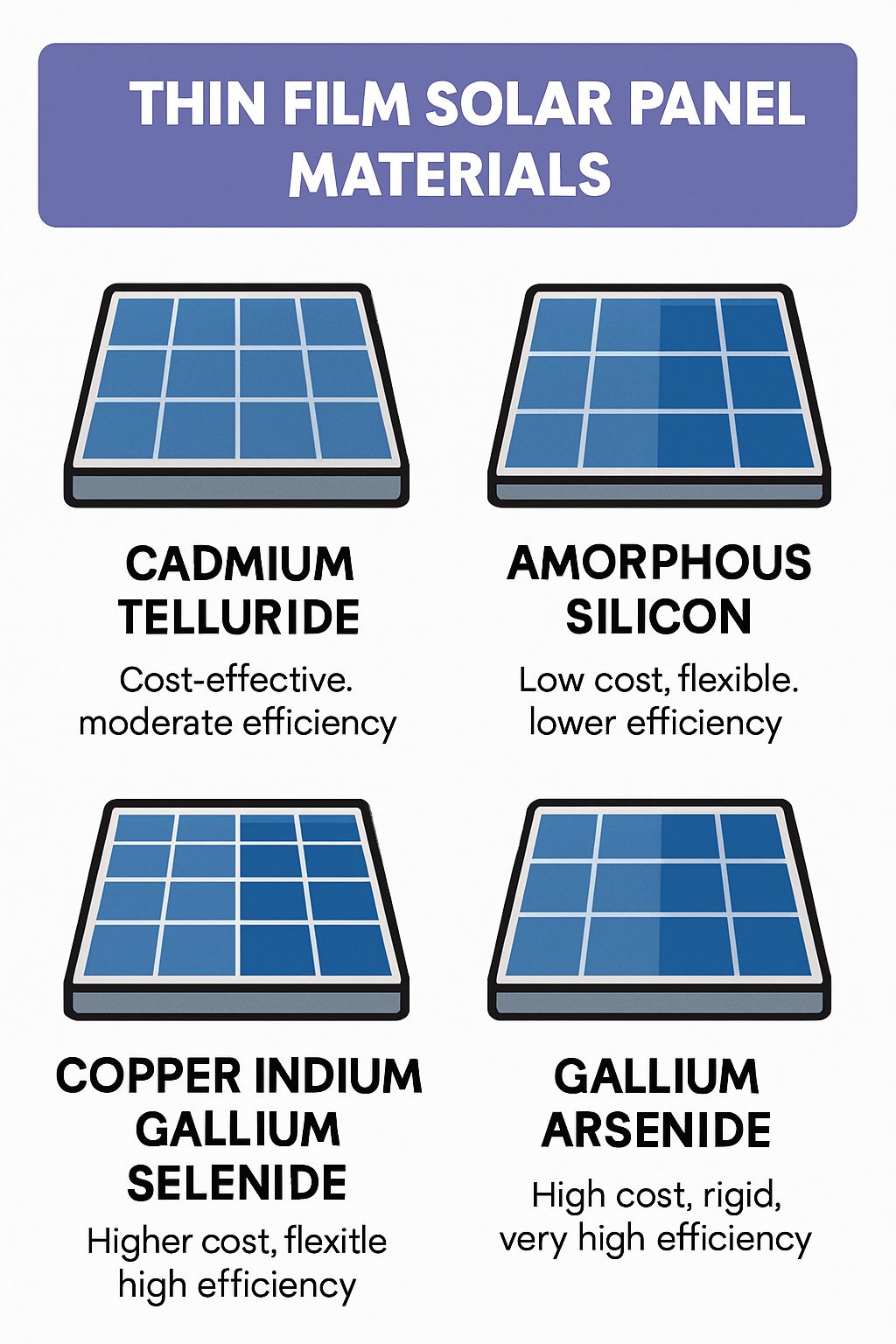
- Thin film solar panels use four main materials—CdTe, amorphous silicon, CIGS, and GaAs—each with different efficiency, cost, and durability trade-offs for farm use.
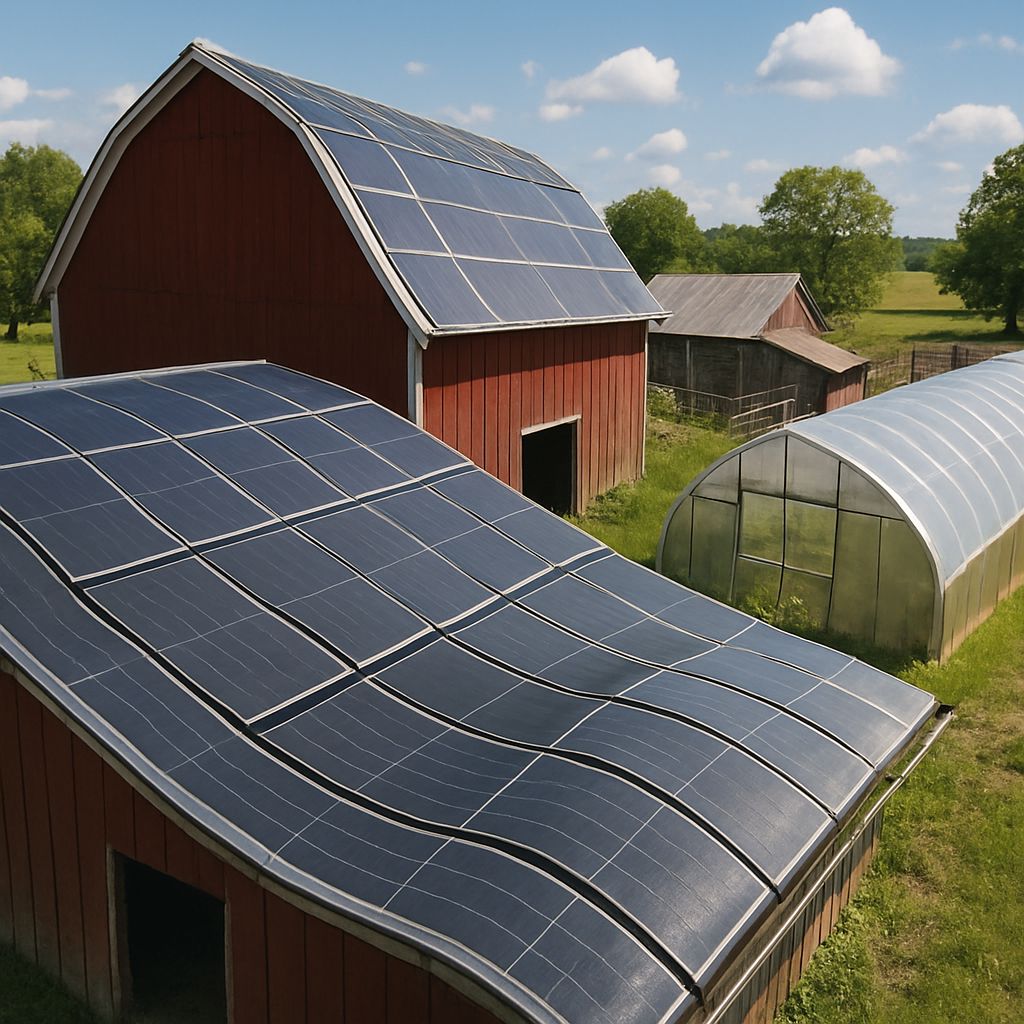
- These panels weigh less and bend more than traditional silicon panels, making them a practical fit for barns, greenhouses, and uneven farm structures.
- Thin film technology keeps producing power in low-light and cloudy conditions, which matters a lot for farms that can’t afford energy gaps during irrigation or milking schedules.
- Lower manufacturing costs mean thin film panels often require less upfront investment than crystalline silicon alternatives, though efficiency and lifespan trade-offs exist.
- Later in this guide, you’ll see exactly how CdTe, CIGS, and other materials stack up against each other—and which one makes the most sense for your specific farm setup.
Thin film solar panels are built from one of four main materials—cadmium telluride, amorphous silicon, copper indium gallium selenide, or gallium arsenide—and each one brings a different mix of cost, flexibility, and power output to the table. For farmers trying to cut energy bills without pouring money into a massive solar installation, understanding these materials isn’t optional homework. It’s the difference between picking a panel that works with your land and buildings versus one that fights against them.
Resources like Rayzon Solar’s breakdown of thin film technology have helped clarify how these materials actually perform once they leave the lab and hit a working farm. That kind of technical grounding matters because agricultural settings rarely look like a textbook solar installation—there’s dust, humidity, uneven rooflines, and shade from grain silos or tree lines to deal with.
What Thin Film Solar Panels Are Made Of
Every thin film solar panel, regardless of which material powers it, shares the same basic structure. There’s a substrate holding everything together, an absorber layer that actually captures sunlight, and a transparent conductive layer that lets the generated electricity flow out of the panel. This layered design is what makes thin film panels so much lighter and more adaptable than their bulkier silicon cousins.
The manufacturing process behind these layers also explains why thin film panels tend to cost less. Production starts with preparing and cleaning the substrate, then depositing the chosen photovoltaic material—whether that’s amorphous silicon, CdTe, or CIGS—using techniques like sputtering, chemical vapor deposition, or evaporation. After that, the thin film gets encapsulated to protect it from weather and handling damage, then tested for performance before it ships out.
Because this process uses less raw material and less energy than traditional silicon panel production, the savings get passed down the line. That’s good news for farmers who need solar power but don’t have unlimited capital to spend on it.
The Three Layers: Substrate, Absorber, and Conductive Coating
The substrate is essentially the skeleton of the panel, giving it shape and support. The absorber layer sits on top of that skeleton and does the heavy lifting—it’s the material that actually converts sunlight into usable electricity. On top of the absorber sits a transparent conductive layer, which lets light pass through to reach the absorber while also carrying the generated current away for use.
Glass, Plastic, and Metal Substrates Compared
Substrate choice changes what a panel can do and where it fits on a farm. Glass substrates hold up well against weather and physical wear but add noticeable weight, which matters if you’re mounting panels on an older barn roof. Plastic substrates go the opposite direction—lightweight and flexible enough to curve around irregular surfaces, though they sacrifice some of that rigid durability. Metal substrates split the difference, offering strength and stability at a higher price point than plastic. To learn more about how solar panels can benefit farming, explore different solutions available for farmers.
1. Cadmium Telluride (CdTe) Panels
Cadmium telluride panels sit at the budget-friendly end of the thin film spectrum, with efficiency ranging from 9% to as high as 18.7% depending on the specific build. They’re the second most widely used solar cell type on the planet, trailing only crystalline silicon, and that popularity comes down to a simple formula: strong light absorption paired with low production costs. For more insights, explore thin film solar panels’ advantages and uses.
For farmers eyeing solar without wanting to drop a fortune upfront, CdTe panels are particularly advantageous. They’re among the cheapest solar technologies available anywhere, and they carry a smaller carbon footprint than traditional silicon panels during manufacturing.
That said, CdTe isn’t a universal fix. Tellurium, the key ingredient that gives CdTe its name, is rare enough that large-scale production runs into supply constraints. And while these panels shine in hot, humid climates, they lag behind other thin film options when light conditions get dim.
- Efficiency range: 9% to 18.7%
- Best suited for hot, humid farm regions
- One of the cheapest solar technologies on the market
- Contains cadmium, a toxic heavy metal requiring careful disposal
Efficiency Range and Cost Advantages
CdTe’s wide efficiency range—anywhere from 9% up to 18.7%—gives it more flexibility than people expect from a “cheap” solar option. The low manufacturing cost comes from how little material is actually needed to build a functional cell, which keeps per-panel pricing down even as efficiency climbs toward the higher end of that range.
This cost advantage is exactly why CdTe gets mentioned so often in farm energy discussions. A farmer installing panels across a large barn roof or equipment shed can cover more square footage for less money compared to premium crystalline silicon options.
Performance in Heat and Humidity
Unlike some solar materials that lose efficiency as temperatures climb, CdTe panels actually hold their own in hot and humid conditions. That’s a meaningful advantage for farms in southern climates or regions with long, sticky summers where panel performance can otherwise tank during peak sunlight hours.
This heat tolerance means CdTe panels keep generating usable power exactly when farms need it most—during long summer days when irrigation pumps, cooling fans, and refrigeration units are all running at full tilt.
Toxicity and Disposal Concerns
The tradeoff for CdTe’s affordability is the cadmium itself. This heavy metal raises legitimate questions about environmental impact, particularly around how panels get disposed of once they reach the end of their 10-to-20-year lifespan. Farmers considering CdTe should factor in responsible disposal or recycling plans from the start rather than treating it as a someday problem.
It’s worth noting that this toxicity concern is specific to CdTe and doesn’t apply across all thin film materials—amorphous silicon, for instance, skips this issue entirely by avoiding cadmium altogether.
2. Amorphous Silicon (a-Si) Panels
Amorphous silicon holds the title of most widely used thin film module on the market, and for good reason—it’s far easier and cheaper to produce than mono or polycrystalline silicon. Rather than relying on the rigid crystal structure found in traditional panels, a-Si uses non-crystalline silicon, which opens the door to flexibility that crystalline panels simply can’t match.
Why a-Si Is the Most Widely Used Thin Film Type
Manufacturing simplicity drives a-Si’s popularity. Since it skips the energy-intensive crystallization process required for traditional silicon, production costs drop significantly, making it an accessible entry point for farms testing out solar for the first time. It’s also one of the least toxic options on this list, avoiding the cadmium concerns tied to CdTe.
Flexibility for Curved and Irregular Surfaces
Because a-Si panels bend and flex, they work beautifully on curved barn roofs, irregular equipment sheds, or anywhere a rigid panel just wouldn’t sit right. They’re also less affected by high heat than other solar technologies, and they perform particularly well in low-light conditions—a real advantage for farms in regions with frequent overcast skies.
Trade-Off: More Surface Area Needed for Power
The catch with a-Si is efficiency, which sits under 10%. That means covering more roof or ground space to generate the same power output you’d get from a smaller CdTe or CIGS installation. For farms with plenty of barn roof or shed space to spare, this trade-off is manageable. For tighter properties, it’s worth running the numbers first. For more insights, explore the benefits of thin film solar panels for farm operations.
3. Copper Indium Gallium Selenide (CIGS) Panels
CIGS panels typically run between 10% and 12% efficiency, with lab settings pushing that number as high as 18%—putting CIGS in the same performance league as traditional crystalline silicon. Made from copper, indium, gallium, and selenium, these panels are known for being “highly efficient at converting sunlight into energy,” and they hold up well in low-light conditions too.
How CIGS Achieves Silicon-Level Efficiency
What sets CIGS apart is its ability to close the efficiency gap with crystalline silicon while still keeping the flexibility benefits of thin film technology. The material can be deposited onto flexible substrates, meaning farmers get silicon-like performance without sacrificing the adaptability that makes thin film attractive in the first place.
Best Uses: Building Integration and Portable Power
CIGS panels show up often on non-flat surfaces—industrial terraces, residential roofs, and anywhere a standard rigid panel wouldn’t fit well. They’re also extremely portable-friendly, making them a solid choice for farms that need to move power sources between locations, like seasonal irrigation setups or temporary equipment stations. The one downside: CIGS production is more complex and costly than CdTe or a-Si, which shows up in the final price tag.
4. Gallium Arsenide (GaAs) Panels
Gallium arsenide panels earn their reputation as “the gold standard in solar efficiency,” hitting efficiency levels of up to 30% in laboratory settings—nearly double what CIGS can achieve. That kind of output makes GaAs the most powerful thin film option by a wide margin, and it’s highly resistant to environmental degradation on top of that.
Why GaAs Hits 30% Efficiency in Labs
The material’s crystal structure allows it to absorb a broader range of the light spectrum than other thin film options, which is part of why it’s the go-to choice for aerospace applications where every bit of efficiency counts. In specialized settings where performance can’t be compromised, GaAs delivers.
Why Cost Limits GaAs for Farm Use
The catch is cost. GaAs production is complex and resource-intensive, which pushes the price well beyond what most farms need to justify for standard power generation. Unless you’re running a highly specialized operation where maximum efficiency outweighs budget concerns, GaAs is likely overkill for typical agricultural use.
How Thin Film Panels Are Manufactured
Every thin film panel, regardless of material, goes through four basic stages: preparation, deposition, encapsulation, and testing. First, the substrate gets cleaned and prepped to receive the photovoltaic material. Then the chosen material—whether that’s a-Si, CdTe, or CIGS—gets deposited onto the substrate in a thin layer.
Deposition Techniques: Sputtering and Chemical Vapor Deposition
Manufacturers use a few different techniques to apply that thin layer, including sputtering, chemical vapor deposition, and evaporation. Each method deposits the photovoltaic material with precision, building up the thin film one microscopic layer at a time until it reaches the thickness needed for proper energy conversion. Learn more about the benefits of thin film solar panels for farm operations.
Why Simpler Manufacturing Means Lower Costs
Once the material layer is in place, the panel gets encapsulated to protect it from moisture, dust, and general wear before undergoing rigorous testing to confirm it meets performance standards. This entire process is far less energy-intensive than traditional silicon panel manufacturing.
That reduced energy and material usage is exactly why thin film panels cost less to produce. For farmers comparing upfront solar investment options, that manufacturing simplicity translates directly into a smaller price tag at installation.
Why Thin Film Panels Outperform in Low Light
Cloudy days, shaded barn corners, early morning light—these are everyday realities on a working farm, and they’re exactly where thin film panels earn their keep. Despite having lower peak efficiency than traditional crystalline silicon, thin film technology maintains steadier output when sunlight isn’t at full strength. That consistency matters more than peak efficiency numbers for farms that need reliable power regardless of weather.
Thin Film vs Traditional Silicon Panels
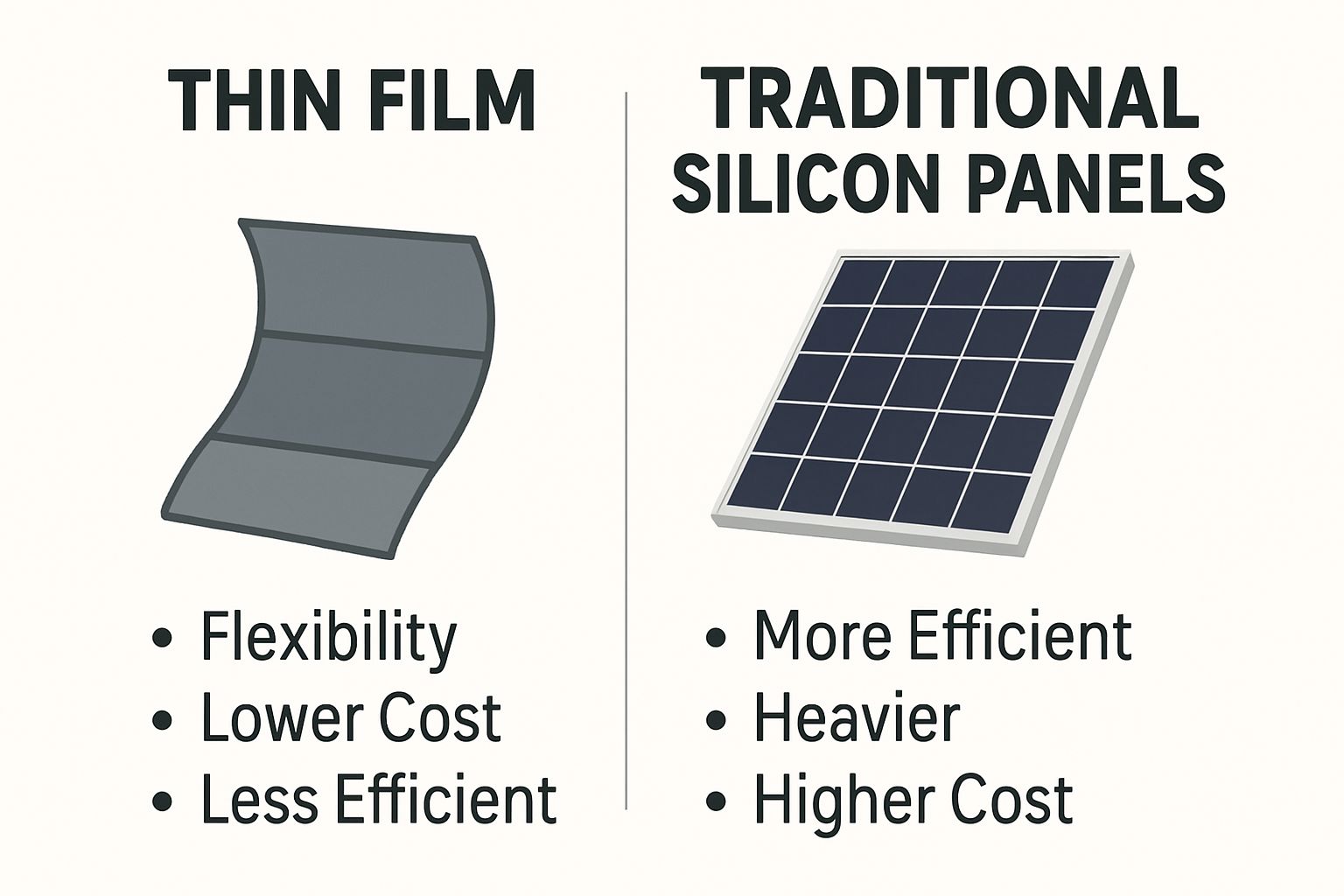
Choosing between thin film and traditional silicon often comes down to what matters more for your specific farm: raw efficiency or flexibility and cost. Traditional monocrystalline and polycrystalline panels win on efficiency and lifespan, but they’re heavier, pricier, and far less adaptable to unconventional surfaces.
Here’s how the numbers actually stack up across the key categories farmers care about most, including the benefits of agrivoltaics.
Efficiency and Lifespan Side-by-Side
- Thin film panels: 12-15% efficiency, 10-20 year lifespan
- Monocrystalline panels: 18-22% efficiency, 25-30 year lifespan
- Polycrystalline panels: 15-18% efficiency, 20-25 year lifespan
These numbers tell a clear story. Traditional silicon panels last longer and squeeze more power from the same amount of sunlight. But that advantage comes bundled with higher weight, higher cost, and far less installation flexibility. For more on the advantages and limitations of thin film solar panels, check out this detailed guide.
For a farm with a sturdy, flat roof and no rush to cut upfront costs, monocrystalline panels might make more sense long-term. But for operations needing flexible mounting, lower initial investment, or integration into curved and irregular structures, thin film closes that performance gap in practical terms.
The right choice really depends on your specific roof structure, budget timeline, and how much surface area you have to work with.
Weight and Installation Cost Differences
Thin film panels are dramatically lighter than both monocrystalline and polycrystalline alternatives, which matters enormously for older barns or structures that weren’t engineered to support heavy rooftop loads. That reduced weight also simplifies installation, often cutting labor costs and avoiding the need for structural reinforcement that heavier traditional panels might require.
5 Ways Farmers Can Use Thin Film Solar
Thin film’s flexibility and low-light performance open up practical applications across nearly every corner of a working farm. Here’s where these panels earn their place in daily agricultural operations.
Powering Irrigation Systems and Electric Fences
Remote irrigation setups and electric fence lines often sit far from the main power grid, making them expensive or impractical to wire conventionally. Thin film panels solve this by generating power right where it’s needed, without trenching cable across entire fields.
Because these panels handle low-light conditions well, irrigation systems keep running even during overcast stretches when crops need water the most.
Running Dairy Equipment and Refrigeration Units
Dairy operations depend on consistent power for milking machines and refrigeration units, and any interruption risks spoiled product or missed milking schedules. Solar-powered systems using thin film panels reduce reliance on grid electricity, cutting operational costs while adding a layer of backup reliability.
This matters especially for farms in areas with unreliable grid service, where a power outage could mean real financial loss. Exploring solar panels’ financial benefits can help mitigate such risks.
Integrating Solar into Barns and Greenhouses
Thin film’s flexibility makes it ideal for building-integrated photovoltaics, meaning the panels themselves become part of the structure rather than an added-on feature. A greenhouse with integrated solar panels can generate power while still providing the light and environment plants need to grow, turning what’s normally just a growing space into a dual-purpose energy asset.
Monitoring Crops with Automated Solar-Powered Sensors
Precision agriculture relies on sensors that track soil moisture, temperature, and crop health around the clock, and those sensors need steady power to keep feeding data back to the farmer. Thin film panels, especially flexible CIGS or a-Si options, can be mounted directly onto sensor housings or nearby posts without adding bulky hardware that gets in the way of fieldwork.
This kind of automated monitoring becomes far more practical when the power source doesn’t require running cable across acres of cropland, which is why many farmers are turning to thin film solar panels.
Off-Grid Power for Remote Farm Locations
Not every part of a farm sits conveniently close to the grid. Equipment sheds, livestock shelters, and far-flung field stations often need power in places where running a utility line just isn’t cost-effective. Thin film’s lightweight, flexible design makes it easy to set up standalone power systems in these remote spots without heavy infrastructure work.
Environmental Impact of Thin Film Technology
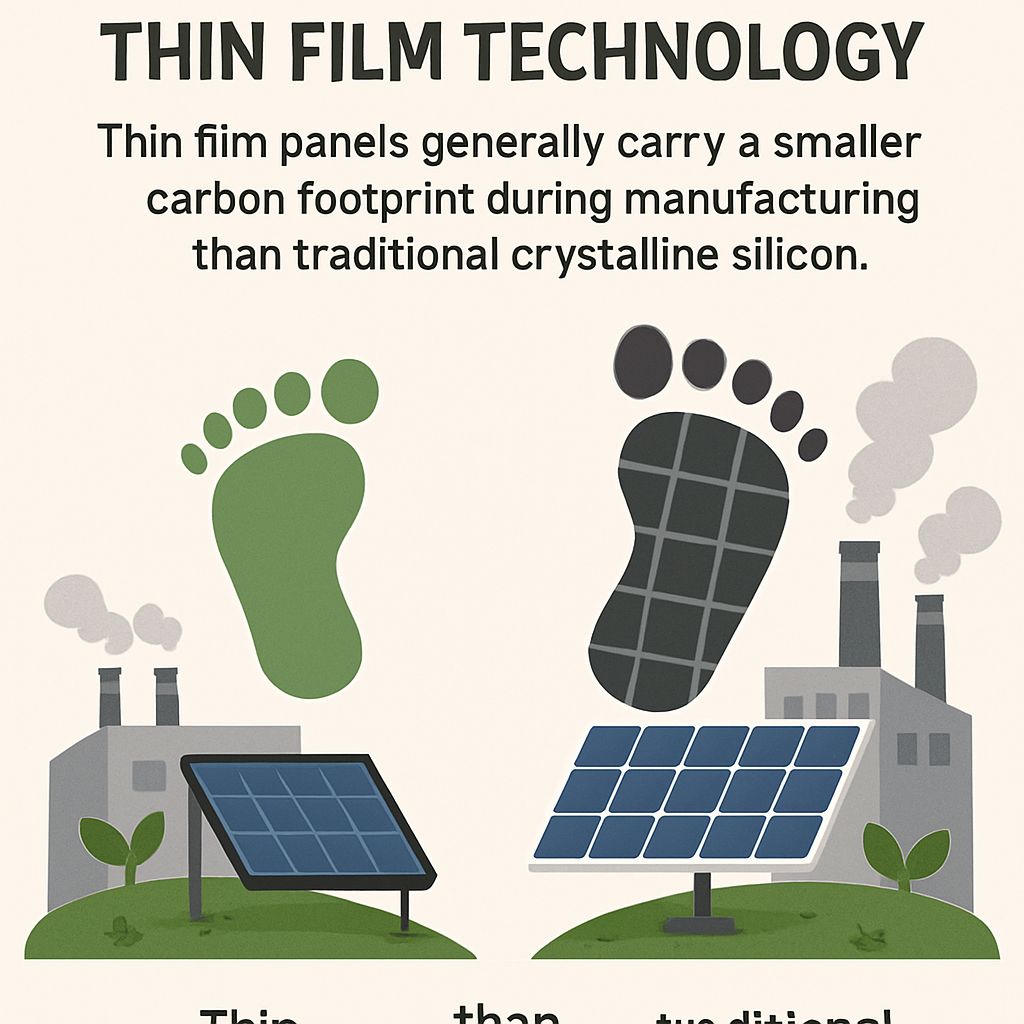
Thin film panels generally carry a smaller carbon footprint during manufacturing than traditional crystalline silicon, largely because the production process uses less energy and less raw material. That said, the environmental picture isn’t identical across every thin film type.
- CdTe panels contain cadmium, a toxic heavy metal that requires careful end-of-life disposal
- Amorphous silicon avoids toxic materials entirely, making it one of the cleaner thin film options
- CIGS panels use copper, indium, gallium, and selenium—materials that are more environmentally manageable than cadmium
- Thin film panels overall have the least carbon footprint of any solar panel category
For farmers weighing environmental impact alongside cost, the material choice matters as much as the decision to go solar in the first place. Amorphous silicon and CIGS sidestep the toxicity concerns tied to CdTe, while still delivering the flexibility and low-light performance thin film is known for.
It’s also worth remembering that responsible disposal and recycling programs are becoming more common as thin film technology matures, which should ease some of these end-of-life concerns over the coming years.
Limitations Farmers Should Know Before Buying
No solar technology is perfect for every situation, and thin film panels come with trade-offs that are worth understanding before signing a purchase order. The biggest one is efficiency—thin film simply can’t match crystalline silicon’s power output per square foot.
|
Factor |
Thin Film |
Crystalline Silicon |
|---|---|---|
|
Efficiency |
12-15% |
18-22% |
|
Lifespan |
10-20 years |
25-30 years |
|
Weight |
Lightweight |
Heavy |
|
Cost |
Affordable |
Higher upfront cost |
This table makes the trade-off pretty clear. Thin film wins on weight and affordability, but gives up ground on raw efficiency and long-term durability. To learn more about the advantages and limitations of thin film solar panels, check out this resource.
Understanding these limitations upfront helps farmers avoid the mismatch of buying a technology that doesn’t fit their actual energy needs or available installation space.
Lower Efficiency Means More Panels Needed
Since thin film panels convert less sunlight into usable energy per square foot, covering the same power demand as a crystalline silicon setup means installing more panels or dedicating more surface area. For farms with ample barn roofs, equipment shed space, or open structure surfaces, this isn’t a dealbreaker. For operations with limited space, it’s a real factor to run through the numbers on before committing.
Shorter Lifespan Compared to Crystalline Panels
Thin film panels typically last 10 to 20 years, which falls short of the 25-to-30-year lifespan crystalline silicon panels can deliver. That shorter window means farmers may need to budget for replacement sooner, even though the lower upfront cost often balances out that difference over time. For more insights, check out the benefits of thin film solar panels for farm operations.
It’s a classic trade-off between paying less now versus paying less over the long haul. Farms planning for a 10-to-15-year horizon might find thin film’s lower upfront cost makes more financial sense, while those planning multi-decade investments may lean toward crystalline silicon instead.
Either way, knowing this lifespan difference ahead of time prevents surprises down the road.
- Thin film: 10-20 year lifespan, lower upfront cost
- Crystalline silicon: 25-30 year lifespan, higher upfront cost
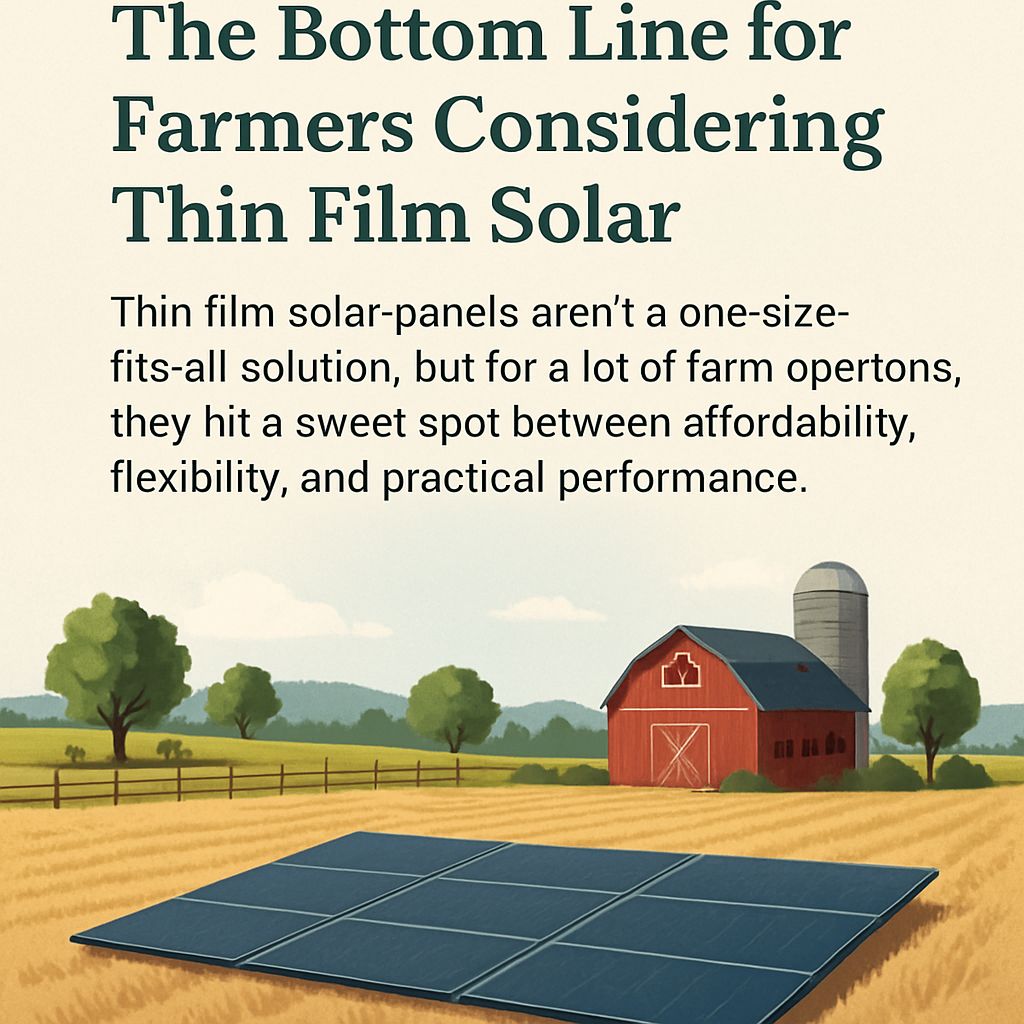
The Bottom Line for Farmers Considering Thin Film Solar
Thin film solar panels aren’t a one-size-fits-all solution, but for a lot of farm operations, they hit a sweet spot between affordability, flexibility, and practical performance. The lightweight design fits barns and sheds that couldn’t handle heavier crystalline panels, and the low-light performance keeps power flowing even when the weather doesn’t cooperate.
Is it a Good Choice for Farmers to Power Their Farms with Thin Film Panels
For farms with irregular roof structures, limited upfront budget, or a need for portable power solutions, thin film panels make a lot of sense. The trade-offs in efficiency and lifespan are real, but they’re manageable trade-offs for operations that value flexibility and lower initial cost over maximum long-term power output.
Farms with ample roof space and a longer investment horizon might still lean toward traditional crystalline silicon. But for everything from irrigation pumps to dairy refrigeration to remote sensor networks, thin film solar delivers a practical, cost-effective way to cut energy bills and reduce dependence on the grid.
Frequently Asked Questions
Farmers researching solar options tend to ask similar questions before making a purchase decision. Here are straightforward answers to the ones that come up most often.
Are thin film solar panels good for farms?
Yes, thin film solar panels work well for farms because they’re lightweight, flexible, and perform reliably in low-light conditions common in agricultural settings. They install easily on barns, greenhouses, and irregular surfaces without needing major structural reinforcement.
What is the cheapest thin film solar panel material?
Cadmium telluride (CdTe) is generally the cheapest thin film material, ranking among the most affordable solar technologies available anywhere. Amorphous silicon runs a close second, offering low production costs since it skips the energy-intensive crystallization process used for traditional silicon.
How long do thin film solar panels last?
Thin film panels typically last between 10 and 20 years, which is shorter than the 25-to-30-year lifespan of crystalline silicon panels. The exact lifespan depends on the specific material and environmental conditions the panels face. For more information on the advantages and limitations of thin film solar panels, you can explore further resources.
Farmers should factor this shorter lifespan into their long-term energy budgeting, especially when comparing upfront savings against eventual replacement costs.
Can thin film panels power a whole farm?
Thin film panels can power significant portions of a farm’s energy needs, including irrigation, refrigeration, and equipment, but covering an entire farm’s demand usually requires more surface area than crystalline silicon due to lower efficiency. Many farms use thin film for specific applications like remote power or building integration rather than full-farm electricity replacement. For more information on choosing the best solar panels for farm operations, explore different options available.
Is cadmium telluride safe to use on agricultural land?
CdTe panels are safe during normal operation since the cadmium is sealed within the panel structure and doesn’t pose a risk to crops or soil. The concern arises at end-of-life disposal, where cadmium’s toxicity requires proper recycling or disposal procedures rather than standard landfill treatment.
Farmers considering CdTe should plan for responsible disposal from the outset, ensuring any damaged or retired panels get handled through appropriate recycling channels rather than general waste.
Whatever material fits your farm best, working with knowledgeable manufacturers like Rayzon Solar can help turn these technical details into a system that actually powers your operation reliably for years to come.
Thin film solar panels are an innovative solution for farmers looking to integrate renewable energy into their operations. These panels are lightweight, flexible, and can be installed on a variety of surfaces, making them ideal for agricultural settings. Additionally, they perform well in low-light conditions, which is beneficial for farms located in areas with less consistent sunlight. To learn more about how these panels compare to other types, check out the benefits of thin film solar panels over other types.







Leave a Reply