-
Perovskite solar cells offer higher efficiency than traditional silicon cells, reaching over 25% in some cases.
-
These cells are made with materials that are less expensive and more abundant than those used in silicon cells.
-
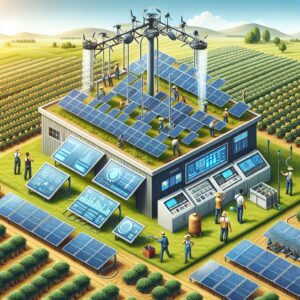
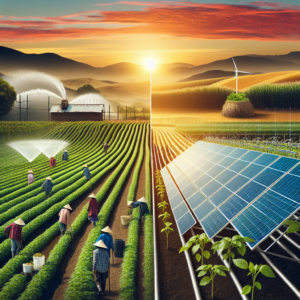
Perovskite solar technology is particularly suited for farming environments due to its resilience under varying weather conditions.
-
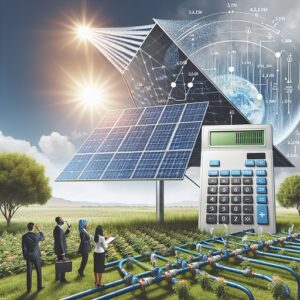
Cost analysis shows that perovskite solar cells can be a cost-effective investment for farmers, with the potential for high returns.
-
Future developments in perovskite solar technology hold the promise of even greater efficiency and integration with smart farming practices.
Revolutionizing Energy Use in Agriculture with Perovskite Solar Cells
As someone who’s closely watched the solar technology space, I’ve seen a game-changer on the horizon for our hardworking farmers: perovskite solar cells. These aren’t your average solar panels; they’re a leap forward in efficiency and cost-effectiveness. Most importantly, they’re proving to be a perfect match for the rugged demands of farming life.
| Perovskite Solar Cells | Pros | Cons |
|---|---|---|
| High efficiency | – Up to 30% for a single solar cell 2 | – Stability, scalability, and reliability concerns 2 |
| Performance in extreme weather | – Temperature coefficient of -0.13%/ºC 2 | – Potential issues with long-term stability and degradation 2 |
| Manufacturing costs | – Low 2 | – Environmental and health concerns due to the lead content in some perovskite cells 2 |
| Flexibility | – More flexible and lighter design compared to traditional solar technologies 2 | – Limited knowledge about the long-term behavior of perovskite materials 2 |
| Transparency | – Increased, allowing for potential use in a variety of applications 2 | – Challenges in moving beyond lead-based perovskite materials 2 |
| Cost reduction potential | – Rapid production and potential for cost reduction through economies of scale 2 |
What Perovskite Solar Technology Brings to the Farm
Let’s get right to the point. Perovskite solar cells are a big deal because they’re incredibly efficient at converting sunlight into electricity. This means you can generate more power with less space, which is crucial when every inch of your farm counts. Besides that, they’re made from materials that are much cheaper than traditional silicon, so the initial investment isn’t as steep.
But what makes them especially suited for farms is their toughness. These cells are built to withstand the unpredictable weather and temperature swings that can cause other solar panels to falter. So, whether you’re dealing with the scorching summer sun or a surprise frost, perovskite panels keep chugging along.
The Leap in Efficiency: From Silicon to Perovskite
Why is everyone so excited about perovskite solar cells? It’s all about efficiency. Traditional silicon solar cells have been around for decades, and they’ve done a great job, but they’re hitting their limits. Perovskite cells, on the other hand, have shattered expectations. They’ve gone from a mere concept to surpassing 25% efficiency in just a few years. That’s a massive jump, and it’s a big deal for anyone paying an electric bill – especially farmers.

Understanding Perovskite Solar Cells: Composition and Mechanisms
The Core Materials: What Makes Perovskite Tick?
So, what exactly is perovskite? It’s not a single material but a structure that a bunch of different materials can form. The most common type used in solar cells is made from a mix of lead, iodine, and an organic component that’s often just carbon-based stuff. This combination creates a crystal structure that’s fantastic at absorbing light and turning it into electricity.
But here’s the kicker: unlike silicon, these materials are abundant and cheap to produce. That means the cost of making perovskite solar cells is potentially much lower, making this technology a financially savvy choice for energy-conscious farmers.
How Perovskite Solar Cells Convert Sunlight into Energy
Let’s break down how these cells work. When sunlight hits a perovskite solar cell, it excites electrons in the material. These electrons then flow through the cell to create an electric current. The efficiency of a solar cell is all about how well it can convert sunlight into this current. And perovskite cells are like the Olympians of this sport – they’re breaking records in efficiency left and right.
Therefore, by choosing perovskite, you’re banking on a technology that’s not just good for today but is on the cutting edge of what’s possible for tomorrow.

Rugged Resilience: Stability of Perovskite Panels Under Harsh Conditions
Weathering the Storm: Durability of Perovskite Cells
Now, let’s talk durability. Farming isn’t a walk in the park; it’s an environment that demands tough, resilient equipment. Perovskite solar cells are just that. They’ve been tested in all sorts of conditions – extreme cold, heat, humidity, you name it – and they’ve come out on top. This means you can trust them to keep your farm powered even when Mother Nature is having a bad day.
And while no solar technology is indestructible, perovskite cells are showing they can take a beating and keep on ticking. That’s peace of mind you can’t put a price on, especially when your livelihood depends on it.
Battle Against the Elements: Performance in Extreme Temperatures
Extreme temperatures can wreak havoc on traditional solar panels, but perovskite solar cells have shown remarkable resilience. They maintain performance even when the thermometer climbs high or dips low. This robustness is crucial for farmers, who often face such temperature extremes. With perovskites, the worry of efficiency loss due to weather is significantly reduced, ensuring a steady energy supply for your farm operations.
Case Studies: Perovskite Solar Cells in Action
Real-life applications of perovskite solar cells have started to emerge, painting a promising picture for the future of farm-based solar energy. These case studies showcase the practical benefits of perovskite technology, highlighting increased energy output and reliability, even in the most demanding agricultural settings.
Maximizing Crop Yields with Enhanced Solar Efficiency
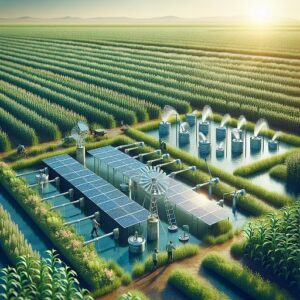
Imagine a farm where every ray of sunlight not only helps grow your crops but also powers your operations. That’s what perovskite solar cells can offer. Their superior efficiency means that you can generate more power per square foot, leaving more land for cultivation. This dual benefit of energy and space efficiency can directly translate into increased crop yields and lower energy costs.
Real-World Examples: Success Stories from the Fields
Take the story of a vineyard in California that switched to perovskite solar cells. They not only cut down their energy bills but also used the extra power to run an innovative irrigation system that improved grape quality. Stories like these are becoming more common as farmers discover the advantages of this cutting-edge solar technology.
Cost Analysis: The Economic Benefits for Farmers
When it comes to integrating new technology into a farm, the bottom line matters. The initial investment, maintenance costs, and potential savings all play into the decision. Perovskite solar cells stand out in this cost-benefit analysis, offering a compelling economic argument for their adoption on farms.
Comparing the costs of perovskite to traditional solar technologies reveals a clear advantage. Not only are the materials cheaper, but the manufacturing process for perovskite cells is also less complex, resulting in lower overall costs.
Comparing Costs: Perovskite vs. Traditional Solar Technologies
Let’s break it down:
-
Perovskite solar cells are made from materials that cost significantly less than the silicon used in traditional cells.
-
The manufacturing process for perovskite cells is simpler, which can lead to lower production costs.
-
Due to their higher efficiency, perovskite cells can potentially provide more energy over their lifetime, increasing the return on investment.
This table will show the breakdown of the cost comparison between more Perovskite vs. Traditional Solar Technologies even more.
| Cost Comparison | Perovskite | Traditional Solar Technologies |
|---|---|---|
| Cost per watt | Around $0.16/W 3 | Thin-film photovoltaics: $0.40 – $0.69/W 3 |
| Manufacturing costs | Low manufacturing costs 2 | Costs of solar PV technologies were 9.78–19.33 US cents/kWh 1 |
| Potential for cost reduction | Rapid production and economies of scale have the potential to reduce costs 2 | Costs may vary, but generally, traditional solar technologies have been more expensive 5 |
These factors make perovskite solar cells a cost-effective choice for farmers who are looking to reduce their energy expenses and increase their self-reliance.
Long-Term Investment: Analyzing the Return on Perovskite Solar Cells
While the upfront cost is important, the long-term return on investment is what truly matters. With their higher efficiency and durability, perovskite solar cells are likely to provide a greater energy yield over their lifespan. This means that, over time, they can offer substantial savings on energy costs, outweighing the initial investment and providing a solid financial benefit for farmers.
The Road Ahead: Future Developments and Innovations
The future looks bright for perovskite solar technology. Ongoing research and development are focused on further improving efficiency and stability, which will only enhance their suitability for agricultural applications. As this technology matures, we can expect to see even more innovative uses on farms around the world.
Next-generation perovskite cells are also expected to be even more environmentally friendly, with advances in lead-free alternatives and recycling processes. These improvements will make perovskite an even more attractive option for eco-conscious farmers.
Next-Gen Perovskites: What’s on the Horizon for Solar Tech?
Researchers are continuously pushing the boundaries of perovskite solar technology. The next wave of innovations includes:
-
Developing lead-free perovskite materials to address environmental concerns.
-
Creating tandem cells that layer perovskite with silicon or other materials to achieve even higher efficiencies.
-
Improving the stability and longevity of perovskite solar cells to ensure they can last as long as traditional panels.
These advancements promise to solidify perovskite’s position as a leading solar technology for farms and beyond.
Integrating Solar Power into Smart Farming Practices
Perovskite solar technology isn’t just about generating electricity; it’s about integrating that power into smarter, more efficient farming practices. With the rise of precision agriculture, farmers can use the abundant energy from perovskite cells to power sensors, drones, and automated systems that optimize crop health and yields. This seamless integration of energy and data is the future of farming, and perovskite solar cells are paving the way.
How Long Do Perovskite Solar Panels Last?
When considering any investment, especially in technology as critical as solar energy, longevity is key. Perovskite solar panels, while relatively new on the scene, have shown promising signs of long-term durability. Current estimates suggest that perovskite solar panels can last for 20 years or more, which is comparable to the lifespan of traditional silicon panels. Ongoing improvements in the encapsulation techniques used to protect these cells from the environment are expected to further extend their lifespan.
It’s important to note that the longevity of perovskite solar panels is also influenced by the conditions they’re exposed to. On a farm, where they might face dust, debris, and frequent temperature fluctuations, robust installation and occasional maintenance are essential to ensure that the panels continue to operate at peak efficiency for as long as possible.
Additionally, manufacturers are actively working on enhancing the intrinsic stability of perovskite materials, addressing one of the early concerns about their longevity. This means that the perovskite solar panels you install today will likely be even more resilient than those tested in the early days of this technology.
Are Perovskite Solar Cells Environmentally Friendly?
Perovskite solar cells represent a significant step forward in environmental sustainability for several reasons. First, they can be produced with less energy and at lower temperatures than silicon cells, reducing their carbon footprint. Moreover, the materials used in perovskite cells are more abundant and less toxic than those used in some other solar technologies.
However, there is a valid concern regarding the use of lead in some perovskite cells. Researchers are actively seeking lead-free alternatives to address this issue, and progress is being made. For instance, there are already prototypes using tin-based perovskites, and other non-toxic materials are being explored.
Furthermore, the high efficiency of perovskite cells means that they can potentially produce more energy over their lifetime than silicon cells, leading to greater overall environmental benefits. It’s a balancing act, but one where perovskite technology is rapidly tipping the scales towards a greener future.
What Are the Current Barriers to the Adoption of Perovskite Solar Cells?
Despite their many advantages, perovskite solar cells face a few hurdles on the road to widespread adoption. One major barrier is the scaling up of production to meet global demand. While laboratory efficiencies are impressive, replicating these results on a mass scale poses manufacturing challenges.
Stability and longevity have also been concerns, as perovskite cells have not yet been proven to last as long as silicon cells in the field. However, with the rate of advancement in perovskite technology, these issues are quickly being addressed.
Finally, market inertia plays a role. Silicon solar panels have been the industry standard for decades, and infrastructure, manufacturing, and consumer trust are built around them. Shifting to a new technology requires not just proving that it’s better, but also building the ecosystem that supports it.
Conclusion: Is Perovskite Solar Panels Durable Enough for The Farming Environment
As we’ve seen, perovskite solar technology is a powerful tool for the modern farmer. Its efficiency and cost-effectiveness are unmatched, and its resilience makes it well-suited for the demands of agricultural life. With proper installation and maintenance, perovskite solar panels are indeed durable enough to thrive in the farming environment.
The future of farming is bright with the integration of perovskite solar cells. As this technology continues to mature and overcome its initial barriers, it will offer farmers a reliable source of clean energy. With the potential to power smart farming practices and increase sustainability, perovskite solar cells are poised to revolutionize agriculture as we know it.
For those of you who are looking to make your farm more energy-independent, cost-efficient, and sustainable, keeping an eye on perovskite solar technology is a smart move. It’s an investment in the future of your farm and the planet.