
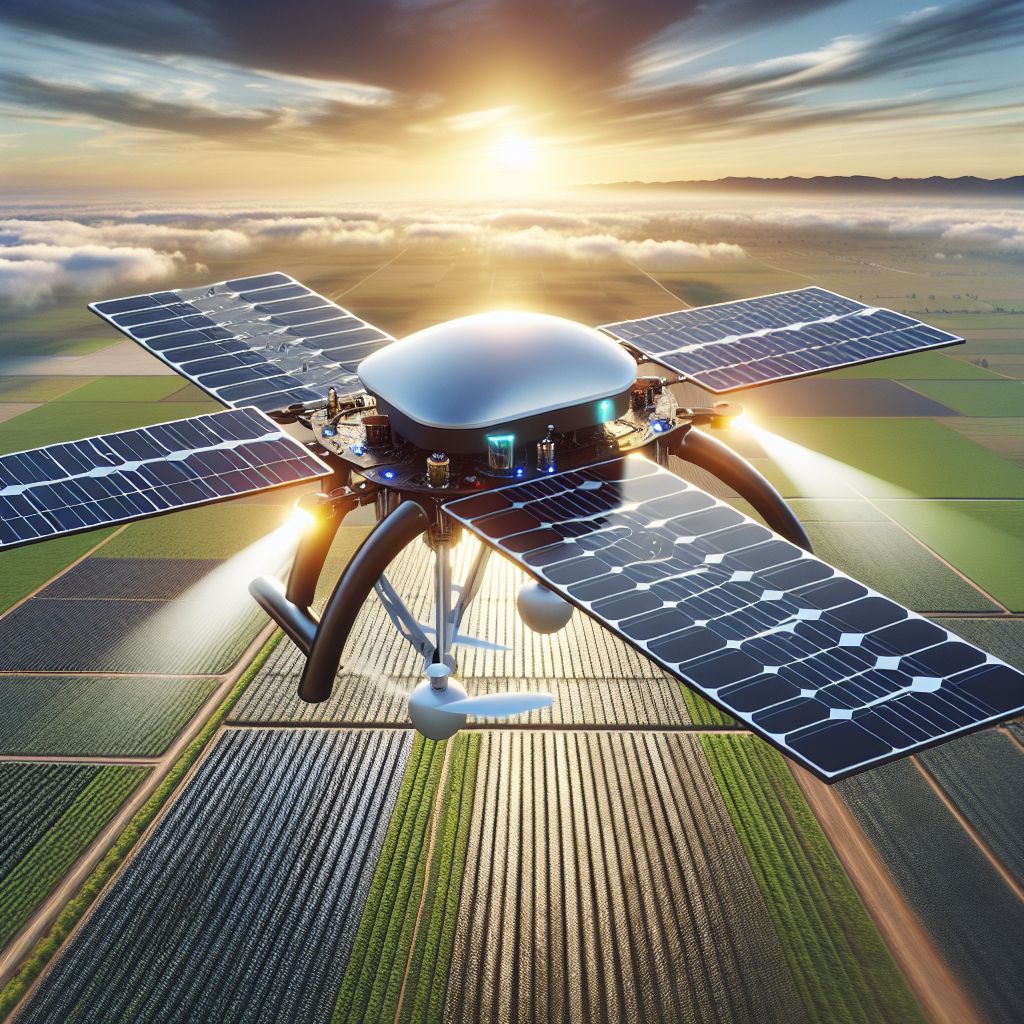
When it comes to irrigation, precision is key. The right amount of water, at the right time, can make all the difference between a thriving crop and a failed harvest. But how do you achieve such precision? Enter solar-powered drones – an innovative solution that’s changing the game for farmers worldwide.
Key Takeaways
-
Solar-powered drones offer a high-tech solution to monitor and manage farm irrigation systems efficiently.
-
They collect real-time data on soil moisture and crop health, allowing for precise water management.
-
These drones are cost-effective over time, reducing water waste and energy consumption.
-
Implementing solar-powered drones is straightforward, with a focus on simplicity for ease of use.
-
Adopting this technology can lead to significant improvements in crop yields and sustainability.
Harness the Sun: Boosting Irrigation Efficiency with Solar-Powered Drones
What Are Solar-Powered Drones?
Imagine a flying robot, powered by the sun, zipping over your fields. That’s essentially what a solar-powered drone is. These are unmanned aerial vehicles (UAVs) equipped with solar panels that not only collect data but also use the sun’s energy to stay aloft longer. This means they can cover more ground without the need for frequent recharging or battery swaps, making them an ideal tool for monitoring large areas of farmland.
These drones carry various sensors to measure vital signs of crop health, such as moisture levels, temperature, and growth. This information is then relayed back to the farmer in real-time. It’s like having a bird’s eye view of your entire farm’s irrigation needs at your fingertips.
For instance, a farmer in the Central Valley of California used a solar-powered drone equipped with multispectral imaging to assess crop health, leading to a 25% increase in yield and a 20% reduction in water usage.
Advantages of Solar-Powered Drone Technology in Agriculture
In recent years, the use of drones in agriculture has been on the rise as farmers and researchers have begun to recognize the many benefits they offer. These drones have revolutionized the way we collect data and monitor crops, making farming more efficient and sustainable. However, the use of traditional drones comes with its own set of limitations, such as limited flight time and the need for constant charging. This is where solar-powered drones come in, offering a range of advantages for agriculture data collection, specifically for irrigation systems on farms. This below table will show you some of these advantages.
| Advantage | Explanation |
| Increased Efficiency | Drones can precisely monitor field conditions and target irrigation to specific areas, reducing water waste and improving crop yields. 1, 2 |
| Sustainability | Solar-powered drones reduce reliance on fossil fuels and lower the environmental footprint of farming operations. 1, 2, 5 |
| Cost Savings | The long-term savings from reduced water and energy usage can offset the initial investment in drone technology. 1, 5 |
| Government Incentives | Farmers may be able to take advantage of government incentives to help offset the costs of transitioning to solar-powered drones. 1 |
| Precision Agriculture | Drones equipped with sensors can detect plant stress, disease, and other issues early, allowing for more targeted interventions. 1, 2, 4 |
| Increased Crop Yields | The precision and efficiency of drone-based irrigation can lead to significant increases in crop yields. 1, 2, 4 |
| Reduced Water Usage | Targeted irrigation delivered by drones can reduce water consumption by 20-60% compared to traditional flood irrigation. 4 |
| Long Flight Time | Using the sun , solar-powered drones can stay in the air for extended periods, allowing for more comprehensive coverage of the farm and continuous monitoring. 2, 3 |
Negatives of Solar-Powered Drone Technology in Agriculture
While solar-powered drones may seem like a promising technology for data collection in agriculture, they come with several drawbacks that cannot be ignored. The high initial cost, weather dependency, and maintenance and repair costs make it challenging for farmers to fully embrace this technology. It is essential for farmers to carefully consider their specific needs and budget before investing in a solar-powered drone for agriculture data collection.
Before you decide to use a solar -powered drone, it’s not all sunshine and high yields. There are some considerations to keep in mind. This below table will go over them.
| Negative | Explanation |
| Higher Initial Costs | The initial investment in a solar-powered drone system, including the drone, solar panels, and irrigation components, can be significantly higher than traditional diesel-powered irrigation systems. 2, 4 |
| Technical Malfunctions | Solar-power drones, like any complex machinery, are susceptible to technical issues and malfunctions that can disrupt operations and lead to downtime. 2 |
| Limited Maneuverability | Solar-power drones, especially fixed-wing models, may have limited maneuverability compared to traditional ground-based irrigation systems, making it challenging to reach certain areas of the farm. 2, 3 |
| Maintenance Requirements | Solar-powered drones require regular maintenance, including inspections, software updates, and battery replacements, which can add to the ongoing operational costs. 2, 3 |
| Weather Dependency | The performance of solar-powered drones is heavily dependent on weather conditions, as they rely on sunlight to produce enough power to function or recharge their batteries. Cloudy or rainy days can limit their flight time and effectiveness. 2, 4 |
| Regulatory Compliance | Farmers may need to navigate complex regulations and obtain necessary permits to operate drones, which can add to the administrative burden and costs. 2, 3 |
| Potential Privacy Concerns | The use of drones for agricultural purposes may raise privacy concerns among neighboring landowners or the general public, which could lead to legal or social challenges. 2 |
| Payload Restrictions | Solar-powered drones may have limited payload capacity, which can restrict the amount of irrigation equipment or sensors they can carry, potentially limiting their effectiveness. 1, 2 |
While solar-powered drones offer many advantages for irrigation on a farm, these negatives should be carefully considered by farmers to ensure that the benefits outweigh the drawbacks in their specific context.

From Sky to Soil: Mapping Out Moisture with Precision
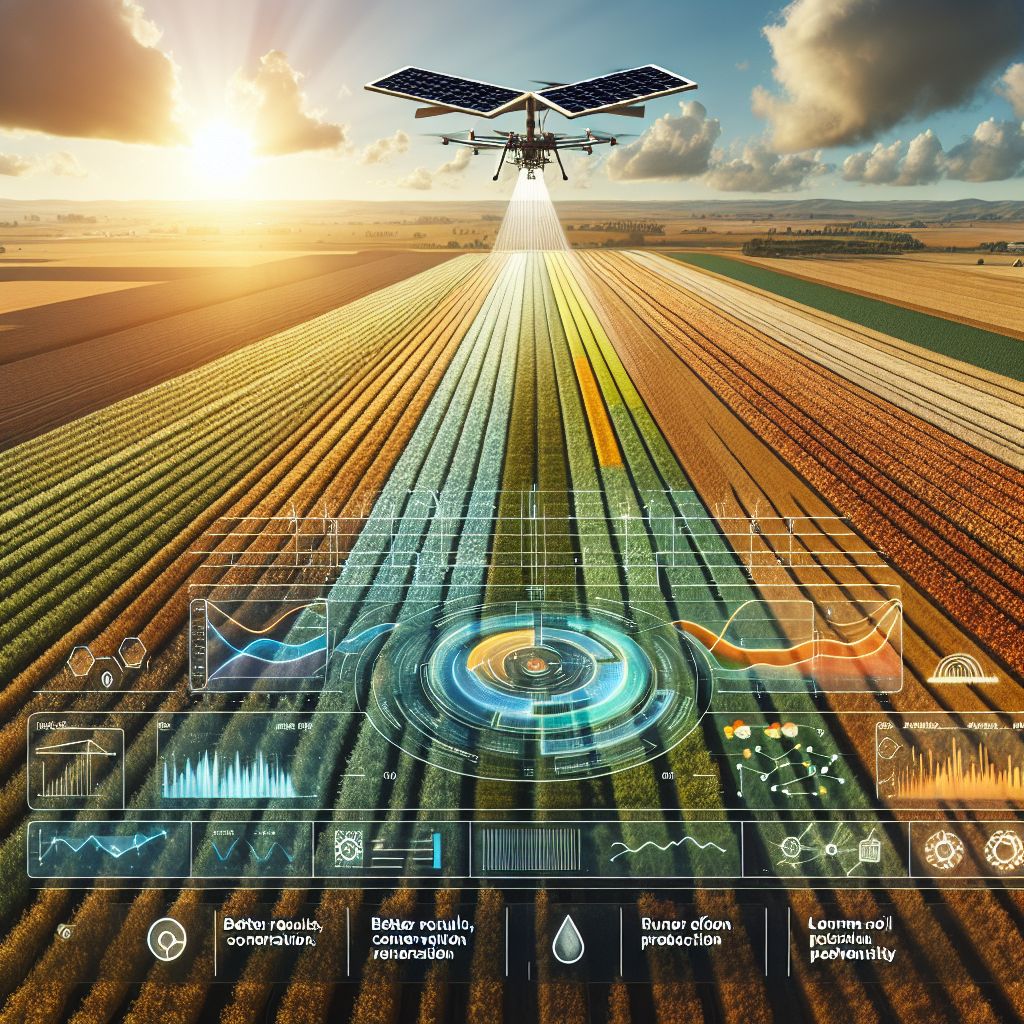
The true power of solar-powered drones lies in their ability to collect and analyze data that translates into actionable insights for irrigation management. They map out your fields, identifying which areas are dry, which are adequately watered, and which are at risk of overwatering.
With this precision, you’re not just watering your crops; you’re giving them exactly what they need to reach their full potential. It’s like the difference between a sprinkler and a syringe: one scatters water broadly, the other delivers it with pinpoint accuracy.
-
Real-time soil moisture maps allow for immediate adjustments to irrigation schedules.
-
Thermal imaging can detect stressed plants before visible signs appear, preventing yield loss.
-
By analyzing plant health data, farmers can apply water and nutrients more effectively.
Most importantly, by utilizing the data gathered by these drones, you’re not just working harder; you’re working smarter. And in farming, that’s what separates the best from the rest.
How Solar Powered Drones Navigate and Map Fields
These drones are equipped with GPS and advanced software that allows them to follow pre-programmed flight paths over your fields. They’re essentially on autopilot, systematically collecting data as they go. Here’s how you can set them up:
-
Plan the flight path: Map out the area you want to survey and input the coordinates into the drone’s system.
-
Launch the drone: With the push of a button, the drone takes off and follows the set route, adjusting as needed for obstacles or changes in terrain.
-
Collect the data: As the drone flies, it gathers information with its sensors, storing it for later analysis or sending it back to you in real-time.
By automating this process, you ensure consistent, thorough monitoring of your fields, which is critical for making informed irrigation decisions.
The Critical Role of Real-Time Data in Irrigation
There’s an old saying: “You can’t manage what you can’t measure.” This rings especially true in farming. Real-time data is the compass that guides the irrigation process. It tells you where your water is going and how your crops are doing. Without it, you’re flying blind. But with it, you can steer your farm towards maximum efficiency and productivity.
These solar-powered drones are the eyes in the sky that gather this vital information. They measure soil moisture levels to the tee, assess crop health with precision, and track the progress of your irrigation efforts in real-time. This data isn’t just numbers and charts; it’s a narrative of your farm’s hydration story, and you’re the author with the power to write its success.
Because when you know exactly what’s happening on your fields, you can make adjustments on the fly. Is one corner getting too much water? Cut back the irrigation there. Is another spot looking parched? Give it a boost. This is smart farming – responsive, responsible, and results-driven.
Wielding the Water Wisely: Solar Powered Drone Data for Smart Irrigation
Smart irrigation isn’t just about saving water; it’s about using it where it counts. You’ve got the data; now it’s time to put it to work. Solar-powered drones allow you to identify the specific needs of different crop zones and tailor your watering schedule accordingly.
For example, your drone might detect that the south end of your field has higher soil moisture than the north. With this insight, you can direct your irrigation system to focus more on the drier areas, promoting even growth across the entire field. It’s a level of management that traditional methods just can’t match.
Targeting Irrigation with Solar Powered Drones-Gathered Data
Let’s break down the process of targeting irrigation using drone-gathered data:
-
Identify the target: Use the drone’s data to pinpoint which areas need more or less water.
-
Adjust the irrigation: Change your system’s settings to deliver the right amount of water to the right places.
-
Monitor the results: Keep an eye on how the crops respond to these adjustments over time.
It’s a cycle of continuous improvement. As the seasons change and your crops grow, your irrigation strategies evolve. And with each iteration, you’re fine-tuning your approach for better results.
Optimizing Water Use and Reducing Waste
Every drop counts. That’s why optimizing water use isn’t just good for your farm; it’s good for the planet. By reducing waste, you’re conserving a limited resource and cutting down on the energy needed to pump and treat that water. It’s a win-win for your bottom line and the environment.
And let’s not forget about the reduced runoff and soil erosion that come with precise irrigation. When you’re not overwatering, you’re not only saving water; you’re also protecting your soil’s structure and nutrient content, which is crucial for long-term soil health and fertility.

Into the Field: Practical Steps to Implement Solar Powered Drones-Assisted Irrigation
Ready to take your farm into the future with solar-powered drones? Here’s how you get started:
Setting Up Your Drone System: A Starter Guide
First things first, you’ll need to choose the right drone. Look for one with a good balance of flight time, payload capacity, and ease of use. Once you’ve got your drone, follow these steps:
-
Install the necessary software on your computer or smartphone.
-
Charge the drone’s batteries using the solar panels or a charger.
-
Plan the drone’s flight path to cover all your fields.
-
Conduct a test flight to ensure everything is working correctly.
Remember, you don’t need to be a tech wizard to use these drones. Many are designed with user-friendly interfaces that guide you through the setup and operation process.
Maintaining and Upgrading Your Solar-Powered Drones
Maintenance is crucial to keeping your drone in top flying condition. Regularly check the solar panels for cleanliness and the batteries for optimal charge. Keep the sensors calibrated, and update the software as needed. And as technology advances, consider upgrading your drone to take advantage of the latest features and capabilities.
Think of your drone as a trusty farmhand – the better you take care of it, the better it will take care of your crops.

Solar Drones: The Future of Farming or Just a Passing Cloud?
So, are solar-powered drones a fleeting trend or a fixture in the future of farming? The answer lies in the results. Farmers who’ve adopted this technology are seeing tangible benefits – higher yields, lower costs, and a smaller environmental footprint. It’s a clear indication that these high-flying helpers are here to stay.
Assessing Cost-Effectiveness and ROI of Drone Irrigation
Let’s talk numbers. Investing in a solar-powered drone system might seem like a big expense, but it’s important to consider the return on investment (ROI). Here’s what you need to keep in mind:
-
Reduced water bills: Precision irrigation means using less water, which translates to lower costs.
-
Increased yields: Healthier crops often yield more, boosting your farm’s productivity and profits.
-
Long-term savings: The durability and low operating costs of solar-powered drones add up to savings over time.
In many cases, the ROI can be quite impressive, with some farmers recouping their investment within a single growing season. But, as with any investment, it’s essential to crunch the numbers for your specific operation.
FAQ
It’s natural to have questions when it comes to integrating new technology into traditional practices. Here are some answers to common queries about solar-powered drone irrigation systems:
Can solar-powered drones operate in less sunny climates?
Yes, they can. Solar-powered drones are designed to maximize sunlight absorption, but they also come with batteries to store energy. This means they can still operate when the sun is playing hide-and-seek. However, their efficiency might decrease, and they may require more frequent recharging compared to operation in sunnier conditions. For more on how these innovative drones are used in agriculture, you can read about Types of Drones Use with a Solar Power Irrigation System on a Farm.
In regions like the Pacific Northwest, where clouds are more common than not, farmers have successfully used solar-powered drones by optimizing flight times for the brightest parts of the day and supplementing with battery power when needed.
It’s all about adaptation. Farmers in less sunny climates can still reap the benefits of solar-powered drone technology by adjusting their usage patterns to fit the environmental conditions.
How do solar-powered drones help in reducing the farm’s carbon footprint?
Solar-powered drones contribute to a greener farm in several ways:
-
They use clean energy from the sun, reducing reliance on fossil fuels.
-
By optimizing irrigation, they reduce the electricity needed for pumping water.
-
They help maintain soil health, which can sequester more carbon.
Collectively, these factors mean that solar-powered drones can play a significant role in making farming practices more sustainable and eco-friendly.
Is it difficult to learn how to operate a solar-powered drone for irrigation?
Not at all. Modern solar-powered drones are designed with user-friendliness in mind. Many come with intuitive software that guides you through the process. Plus, there’s plenty of support available—from online tutorials to customer service hotlines. With a bit of practice, you’ll be piloting your drone like a pro.
What is the average cost to set up a solar-powered drone system for a small farm?
The cost of setting up a solar-powered drone system can vary widely based on the size of the farm and the specific needs. Generally, you can expect:
-
Drone purchase: $1,000-$4,000 for a quality agricultural drone.
-
Additional sensors and equipment: $500-$2,000, depending on the complexity.
-
Software subscription: $250-$1,000 annually for advanced analytics platforms.
While these numbers might seem steep, remember that the investment often pays for itself through increased yields and reduced water and energy costs.
Are there limitations to the types of crops that can benefit from drone-monitored irrigation?
Solar-powered drones are versatile and can be used for a wide range of crops. However, the effectiveness can vary based on the crop’s canopy structure and the farm’s layout. For instance, dense canopies may make it harder for drones to assess moisture levels at the soil surface. Customizing flight paths and sensor types can often overcome these challenges.
Conclusion: Are Solar-Powered Drones a good investment for a Farmer?
In the final analysis, solar-powered drones represent a smart investment for many farmers. They offer a cutting-edge way to monitor and manage irrigation, leading to better water usage, healthier crops, and higher yields. While the upfront costs may be significant, the long-term savings and benefits can be substantial.
Embracing solar-powered drone technology can propel your farming operations into a more efficient, sustainable, and profitable future. It’s not just about staying ahead of the curve; it’s about shaping the curve for the betterment of your farm and the environment. So, are solar-powered drones worth it? For farmers looking to optimize their irrigation and embrace sustainable practices, the answer is a resounding yes.






