Key Takeaways
-
Silicon solar panels can significantly reduce energy costs for irrigation, making them a sustainable investment for farmers.
-
They are known for their durability and performance, even under various weather conditions, essential for reliable farm operations.
-
The initial cost of silicon solar panels is offset by long-term savings and potential government subsidies.
-
Implementing solar-powered irrigation systems can help in reducing the carbon footprint of farming activities.
-
Maintenance and proper integration with existing irrigation systems are key to maximizing the benefits of solar panels.
Silicon Solar Panels: Powering Sustainable Irrigation for Farmers
In today’s world, the need for sustainable energy sources is becoming increasingly important. With the growing population and the constant demand for food, farmers are facing the challenge of producing more crops while also reducing their carbon footprint. This is where silicon solar panels come in, providing a solution for sustainable irrigation that benefits both the environment and farmers.
Silicon solar panels have the potential to revolutionize the way farmers irrigate their crops. They provide a clean, renewable, and reliable source of energy that can help reduce the carbon footprint of agriculture. By utilizing solar energy for irrigation, farmers can not only save money and increase efficiency but also contribute to a more sustainable future. It is time for farmers to embrace this technology and harness the power of the sun to grow their crops in an environmentally friendly way.
Harvesting the Sun’s Energy for Water Efficiency
Water is the lifeblood of farming. Without it, nothing grows. But getting water to crops can be energy-intensive and costly. That’s where silicon solar panels come in, transforming the sun’s energy into a cost-effective way to power irrigation systems. This isn’t just about saving money; it’s about harnessing renewable energy to create a sustainable future for farming.
Silicon Solar Panels 101: A Primer for Farmers
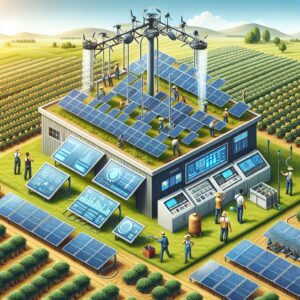
Let’s dive into what makes silicon solar panels a smart choice for farmers. They’re made from silicon cells that convert sunlight into electricity. This electricity can then be used to run water pumps for irrigation, without relying on the grid or fuel-powered generators. Here’s what you need to know:
-
Efficiency: Silicon panels are highly efficient, often converting around 15-20% of the sunlight they capture into usable energy.
-
Durability: They’re built to last, with a typical lifespan of 25-30 years, which is vital for the long-term planning necessary in farming.
-
Reliability: They perform consistently, even in less-than-ideal light conditions, which is crucial for the day-to-day operations on a farm.
So, why should you, as a farmer, consider going solar? Because, besides cutting down on electricity bills, you’re also investing in a technology that secures your farm’s energy independence and contributes to a healthier planet.
This table below will outline the pros and cons of using silicon solar panels for an irrigation system on a farm:
|
Aspect |
Pros |
Cons |
|---|---|---|
|
Energy Efficiency |
Harnesses renewable energy source, reducing reliance on non-renewable resources |
Efficiency can be affected by weather conditions and sunlight availability |
|
Cost Savings |
Reduces electricity bills over the long term |
High initial investment cost |
|
Environmental Impact |
Decreases carbon footprint, promotes sustainability |
Manufacturing process may involve environmental pollutants |
|
Longevity |
Long lifespan with minimal maintenance required. solar panels have an average lifespan of 25 years |
Degradation over time can reduce efficiency |
|
Independence |
Provides energy independence from the grid, reducing vulnerability to power outages |
Requires space for installation, which may not be feasible for all farms |
|
Government Incentives |
Eligible for tax credits and incentives for renewable energy adoption |
Regulations and incentives may vary by location, requiring research and paperwork |
|
Property Value |
May increase property value due to eco-friendly features |
Aesthetics of solar panels may be undesirable to some potential buyers |
The Financial Sense: Analyzing Costs and Savings
Breaking Down the Investment: Initial Costs Explained
Let’s talk numbers. Investing in solar panels for irrigation does require an upfront cost. But don’t let that deter you. Here’s a breakdown:
-
Purchase: You can expect to spend about $0.70 to $1.50 per watt for high-quality silicon solar panels, which totals to $7,000 to $15,000 for a 10kW system.
-
Installation: The labor and additional equipment for installation can add around $5,000 to $10,000 to your initial investment.
However, these costs are often mitigated by government incentives, tax breaks, and the significant reduction in ongoing energy expenses.
Seeing Returns: Long-Term Savings on Irrigation
Now, let’s consider the savings. After the initial investment, the ongoing costs for solar-powered irrigation systems are minimal. The sun’s energy is free, so you’re looking at savings on your electricity bill from day one. Over time, these savings can be substantial, often enough to pay back the initial investment and continue to save you money for years to come.
Green Farming: Environmental Impact of Silicon Solar Panels
Embracing solar technology isn’t just about the economics; it’s about stewardship of the land. By choosing silicon solar panels, you’re opting for a clean energy source that reduces greenhouse gas emissions and the use of fossil fuels. This commitment to the environment can also resonate with consumers who are increasingly looking for sustainably produced products.
Reducing Carbon Footprints: The Eco-Friendly Approach using Silicon Solar Panels
When you switch to solar, you’re making a statement that you care about the planet. For every kilowatt-hour of solar energy produced, you’re significantly reducing your carbon footprint. It’s a powerful way to show that sustainable farming is not just about what you grow, but how you grow it.
And remember, the more farmers adopt solar energy, the greater the impact we can have on preserving our environment for future generations.
Life Cycle of Silicon Solar Panels: From Production to Disposal
Silicon solar panels are not just about the energy they produce; it’s also important to consider their entire life cycle. They are manufactured using abundant materials like silicon, which reduces the environmental impact compared to scarce or toxic materials. And at the end of their life, silicon solar panels can be recycled, ensuring that their environmental footprint remains as small as possible.
Case Studies: Farmers Reaping Benefits from Silicon Solar Panels
Real-life examples paint the best picture of how silicon solar panels benefit farmers. Across the globe, farmers are seeing tangible improvements in their operations thanks to solar-powered irrigation systems. Whether it’s through reduced utility bills, increased crop yields, or the satisfaction of contributing to environmental sustainability, the stories are compelling.
Small Farm Success Stories: Silicon Solar Panel Implementation
Take, for example, a small family-run farm in California. After grappling with high energy costs, they decided to install silicon solar panels to power their drip irrigation system. Within a year, they saw a reduction in their energy bills by 75%. The solar panels provided a reliable water source for their crops, leading to a more bountiful harvest and higher profits.
Another story comes from a farm in Spain, where unpredictable weather patterns made consistent irrigation a challenge. With the installation of silicon solar panels, the farm gained energy independence, ensuring that even during cloudy days, their irrigation system remained operational. Their investment paid off not only in terms of energy savings but also through increased resilience against climate variability.
These stories are not isolated incidents. They are part of a growing trend where farms of all sizes are realizing the benefits of solar energy. It’s a win-win scenario, where both the environment and the farmers benefit.
Large-Scale Operations: Managing Water with the Power of the Sun
On a larger scale, consider a vast grain operation in the Australian Outback. With fields stretching as far as the eye can see, the cost of fuel to run water pumps was astronomical. By switching to silicon solar panels, the farm cut its energy costs by more than half. The solar panels also proved to be remarkably durable, standing up to the harsh Australian sun without significant degradation in performance.

Installing Silicon Solar Panels: Step by Step
So, you’re convinced that silicon solar panels could be a boon for your farm’s irrigation needs. Where do you start? Here’s a step-by-step guide to ensure you get the most out of your investment:
Selecting the Right Panels for Your Farm’s Needs
First, assess your energy requirements. How much power do you need to run your irrigation pumps? This will determine the size of the solar panel system you’ll need. You also want to consider the quality of the panels. Look for panels with a high efficiency rating and a strong warranty. Remember, this is a long-term investment, so quality matters.
Next, evaluate the solar potential of your land. Are there areas that receive ample sunlight throughout the year? Are there obstructions that might shade your panels? Positioning your panels to maximize sun exposure will optimize their performance.
Irrigation System Integration: Best Practices
Integrating silicon solar panels with your existing irrigation system requires careful planning. You’ll need a compatible pump that can be powered by the electricity your panels generate. You may also need a storage system, like batteries, to ensure water delivery even when the sun isn’t shining.

Maintaining Your Solar-Powered Irrigation System
Once your system is up and running, maintenance is key to longevity and efficiency. Regular cleaning of the panels is essential; dust and debris can reduce their effectiveness. Inspect your system periodically for any damage, and make sure all connections remain secure and corrosion-free.
Regular Check-Ups: Keeping Your System Efficient
Regular maintenance check-ups are as crucial for your solar panels as they are for any other piece of farm equipment. Here’s a simple checklist to keep your system running smoothly:
-
Inspect solar panels for any physical damage or wear.
-
Clean panels to remove dust, dirt, or snow that may have accumulated.
-
Check the electrical components for signs of corrosion or damage.
-
Ensure that the mounting system is secure and that the panels are correctly aligned.
-
Monitor the system’s energy output to detect any potential issues early.
By following these best practices, you can ensure that your solar-powered irrigation system will provide reliable service for many years, making your farm more sustainable and cost-effective.
FAQ: Frequently Asked Questions
How do Silicon Solar Panels Work for Irrigation Systems?
It’s quite simple, really. Silicon solar panels are composed of photovoltaic cells that convert sunlight directly into electricity. This electricity can then be used to power irrigation pumps, which provide water to crops. The process is clean, efficient, and sustainable, harnessing the sun’s renewable energy to support agricultural needs.
For irrigation, this setup often involves a solar array connected to an electric pump that moves water from its source to the fields. During sunny days, the system can operate directly off the solar energy, and any excess power can be stored in batteries for use during cloudy days or at night.
Overall, the integration of silicon solar panels into an irrigation system helps farmers reduce dependence on the grid or diesel generators, cutting down on operational costs and contributing to a greener environment.
What is the Expected Lifespan of Silicon Solar Panels?
Silicon solar panels are known for their longevity. Most panels come with a warranty that guarantees their output will not fall below a certain level for 25 to 30 years. However, many panels continue to operate effectively well beyond this period, sometimes up to 40 years, with only a gradual decrease in efficiency over time.
Because of this extended lifespan, the return on investment for silicon solar panels can be quite significant, especially when you factor in the savings on energy costs for powering irrigation systems.
-
Typical warranty period: 25-30 years
-
Possible effective lifespan: Up to 40 years
-
Gradual efficiency decrease: Around 0.5% per year
It’s clear that while the initial investment may be considerable, the long-term benefits and savings can be substantial, making silicon solar panels a wise choice for farmers.
Can Silicon Solar Panels Withstand Harsh Weather Conditions?
Absolutely. Silicon solar panels are designed to be tough. They need to be, considering they’re exposed to the elements year-round. Most panels are tested rigorously to ensure they can withstand high winds, heavy snow loads, and hail. The frames and glass covering are built to survive extreme weather, making them suitable for most farming environments.
Are There Any Government Subsidies for Farmers Using Solar Panels?
Yes, there are. Many governments around the world offer subsidies, grants, or tax incentives to encourage the adoption of solar energy for agricultural needs. These can significantly lower the cost barrier for farmers looking to install solar panels for irrigation and other agricultural needs. It’s always a good idea to check with local authorities or renewable energy organizations to find out what support might be available in your area.
Is It Possible to Retrofit Existing Irrigation Systems with Solar Panels?
Most definitely. Existing irrigation systems can often be retrofitted to run on solar power. The key is to ensure that the solar panel system is correctly sized to meet the energy demands of the pumps. A qualified solar installer with experience in agricultural applications can help make the transition smooth and efficient.
Conclusion: Are Silicon Solar Panels a Good Investment for a Farmers Irrigation System?
In conclusion, silicon solar panels represent a significant investment in the future of farming. They provide a sustainable, cost-effective way to power irrigation systems, reduce reliance on non-renewable energy sources, and can withstand the test of time and the elements. With the potential for government subsidies and long-term savings on energy costs, they offer a compelling case for farmers looking to modernize their operations and embrace greener practices.
The benefits extend beyond the financial. By choosing silicon solar panels, farmers are contributing to a cleaner environment and can proudly claim their role in the movement towards sustainable agriculture. With the technology continually improving and costs decreasing, there’s never been a better time to consider solar power for your farm.
So, are silicon solar panels a good investment for a farmer’s irrigation system? The answer is a resounding yes. They are not just good for the farm, but they’re also good for the wallet, and most importantly, they’re good for our planet.