Key Takeaways
-
Solar irrigation systems can lead to significant cost savings, with initial setup costs often offset by long-term energy savings and possible subsidies.
-
They offer increased water efficiency, delivering water directly to the roots of plants and reducing waste.
-
Using solar power for irrigation boosts energy independence and resilience, especially in remote areas with limited access to the electrical grid.
-
Adopting solar irrigation contributes to environmental sustainability by reducing carbon emissions and conserving water.
-
Setting up a solar-powered irrigation system requires careful planning, but maintenance is typically low, and the technology is becoming increasingly user-friendly.
Shining a Spotlight on Solar Irrigation Power
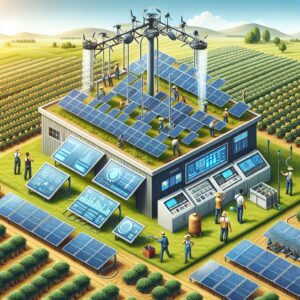
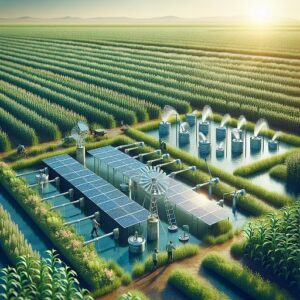
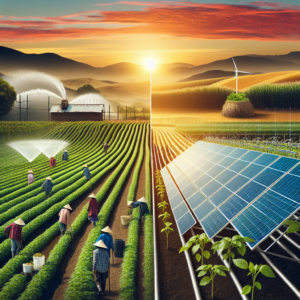
Imagine a farm where the energy of the sun doesn’t just spur the growth of crops, but also powers the very system that irrigates them. This isn’t a vision of the future—it’s a reality today, thanks to solar-powered irrigation systems. By tapping into the most abundant energy source available, these systems are revolutionizing the agricultural landscape. And it’s not just about being eco-friendly; it’s about practical, measurable benefits that can make a world of difference for a farm’s output and overhead.
Why Solar Irrigation is a Game Changer for Modern Farming
Most importantly, solar irrigation systems offer a sustainable and cost-effective solution for water management on farms. They are particularly game-changing for areas with ample sunlight but scarce electrical infrastructure. The beauty of solar power lies in its simplicity and efficiency. By converting sunlight directly into electricity, these systems bypass the need for fuel-based power generation, cutting down on both costs and emissions.
Because these systems are powered by the sun, they also align perfectly with the farming cycle. They work hardest during sunny days, which are also when crops need the most water. It’s a harmonious relationship between nature and technology, resulting in a more resilient and self-sufficient farming operation.
Direct Benefits: Cost Savings and Efficiency Increases
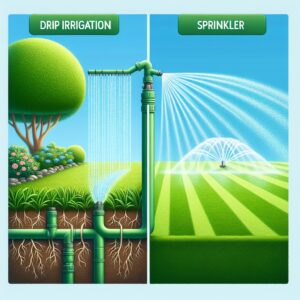
When it comes to farming, every penny and every drop of water counts. Solar irrigation systems shine in both respects. They reduce the reliance on grid power or diesel generators, leading to significant savings on energy bills. Besides that, the precision of solar-powered drip irrigation systems means water gets directly to where it’s needed most—the roots of the plants—minimizing waste and maximizing growth.
Therefore, the switch to solar isn’t just an environmentally conscious decision; it’s a smart financial move. Farmers can often recover the initial investment through the savings on energy costs, and in some regions, they can even benefit from government subsidies or tax incentives designed to promote renewable energy use.
This below table illustrates how implementing a solar irrigation system can provide various direct benefits, including cost savings, efficiency improvements, increased crop yield, and environmental advantages.
| Direct Benefits | Description |
|---|---|
| Reduced Energy Costs | Solar power generation reduces or eliminates the need for grid electricity, lowering energy bills. |
| Water Savings | Efficient irrigation methods ensure optimal water usage, reducing water bills and conserving resources. |
| Maintenance Savings | Solar irrigation systems typically have lower maintenance requirements compared to traditional systems, saving on maintenance costs. |
| Increased Crop Yield | Consistent and precise irrigation provided by solar systems can lead to higher crop yields, translating to increased revenue. |
| Government Incentives | Depending on location, governments may offer incentives such as tax credits or rebates for adopting renewable energy solutions like solar irrigation systems, reducing upfront costs. |
| Long-term Investment | While initial costs may be higher, solar irrigation systems offer long-term savings and return on investment due to reduced operating expenses and energy independence. |
| Carbon Footprint Reduction | Solar energy is clean and renewable, leading to a significant reduction in carbon emissions compared to fossil fuel-based energy sources, contributing to environmental sustainability. |

Going Green: Solar Power’s Role in Sustainable Agriculture
The shift towards sustainable agriculture is more than a trend; it’s a necessary step to ensure the health of our planet and food security for future generations. Solar power plays a pivotal role in this transition, offering a clean, renewable energy source for irrigation systems. It’s about making a positive impact on the environment while maintaining, or even increasing, agricultural productivity.
Contributions to Environmental Stewardship
Embracing solar-powered irrigation systems is a significant stride in environmental stewardship. These systems harness natural energy, reducing the carbon footprint associated with fossil fuel-based power. They also encourage water conservation—a critical concern in many farming regions.
Furthermore, solar irrigation systems often lead to less groundwater extraction, helping to preserve this precious resource. By using energy that’s as clean as the water it pumps, solar irrigation sustains the very ecosystem that sustains us.
-
Reduces reliance on non-renewable energy sources and lowers greenhouse gas emissions.
-
Conserves water by using efficient irrigation methods like drip irrigation.
-
Protects water quality by reducing runoff and soil erosion.
Therefore, when you choose solar, you’re not just saving on costs; you’re investing in the health of the environment.
Creating a Positive Eco-Friendly Farm Brand
Adopting solar-powered irrigation does more than just aid in water and energy conservation—it also helps you build a strong, positive brand for your farm. Consumers are increasingly seeking out products that are produced sustainably. By going solar, you’re tapping into this eco-conscious market.
Moreover, sharing your commitment to sustainability can strengthen your reputation, setting you apart from competitors. It’s a powerful message: your farm not only produces quality products but also cares for the planet.
Example: A farm in California switched to solar-powered irrigation and promoted their sustainable practices through their marketing. As a result, they saw a 20% increase in sales from eco-aware customers.
By showcasing your solar initiatives, you can attract customers who are willing to support and pay a premium for responsibly grown produce.
Tools of the Trade: Setting Up Your Solar-Powered Irrigation System
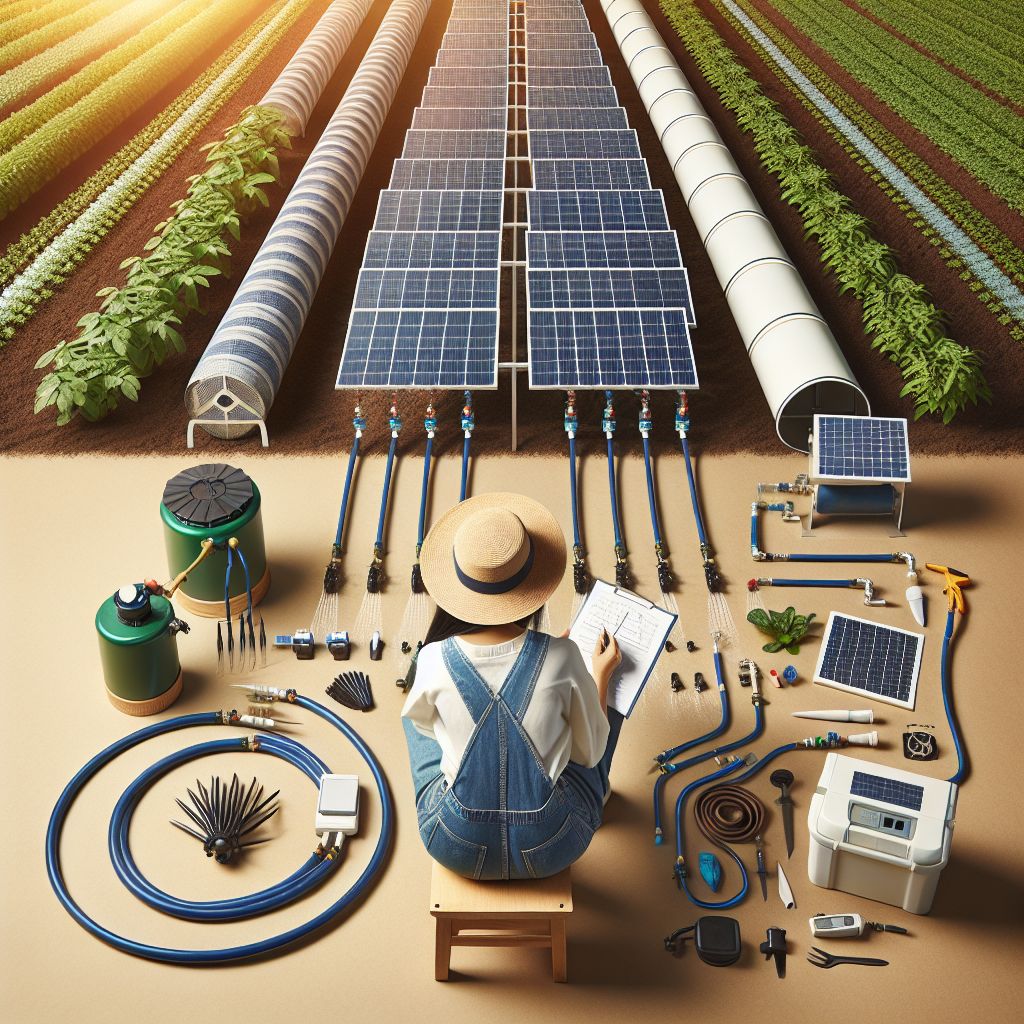
Let’s get practical. Setting up a solar-powered irrigation system isn’t as daunting as it might seem. The key is to select the right equipment that suits the specific needs of your farm.
Selecting the Right Equipment for Your Farm
To start, you’ll need solar panels, a water pump, and an irrigation controller. The size and number of solar panels depend on your irrigation needs and the amount of sunlight your location receives. It’s crucial to get a pump that’s powerful enough to meet your water distribution needs but also compatible with the energy output of your solar panels.
Remember, the goal is to create a system that’s efficient, reliable, and tailored to your farm’s unique requirements. Don’t hesitate to consult with experts or other farmers who have made the switch to solar. Their insights can be invaluable in your journey to sustainability.
Step-by-Step Guide to Implementation
-
Evaluate your water needs: Consider the size of your farm, the types of crops you grow, and your local climate.
-
Assess your site: Determine the best location for solar panels to maximize sun exposure throughout the year.
-
Choose your equipment: Select a solar panel array, pump, and controller that fit your specific needs.
-
Installation: You can either install the system yourself, if you’re technically inclined, or hire professionals.
-
Testing: Once installed, test the system to ensure it operates efficiently and meets your irrigation requirements.
This below table provides a clear, step-by-step guide for implementing a solar irrigation system on a farm, covering evaluation of water needs, site assessment, equipment selection, installation, and testing phases.
| Step | Description |
|---|---|
| 1. Evaluate Your Water Needs | Assess the size of your farm, types of crops grown, and local climate to determine your irrigation requirements. Calculate the volume of water needed for irrigation to ensure adequate coverage for your crops. |
| 2. Assess Your Site | Survey your farm to identify the best location for solar panels, considering factors such as sun exposure, shading, and terrain. Choose a site with maximum sunlight exposure throughout the day and year-round to optimize solar energy generation. |
| 3. Choose Your Equipment | Select the appropriate solar panel array, pump, and controller based on your water needs and site assessment. Consider factors such as panel efficiency, pump capacity, and controller features to ensure compatibility and efficiency. |
| 4. Installation | Install the solar panels, pump, and controller according to manufacturer guidelines and local regulations. Ensure proper mounting of solar panels for optimal sun exposure and secure installation of pumps and controllers. If you lack technical expertise, consider hiring professionals to install the system safely and correctly. |
| 5. Testing | Conduct thorough testing of the entire system to ensure proper functionality and efficiency. Test the irrigation system under various conditions, including different weather scenarios and irrigation schedules. Monitor water flow, solar energy production, and system performance to identify any issues or inefficiencies. Make adjustments as needed to optimize system performance and ensure reliable operation. |
| 6. Training and Maintenance | Provide training for farm personnel on operating and maintaining the solar irrigation system. Establish a regular maintenance schedule to inspect and clean solar panels, check pump performance, and monitor system components. Promptly address any maintenance issues or malfunctions to prevent downtime and maximize system lifespan. |
| 7. Monitor and Evaluate | Continuously monitor system performance and water usage to assess the effectiveness of the solar irrigation system. Keep records of energy production, water usage, crop yield, and cost savings to evaluate the system’s return on investment. Identify opportunities for further optimization or expansion based on performance data and evolving farm needs. |
With the right plan and equipment, you’ll be on your way to a more sustainable and cost-effective irrigation system.

Nurturing Growth: Maintenance and Optimization of Your Solar System
Once your solar irrigation system is up and running, it’s not a ‘set it and forget it’ scenario. Regular maintenance is key to ensuring your system continues to operate at its best.
Regular Upkeep for Long-Term Efficiency
Maintenance tasks are straightforward but crucial. Cleaning solar panels regularly to remove dust and debris will keep them operating efficiently. Checking connections and wiring can prevent potential power losses. It’s also wise to inspect your water pump and irrigation lines periodically for any signs of wear or damage.
These simple steps can prevent downtime and extend the lifespan of your solar irrigation system.
Monitoring and Adjusting Your System for Peak Performance
Monitoring your system’s performance is essential. Keep an eye on the energy output of your solar panels and the water flow rates. Adjustments may be needed to ensure the system is aligned with the changing seasons and weather patterns.
By staying proactive, you can optimize your system’s performance, ensuring that your crops receive the right amount of water at the right time, all while harnessing the sun’s power efficiently.
Understanding the Costs and Calculating the ROI
Investing in a solar-powered irrigation system is an upfront cost that needs careful consideration. However, the return on investment (ROI) can be quite attractive. Typically, the costs for a small-scale solar irrigation setup can range from a few thousand dollars to tens of thousands, depending on the size and complexity of the system. But don’t let the initial price tag deter you; the long-term savings on energy bills and the potential increase in crop yields can make solar irrigation a wise financial decision.
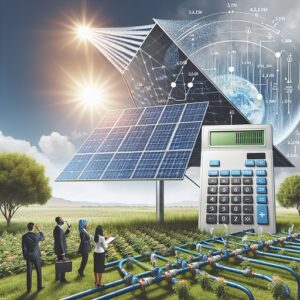
Calculating the ROI involves considering the cost of the system, the savings on energy bills, any available subsidies, and the expected increase in crop yields due to more efficient irrigation. For example, it usually costs $5,000-$20,000 to install a solar irrigation system, with annual savings on energy costs ranging from $1,000-$4,000, leading to a payback period of roughly 5-10 years.
Sowing Seeds for the Future: The Long-Term Benefits of Solar Irrigation
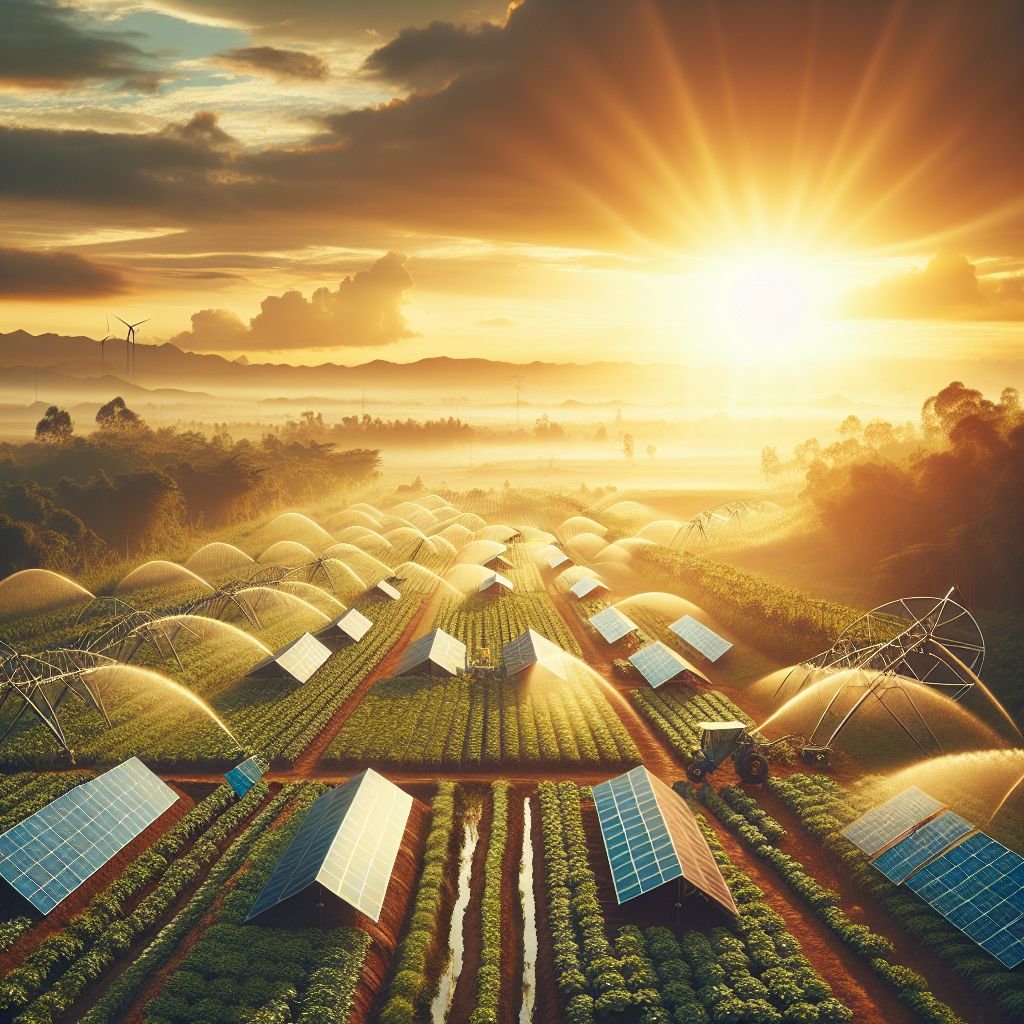
Looking beyond the immediate benefits, solar irrigation promises a future of sustainable farming. It’s a long-term investment in your farm’s productivity and environmental footprint. With solar panels having lifespans that can exceed 25 years, the benefits of solar irrigation stretch far into the future, ensuring that your farm remains productive and sustainable for years to come.
Moreover, as energy costs continue to rise, the savings provided by solar irrigation will only become more significant. This aspect of solar power ensures that your farm can maintain a competitive edge by keeping operational costs low while continuing to produce high-quality crops.
Cost Reduction Over Time and Energy Independence
One of the most compelling reasons to switch to solar irrigation is the promise of reduced operational costs over time. Solar panels and equipment have become more affordable, and their efficiency continues to improve. This means that, over time, the cost of solar-powered irrigation will continue to drop, even as the cost of traditional energy sources likely rises.
Energy independence is another major benefit. By generating your own power, you’re not subject to the unpredictability of energy prices. This can be especially crucial for farms in remote locations where energy costs are higher or access to the grid is unreliable.
Enhancing Resilience Against Climate Variability
Climate variability poses one of the biggest threats to agriculture. Solar irrigation systems can help mitigate this by providing a consistent and reliable water supply, regardless of weather conditions. With solar power, you’re not just protecting your current crop yield; you’re investing in the resilience of your farm against future climate challenges.
Frequently Asked Questions
It’s natural to have questions when considering a significant change like adopting solar-powered irrigation. Here are some common queries and their answers to help you make an informed decision.
Can Solar Irrigation Work in Any Climate?
Yes, solar irrigation can work in almost any climate. Solar panels are effective even on cloudy days, though they produce less energy than on sunny days. Regions with more sunshine will naturally get the most out of solar irrigation systems, but advances in technology have made them viable in less sunny environments as well.
What’s the Average Payback Period for a Solar Irrigation System?
The average payback period for a solar irrigation system can vary widely but typically ranges from 5 to 10 years. This period can be shorter if you factor in subsidies, increased crop yields, and rising energy costs. It’s a solid investment that pays dividends in both financial savings and environmental benefits.
Do Solar Irrigation Systems Require Special Maintenance?
Solar irrigation systems require minimal maintenance. Regular cleaning of solar panels and routine checks of pumps and irrigation equipment are generally all that’s needed. This ease of maintenance is a significant advantage over traditional irrigation systems.
How Does Solar Irrigation Benefit Soil Health and Biodiversity?
Solar irrigation systems, particularly when combined with drip irrigation, can lead to healthier soil and increased biodiversity. By providing water directly to the plant roots and reducing runoff, these systems minimize soil erosion and nutrient leaching. This targeted watering also promotes the growth of diverse flora and fauna around the farm.
Can Solar-Powered Systems be Used for Large-Scale Farming?
Absolutely. Solar-powered irrigation systems are scalable and can be designed to suit farms of any size. Large-scale operations can benefit from the same cost savings, water efficiency, and sustainability as smaller farms. The key is proper planning and design to ensure that the system meets the specific needs of a large-scale operation.
Conclusion: Using Solar-Power Irrigation Systems Has Many Benefits but Is It the Future for Farming
As we grapple with the realities of climate change and the need for sustainable farming practices, solar-powered irrigation systems stand out as a beacon of hope. They offer a multitude of benefits, from cost savings and water efficiency to energy independence and environmental stewardship. Moreover, they provide a practical solution for enhancing the resilience of farms in the face of a changing climate.
Is solar irrigation the future for farming? Given the compelling case it presents, it’s hard to argue otherwise. It aligns perfectly with the growing need for sustainable agriculture practices that can feed the world without depleting its resources. As technology continues to advance and the global community becomes more aware of the importance of sustainability, solar-powered irrigation systems are poised to become a staple of modern farming.