Key Takeaways
-
AI drones and solar-powered irrigation systems significantly improve water management and crop health monitoring.
-
Using solar energy to power drones and irrigation is cost-effective, reducing farmers’ reliance on non-renewable energy sources.
-
Drones equipped with AI technology can precisely identify areas of a field that need attention, leading to more targeted and efficient farming practices.
-
Solar irrigation provides a consistent water supply, even in remote areas or during periods of low rainfall.
-
The combination of AI drones and solar irrigation supports sustainable farming, preserving resources for future generations.
Innovating Agriculture with AI Drones and Solar Irrigation
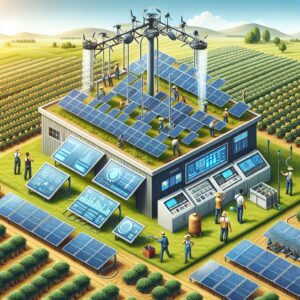
Imagine a farm where technology and nature work in perfect harmony. It’s not just a dream; it’s the future of farming, and it’s happening now with AI-driven drones and solar-powered irrigation. These innovations are more than just fancy gadgets; they’re essential tools for today’s eco-conscious farmer who aims to produce more with less, ensuring a sustainable future for all.
Why Modern Farming Needs Smart Technology
Modern farming is facing a challenge. The world’s population is growing, but the amount of arable land isn’t. This means we need to find smarter ways to farm, ways that increase efficiency without harming the environment. That’s where AI drones and solar-powered irrigation come in.
These technologies are not just about keeping up with the latest trends. They’re about survival and sustainability. They help us make precise decisions about where, when, and how much to water or treat crops, based on real-time data rather than guesswork. And, they do this using the clean, endless energy of the sun.
Renewable Energy for Resource Conservation
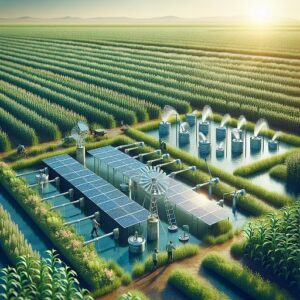
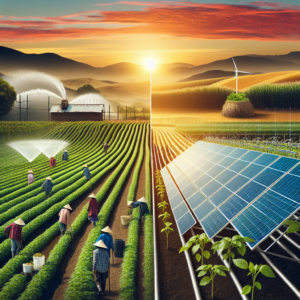
First things first, let’s talk about the sun. It’s powerful, it’s free, and it doesn’t produce greenhouse gases. By harnessing solar power for irrigation, we cut down on fossil fuel consumption, reduce our carbon footprint, and save water – a precious resource that’s becoming increasingly scarce.
And when you think about it, it’s a no-brainer. Why rely on expensive, polluting energy sources when you can use the sun? It shines down on your fields anyway; you might as well put it to work. With solar panels, you can capture that energy and use it to power irrigation systems, even in the most remote areas.
The Sky’s the Limit: Drones in Agriculture
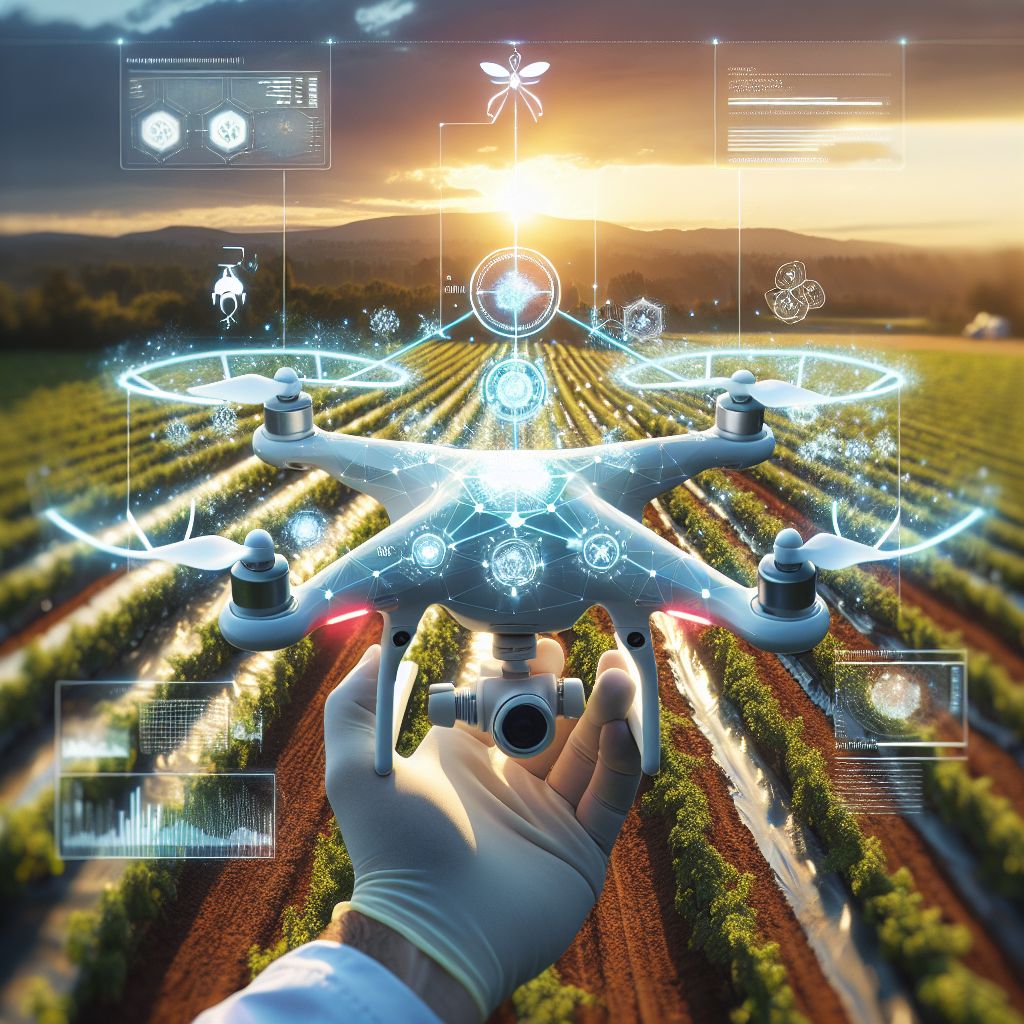
Now, let’s take to the skies with drones. These aren’t your average toys; they’re sophisticated flying robots equipped with cameras and sensors that can monitor plant health, track growth, and even spot pests or diseases. All this happens from above, without trampling over your crops or compacting the soil.
Mapping Out Plant Health from Above
Drones give us a bird’s-eye view of our fields, but that’s just the start. They can be equipped with special cameras that capture different wavelengths of light, including those invisible to the human eye. These images can tell us a lot about plant health, like which areas are thriving and which might need a bit more TLC.
But the real magic happens when you combine these images with AI. The AI analyzes the data, learns from it, and gives you actionable insights. It’s like having a super-smart farming assistant who’s always on duty, always learning, and always ready to help you make the best decisions for your crops.
Pest Control: Precision from the Air
Besides that, drones can also help with pest control. Imagine being able to spot a small outbreak of pests before they become a big problem. With drones, you can. You can then target just the affected area, rather than spraying your whole field. This means less pesticide use, which is better for your wallet and the environment.
And it’s not just about spotting problems. Drones can also help with the solutions. Some are even capable of precision spraying, delivering treatments right where they’re needed and nowhere else. This targeted approach isn’t just efficient; it’s responsible farming.
For example, a farmer in California used drone technology to detect an infestation of aphids in a small section of his vineyard. Instead of treating the entire vineyard with pesticides, he used the drone’s precise data to target only the affected vines, reducing pesticide use by 30%.
This table below summarizes some of the key benefits of using drones to gather information for a solar-powered irrigation system on a farm.
| Benefit | Explanation |
| Enhanced Efficiency | Drones can inspect large areas of farmland more accurately and rapidly than manual inspections, saving time and money on solar installation and maintenance. 1, 2, 3 |
| Improved Safety | Drones can perform tasks like inspections and maintenance that would typically be done by humans, reducing the risk of accidents and fatalities. 2, 3 |
| Cost-Effectiveness | Using drones for solar maintenance can lower labor costs since fewer employees are needed to complete installation and monitoring tasks. 2, 3, 4 |
| Better Data Collection | Drones equipped with sensors and cameras can provide detailed, real-time data on crop health, soil conditions, and other farm metrics, enabling more informed decision-making about irrigation. 2, 4, 5 |
| Precision Irrigation | By analyzing the data collected by drones, farmers can identify which parts of their fields are too dry or too wet and adjust their irrigation accordingly, preventing over- or under-watering. 1, 2, 4 |
| Sustainability | Drones allow for more efficient use of water resources, promoting healthier crops and conserving water – a key benefit in areas with limited water supplies. 1, 4, 5 |
| Future Advancements | Drone technology is expected to continue advancing, potentially allowing drones to independently carry out maintenance and installation tasks, further enhancing the performance of solar irrigation systems. 2, 4 |
Irrigation on a New Wavelength: Solar Power in Action
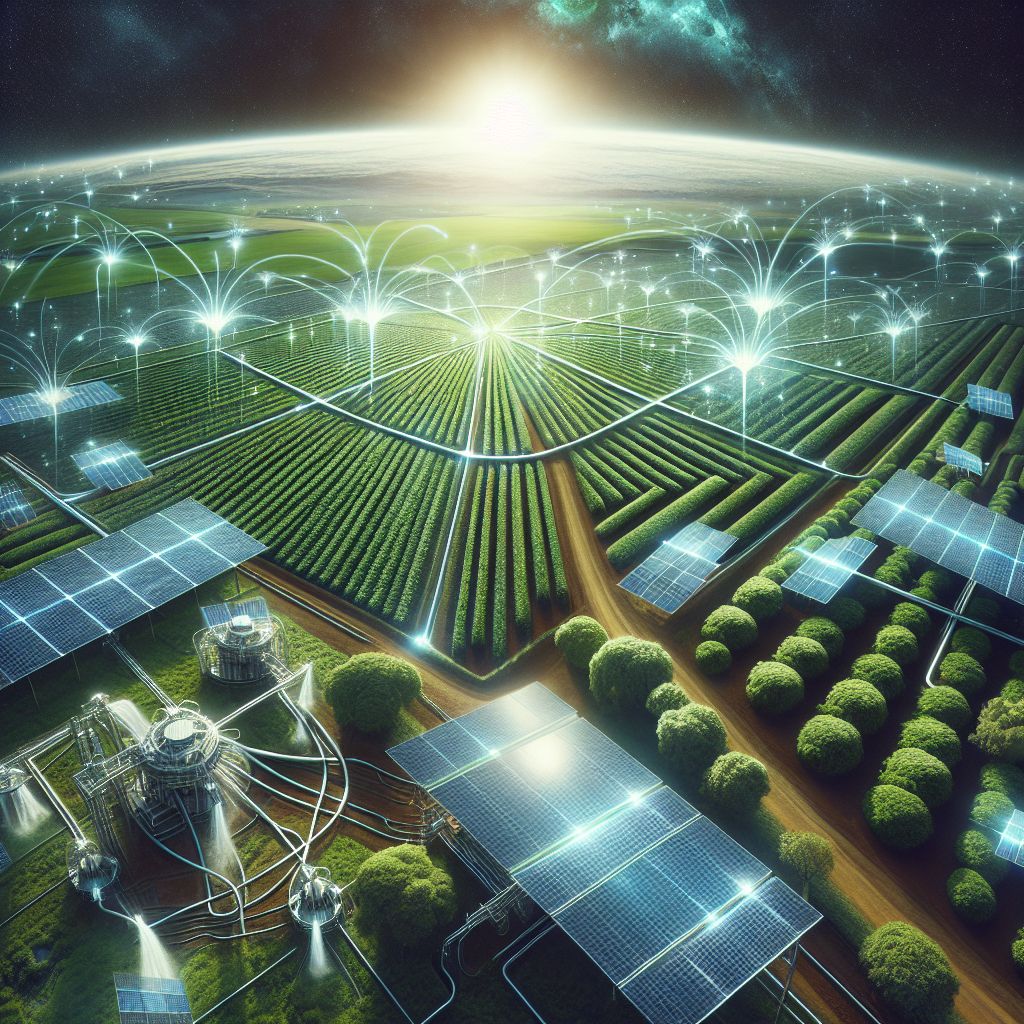
Solar-powered irrigation is a game-changer for the agricultural industry. It provides a sustainable and cost-effective solution to the water scarcity issue faced by farmers around the world. With its flexibility, low maintenance, and positive impact on the environment, it is a technology that has the potential to revolutionize the way we grow our food. As we continue to face global challenges, it is essential to embrace innovative and sustainable solutions like solar-powered irrigation to ensure a brighter future for agriculture.
Cutting Costs, Not Corners: Solar Efficiency
The use of solar panels in farm irrigation systems is a win-win situation for both farmers and the environment. By cutting costs and reducing carbon emissions, farmers can improve their bottom line and contribute to a more sustainable future. It is an investment that not only benefits the individual farmer but also has a positive impact on the community and the planet as a whole. As the demand for sustainable farming practices continues to grow, it is essential for farmers to consider incorporating solar energy into their operations. After all, cutting costs should not mean cutting corners, and solar efficiency is a perfect example of that.
A Weather-Proof Water Supply
One of the most significant advantages of solar-powered irrigation is its reliability, regardless of weather patterns. Traditional irrigation methods are often at the mercy of the weather – too much rain and your fields are flooded, too little and your crops wither. Solar irrigation, on the other hand, harnesses the power of the sun to provide a consistent water supply.
Even in areas with less sunshine, solar panels are efficient enough to collect the necessary energy during daylight hours. This energy is stored and used to power irrigation systems as needed. It’s a game-changer for farmers in drought-prone regions or those who face water scarcity. With solar irrigation, they have a weather-proof water source that ensures their crops never go thirsty.
Here is a table summarizing the key benefits of using a solar irrigation system for a farm.
| Benefit | Description |
| Sustainable Energy Source | Solar power is a renewable and clean energy source, reducing reliance on fossil fuels and grid electricity. This makes it an environmentally-friendly option for powering irrigation. 1, 2, 3 |
| Cost Savings | While the initial setup cost can be high, solar irrigation systems lead to significant long-term cost savings by eliminating electricity or fuel bills for running pumps. 1, 2, 3 |
| Reliability | Solar-powered irrigation systems provide a reliable source of energy for water pumping, especially in remote areas without access to grid electricity. This improves water availability for crops. 1, 2, 3 |
| Government Incentives | Many governments offer tax credits, subsidies, and other financial incentives to encourage adoption of solar irrigation technology, further improving the economic viability. 1, 3 |
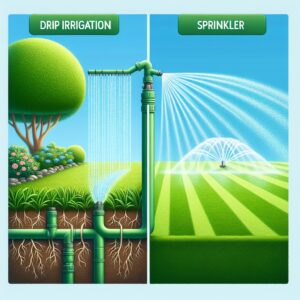
| Water Conservation | Solar irrigation systems can be integrated with efficient irrigation methods like drip or sprinkler systems, reducing water waste and improving overall water use efficiency on the farm. 1, 2, 3 |
| Scalability | Solar irrigation systems have a modular design, allowing farmers to start small and scale up the system as their needs grow over time. 1, 2 |
| Longevity | Solar irrigation components have a long lifespan with minimal degradation, requiring only occasional maintenance, unlike fossil fuel-powered systems. 1, 2 |

When Technologies Collide: AI and Solar Synergy
The marriage of AI drones and solar-powered irrigation is a match made in heaven for sustainable agriculture. The synergy between these two technologies creates a loop of efficiency that’s hard to beat. Here’s how it works: drones gather data, AI processes it, and solar-powered systems act on it. This loop ensures that water and other resources are used optimally, reducing waste and maximizing yield.
AI algorithms can predict weather patterns, analyze soil moisture, and even suggest the best times for irrigation. This predictive power means you’re always one step ahead, ready to water your crops just before they start to stress, not after. And since the whole system is powered by solar energy, it’s clean and green from start to finish.
Crop Yields That Reach New Heights
When you use AI drones to monitor your crops and solar irrigation to water them, something amazing happens: your yields go up. It’s not just a small increase, either. Farmers who use these technologies report significant improvements in the quantity and quality of their harvests.
Most importantly, because you’re giving your crops exactly what they need, when they need it, they’re healthier and more robust. Healthy plants are better at fighting off diseases and pests, which means you can use fewer chemicals. It’s a win for your farm, your wallet, and the environment.
Farming with Foresight: Sustainable Practices
Sustainable farming isn’t just about the here and now; it’s about looking ahead and making sure future generations can farm the same land just as successfully. AI drones and solar irrigation help you do just that. They allow you to conserve water, reduce chemical use, and maintain soil health – all crucial for long-term sustainability.
By using data to drive your decisions, you’re not just working hard; you’re working smart. You’re keeping your soil healthy, your water clean, and your ecosystem vibrant. That’s the kind of foresight that makes a farm sustainable for decades to come.
Real-Life Harvests: Testimonials and Transformations
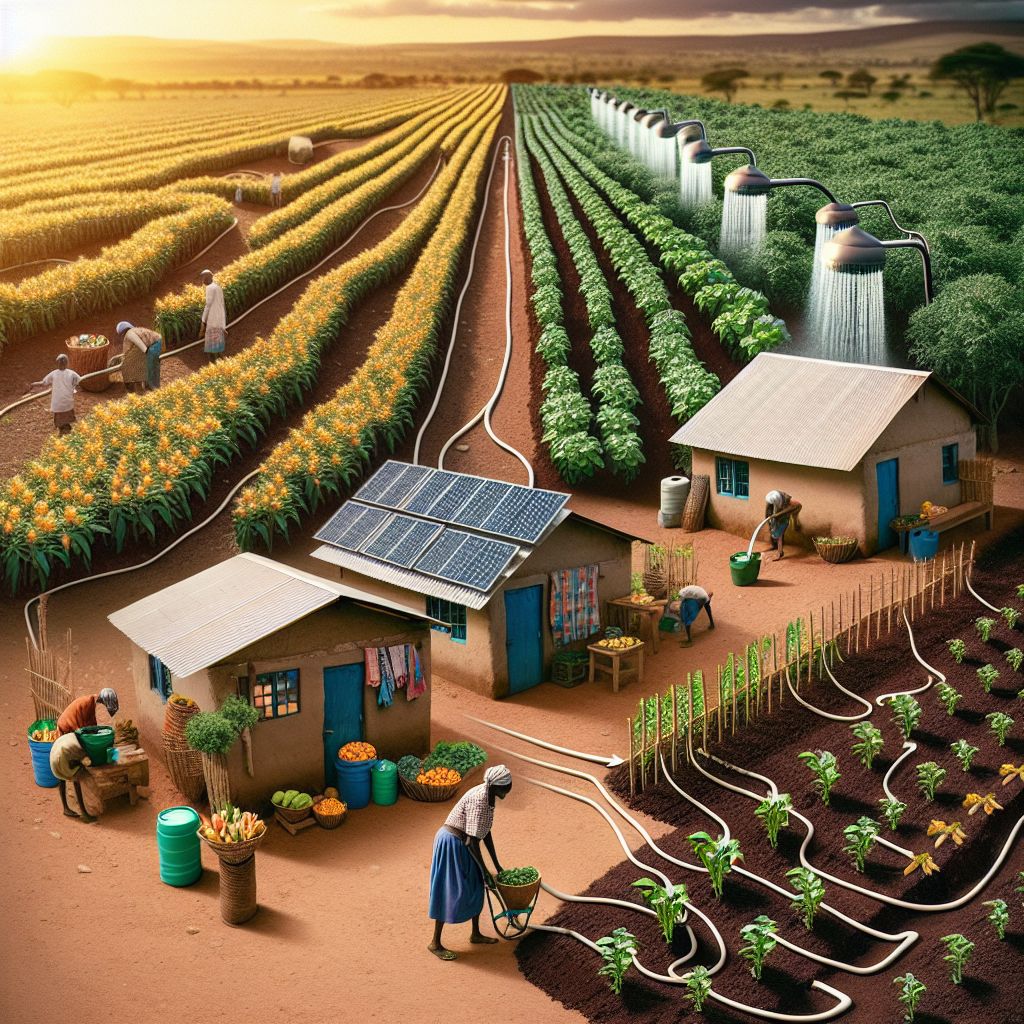
These technologies aren’t just theoretical; they’re already changing lives. Take the case of a smallholder farmer in Kenya who struggled with inconsistent rainfall and poor harvests. After implementing a solar-powered irrigation system, she was able to triple her crop yield in just one season. Her success is a testament to the power of sustainable technology.
From Barren to Bountiful: Farmer Successes
It’s not just about increased yields; it’s about transforming previously unproductive land into thriving farms. Farmers who have adopted these technologies find that they can grow crops in places where it was previously impossible. By using solar-powered irrigation, they can bring water to arid land, and with AI drones, they can manage their crops more effectively.
For instance, a farmer in Australia used drone technology to reclaim land that had been written off as too dry for cultivation. With precise monitoring and efficient solar-powered irrigation, he turned a barren plot into a productive field that now yields high-quality wheat.
The Numbers Speak: Data-Driven Farming Victory
Data is the currency of the modern world, and farming is no exception. By using AI drones to collect data on crop health and solar irrigation to respond to that data, you’re essentially running a data-driven farm. The results are clear: farms that embrace these technologies are more productive, more efficient, and more sustainable.
It’s not just about growing more; it’s about growing smarter. With every flight, drones collect invaluable information that can be used to improve the next season’s crops. Over time, this leads to a deep understanding of your land and how to get the best out of it – all thanks to data.

The Greenprint for Tomorrow’s Farms
The future of farming is green, and it’s high-tech. The combination of AI drones and solar-powered irrigation is not just a fad; it’s the blueprint for sustainable agriculture. It’s about using the best of what technology has to offer to work with nature, not against it.
As we look to the future, it’s clear that these technologies will become even more integrated into farming practices. They’ll become more affordable, more efficient, and more accessible. They’re the tools we need to feed the world without depleting its resources.
Next-Level Innovations on the Horizon
And this is just the beginning. Innovations in AI and solar technology are happening every day. We’re seeing drones that can plant seeds, solar panels that double as greenhouses, and AI that can predict crop yields months in advance. The possibilities are as endless as they are exciting.
The next generation of farmers won’t just be growers; they’ll be tech-savvy innovators who use every tool at their disposal to produce food sustainably. It’s a thrilling time to be in agriculture, and the horizon is bright with promise.
Planting Seeds for a Sustainable Legacy
When you invest in AI drones and solar-powered irrigation, you’re not just investing in your farm; you’re investing in the future. You’re showing that it’s possible to produce food in a way that’s kind to the earth and good for the community. You’re planting seeds for a legacy that will last well beyond your own years.
So, if you’re a farmer who cares about the land, the water, and the legacy you leave behind, it’s time to look up to the skies and out to the sun. These technologies are ready for you, and they’re ready to help you build a farm that will feed the world sustainably for generations to come.
Now, let’s address some common questions you might have about integrating AI drones and solar-powered irrigation into your farming operations.
FAQ
How Do AI Drones Exactly Improve Crop Efficiency?
-
They provide precise monitoring of crop health, identifying issues like nutrient deficiencies or water stress.
-
Drones can map out fields for optimized planting patterns and track growth progress.
-
They enable targeted pesticide and herbicide application, reducing overall chemical use.
-
AI drones can analyze data over time to predict future crop needs and improve planning.
By utilizing these capabilities, AI drones ensure that each plant gets exactly what it needs to thrive, maximizing efficiency and yield.
Can Solar Irrigation Work in Less Sunny Areas?
Yes, solar irrigation can be effective even in areas with moderate sunlight. Modern solar panels are highly efficient and can store energy for use during cloudy days or at night. Additionally, solar systems can be sized to meet the specific needs of a farm, ensuring a consistent water supply regardless of the weather.
Is the Cost of Implementing AI and Solar Solutions Outweighed by the Benefits?
Absolutely. While there’s an upfront investment, the long-term savings on water, energy, and labor, as well as the increased crop yields, often outweigh the initial costs. Farmers typically find that these systems pay for themselves over time through reduced operational expenses and higher profits.
What Types of Crops Benefit Most from AI Drone and Solar Irrigation?
Most crops can benefit from these technologies, but they’re especially valuable for high-value crops like fruits, vegetables, and nuts where precision agriculture can significantly impact quality and yield. However, even staple crops like wheat and corn can see improved efficiency and sustainability.
How Can a Farmer Get Started with These Technologies?
Getting started involves researching and reaching out to technology providers specializing in agricultural drones and solar irrigation systems. Start small with a pilot project to understand the technology’s impact on your farm. Many providers offer training and support to help farmers integrate these systems into their operations.
Conclusion: AI-Driven Drones & Solar-Powered Irrigation Are Good for Farmers to Invest In
In conclusion, AI-driven drone technology and solar-powered irrigation systems represent a significant leap forward in sustainable agriculture. By investing in these innovations, farmers are not only boosting their crop efficiency but also contributing to a healthier planet. The benefits are clear: reduced costs, increased yields, and a sustainable legacy for future generations. It’s time for eco-conscious farmers to embrace the future and make their farms more resilient, productive, and sustainable.
Remember, the future of farming isn’t just about producing more; it’s about producing wisely. By harnessing the power of the sun and the intelligence of AI, we can create a food system that’s as kind to the earth as it is bountiful. So, let’s roll up our sleeves and get to work – the future is waiting, and it’s looking bright.