

Let’s dive right into the heart of sustainable agriculture—using solar power to irrigate crops, specifically black beans. Picture a field basking in sunlight, with rows of lush plants being watered by a system that’s as friendly to the environment as it is to your wallet. That’s the future we’re aiming for, and it’s entirely within reach.
Key Takeaways
Solar-powered irrigation systems can drastically reduce energy costs and are environmentally friendly.
Drip irrigation, when paired with solar power, offers precise water delivery directly to the roots of black beans, conserving water.
Monocrystalline solar panels are highly efficient and ideal for farms with limited space.
The initial investment in solar irrigation can lead to significant long-term savings and increased sustainability.
Choosing the right combination of solar panels and irrigation methods is crucial for optimizing efficiency on a black bean farm.

Why You Should Use Solar Panels with an Irrigation System for Growing Black Beans
Imagine slashing your electricity bill and at the same time, nurturing your black bean crop with the perfect amount of water. This isn’t just a dream—it’s what solar-powered irrigation systems can do for you. Here’s why they’re a game-changer:
Cutting Costs with the Sun’s Power
The sun showers your farm with free energy every day. By harnessing this power with solar panels, you’re looking at a significant cut in your energy bills. After the initial setup, the sun won’t send you a monthly invoice, and that’s a huge relief for any farmer’s budget.
Benefits for the Environment and Your Farm’s Carbon Footprint
Every drop of water and every kilowatt of power counts when it comes to our planet. By using solar panels, you’re reducing reliance on fossil fuels, cutting down greenhouse gas emissions, and making a positive impact on the environment. It’s a step towards a greener, more sustainable future for farming.
Reliability and Low Maintenance of a Solar-Powered Setup
Solar panels are not just about saving the planet or cutting costs; they’re also about peace of mind. They’re durable, require minimal maintenance, and provide a consistent energy supply, ensuring that your black beans get watered even during power outages or fuel shortages.
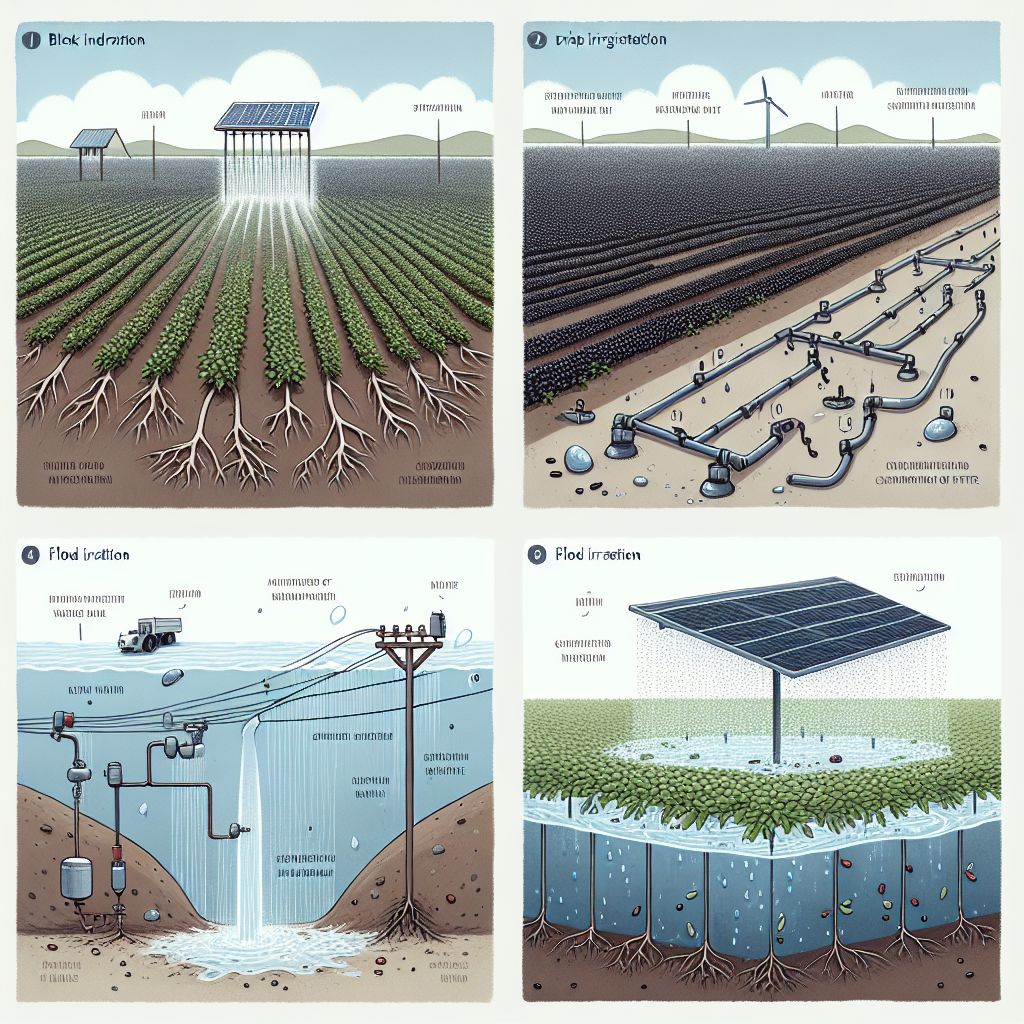
Top Irrigation Methods Used by Black Bean Farmers
Black beans, like any other crop, thrive when they get just the right amount of water. Too little, and they won’t grow; too much, and you risk disease or wasted resources. Let’s look at the most effective watering techniques:
Drip Irrigation for Precise Water Delivery
Drip irrigation is like the sniper of watering techniques—it’s precise, conserves water, and gets the job done with minimal waste. By delivering water directly to the roots of your plants, it ensures that every drop counts. This method is especially effective when powered by solar panels, as it requires less energy than other systems.
Sprinkler Systems: Pros and Cons
Sprinkler systems are like a rain dance for your crops. They can cover large areas and are fairly easy to install. However, they’re not as water-efficient as drip systems and can lead to evaporation and runoff. It’s a trade-off between convenience and conservation.
Flood Irrigation and its Usage in Black Bean Cultivation
Think of flood irrigation as a blanket of water gently covering your field. It’s an age-old technique that’s simple and effective for certain crops. But for black beans, which require careful water management, it might not be the best choice. It’s crucial to consider the specific needs of your crop before deciding on an irrigation method.
Here is a table showing the pros and cons of different irrigation systems a farmer can use on a farm:
|
Irrigation System |
Pros |
Cons |
|---|---|---|
|
Drip Irrigation |
– High water efficiency (90%+). 1 |
– High initial cost. 4 |
|
Sprinkler Irrigation |
– Relatively inexpensive to install. 5 |
– Lower efficiency than drip (60-80%). 1 |
|
Furrow/Surface Irrigation |
– Very low efficiency (50-60%). 1 |
Now, let’s talk about the types of solar panels that can power these irrigation systems. The right choice can maximize efficiency and ensure that your black beans get the care they need.

Top Solar Panels for Your Black Bean Farmers Irrigation System
Picking the perfect solar panels for your irrigation system can make a big difference in how efficient and sustainable your setup is. There are many different types of solar panels to choose from, each with their own pros and cons. Let’s take a look at the best choices for black bean farmers.
Monocrystalline Solar Panels: High Efficiency in Limited Spaces
When you’re eyeing the sun to power your farm, monocrystalline solar panels are like the high-performance athletes of solar tech. They’re sleek, they’re efficient, and they pack a punch in terms of energy output. These panels are made from single-crystal silicon, which means they can convert more sunlight into electricity than their counterparts. That’s a big deal when you’re relying on the sun to keep your papayas perfectly watered.
Let’s break it down: monocrystalline panels have an efficiency rate of around 15-22%. This means they’re perfect for smaller spaces where you need to squeeze out as much power as you can. They might come with a higher price tag, but they make up for it with their long lifespan and reliability. Plus, they perform better in low-light conditions, which is handy for those cloudy days.
Polycrystalline Solar Panels: Cost-Effective Energy Solution
Polycrystalline solar panels are another option for powering your irrigation system. These panels are made from silicon crystals and are generally more affordable than monocrystalline panels. They are less efficient, typically converting around 13-16% of sunlight into electricity, but they can still be a viable option for farms with larger areas available for panel installation. Polycrystalline panels have a shorter lifespan compared to monocrystalline panels, often around 20-25 years. They also tend to perform less efficiently in high-temperature conditions, which might be a consideration depending on your farm’s location. However, if cost is a major factor and you have ample space, polycrystalline panels can be a good choice for your lemon orchard’s irrigation system.
Thin-Film Solar Panels: Flexibility and Versatility
Thin-film solar panels are made by depositing one or more layers of photovoltaic material onto a substrate. They are the least efficient type of solar panel, with an efficiency rate of around 7-13%. However, they are lightweight, flexible, and can be installed in a variety of locations, including on uneven surfaces. These panels are less expensive upfront, but they have a shorter lifespan and lower efficiency, meaning you will need more panels to generate the same amount of power as monocrystalline or polycrystalline panels. Thin-film panels might be suitable for smaller farms or those with unique installation needs, but they are generally not the best choice for large-scale agricultural irrigation.
Here is a table showing the pros and cons of using different types of solar panels with an irrigation system on a farm:
|
Panel Type |
Pros |
Cons |
|---|---|---|
|
Monocrystalline Panels |
– High efficiency (15-22%), producing more power per square foot. 1, 2, 4 | |
|
Polycrystalline Panels |
– Lower upfront cost than monocrystalline. 1, 2 |
– Lower efficiency and shorter lifespan than monocrystalline. 2, 4 |
|
Thin-Film Solar Panels |
– Lowest upfront cost. 1, 2 |
– Lowest efficiency (7-13%). 2, 4 |
The choice depends on factors like budget, space constraints, climate, and expected lifespan. Monocrystalline panels offer the best long-term performance but at a higher upfront cost. 1, 2, 4
What is the Best Solar Panel a Black Bean Farmer Can Use on His Farm
Choosing the best solar panel for your farm comes down to space, budget, and energy needs. If efficiency and space-saving are your top priorities, monocrystalline panels are the way to go. But if you’re looking to save on upfront costs and have plenty of room, polycrystalline panels and thin-film solar panels are a solid choices.

Cost and Efficiency Comparison: Solar Irrigation Systems Versus Traditional Irrigation Systems for Growing Black Beans
When it comes to the bottom line, every farmer wants to know how their investment will pay off. Let’s break down the numbers:
Initial Investment and Long-Term Savings for Each System
Initially, a solar-powered irrigation system might seem like a hefty expense. But consider this: solar panels can last 25 years or more, and during that time, they’ll be cutting down your electricity bills every single month. Over the long term, the savings can be substantial. Traditional systems, on the other hand, may cost less upfront but will keep your meter running—and your bills climbing—for years.
Comparative Analysis of Water Usage Between Both Systems
Water is a precious resource, and using it wisely is not just good for the environment—it’s good for your farm’s sustainability. Drip irrigation systems, when paired with solar power, deliver water directly to where it’s needed, reducing waste. Traditional methods like flood irrigation can use up to 50% more water, much of which evaporates or runs off without benefiting the plants.
Running Costs: Breaking Down the Numbers of Each System
Besides the initial setup, the day-to-day running costs of solar-powered systems are significantly lower than those of traditional systems. There’s no fuel to buy for pumps, and maintenance is minimal. The sun’s energy is free, after all, and it keeps your system running without a hitch.
Here is a table comparing the cost and efficiency of an irrigation system with and without solar panels:
|
Aspect |
Without Solar Panels |
With Solar Panels |
|---|---|---|
|
Initial Cost | ||
|
Operating Cost |
Very low or zero fuel/electricity costs after installation. 1, 4 | |
|
Efficiency |
Depends on energy source efficiency. 4 |
Depends on solar radiation, temperature, system design. 1, 4 |
|
Environmental Impact |
Higher carbon footprint. 1 |
Lower carbon footprint, renewable energy. 1 |
|
Location Flexibility |
Limited to grid-connected or fuel access areas. 3 |
Can be used in remote off-grid areas. 3 |
|
Maintenance | ||
|
Lifespan |
Shorter for fuel-based systems. 1 | |
|
Long-term Costs |
Higher due to recurring fuel/electricity bills. 1 |
Lower total 20-year costs by 50-60% compared to traditional systems. 1 |
|
Government Incentives |
Generally none |
Many governments provide tax credits, subsidies for solar irrigation. 1 |
While solar irrigation systems have higher upfront costs, they can provide substantial long-term economic and environmental benefits over traditional irrigation systems powered by electricity grids or fossil fuels. 1, 3, 4

Which Combination of Solar Panels and Irrigation Systems make the Most Efficient System for Your Black Bean Farm
Finding the perfect match of solar panels and irrigation systems can lead to the most efficient and cost-effective setup for your farm. Here’s what you need to consider:
The perfect match: Monocrystalline Solar Panels Working with Drip Irrigation
For the best results, pair high-efficiency monocrystalline solar panels with a drip irrigation system. This combo offers precision watering with minimal waste, powered by the most efficient solar panels available. It’s a setup that will keep your black beans—and your bank account—happy.
Case studies: Farmers Who’ve Succeeded with Solar Irrigation
Take John, a black bean farmer in California. After switching to a solar-powered drip irrigation system, he saw his water usage drop by 30% and his energy costs by 50%. His yield? It went up, because his beans were getting just the right amount of water, right at their roots.
Tailoring Systems for Different Farm Sizes and Climates
Every farm is unique, so your solar irrigation system should be tailored to fit your specific situation. Consider your local climate, the size of your farm, and the particular needs of your black bean crop when choosing your setup. Consulting with experts can help you make the right choice for an efficient, sustainable system.

Conclusion: Is it a Smart Decision to Add Solar-Power to an Irrigation System for Your Black Bean Farm
Embracing solar power for irrigation is more than just a wise financial move; it’s a commitment to the future of agriculture. By reducing reliance on non-renewable energy sources and optimizing water usage, solar irrigation offers a path to a more sustainable and resilient farming practice.
Moreover, it positions your farm at the forefront of the green revolution, potentially attracting customers who value sustainability. With the right setup, solar-powered irrigation is indeed a smart decision for any black bean farmer looking to innovate and improve their operations.
Long-Term Environmental and Financial Benefits
Switching to solar-powered irrigation systems for growing black beans brings profound long-term benefits. Environmentally, it contributes to the reduction of carbon emissions and promotes the conservation of water resources. Financially, the reduction in utility bills and the potential for increased yields present a compelling case for investment. Over time, these benefits can lead to significant savings and a more sustainable farming operation.
Criteria for Assessing if Solar is Right for Your Farm
To determine if solar-powered irrigation is the right choice for your farm, consider the following criteria:
Local climate and average sunlight exposure.
Energy requirements for your current irrigation system.
Available space for installing solar panels.
Budget and financial resources for initial investment.
Potential savings on energy and water costs.
Assessing these factors will help you make an informed decision and ensure that your investment aligns with your farm’s long-term goals. For more detailed insights, consider exploring irrigation systems you can connect to solar panels for increased efficiency.
Frequently Asked Questions
How Long Will It Take to Break Even with a Solar-Powered Irrigation System?
Breaking even on a solar-powered irrigation system depends on several factors, including the size of the system, local energy costs, and the amount of sunlight your farm receives. On average, farmers can expect to break even in 5 to 10 years. However, with rising energy costs and potential government incentives, the payback period could be shorter.
Can I Convert My Existing Irrigation System to Solar Power?
Yes, most existing irrigation systems can be converted to solar power. The process involves installing solar panels and connecting them to your irrigation system’s pumps. It’s a straightforward upgrade that can be tailored to fit your current setup and energy needs.
Are There Any Government Incentives or Grants for Farmers Going Solar?
Many governments offer incentives, grants, or tax breaks for farmers who adopt solar energy solutions. These programs are designed to reduce the initial cost of solar installations and accelerate the transition to renewable energy. Check with your local agricultural extension office or renewable energy agency for programs available in your area.
What is the Lifespan of a Solar-Powered Irrigation System?
The lifespan of a solar-powered irrigation system can exceed 25 years. Solar panels typically come with a 20-25 year warranty, and with proper maintenance, they can continue to operate efficiently for many years beyond that. The irrigation components may require occasional replacements or upgrades, but the solar panels themselves are long-lasting investments.
Implementing solar powered irrigation systems can significantly enhance the efficiency of water usage when growing crops like black beans. By harnessing the power of the sun, these irrigation systems can operate without the need for external electricity sources, making them environmentally friendly and cost-effective for farmers. Additionally, the use of such sustainable practices contributes to the conservation of water, a critical resource in agriculture.







Leave a Reply