

Key Takeaways
Blackberry farmers can significantly cut down on energy costs by using solar-powered irrigation systems.
Monocrystalline solar panels are the most efficient but also the most expensive option.
Drip irrigation is the most effective method for blackberry farming due to its water efficiency.
Initial investment in solar-powered irrigation can be high, but the long-term savings and sustainability benefits are substantial.
Government incentives may be available to offset the initial costs of installing solar-powered irrigation systems.
The Benefits of Using Solar Panels with an Irrigation System for Growing Blackberries
Switching to solar-powered irrigation for your blackberry farm can be a game-changer. This method not only reduces energy expenses but also encourages sustainability. By harnessing the power of the sun, you can create a more efficient and reliable irrigation system that benefits both your farm and the environment.
Going Green
Going solar for irrigation has a big upside: it’s good for the planet. Old-school irrigation systems tend to use fossil fuels, and that just adds to the problem of greenhouse gases. Solar power is clean and renewable. So, when you go solar, you’re doing your part to reduce your carbon footprint and fight global warming.
Saving Money in the Long Run
While the upfront cost of setting up a solar-powered irrigation system can be steep, the long-term savings make it a worthy investment. After the panels are installed, solar energy is free, which can lead to a substantial decrease in your energy bills. Over time, these savings can make up for the initial cost, making solar-powered irrigation a smart financial decision.
Enhanced Efficiency and Dependability
Not only are solar-powered irrigation systems cost-friendly, but they are also very efficient. They offer a steady and dependable energy source, minimizing the chances of power interruptions that could interfere with your irrigation timetable. This guarantees that your blackberry plants are watered adequately and at the appropriate time, resulting in healthier and more fruitful harvests.
Boosted Harvest Yield and Quality
Accurate irrigation is essential for the growth and quality of blackberries. Solar-powered systems provide precise control over watering schedules, ensuring that your plants receive the perfect amount of water. This can result in higher yields and superior-quality fruit, which means more profits for your farm.

Top Irrigation Techniques for Growing Blackberry
There are many ways to water blackberries, and each method has its own set of advantages and disadvantages. The right choice for you depends on your unique situation. Let’s take a look at the most popular methods:
Drip Irrigation
Drip irrigation is an effective technique that supplies water straight to the plant roots. This reduces water waste and guarantees that your blackberry plants get the appropriate moisture levels. It’s especially advantageous for blackberries, which need regular watering for the best growth.
|
Advantages |
Disadvantages |
|---|---|
|
Efficient use of water, minimizes waste |
Initial installation can be expensive |
|
Delivers water straight to the roots |
Needs regular upkeep |
|
Helps prevent soil erosion |
Can become blocked if not properly maintained |
Overhead Sprinkler Systems
Overhead sprinkler systems are another common choice for irrigating blackberries. These systems spread water evenly across a large area, making them a good fit for larger farms. However, they may not be as water-efficient as drip irrigation.
Ditch and Basin Irrigation
Ditch and basin irrigation are conventional methods that involve saturating the fields with water. While these methods are less costly to establish, they are not as water-efficient and can result in soil erosion and waterlogging.
Which Irrigation Method is the Best for Blackberries?
When it comes to picking the right irrigation method for your blackberry farm, you have to consider several things, such as your budget, the size of your farm, and the amount of water you have available. Drip irrigation is the most efficient and effective, especially when you use solar power with it.
Now that we took look at irrigation system, let’s look at the solar panels that power them.
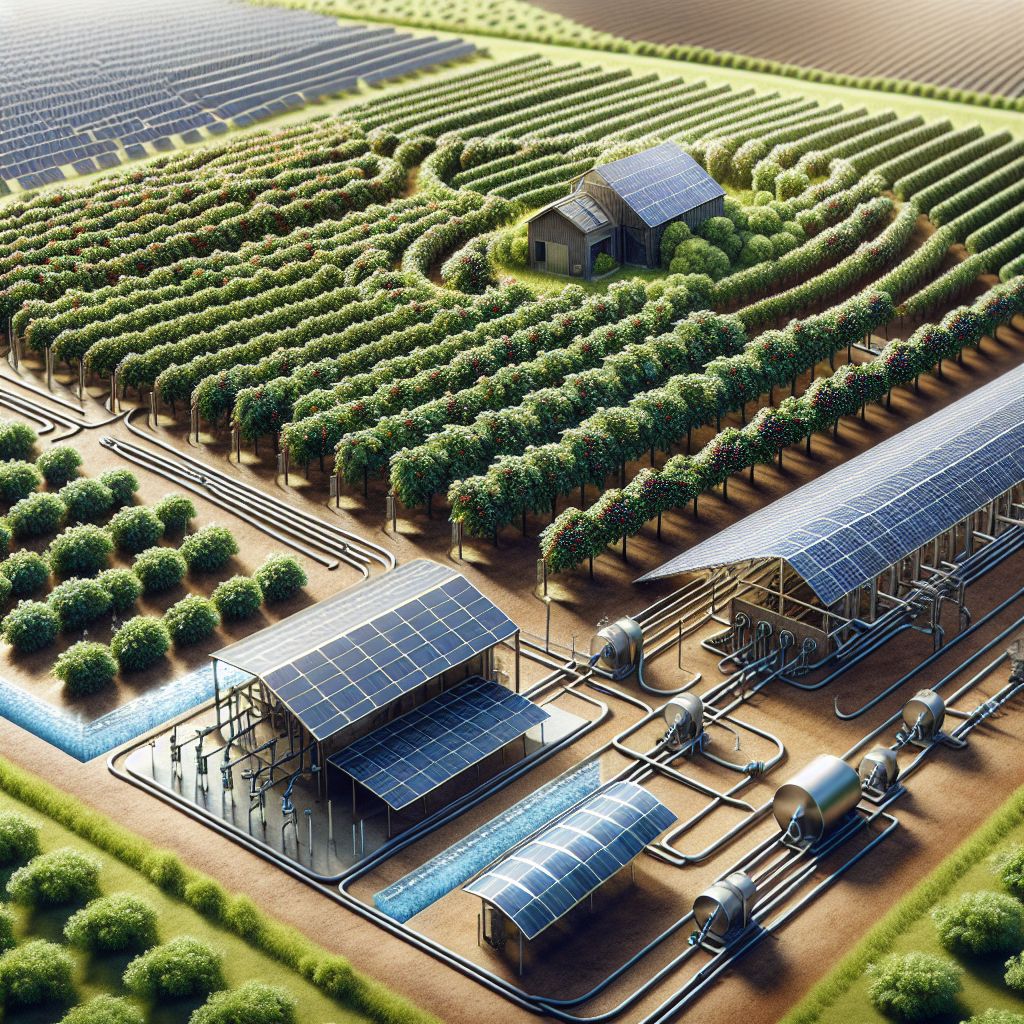
Top Solar Panels for Your Blackberry Farm’s Irrigation System
Choosing the right solar panels is crucial. You want panels that will stand up to the demands of farm life and provide plenty of power for your irrigation needs.
Monocrystalline Solar Panels: High Efficiency in Limited Spaces
Monocrystalline panels are the A-listers of the solar panel world. They’re sleek, they’re efficient, and they’re perfect if you’ve got limited space. They might cost more upfront, but they’ll give you more power per square foot than other types.
Polycrystalline Solar Panels: Cost-Effective Energy Solution
On the other hand, polycrystalline solar panels are the workhorses of solar irrigation. They don’t have the same high efficiency as monocrystalline panels, but they make up for it in cost-effectiveness. If you’re budget-conscious and have more space to spare, these panels can be a great choice for keeping your pear orchard irrigated without breaking the bank.
Polycrystalline panels are also robust and have a decent lifespan, making them a solid investment for the long haul. While they may produce less power per square foot, their lower price point can allow you to buy more panels and cover a larger area if needed.
One thing to keep in mind is that polycrystalline panels might not perform as well in extremely hot conditions. However, for most pear-growing regions, they’re a reliable and cost-effective option for solar-powered irrigation systems.
Lower upfront costs compared to monocrystalline panels
Good option for farms with more available space
Durable with a decent lifespan
Less efficient in high-temperature environments
Thin-Film Solar Panels: Flexibility and Versatility
Thin-film solar panels are the mavericks of the solar world. They’re lightweight, flexible, and can be applied to a variety of surfaces. This makes them ideal for blackberry orchards with unconventional layouts or for farmers who want to get creative with their solar setups.
They’re not as efficient as their monocrystalline or polycrystalline cousins, but they have their own advantages. Thin-film panels can perform better in low-light conditions and are less affected by high temperatures. Plus, they’re often easier to install, which can save you time and labor costs.
While they might not be the first choice for everyone, thin-film solar panels offer a versatile and potentially more aesthetically pleasing option for integrating solar power into your pear farm’s irrigation system.
Here is a table showing the pros and cons of using different types of solar panels with an irrigation system on a farm:
|
Panel Type |
Pros |
Cons |
|---|---|---|
|
Monocrystalline Panels |
– High efficiency (15-22%), producing more power per square foot. 1, 2, 4 | |
|
Polycrystalline Panels |
– Lower upfront cost than monocrystalline. 1, 2 |
– Lower efficiency and shorter lifespan than monocrystalline. 2, 4 |
|
Thin-Film Solar Panels |
– Lowest upfront cost. 1, 2 |
– Lowest efficiency (7-13%). 2, 4 |
When deciding on solar panels for your irrigation system, there are several things to think about:
Efficiency: More efficient panels can produce more power in less space.
Cost: Keep in mind your budget and the potential for long-term savings.
Durability: Choose panels that are long-lasting and come with a good warranty.
Space Availability: Make sure you have enough room for the amount of panels you need.
Climate: Certain panels may work better in specific weather conditions.

Comparing Costs and Efficiency: Solar Irrigation Systems vs. Traditional Irrigation Systems for Blackberry Growth
When comparing solar irrigation systems to traditional ones, it’s important to look at both the initial investment and the ongoing operating costs. Solar systems often have a higher upfront cost but can provide substantial savings in the long run.
Comparing the Start-up and Installation Prices
While the upfront cost of setting up a solar-powered irrigation system can be steep, including the cost of the solar panels, the installation, and any required infrastructure improvements, traditional systems usually have a lower initial cost but higher ongoing costs due to the energy they consume.
Comparing the Ongoing Expenses of Both Systems
Once a solar-powered system is in place, it has very little operating expense. The sun provides energy at no cost, reducing your dependence on electricity or fossil fuels. Traditional systems, on the other hand, have continuous energy expenses, which can accumulate over time.
Conserving Water
When it comes to water efficiency, solar-powered irrigation systems, especially those that use drip irrigation, are top-notch. They deliver water straight to the roots of the plant, minimizing waste and making sure your blackberry plants get just the right amount of moisture. Traditional systems, particularly flood and furrow methods, aren’t as efficient and can result in wasted water and soil erosion.
Comparing Energy Usage
By using solar-powered systems, you’re utilizing renewable energy and lessening your farm’s impact on the environment. Traditional systems, on the other hand, are usually powered by electricity or fossil fuels. These not only contribute to greenhouse gas emissions but are also subject to the unpredictable changes in energy prices.
Return on Investment and Time to Recoup Costs
Although the upfront cost of a solar-powered irrigation system can be steep, the energy savings over time can result in a positive return on investment (ROI). The length of time it takes to recoup the initial investment can differ based on factors like energy costs, the efficiency of the system, and any incentives that may be available. However, many blackberry farmers find that the cost savings make up for the initial investment in just a few years.
Here is a table comparing the cost and efficiency of an irrigation system with and without solar panels:
|
Aspect |
Without Solar Panels |
With Solar Panels |
|---|---|---|
|
Initial Cost | ||
|
Operating Cost |
Very low or zero fuel/electricity costs after installation. 1, 4 | |
|
Efficiency |
Depends on energy source efficiency. 4 |
Depends on solar radiation, temperature, system design. 1, 4 |
|
Environmental Impact |
Higher carbon footprint. 1 |
Lower carbon footprint, renewable energy. 1 |
|
Location Flexibility |
Limited to grid-connected or fuel access areas. 3 |
Can be used in remote off-grid areas. 3 |
|
Maintenance | ||
|
Lifespan |
Shorter for fuel-based systems. 1 | |
|
Long-term Costs |
Higher due to recurring fuel/electricity bills. 1 |
Lower total 20-year costs by 50-60% compared to traditional systems. 1 |
|
Government Incentives |
Generally none |
Many governments provide tax credits, subsidies for solar irrigation. 1 |
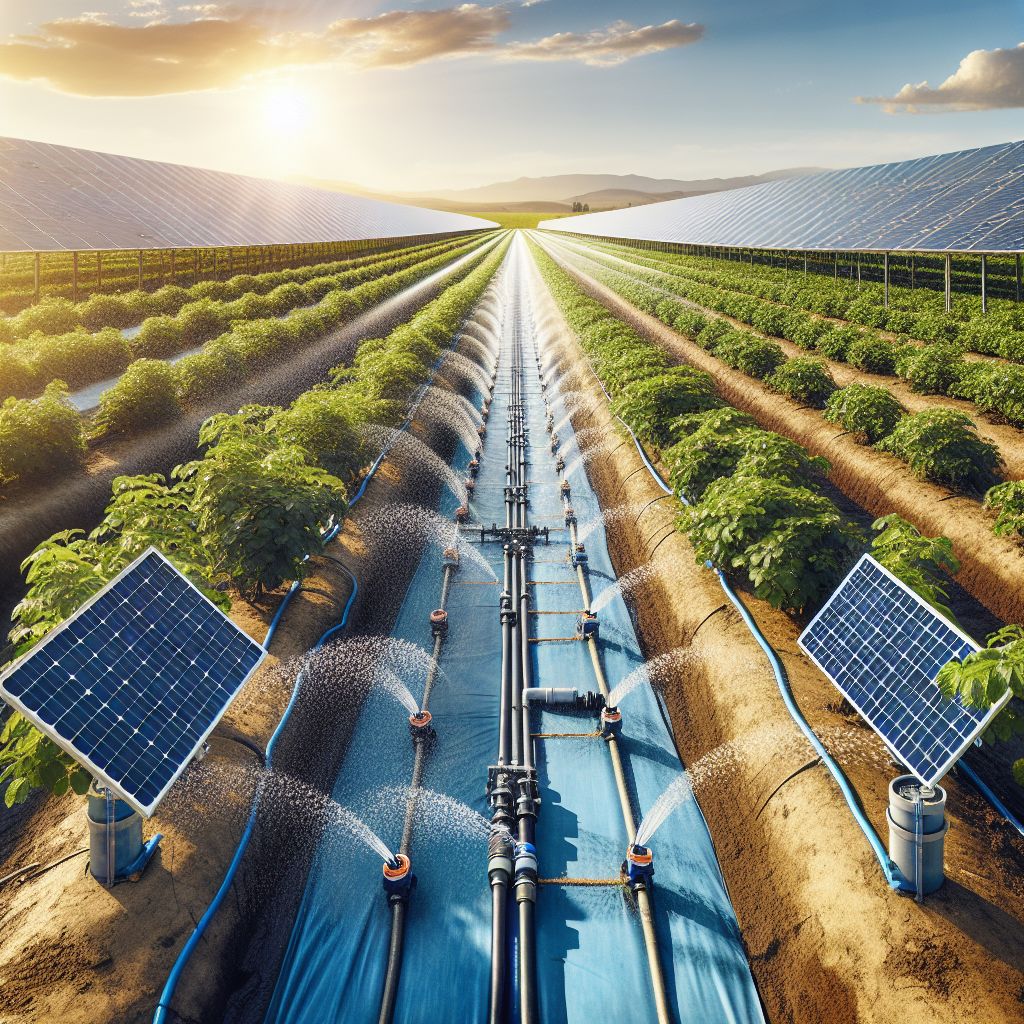
Choosing the Best Solar Panels and Irrigation Systems for Your Blackberry Orchard
Choosing the right combination of solar panels and irrigation systems is key to maximizing efficiency. Here are some of the best options:
Top Pick: Drip Irrigation Powered by Monocrystalline Solar Panels
When it comes to efficiency and reliability, the combination of monocrystalline solar panels and drip irrigation can’t be beaten. Monocrystalline panels are highly efficient, so you’ll need fewer of them to power your irrigation system. Meanwhile, drip irrigation is a water-wise method that delivers the perfect amount of water to your blackberry plants, minimizing waste.
Best Pairings for Sprinkler Systems
For those who like using a sprinkler system, polycrystalline solar panels are a good, budget-friendly option. They may not be as efficient as monocrystalline panels, but they still deliver dependable power at a lower price. This makes them a great choice for bigger farms that have more room for installation.
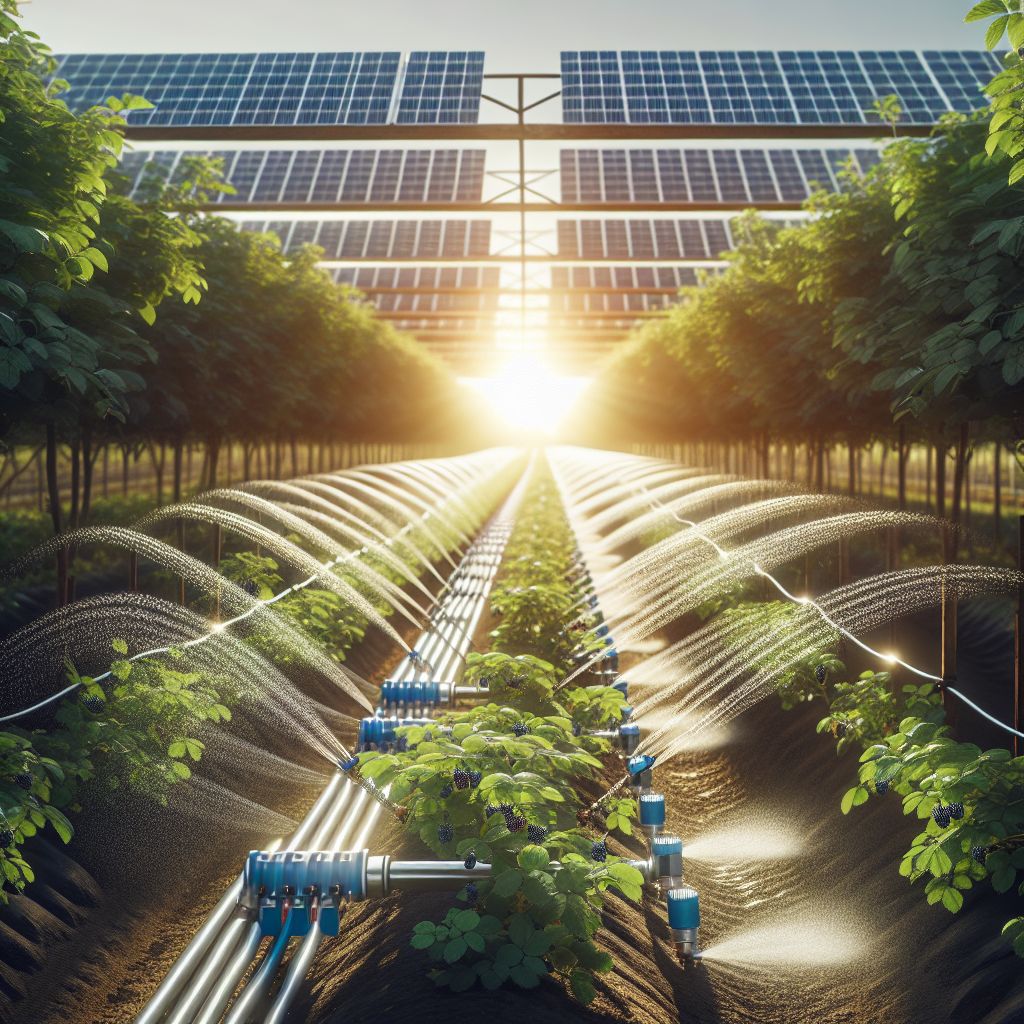
Conclusion: Is it a Good Idea to Incorporate Solar Power into Your Blackberry Orchard’s Irrigation System?
Incorporating solar power into your irrigation system is a good idea for several reasons. It allows for significant long-term savings, reduces the carbon footprint of your farm, and provides a reliable source of energy for your irrigation needs.
By selecting the right mix of solar panels and irrigation techniques, you can create a sustainable and efficient system that benefits your farm and the environment. While the upfront cost may be high, the long-term savings and environmental benefits make it a worthwhile investment.
Final Recommendations
For the best results, invest in high-efficiency monocrystalline solar panels and pair them with a drip irrigation system. This combo offers the highest efficiency and reliability, ensuring that your blackberry plants get the right amount of water while keeping energy costs to a minimum. Additionally, look into government incentives that are available to help offset the upfront costs.
Frequently Asked Questions (FAQ)
What is the cost of installing a solar-powered irrigation system?
The cost to install a solar-powered irrigation system can range greatly based on factors like the size of your farm, the type of solar panels you choose, and the complexity of the installation. On average, you might spend anywhere from $10,000 to $50,000. However, government incentives and long-term energy savings can help offset these costs.
What is the best way to keep a solar-powered irrigation system running smoothly?
Keeping a solar-powered irrigation system in good working order involves regular cleaning of the solar panels to ensure they are free of dust and debris, which can reduce efficiency. In addition, check the irrigation system for clogs and leaks, and perform routine inspections to ensure all components are functioning correctly. Above all, follow the manufacturer’s maintenance guidelines to extend the lifespan of your system.
Can you use solar power irrigation systems in all climates?
Absolutely! Solar power irrigation systems can be used in a wide range of climates. That being said, their effectiveness may depend on the amount of sunlight in the area. If you live in a region with less sunlight, you might need more panels to produce the necessary energy. It’s crucial to evaluate the solar potential of your location before you invest in a solar-powered irrigation system.
How big should the solar panel system be for my blackberry farm?
The size of your solar panel system is determined by the energy needs of your farm and the amount of sunlight available in your area. A typical blackberry farm might need a system that produces between 5 kW and 20 kW of power. For the most accurate size and number of panels needed, it’s recommended to consult with a solar energy professional.
Solar power irrigation for growing blackberries is an innovative and sustainable method to ensure efficient watering. This technique not only conserves water but also reduces electricity costs, making it an ideal solution for farmers. By utilizing solar panels to power the irrigation systems, farmers can optimize water usage and enhance crop yields. For those interested in similar methods, solar irrigation for growing strawberries offers valuable insights and techniques.







Leave a Reply