

Key Takeaways
Solar-powered irrigation systems can significantly reduce energy costs and are sustainable for growing strawberries.
Drip irrigation is the most water-efficient method, ideal for targeting strawberry roots directly.
Monocrystalline solar panels offer the highest efficiency for space-constrained farms.
Combining solar panels with drip irrigation can create the most efficient system for strawberry farming.
Initial costs for solar irrigation can be higher, but long-term savings and environmental benefits make it a wise investment.
Why You Should Use Solar Panels with an Irrigation System for Growing Strawberries
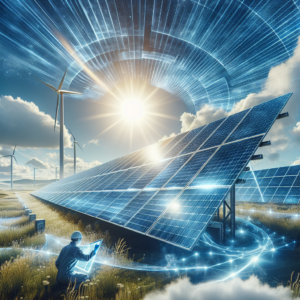
As we look for ways to grow food sustainably, solar-powered irrigation systems have emerged as a game-changer, especially for water-intensive crops like strawberries. Solar panels harness the sun’s energy to power irrigation systems, providing a reliable and eco-friendly water source for your strawberry plants.
Eliminating Power Costs with Solar Energy
Many farmers are now looking into solar panels for farm irrigation systems to reduce their power costs and increase efficiency.
Think about it: sunlight is free, so once you’ve set up your solar panels, the energy costs to run your irrigation pumps plummet to nearly zero. That’s a big deal because it means more money stays in your pocket. And who doesn’t like saving money?
But there’s more. By going solar, you’re also locking in your energy costs. You won’t be at the mercy of rising electricity prices, giving you peace of mind and predictable operating expenses. Plus, solar panels have a long lifespan – often 25 years or more – so this is a long-term solution, not just a quick fix.
Enhancing Water Use Efficiency with Solar Power
Understanding the benefits and efficiencies of solar irrigation systems can be crucial for farmers and gardeners looking to optimize water usage in their cultivation practices.
Match watering schedules with peak sunlight hours to maximize solar energy use.
Use solar-powered sensors to monitor soil moisture and provide water only when needed.
Automate your irrigation system to eliminate water waste and ensure consistent watering.
Efficient water use is crucial for growing strawberries, which are sensitive to both over and under-watering. Solar power can drive smart irrigation systems that deliver the exact amount of water your strawberries need, precisely when they need it.
Positive Environmental Impact of Solar-Powered Irrigation
By choosing solar, you’re not just saving money; you’re also doing your part for the planet. Solar irrigation doesn’t emit greenhouse gases, unlike systems powered by fossil fuels. This means you’re reducing your carbon footprint and contributing to a cleaner environment. It’s a win-win for your farm and the Earth.

Top Irrigation Methods Used by Strawberry Farmers
Let’s dive into the most popular irrigation methods for strawberries. Understanding these will help you pick the best one for your solar setup.
Drip Irrigation: Targeting the Roots
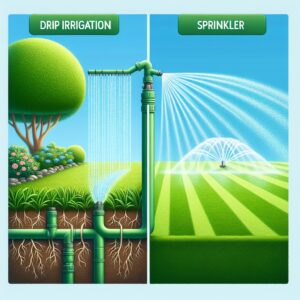
Drip irrigation is a superstar when it comes to water efficiency. It delivers water directly to the base of your strawberry plants, minimizing evaporation and runoff. This targeted approach encourages strong root development, which is essential for healthy, juicy strawberries.
Here’s what makes drip irrigation stand out:
Water savings of up to 60% compared to traditional methods.
Reduced weed growth since only the areas near the plant roots are watered.
Lower risk of disease since the foliage remains dry, preventing fungal growth.
Example: A strawberry farmer in California switched to drip irrigation and saw water usage drop by half while the strawberry yield increased by 20%. That’s the power of precision watering!
Sprinkler Systems: Providing Uniform Water Distribution
When it comes to efficient watering techniques, sprinkler systems are renowned for their ability to deliver a uniform distribution of water, mimicking natural rainfall. This is essential for maintaining consistent moisture levels for crops, which is particularly important in large-scale agricultural operations.
Sprinkler systems are another popular choice, especially for larger fields. They mimic rainfall by spraying water over the plants. While not as water-efficient as drip systems, sprinklers can still be part of a sustainable farm when powered by solar energy.
Benefits include:
Uniform water distribution, which is great for young plants.
Ability to cool plants on hot days, preventing heat stress.
Simplicity in design and ease of installation.
But remember, sprinklers can also lead to water waste through evaporation and runoff. So, they’re best used in conjunction with moisture sensors and timers to optimize water use.
Hybrid System: Using Both Drip and Sprinkler Irrigation Systems for Ultimate Efficiency
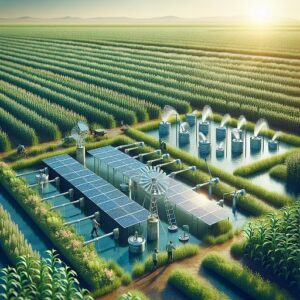
Implementing a hybrid system that combines both drip and sprinkler irrigation can optimize water usage and energy efficiency on farms. This approach allows for targeted watering directly at the root zone through drip systems, while also providing the broader coverage that sprinkler systems offer.
Why not have the best of both worlds? A hybrid system combines drip and sprinkler irrigation, allowing you to use each method when it’s most beneficial. For example, you might use sprinklers for young plants and switch to drip as they mature. This flexibility can lead to even greater efficiency and higher quality strawberries.
Here’s a table summarizing the top irrigation methods used by strawberry farmers, with sources marked:
|
Irrigation Method |
Description |
Advantages |
Disadvantages |
|---|---|---|---|
|
Drip Irrigation |
Delivers water directly to the root zone through drip lines installed along the planted rows. 1, 2, 5 |
– High efficiency (up to 95%).. 1, 5 – Reduces water loss due to evaporation and wind. 1, 5 – Minimizes disease by keeping leaves dry. 1, 5 |
– Does not provide frost protection. 5 |
|
Sprinkler Systems |
Uses overhead sprinklers to distribute water over the plants. 4 |
– Provides frost protection. 4 – Useful during initial growth stages when roots are not fully developed. 4, 5 – Can cover large areas. 4 |
– Lower efficiency (85-90%) due to evaporation and wind drift. 4 |
|
Hybrid System |
Combines both drip and sprinkler systems to maximize efficiency and benefits. 1, 4 |
– Offers the advantages of both systems. 1, 4 |
– More complex and costly to install and maintain. 1, 4 |
Now, let’s move on to the solar panels that will power these systems. It’s important to choose the right type for your needs, so let’s compare your options.

Top Solar Panels for Your Strawberry Farmers Irrigation System
Choosing the right solar panels is critical for the efficiency and effectiveness of your irrigation system. Here’s a look at the top contenders.
Monocrystalline Solar Panels: Maximum Efficiency in a Smaller Space
Monocrystalline solar panels are the go-to choice for those who want the best performance and have limited space. They’re made from a single, pure crystal structure, which allows them to produce more power per square foot than other types. This means you can get more energy with fewer panels, which is great when farm space is at a premium.
They also perform better in low-light conditions, which is important for those cloudy days. Plus, they have a long lifespan, often lasting more than 25 years with proper maintenance. The downside? They come with a higher price tag compared to other types.
Polycrystalline Solar Panels: Balance of Cost and Efficiency
Polycrystalline solar panels are a bit easier on the wallet and still offer reliable performance. They’re made from multiple silicon crystals, which makes them slightly less efficient than monocrystalline panels. However, they are still a solid choice for many farms.
They have a slightly shorter lifespan and may take up more space to generate the same amount of power as monocrystalline panels, but they can still be a cost-effective solution for your irrigation needs, especially if you have more land available.
Thin-Film Solar Panels: Flexibility and Versatility
Thin-film solar panels are the most affordable and the most flexible – literally. They can be rolled out like a mat and are less affected by high temperatures. While they are the least efficient type of solar panel, they work well for large areas where space isn’t an issue.
Their flexibility means they can be installed on a variety of surfaces, including some that aren’t perfectly flat. They’re also lightweight, which can be a big plus for installation. Keep in mind, though, they have the shortest lifespan and will likely need to be replaced more often than the other types.
Here is a table showing the pros and cons of using different types of solar panels with an irrigation system on a farm:
|
Panel Type |
Pros |
Cons |
|---|---|---|
|
Monocrystalline Panels |
– High efficiency (15-22%), producing more power per square foot. 1, 2, 4 | |
|
Polycrystalline Panels |
– Lower upfront cost than monocrystalline. 1, 2 |
– Lower efficiency and shorter lifespan than monocrystalline. 2, 4 |
|
Thin-Film Solar Panels |
– Lowest upfront cost. 1, 2 |
– Lowest efficiency (7-13%). 2, 4 |
What is the Best Solar Panel to Use for Growing Strawberries
When it comes to growing strawberries, monocrystalline panels are generally the best option due to their efficiency and space-saving benefits. However, the best choice for you will depend on your specific farm’s layout, climate, and budget. Let’s weigh the options:
Space: If you’re tight on space, monocrystalline is the way to go.
Budget: If you’re looking to save on upfront costs, consider polycrystalline or thin-film panels.
Climate: If you live in a very hot climate, thin-film panels may perform better.
Now, let’s compare the costs and efficiency of solar irrigation systems to traditional methods.
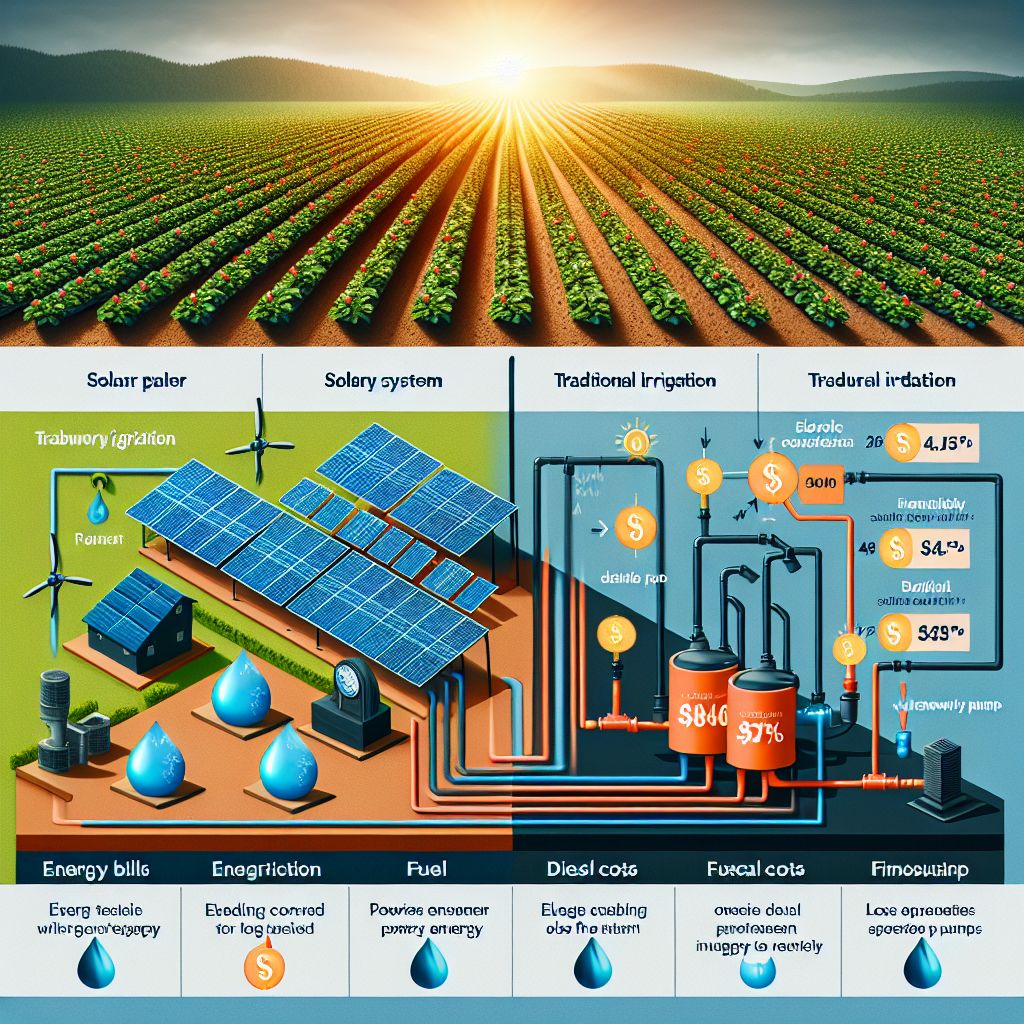
Cost and Efficiency Comparison: Solar Irrigation Systems Versus Traditional Irrigation Systems for Growing Strawberries
When deciding between solar and conventional irrigation systems, it’s important to consider both short-term and long-term factors.
Short-term and Long-term Financial Benefits of Solar Irrigation compared to Conventional Irrigation Systems
In the short term, solar irrigation systems have higher upfront costs due to the purchase of solar panels and installation. However, these costs are offset by the long-term savings on energy bills. A solar irrigation system can save you money over time, not to mention the potential for tax incentives and grants for renewable energy investments.
Long-term, the financial benefits of solar irrigation systems become even more apparent. They have minimal operating costs and require less maintenance than conventional systems. Plus, as energy prices continue to rise, the savings from using free solar energy will only increase.
Energy Efficiency: Solar vs. Electric/Diesel Pumps
Solar pumps are far more energy-efficient than electric or diesel pumps. They convert sunlight directly into electricity to power your irrigation system, with little to no waste. Electric and diesel pumps, on the other hand, often lose energy through heat and friction.
Moreover, diesel pumps require fuel, which is subject to price fluctuations and can be a significant ongoing expense. Electric pumps might seem more convenient, but they’re still drawing on the grid, which may not be using renewable energy. Solar pumps give you the peace of mind that you’re using a clean, renewable source that’s good for the environment and your wallet.
Here is a table comparing the cost and efficiency of an irrigation system with and without solar panels:
|
Aspect |
Without Solar Panels |
With Solar Panels |
|---|---|---|
|
Initial Cost | ||
|
Operating Cost |
Very low or zero fuel/electricity costs after installation. 1, 4 | |
|
Efficiency |
Depends on energy source efficiency. 4 |
Depends on solar radiation, temperature, system design. 1, 4 |
|
Environmental Impact |
Higher carbon footprint. 1 |
Lower carbon footprint, renewable energy. 1 |
|
Location Flexibility |
Limited to grid-connected or fuel access areas. 3 |
Can be used in remote off-grid areas. 3 |
|
Maintenance | ||
|
Lifespan |
Shorter for fuel-based systems. 1 | |
|
Long-term Costs |
Higher due to recurring fuel/electricity bills. 1 |
Lower total 20-year costs by 50-60% compared to traditional systems. 1 |
|
Government Incentives |
Generally none |
Many governments provide tax credits, subsidies for solar irrigation. 1 |
While solar irrigation systems have higher upfront costs, they can provide substantial long-term economic and environmental benefits over traditional irrigation systems powered by electricity grids or fossil fuels. 1, 3, 4

Which Combination of Solar Panels and Irrigation Systems make the Most Efficient System for Your Strawberry Farm
Finding the most efficient system for your farm involves matching the right type of solar panel with the best irrigation method. Here’s what you should consider:
What is the best combination
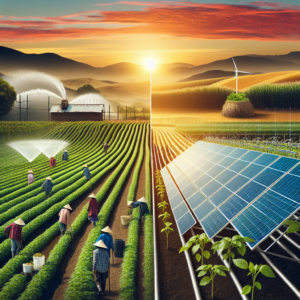
The best combination is often monocrystalline solar panels paired with a drip irrigation system. This setup ensures maximum efficiency, as the high-efficiency panels provide plenty of power for the precise water delivery of drip irrigation. This combination is particularly powerful for strawberry farms where space is at a premium and water conservation is a priority.
However, the best setup for your farm might vary based on several factors, including climate, soil type, and farm size. It’s essential to assess your specific needs before making a decision. Consulting with a solar energy expert and an agricultural specialist can help you determine the best combination for your strawberry farm.
Now, let’s wrap up and consider whether adding solar power to your irrigation system is the smart move for your strawberry farm.

Conclusion: Is it a Smart Decision to Add Solar-Power to an Irrigation System for Your Strawberry Farm
As a strawberry farmer, you know the sun is your lifeblood. But what if you could harness its power directly for your irrigation system? Solar power is gaining popularity, but is it truly a smart decision for your strawberry farm?Ultimately, adding solar power to your strawberry farm’s irrigation system is a smart decision that delivers a multitude of benefits
Considering Initial Investment and ROI
When you’re thinking about adding solar panels to your irrigation system, it’s natural to focus on the initial investment. Yes, you’ll need to spend money upfront on the panels and the setup. But let’s talk about ROI, or return on investment. Solar panels start paying for themselves from day one by cutting down your energy bills. And with incentives like tax breaks and grants, the initial cost isn’t as steep as it seems. Plus, the long-term savings are substantial, making solar a smart financial decision for many strawberry farmers.
Evaluating the Overall Benefits for Your Specific Farm Conditions
Every farm is unique, so it’s important to consider your specific situation. How much sun does your farm get? What’s the local climate like? How much space do you have? Answering these questions will help you figure out if solar irrigation is right for you. And don’t forget to factor in the positive environmental impact and the satisfaction of using clean energy. For many growers, these benefits are just as important as the financial savings.
Frequently Asked Questions
How much can I save by switching to a solar-powered irrigation system?
The amount you can save by going solar depends on several factors, including the size of your irrigation system, local energy costs, and how much sunlight your farm receives. But here’s a rough idea: Farmers who switch to solar can cut their irrigation energy costs by 50% to 80%. That’s a significant saving, especially when you consider that irrigation can be one of the biggest energy users on a farm.
Can solar irrigation systems be used in areas with limited sunlight?
Absolutely! Solar panels are more efficient than ever, and they can generate electricity even on cloudy days. Plus, battery storage systems can store excess energy generated during sunny periods for use when it’s overcast. So, even in areas with less sunlight, solar irrigation can still be a viable option.
What is the lifespan of a solar-powered irrigation system?
Solar panels are built to last. Most come with a warranty of 25 years, and they can continue to work well beyond that. The other components of the system, like the pumps and controllers, typically have shorter lifespans, but they can usually be easily replaced without replacing the entire system.
Are there government incentives for using solar energy in agriculture?
Yes, there are often incentives available for farmers who choose solar. These can include tax credits, grants, and rebates. The specifics vary depending on where you live, so it’s worth doing some research or talking to a local solar provider to find out what’s available in your area.
How does solar irrigation impact the quality of strawberries?
Using solar irrigation can actually improve the quality of your strawberries. Consistent and precise watering leads to better crop yields and higher quality fruit. Plus, because solar irrigation systems often use drip irrigation, there’s less chance of water-related diseases, which can also improve the overall quality of your strawberries.

Leave a Reply