

Imagine walking through a lush orchard, the air sweet with the scent of ripening peaches. Now, imagine that this orchard is not only producing delicious fruit but doing so in harmony with the environment. That’s the power of combining solar irrigation with peach farming. It’s a game-changer for those of us who care deeply about sustainability and want to lead by example. So, let’s dive into how this innovative method is revolutionizing the way we grow peaches.
Key Takeaways
Solar irrigation systems can significantly reduce water usage and energy costs, making them a smart choice for peach farmers.
Monocrystalline solar panels offer high efficiency for limited spaces, ideal for small to medium-sized orchards.
Drip irrigation is the most water-efficient method, delivering water directly to the peach tree roots.
Combining solar panels with the right irrigation method can lead to long-term savings and a more sustainable farm.
Understanding the specifics of your farm’s layout and sunlight exposure is crucial for optimizing a solar irrigation system.

Why You Should Use Solar Panels with an Irrigation System for Growing Peaches
Let’s face it, growing peaches requires a lot of water. But in a world where water is becoming ever more precious, we need to find ways to cut down on waste. That’s where solar irrigation systems come in. They use the power of the sun to pump water through your irrigation system, which means you’re not only saving on your electricity bill but also using energy that’s clean and renewable.
Maximizing Sunlight for Water and Energy Savings
Most importantly, solar panels convert sunlight into electricity without any harmful emissions. This clean energy can then be used to power water pumps, which are essential for irrigation. By harnessing the sun’s power, we’re tapping into an endless, free energy source that can run our irrigation systems without the need for fossil fuels.
The Environmental Impact Reductions
When you choose solar irrigation, you’re also making a positive impact on the environment. By reducing reliance on grid power and fossil fuels, you’re cutting down on greenhouse gas emissions. This means less air pollution and a smaller carbon footprint for your peach orchard.
Long-Term Cost Benefits for Farmers
Besides that, think about the savings. Yes, there’s an upfront cost to installing solar panels, but they start paying for themselves from day one. Over time, the cost of running your irrigation system can drop significantly, because sunlight doesn’t send you a bill. And with the longevity of solar panels, you’re looking at benefits that continue for 25 years or more.

Top Irrigation Methods Used by Peach Farmers
When it comes to watering peaches, not all methods are created equal. It’s crucial to choose an irrigation system that’s efficient and works in tandem with your solar setup. Here are some of the top methods peach farmers are using:
Drip Irrigation: Precise and Water-Saving
Drip irrigation is a fantastic choice for peach orchards. It delivers water directly to the base of each peach tree, minimizing evaporation and runoff. This method is incredibly water-efficient and, when powered by solar energy, it’s also energy-efficient.
Here’s how to set up a solar-powered drip irrigation system:
Install solar panels in a location with maximum sunlight exposure.
Connect the panels to a water pump.
Lay out drip irrigation lines along the rows of peach trees.
Use a timer or controller to automate the watering schedule.
Micro-Sprinkler Systems: Uniform Distribution
Micro-sprinkler systems are another excellent option. They provide a uniform distribution of water, which is great for young trees that need consistent moisture. And when you power these systems with solar panels, you’re ensuring that the water is delivered in the most energy-efficient way possible.
However, it’s important to note that micro-sprinkler systems can be more susceptible to wind and evaporation than drip systems. To maximize efficiency:
Position the micro-sprinklers close to the ground.
Water during the early morning or late evening to reduce evaporation.
Adjust the sprinkler heads to minimize overspray and runoff.
Furrow Irrigation: Is This Traditional Method an Option for Growing Peaches
Furrow irrigation is a more traditional method that involves flooding rows of trees with water. It’s less expensive to install but can be less efficient when it comes to water use. However, it’s not commonly recommended for peach orchards because it can lead to uneven watering and potential disease issues due to standing water.
Which system is best for growing Peaches
So, which is the best system for growing peaches? The answer is: it depends on your specific situation. But for most peach orchards, drip irrigation, powered by solar energy, is the way to go. It’s efficient, it conserves water, and it provides just the right amount of moisture directly to the roots where it’s needed most.
Top Solar Panels for Your Peach Farmers Irrigation System
As a peach farmer, you know that irrigation is key to a successful crop. But with the rising cost of energy, it’s more important than ever to find ways to reduce your irrigation costs. One of the best ways to do this is to install a solar-powered irrigation system. Solar panels can generate free electricity from the sun, which can then be used to power your irrigation system. Here are some top solar panels.
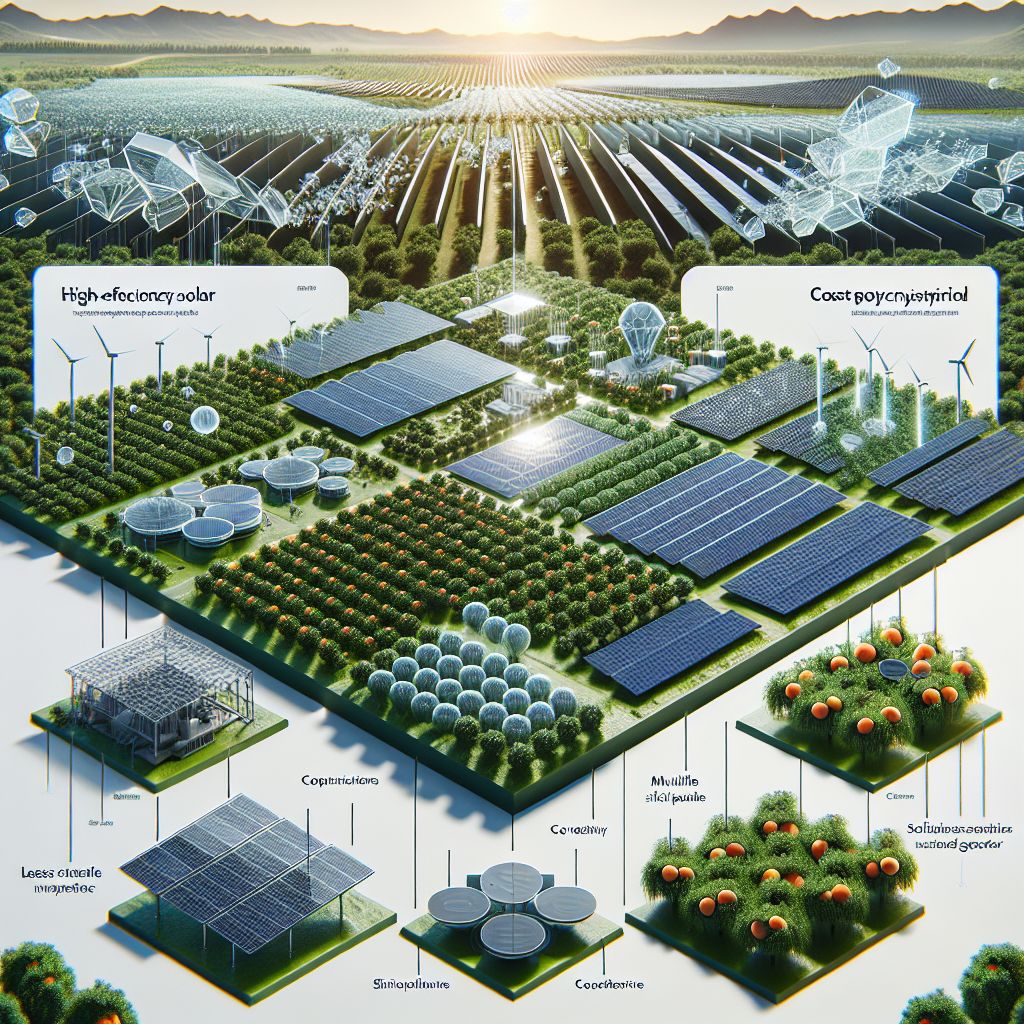
Monocrystalline Solar Panels: High Efficiency in Limited Spaces
Monocrystalline solar panels are top-notch when it comes to efficiency. They’re made from a single, pure crystal structure, which allows them to convert more sunlight into electricity than other types. This means you need fewer panels to get the job done, making them perfect for farms with limited space. To understand how these can be integrated into your agricultural practices, consider exploring irrigation systems you can connect to solar panels for more efficiency for the farmer.
Polycrystalline Solar Panels: Cost-Effective Energy Solution
Polycrystalline panels, on the other hand, are made from multiple silicon fragments melted together. They’re a bit less efficient than monocrystalline panels but are also less expensive. If you’ve got a bit more room to spread out your solar array, these can be a great budget-friendly option.
Thin-Film Solar Panels: Flexibility and Versatility
Thin-film solar panels are lightweight and flexible, which makes them easy to install on a variety of surfaces. They’re less efficient than both monocrystalline and polycrystalline panels, but their versatility can make them a good choice for certain applications.
Here is a table showing the pros and cons of using different types of solar panels with an irrigation system on a farm:
|
Panel Type |
Pros |
Cons |
|---|---|---|
|
Monocrystalline Panels |
– High efficiency (15-22%), producing more power per square foot. 1, 2, 4 | |
|
Polycrystalline Panels |
– Lower upfront cost than monocrystalline. 1, 2 |
– Lower efficiency and shorter lifespan than monocrystalline. 2, 4 |
|
Thin-Film Solar Panels |
– Lowest upfront cost. 1, 2 |
– Lowest efficiency (7-13%). 2, 4 |
Which Solar Panel is the best
Choosing the best solar panel for your peach orchard’s irrigation system comes down to balancing efficiency, cost, and space. Monocrystalline panels are the most efficient but also the costliest. Polycrystalline panels offer a middle ground, and thin-film panels are the least efficient but can be the right choice in the right circumstances.

Cost and Efficiency Comparison: Solar Irrigation Systems Versus Traditional Irrigation Systems for Growing Peaches
Initial Investment and Long-Term Savings with Both System
The initial investment for a solar irrigation system can be higher than a traditional system. However, the long-term savings on water and energy can be substantial. Over time, the solar system can pay for itself and continue to provide cost savings for years to come.
Comparing Water Usage: Solar vs. Traditional Methods
When it comes to water usage, solar irrigation systems, especially when paired with drip irrigation, are far more efficient than traditional methods. This means you can save precious water resources while still providing your peach trees with the hydration they need to thrive.
Here is a table comparing the cost and efficiency of an irrigation system with and without solar panels:
|
Aspect |
Without Solar Panels |
With Solar Panels |
|---|---|---|
|
Initial Cost | ||
|
Operating Cost |
Very low or zero fuel/electricity costs after installation. 1, 4 | |
|
Efficiency |
Depends on energy source efficiency. 4 |
Depends on solar radiation, temperature, system design. 1, 4 |
|
Environmental Impact |
Higher carbon footprint. 1 |
Lower carbon footprint, renewable energy. 1 |
|
Location Flexibility |
Limited to grid-connected or fuel access areas. 3 |
Can be used in remote off-grid areas. 3 |
|
Maintenance | ||
|
Lifespan |
Shorter for fuel-based systems. 1 | |
|
Long-term Costs |
Higher due to recurring fuel/electricity bills. 1 |
Lower total 20-year costs by 50-60% compared to traditional systems. 1 |
|
Government Incentives |
Generally none |
Many governments provide tax credits, subsidies for solar irrigation. 1 |
Which Combination of Solar Panels and Irrigation Systems make the Most Efficient System for Your Peach Farm
Now that we’ve looked at the types of solar panels and irrigation systems available, it’s time to consider the best combination for your peach farm. The goal is to match the efficiency of the solar panels with the water-saving capabilities of the irrigation system to create a setup that’s both environmentally friendly and cost-effective.
Case Studies: What Successful Farms Are Using
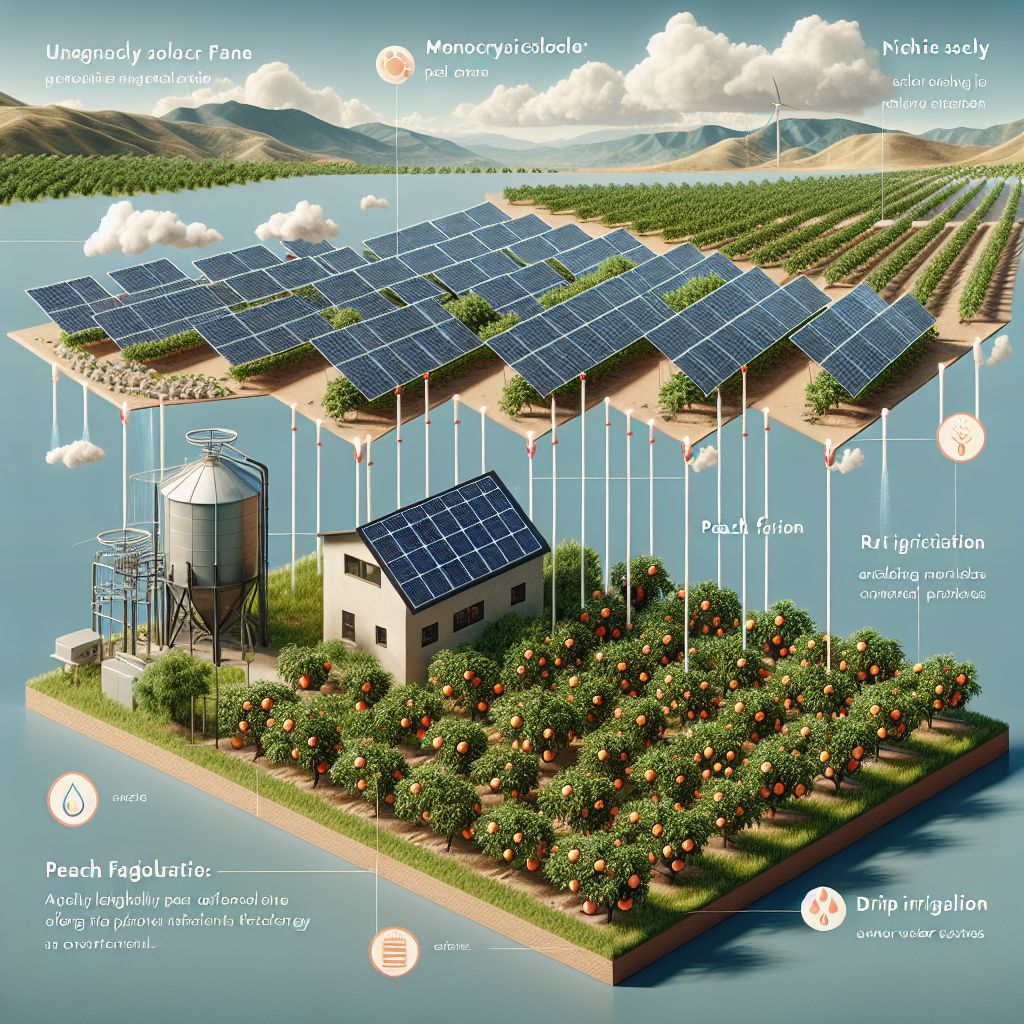
Many successful peach farms have turned to monocrystalline solar panels combined with drip irrigation systems. This combination offers high efficiency in both energy conversion and water delivery, making it a popular choice for farmers who are serious about sustainability and cost savings.
Tailoring the System to Your Farm’s Specific Needs
However, the best combination for your farm will depend on a variety of factors, including the size of your orchard, your budget, and your local climate. It’s essential to assess your specific needs and do your research before making a decision.
What is the Overall Best Combination
While there’s no one-size-fits-all answer, the overall best combination for most peach farms is likely to be monocrystalline solar panels with a drip irrigation system. This setup provides a good balance of efficiency, cost savings, and environmental benefits.

Conclusion: Is it a Smart Decision to Add Solar-Power to an Irrigation System for Your Peach Farm
After considering the benefits and options, it’s clear that adding solar power to your irrigation system is a smart move for peach farmers. Not only does it help conserve water and reduce energy costs, but it also aligns with the growing demand for sustainable farming practices.
Assessing the Return on Investment
When assessing the return on investment, remember to factor in not only the savings on your utility bills but also the potential increase in your farm’s value and the positive impact on the environment. With the right setup, solar irrigation can be a win-win for your business and the planet.
It’s essential to think about the future too. By incorporating solar power into your irrigation practices, you’re not just cutting costs today—you’re investing in the sustainability of your orchard for years to come. You’re future-proofing your farm against rising energy costs and the increasing scarcity of water resources. And that’s something to be proud of.
Future-Proofing Your Orchard with Renewable Energy
Choosing solar-powered irrigation is more than a financial decision; it’s a commitment to future generations. As the climate changes, water and energy resources will become more strained. By adopting solar now, you’re setting up your peach orchard to thrive in a changing world, ensuring that it can continue to produce fruit and support your community for decades.
Frequently Asked Questions (FAQ)
How does solar panel orientation affect irrigation efficiency?
Solar panel orientation is crucial because it determines how much sunlight your panels can capture. The more sunlight they get, the more energy they produce, and the more efficiently they can run your irrigation system. In the Northern Hemisphere, panels should typically face south to maximize sun exposure.
Can solar irrigation systems be automated?
Absolutely! Solar irrigation systems can be fully automated with timers and sensors that monitor soil moisture levels. This means your system can deliver the right amount of water at the right time, without any guesswork or wasted resources. Learn more about solar panels for farm irrigation systems and how they can enhance efficiency.
What is the life expectancy of a solar-powered irrigation system?
Solar panels themselves can last 25 years or more with proper maintenance. The pumps and other equipment in the system may have a shorter lifespan, but with regular upkeep, you can expect your solar irrigation system to run efficiently for many years.
Are there government incentives for installing solar irrigation systems?
In many places, yes. Governments around the world offer various incentives, like tax credits or rebates, to encourage the adoption of solar power. It’s worth researching the incentives available in your area as they can significantly offset the initial installation costs.
How do weather patterns influence the performance of solar irrigation systems?
Weather patterns can affect how much sunlight your solar panels receive and therefore how much energy they produce. During cloudy or rainy periods, your system might produce less power. However, most systems are designed with this variability in mind and can store excess energy for use during these times.
In conclusion, integrating solar power into your peach farm’s irrigation system is a smart and forward-thinking choice. Not only does it offer immediate benefits in terms of cost savings and water conservation, but it also positions your farm as a leader in sustainable agriculture. By making the switch to solar, you’re not just investing in your own future, but in the health of the planet and the well-being of the next generation of farmers and consumers alike. Embrace the sun, the most powerful resource we have, and let it nourish your orchard and your business for years to come.







Leave a Reply