

Key Takeaways:
Switching to solar power for irrigation can dramatically cut down energy expenses and lessen the environmental footprint.
Drip irrigation is the most efficient method for flaxseed cultivation, as it delivers water right to the plant roots.
Monocrystalline solar panels are the best choice for areas with limited space because of their high efficiency.
While the initial investment for a solar-powered irrigation system is high, the long-term savings and return on investment are significant.
The combination of drip irrigation and monocrystalline solar panels provides the most efficient system for flaxseed cultivation.
The Benefits of Using Solar Panels with an Irrigation System for Flaxseed Cultivation
Flaxseed cultivation requires efficient water management to ensure the best possible crop yield. By incorporating solar panels into your irrigation system, you can achieve both sustainability and cost-effectiveness. Solar-powered irrigation systems provide numerous benefits, making them an excellent choice for contemporary flaxseed farmers.
Why Solar-Powered Irrigation is Good for the Environment
By using solar power for irrigation, you’re choosing a green solution that cuts down on the use of fossil fuels. Conventional irrigation systems usually need electricity that’s generated from non-renewable resources, which adds to the problem of greenhouse gas emissions. Solar panels, on the other hand, draw on the sun’s energy, a renewable resource, which can help reduce your farm’s carbon footprint.
Moreover, solar irrigation systems are a great way to save water. With efficient watering techniques such as drip irrigation, you can reduce water waste and make sure every drop is put to good use.
Long-Term Financial Benefits
While it’s true that the upfront cost of a solar-powered irrigation system can be steep, the savings you’ll see over time are substantial. Conventional irrigation systems have continuous costs for electricity or fuel that can accumulate. Solar panels, on the other hand, offer free energy from the sun once they’re installed, significantly cutting your operating costs.
Moreover, numerous areas provide incentives and grants for the implementation of renewable energy solutions, which can help cover the initial expenses. These financial advantages make solar-powered irrigation a smart investment for the future.
Better Crop Yield and Quality
Managing water efficiently is key to growing top-quality flaxseeds. Solar-powered irrigation systems can provide a steady and dependable water supply, making sure that your crops get the right amount of water at the right time. This consistency results in healthier plants and improved yields.
Furthermore, solar-powered systems can be programmed and managed from a distance, giving you the ability to observe and modify water distribution in response to live data. This level of accuracy ensures that your flaxseeds flourish in the best possible conditions.
Self-Sufficient Energy
With solar panels to irrigate your crops, you can achieve energy self-sufficiency. You’re not at the mercy of external energy providers, which can be unreliable and have volatile pricing. Solar power is a steady and dependable source of energy, giving you more control over your farming operations.
One of the biggest advantages of solar-powered irrigation systems is that they keep working even when the power goes out, so your crops are always taken care of.

Top Irrigation Techniques for Flaxseed Farming
It’s essential to pick the right watering technique for your flaxseed crop. Here are some of the most common methods used by flaxseed farmers, including solar-powered irrigation systems.
Drip Irrigation: Delivering Water Where It’s Needed Most
Drip irrigation is a water-saving method that directly delivers water to the roots of the plants through a system of tubes and emitters. This focused technique minimizes water waste and ensures that each plant gets the moisture it needs.
For flaxseed farming, drip irrigation is especially helpful because it keeps water from going where it shouldn’t, which cuts down on weeds and soil erosion. Plus, it lets you control exactly where the water goes, which is key for keeping the soil moisture levels just right.
Why Sprinkler and Center Pivot Irrigation Work Well on Light Soils
For those farming on light, sandy soils, sprinkler and center pivot irrigation systems are a good fit. They mimic the effects of natural rainfall by evenly distributing water throughout the field. Not only are they easy to install, but they can also cover a large area, making them a favorite among farmers. For more information, check out this guide on solar panels for farms.
Nonetheless, sprinkler systems may not be as efficient as drip irrigation because some water could evaporate or run off. For optimal efficiency, it’s crucial to regularly check and fine-tune the system.
Flood Irrigation: Ideal for Heavy Soils
Flood irrigation is a method that involves spreading water across the field via gravity flow. It’s ideal for farms with heavy, clay soils that hold water well. Flood irrigation is relatively straightforward and inexpensive, as it requires minimal equipment. For more information on setting up efficient irrigation systems, check out this guide on solar panels for farm irrigation systems.
However, it may not be as accurate as other methods, resulting in an unequal distribution of water. To make it more efficient, you might want to think about using furrows or basins to direct the water flow and make sure it gets to all parts of the field. For a detailed guide on improving irrigation systems, check out this solar panels for farms irrigation system.
Here is a table showing the pros and cons of different irrigation systems a farmer can use on a farm:
|
Irrigation System |
Pros |
Cons |
|---|---|---|
|
Drip Irrigation |
– High water efficiency (90%+). 1 |
– High initial cost. 4 |
|
Soaker Hoses |
– Simple to install and use. 6 |
– Less efficient than drip irrigation. 6, 7 |
|
Sprinkler Irrigation |
– Relatively inexpensive to install. 5 |
– Lower efficiency than drip (60-80%). 1 |
|
Flood Irrigation |
– Very low efficiency (50-60%). 1 |
Which Irrigation System is the Best for Flaxseed Farming?
The ideal irrigation system for your flaxseed farm can depend on a number of factors, such as the type of soil, the size of the field, and the availability of water. However, drip irrigation is usually the best method for flaxseed farming. This is because it delivers water straight to the roots of the plants, reducing waste.
When it comes to light, sandy soils, a sprinkler or center pivot system might be your best bet. For heavier, clay soils, surface irrigation might be a more effective and affordable choice. Always remember to take into account your farm’s unique needs and circumstances when deciding on the most appropriate irrigation method.
Now that we looked at irrigation systems, let’s take a look at the solar panels that power them.

Top Solar Panels for Your Flaxseed Farming Irrigation System
Picking the perfect solar panels for your irrigation system is key to ensuring optimal efficiency and performance. Here are a few of the best solar panel choices for flaxseed farmers:
Monocrystalline Solar Panels: Achieving High Efficiency in Constrained Spaces
Monocrystalline solar panels are recognized for their superior efficiency and extended lifespan. These panels are constructed from a singular crystal structure, enabling them to transform sunlight into electricity more efficiently than other panel varieties.
If you’re working with a smaller farm, monocrystalline panels are a great option. They generate a lot of power in a small space. These panels are also known for their durability and performance, making them a dependable choice for powering your irrigation system.
Polycrystalline Solar Panels: A Budget-Friendly Energy Option
Polycrystalline solar panels are constructed from numerous silicon crystals, which results in them being less efficient than their monocrystalline counterparts. However, they are more budget-friendly, making them a common selection for cost-conscious farmers. These panels strike a good balance between performance and cost, supplying dependable energy for your irrigation system.
Flexible and Versatile Thin-Film Solar Panels
Thin-film solar panels, made from materials like amorphous silicon, cadmium telluride, and copper indium gallium selenide, are lightweight and flexible. This makes them easy to install in a variety of places. Although they aren’t as efficient as crystalline panels, they are versatile enough to work well on farms with unique installation requirements.
Here is a table showing the pros and cons of using different types of solar panels with an irrigation system on a farm:
|
Panel Type |
Pros |
Cons |
|---|---|---|
|
Monocrystalline Panels |
– High efficiency (15-22%), producing more power per square foot. 1, 2, 4 | |
|
Polycrystalline Panels |
– Lower upfront cost than monocrystalline. 1, 2 |
– Lower efficiency and shorter lifespan than monocrystalline. 2, 4 |
|
Thin-Film Solar Panels |
– Lowest upfront cost. 1, 2 |
– Lowest efficiency (7-13%). 2, 4 |
Choosing the Perfect Solar Panel for Your Farm
The perfect solar panel for your farm is based on your specific needs and budget. If you are limited on space and need high efficiency, monocrystalline panels are the way to go. If cost is your main concern, polycrystalline panels are a good balance of performance and price. For unique installation scenarios, thin-film panels give you the flexibility and versatility you need to power your irrigation system effectively.
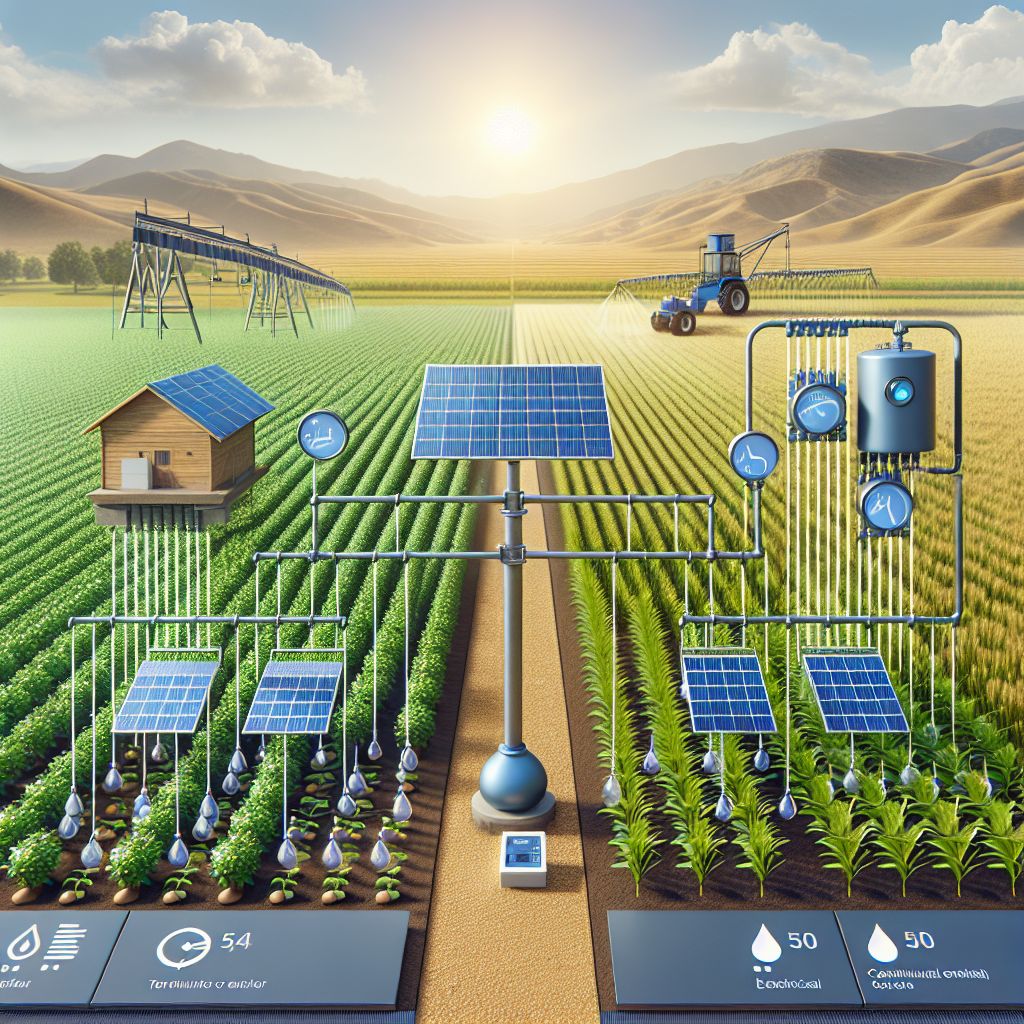
Comparing Costs and Efficiency: Solar-Powered Irrigation Systems and Traditional Irrigation Systems for Flaxseed Farm
When comparing solar-powered irrigation systems to traditional irrigation systems, it’s important to consider both the cost and the efficiency of each system. By understanding these factors, you can make a decision that will be beneficial to your farm in the long term.
Upfront Costs and Setup Expenses for Both Systems
The upfront costs for a solar-powered irrigation system are higher than those of a conventional system. Solar panels, inverters, and other components can be expensive initially. However, various incentives, grants, and financing options can help mitigate these upfront expenses. For more information on setting up solar irrigation, check out this guide on solar-powered irrigation for growing eggplant.
While conventional irrigation systems may be cheaper to install initially, they incur continuous costs for electricity or fuel. These ongoing expenses can accumulate over time, resulting in traditional systems being more costly in the long term.
Comparing Long-Term Operating Expenses
Once installed, solar-powered irrigation systems have very low operating costs. The sun provides energy for free, so you don’t have to worry about electricity or fuel costs.
Traditional irrigation systems, on the other hand, require continuous electricity or fuel, the cost of which can change depending on the market.
Both types of systems have similar maintenance costs, but solar systems may need to be cleaned and inspected from time to time to keep them working at their best.
When you look at the big picture, solar-powered irrigation systems can save you a lot of money in the long run compared to traditional systems.
Comparing Efficiency in Water Usage
When it comes to accuracy in water distribution, solar-powered irrigation systems, especially when combined with efficient watering techniques like drip irrigation, are hard to beat. This accuracy not only minimizes water waste, but it also guarantees that each plant gets the moisture it needs.
Conventional watering systems, such as surface irrigation, can be inefficient, leading to uneven water distribution and a higher level of water wastage.
Comparing the Return on Investment (ROI)
Solar-powered irrigation systems typically have a higher ROI than traditional systems. Although they require a larger upfront investment, the long-term energy savings and potential incentives make solar systems a more cost-effective choice in the long run.
Here is a table comparing the cost and efficiency of an irrigation system with and without solar panels:
|
Aspect |
Without Solar Panels |
With Solar Panels |
|---|---|---|
|
Initial Cost | ||
|
Operating Cost |
Very low or zero fuel/electricity costs after installation. 1, 4 | |
|
Efficiency |
Depends on energy source efficiency. 4 |
Depends on solar radiation, temperature, system design. 1, 4 |
|
Environmental Impact |
Higher carbon footprint. 1 |
Lower carbon footprint, renewable energy. 1 |
|
Location Flexibility |
Limited to grid-connected or fuel access areas. 3 |
Can be used in remote off-grid areas. 3 |
|
Maintenance | ||
|
Lifespan |
Shorter for fuel-based systems. 1 | |
|
Long-term Costs |
Higher due to recurring fuel/electricity bills. 1 |
Lower total 20-year costs by 50-60% compared to traditional systems. 1 |
|
Government Incentives |
Generally none |
Many governments provide tax credits, subsidies for solar irrigation. 1 |
Perhaps the most compelling reason to invest in solar-powered irrigation systems is their environmental friendliness and sustainability, which make them a wise choice for progressive farmers.

Choosing the Best Pairing of Solar Panels and Irrigation Systems for Your Flaxseed Farm
Pairing the perfect solar panels with the appropriate irrigation system can help you get the most out of your flaxseed farm. Here are some great combinations:
Perfect Match: Drip Irrigation and Monocrystalline Solar Panels
If you’re farming on a small scale, combining monocrystalline solar panels with drip irrigation is a great way to get the most out of your water and energy resources. This setup makes sure your flaxseeds get just the right amount of water, without wasting a drop.
Pairing Sprinkler Systems with Polycrystalline Solar Panels: A Cost-Effective Solution
For those on a tight budget, pairing polycrystalline solar panels with sprinkler systems is a good option. While this combination may not be as efficient as others, it is a cost-effective solution that still provides reliable performance. Learn more about irrigation systems you can connect to solar panels for better efficiency.
Keeping Your System Running Smoothly
It’s important to take care of your solar-powered irrigation system if you want it to last a long time and work well. Here are some key tips: Regularly check for any clogs or leaks in the system to ensure efficient water distribution. For more information on enhancing efficiency, explore irrigation systems you can connect to solar panels.
Keep the solar panels clean and free of dust and debris to ensure they operate at peak efficiency.
Regularly check the irrigation system for leaks or blockages and fix them as soon as possible.
Use sensors and automation tools to monitor the system’s performance and ensure water is being distributed evenly.
Perform routine maintenance checks to catch and fix any potential problems before they turn into major issues.
Conclusion
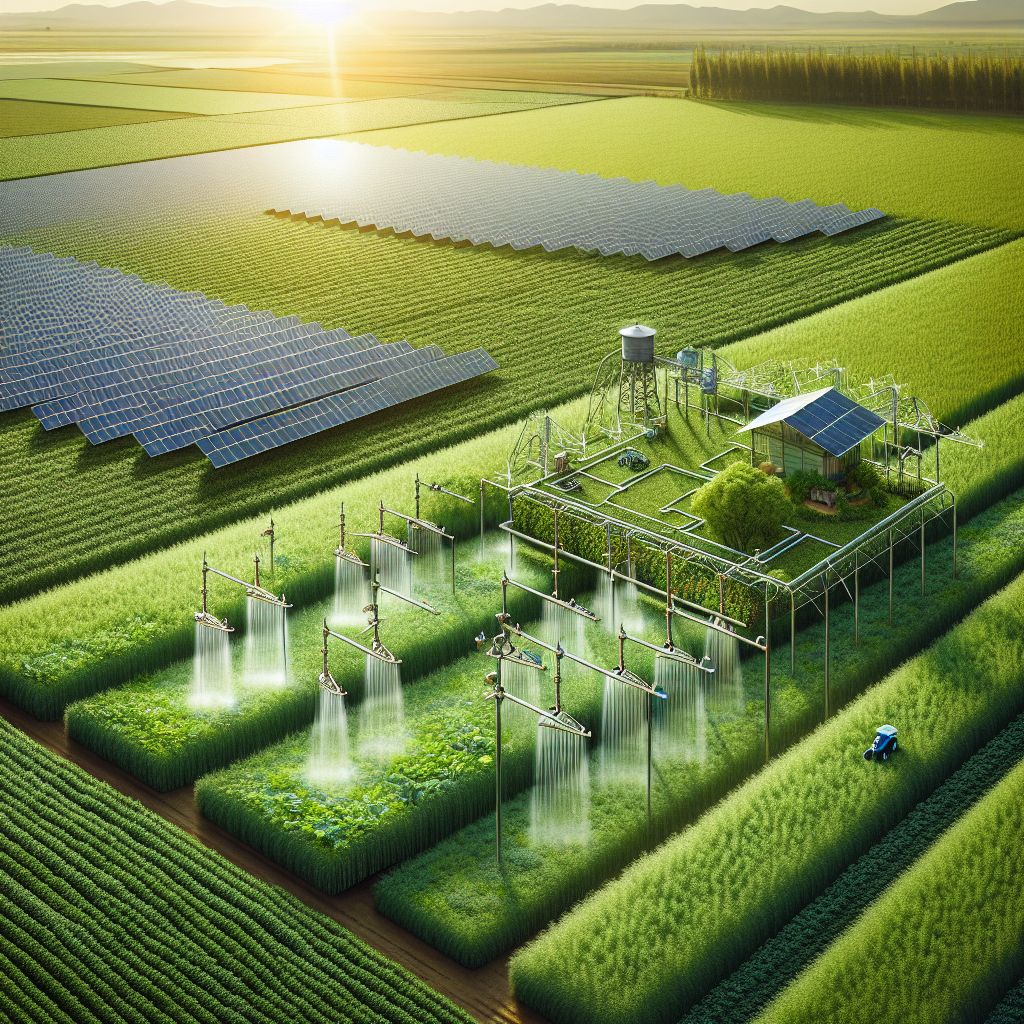
Implementing a solar-powered irrigation system on your flaxseed farm has many advantages, such as cost savings, environmental friendliness, and increased crop yields. By choosing the right combination of solar panels and irrigation techniques, you can build a system that is efficient, reliable, and tailored to your farm’s specific needs.
Even though the upfront costs may be steep, the long-term savings and the positive impact on the environment make solar-powered irrigation a smart choice for forward-thinking farmers. This innovative technology can boost your farm’s productivity and sustainability.
Frequently Asked Questions (FAQ)
What is the lifespan of a solar panel?
On average, solar panels have a lifespan of 25 to 30 years. It is important to note that their efficiency can decrease slightly over time. However, you can extend their lifespan and maintain optimal performance with regular maintenance and cleaning.
Does solar-powered irrigation still function when it’s overcast?
Indeed, solar panels can produce power even when the sky is cloudy, though their effectiveness might be diminished. To guarantee a steady power supply, you might want to think about setting up a battery storage system. This will allow you to store surplus energy produced on sunny days for use when the weather is less cooperative. For more information, check out this Solar Panels for Farms Irrigation System: Efficiency & Setup Guide.
What upkeep is needed for solar-powered irrigation systems?
Keeping solar-powered irrigation systems running smoothly involves regular cleaning of the solar panels, checking the irrigation system for leaks or obstructions, and keeping an eye on the system’s performance. Regular upkeep checks can help spot and deal with potential problems before they become big issues.
What is the water output of a solar-powered pump?
The water output of a solar-powered pump is determined by several factors, such as the size and efficiency of the solar panels, the pump’s capacity, and the water source. It’s crucial to select a pump that can meet your farm’s specific water requirements and make sure that the solar panels can produce sufficient power to run the pump effectively.
Do government grants or incentives exist for solar irrigation?
Several areas provide grants and incentives for implementing renewable energy solutions, such as solar-powered irrigation systems. These financial advantages can help mitigate the initial investment costs and render solar irrigation more economical. Consult your local government or agricultural extension office for applicable programs and eligibility criteria.

Leave a Reply