

Key Takeaways
Using solar power for irrigation significantly cuts down on water and energy expenses.
Drip irrigation is the best way to water pinto beans, as it minimizes wasted water.
Monocrystalline solar panels are the most efficient and have the longest lifespan.
While the upfront cost of solar irrigation systems can be high, the long-term savings make it a worthwhile investment.
Government incentives are available to help cover the cost of installing solar-powered systems.
The Benefits of Using Solar Panels with an Irrigation System for Growing Pinto Beans
Solar-powered irrigation systems are revolutionizing the way we grow pinto beans. These systems use the power of the sun to provide a sustainable, cost-effective way to water crops. Pinto beans, like many other crops, need regular, efficient watering to grow well. With solar-powered irrigation, you can make sure your beans get the water they need without the high energy costs of traditional irrigation methods.
Going Green
Perhaps the most persuasive argument for using solar panels to power your irrigation system is the positive effect on the environment. Traditional irrigation systems often use electricity generated by burning fossil fuels, which leads to the emission of greenhouse gases. Solar-powered systems, in contrast, use renewable energy from the sun, which helps to reduce the carbon footprint of your farm.
Additionally, solar panels are known to last for a long time, often more than 25 years. This means that they require fewer resources for maintenance and replacement, making them a long-term sustainable option.
Reduced Expenses
Adopting solar irrigation can result in substantial savings. Although the initial cost might seem steep, the long-term advantages far outweigh the expenses. Once the panels are installed, solar energy is free, eliminating your monthly electric bill for irrigation.
In addition, solar-powered systems often qualify for government incentives and rebates, which can help offset the initial costs. In the long run, the savings on energy bills and potential incentives make solar irrigation a financially wise choice.
The Benefits of Renewable Energy
Unlike fossil fuels, solar energy is a renewable resource. It won’t ever run out, making it a dependable source of power for your irrigation system. Solar energy is constant and reliable, unlike fossil fuels, which can be subject to price and availability fluctuations.
Moreover, by using renewable energy, we are promoting a cleaner and healthier environment. By reducing our reliance on non-renewable energy sources, we are helping to create a more sustainable future.
A Sustainable Future
Going solar with your irrigation is a move towards a sustainable future. Solar panels need little upkeep and have a long life, making sure your irrigation system keeps running for many years.
Moreover, utilizing solar power is in line with sustainable farming methods, encouraging environmental care and preservation of resources. This not only aids your farm but also helps to protect the earth.
Government Subsidies
There are numerous government subsidies and rebates available for the installation of solar-powered systems. These subsidies can drastically lower the upfront cost of installing a solar irrigation system, making it more affordable for farmers.
It’s crucial to explore these programs and make the most of them to maximize your savings. In many instances, the combination of cost savings on energy bills and government incentives makes solar-powered irrigation a very appealing choice.

Top Irrigation Techniques Among Pinto Bean Cultivators
Deciding on the most suitable watering technique is vital for the successful growth of pinto beans. Each method has its pros and cons, so it’s crucial to choose the one that fits your farm’s requirements the best.
Drip Irrigation
Drip irrigation is one of the best watering techniques for pinto beans. This system uses a series of tubes and emitters to deliver water straight to the root zone of the plant. Trickle irrigation reduces water waste and ensures accurate delivery, which leads to optimal water use and increased crop yield. For more information on similar systems, you can explore solar-powered irrigation for growing green beans.
Drip irrigation is especially useful for pinto beans because it decreases the chance of diseases that can be caused by too much moisture on the leaves. It also helps to better manage the amount of water each plant gets, which can help them grow better. For more information, check out this article on solar-powered irrigation for growing green beans.
Watering with Sprinklers
Watering with sprinklers is a great way to imitate nature’s way of providing rain to crops. This method is flexible and can be used over a large area, which is perfect for watering a large field of pinto beans. However, sprinkler systems can lead to water loss through evaporation and runoff, which can reduce the overall efficiency of the system.
Even with these challenges, the sprinkler irrigation system is still a favorite among many farmers because of its simplicity and ease of installation. It’s important to keep an eye on the system and make necessary adjustments to prevent water wastage and ensure even water distribution.
Even with these disadvantages, many farmers still prefer sprinkler irrigation because it is simple and easy to install. However, it is crucial to regularly check and adjust the system to reduce water waste and ensure that all areas are watered evenly.
Furrow Irrigation
Furrow irrigation is a method where small trenches are made throughout the field and water is allowed to flow through them by gravity to water the crops. This method is simple to install and doesn’t require a lot of equipment. However, ditch irrigation can cause uneven watering and a lot of water can be lost through evaporation and runoff.
When it comes to growing pinto beans, furrow irrigation can work wonders, but only if it’s managed correctly. It’s important to make sure that the furrows are well-constructed and kept in good shape to avoid waterlogging and soil erosion.
Subsurface Irrigation
Subsurface irrigation works by supplying water straight to the plant’s root zone via a series of pipes or tubes that are buried underground. This technique is extremely effective because it cuts down on the amount of water lost due to evaporation and runoff. Furthermore, by keeping the foliage dry, underground irrigation lowers the chances of plant diseases.
Despite the initial complexity and expense of setting up a subsurface irrigation system, it can provide lasting advantages for growing pinto beans. The system’s ability to deliver water consistently and accurately encourages strong plant development and high crop yields.
Pros and Cons of Different Techniques
Every watering technique comes with its own set of benefits and drawbacks. When deciding on the best technique for your field, it’s important to take into account aspects such as water efficiency, price, ease of setup, and compatibility with pinto beans.
|
Method of Irrigation |
Advantages |
Disadvantages |
|---|---|---|
|
Drip Irrigation |
Highly efficient in water usage, delivers water precisely, reduces the risk of disease |
Costly to set up, needs regular maintenance |
|
Sprinkler Irrigation |
Simple to set up, can cover large areas |
Loss of water due to evaporation, coverage can be uneven |
|
Furrow Irrigation |
Inexpensive, easy to set up |
Loss of water due to evaporation, distribution can be uneven |
|
Subsurface Irrigation |
Extremely efficient, reduces the risk of disease |
Complicated to install, costly to set up |
Now that we finished looking at irrigation systems, let’s take a look at the solar panels that power them.

Best Solar Panels for Your Pinto Bean Farm’s Irrigation System
It’s important to choose the right solar panels to get the most out of your irrigation system. There are several types of solar panels to choose from, each with its own pros and cons.
Monocrystalline Solar Panels
Single-crystal solar panels, also known as monocrystalline panels, are recognized for their superior efficiency and longevity. Their structure, made from a single crystal, enables them to convert sunlight into electricity more efficiently than other panel types.
Monocrystalline panels are a great choice for farms that are tight on space, as they generate more power per square foot. Plus, these panels usually perform better in low-light conditions, so you can count on consistent energy production. For more information, check out this solar panels for farms setup guide.
Polycrystalline Solar Panels
Multi-crystal structures are used to make polycrystalline solar panels. They are not as efficient as monocrystalline panels, but they are usually cheaper and easier to make.
Polycrystalline panels may need more room to generate the same amount of power as monocrystalline panels, but they can still be a practical choice for farms that have a lot of space and a limited budget.
Thin-Film Solar Panels
Thin-film solar panels are created by applying a thin layer of photovoltaic material onto a base material. These panels are not heavy, can be bent, and can be placed on different surfaces, making them a flexible choice for watering systems.
On the other hand, thin-film panels usually have less efficiency and a shorter lifespan than monocrystalline and polycrystalline panels. They are the best choice for applications where flexibility and easy installation are more important than efficiency.
Here is a table showing the pros and cons of using different types of solar panels with an irrigation system on a farm:
|
Panel Type |
Pros |
Cons |
|---|---|---|
|
Monocrystalline Panels |
– High efficiency (15-22%), producing more power per square foot. 1, 2, 4 | |
|
Polycrystalline Panels |
– Lower upfront cost than monocrystalline. 1, 2 |
– Lower efficiency and shorter lifespan than monocrystalline. 2, 4 |
|
Thin-Film Solar Panels |
– Lowest upfront cost. 1, 2 |
– Lowest efficiency (7-13%). 2, 4 |
Which Solar Panel is Most Suitable for Pinto Bean Cultivation
Monocrystalline panels are usually the preferred option for pinto bean cultivation because of their high efficiency and longevity. Even though they might be more expensive initially, their excellent performance and durability make them a valuable investment for eco-friendly irrigation.
Nonetheless, the best solar panel for your farm will come down to your specific needs and budget. You should think about factors such as the space you have available, your energy needs, and how much you’re willing to spend when you’re making your decision.
Monocrystalline Panels: These panels are highly efficient, have a long lifespan, and are ideal for areas with limited space.
Polycrystalline Panels: These are more affordable and require more space, making them suitable for larger farms.
Thin-Film Panels: These panels are lightweight, flexible, and have lower efficiency, making them best for versatile applications.
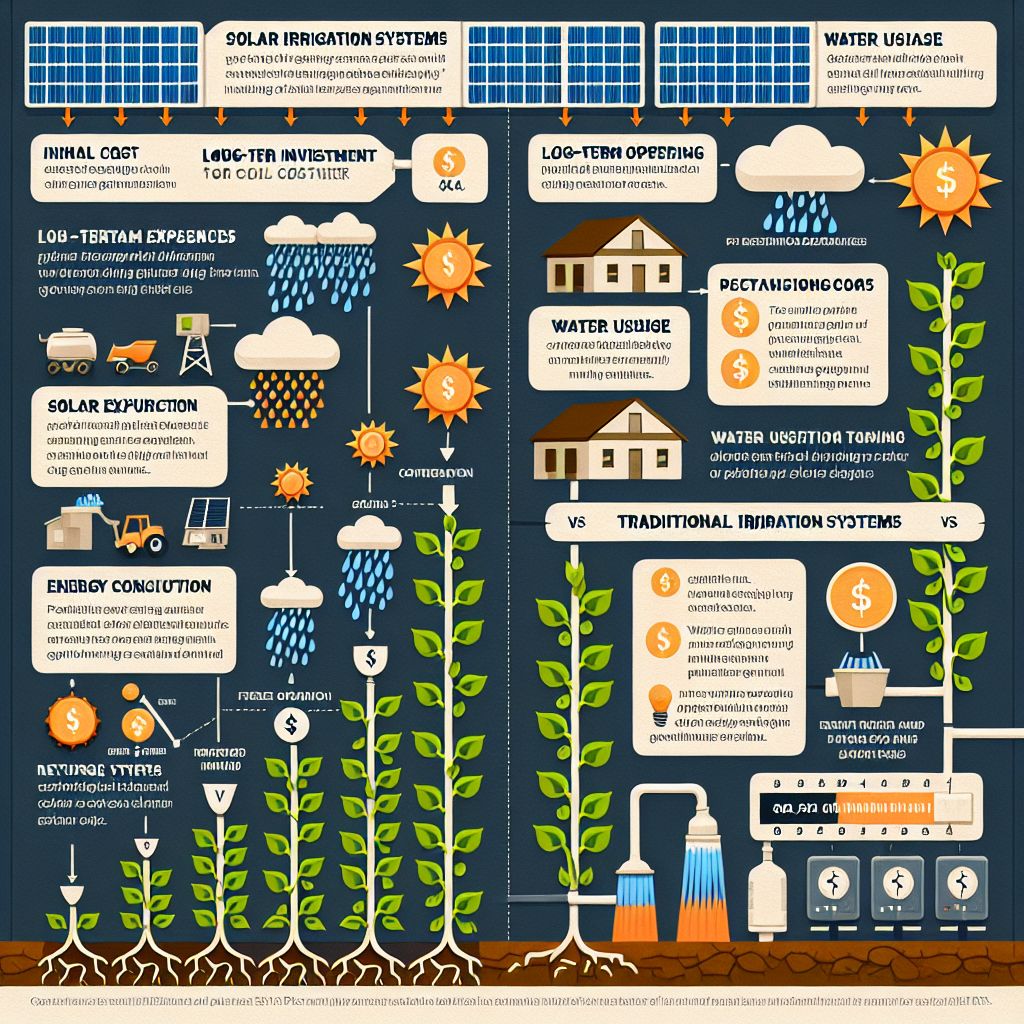
Comparing the Cost and Efficiency of Solar Irrigation Systems and Traditional Irrigation Systems for Growing Pinto Beans
When choosing between solar and traditional irrigation systems, it’s important to weigh the costs and efficiency of each. While solar-powered systems may require a larger initial investment, they often provide long-term savings and are better for the environment.
Comparing the Initial Investment Costs
While the initial costs of solar irrigation systems are often higher due to the expense of the solar panels and their installation, they can be made more affordable through government incentives and rebates.
While traditional irrigation systems may have lower upfront costs, they often end up costing more in the long run due to energy usage and upkeep.
Long-run Operating Expenses for Both Methods
Once set up, solar-powered irrigation systems have very low operating costs. Solar power is free and the systems require little upkeep, which results in considerable savings over time.
On the other hand, conventional irrigation systems are powered by electricity or fuel, leading to substantial operating costs. Moreover, these systems may need more regular upkeep, which can add to the costs.
Comparing Water Use and Conservation
When you combine solar-powered irrigation systems with efficient watering techniques, such as drip irrigation, you can drastically cut down on the amount of water you use. These systems deliver water right to the roots of the plants, which helps to reduce waste and encourage water conservation. For example, you can read about solar irrigation for growing cantaloupes to understand more about these efficient systems.
Old school watering methods like sprinklers and furrows often lose a lot of water to evaporation and runoff. This can make watering less efficient and more expensive.
How Much Energy Does Each System Use?
With solar-powered irrigation systems, you’re using the sun’s renewable energy instead of electricity or fuel. This not only cuts down on energy costs, but it’s also a more environmentally friendly option.
Conventional irrigation methods use a lot of energy, which can drive up operational expenses and harm the environment. By transitioning to solar power, we can alleviate these problems.
Cost and Return Time for Both Systems
Although the initial cost for solar-powered irrigation systems may be higher, the savings on energy and water costs over time often lead to a positive return on investment (ROI). The return time for solar systems can vary, but it is usually within a few years, depending on factors such as energy consumption and available incentives. For example, solar-powered irrigation for growing beets has shown significant cost savings over time.
Even though traditional irrigation systems might seem cheaper at first, the recurring costs can pile up quickly and reduce the overall return on investment.
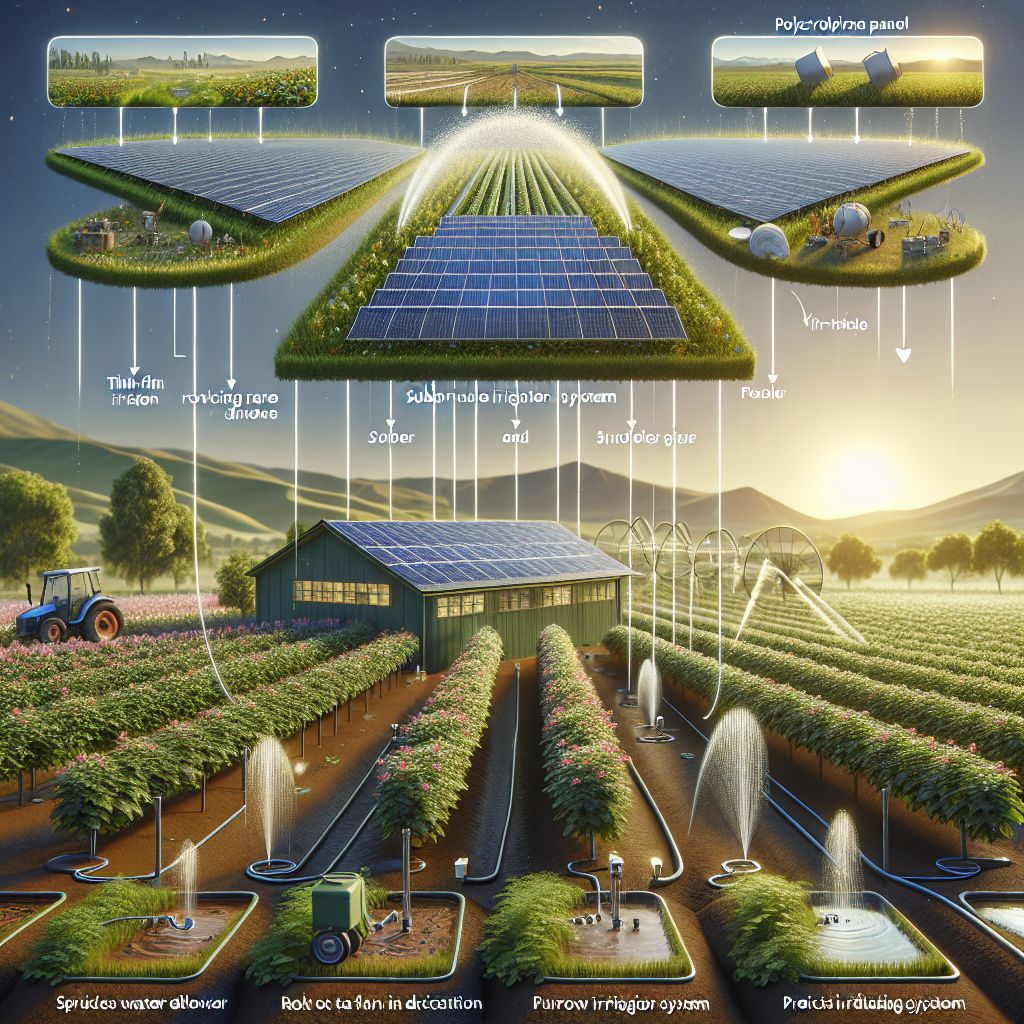
Choosing the Best Solar Panels and Irrigation Systems for Your Pinto Bean Farm
Choosing the right solar panels and irrigation system is crucial to getting the most out of solar-powered irrigation on your pinto bean farm.
The Perfect Match: Drip Irrigation and Monocrystalline Solar Panels
Many pinto bean farmers find that using drip irrigation in conjunction with monocrystalline solar panels gives them the best results. Drip irrigation is great for delivering water exactly where it’s needed, reducing waste and helping plants to grow healthily. Monocrystalline solar panels are high performers, offering consistent energy production and great efficiency, making them a perfect choice for powering your irrigation system.
Alternative Pairings for Solar-Powered Irrigation Systems
Although drip irrigation and monocrystalline panels are frequently the top picks, other pairings might work just as well, depending on your farm’s unique requirements. For instance, exploring irrigation systems you can connect to solar panels can offer more efficiency for the farmer.
Polycrystalline Panels with Sprinkler Irrigation: This is a good option for larger farms with more space and a smaller budget. It’s a good balance between cost and efficiency, but you may lose more water to evaporation.
Thin-Film Panels with Furrow Irrigation: This is a great option if you need something versatile and easy to install. It may not be as efficient with water, but it can be cost-effective for certain farm setups.
Monocrystalline Panels with Subsurface Irrigation: This combination is highly efficient and delivers water right where you need it for optimal crop growth. It’s great for reducing water waste and promoting healthy plant growth.
At the end of the day, the best combination for your farm will depend on things like how much space you have, your budget, and your specific irrigation needs. By taking these things into consideration, you can create a sustainable and efficient irrigation system that is good for your crops and the environment. For more details, you can check out solar panels for farms.

Conclusion: Should You Add Solar-Power to Your Pinto Bean Farm’s Irrigation System?
“Investing in solar-powered irrigation systems can lead to significant long-term savings and environmental benefits, making it a good choice for sustainable farming.”
Adding solar power to your irrigation system isn’t just a good decision; it’s a forward-thinking approach to sustainable farming. The benefits of reduced energy costs, environmental impact, and long-term savings far outweigh the initial investment. For more information, check out this guide on solar panels for farms irrigation systems.
In addition, the combination of solar panels and efficient watering techniques, like drip irrigation, means your pinto beans get just the right amount of water they need to grow healthily and produce the best possible crop.
So, by switching to solar-powered irrigation, you can establish a more eco-friendly and cost-efficient farming operation that is beneficial to both your crops and the environment. Learn more about irrigation systems you can connect to solar panels for increased efficiency.
Benefits at a Glance
Let’s quickly recap the benefits of using solar-powered irrigation systems for pinto bean cultivation:
Significant savings on energy and water bills.
Reduced carbon footprint and environmental impact.
Increased water efficiency and conservation.
Long-term sustainability with minimal maintenance.
Potential for government incentives and rebates.
Success Stories and Case Studies
Many farmers have successfully made the switch to solar-powered irrigation systems, enjoying the benefits of sustainable farming. For instance, a pinto bean farmer in California installed a solar-powered drip irrigation system and reported a 30% increase in crop yield while reducing water usage by 40%. The farmer also saved thousands of dollars on energy bills, demonstrating the financial viability of solar-powered irrigation.
A pinto bean farm in Texas has seen success after installing a solar-powered subsurface irrigation system. The farmer reported that the system required little maintenance and delivered water consistently, which led to healthier plants and higher yields.
Wrapping Up
To sum up, solar-powered watering systems can provide a myriad of advantages for those who farm pinto beans. By using the sun’s energy, you can develop a sustainable and effective watering system that encourages robust crop growth, cuts down on expenses, and is good for the environment. With the correct mix of solar panels and watering techniques, you can guarantee the prosperity of your pinto bean farm for the foreseeable future.
Frequently Asked Questions (FAQ)
Here are some answers to the most commonly asked questions about solar-powered irrigation systems:
What is the Function of a Solar-Powered Irrigation System?
A solar-powered irrigation system operates by using solar panels to change sunlight into electricity. The electricity then powers the water pumps which pull water from a source like a well or reservoir, and then delivers it to the irrigation system. The system can be automated to ensure that water is consistently and accurately delivered to your crops.
What Do You Need to Do to Maintain Solar Panels?
Keep them clean by removing dust and debris regularly.
Look for any damage or wear.
Check the electrical connections and parts.
Monitor the energy output to make sure it’s performing at its best.
By doing these maintenance tasks, you can make sure your solar panels stay efficient and effective for a long time.
What Will My Energy Savings Look Like?
Several factors will determine your energy savings, such as the size of your solar panel system, your energy consumption, and the amount of sunlight available. However, farmers typically save thousands of dollars each year by using solar-powered irrigation systems.
Here are some common savings:
Small farms: $1,000 – $3,000 annually.
Medium farms: $3,000 – $7,000 annually.
Large farms: $7,000 – $15,000 annually.
Does the Government Offer Incentives for Solar-Powered Irrigation?
Yes, many governments provide incentives and rebates for installing solar-powered systems. These incentives can greatly lower the upfront cost of installing a solar irrigation system. It’s crucial to research the programs available in your region to maximize your savings. Learn more about different irrigation systems you can connect to solar panels for more efficiency.
How Long Does a Solar-Powered Irrigation System Last?
On average, solar-powered irrigation systems can last for 25 years or more. The solar panels that power these systems can last even longer, with some surviving up to 30-40 years. With regular upkeep and proper care, you can extend the life of your system, providing long-term advantages for your farm.
Putting it all together, deciding to use a solar-powered irrigation system for your pinto bean farm comes with a lot of perks. These include saving money, helping the environment, and ensuring the farm’s success for many years. By finding the perfect mix of solar panels and irrigation techniques, you can create a system that’s both efficient and effective.
Solar powered irrigation systems are becoming increasingly popular for growing pinto beans due to their efficiency and sustainability. These systems utilize solar panels to power water pumps, providing a consistent and cost-effective water supply for crops. By adopting solar irrigation, farmers can reduce their reliance on traditional energy sources and lower their operational costs. Additionally, solar irrigation systems are environmentally friendly, reducing the carbon footprint associated with farming operations.







Leave a Reply