

Key Takeaways
Solar submersible water pumps are both environmentally friendly and cost-effective, as they utilize solar power.
These pumps are perfect for deep wells and remote locations where there is a lot of sun.
Switching to solar pumps can significantly reduce your energy bills and lower your carbon footprint.
Solar submersible pumps are reliable and steady, ensuring a constant water supply.
They are easy to install and maintain, making them suitable for farms of all sizes.
Solar Submersible Water Pumps for Farm Irrigation Systems: The Science, Benefits, and Efficiency
Introduction: Adopting Solar Power for Farm Irrigation
Farmers are faced with many challenges, including fluctuating energy prices and unpredictable weather. One solution that is gaining popularity is the use of solar submersible water pumps. These innovative devices use solar power to provide a steady and reliable water supply, especially in remote areas. Let’s delve into how these pumps operate, their advantages, and why they might be the ideal solution for your farm.
Understanding Solar Submersible Water Pumps
Solar submersible water pumps are a type of pump that works underwater and is powered by solar energy. They are specifically designed to pull water from deep wells, making them particularly useful for irrigation in areas without reliable access to electricity.
“Solar submersible pumps are a shining example of the innovative combination of technology and renewable energy.”
These pumps are made up of several important parts, including photovoltaic cells, electric motors, and submersible designs that guarantee efficient water lifting and distribution.

How Solar Submersible Water Pumps Work
Getting to grips with the inner workings of solar submersible water pumps can give you a greater understanding of their effectiveness and dependability. Essentially, these pumps transform solar energy into electrical energy, which then drives the motor to pump water from the well.
“The appeal of solar submersible pumps is that they can function without the need for grid power, which makes them ideal for use in remote areas.”
Here’s how it works: adding batteries to solar irrigation systems can store energy for use during cloudy days or at night.
Solar Panels: Photovoltaic cells capture sunlight and convert it into electrical energy.
Controller: The controller regulates the power supply to the pump, ensuring optimal performance.
Submersible Pump: The pump, placed underwater, draws water from the well and pushes it to the surface.
Components of a Solar Submersible Water Pump System
A typical solar submersible water pump system includes several essential components:
Solar Panels: These gather and transform sunlight into electricity.
Controller: Regulates the flow of power and safeguards the system from electrical problems.
Submersible Pump: Positioned under the water, it raises and disperses water.
Batteries (optional): Hold additional energy for use during overcast days or at night.
Solar Panels and Battery Backups
Solar panels are the core of the system, collecting sunlight and changing it into electricity. Depending on where you live and your water needs, you may also think about adding battery backups. These batteries hold extra energy, making sure your pump can work even when there is no sun.
Here’s a table outlining the essential components of a typical solar submersible water pump system:
|
Component |
Description |
|
Solar Photovoltaic System |
– Generates electricity using solar panels through the photovoltaic effect. – Absorbs solar photons and converts them into energy. – Main component of the system. – Array of solar panels. 1, 4 |
|
Water Pumps |
– Draws water from a source for various applications like agriculture and irrigation. – Available in AC and DC power options. – Includes submersible pumps for lifting water from great depths. 3, 4 |
|
Inverters |
– Converts direct current (DC) output into alternating current (AC) for powering electrical grids and off-grid networks. – Essential for powering electrical devices like water pumps. 2, 4 |
|
Controllers |
– Maximizes pump performance by controlling the water pump operation. – Sets pumping schedules, turns the pump on or off, and helps extend the pump’s life. – Offers efficiency improvements like water sensors for low water levels. 1, 2, 3, 4 |
|
Batteries |
– Deep-cycle batteries designed to store excess energy generated by the solar panels. – Provide power during periods of low sunlight or at night when solar power is not available. – Must be deep-cycle batteries, not standard car batteries 1, 3, 4 |
How Water is Pumped and Distributed
The submersible pump works underwater, pulling water from deep wells and pushing it to the surface. This is especially beneficial for farms that need a consistent and dependable water supply for irrigation. The pump’s efficiency means little energy is wasted, making it a cost-effective option.
Why Choose Solar Submersible Water Pumps?
There are many reasons why farmers are increasingly choosing solar submersible water pumps. Let’s explore some of these benefits.
Affordable Irrigation Option
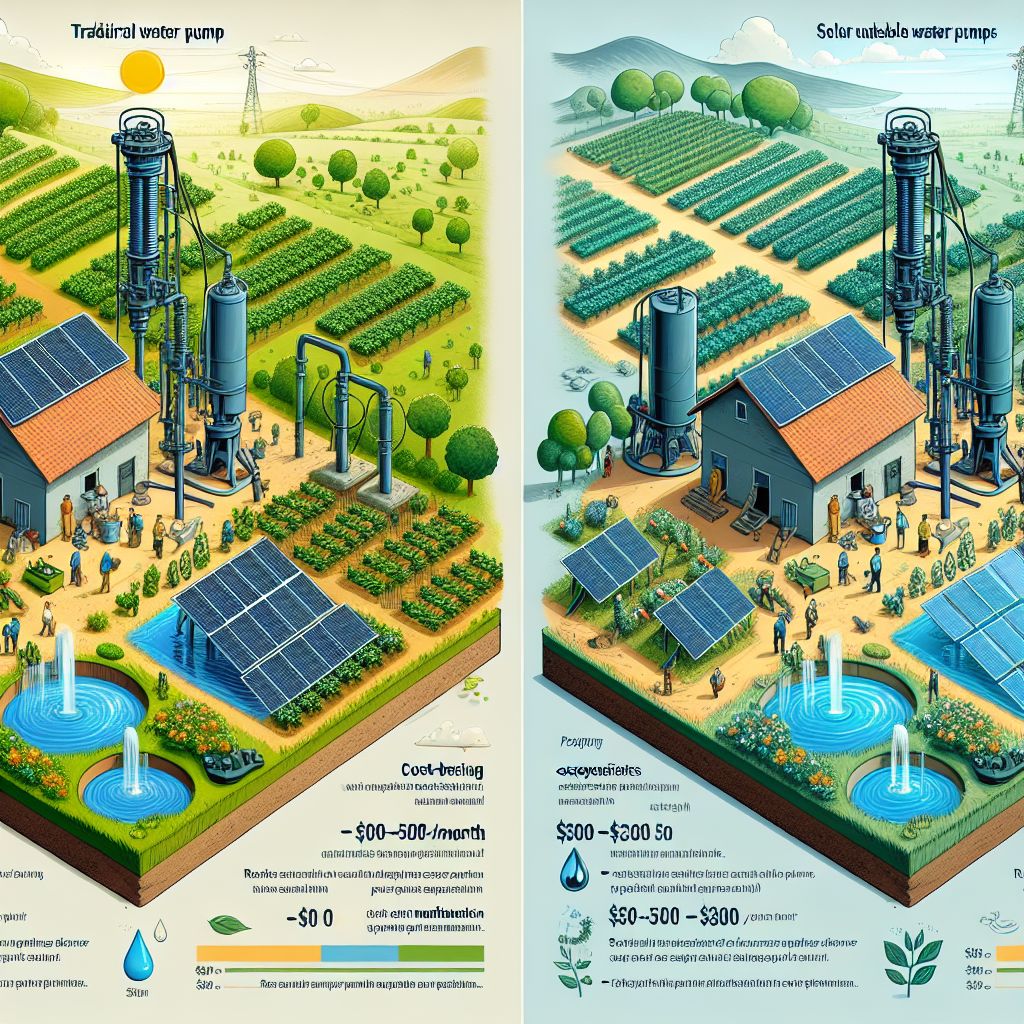
One of the most persuasive arguments to make the change to solar submersible water pumps is the money you’ll save. Traditional irrigation systems can be pricey to run, particularly with energy costs on the rise. Solar pumps, however, use free solar energy, dramatically cutting down on operating expenses.
Let’s take a glance at the potential savings:
One of the major incentives to switch to solar submersible water pumps is the cost savings. Traditional irrigation systems can be costly to run, especially with the increasing energy costs. Solar pumps, however, depend on free solar energy, significantly cutting operational costs.
Let’s take a quick glance at the possible savings:
|
Cost |
Conventional Pumps |
Solar Pumps |
|---|---|---|
|
Energy Costs |
$100 – $500/month |
$0 – $50/month |
|
Maintenance |
$200 – $1,000/year |
$50 – $300/year |
Eco-Friendly Benefits
Not only are solar submersible water pumps cost-efficient, they’re also good for the environment. These pumps use renewable solar energy, reducing dependence on fossil fuels and decreasing greenhouse gas emissions. They’re a green choice for farmers who are environmentally aware.
“By choosing solar power, your farm can lower its carbon emissions, helping to make the earth a cleaner place.”
Not only that, but solar pumps are also quieter, reducing noise pollution compared to traditional diesel-powered pumps.
Dependability and Steadiness
Dependability is key for any irrigation system. Solar submersible water pumps offer a steady water supply, guaranteeing that your crops get the necessary hydration even when there’s a power outage. The use of solar energy means that as long as the sun is up, your pump will function effectively. Learn more about the efficiency of solar submersible water pumps.
Flexibility for All Farming Operations
Regardless of the size of your farm or its water needs, solar submersible water pumps are flexible enough to work for you. These systems can be used on everything from a small family farm to a large-scale agricultural operation.
Small Farms: Ideal for gardens and small-scale irrigation.
Medium Farms: Suitable for larger crop fields and moderate water needs.
Large Farms: Capable of handling extensive irrigation systems and high water demands.
Efficiency and Performance of Solar Pumps
Efficiency is a hallmark of solar submersible water pumps. These pumps are designed to maximize water flow while minimizing energy consumption. Let’s explore their performance in various conditions.
Working Depths and Water Flow
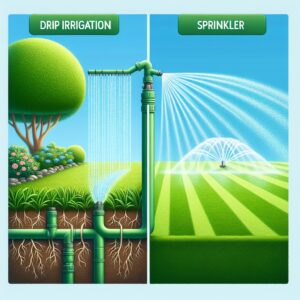
Solar submersible water pumps are capable of operating at great depths, making them ideal for deep wells. They are designed to provide a continuous flow of water, ensuring that your irrigation requirements are met without interruption. For more insights on optimizing your irrigation system, consider exploring the differences between solar micro-sprinkler and solar drip irrigation systems.
How Do They Perform in Various Weather Conditions?
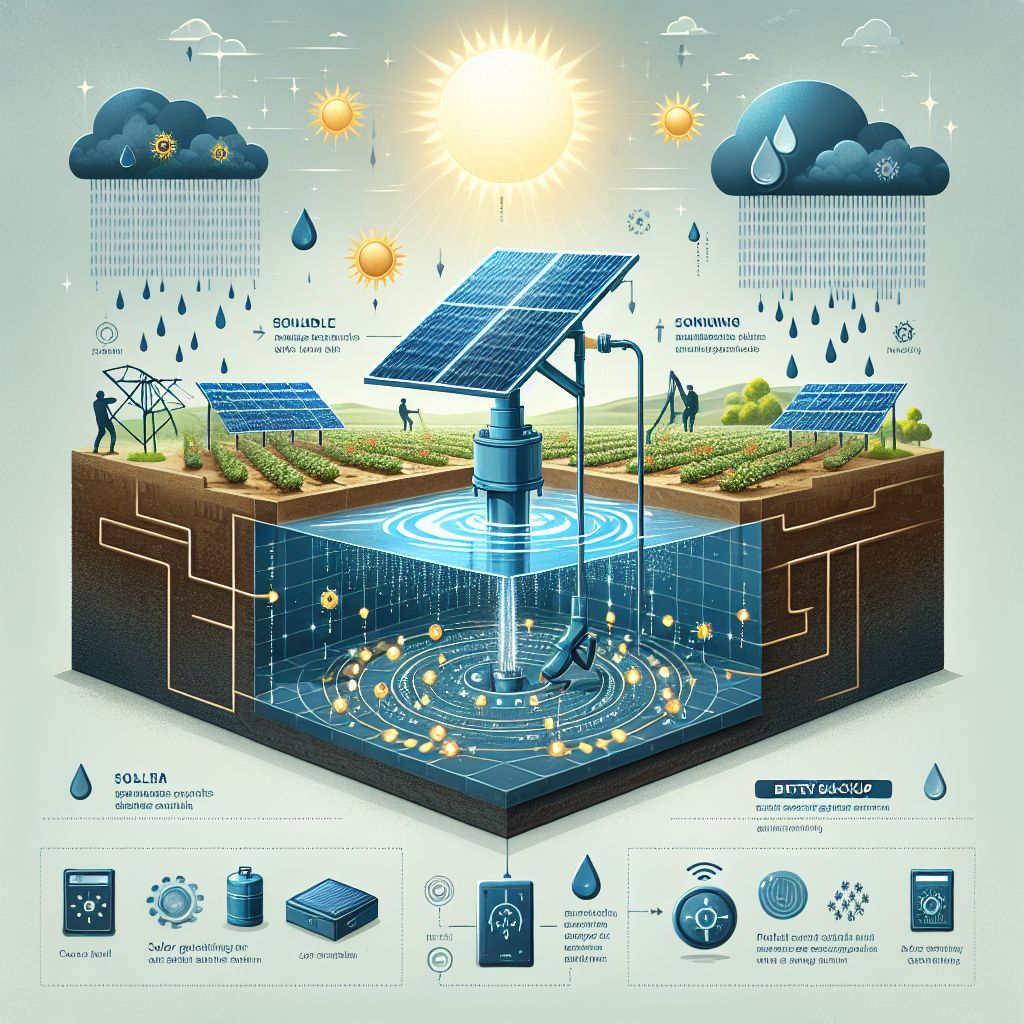
Many worry about how solar pumps will fare in overcast or rainy weather. While it’s true that solar panels work best in direct sunlight, today’s systems are built to operate even when the weather isn’t perfect. Battery backups can hold onto extra energy, which means the pump can still work when it’s cloudy or dark.
“Even on cloudy days, high-tech solar pump systems can achieve up to 80% efficiency.”
Saving Energy and Cutting Costs
Transitioning to solar submersible water pumps can result in significant energy savings. By utilizing solar energy, which is freely available, you can significantly decrease your electricity or fuel expenses. This not only reduces operational costs, but also boosts the overall profitability of your farming business.
Setting Up Solar Submersible Water Pumps
Setting up a solar submersible water pump system on your farm involves several important steps. Each step, from picking the right pump to correct installation and upkeep, is vital for the best performance. For instance, understanding the best solar panels for farmers can significantly enhance the efficiency of your irrigation system.
Finding the Perfect Pump for Your Agricultural Needs
The perfect pump for your farm depends on a variety of factors, including the depth of your well and the amount of water you need. It is recommended to consult with a solar pump supplier to help you choose the best system for your farm. You should consider factors such as the water flow rate, the head height, and the capacity of the solar panel.
Setting Up: Do’s and Don’ts
To make sure your solar submersible water pump works as efficiently as possible, it’s important to install it correctly. Here are some pointers:
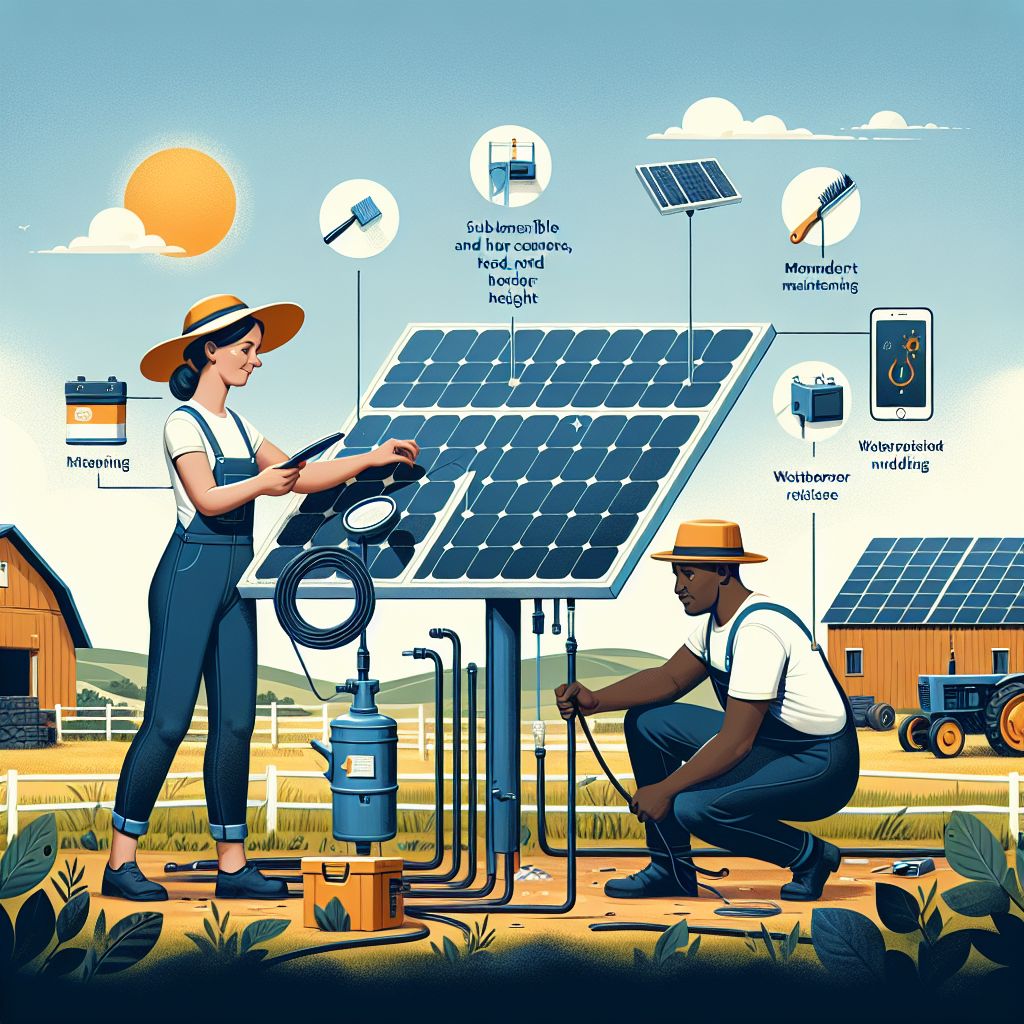
Picking a Spot: Select a spot that gets the most sunlight for the solar panels.
Installation: Make sure the solar panels are installed securely to withstand wind and weather conditions.
Connection: Use high-quality, weather-resistant wiring to connect the panels to the pump.
Verification: After the system is installed, test it to make sure it’s working properly.
Keeping it Running
Keeping up with maintenance for solar submersible water pumps is pretty easy. Regularly clean the solar panels to ensure they receive maximum sunlight. Check the wiring and connections for any signs of wear or damage. From time to time, inspect the pump and controller to make sure they’re working the way they should. For more information on choosing the right solar panels, check out this article on best solar panels for farmers.
“Regular upkeep can prolong the life of your solar pump system and guarantee peak performance.”

Case Studies: Success Stories from Farmers
There are numerous success stories of farmers who have effectively used solar submersible water pumps, enjoying the advantages of dependable and economical irrigation. Here are a few examples.
Increased Crop Yields and Profits
John, a Californian farmer, transitioned to a solar submersible water pump system and witnessed a substantial increase in crop yields. The steady water supply let his crops flourish, resulting in greater earnings during harvest season.
“Ever since I got the solar pump, my water bills have gone down and my crops have increased by 20%.”
Examples from Various Areas
In India, a lot of farmers in remote villages have taken up solar submersible pumps. These pumps have given them a reliable source of water, turning previously barren lands into productive farms. In Africa, solar pumps have played a big role in providing water for irrigation and household use in rural communities.

Conclusion: A Sustainable Future with Solar Irrigation
When it comes to sustainable and efficient farm irrigation, solar submersible water pumps are the way to go. Powered by the sun, these pumps ensure a steady water supply, lower energy expenses, and lessen environmental harm. Regardless of the size of your farm or garden, making the switch to solar pumps can drastically improve your irrigation system and help pave the way to a more eco-friendly future.
Frequently Asked Questions (FAQ)
Here are some frequently asked questions about solar submersible water pumps:
Are Solar Pumps Compatible With All Irrigation Systems?
Absolutely, solar pumps can accommodate all kinds of irrigation systems, such as drip, sprinkler, and flood irrigation. The trick is to select a pump with the right flow rate and pressure for your particular system.
What Kind of Maintenance Do Solar Water Pumps Need?
They don’t need much, but what they do need is crucial. Keep the solar panels clean, make sure the wiring and connections are good, and give the pump and controller a once-over now and then. Regular maintenance will keep everything working well and lasting a long time.
Can Solar Pumps Operate in Overcast or Rainy Weather?
Today’s solar pumps are engineered to function effectively even in overcast or rainy weather. Battery backups can store surplus energy, enabling the pump to function during times of limited sunlight.
How Long Does a Solar Submersible Water Pump Last?
With regular upkeep, a solar submersible water pump can last anywhere from 10 to 20 years. Solar panels can have an even longer lifespan, potentially lasting 25 years or more.
Does the Government Offer Incentives for Solar Submersible Water Pumps?
There are many incentives offered by governments for the adoption of renewable energy solutions such as solar submersible water pumps. These incentives can take the form of tax credits, rebates, and grants. You can find out about the programs available in your area by contacting your local government or agricultural extension office.

Leave a Reply