

Key Takeaways:
It is important to evaluate the amount of sunlight and water requirements for a solar irrigation system.
Knowing the geography of your site and the amount of sunlight it receives can help make the system more efficient.
Purchasing high-quality components like solar panels and pumps can help extend the lifespan of the system.
Thinking about the balance between initial costs and long-term benefits can help you make the right decision.
Regular maintenance and correct installation are crucial for the success of a solar irrigation system.
What to Think About Before Purchasing a Solar Irrigation System
Switching to solar power for your farm’s irrigation needs is not just a fad; it’s a smart, sustainable choice that can save you money and help the environment. But before you jump in, it’s important to know what you’re getting into and how to choose the best option for your needs. Here are the top things you should consider to make sure you’re making an informed decision.
|
Consideration |
Description |
|---|---|
|
Solar Panels |
Determine the type, size and number of solar panels needed to power the irrigation system based on the energy demand. Consider factors like site conditions, available space, and cost. 1, 3 |
|
Energy Demand |
Determine the energy requirements for the irrigation system, including pump flow rate, water lift, and output pressure. This will help size the solar panel array appropriately. 1, 3 |
|
Irrigation System |
Choose an irrigation method (surface, localized, or sprinkler) that matches the energy requirements and water needs of the farm. 1, 3 |
|
Initial Cost |
Solar irrigation systems have high upfront costs, so consider available financing options, subsidies, or incentives to offset the investment. 1, 2, 3 |
|
Location and Sunlight Availability |
The location of your farm plays a crucial role in the effectiveness of a solar irrigation system. You need to ensure that your farm receives adequate sunlight throughout the day for the system to function efficiently. 1, 2, 3 |
|
Water Management |
Integrate the solar irrigation system into a strong regulatory framework to ensure sustainable use of water resources and avoid groundwater depletion. 1, 2, 4 |
|
Energy Storage |
Evaluate the need for battery storage or other energy storage solutions to provide power when sunlight is limited. 1, 3 |
|
Pump Type |
Choose between AC or DC pumps based on availability, cost, and maintenance requirements in the local area. 1, 3 |

Figuring Out Your Solar Requirements
Before anything else, you should figure out how much water your farm needs and the solar power required to pump that water. This isn’t simply about checking your current water bills; it’s about knowing the needs of your crops, the weather patterns in your area, and how these factors affect your irrigation plan.
Evaluating Your Water Needs
Each plant is unique, and so are the water requirements of each farm. Factors such as the crops you’re planting, their growth stage, and your local weather conditions must all be considered. Do you live in a region with plenty of rain, or is it quite dry? These aren’t just important questions; they’re the basis of your solar irrigation system.
Understand what crops you’re growing and how much water they need.
Figure out how much of your farm needs to be watered.
Think about how water usage changes with the seasons.
For instance: Tomato plants need a lot more water when they’re bearing fruit than when they’re just sprouts.
Getting to Know Solar Power Capacity
Next, let’s talk about the solar aspect. Simply purchasing a heap of solar panels and crossing your fingers won’t cut it. You must ensure the power that these panels can generate matches the energy needed to pump the required water. This involves knowing the peak sunlight hours in your location and the efficiency of the solar panels you’re thinking of getting.
Here, we delve into the nitty-gritty details. You should be familiar with:
How much peak sunlight does your farm get on average?
What is the wattage of the solar panels you’re considering?
What is the efficiency rate of those panels? Not all panels are the same!
For example, if your farm gets about 5 hours of peak sunlight and you have a pump that needs 500 watts, you’ll need solar panels that can generate that much power during those hours.
How Your Farm’s Location Affects Solar Irrigation
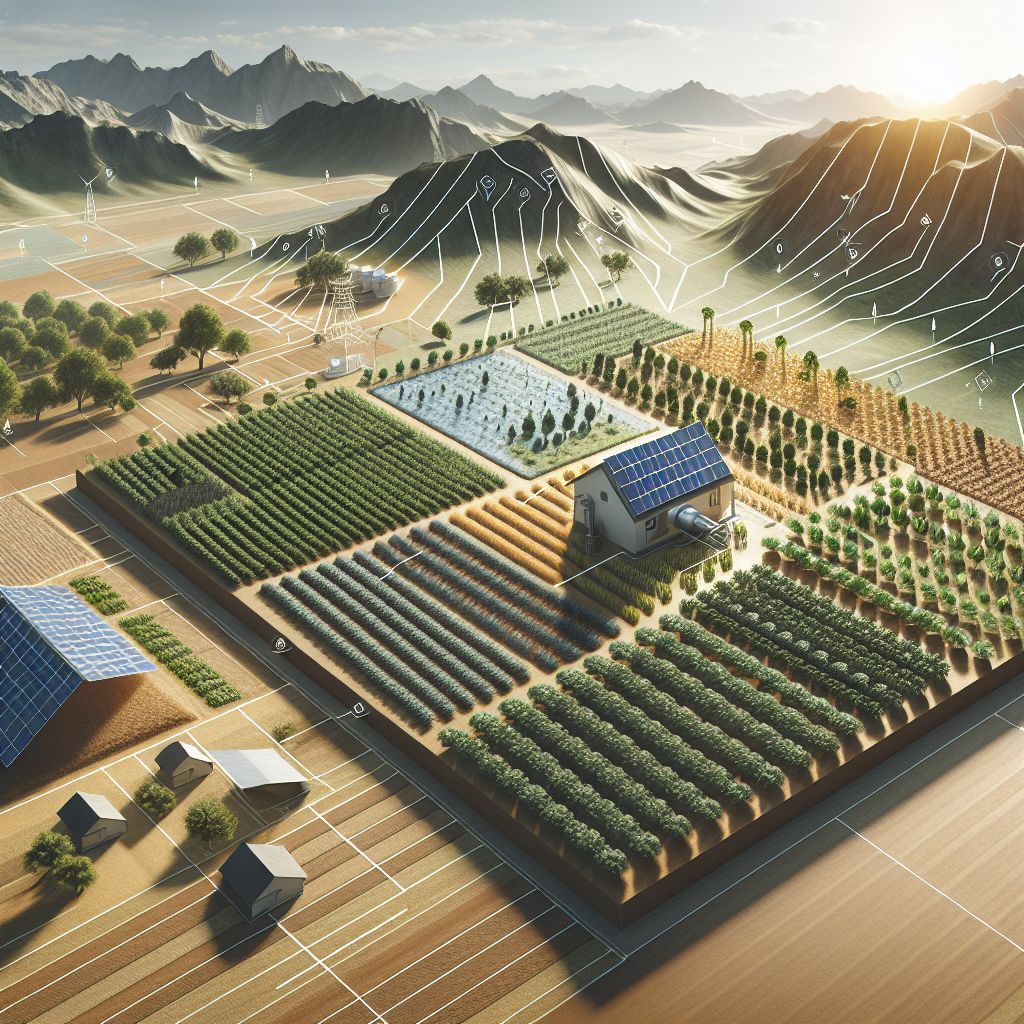
Once you’ve figured out your water and power needs, you’ll want to think about your farm’s location. The location of your farm can make a big difference in how well a solar irrigation system works. You’ll need to think about how the sun hits your land, any things that might get in the way like trees or buildings, and even what kind of soil you have. All of these things can change how well your system works.
Checking Sunlight Access
Every part of your farm that will be under the gaze of a solar panel needs to be drenched in sunlight, ideally during the peak hours of the day. If some of your land is shaded or doesn’t receive consistent sunlight, you’ll need to factor that in. Sometimes, all it takes is trimming a few branches or moving panels to a spot with more sun.
Take a look around your property to find the best spots for setting up your solar panels.
Think about anything that could get in the way and come up with solutions to lessen their effect.
Keep in mind, the more sun your panels get, the better they’ll work.
For instance, if you see that the east side of your farm gets a lot of sun, that’s probably a good place to put your panels.
Dealing with Geographic Issues
Geographic hurdles can be challenging, but they’re not insurmountable. Perhaps your farm is situated on a hill, or you have a lot of rough land. These characteristics necessitate meticulous planning to guarantee that your solar panels are situated for optimal sunlight capture. If you’re in a region with less sunlight, you might need to install more panels.
Check out the lay of your land to see how best to set up your solar panels.
Consider adjustable mounting systems that you can angle towards the sun.
Don’t be put off by geography—there’s almost always a way.
Think about a farmer who installed raised solar panels over his crops, providing not just power but also shade for the plants that needed it.

Spending Smart: Thinking About Cost
Let’s address the big issue—price. Solar irrigation systems are not cheap, but they are a great investment. Like any investment, you need to think about the initial price tag and the long-term gains. Let’s go through it so you can make the best choice for your farm.
Initial Investment vs. Ongoing Savings
Indeed, the initial cost of solar irrigation systems can be steep. You’re investing in panels, pumps, and potentially storage batteries. However, consider this: over time, they pay for themselves. You’re looking at a significant decrease in water bills and, in some instances, energy bills if you’re going off-grid.
When you’re doing the math, don’t forget to include:
The price of the system and its installation.
Any potential savings on your energy and water bills.
The possible increase in crop yield due to regular irrigation.
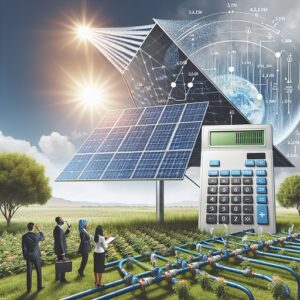
Example: You may need to spend $10,000 to install your system, but if you save $2,000 annually on energy, it’ll pay for itself in five years. For a detailed analysis, read about the economics of solar-powered irrigation systems.
Checking for Available Grants and Incentives
Before you start shelling out your hard-earned cash, check to see if there are any available incentives or grants. There are numerous governments and organizations that provide financial aid to farmers who are transitioning to more environmentally friendly practices. This can significantly reduce the initial investment, making it much more affordable.
Look into regional and national initiatives that provide monetary assistance for green energy projects.
Think about low-interest loans that are specifically tailored to eco-friendly farming projects.
Contact farming extensions or eco-friendly organizations for advice.
For example, a farmer in California could qualify for a rebate program that pays for up to 25% of the expense of their new solar irrigation system.
It’s critical to select the correct equipment for your solar irrigation system to work effectively. There are numerous options available on the market, but it’s crucial to choose components that are not only efficient and appropriate for your needs, but also durable enough to endure the demands of farming and last for a long time.

Choosing the Right Equipment
Choosing the right equipment for a solar irrigation system is crucial for the success of your farming operations. Consider the water source and supply, solar panels, pump, storage and distribution system, controller and monitoring system, and maintenance and warranty when making your decision. By carefully assessing these factors, you can ensure that your solar irrigation system is efficient, cost-effective, and sustainable for your farming needs.
Below is a table talking about choosing the right equipment for a solar irrigation system for a farm.
|
Equipment |
Key Considerations |
|---|---|
|
Solar Panels |
– Panel efficiency: Higher efficiency means fewer panels needed to meet energy requirements. 1 |
|
Charge Controllers |
– Regulate voltage and current from solar panels to batteries. 2 |
|
Batteries |
– Store energy generated by solar panels for use when needed. 2 |
|
Solar Pumps |
– Capacity determined by water table depth, cropping patterns, and land size. 4 |
|
Irrigation System |
– Use efficient systems like drip, micro-sprinklers, or low-elevation precision application (LEPA) sprinklers to reduce energy needs. 5 |
|
Monitoring Equipment |
– Meters and sensors to track system performance and water usage. 4 |
Don’t Skimp on Quality: Choose Long-Lasting Solar Panels
As with many things, you often get what you pay for with solar panels. While it might be tempting to save money by purchasing cheaper panels, those from well-known and respected manufacturers are usually more efficient and longer-lasting. It’s also a good idea to choose panels with a robust warranty, as this suggests the manufacturer has faith in the durability of their product.
Ensure certifications and standards are met.
Look at warranties and service contracts.
Look at reviews and get advice from other farmers.
For example: A farmer who went for the cheaper panels had to replace them after only three years, while his neighbor who paid more for better quality panels has had them for ten years and counting.
Essential Elements: Pumps and Controllers
At the core of your solar irrigation system is the pump, and the controller is its command center. Your pump needs to be strong enough to handle your water needs, and your controller needs to be able to effectively manage the power supply. Some advanced controllers can even modify the water flow based on weather predictions or the moisture level in the soil.
Make sure the pump’s flow rate is suitable for your irrigation requirements.
Think about incorporating smart controllers for increased efficiency and ease of use.
Keep in mind the importance of after-sales service and the availability of parts.
Keep in mind that a pump that is too small will not be able to handle the job, while one that is too large will consume too much energy and could potentially harm your system.
Getting it Up and Running: Setting Up and Upkeeping
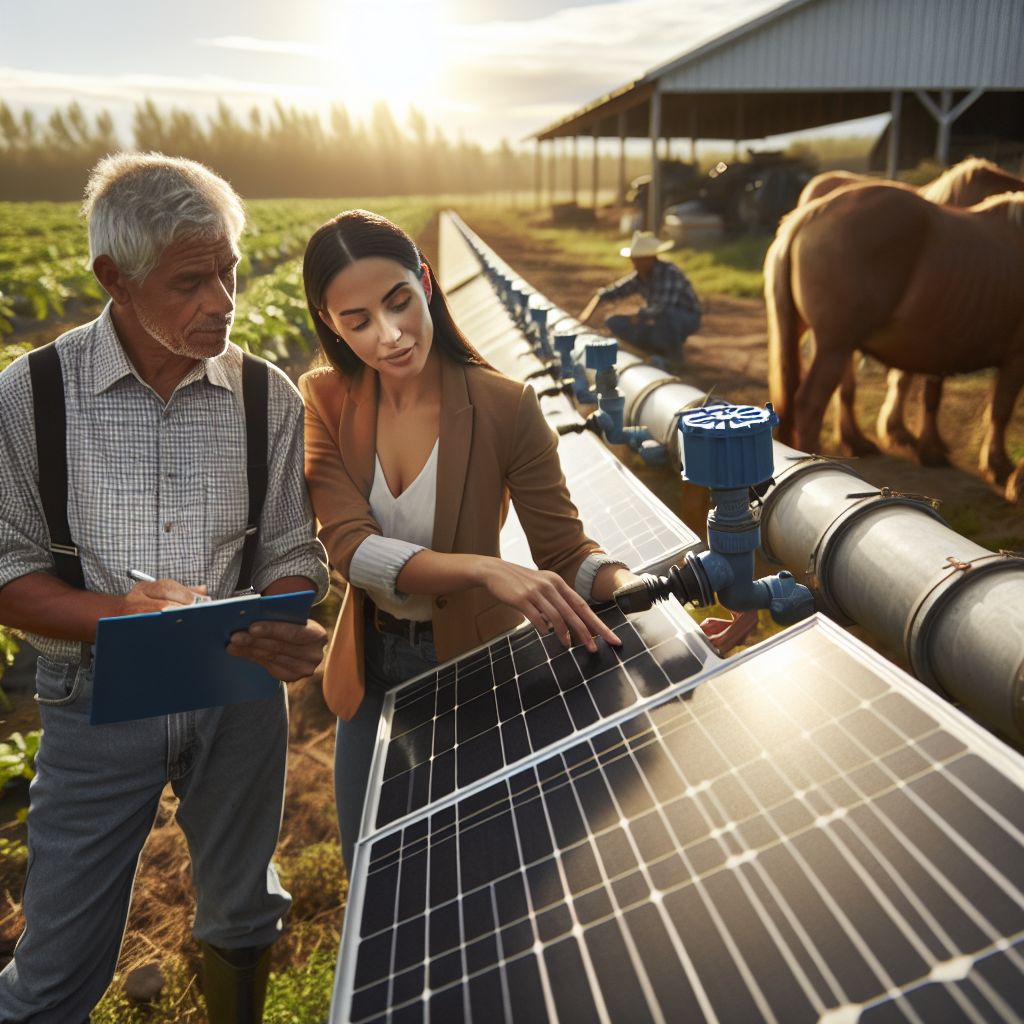
Even the most top-notch equipment can go wrong if not installed properly. You have two choices: get your hands dirty and do it yourself, or employ an expert. If you’re not particularly tech-savvy or just want to make sure it’s done correctly, a professional installer is your best bet. They can also provide helpful tips on where to put your system and how to look after it.
Should You Install It Yourself or Hire a Professional?
If you’re thinking about doing it yourself, make sure you’re comfortable with the installation process and have the necessary skills. If not, the money you save on labor might not be worth it if you end up with a system that doesn’t work efficiently or, even worse, is unsafe.
Consider your technical abilities and knowledge of the system.
Investigate and adhere to all safety procedures.
Engage a professional if unsure.
A farmer who chose to install his system saved money initially but ended up spending more on repairs when a faulty setup resulted in a system breakdown.
Maintaining Your System for a Long Life
Just like any other piece of farm equipment, you need to maintain your solar irrigation system regularly to keep it working at peak performance. This includes cleaning the solar panels, checking the connections, and making sure the pumps are working well. If you don’t do these things, your system could become less efficient or even stop working altogether.
Make sure to clean the solar panels regularly to get rid of dust and debris.
Check the electrical connections and tighten any that are loose.
Pay attention to any strange noises from the pump that could suggest there’s an issue.
Regular maintenance not only extends the lifespan of your system, but also keeps it running efficiently, saving you money over time.
Final Thoughts
Transitioning to a solar-powered irrigation system is a big move towards eco-friendly farming. It’s an investment in both your farm’s future and the future of our world. By considering your water and power requirements, selecting the appropriate equipment, and committing to ongoing maintenance, you can ensure that your solar irrigation system will be a reliable asset for many years.
Commonly Asked Questions
What Effect Do Solar Irrigation Systems Have on the Environment?
Solar irrigation systems are beneficial to the environment because they decrease the dependence on fossil fuels and reduce greenhouse gas emissions. They use clean, renewable energy from the sun to operate water pumps, thereby reducing the environmental impact of farming activities.
Is it possible to use solar irrigation systems in areas with less sunlight?
Indeed, solar irrigation systems can be used in areas with less sunlight, but they may require more panels or other energy sources to make up for the lower solar input. It’s crucial to evaluate the amount of sunlight available in your area and modify the system as needed.
How Long Does a Solar Irrigation System Last?
With good care, solar panels in an irrigation system can last 25 years or more. If you maintain them well, pumps and controllers can also last for ten years or more.
Can Small Farms Benefit from Solar Irrigation Systems?
Definitely! Solar irrigation systems are flexible and can be customized to meet the requirements of small farms. They offer a budget-friendly and eco-friendly way to handle water resources, no matter the size of the farm.
What Should I Do First If I Want to Change to a Solar Irrigation System?
If you’re thinking about changing to a solar irrigation system, you should begin by:
Estimating your water requirements and maximum sunlight hours.
Investigating various kinds of solar panels and pumps.
Seeking advice from experts for system planning and setup.
Looking into financing possibilities and benefits.
With the correct strategy, a solar irrigation system can revolutionize your farm, resulting in increased sustainability and effectiveness in your activities.

Leave a Reply