

Article-At-A-Glance
- Lithium-ion batteries provide critical night-time power for solar-dependent farms, enabling 24/7 operation of essential equipment without fossil fuel generators
- Modern lithium-ion systems outperform traditional lead-acid batteries with 3-4 times longer lifespan, deeper discharge capabilities, and minimal maintenance requirements
- Strategic battery backup systems can reduce farm operating costs by up to 80% compared to grid electricity while providing protection against power outages
- Properly sized lithium-ion battery systems can power essential farm operations including irrigation, equipment, livestock management, and climate control systems
- Government incentives including the Rural Energy for America Program (REAP) can cover up to 50% of installation costs for qualifying agricultural operations
Why Modern Farms Need Better Power Solutions
Today’s agricultural operations face increasing pressure to maximize efficiency while minimizing environmental impact. Rising electricity costs, unreliable rural grid connections, and the push toward sustainable farming practices are driving a revolution in how farms power their operations. Without dependable energy, critical systems from irrigation to refrigeration can fail, potentially destroying crops and livestock. The modern farm needs power solutions that are reliable, cost-effective, and aligned with sustainability goals.
Climate change has intensified this challenge, bringing more frequent extreme weather events that disrupt power grids precisely when farms need energy most. Meanwhile, utility companies continue implementing rolling blackouts during peak demand periods, disproportionately affecting rural areas where many farms operate. This perfect storm of challenges has created an urgent need for energy independence in agricultural settings – a need that lithium-ion battery systems paired with solar generation are uniquely positioned to address.
Why Do Farmers Need to Use a Battery When They are Using Solar Power to run the Farm
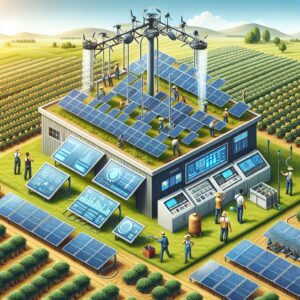
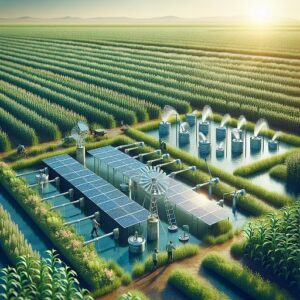
Solar panels provide excellent power generation during daylight hours, but farming operations don’t stop when the sun sets. Without battery storage, solar energy becomes a half-solution that leaves farms vulnerable during nighttime hours or cloudy days. Critical processes like irrigation scheduling, climate control, and security systems require consistent power regardless of sunlight availability. Additionally, many agricultural tasks are strategically performed during off-peak hours to maximize efficiency and take advantage of cooler temperatures.
Battery storage transforms intermittent solar power into a reliable 24/7 energy solution. During peak sunlight hours, solar panels simultaneously power immediate farm needs while charging the battery system. This stored energy becomes available during nighttime, early morning operations, or whenever clouds temporarily reduce solar production. Without this storage component, farmers would need to maintain costly backup generators or remain connected to an increasingly unreliable and expensive grid system.
The integration of batteries also allows farms to optimize their energy usage patterns. For instance, energy-intensive operations like grain drying or water pumping can be scheduled during peak solar production, while the stored energy handles baseline power needs during non-productive solar hours. This strategic approach maximizes self-consumption of generated power and minimizes the need for external energy sources, creating both economic and environmental benefits for the farm operation.
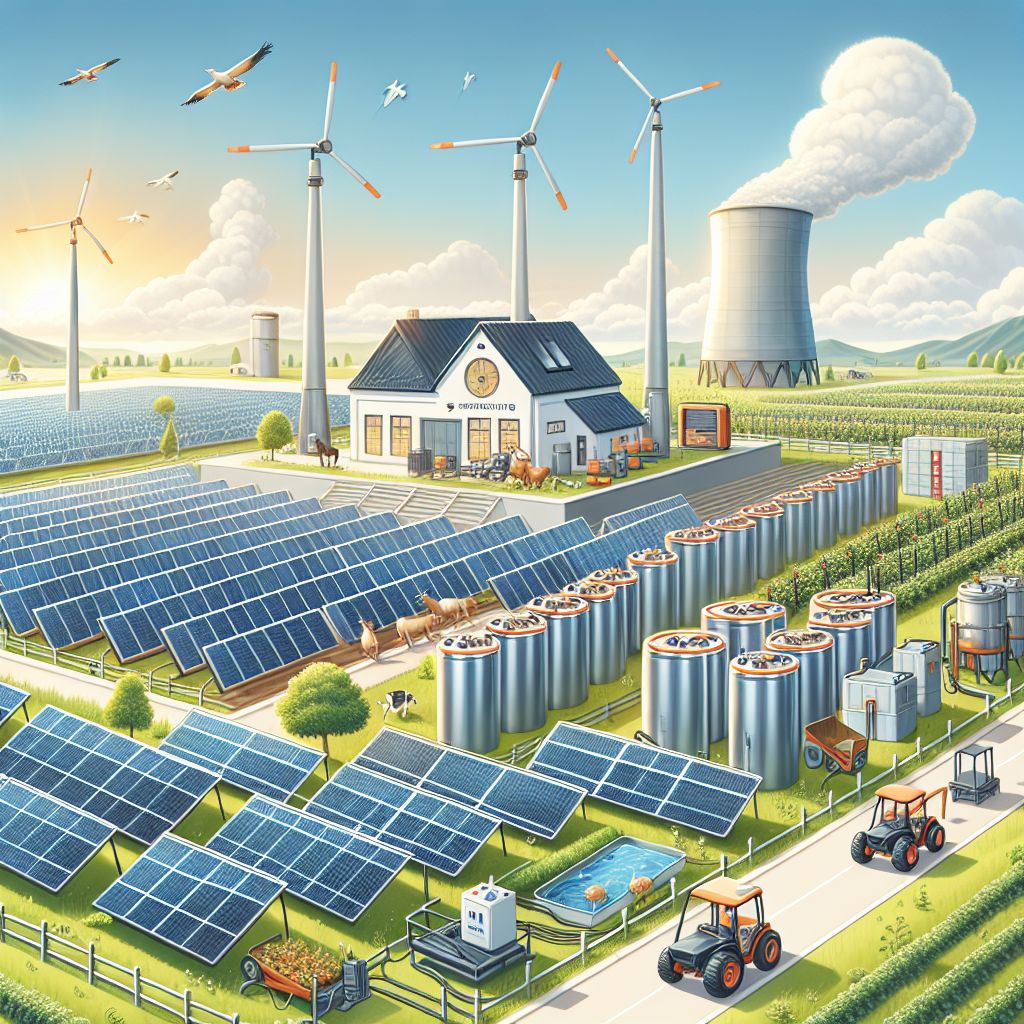
How Lithium-Ion Batteries Transform Farm Energy Management
Lithium-ion technology represents a quantum leap in energy storage capabilities for agricultural applications. Unlike traditional power solutions, these advanced battery systems enable farms to capture excess daytime solar production and deploy that energy precisely when and where it’s needed. This transformation eliminates the traditional dilemma farmers faced: either invest in expensive fossil fuel generators or accept the limitations and vulnerabilities of grid dependence.
What Makes Lithium-Ion Technology Different
Lithium-ion batteries utilize a fundamentally different chemistry than older battery technologies, allowing them to store more energy in a smaller, lighter package. The electrochemical process involves lithium ions moving between positive and negative electrodes through an electrolyte, creating an efficient energy storage and release system. This design enables faster charging, deeper discharging, and significantly more charge/discharge cycles before performance degradation.
The advanced battery management systems (BMS) integrated into lithium-ion solutions provide precise monitoring and control of individual cells, ensuring optimal performance and longevity. These systems prevent overcharging, over-discharging, and maintain appropriate operating temperatures – critical protections that extend battery life and maintain consistent performance even in demanding agricultural environments. For farms operating in extreme temperature regions, this intelligent management makes lithium-ion solutions far more reliable than alternatives.
Comparing Lithium-Ion to Traditional Lead-Acid Batteries
Traditional lead-acid batteries have long been the default choice for off-grid power storage, but their limitations become particularly problematic in agricultural settings. Lead-acid batteries typically allow only 50% depth of discharge without damaging the battery, effectively cutting their usable capacity in half. In contrast, lithium-ion batteries safely deliver 80-100% of their rated capacity, providing nearly twice the usable energy from the same rated capacity.
The weight difference between these technologies creates practical advantages for farm implementation. Lithium-ion batteries weigh approximately 60-70% less than lead-acid batteries of equivalent capacity, making installation simpler and opening more placement options around the farm. This weight reduction also makes portable power solutions viable for remote field operations, bringing power directly to where farm work is happening.
Perhaps most significant for busy farm operations is the maintenance differential. Lead-acid batteries require regular water level checking, terminal cleaning, and specific charging protocols to prevent premature failure. Lithium-ion systems operate virtually maintenance-free, eliminating these time-consuming tasks from the already packed schedule of farm management. This “set-and-forget” reliability is invaluable during critical growing seasons when every hour of farm labor must be dedicated to production.
Cycle Life and Longevity Benefits for Agricultural Applications
The cycle life of a battery represents how many times it can be charged and discharged before significant capacity loss occurs. In agricultural settings where batteries may cycle daily, this becomes a critical consideration. Lithium-ion batteries typically deliver 3,000-5,000 cycles at 80% depth of discharge, compared to just 500-1,000 cycles for lead-acid batteries at 50% depth of discharge. For farmers, this translates to a system that can operate reliably for 8-10 years versus 2-3 years with traditional technology.
This extended lifespan dramatically improves the return on investment for farm energy systems. The initial premium paid for lithium-ion technology is quickly offset by avoiding multiple replacement cycles required with lead-acid alternatives. Additionally, lithium batteries maintain consistent performance throughout their life cycle, while lead-acid batteries begin degrading immediately and deliver progressively less usable energy as they age.
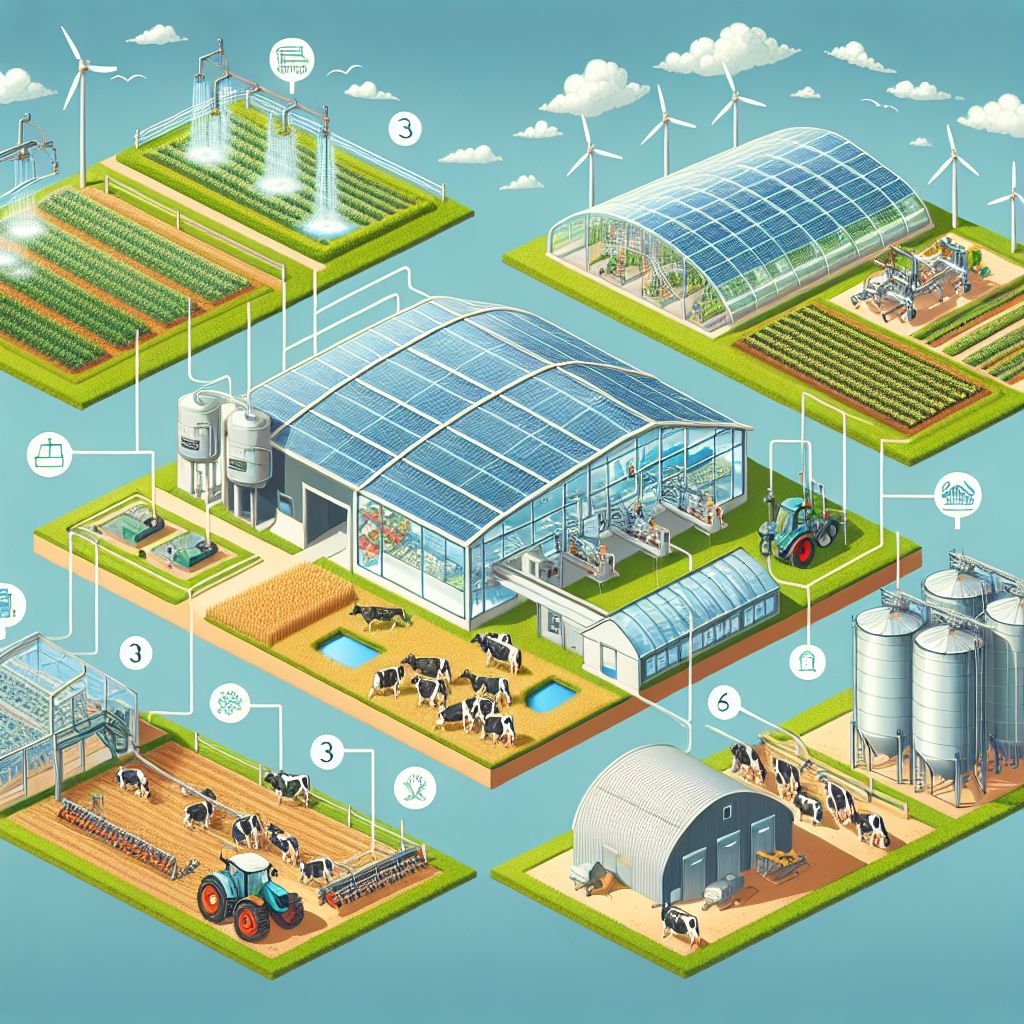
6 Essential Farm Operations Powered by Lithium-Ion Batteries
Modern farms rely on a diverse range of electrical systems that can benefit from reliable battery backup. Understanding these applications helps farmers prioritize which operations should be connected to lithium-ion storage systems for maximum benefit and protection. The flexibility of these systems allows for customized solutions that address the specific needs of different agricultural operations, from small organic farms to large commercial enterprises.
1. Irrigation Systems and Water Management
Water delivery represents one of the most critical and energy-intensive operations on most farms. Lithium-ion batteries ensure irrigation pumps, drip systems, and water treatment equipment can operate on optimal schedules regardless of grid availability. Many advanced irrigation controllers now integrate directly with battery systems, automatically adjusting watering schedules based on available stored energy and weather forecasts.
For farms implementing precision agriculture techniques, battery-powered soil moisture sensors and automated valves allow for targeted irrigation that conserves water while improving crop yields. These systems rely on consistent power to collect and transmit data, making battery backup essential for maintaining the accuracy of moisture readings and control systems. During drought conditions when water restrictions may limit irrigation to specific time windows, having battery storage ensures farmers can pump water whenever permitted, regardless of solar production hours.
2. Electric Farm Equipment and Tools
The rapid development of electric agricultural equipment has created new opportunities for farms to reduce operating costs and environmental impact. From electric utility vehicles to battery-powered hand tools, these innovations require reliable charging infrastructure. Lithium-ion battery banks provide the clean, stable power needed to charge this equipment, often during overnight hours when the equipment isn’t in use but solar production has ceased.
Some forward-thinking farms are now implementing mobile charging stations powered by lithium-ion batteries, allowing equipment to be charged directly in the field without returning to central buildings. This approach maximizes productive work time and extends the effective range of electric equipment. As manufacturers continue developing larger electric farm implements like tractors and harvesters, scalable lithium-ion storage will become increasingly important for farms transitioning away from fossil fuels.
3. Livestock Monitoring and Management
Modern livestock operations rely on electronic systems to monitor animal health, control feeding equipment, and manage environmental conditions. Power interruptions to these systems can have immediate negative impacts on animal welfare and production. Lithium-ion battery backup ensures continuous operation of critical systems like ventilation fans, automatic feeders, and temperature controls that protect valuable livestock.
Advanced monitoring systems including RFID tracking, health sensors, and automated sorting gates all require consistent power to function properly. By connecting these systems to lithium-ion battery backup, farmers can maintain operational continuity even during extended power outages or periods of limited solar production. For dairy operations, maintaining power to milking equipment and milk cooling systems is particularly critical, as even brief interruptions can compromise product quality and animal comfort.
4. Temperature Control for Greenhouses and Storage
Climate-controlled environments are essential for specialty crop production and post-harvest storage. Heating, cooling, and ventilation systems in greenhouses, cold storage, and curing facilities require reliable power to maintain precise environmental conditions. Lithium-ion batteries provide the clean power needed to run these sensitive systems without the voltage fluctuations often experienced with generators or unstable grid connections.
Many modern climate control systems incorporate variable frequency drives and other efficiency technologies that perform optimally with the stable power delivery characteristic of lithium-ion batteries. For operations storing high-value crops like fruits, vegetables, or flowers, even short temperature excursions can result in significant product loss. Battery backup systems provide critical protection against these risks while allowing farms to optimize energy usage by running cooling systems during periods of excess solar production and using stored energy during peak temperature hours.
5. Security Systems and Remote Monitoring
Farm security has become increasingly important as equipment values rise and remote operations require monitoring. Camera systems, access controls, and alarm systems require continuous power to maintain property protection. Lithium-ion batteries ensure these critical security systems remain operational even during extended power outages or in remote locations beyond grid access.
- Perimeter security systems and gate controls
- Camera systems monitoring livestock, crops, and equipment
- Remote sensors detecting environmental conditions or intrusions
- Communication systems for remote farms and ranches
- GPS tracking for high-value mobile equipment
6. Living quarters for the Farmer, Family and, Workers
Many farms include on-site housing for owners, family members, and seasonal workers. Providing reliable power to these living quarters improves quality of life and helps attract and retain quality farm labor. Lithium-ion battery systems can power essential household functions including lighting, refrigeration, and basic appliances when connected to appropriately sized solar arrays.
For farms in remote locations, battery power may represent the only practical alternative to noisy, maintenance-intensive generators for providing household electricity. The silent operation and minimal maintenance requirements of lithium-ion systems make them particularly suitable for living spaces. Some agricultural operations now advertise their sustainable power systems as an employee benefit when recruiting seasonal workers, highlighting the improved living conditions compared to operations relying solely on generators or intermittent grid connections.
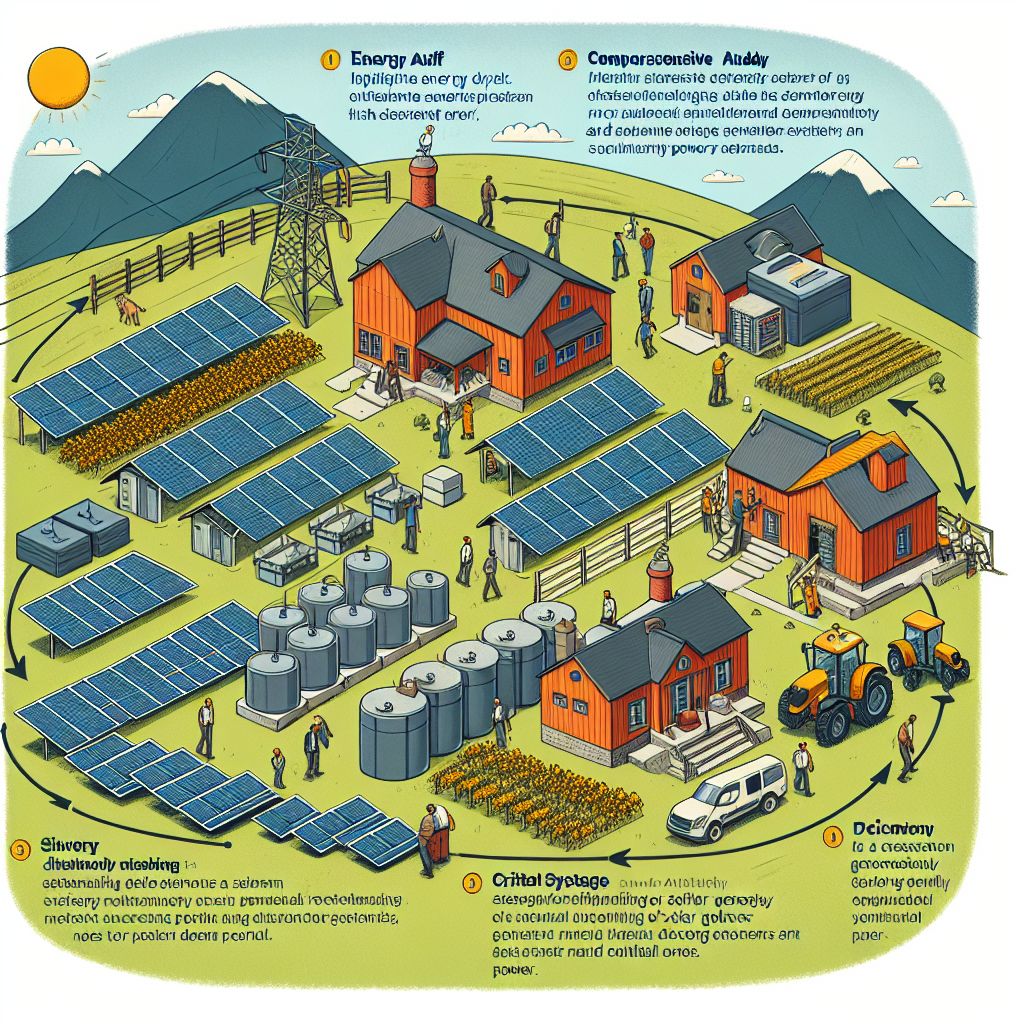
Creating a Solar + Battery System for Your Farm
Implementing a lithium-ion battery system on your farm requires careful planning to ensure optimal performance and return on investment. The process begins with a comprehensive energy audit to identify your farm’s specific power requirements. This assessment should account for seasonal variations in energy usage, peak demand periods, and critical systems that require uninterrupted power. Understanding these patterns will guide the proper sizing of both solar generation and battery storage components.
Sizing Your Battery Bank Based on Farm Needs
Properly sizing a lithium-ion battery system requires balancing initial investment against operational needs. The calculation begins with determining your farm’s daily energy requirements in kilowatt-hours (kWh), focusing on essential operations that must run continuously. Most agricultural operations benefit from systems designed to provide 1-3 days of autonomy – the ability to run critical systems without solar recharging or grid power.
When calculating battery capacity requirements, it’s important to factor in the usable capacity rather than total capacity. While lithium-ion batteries typically allow 80-90% depth of discharge, designing your system to routinely use only 60-70% of capacity will extend battery lifespan and provide additional reserve for unexpected power needs. For farms in northern climates, winter solar production limitations may necessitate larger battery banks to compensate for shorter charging days during critical winter operations.
Critical Components for a Complete System
A complete farm energy system integrates several key components beyond just batteries and solar panels. The hybrid inverter serves as the system’s brain, converting DC power from batteries and solar panels into AC power for farm equipment while managing charging cycles. Battery management systems monitor individual cell health, prevent overcharging, and balance energy distribution across the battery bank, significantly extending system lifespan.
- Solar charge controllers optimize the charging process based on battery state and available sunlight
- System monitoring equipment provides real-time performance data and alerts
- Automatic transfer switches seamlessly transition between power sources during outages
- Surge protection devices safeguard sensitive equipment from electrical damage
- Properly sized cables and connection points minimize energy loss and heat generation
Installation Considerations for Agricultural Settings
Farm environments present unique installation challenges that must be addressed for system longevity. Battery systems should be housed in clean, temperature-controlled spaces protected from dust, moisture, and extreme temperatures. Dedicated battery rooms or repurposed outbuildings often provide ideal locations, with proper ventilation to dissipate heat and prevent gas accumulation. For maximum safety, these installations should include fire suppression systems, especially in structures containing combustible materials.
Proximity to electrical loads should guide placement decisions, as voltage drop over long distances can reduce system efficiency. Many farms benefit from a distributed approach, with multiple smaller battery installations positioned near major load centers rather than a single centralized system. This approach reduces wiring costs and energy losses while providing redundancy if one system requires maintenance. Always work with installers experienced in agricultural applications who understand the unique requirements of farm operations and rural electrical systems.
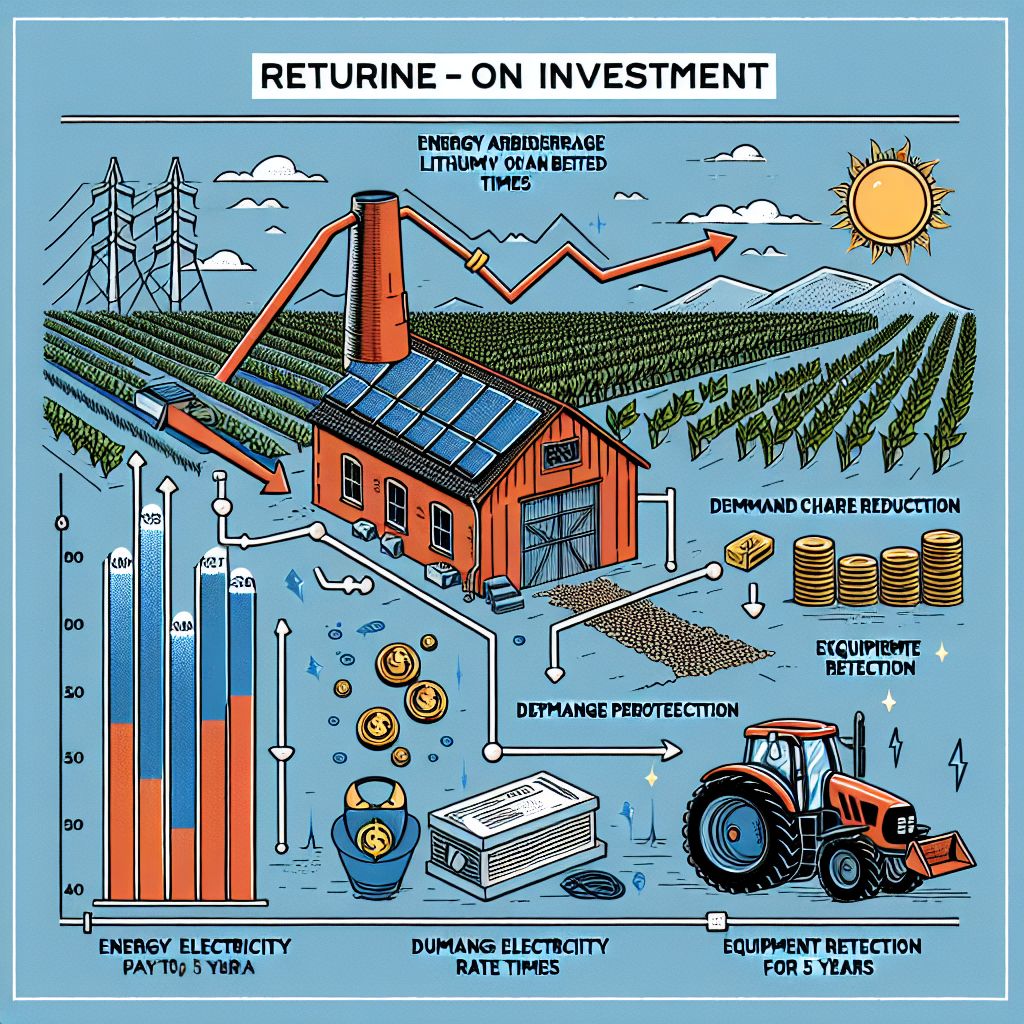
Real Cost Savings: ROI Analysis for Farm Lithium-Ion Battery Systems
The financial impact of implementing lithium-ion battery storage extends far beyond simple electricity bill reduction. A comprehensive return on investment analysis must account for multiple value streams including energy arbitrage (using stored energy during peak rate periods), demand charge reduction, outage protection, and equipment life extension through consistent power quality. For many farms, these combined benefits deliver payback periods of 5-7 years, with continued savings for the remaining 5+ years of battery system life.
Initial Investment vs. Long-Term Savings
Modern agricultural lithium-ion battery systems typically cost between $800-$1,200 per kilowatt-hour of capacity installed, with economies of scale reducing per-unit costs for larger installations. While this represents a significant upfront investment, the operational savings accumulate quickly. Farms relying on diesel generators for backup power often see the most dramatic savings, as fuel costs, maintenance requirements, and generator replacement expenses are eliminated.
Energy independence delivers particularly compelling economics in areas with unreliable grid service or high demand charges. Many agricultural operations face steep utility penalties for peak power usage during critical periods like irrigation season. Battery systems can strategically discharge during these high-demand periods, effectively “peak shaving” to avoid these costly demand charges while maintaining full operational capacity. This capability alone can reduce monthly utility bills by 20-30% for farms with significant irrigation or processing loads.
Available Agricultural Grants and Tax Incentives
The financial equation for farm energy storage has improved dramatically due to federal and state incentives designed to promote agricultural sustainability. The USDA’s Rural Energy for America Program (REAP) offers grants covering up to 25% of system costs and loan guarantees for the remaining balance. These funds specifically target renewable energy improvements on agricultural operations, with simplified applications for smaller projects under $80,000.
Beyond dedicated agricultural programs, farms can access broader renewable energy incentives including the federal Investment Tax Credit, which currently provides a 30% tax credit for solar+storage systems. Many states offer additional incentives including property tax exemptions for renewable energy improvements, sales tax exemptions on equipment purchases, and performance-based incentives that provide ongoing payments for clean energy production. Working with an agricultural energy specialist can help identify all available funding sources for your specific location and operation type.
Maintenance Costs and Battery Replacement Timeline
One of the most significant economic advantages of lithium-ion technology is its minimal maintenance requirements compared to alternatives. Unlike lead-acid batteries that require regular watering, terminal cleaning, and specific charging protocols, lithium systems operate virtually maintenance-free. This eliminates the hidden labor costs associated with traditional battery maintenance – a particularly valuable benefit during busy growing seasons when farm labor is already stretched thin.
When calculating long-term costs, it’s important to factor in the complete lifecycle. Modern lithium iron phosphate (LFP) batteries used in agricultural applications typically maintain 80% or more of their original capacity after 4,000 cycles – equivalent to approximately 10 years of daily use. This extended replacement timeline significantly improves lifetime economics compared to lead-acid alternatives requiring replacement every 2-3 years in demanding farm applications. Most manufacturers now offer warranties of 8-10 years, providing additional financial security for this investment.
Weathering Power Outages and Grid Failures
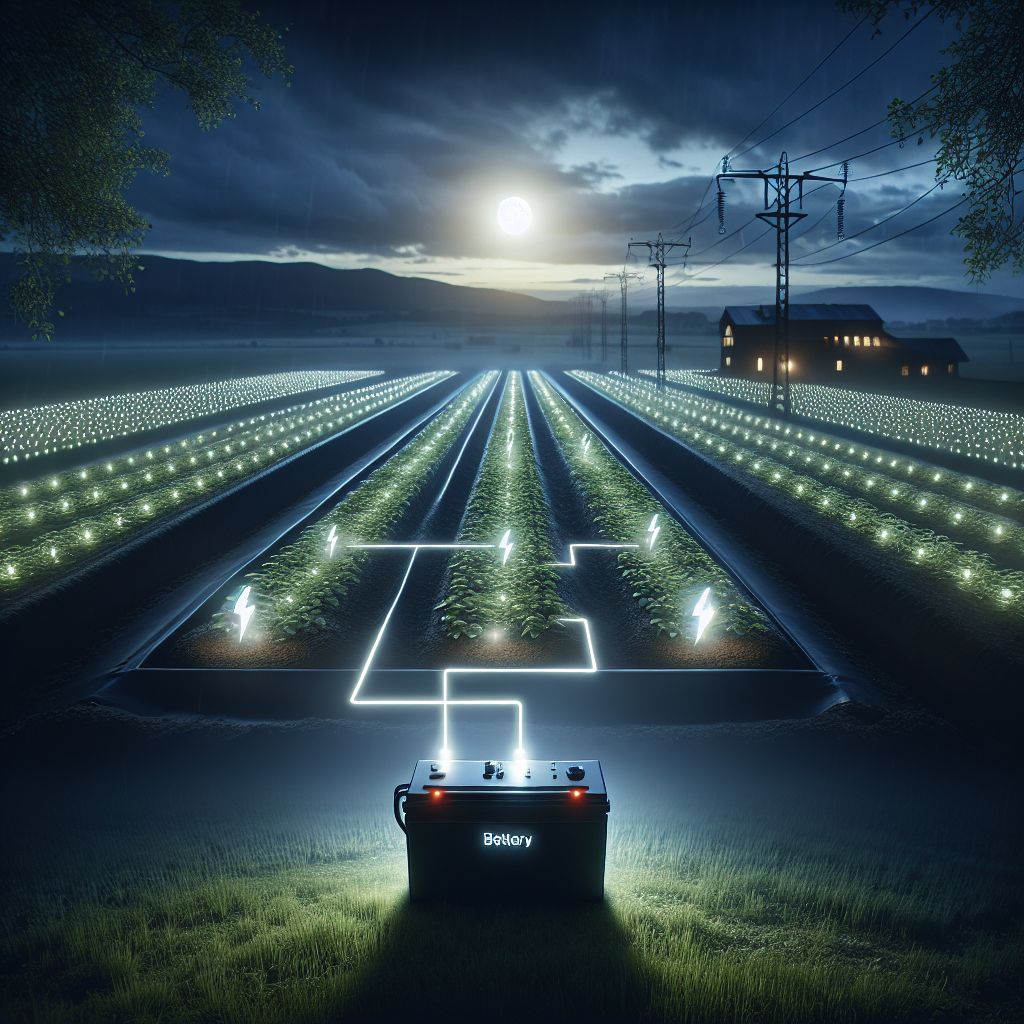
For agricultural operations, power outages represent more than inconvenience – they threaten livestock welfare, crop viability, and essential production processes. Lithium-ion battery systems provide crucial protection against these increasingly common events, automatically activating within milliseconds of detecting grid failure. This seamless transition maintains power to critical systems without the delay, noise, or pollution associated with generator startup.
Automatic Backup Systems That Protect Vulnerable Operations
Modern battery backup systems incorporate sophisticated automation that eliminates the need for manual intervention during power emergencies. Automatic transfer switches detect utility outages instantly, disconnecting from the grid and creating an independent power island that continues supplying critical farm loads. This automation proves particularly valuable during nighttime outages or when farm operators are away from the property, ensuring continuous protection regardless of human presence.
Case Study: Richards Family Dairy
When a three-day ice storm knocked out power to their 120-cow operation, the Richards’ newly installed 60kWh lithium battery system automatically activated to maintain critical milking equipment, milk cooling, and barn ventilation. While neighboring farms scrambled to connect generators or relocate livestock, the Richards’ operation continued normal production throughout the outage. The $45,000 battery system paid for itself in this single event by preventing milk spoilage and production disruption valued at over $50,000.
For operations with extensive refrigeration or climate control requirements, battery systems can be programmed to prioritize these loads during extended outages. Advanced load management controllers automatically shed non-essential equipment to extend backup runtime for critical systems. This intelligent load management ensures maximum protection for the most vulnerable aspects of your operation while conserving energy for extended outage scenarios.
Battery backup provides significant advantages over traditional generator systems, particularly for sensitive electronic equipment. While generators often produce “dirty” power with voltage fluctuations that can damage control systems and motors, battery inverters deliver pure sine wave electricity identical to or better than utility power. This clean power protects expensive farm technology including irrigation controllers, monitoring systems, and precision agriculture equipment that may be damaged by generator power quality issues.
Prioritizing Critical Farm Systems During Outages
Effective outage preparation requires identifying and prioritizing which farm systems must remain operational during power interruptions. Most agricultural operations benefit from a tiered approach that ensures the most critical systems receive guaranteed backup while less essential loads are served as capacity permits. This prioritization should be programmed into the battery system’s load management controller during installation, eliminating difficult decisions during actual emergencies.
First-tier priority typically includes systems directly impacting animal welfare and preventing immediate crop loss – ventilation, minimal lighting, water pumps, and essential refrigeration. Second-tier systems might include security equipment, communication systems, and additional lighting. Lower-priority loads like office equipment, workshop tools, and convenience appliances can be automatically disconnected during outages to extend battery runtime for critical needs.
For maximum resilience during extended outages, many farms implement hybrid systems that integrate battery storage with existing or new generator capacity. In this configuration, the battery system handles immediate backup needs and shorter outages, while the generator activates only for extended emergencies when battery capacity is depleted. This approach minimizes generator runtime, fuel consumption, and maintenance requirements while providing unlimited backup duration when needed.
Choosing the Right Lithium-Ion Battery for Your Farm Size
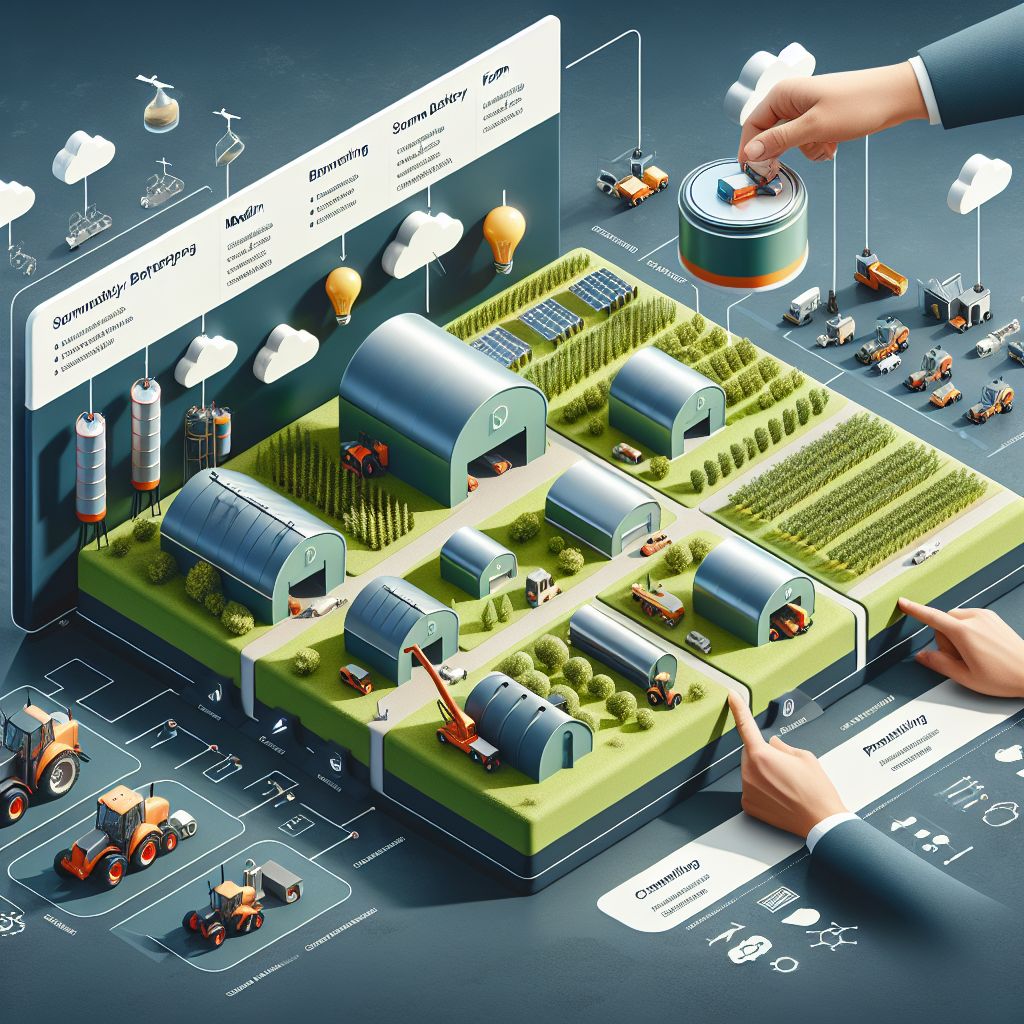
The optimal battery solution varies dramatically based on farm size, operation type, and specific energy requirements. From compact systems supporting small specialty crop operations to extensive battery banks powering commercial agriculture, matching technology to actual needs ensures maximum return on investment. Working with specialists familiar with agricultural applications helps navigate the numerous options available in today’s rapidly evolving battery market.
Small Farm Solutions (Under 50 Acres)
Small-scale and specialty crop operations often benefit from integrated, all-in-one battery systems that simplify installation and minimize space requirements. These packaged solutions typically provide 5-15kWh of storage capacity – sufficient to power critical small farm equipment, basic irrigation, refrigeration, and essential lighting. Systems in this category generally cost $5,000-$15,000 installed and can often be managed directly by the farm operator with minimal technical expertise.
For operations focusing on high-value specialty crops or direct marketing, even modest battery systems can deliver significant benefits by protecting refrigeration and maintaining market preparation activities during outages. Many small farms successfully implement portable battery solutions that can be relocated seasonally to support different activities from greenhouse operations in spring to harvest processing in fall. This flexibility maximizes the utility of a modest energy investment while addressing the diverse needs of small diversified farms.
Mid-Size Farm Recommendations (50-500 Acres)
Mid-sized agricultural operations typically require more substantial energy storage ranging from 20-100kWh to support larger irrigation systems, multiple buildings, and more extensive equipment. At this scale, modular battery solutions offer important advantages by allowing incremental expansion and providing redundancy if individual battery units require maintenance. These systems typically cost $20,000-$75,000 installed but deliver proportionally better economics through scale efficiencies and the ability to manage larger electrical loads.
Many mid-sized farms benefit from hybrid systems that maintain grid connection while incorporating significant battery capacity and solar generation. This approach allows farms to optimize energy costs through strategies like peak shaving, time-of-use arbitrage, and selective load management while maintaining the security of grid connection for extended high-demand periods. The flexibility of these systems provides both economic advantages during normal operation and critical protection during grid outages.
Large Operation Battery Systems (500+ Acres)
Commercial-scale agricultural operations with substantial electrical demands require comprehensive energy strategies incorporating extensive battery storage, often exceeding 100kWh and sometimes reaching megawatt-hour capacity. These systems typically involve custom-engineered solutions addressing complex requirements for irrigation pumping, processing equipment, cold storage, and extensive outbuildings. While representing significant capital investments ($100,000+), these systems deliver transformative economic benefits through dramatic demand charge reduction, energy arbitrage, and potential revenue from grid services.
Best Practices for Battery Maintenance in Agricultural Settings
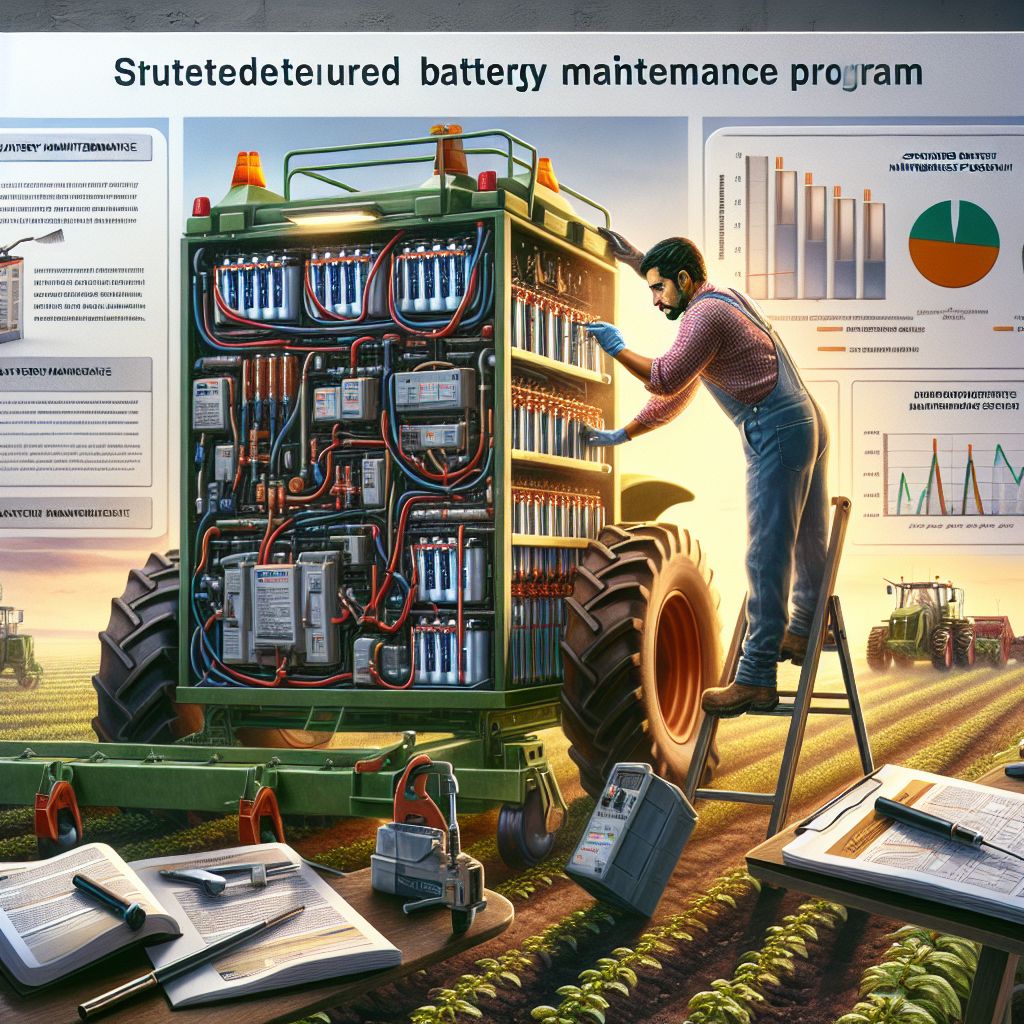
While lithium-ion batteries require significantly less maintenance than traditional alternatives, proper care remains essential for maximizing system lifespan and performance. Implementing a structured maintenance program tailored to agricultural environments helps protect your energy investment while ensuring reliable operation when needed most. Even the most durable batteries benefit from regular monitoring and basic preventative care.
Protecting Batteries from Extreme Temperatures
This below table will discuss the Temperature Impact on Lithium Battery Performance
|
Temperature Range |
Performance Impact |
Risks & Degradation |
Recommendations |
Source(s) |
|---|---|---|---|---|
|
Below 0°C (32°F) |
Significant capacity loss; reduced energy and power output; voltage sag |
Lithium plating, permanent capacity loss, dendrite growth |
Avoid charging/use; insulate or warm | |
|
0°C to 15°C (32–59°F) |
Reduced capacity and efficiency; slower chemical reactions |
Increased internal resistance |
Use low-temp batteries if needed | |
|
15°C to 35°C (59–95°F) |
Optimal performance and efficiency; maximum lifespan |
Minimal degradation |
Ideal for operation and charging | |
|
35°C to 60°C (95–140°F) |
Overheating, reduced capacity, accelerated aging |
Risk of thermal runaway, shortened lifespan |
Use cooling/thermal management systems | |
|
Above 60°C (140°F) |
Severe performance drop; rapid degradation |
High safety risk, possible thermal runaway, fire hazard |
Avoid at all costs; ensure ventilation |
Temperature management represents the single most important maintenance consideration for agricultural battery systems. Extreme heat accelerates chemical degradation within lithium cells, potentially reducing battery lifespan by 50% or more if consistently operated above 95°F (35°C). Conversely, charging lithium batteries at freezing temperatures can cause permanent damage through lithium plating. Proper installation in temperature-controlled spaces provides the foundation for temperature management, but ongoing monitoring remains essential.
For installations in hot climates, supplemental cooling systems may be necessary during summer months. Options range from simple ventilation fans to dedicated mini-split air conditioning systems for battery rooms. The investment in temperature management typically delivers substantial returns through extended battery life and improved performance. Some advanced systems automatically reduce charging rates during extreme temperatures to protect battery health when cooling systems cannot maintain ideal conditions.
Cold weather presents different challenges, particularly for farms in northern climates. Battery heating systems activated during charging can prevent damage while maintaining efficiency in winter conditions. Simple solutions include insulated enclosures, thermostatically controlled heating pads beneath battery units, or locating batteries in buildings that maintain moderate temperatures year-round. For extremely cold regions, dedicated battery heaters may be necessary to maintain operating temperatures during winter operations.
Monitoring Systems and Performance Tracking
Regular monitoring provides early warning of potential issues while verifying system performance meets expectations. Modern lithium battery systems include sophisticated monitoring capabilities that track individual cell voltages, overall system performance, and critical parameters like state of charge and temperature. Many systems now offer smartphone apps or web portals allowing remote monitoring from anywhere – particularly valuable for farms with multiple or remote properties.
Beyond the convenience factor, performance tracking creates valuable documentation of system operation that can identify subtle efficiency losses before they become serious problems. Unexplained increases in discharge rates, unusual temperature patterns, or changes in charging efficiency often indicate developing issues that can be addressed before causing system failure. Maintaining detailed performance records also proves valuable for warranty claims if problems develop during the coverage period.
Cleaning and Connection Maintenance
Agricultural environments present unique challenges for electronic equipment due to dust, humidity, and potential exposure to corrosive substances. While lithium battery cells themselves are sealed and maintenance-free, the surrounding connections, cooling systems, and electronics require periodic attention. Quarterly visual inspections should check for dust accumulation on cooling fins, loose connections, corrosion on terminals, and proper operation of ventilation systems.
Dust accumulation represents a particular concern as it can obstruct ventilation, causing temperature increases that accelerate battery degradation. Using compressed air to clean ventilation openings, fans, and heat sinks helps maintain proper cooling without risking water damage to electronic components. For systems installed in particularly dusty environments like grain operations or near field work, more frequent cleaning may be necessary during peak activity periods. For more insights on energy solutions in agriculture, consider exploring portable lithium power stations in farming.
Future-Proof Your Farm with Lithium-Ion Battery Technology
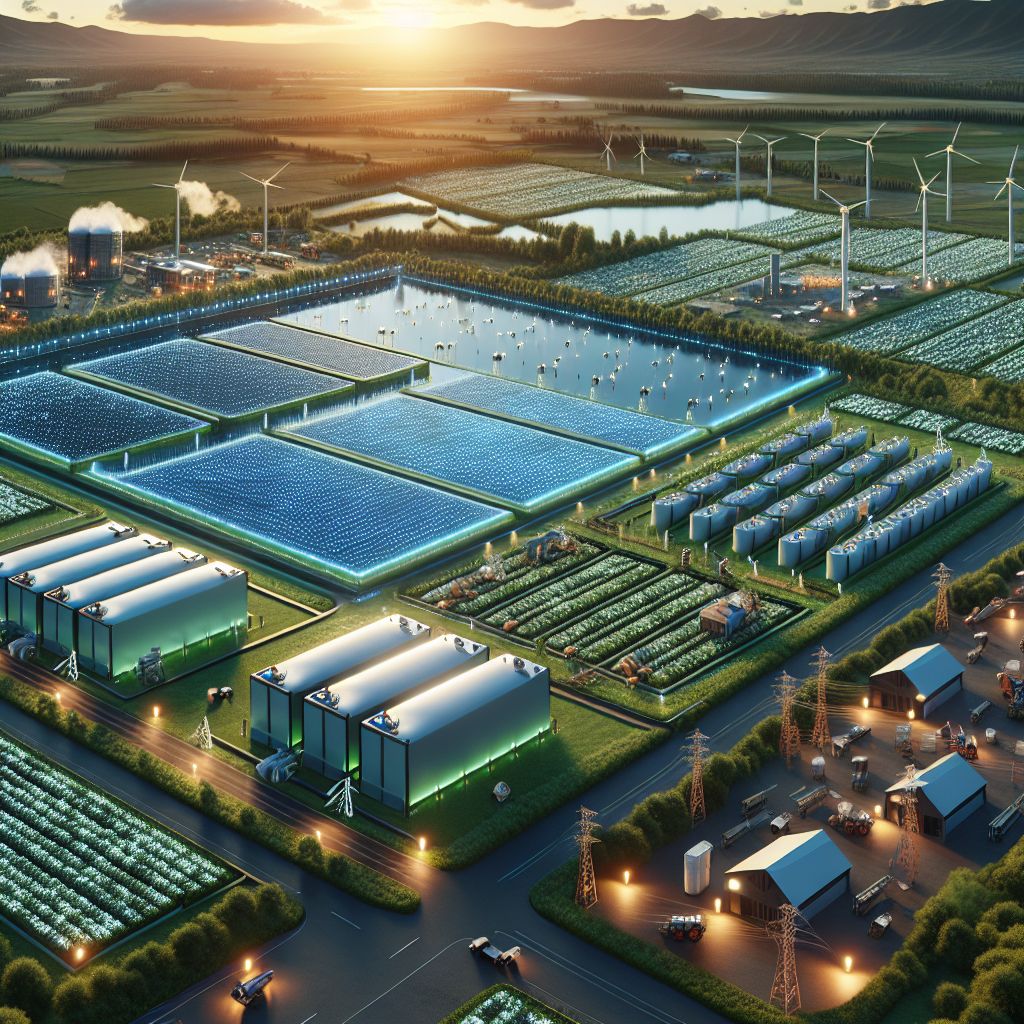
Investing in lithium-ion battery technology positions your farm at the forefront of the agricultural energy revolution. As utility rates continue rising and grid reliability declines in many rural areas, energy independence becomes increasingly valuable for maintaining profitable operations. Today’s modular battery systems allow for incremental expansion as farm needs grow, protecting your initial investment while accommodating future requirements. By implementing this technology now, you establish the infrastructure foundation for emerging agricultural innovations including electrified equipment, automated systems, and advanced monitoring that will define competitive farming in the coming decades.
Frequently Asked Questions
The following questions address common concerns farmers have when considering lithium-ion battery systems for their operations. Understanding these practical aspects helps make informed decisions when planning your farm’s energy transition.
How long do lithium-ion batteries typically last in farm applications?
Modern lithium iron phosphate (LFP) batteries commonly used in agricultural applications typically provide 4,000-6,000 cycles at 80% depth of discharge before reaching 80% of their original capacity. In practical terms, this translates to 10-15 years of daily use for most farm installations. Actual lifespan varies based on operating conditions, with temperature management being particularly important for maximizing longevity. Systems operated primarily in temperature-controlled environments (40-75°F) typically achieve the upper end of this range, while those exposed to temperature extremes may experience accelerated aging.
Can lithium-ion batteries be safely used in barns and other agricultural buildings?
Lithium iron phosphate (LFP) batteries commonly used in agricultural settings offer excellent safety profiles suitable for farm building installation when properly housed. These systems should be installed in clean, dry areas protected from physical damage, extreme temperatures, and direct exposure to hay, dust, or other combustible materials. Dedicated battery rooms or repurposed office spaces within larger buildings often provide ideal locations. For maximum safety, battery installations should include proper ventilation, fire detection systems, and clear access for maintenance. Always follow manufacturer guidelines and local electrical codes, which may have specific requirements for battery installations in agricultural buildings.
What size battery system do I need to run my irrigation pumps?
Sizing a battery system for irrigation depends on pump specifications, watering requirements, and desired run time between charges. Start by calculating your pump’s hourly energy consumption (pump horsepower × 0.746 × hours of operation) to determine baseline requirements. For example, a 10HP pump consumes approximately 7.5kWh per hour of operation. To power this pump for 6 hours between charges would require approximately 45kWh of usable battery capacity (accounting for efficiency losses and keeping within recommended discharge limits).
For solar-powered irrigation systems, battery capacity should be sized based on the maximum number of consecutive days you might need to irrigate during cloudy periods with limited solar recharging. Many farms implement variable frequency drives (VFDs) on irrigation pumps, which can reduce peak power requirements and extend battery runtime by operating pumps at lower speeds for longer periods – often improving irrigation effectiveness while reducing energy needs.
Are there special disposal requirements for lithium-ion batteries used on farms?
End-of-life lithium-ion batteries are classified as universal waste in most jurisdictions and must be properly recycled rather than disposed of in regular waste streams. Most battery manufacturers and many solar installation companies now offer take-back programs for expired systems, simplifying the recycling process. The valuable metals in these batteries, including lithium, cobalt, and nickel, create economic incentives for recycling that help support these programs. When purchasing new systems, inquire about end-of-life policies and factor these considerations into your selection process.
Can I expand my battery system as my farm energy needs grow?
Most modern agricultural battery systems are designed with scalability in mind, allowing for future expansion as needs evolve. Modular systems using standard battery capacities (typically 5-15kWh per module) offer the greatest flexibility for incremental growth. When planning initial installations, select inverters and electrical infrastructure sized for your anticipated future capacity rather than just current needs. This approach may increase initial costs slightly but eliminates expensive electrical upgrades when expanding later.
Many farmers implement phased approaches, beginning with battery capacity for essential operations and expanding as budgets allow or as additional farm systems are electrified. When planning expansions, it’s generally best to add new batteries of the same chemistry and preferably the same model as your existing system. While mixing different battery types is technically possible with advanced battery management systems, maintaining consistency simplifies integration and optimization.
For maximum future flexibility, consider working with manufacturers offering compatible expansion options and clear upgrade paths for their systems. Many agricultural energy specialists can design systems with designated connection points and space allocations for future batteries, minimizing the complexity of later expansions. This forward-thinking approach ensures your energy infrastructure can evolve alongside your farming operation for decades to come. For more information, check out how portable lithium power stations are used in farming.
Ready to transform your farm’s energy future with reliable, sustainable lithium-ion battery technology? Jackery’s agricultural power solutions provide the dependable backup your operation needs with industry-leading warranty protection and expert support designed specifically for farm applications.




Leave a Reply