

In the ever-evolving landscape of agriculture, efficiency and sustainability are key. One of the most promising advancements is the use of solar-powered irrigation systems enhanced by drone technology. This innovation is reshaping how we manage water resources, ensuring crops receive the right amount of water while minimizing waste and environmental impact.
Article-at-a-Glance
Solar-powered irrigation systems, when combined with drones, can significantly boost agricultural efficiency. Here are some key takeaways:
- Drones enable precise irrigation, reducing water waste and enhancing crop yields.
- Solar energy powers both irrigation systems and drones, lowering energy costs.
- Integrating drones with solar systems allows for real-time monitoring of crops.
- Despite initial costs, long-term savings make this technology cost-effective.
- Adoption of this technology contributes to sustainable farming practices.
A New Era for Irrigation: Solar Power and Drones
The integration of solar power with drone technology marks a new era in agricultural practices. Solar-powered irrigation systems have already transformed the way we water crops, but adding drones to the mix takes efficiency to a whole new level.
Solar-Powered Irrigation Systems
Solar-powered irrigation systems harness the sun’s energy to pump water, making them both eco-friendly and cost-effective. These systems reduce reliance on fossil fuels, cutting down on greenhouse gas emissions. Furthermore, solar panels have become more affordable and efficient, making this technology accessible to farmers worldwide.
Most importantly, solar-powered systems offer a sustainable solution for water management in agriculture. By using renewable energy, farmers can irrigate their fields even in remote areas without access to the electrical grid. This is particularly beneficial in regions with abundant sunlight but limited infrastructure.
The Rise of Drone Technology in Agriculture
Drones have rapidly gained popularity in agriculture due to their ability to cover large areas quickly and efficiently. Equipped with advanced sensors, drones can collect data on soil moisture, crop health, and weather conditions. This data allows farmers to make informed decisions about when and where to irrigate, fertilize, or apply pesticides. For instance, understanding the impact of solar irrigation can further enhance these decisions, optimizing resource use and crop yield.
Besides that, drones provide a bird’s-eye view of fields, helping farmers identify issues that may not be visible from the ground. For instance, they can detect areas of a field that are receiving too much or too little water, allowing for precise adjustments to irrigation schedules.
Benefits of Integrating Drones with Solar Irrigation
Combining drones with solar-powered irrigation systems offers numerous benefits. First and foremost, it enhances precision in water application. Drones can pinpoint exactly where water is needed, reducing waste and ensuring that crops receive the right amount of moisture.
Additionally, drones facilitate real-time monitoring of crops. With the ability to capture high-resolution images and videos, they provide valuable insights into crop health and growth patterns. This information can be used to optimize irrigation practices, leading to healthier plants and higher yields.
Moreover, using solar energy to power both irrigation systems and drones reduces energy costs. While the initial investment may be higher than traditional methods, the long-term savings in energy and water make this approach cost-effective. Farmers can expect to see a return on investment as they reduce their reliance on non-renewable resources.

Current Challenges in Solar-Powered Irrigation
Despite the advantages, there are challenges associated with solar-powered irrigation systems. Understanding these challenges is crucial for successful implementation and operation, including the key components of solar irrigation systems.
Limitations of Traditional Irrigation Methods
Traditional irrigation methods, such as flood irrigation, can be inefficient and wasteful. Water is often applied uniformly across a field, regardless of the varying needs of different areas. This can lead to overwatering in some parts and underwatering in others, negatively impacting crop health and yield.
Furthermore, traditional systems can be labor-intensive and costly to operate. They require significant human intervention to monitor and adjust water levels, which can be time-consuming and prone to error. For a more efficient alternative, consider exploring the benefits of solar-powered pumps in irrigation systems.
Environmental and Economic Impacts
The environmental impact of traditional irrigation methods is also a concern. Overuse of water resources can deplete local aquifers and harm ecosystems. Additionally, the energy required to pump and distribute water contributes to greenhouse gas emissions, exacerbating climate change. Exploring alternatives like solar-powered irrigation systems can help mitigate these impacts.
Economically, the inefficiencies of traditional systems can result in higher costs for farmers. Water waste and energy consumption drive up operational expenses, cutting into profits and making it difficult for small-scale farmers to compete.

How Drones Enhance Irrigation Efficiency
Integrating drones into solar-powered irrigation systems brings a new level of precision and efficiency to agriculture. Drones are not just flying cameras; they are sophisticated tools that can transform how we manage water resources.
By using drones, farmers can significantly enhance irrigation efficiency, ensuring that every drop of water is used effectively. This technology allows for smarter water management, which is crucial in today’s world where water scarcity is a growing concern.
Precision Water Application
Drones excel in precision water application. They can survey vast tracts of farmland and identify areas that require more or less water. This targeted approach ensures that water is applied exactly where it is needed, reducing waste and optimizing plant growth.
For instance, a drone can detect a dry patch in a field and direct the irrigation system to deliver water precisely to that area. This eliminates the guesswork involved in traditional methods and leads to healthier crops and increased yields.
Real-Time Monitoring and Data Collection
One of the standout features of drones is their ability to provide real-time monitoring and data collection. Equipped with advanced sensors and cameras, drones can capture detailed images and data on crop health, soil moisture, and weather conditions. For a deeper understanding of how these technologies can enhance agricultural practices, explore the revolutionizing watering practices with solar energy.
With this information, farmers can make informed decisions about irrigation schedules and strategies. Real-time data allows for quick adjustments, ensuring that crops receive the optimal amount of water. This proactive approach can prevent issues before they become major problems.
Moreover, drones can identify trends and patterns over time, providing valuable insights into crop performance. This data-driven approach empowers farmers to optimize their practices and achieve better results.
Reducing Water Waste and Costs
Reducing water waste is a top priority for sustainable agriculture, and drones play a pivotal role in achieving this goal. By delivering water precisely where it is needed, drones minimize waste and ensure that resources are used efficiently.
This targeted approach also reduces costs for farmers. By using water more efficiently, farmers can lower their water bills and reduce the energy required to pump and distribute water. Over time, these savings can add up, making drone-assisted irrigation a cost-effective solution.
“In a study conducted by the University of California, it was found that using drones for precision irrigation reduced water usage by up to 30% while increasing crop yields by 20%.”
These results highlight the potential of drones to revolutionize irrigation practices and promote sustainability in agriculture. For instance, exploring the revolutionizing watering practices with solar energy can further enhance these sustainable efforts.
Here’s a table discussing the advantages of using a drone with irrigation systems:
|
Advantage |
Description |
|---|---|
|
Efficient Water Use |
Drones help identify over-watered or under-watered areas, enabling precise water distribution and preventing wastage. 1, 3, 5 |
|
Cost Savings |
By reducing water wastage and detecting problems early, drones help lower water bills and minimize maintenance costs. 1, 5 |
|
Crop Health Monitoring |
Multispectral sensors on drones can detect early signs of crop stress or disease, enabling timely interventions. 1, 2, 5 |
|
Accurate Data Collection |
Drones cover large areas quickly, providing high-resolution imagery for detailed soil and crop analysis. 1, 2, 5 |
|
Improved Productivity |
Automating inspection processes frees up time for other important tasks, reducing the need for manual labor. 1, 2 |
|
Environmental Impact Reduction |
Precision irrigation reduces water runoff, soil erosion, and energy consumption, lowering the farm’s carbon footprint. 1, 5 |
|
Flexible Scheduling |
Drones can operate at any time, providing real-time information to adapt to changing conditions. 1 |
|
Historical Data Analysis |
Drones store data over time, enabling trend analysis and long-term irrigation system improvements. 1 |
|
Leak Detection |
Thermal cameras on drones can identify temperature changes in the ground, indicating irrigation leaks. 1, 5 |
|
Soil Moisture Mapping |
Specialized sensors create detailed soil moisture maps, highlighting areas needing irrigation adjustments. 1, 5 |
|
Precision Application |
GPS technology and advanced sensors enable targeted water application, minimizing waste and maximizing efficiency. 4 |
|
Remote Monitoring |
Drones capture high-resolution imagery and data, allowing operators to assess water quality and identify problem areas without physical presence. 4 |
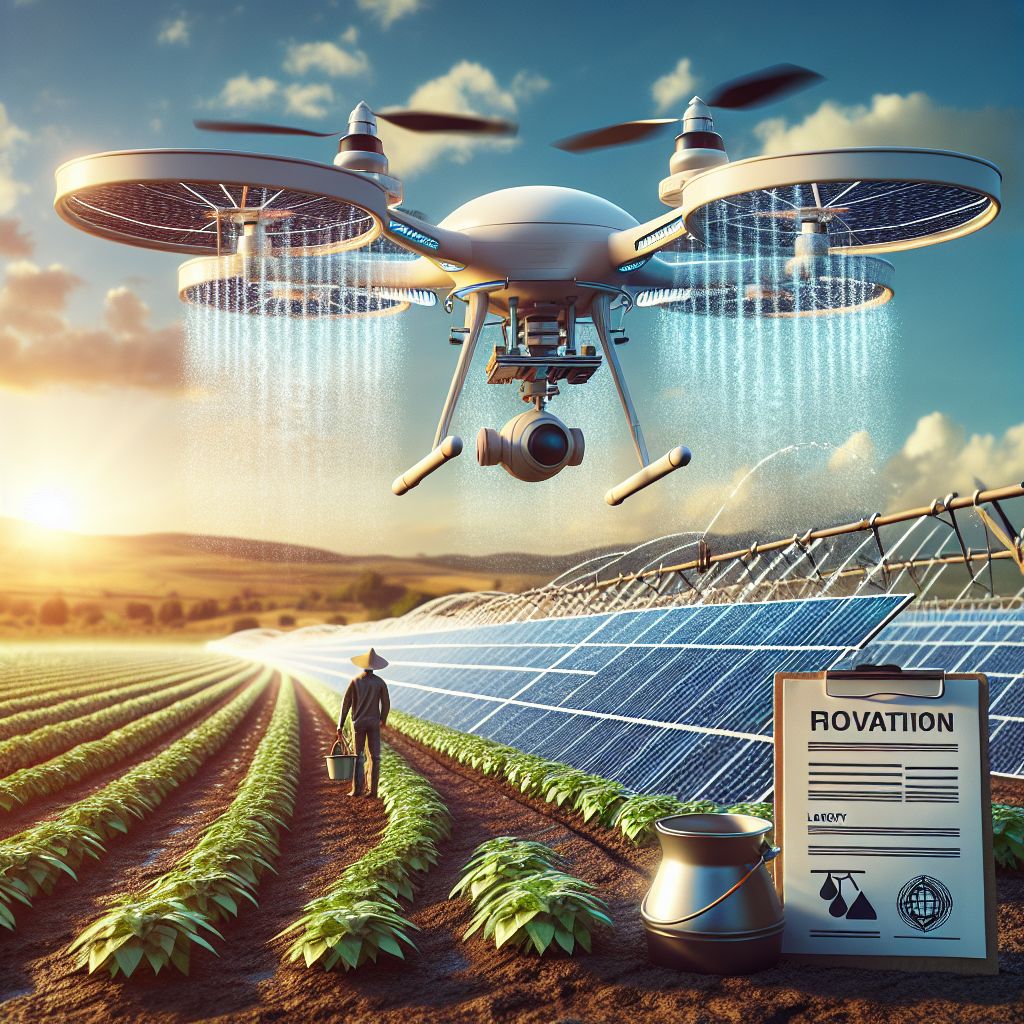
This integration of drones with irrigation systems significantly enhances farming efficiency, sustainability, and crop yield while reducing resource consumption and environmental impact.
Potential Obstacles and Solutions
While the benefits of drone-assisted solar irrigation are clear, there are potential obstacles that need to be addressed. Overcoming these challenges is essential for the widespread adoption of this technology.
Understanding the technical and maintenance challenges, adapting to new technology, and navigating legal and regulatory considerations are key factors in ensuring the successful implementation of drones in agriculture.
Technical and Maintenance Challenges
One of the primary challenges of using drones in agriculture is the technical and maintenance aspects. Drones require regular maintenance to ensure they operate effectively and safely. This includes battery management, software updates, and repairs.
Farmers need to be trained on how to operate and maintain drones, which can be a barrier for those unfamiliar with the technology. Providing accessible training and support can help overcome this obstacle and empower farmers to use drones confidently. For instance, understanding the setup and benefits of solar sprinkler irrigation systems can complement drone usage for efficient farm management.
“In regions where drone technology has been successfully implemented, local agricultural extension services have played a crucial role in providing training and support to farmers.”
This collaborative approach can help farmers overcome technical challenges and fully utilize the benefits of drones in irrigation.
Adapting to Drone Technology
Adapting to new technology can be daunting, especially for farmers who have relied on traditional methods for generations. However, embracing drone technology is essential for staying competitive and sustainable in the modern agricultural landscape.
Farmers can start by integrating drones into their existing practices gradually. This allows them to become familiar with the technology and its capabilities without overwhelming them. As they gain confidence, they can expand their use of drones to cover more areas and tasks, enhancing their overall farm efficiency and productivity.
Legal and Regulatory Considerations
Legal and regulatory considerations are another important aspect of using drones in agriculture. Different regions have varying regulations regarding drone usage, including airspace restrictions and privacy concerns.
Farmers need to be aware of these regulations and ensure they comply with all legal requirements. This may involve obtaining permits or licenses, as well as adhering to safety guidelines and privacy laws.
By staying informed and working with local authorities, farmers can navigate the legal landscape and use drones responsibly and effectively.
Real-World Success Stories
Real-world success stories highlight the transformative impact of drones in agriculture. These stories demonstrate how farmers have successfully integrated drone technology into their practices, leading to improved efficiency and sustainability.
Case Study: Improved Yields in Africa
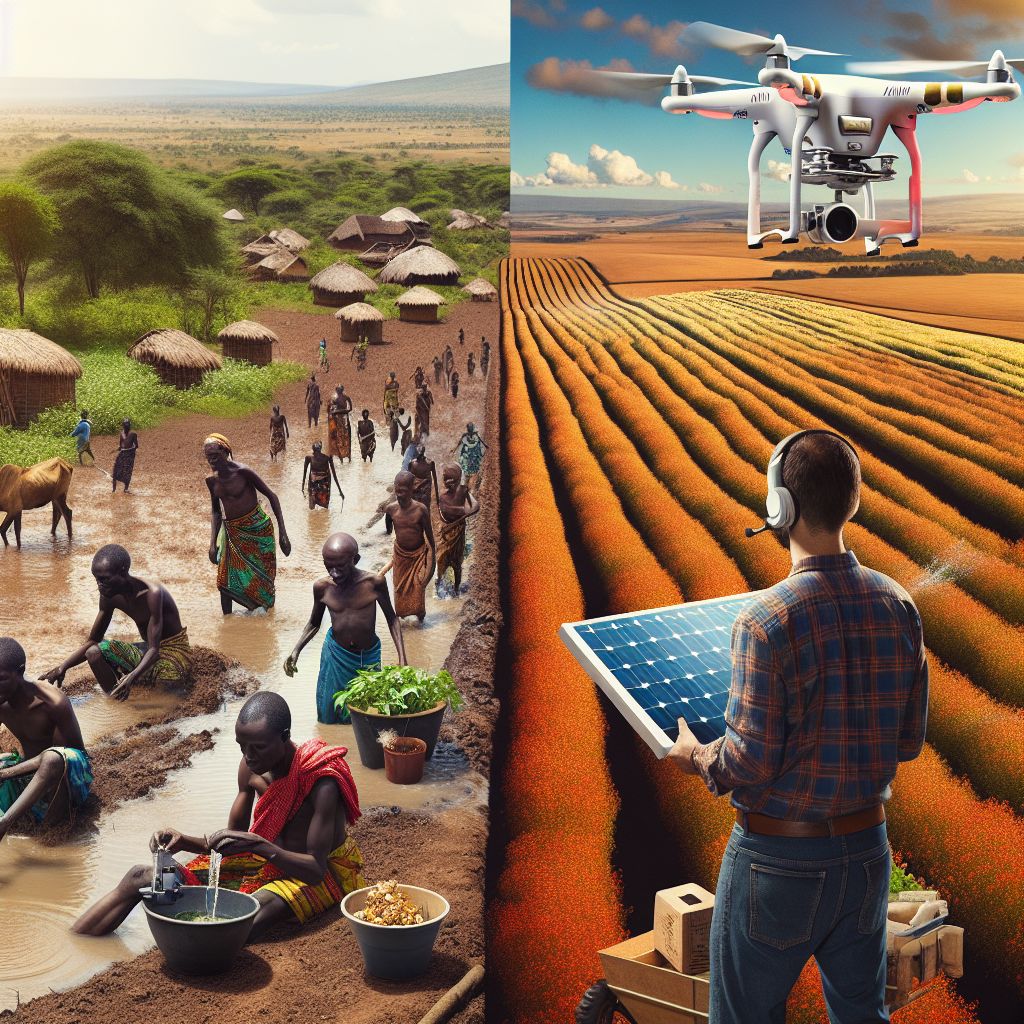
In a case study from Kenya, a group of farmers implemented drone-assisted solar irrigation systems to combat water scarcity and improve crop yields. By using drones to monitor their fields, they were able to apply water more precisely and reduce waste.
The results were remarkable. Crop yields increased by 25%, and water usage decreased by 40%. This success story highlights the potential of drones to address the challenges of water scarcity and food security in regions facing similar issues.
A Midwest Farmer’s Perspective
In the heartland of America, a Midwest farmer named Joe embraced drone technology to enhance his solar-powered irrigation system. Joe’s farm, like many others, faced challenges with water management and energy costs. By integrating drones, he was able to transform these challenges into opportunities.
Joe started by using drones to survey his fields and identify areas that required more or less water. This allowed him to adjust his irrigation schedules precisely, ensuring that each part of his field received the optimal amount of water. As a result, Joe saw a significant increase in crop yields and a reduction in water waste. For more information on how drones are transforming agriculture, check out this article on the digitization of agriculture.
Moreover, the use of solar power to run his irrigation system and drones led to a substantial decrease in energy costs. Joe’s story is a testament to how technology can empower farmers to achieve greater efficiency and sustainability.
Future Implications for Sustainable Agriculture
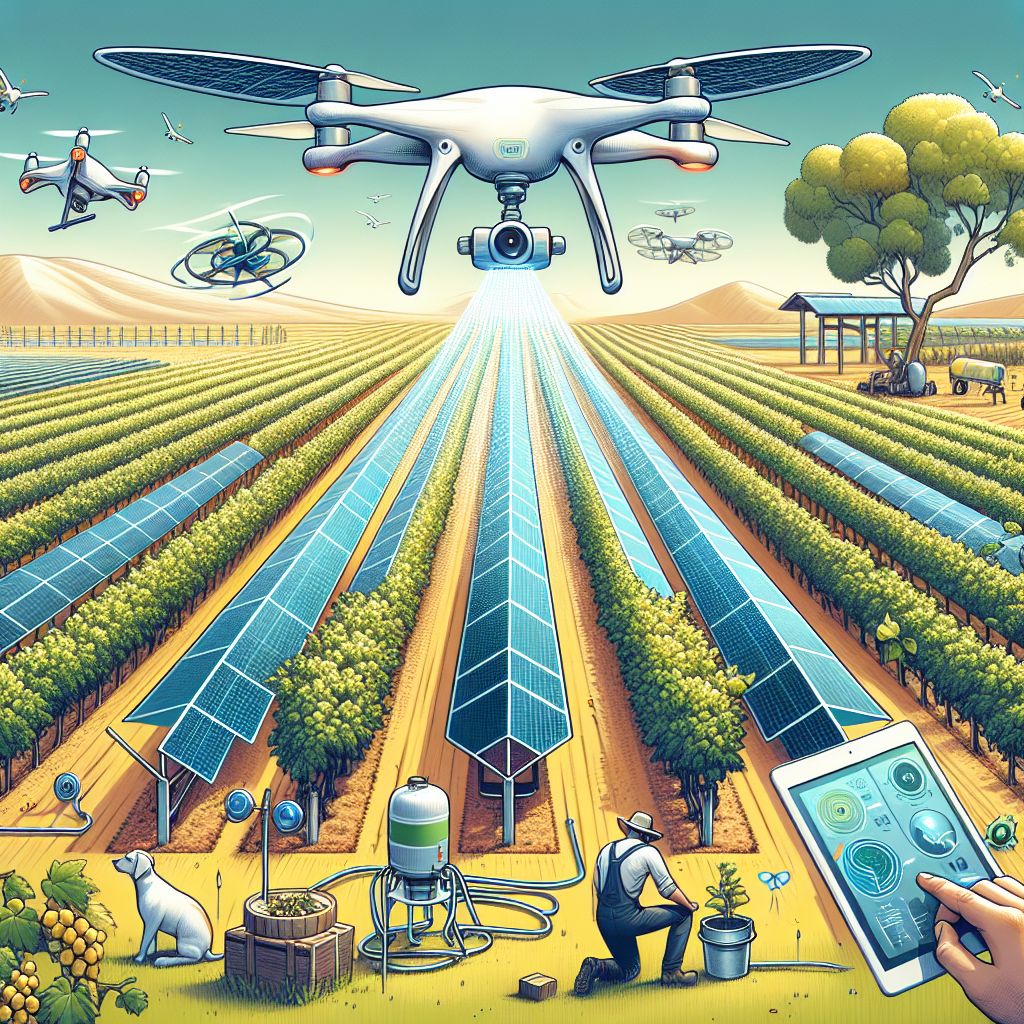
The integration of drones with solar-powered irrigation systems has far-reaching implications for sustainable agriculture. As technology continues to advance, the potential for innovation in this field is immense.
Technological Advancements in Drone Design
Future advancements in drone design are likely to enhance their capabilities and make them even more effective tools for agriculture. Drones may become equipped with more sophisticated sensors and imaging technology, allowing for even greater precision in data collection and analysis.
These advancements could lead to more efficient water management practices and improved crop yields. As drones become more affordable and accessible, farmers of all sizes will be able to leverage this technology to improve their operations.
Policy and Industry Support
For the widespread adoption of drone-assisted solar irrigation systems, policy and industry support will be crucial. Governments and agricultural organizations can play a significant role in promoting this technology by providing incentives and resources to farmers.
Programs that offer financial assistance for the purchase of drones and solar equipment can help reduce the initial costs for farmers. Additionally, providing training and support can ensure that farmers are equipped with the knowledge and skills needed to use these technologies effectively.
“In a recent initiative, the government of India launched a subsidy program for farmers adopting solar-powered irrigation systems, making it more accessible for small-scale farmers.”
Such initiatives can drive the adoption of sustainable practices and contribute to the global effort to combat climate change. To understand the key components of solar irrigation systems, it is essential to explore how these systems function and their impact on agriculture.
Potential for Other Agricultural Applications
The potential applications of drones in agriculture extend beyond irrigation. Drones can be used for a variety of tasks, including crop monitoring, pest control, and soil analysis. These applications can further enhance the efficiency and sustainability of agricultural practices, similar to how solar-powered irrigation systems have revolutionized watering practices.
For example, drones equipped with thermal imaging cameras can detect pest infestations early, allowing farmers to take targeted action before the pests cause significant damage. This proactive approach can reduce the need for chemical pesticides and promote healthier crops.
“In vineyards in California, drones are being used to monitor grapevines for signs of disease, enabling early intervention and preventing crop loss.”
As technology continues to evolve, the possibilities for drone applications in agriculture are endless, offering new ways to improve efficiency and sustainability.
FAQ
Here are some frequently asked questions about the use of drones in solar-powered irrigation systems:
Are drones suitable for all types of crops?
Drones can be used for a wide variety of crops, but their effectiveness may vary depending on the specific needs and characteristics of each crop. For instance, crops with dense foliage may require different sensor technologies compared to open-field crops.
Are there any risks associated with using drones for irrigation?
While drones offer many benefits, there are some risks to consider. These include potential technical malfunctions, weather-related issues, and regulatory compliance. Proper training and maintenance can help mitigate these risks.
How is solar-powered irrigation cost-effective in the long run?
Solar-powered irrigation systems reduce reliance on fossil fuels, lowering energy costs over time. Although the initial investment may be higher, the savings on energy and water, combined with increased crop yields, make this technology cost-effective in the long run.
Can drones be used in regions with limited sunlight?
While solar-powered systems are most effective in regions with abundant sunlight, they can still be used in areas with limited sunlight. Battery storage and hybrid systems that combine solar with other energy sources can ensure reliable operation.
What are the initial costs of implementing a solar drone irrigation system?
The initial costs can vary depending on the size of the farm and the specific equipment chosen. On average, purchasing a drone may cost between $1,000 and $10,000, while a solar-powered irrigation system can range from $5,000 to $20,000. However, financial incentives and subsidies may be available to offset these costs.

Leave a Reply