

Key Takeaways
Solar-powered water pumps reduce operational costs by eliminating the need for fuel.
These pumps are environmentally friendly, significantly reducing carbon emissions.
Solar water pumps increase agricultural productivity by providing consistent water supply.
They are suitable for remote areas where electricity is unavailable or unreliable.
Initial costs can be high, but long-term savings and sustainability make them a worthwhile investment.
Solar Powered Water Pump for Farmers Irrigation System: Science & Benefits
How Solar-Powered Water Pumps Work
Solar-powered water pumps harness energy from the sun to pump water from various sources like wells, rivers, or ponds. They consist of solar panels that convert sunlight into electricity, which then powers the water pump. The system is simple yet effective, ensuring that water is available for irrigation without relying on traditional power sources.
Introduction to Solar-Powered Water Pumps
Solar-powered water pumps are transforming the agricultural landscape, especially in regions where water scarcity and unreliable electricity supply are significant challenges. These pumps offer a sustainable and cost-effective solution for farmers to irrigate their fields, ensuring better crop yields and more efficient water usage.
What Are Solar-Powered Water Pumps?
Solar-powered water pumps are devices that use solar energy to pump water. They are ideal for agricultural activities, providing a reliable source of water for irrigation. The key components include solar panels, a pump, and a controller that regulates the system.
Basic Components of the System
The main components of a solar-powered water pump system are:
Solar Panels: Capture and convert sunlight into electrical energy.
Pump: Moves water from the source to the desired location.
Controller: Manages the flow of electricity to the pump, ensuring efficient operation.
The Different Type of Water Pumps
There are two main types of water pumps used in solar-powered systems: submersible pumps and surface pumps.
Submersible Pumps: These pumps are placed underwater and are ideal for deep wells. They are efficient and can pump large volumes of water.
Surface Pumps: These are placed above the water source and are suitable for shallow wells or surface water sources like rivers and ponds.
Here’s a table comparing the advantages and disadvantages of submersible pumps and surface pumps used in solar-powered irrigation systems for farmers:
|
Feature |
Submersible Pumps |
Surface Pumps |
|---|---|---|
|
Advantages |
– Easier to install and maintain as they are above ground. 1, 2, 4 | |
|
– Efficient at pushing water to the surface. 2 |
– Ideal for shallow water sources like ponds or rivers. 1 | |
|
– Can operate in remote areas with no electricity. 3 |
– Can be easily moved or repositioned if needed. 4 | |
|
Disadvantages |
– Limited to shallow water sources, not suitable for deep wells. 1, 4 | |
|
– Less efficient for deep water applications. 1 | ||
|
– May require additional equipment for very deep wells. 1, 2, 4 |
This table highlights the key differences between submersible and surface pumps for solar-powered irrigation systems, focusing on their suitability for different water sources, ease of installation and maintenance, cost considerations, and operational efficiency.
The Science Behind Solar Water Pumps
Solar water pumps operate on a straightforward principle. Solar panels capture sunlight and convert it into direct current (DC) electricity. This electricity powers the water pump, which then moves water from the source to the fields. The efficiency of the system depends on the quality of the solar panels, the capacity of the pump, and the amount of sunlight available.
“Solar water pumps can operate for up to 20 years with minimal maintenance, providing a reliable and sustainable water supply for farmers.”
Besides that, the simplicity of the system means fewer moving parts, reducing the likelihood of mechanical failures and maintenance costs. This makes solar-powered water pumps a practical and economical choice for sustainable farming.
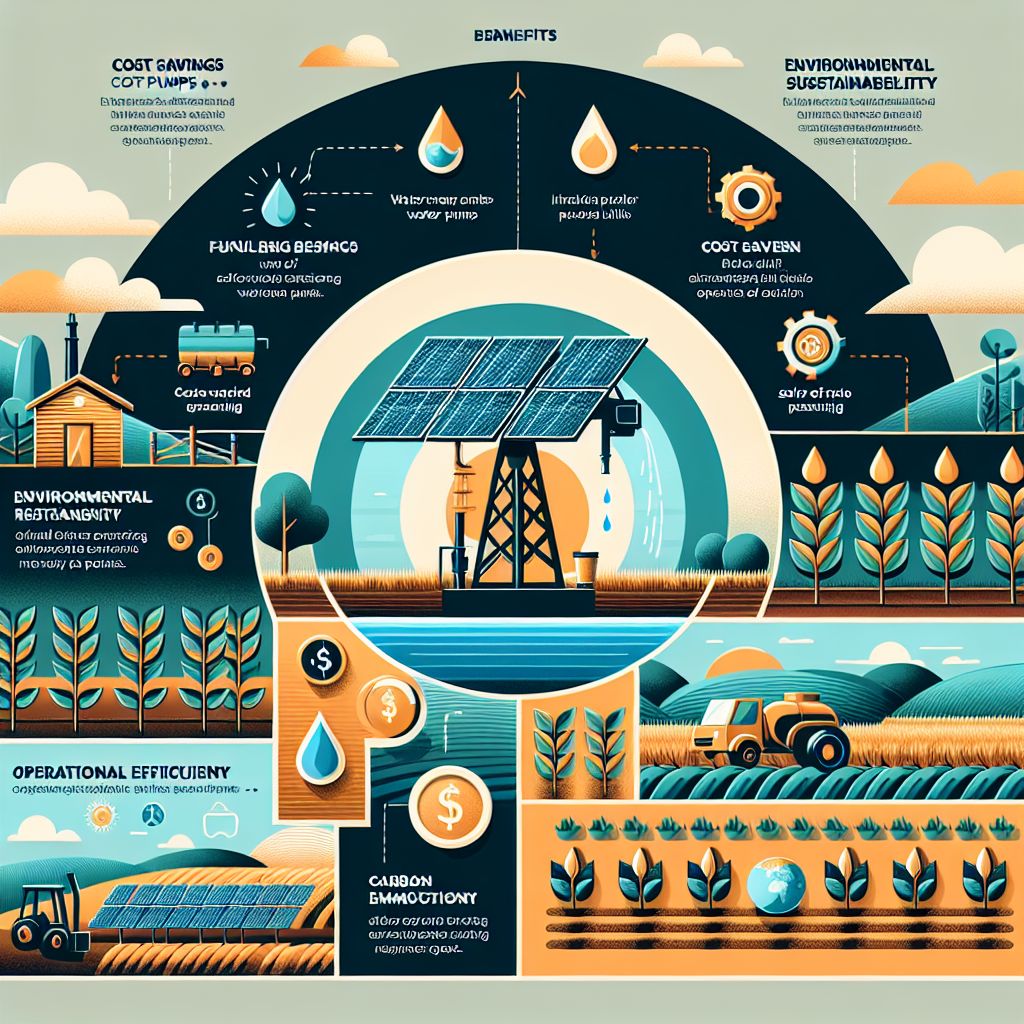
Advantages of Solar-Powered Water Pumps
Solar-powered water pumps offer numerous benefits that make them an attractive option for modern agriculture. Let’s explore some of the key advantages:
Cost Savings
One of the most significant benefits of solar-powered water pumps is the cost savings. Traditional pumps require fuel or electricity, which can be expensive and subject to price fluctuations. Solar pumps, on the other hand, use free and abundant solar energy, leading to substantial long-term savings.
Here are some specific cost-saving aspects:
Elimination of Fuel Costs: No need to purchase diesel or petrol.
Reduced Electricity Bills: Lower reliance on grid electricity.
Minimal Maintenance: Fewer moving parts mean less wear and tear.
Environmental Sustainability
Solar-powered water pumps are environmentally friendly. They reduce carbon emissions by eliminating the need for fossil fuels. This contributes to a cleaner and healthier environment, which is crucial for sustainable farming practices.
Additionally, solar pumps help in water conservation by providing a controlled and efficient water supply, reducing wastage.
Operational Efficiency
Solar water pumps are highly efficient, providing a consistent and reliable water supply. This is especially important in areas with unreliable electricity or fuel supply. With solar pumps, farmers can ensure their crops receive the necessary water, leading to better yields and improved food security.
Operational Efficiency
Solar water pumps are designed for optimal operational efficiency. They can run throughout the day as long as there is sunlight, providing a consistent water supply for irrigation. This is particularly beneficial during the dry season when water needs are highest. Additionally, the system can be automated to start and stop based on water needs, reducing labor and ensuring efficient water use.
Because they rely on solar energy, these pumps can operate in remote areas where electricity is unavailable or unreliable. This makes them an excellent choice for farmers in off-grid locations, ensuring that their irrigation needs are met without the hassle of fuel logistics or electricity outages. Learn more about the benefits of solar-powered irrigation systems.
Benefits to Crop Yields
Consistent and reliable water supply is crucial for optimal crop growth. Solar-powered water pumps ensure that crops receive the necessary water, leading to healthier plants and higher yields. This is particularly important for high-value crops that require precise irrigation schedules.
Moreover, the ability to irrigate fields regularly helps in maintaining soil moisture levels, preventing soil degradation and promoting better root development. This results in robust plant growth and higher agricultural productivity.
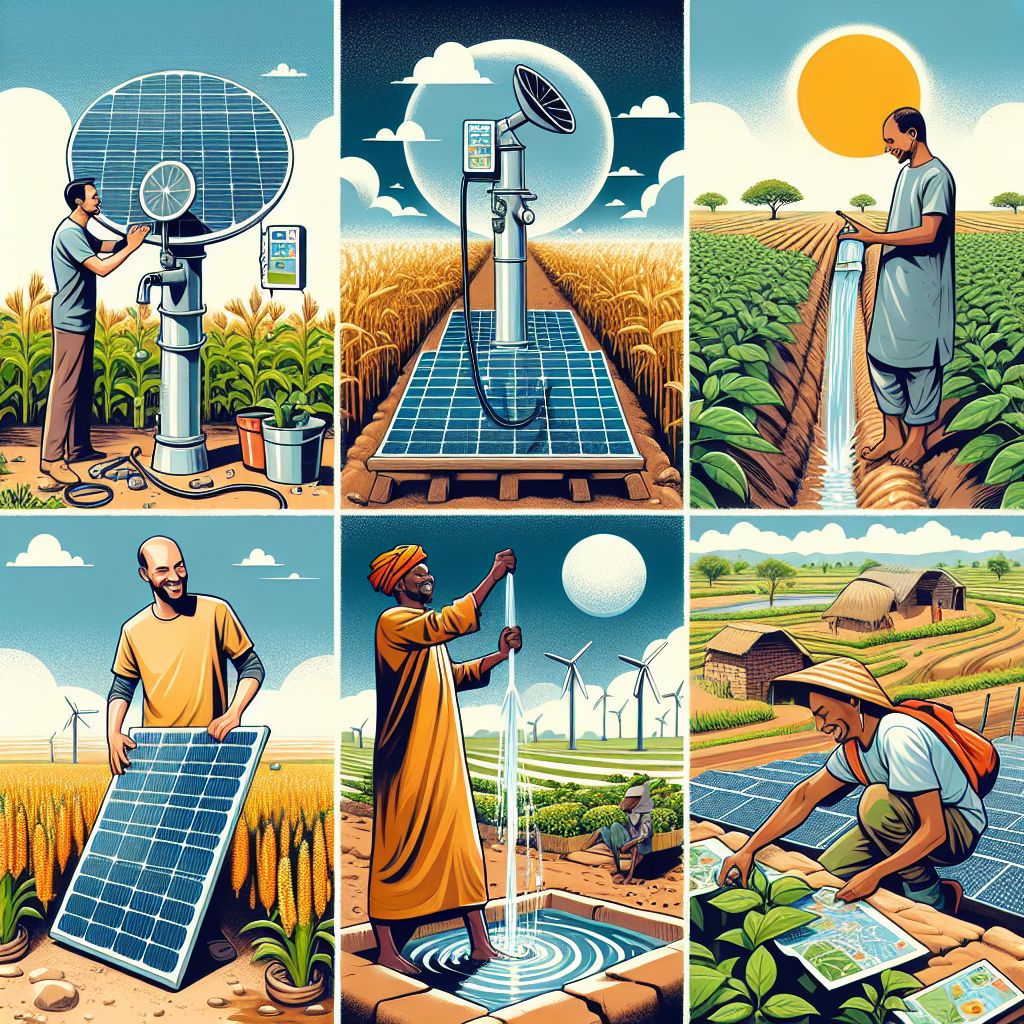
Case Studies and Real-World Applications
Solar-powered water pumps have been successfully implemented in various parts of the world, demonstrating their effectiveness and benefits. Let’s explore some real-world examples to understand their impact.
Example: The DREAM Initiative in Africa
The DREAM (Developing Resilient and Efficient Agricultural Mechanisms) Initiative in Africa has been a game-changer for many smallholder farmers. By providing solar-powered water pumps, the initiative has enabled farmers to access reliable water sources, leading to improved crop yields and increased income.
Impact of Solar-Powered Pumps in West Africa
In West Africa, solar-powered water pumps have significantly impacted agricultural productivity. Farmers in regions like Mali and Burkina Faso have reported substantial improvements in crop yields and income levels. The availability of a reliable water source has allowed them to cultivate multiple crops throughout the year, enhancing food security and economic stability.
“Solar water pumps have transformed our farming practices. We no longer worry about water shortages, and our crop yields have doubled.” – A farmer from Burkina Faso
The success of these projects has inspired other regions to adopt similar solutions, further promoting sustainable farming practices across the continent.
Smallholder Farmers in Ghana
In Ghana, smallholder farmers have embraced solar-powered water pumps to overcome water scarcity challenges. These pumps have enabled them to irrigate their fields efficiently, leading to better crop quality and higher market prices. The reduced dependency on rain-fed agriculture has also made them more resilient to climate change impacts. For more insights, check out the solar-powered linear move irrigation system guide.
Farmers have reported a significant reduction in operational costs, as they no longer need to purchase fuel or pay high electricity bills. This has allowed them to reinvest their savings into improving their farming practices and expanding their operations.
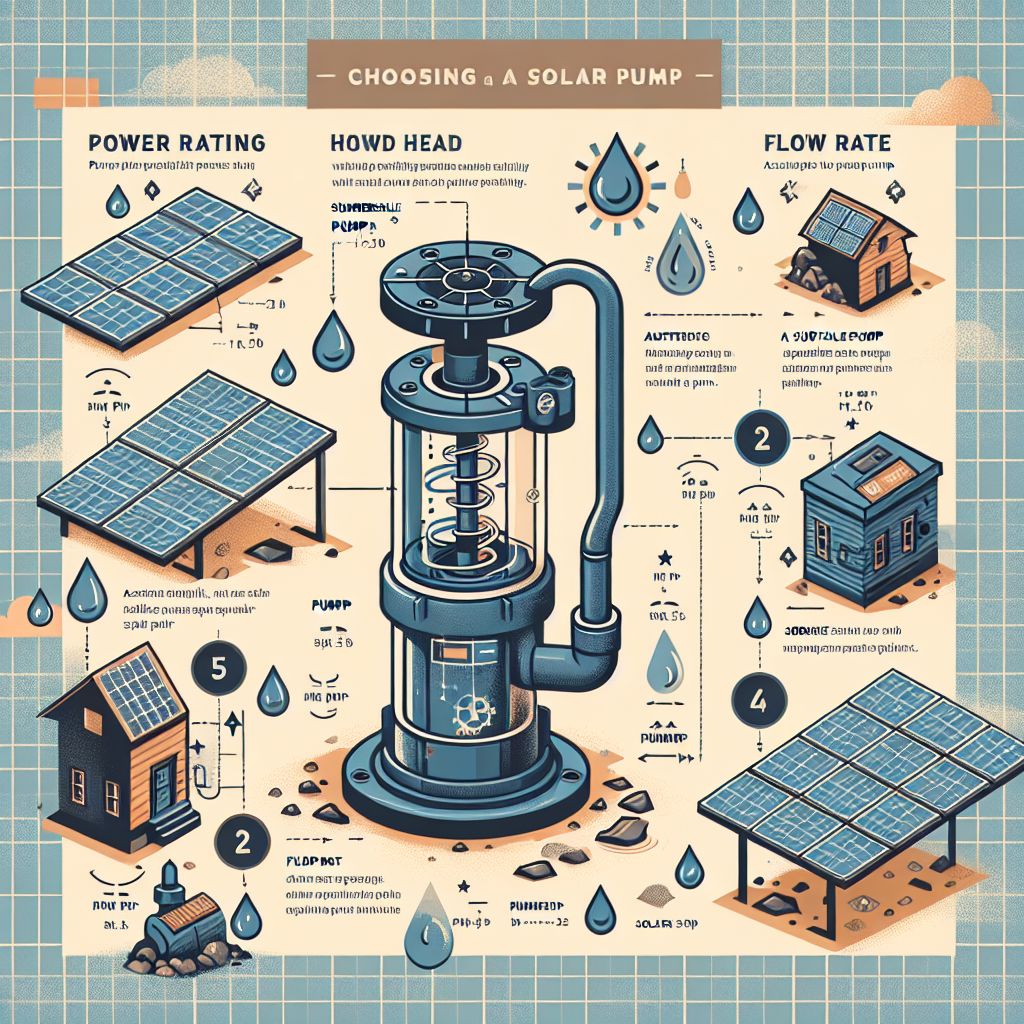
Choosing the Right Solar Pump
Assessing Power Rating, Head, and Flow Rate
Considering Pump Depth
Number of Solar Panels Needed
When selecting a solar pump, it’s essential to consider various factors to ensure it meets your specific needs. Here’s a detailed guide to help you make an informed decision.
Assessing Power Rating, Head, and Flow Rate
The power rating of the pump determines its capacity to move water. It’s crucial to choose a pump with the right power rating based on your irrigation needs. The head refers to the vertical distance the pump can propel water, while the flow rate indicates the volume of water it can move per unit time. Assessing these parameters will help you select a pump that efficiently meets your water requirements.
Considering Pump Depth
The depth of the water source plays a significant role in determining the type of pump needed. Submersible pumps are ideal for deep wells, while surface pumps are suitable for shallow sources. Understanding the depth of your water source will ensure you choose a pump that can efficiently extract and deliver water. For more information on irrigation systems, you can explore the solar-powered center pivot irrigation systems.
Number of Solar Panels Needed
The number of solar panels required depends on the pump’s power rating and the amount of sunlight available in your region. It’s essential to calculate the energy needs of your pump and match them with the solar panel capacity to ensure uninterrupted operation. Consulting with a solar energy expert can help you determine the optimal number of panels for your system.

Challenges and Solutions
While solar-powered water pumps offer numerous benefits, there are some challenges to consider. However, with the right approach, these challenges can be effectively addressed.
High Initial Costs
The initial investment for solar-powered water pumps can be high, which may deter some farmers from adopting this technology. However, various financing options and government subsidies are available to make these systems more affordable. Additionally, the long-term savings on fuel and electricity costs can offset the initial investment, making it a worthwhile expenditure. For those interested, here is a guide on solar-powered center pivot irrigation systems and their benefits.
Farmers can also explore community-based funding models, where multiple farmers pool resources to invest in a shared solar pump system. This reduces the financial burden on individual farmers and promotes collective ownership and maintenance.
Lack of Awareness
Many farmers are unaware of the benefits and availability of solar-powered water pumps. Raising awareness through educational programs, workshops, and demonstrations can help farmers understand the advantages of this technology and encourage its adoption.
Organize community workshops to educate farmers about solar pumps.
Provide hands-on demonstrations to showcase the efficiency and benefits.
Collaborate with local agricultural extension services to disseminate information.
By addressing these challenges, we can promote the widespread adoption of solar-powered water pumps and empower sustainable farming communities worldwide.
High Initial Costs
The initial investment for solar-powered water pumps can be high, which may deter some farmers from adopting this technology. However, various financing options and government subsidies are available to make these systems more affordable. Additionally, the long-term savings on fuel and electricity costs can offset the initial investment, making it a worthwhile expenditure.
Farmers can also explore community-based funding models, where multiple farmers pool resources to invest in a shared solar pump system. This reduces the financial burden on individual farmers and promotes collective ownership and maintenance.
Lack of Awareness
Many farmers are unaware of the benefits and availability of solar-powered water pumps. Raising awareness through educational programs, workshops, and demonstrations can help farmers understand the advantages of this technology and encourage its adoption.
Organize community workshops to educate farmers about solar pumps.
Provide hands-on demonstrations to showcase the efficiency and benefits.
Collaborate with local agricultural extension services to disseminate information.
By addressing these challenges, we can promote the widespread adoption of solar-powered water pumps and empower sustainable farming communities worldwide.
Technological Advancements and Future Scope
Technological advancements are continuously improving the efficiency and affordability of solar-powered water pumps. Innovations in solar panel technology, battery storage, and smart controllers are making these systems more accessible and reliable. As the technology evolves, we can expect even greater benefits for farmers.
Future developments may include more efficient solar panels that can capture sunlight even on cloudy days, advanced battery systems for storing excess energy, and smart irrigation systems that optimize water usage based on soil moisture levels and weather conditions. These advancements will further enhance the sustainability and productivity of solar-powered water pumps.

Conclusion
Summary of Key Benefits
Solar-powered water pumps offer numerous benefits for farmers, including cost savings, environmental sustainability, operational efficiency, and improved crop yields. By harnessing the power of the sun, these pumps provide a reliable and sustainable water supply, making them an ideal choice for modern agriculture.
Besides that, solar-powered water pumps are suitable for remote areas where electricity is unavailable or unreliable, ensuring that farmers in off-grid locations can access the water they need for irrigation. Learn more about the benefits of solar-powered irrigation systems.
Encouraging Sustainable Irrigation Practices
Promoting the adoption of solar-powered water pumps is crucial for encouraging sustainable irrigation practices. By reducing reliance on fossil fuels and minimizing water wastage, these pumps contribute to a more sustainable and resilient agricultural system. Educational programs, financial incentives, and community-based initiatives can help farmers transition to this eco-friendly technology.
Ultimately, embracing solar-powered water pumps can lead to increased agricultural productivity, improved food security, and a healthier environment. By investing in this technology, we can empower sustainable farming communities and ensure a brighter future for agriculture.
Frequently Asked Questions (FAQ)
What are the main components of a solar-powered water pump system?
The main components of a solar-powered water pump system include solar panels, a pump, and a controller. Solar panels capture and convert sunlight into electrical energy, which powers the pump to move water from the source to the desired location. The controller manages the flow of electricity to the pump, ensuring efficient operation.
How do solar-powered water pumps reduce water waste?
Solar-powered water pumps provide a controlled and efficient water supply, reducing wastage. They can be automated to start and stop based on water needs, ensuring that crops receive the necessary amount of water without over-irrigation. This helps in maintaining soil moisture levels and preventing waterlogging. For more information on the benefits and setup, check out our guide on solar-powered center pivot irrigation systems.
What factors should be considered when selecting a solar pump?
When selecting a solar pump, it’s essential to consider the power rating, head, and flow rate of the pump, as well as the depth of the water source. Additionally, the number of solar panels needed should be calculated based on the pump’s power requirements and the amount of sunlight available in the region. Consulting with a solar energy expert can help in making an informed decision.
How do solar-powered pumps benefit smallholder farmers?
Solar-powered pumps benefit smallholder farmers by providing a reliable and cost-effective water supply for irrigation. This leads to improved crop yields and higher income levels. The reduced dependency on fuel and electricity also lowers operational costs, allowing farmers to reinvest their savings into improving their farming practices and expanding their operations. For more information on the benefits, you can read about solar-powered center pivot irrigation systems.
Solar powered water pumps have revolutionized the way farmers irrigate their fields. These systems are not only environmentally friendly but also cost-effective in the long run. By harnessing the power of the sun, farmers can reduce their dependence on traditional energy sources and cut down on operational costs. Moreover, the use of solar energy helps in reducing carbon emissions, contributing to a cleaner and greener planet. With advancements in technology, solar powered water pumps have become more efficient and reliable, making them a viable option for farmers worldwide.







Leave a Reply