

Key Takeaways
Solar-powered traveling gun irrigation systems can drastically reduce energy costs for farmers, leveraging free solar energy.
These systems are environmentally friendly, reducing reliance on fossil fuels and lowering carbon footprints.
They offer flexibility and mobility, making them suitable for various types of farms and terrains.
Installation and maintenance are straightforward, requiring minimal technical knowledge.
Real-world applications have shown significant improvements in crop yields and overall farm efficiency.
An Overview of Solar-Powered Traveling Gun Irrigation Systems
What is a Solar-Powered Traveling Gun Irrigation System?
A solar-powered traveling gun irrigation system is an innovative solution that combines solar energy with modern irrigation technology. Essentially, it uses solar panels to power a traveling gun that sprays water over large agricultural areas. This method is highly efficient and environmentally sustainable, providing farmers with a reliable way to irrigate their crops without relying on traditional energy sources.
Key Components of the System
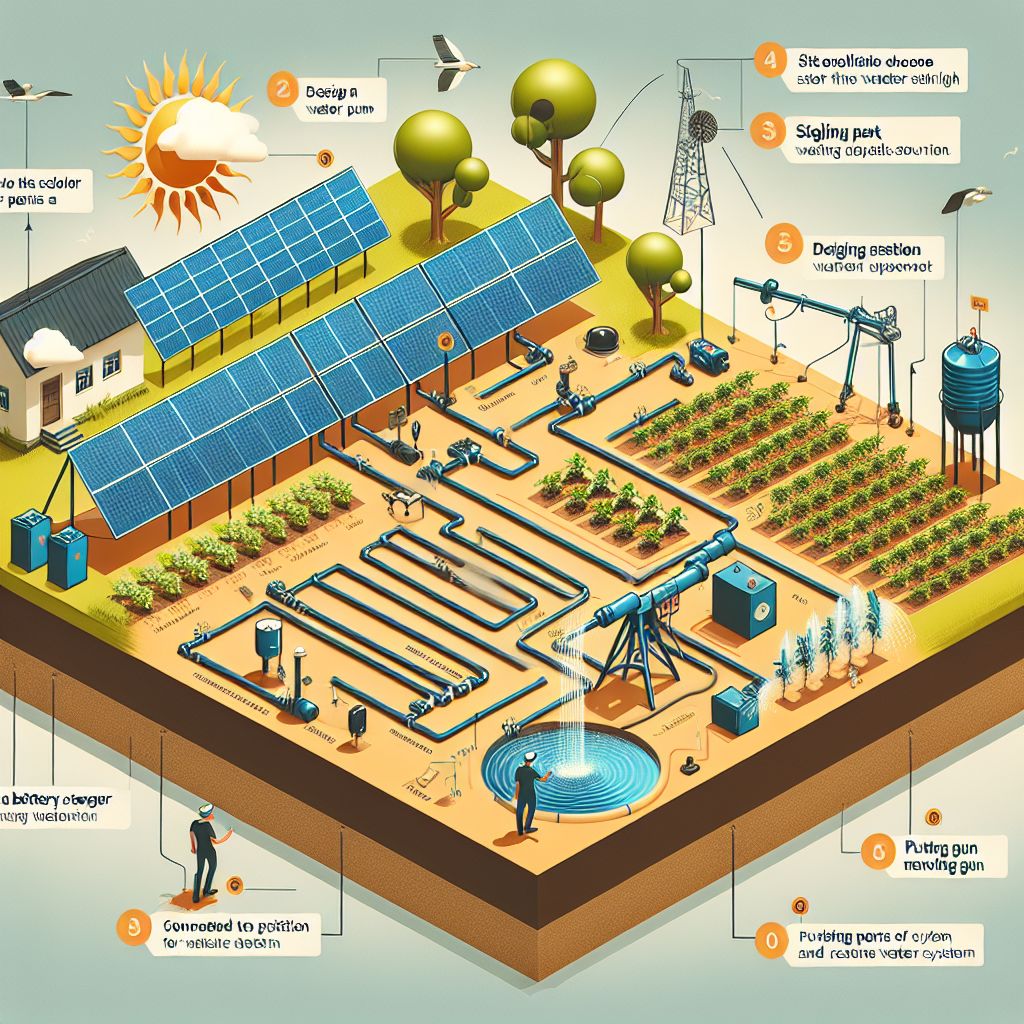
To understand how this system works, let’s break down its key components:
Solar Panels: These capture sunlight and convert it into electrical energy.
Battery Storage: Stores the energy generated by the solar panels for use during non-sunny periods.
Water Pump: Powered by the stored solar energy, this pump moves water from a source to the irrigation system.
Traveling Gun: A mobile irrigation device that sprays water over the fields, covering large areas efficiently.
Control System: Manages the operation of the entire system, ensuring optimal performance and water usage.
Here’s a table showing a more detailed list of key components for a Solar-Powered Traveling Gun Irrigation Systems:
|
Component |
Description |
|---|---|
|
Solar Panels |
Photovoltaic modules that convert sunlight into electricity to power the system. 3 |
|
Charge Controller |
Regulates the flow of electricity from solar panels to batteries, preventing overcharging and optimizing energy storage. 3 |
|
Batteries |
Store excess solar energy for use during cloudy periods or at night, ensuring continuous operation. 3 |
|
Solar Pump |
Powered by solar electricity, it moves water from the source to the irrigation system. 3 |
|
Traveling Gun Sprinkler |
A large sprinkler mounted on wheels or skids, which moves across the field while spraying water over a wide area. 1 |
|
Flexible Irrigation Hose |
Connects the water source to the traveling gun, allowing for movement across the field. 1, 2 |
|
Mainline Pipe |
Buried pipeline that delivers water from the source to various points in the field. 2 |
|
Risers |
Vertical pipes that connect the mainline to the surface for attaching the flexible hose. 2 |
|
Nozzle |
Attached to the gun sprinkler, it determines the spray pattern and water distribution. 1 |
|
Travel Lane |
Path along which the traveling gun moves while irrigating. 1 |
|
Winch or Cable System |
Mechanism that pulls the traveling gun across the field at a controlled speed. 1 |
|
Control Panel |
Manages the system’s operation, including pump control and travel speed adjustment. 3 |
Basic Working Mechanism
The working mechanism of a solar-powered traveling gun irrigation system is relatively simple. During daylight hours, solar panels collect sunlight and convert it into electricity. This electricity either powers the water pump directly or is stored in batteries for later use. The water pump then pushes water from a source, such as a well or a reservoir, through pipes to the traveling gun. The traveling gun moves across the field, spraying water in a controlled manner to ensure even distribution.

Solar Panels a Farmer can Use with a Traveling Gun Irrigation Systems
When selecting solar panels for a traveling gun irrigation system, it’s essential to consider the different types available. Each type has its own set of advantages and disadvantages.
- Monocrystalline Solar Panels: High Efficiency in Limited Spaces
Monocrystalline solar panels are known for their high efficiency and longevity. They are made from a single crystal structure, which allows them to convert more sunlight into electricity compared to other types. This makes them ideal for farms with limited space but high energy needs.
- Polycrystalline Solar Panels: Cost-Effective Energy Solution
Polycrystalline solar panels are made from multiple crystal structures, making them less efficient than monocrystalline panels but more affordable. They are a cost-effective solution for farmers who need a balance between efficiency and budget.
- Thin-Film Solar Panels: Flexibility and Versatility
Thin-film solar panels are lightweight and flexible, making them easy to install in various locations. Although they are less efficient than crystalline panels, their versatility can be beneficial for farms with unconventional layouts or specific installation challenges.
What solar panel would be best to team up with the traveling gun irrigation systems
Choosing the right type of solar panel depends on several factors, including your farm’s size, budget, and specific needs. Here’s a comparison to help you decide:
|
Solar Panel Type |
Advantages |
Disadvantages |
|---|---|---|
|
Monocrystalline |
– Highest efficiency (15-22%) 2, 3 |
– Most expensive option 2, 3 |
|
Polycrystalline |
– More affordable than monocrystalline 1, 3 |
– Lower efficiency compared to monocrystalline 3 |
|
Thin-Film |
– Cheapest option 1, 4 |
– Lowest efficiency (10-13%) 1, 4 – Shortest lifespan 4 |

Benefits of Adopting Solar-Powered Traveling Gun Irrigation
Cost-effectiveness
Using solar energy to power your irrigation system can lead to significant cost savings. Traditional irrigation systems rely on electricity or fuel, which can be expensive and subject to price fluctuations. Solar power, on the other hand, is free and abundant. Once the initial investment in solar panels and equipment is made, the ongoing costs are minimal.
Environmental Sustainability
Besides cost savings, solar-powered irrigation systems are also environmentally friendly. They reduce the reliance on fossil fuels, which are a major source of greenhouse gas emissions. By using renewable energy, farmers can lower their carbon footprint and contribute to a more sustainable future.
Environmental Sustainability
Solar-powered irrigation systems are a game-changer for environmental sustainability. By harnessing the power of the sun, these systems significantly reduce the reliance on fossil fuels. This not only lowers greenhouse gas emissions but also decreases air and water pollution. Moreover, solar energy is renewable and abundant, making it a reliable source of power for irrigation needs. Farmers can feel good about reducing their carbon footprint and contributing to a healthier planet.
Labor and Time Efficiency
One of the standout benefits of using a solar-powered traveling gun irrigation system is the labor and time efficiency it offers. Traditional irrigation methods often require manual labor and constant supervision. In contrast, solar-powered systems can be automated and controlled remotely. This means farmers can save valuable time and effort, allowing them to focus on other important tasks around the farm. Automation also ensures that crops receive consistent and optimal watering, which can lead to better yields.
Reduced Dependence on Fossil Fuels
By switching to solar-powered irrigation, farmers can significantly reduce their dependence on fossil fuels. Traditional irrigation systems often rely on diesel or electric pumps, which can be costly and subject to price volatility. Solar-powered systems, on the other hand, utilize free solar energy. This not only cuts down on operational costs but also provides a more stable and predictable energy source. Additionally, reducing fossil fuel consumption helps mitigate the adverse effects of climate change.
Flexibility and Mobility
Solar-powered traveling gun irrigation systems offer unparalleled flexibility and mobility. These systems are designed to move across large fields, providing uniform water distribution. They can easily be adjusted to accommodate different crop types and field conditions. This adaptability makes them suitable for various farming operations, from small family farms to large commercial agricultural enterprises. Moreover, the portability of solar panels means they can be relocated as needed, ensuring maximum efficiency and coverage.
Adaptable to different crop types and field conditions
Portable and easy to relocate
Provides uniform water distribution
Technical Specifications and Installation Process
Required Equipment and Materials
To set up a solar-powered traveling gun irrigation system, you’ll need several key components:
Solar panels
Battery storage
Water pump
Traveling gun
Control system
Pipes and hoses
Each of these components plays a crucial role in the system’s overall functionality. It’s important to choose high-quality materials to ensure durability and efficiency.
Step-by-Step Installation Guide
Installing a solar-powered traveling gun irrigation system involves several steps:
Site Assessment: Evaluate the area to determine the best location for solar panels and water sources.
System Design: Plan the layout of the irrigation system, including the placement of solar panels, water pump, and traveling gun.
Solar Panel Installation: Mount the solar panels in a location that receives maximum sunlight throughout the day.
Battery Setup: Connect the solar panels to the battery storage to store excess energy for later use.
Water Pump Installation: Install the water pump near the water source and connect it to the solar panels and battery.
Traveling Gun Setup: Attach the traveling gun to the water pump and set up the control system for automation.
Testing and Calibration: Test the entire system to ensure everything is working correctly and make necessary adjustments.
System Maintenance and Upkeep
Maintaining a solar-powered traveling gun irrigation system is relatively straightforward. Regularly inspect the solar panels for dirt and debris, and clean them as needed to ensure maximum efficiency. Check the battery storage and water pump for any signs of wear and tear, and replace components as necessary. The control system should also be monitored to ensure it is functioning correctly. By performing routine maintenance, you can extend the lifespan of your system and ensure it operates at peak efficiency.
Case Studies and Real-World Applications
Successful Implementation in Agriculture
Farmers around the world have successfully implemented solar-powered traveling gun irrigation systems with impressive results. For instance, a farmer in California switched to a solar-powered system and saw a 30% reduction in energy costs within the first year. This allowed him to reinvest the savings into other areas of his farm, boosting overall productivity.
Positive Impact on Crop Yield
Solar-powered irrigation systems have also been shown to positively impact crop yields. In one case, a farm in India reported a 20% increase in crop production after installing a solar-powered traveling gun irrigation system. The consistent and optimal watering provided by the system ensured that crops received the right amount of water at the right time, leading to healthier and more abundant harvests.
Real-Life Examples from Different Regions
Here are a few real-life examples from different regions:
Australia: A vineyard in South Australia used a solar-powered traveling gun irrigation system to maintain soil moisture levels, resulting in better grape quality and higher wine production.
Kenya: Smallholder farmers in Kenya adopted solar-powered irrigation systems to combat water scarcity, leading to improved food security and livelihoods.
Brazil: Coffee farmers in Brazil utilized solar-powered irrigation to manage water resources more efficiently, enhancing both the quantity and quality of their coffee beans.
These examples highlight the versatility and effectiveness of solar-powered traveling gun irrigation systems in various agricultural settings.
Challenges and Considerations
Initial Investment Costs
While the long-term savings from solar-powered traveling gun irrigation systems can be significant, the initial investment remains a key barrier. The upfront costs cover solar panels, battery storage, and the irrigation system itself, which can add up quickly. Farmers must consider their budget, available financing options, and potential subsidies to mitigate these expenses.
System Efficiency in Various Weather Conditions
Solar-powered traveling gun irrigation systems are designed to be highly efficient, even in varying weather conditions. Solar panels can still generate electricity on cloudy days, although at a reduced capacity. Modern systems come equipped with battery storage, which allows them to store excess energy generated on sunny days for use during overcast periods. This ensures a continuous supply of power, making the system reliable in different weather scenarios. Additionally, these systems can be programmed to adjust water distribution based on real-time weather data. For instance, if rain is forecasted, the system can reduce or halt irrigation to conserve water and energy. This level of automation and adaptability makes solar-powered traveling gun irrigation systems a smart choice for farmers facing unpredictable weather patterns.
Technical Knowledge and Training
One of the common concerns among farmers is the level of technical knowledge required to operate and maintain a solar-powered irrigation system. While these systems are advanced, they are designed to be user-friendly. Most manufacturers provide comprehensive training and support to ensure that farmers can easily manage their systems. Basic training typically covers:
Understanding how solar panels work
Setting up and calibrating the control system
Performing routine maintenance and troubleshooting
In many cases, local agricultural extension services or non-governmental organizations (NGOs) offer additional training and resources. This ensures that farmers have the knowledge and confidence to use their solar-powered irrigation systems effectively.
Conclusion
Summarizing Key Benefits
Solar-powered traveling gun irrigation systems offer numerous benefits that can transform agricultural practices. They provide a cost-effective, environmentally friendly, and efficient solution for irrigation. By reducing reliance on fossil fuels and lowering operational costs, these systems enable farmers to invest more in other aspects of their operations. The automation and flexibility of these systems also lead to better crop yields and more sustainable farming practices.
Future Prospects and Developments
The future of solar-powered irrigation systems looks promising, with ongoing advancements in solar technology and energy storage. Innovations such as more efficient solar panels and smarter control systems are continually being developed. These improvements will make solar-powered irrigation systems even more accessible and effective for farmers worldwide. Additionally, increased awareness and support for sustainable farming practices will likely drive further adoption of these systems.
Final Thoughts on Adoption
Adopting a solar-powered traveling gun irrigation system is a significant step towards more sustainable and efficient farming. While the initial investment may be substantial, the long-term benefits far outweigh the costs. Farmers can expect lower energy expenses, increased crop yields, and a reduced environmental impact. With the right training and support, transitioning to a solar-powered irrigation system can be a seamless and rewarding process.
Lower energy costs
Increased crop yields
Reduced environmental impact
Greater operational efficiency
Frequently Asked Questions (FAQ)
What maintenance is required for a solar-powered irrigation system?
Maintenance for a solar-powered irrigation system is minimal but essential. Regularly clean the solar panels to remove dust and debris, which can reduce efficiency. Inspect the water pump and battery storage for any signs of wear and tear. The control system should also be checked periodically to ensure it is functioning correctly. Routine maintenance helps to prolong the lifespan of the system and ensures optimal performance.
How long do the solar panels last?
Solar panels typically have a lifespan of 25 to 30 years. However, their efficiency may decrease slightly over time. Most manufacturers offer warranties that guarantee a certain level of performance for 20-25 years. Regular maintenance and proper care can help maximize the lifespan and efficiency of the solar panels.
What types of crops benefit most from this system?
Solar-powered traveling gun irrigation systems are versatile and can be used for a wide variety of crops. They are particularly beneficial for crops that require consistent and controlled watering, such as vegetables, fruits, and grains. The system’s flexibility and automation make it suitable for both small-scale and large-scale farming operations.
Can this system be used in all weather conditions?
Yes, solar-powered irrigation systems can be used in various weather conditions. While solar panels generate the most energy on sunny days, they can still produce electricity on cloudy days. Battery storage ensures that excess energy generated on sunny days is available for use during overcast periods. Additionally, the system can be programmed to adjust water distribution based on real-time weather data.
Is there financial support or incentives?
Many governments and organizations offer financial support and incentives for adopting solar-powered irrigation systems. These can include grants, subsidies, and low-interest loans to help offset the initial investment costs. It’s advisable to check with local agricultural extension services or renewable energy programs to find out what financial assistance is available in your area. By investing in a solar-powered traveling gun irrigation system, farmers can significantly enhance their agricultural practices, leading to better yields, lower costs, and a more sustainable future.







Leave a Reply