
Key Takeaways
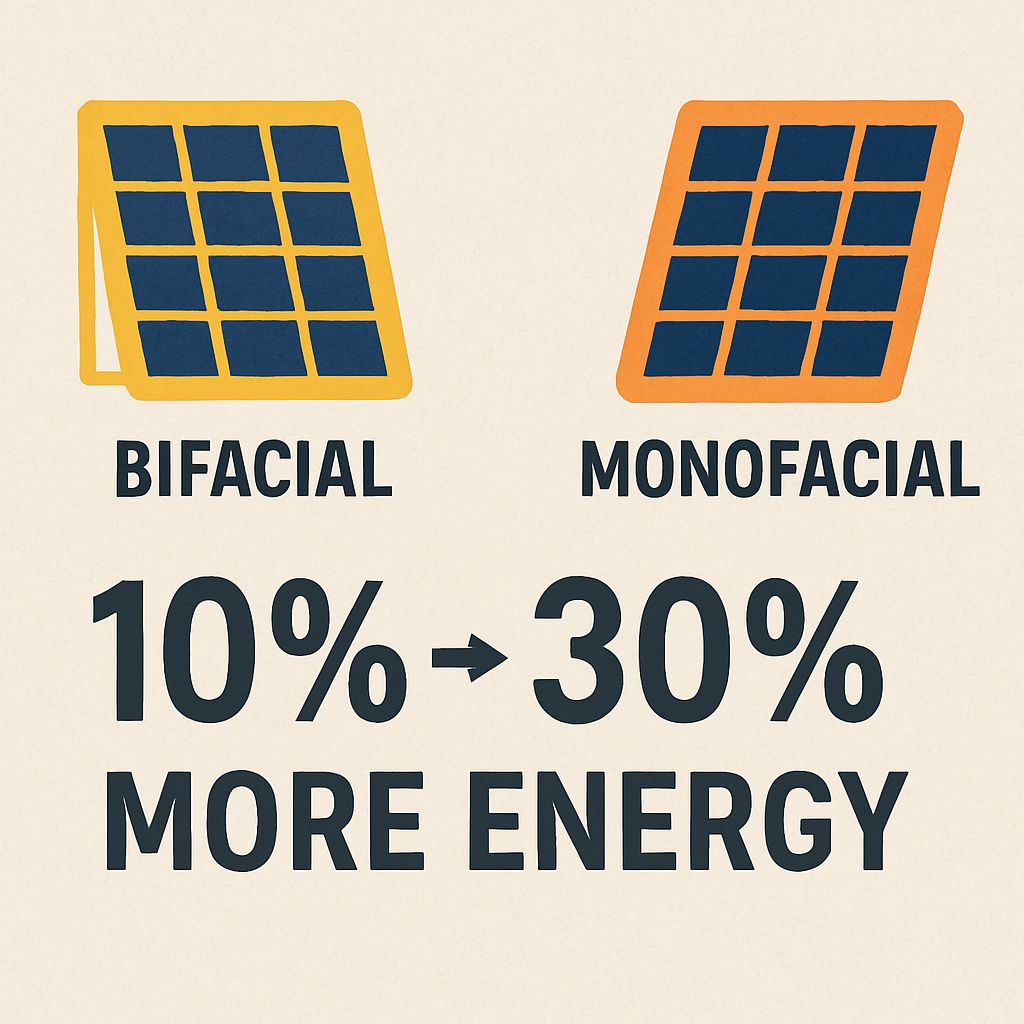
- Bifacial panels generate 10% to 30% more energy than standard monofacial panels by capturing reflected light off the ground beneath them.
- Ground surface color and reflectivity (albedo) is the single biggest factor determining how much bonus energy you’ll actually get.
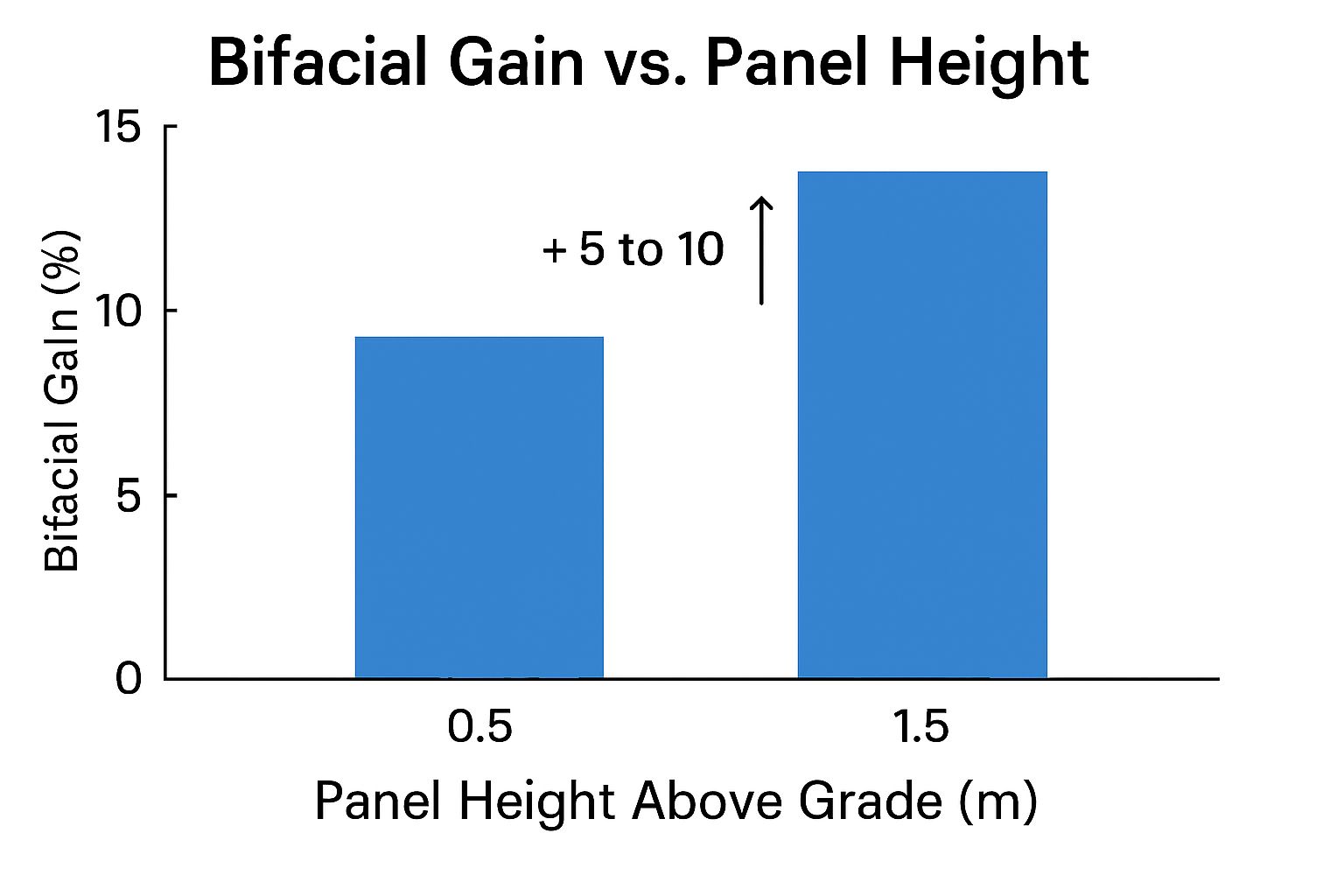
- Mounting height matters enormously—raising panels from 0.5 meters to 1.5 meters can boost bifacial gain by 5 to 10 percentage points.
- Farms with open ground, irrigation pumps, or grain dryers are prime candidates for bifacial ground-mount systems, a trend companies like AgriSun Solar have been tracking closely.
- Not every rooftop or installation benefits equally—keep reading to find out exactly which setups make the premium price tag worth it.
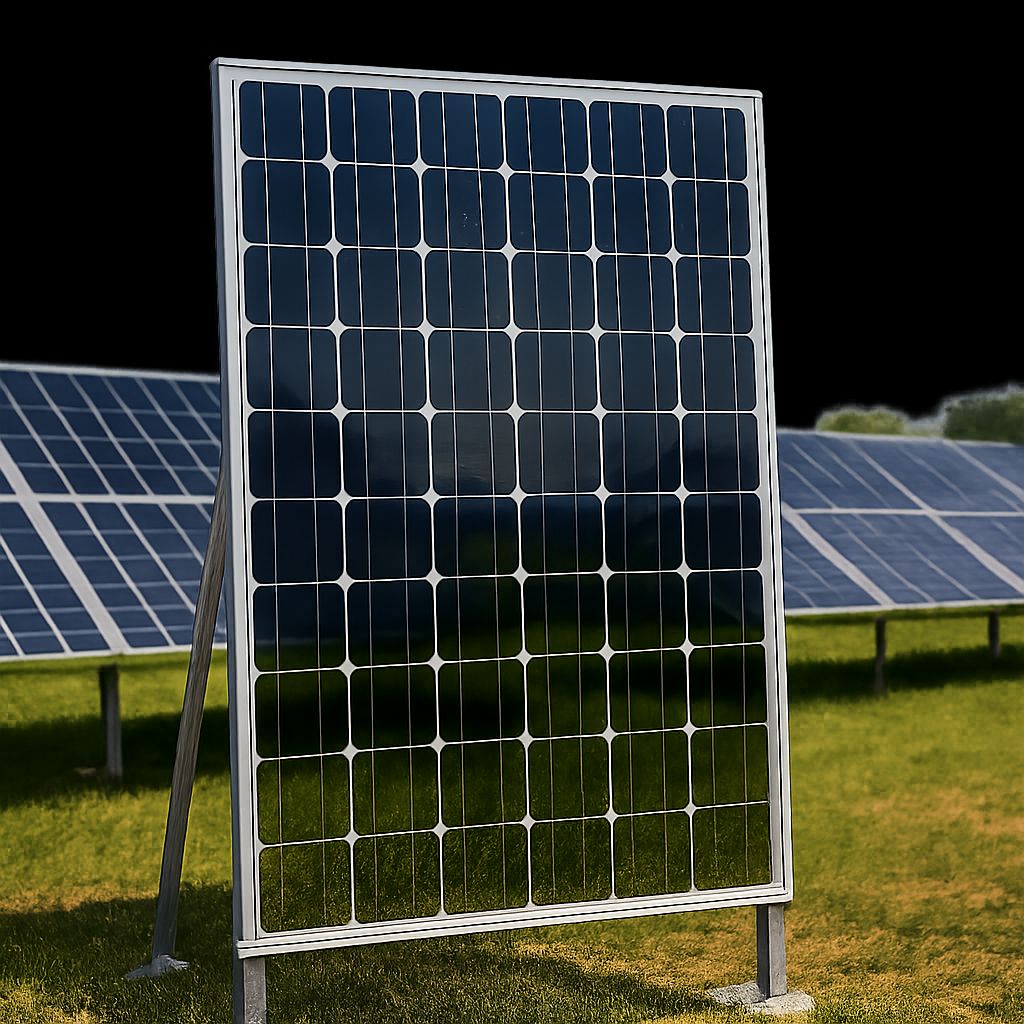
Flip a solar panel’s rulebook on its head and you get bifacial technology—modules that soak up sunlight from both the front and back, squeezing extra kilowatt-hours out of every ray that hits the ground nearby.
That simple design shift is reshaping how farmers, utility developers, and homeowners think about solar ROI, especially when ground conditions and mounting height are dialed in correctly.
Before diving into the mechanics, it helps to understand why this technology exists at all and what separates it from the panels most people grew up seeing on rooftops.
What Makes Bifacial Panels Different
Traditional solar panels—called monofacial panels—only collect sunlight hitting their front surface. Everything that lands on the back is wasted energy, absorbed by an opaque backsheet or lost entirely. Bifacial panels flip that equation by building photovoltaic cells into a structure that’s transparent on both sides, letting light reach the rear surface too.
|
Feature |
Monofacial Panel |
Bifacial Panel |
|---|---|---|
|
Light Capture |
Front side only |
Front and rear sides |
|
Rear Construction |
Opaque backsheet |
Transparent glass or polymer |
|
Typical Energy Gain |
Baseline |
10% to 30% more |
|
Ideal Mounting |
Flush rooftop |
Elevated, ground-mount |
This dual-capture design isn’t just a gimmick. It changes how installers think about mounting height, ground surface, and even row spacing, since every one of those factors now directly influences how much bonus power you harvest from the rear side.
Dual-Side Energy Capture Explained
Picture sunlight hitting the ground around a panel, bouncing back up, and getting caught by cells on the underside of that same panel. That’s the entire premise behind bifacial gain. The brighter and more reflective that ground surface is, the more “bonus” sunlight gets funneled into the rear cells.
Engineers measure this bounced light using a property called albedo, which describes how much sunlight a surface reflects versus absorbs. Snow, white gravel, and light-colored concrete have high albedo. Dark soil and dense grass have low albedo. Everything about maximizing bifacial output comes back to this one concept.
Glass-Glass Construction vs Standard Backsheet Design
Most bifacial modules ditch the traditional glass-and-backsheet sandwich in favor of glass-glass construction, meaning tempered glass protects both the front and rear of the cell layer. This isn’t just about letting light through—it also adds durability.
Glass-glass panels tend to hold up better in demanding outdoor environments, resisting moisture ingress and potential-induced degradation more effectively than polymer-backed alternatives. The tradeoff? These panels run heavier than standard glass-backsheet designs, which means mounting structures need to account for the added load.
What Bifacial Gain Actually Means
“Bifacial gain” is the industry term for the extra percentage of energy a bifacial panel produces compared to an equivalent monofacial panel under the same conditions. It’s not a fixed number baked into the panel—it’s a variable outcome shaped by installation choices.
A panel rated for 20% bifacial gain won’t automatically deliver that in every setup. Ground reflectivity, mounting height, row spacing, and even seasonal weather patterns all play a role in whether that number gets hit, exceeded, or falls short. For more insights on solar panel efficiency, check out the best solar panels for farms.
How Much Extra Power Can You Expect
Numbers vary across sources, but most studies agree that bifacial panels can generate anywhere from 10% to 30% more energy than their monofacial counterparts. That’s a wide range, and the reason it’s so wide comes down entirely to site conditions.
The 10% to 30% Energy Boost Range
At the low end of that range, you’re looking at installations with modest ground reflectivity and tight mounting clearance. At the high end, you’re talking about elevated arrays sitting over white gravel or reflective membrane, where nearly a third more energy gets squeezed out of the same footprint. This is similar to how agrivoltaics benefits can optimize land use for both solar energy and agriculture.
Why Bifacial Gain Varies by Location
Latitude plays a surprising role here. Bifacial panels can produce up to 12% more energy at lower latitudes, but the gain climbs significantly higher at higher latitudes where sun angles create more favorable reflection geometry. Climate, seasonal snow cover, and even local dust levels all shift the equation further.
This is why installers increasingly treat bifacial design as a site-specific puzzle rather than a one-size-fits-all upgrade. The same panel model installed in two different backyards can produce two very different gain percentages.
Real-World Output Example: 100kW Array Comparison
A 100 kW ground-mounted bifacial array operating at a 20% bifacial gain produces output equivalent to a 120 kW standard monofacial array—without adding a single extra panel to the footprint.
That’s the kind of math that gets farm operators and utility planners paying attention. Squeezing 20% more output from the same physical space, without expanding land use, is a genuinely compelling proposition for anyone working with limited acreage or tight interconnection capacity.
Ground Surface Determines Your Energy Bonus
If there’s one variable that deserves the most attention before installing bifacial panels, it’s what’s directly beneath them. Ground surface reflectivity swings bifacial gain more than almost any other factor, and the differences between surface types are substantial. For those interested in learning more about the best solar panels for a farm, understanding these differences can be crucial.
|
Ground Surface |
Bifacial Gain Range |
|---|---|
|
White gravel or white membrane |
25% to 30% |
|
Concrete or light-colored pavement |
18% to 25% |
|
Dry sandy soil |
15% to 20% |
|
Short grass or light ground cover |
12% to 18% |
|
Dark soil or dense vegetation |
10% to 12% |
Notice the pattern: the lighter and more reflective the surface, the bigger the bonus. This table alone explains why desert installations and white-roofed commercial buildings consistently outperform bifacial arrays sitting over dark farmland soil.
White Gravel and Reflective Membranes: 25-30% Gain
White gravel and reflective roofing membranes sit at the top of the performance chart for good reason—they bounce back the overwhelming majority of sunlight that hits them. Commercial rooftop installations with white TPO membrane roofing are increasingly popular bifacial sites because the reflective surface is already built into the structure.
Some solar developers have even started intentionally installing white gravel or crushed limestone beneath ground-mount arrays specifically to push bifacial gain toward that 30% ceiling. It’s a relatively low-cost modification that pays for itself through the extra energy harvest over the system’s lifespan. For more insights on optimizing solar installations, explore the benefits and advantages of agrivoltaics.
Concrete and Light Pavement: 18-25% Gain
Parking lot solar canopies and installations over light-colored concrete pads fall into this strong-performing middle tier. The reflectivity isn’t quite as high as white gravel, but it’s consistent, weather-resistant, and doesn’t degrade in reflectivity the way organic ground cover can over time. For more insights on solar panel options, check out the best solar panels for farmers.
This makes bifacial panels particularly attractive for commercial and institutional properties where parking structures already exist. Pairing bifacial panels with these surfaces essentially turns an already-paved asset into a performance enhancer.
Dry Sandy Soil: 15-20% Gain
Desert and arid-region installations naturally land in this range, assuming the sand stays relatively undisturbed and free of heavy dust accumulation. This is one reason regions like the southwestern United States, the United Arab Emirates, and parts of Australia show up repeatedly in bifacial deployment data—the combination of strong solar irradiance and naturally reflective sandy ground creates favorable conditions on two fronts simultaneously.
- Open desert land with minimal shading structures
- Naturally high albedo from light sand coloration
- Strong year-round solar irradiance levels
- Large available acreage for optimal row spacing
Grass and Light Ground Cover: 12-18% Gain
Most farmland and rural ground-mount installations fall into this category, making it one of the most commonly encountered scenarios for agricultural solar projects. Short grass maintained beneath elevated panels—sometimes through sheep grazing programs—offers a reasonable reflectivity boost while still serving a secondary land-use purpose.
This middle-ground performance tier is exactly why many farm operators find bifacial technology worthwhile even without pursuing white gravel or concrete modifications. The gain is moderate but reliable, and it stacks on top of whatever agricultural value the land underneath continues to provide.
Dark Soil and Dense Vegetation: 10-12% Gain
At the lower end of the spectrum, dark tilled soil or thick vegetation absorbs most incoming light rather than reflecting it, limiting how much bonus energy the rear cells can capture. This doesn’t make bifacial panels a bad choice in these conditions—10% to 12% extra energy is still meaningful over a 25 to 30 year system lifespan—but it does mean the premium price tag takes longer to fully justify itself compared to higher-albedo sites.
Panel Height Changes Everything
Ground surface matters enormously, but it only tells half the story. Even the most reflective white gravel in the world won’t help much if the panel sits just inches above it, because there’s simply not enough gap for reflected light to spread out and reach the rear cells at a useful angle.
Height creates opportunity. The more vertical space between the panel’s rear surface and the ground, the wider the “viewing angle” becomes for capturing bounced sunlight, which is why mounting height ranks right alongside albedo as a top priority for bifacial system design.
- Low mounting (0.5m): Limited rear-side exposure, modest bifacial gain
- Mid-range mounting (1.5m): Noticeably improved gain, common for ground-mount farm arrays
- High mounting (2-4m): Near-optimal exposure, standard for agrivoltaic installations
Designers working on new bifacial projects increasingly treat mounting height as a tunable variable rather than a fixed installation detail, adjusting racking specs specifically to chase better rear-side performance.
Why Elevation From 0.5m to 1.5m Boosts Output
Raising panel height from 0.5 meters to 1.5 meters above grade can increase bifacial gain by 5 to 10 percentage points. That’s a substantial jump for what amounts to a relatively small structural adjustment during the design phase. The logic is straightforward—at low heights, the rear cells only “see” a narrow strip of ground directly beneath them, but as height increases, that visible ground area expands dramatically, bringing more reflected light into play.
The Agrivoltaic Sweet Spot at 2-4 Meters
Agrivoltaic mounting structures—the kind used when crops or grazing animals share space beneath solar arrays—are typically built 2 to 4 meters above ground. This height range happens to land near the sweet spot for maximizing bifacial energy capture, which means farmers pursuing dual land-use setups get a nice bonus: the clearance needed for farm equipment or livestock also happens to be close to ideal for solar performance. It’s one of those rare cases where practical necessity and technical optimization line up almost perfectly.
Rooftop Clearance Rules for Bifacial Installs
Rooftop bifacial installations play by slightly different rules than ground-mount systems. Since panel is mounted extremely close to a surface, the rear side has less opportunity to receive reflected light, which is exactly the challenge rooftop installers face when working within tight roof-to-panel clearance limits. For a bifacial system to make sense on a roof, installers typically need at least a few inches of clearance between the rear glass and the roofing material, paired with a reasonably reflective surface like white membrane roofing rather than dark shingles.
Bifacial vs Monofacial Panels Head-to-Head
Choosing between bifacial and monofacial technology isn’t just about chasing the biggest energy number. Each option carries tradeoffs in cost, durability, and installation complexity that matter depending on your specific project.
|
Factor |
Bifacial Panels |
Monofacial Panels |
|---|---|---|
|
Upfront Cost |
Higher |
Lower |
|
Energy Output |
10-30% more (site dependent) |
Baseline |
|
Installation Complexity |
Specialized mounting required |
Standard, widely available |
|
Durability |
Higher (dual-glass construction) |
Standard |
|
Degradation Rate |
Lower |
Standard |
Durability and Wind Resistance Differences
Bifacial panels are more durable due to their dual-glass construction, which also makes them more resilient to wind loads compared to standard monofacial designs. That extra sheet of tempered glass on the rear isn’t just there to let light through—it adds structural rigidity that helps the panel better withstand flexing and stress during high-wind events. Learn more about the best solar panels for farms and their unique advantages.
This durability advantage becomes especially relevant for farm installations in open, exposed locations where wind exposure tends to be higher than in sheltered residential settings. A panel that can better resist micro-cracking and wind-induced fatigue over 25-plus years of service is worth factoring into any long-term cost comparison.
Degradation Rates Compared Over Time
The degradation rate of bifacial panels is lower than that of monofacial panels, largely because their construction minimizes the impact of environmental factors that typically reduce cell efficiency over time. Less moisture ingress, better protection against potential-induced degradation, and sturdier glass-glass packaging all contribute to panels that hold onto more of their rated output deeper into their service life. For a comprehensive comparison of bifacial and other solar panels, check out this resource.
Installation Costs and Labor Requirements
Here’s where monofacial panels still hold an edge: they’re easier to install and have been the industry standard for years, which means well-established supply chains and installer familiarity keep labor costs predictable. Bifacial panels require specialized mounting structures with higher labor and material costs during installation, since racking needs to account for proper ground clearance, rear-side airflow, and sometimes heavier glass-glass module weight.
That installation premium isn’t necessarily a dealbreaker—it’s simply a cost that needs to be weighed against the long-term energy gains discussed earlier in this article. For more insights, explore the benefits of agrivoltaics and how they can enhance energy efficiency.

Why Farms Are Switching to Bifacial Technology
Farmland offers nearly perfect conditions for bifacial panels to shine: open space, minimal shading, and often enough acreage to optimize row spacing and mounting height without fighting over every square foot. It’s no surprise that agricultural operations have become one of the fastest-growing adopters of this technology.
Agrivoltaics: Sharing Land Between Crops and Panels
Agrivoltaics—the practice of combining solar generation with active farming on the same land—has turned bifacial panels into the clear panel of choice for this emerging sector. Elevated arrays let sunlight filter through to crops or grazing animals below while simultaneously capturing reflected light bouncing back up off that same ground.
For agrivoltaic systems with grazing sheep beneath elevated arrays or shade-tolerant crops planted between rows, bifacial technology squeezes more value out of every acre than a standard monofacial setup ever could.
This dual-purpose land use addresses one of the biggest criticisms leveled at utility-scale solar: that it takes productive farmland out of agricultural circulation. Agrivoltaics flips that argument by showing farmland can generate both food and electricity simultaneously.
Powering Irrigation Pumps and Grain Dryers Efficiently
Farms with high daytime energy loads from irrigation pumps, grain augers, or feed mixing equipment are particularly well-suited to bifacial ground arrays. These operations tend to draw heavy power exactly when solar generation peaks, making the extra 10% to 30% output from bifacial technology directly useful rather than theoretical.
Running irrigation pumps or grain dryers off a bifacial array means less reliance on grid power during planting and harvest seasons—periods when energy demand on the farm typically spikes hardest. To learn more about the benefits of using solar panels on farms, check out this comprehensive guide on solar panel types.
Open Ground Mounts Already Set Up for Success
Even farmland without active co-farming underneath benefits from bifacial technology, since reflected light remains available for capture regardless of whether crops or livestock occupy the space below. Fallow fields, marginal acreage unsuitable for planting, and underutilized corners of a property all become candidates for bifacial ground-mount systems.
- Fallow or rotational fields between growing seasons
- Marginal land with poor soil quality for crops
- Field edges and buffer zones near property lines
- Areas surrounding farm buildings or equipment yards
Farmers should identify land that’s genuinely underutilized rather than repurposing productive acreage, ensuring the solar installation adds value without displacing existing agricultural output.
Climate and Regional Performance Factors
Bifacial panels can technically work in almost any region where conventional solar panels operate, but the extra energy generated from the rear side varies enormously depending on climate and geography. Location isn’t just a minor detail—it fundamentally shapes whether the bifacial premium pays off.
Research from the National Laboratory of the Rockies shows that bifacial performance depends strongly on geographic location, albedo, system geometry, rear-side irradiance, and self-shading—not any single factor in isolation.
Rather than asking whether bifacial solar works in a given country, the more useful question is whether that specific location provides enough rear-side irradiance to make the technology worthwhile. A sun-drenched desert with poor mounting height might underperform a cloudier region with ideal ground reflectivity and proper elevation.
Hot, sunny regions including Pakistan, India, the United Arab Emirates, Saudi Arabia, Oman, Qatar, Egypt, Australia, Mexico, and the southwestern United States consistently rank among the strongest candidates for bifacial deployment, thanks to the combination of intense solar irradiance and often open, reflective terrain.
Desert Regions With High Solar Irradiance
Desert environments check nearly every box bifacial panels need: strong solar irradiance, large open areas, minimal shading, and plenty of room for elevated mounting structures. That said, deserts come with their own complication—dust and sand can accumulate on solar modules and reduce performance even when the panel itself features excellent bifacial technology.
Anyone installing bifacial systems in desert climates should weigh maintenance schedules carefully. A panel that could theoretically deliver 25% bifacial gain over reflective sand might fall short of that number if dust buildup isn’t managed through regular cleaning.
Snow Reflectivity and Cold Climate Advantages
Snow might be the most underrated albedo surface in the entire bifacial conversation. Fresh snow reflects an enormous percentage of incoming sunlight, which means winter months in cold climates can actually produce surprisingly strong bifacial gains despite shorter daylight hours and lower sun angles.
This creates an interesting seasonal dynamic for installations in northern latitudes—summer months might rely more on direct front-side generation, while winter months lean harder on that bright, reflective snow cover to boost rear-side output. Over a full year, this balance can help smooth out some of the seasonal variation that typically challenges solar performance in colder regions.
Dust Accumulation Challenges in Arid Climates
Dust doesn’t discriminate between front and rear glass surfaces, which means bifacial panels installed in arid, sandy regions face a double exposure to performance loss. A layer of dust settling on the rear glass blocks reflected light just as effectively as it blocks direct sunlight on the front, potentially eating into that carefully calculated bifacial gain.
Regular cleaning schedules become non-negotiable in these environments. Many commercial installations in desert regions now factor automated cleaning systems or robotic panel washers directly into project budgets, recognizing that dust management isn’t optional maintenance—it’s a core part of protecting the investment in bifacial technology.

N-Type and TOPCon: The Technology Powering Modern Bifacial Panels
Behind every bifacial gain percentage sits cell-level technology that’s advanced considerably over the past several years. N-type solar cells combined with bifacial design now dominate the premium end of the market, replacing older P-type architectures that simply couldn’t deliver the same combination of efficiency and longevity.
Why N-Type Cells Outperform Older P-Type Designs
N-type cells offer several advantages that stack up nicely for bifacial applications: high efficiency, lower degradation potential, good temperature performance, and strong low-light characteristics. That last point matters more than people realize—rear-side irradiance tends to be lower intensity than direct front-side sunlight, so a cell technology that performs well under lower light conditions translates directly into better real-world bifacial gain.
These cells also pair well with modern high-power module designs, which is part of why panels in the 580W to 650W-plus range are becoming increasingly common in growing solar markets like Pakistan. Higher wattage per panel means fewer panels needed to hit a target system size, which can offset some of the installation cost premium associated with bifacial mounting requirements.
TOPCon Replacing PERC in High-Efficiency Modules
TOPCon technology is increasingly used in high-efficiency bifacial products as a modern alternative to older PERC cell structures. The shift reflects broader industry movement toward cell architectures that handle light absorption more efficiently on both sides of the module, which is obviously critical for anything marketed as bifacial. For farmers interested in the benefits of solar technology, exploring agrivoltaics benefits can provide valuable insights.
Manufacturers adopting TOPCon are generally chasing the same combination of benefits: higher power density, improved durability, better temperature behavior, and lower long-term degradation. For buyers evaluating bifacial panels, checking whether a module uses TOPCon or older PERC technology can be a useful shorthand for gauging overall build quality.
Where Bifacial Panels Make the Most Sense
Not every solar project benefits equally from bifacial technology, and pretending otherwise does readers a disservice. Matching the right panel type to the right installation scenario matters more than chasing the highest spec sheet number.
Best Fit: Ground Mounts and Flat Reflective Roofs
Bifacial panels are particularly advantageous for ground mounts or flat roofs with reflective coatings, where installers have full control over mounting height, row spacing, and ground surface preparation. These scenarios let designers optimize every variable that influences bifacial gain rather than working around existing structural constraints.
Utility-scale solar projects fall squarely into this category too, since large open spaces allow designers to fine-tune panel height, tilt angle, row spacing, and ground reflectivity all at once. The bigger the project, the more room there is to engineer conditions that push bifacial gain toward that higher end of the 10% to 30% range.
A few scenarios consistently deliver strong bifacial performance:
- Large-scale solar farms on open, undeveloped land
- Commercial rooftops with white or light-colored membrane roofing
- Agricultural ground-mount systems with elevated racking
- Parking canopy installations over light concrete surfaces
- Desert installations with proper dust management plans in place
Each of these shares a common thread: enough open space and reflective surface area to actually let the rear side of the panel do meaningful work.
When Monofacial Panels Are the Smarter Choice
Pitched roofs with limited space for rear-side light capture are where monofacial panels still make more practical sense. When a panel sits flush against roofing material with no clearance gap, there’s simply no opportunity for reflected light to reach a rear surface, which means paying a bifacial premium delivers little to no actual benefit.
Small Residential Rooftops: Proceed With Caution
For small residential rooftops, the economics of bifacial technology deserve careful scrutiny before committing to a larger premium over standard monofacial options. Most residential installations involve pitched roofs with panels mounted close to the surface, exactly the scenario where bifacial gain tends to be weakest. Unless a homeowner has a flat roof with reflective coating and room for proper elevation, that extra upfront cost may not translate into proportional energy gains.
The Future of Solar Is Facing Both Ways
Bifacial technology represents one of the more practical advances in solar engineering over the past decade—not because it reinvents how photovoltaic cells work, but because it finds a smarter way to use sunlight that was previously wasted. As manufacturing costs continue dropping and glass-glass construction becomes more standard across the industry, the price gap between bifacial and monofacial panels keeps narrowing.
For farmers, utility developers, and anyone working with open land, that narrowing cost gap combined with proven 10% to 30% energy gains makes bifacial technology worth serious consideration for the next solar project on the table.
Frequently Asked Questions
Do bifacial solar panels work on a regular rooftop?
Yes, but with caveats. Bifacial panels can technically function on any rooftop, but the rear-side benefit depends heavily on having enough clearance between the panel and roof surface along with a reasonably reflective roofing material. A standard asphalt shingle roof with panels mounted flush won’t deliver much bifacial gain, while a flat commercial roof with white membrane and proper standoff mounting can perform quite well. For more information, you can explore the best solar panels for farmers.
How much more do bifacial panels cost compared to standard panels?
Bifacial panels typically cost more upfront than standard monofacial panels, driven partly by more complex manufacturing and partly by the specialized mounting structures required for proper installation. The exact premium varies by manufacturer and market, but most industry sources agree the extra energy harvest over a 25 to 30 year system life usually justifies that initial cost difference, especially for ground-mounted installations on high-albedo sites.
Can bifacial panels work in cloudy or low-light climates?
A bifacial panel doesn’t need a hot or extremely sunny climate to work effectively. What matters most is the amount and quality of solar radiation reaching both sides of the module, which means even moderate-sun regions can see solid performance if ground reflectivity and mounting height are optimized. Cloudy climates with good snow cover in winter months can actually see a meaningful seasonal boost from that highly reflective snow surface.
What is the ideal height to mount bifacial solar panels?
Agrivoltaic mounting structures built 2 to 4 meters above ground tend to land near the sweet spot for maximizing bifacial energy capture, though meaningful gains start showing up even at more modest heights. Raising a panel from 0.5 meters to 1.5 meters above grade can increase bifacial gain by 5 to 10 percentage points, making even moderate elevation adjustments worthwhile during the design phase. For more insights on solar power’s environmental benefits for farmers, explore this resource.
Are bifacial panels worth it for small farms?
For most small farms with open ground and reflective surfaces, bifacial panels make a lot of sense, particularly for operations running irrigation pumps, grain augers, or cold storage off ground-mount systems. The key is identifying genuinely underutilized land rather than repurposing productive acreage, ensuring the solar installation adds value without displacing existing farm output. Even fallow fields or marginal corners of a property can become solid candidates for a bifacial ground-mount array.
Whether you’re planning a utility-scale farm project or just comparing panel specs for a backyard installation, understanding how ground reflectivity and mounting height interact gives you a real edge in making the right call—and if you want ongoing guidance as bifacial technology keeps evolving, AgriSun Solar continues to track these developments for farmers and renewable energy enthusiasts alike.
Bifacial solar panels have revolutionized the renewable energy sector by providing increased efficiency and versatility. Unlike traditional panels, bifacial panels can capture sunlight from both sides, which allows them to generate more energy. This unique design can result in 10% to 30% more energy production compared to standard panels. For more insights on how bifacial panels outperform standard panels, visit our detailed guide.







Leave a Reply