
Article-at-a-Glance
- Agricultural solar mounting systems require specialized design considerations different from residential installations, with proper mounting directly impacting system longevity and ROI
- Wind resistance in open farmland demands stronger foundations and structural support than traditional installations, with some agricultural areas requiring systems rated for up to 120 mph winds
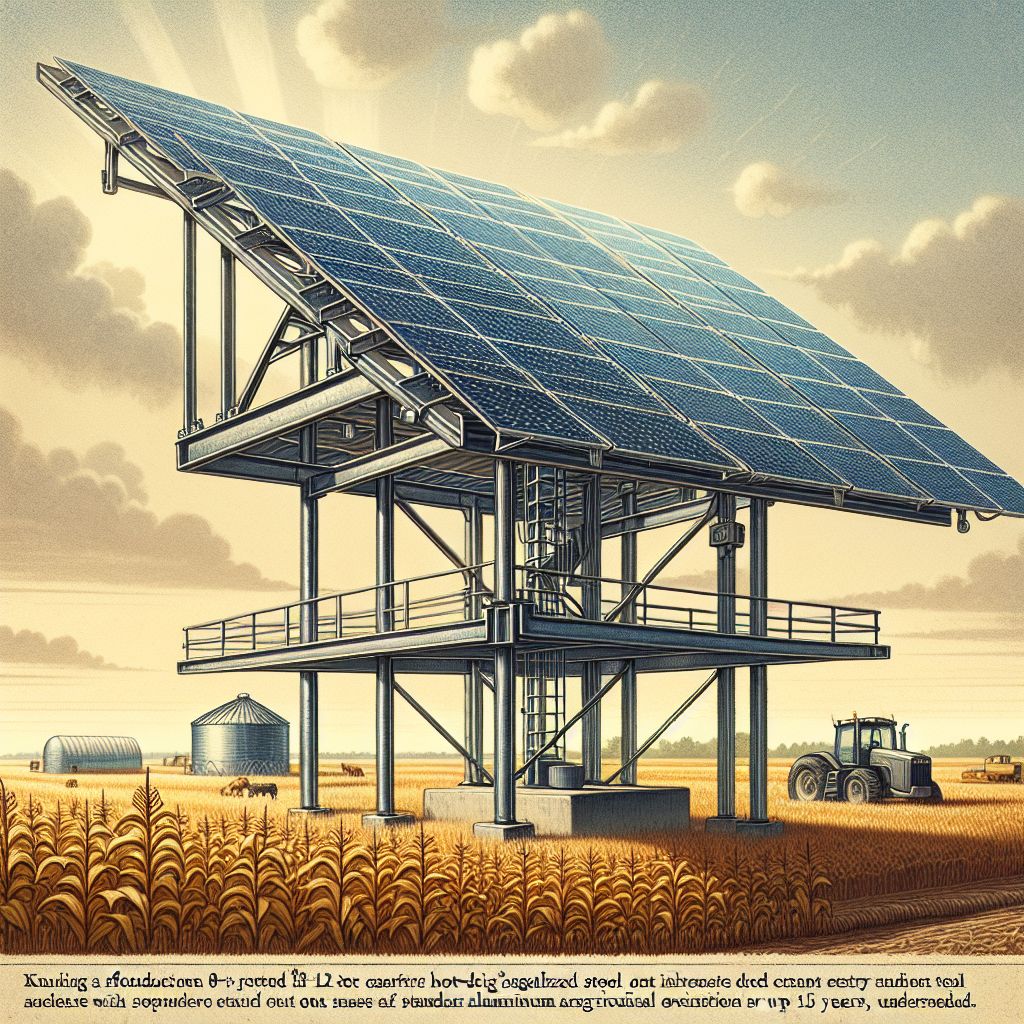
- Elevated mounting systems that maintain 8-12 feet of clearance allow for dual-use of farmland, enabling both energy production and continued agricultural operations underneath
- Material selection dramatically affects system durability, with hot-dip galvanized steel outperforming standard aluminum in corrosive farm environments by up to 15 years
- 8MSolar specializes in custom agricultural mounting solutions that balance optimal energy production with practical farm operation requirements
The right mounting system can make or break your agricultural solar investment. While panels themselves get most of the attention, it’s the mounting infrastructure that determines whether your system will weather decades of farm conditions or fail prematurely. Most agricultural solar failures stem not from panel degradation but from mounting systems that weren’t designed for the unique challenges of farm environments.
Agricultural settings present fundamentally different challenges than residential or commercial installations. From heavy equipment clearance to soil stability in previously tilled land, the considerations extend far beyond simply securing panels to a surface. Farms also experience more extreme weather exposure, with open fields creating wind tunnel effects that can stress mounting points beyond their limits.
Solar on the Farm: Why Your Mounting System Makes All the Difference
When we talk about agricultural solar installations, we’re discussing systems that must withstand decades of exposure while supporting valuable energy-generating equipment. The mounting system represents approximately 10-15% of total system costs but accounts for nearly 100% of the structural integrity. Unlike residential rooftop systems that benefit from existing structural support, agricultural installations must create their own stable foundation in varying soil conditions.
Proper mounting directly influences energy production efficiency. Even minor shifts in panel alignment from inadequate mounting can reduce energy yield by 5-10% annually. Over the 25-30 year lifespan of a solar system, this seemingly small inefficiency compounds into significant lost revenue. Additionally, panels that aren’t properly secured can develop microcracks from excessive movement, accelerating degradation.
“The difference between a mediocre and excellent mounting system isn’t apparent on day one—it reveals itself during the first major storm, during seasonal freeze-thaw cycles, and when heavy equipment needs to maneuver around your array.” — Agricultural Solar Specialist at 8MSolar
The Hidden Factor Behind 38% of Agricultural Solar Failures
Industry data reveals a troubling statistic: approximately 38% of agricultural solar system failures stem from mounting issues rather than electrical or panel problems. These failures typically manifest as structural deformation during extreme weather, foundation settling that misaligns panels, or corrosion at critical connection points. What makes this particularly concerning is that mounting failures often damage the attached panels, creating cascading expenses beyond the mounting repair itself.
- Inadequate wind load calculations leading to structural failure
- Insufficient foundation depth for soil conditions
- Connection points corroding in agricultural chemical environments
- Ground frost heaving causing foundation movement
- Improper drainage creating water pooling and accelerated degradation
Prevention costs significantly less than repair. For example, upgrading from standard to agricultural-grade mounting hardware might add $0.05-0.10 per watt to initial system costs but saves thousands in potential repairs and downtime. Most importantly, it protects against catastrophic system failures that can leave farmers without their anticipated energy production during critical growing seasons.
Dual Benefits: Proper Mounting Extends Panel Life by 7-10 Years
Beyond preventing outright failures, proper agricultural mounting systems significantly extend the operational lifespan of your entire solar array. Solar panels aren’t inherently fragile, but they perform best and last longest when kept in stable positions with minimal stress on their frame and connections. Agricultural-grade mounting systems provide this stability even under challenging farm conditions.
Studies show that panels on properly engineered mounting systems maintain approximately 90% of their rated output after 25 years, while poorly mounted systems may drop below 80% efficiency in the same timeframe. This difference becomes particularly important as panels age, essentially extending useful system life by 7-10 years. For farmers making long-term infrastructure investments, this extended lifespan dramatically improves return on investment calculations.
The Farm-Specific Challenges You’ll Face
Agricultural settings present unique challenges that standard solar mounting solutions aren’t designed to address. From open field wind exposure to soil that’s been worked for generations, farms require specialized approaches to mounting. Recognizing these challenges early in the planning process prevents costly modifications or reinforcements later.
Wind Loads: Why Agricultural Land Requires Different Standards
Agricultural land typically lacks the windbreaks and protective features that shield residential and commercial installations. Open fields create unobstructed wind paths that can subject solar arrays to sustained high winds from multiple directions. While residential systems might be designed for 90 mph wind loads, agricultural systems in many regions should be rated for 110-120 mph winds to account for this increased exposure.
Soil Composition Matters: Finding Stability in Varied Terrain
Agricultural soil presents unique mounting challenges due to its history of cultivation. Years of tilling, fertilizing, and crop cycles create soil profiles that differ significantly from undisturbed land. Testing becomes essential, as load-bearing capacity can vary dramatically even within the same field. Mounting systems must accommodate these variations through adjustable foundation depths and distributed load designs.
Sandy soils may require deeper foundations or helical piles that reach stable layers below the surface. Clay-heavy soils present expansion and contraction risks during wet-dry cycles, necessitating flexible mounting designs that can accommodate minor movement without stressing panels. Professional soil analysis before installation can identify these issues, saving thousands in future repairs.
Equipment Clearance: The Critical Measurements for Farm Machinery
The practical reality of farming with solar involves continuing to use agricultural equipment in and around your array. Ground clearance measurements become crucial design parameters, with most farm operations requiring minimum clearances of 8-12 feet for equipment passage. Underestimating these requirements forces farmers to modify operations or risk costly collisions with solar infrastructure.
Beyond vertical clearance, turning radius and access paths must accommodate your largest equipment. Remember to factor in not just current machinery but potential future acquisitions. Many agricultural solar arrays have 25+ year lifespans, during which equipment sizes typically increase. Building in extra clearance now prevents limitation of operational capacity later.
Consider seasonal needs as well. Harvest equipment often requires more space than regular maintenance vehicles, and you’ll need clearance for both routine panel maintenance and agricultural operations. The most successful installations plan for worst-case scenarios rather than typical conditions.
Seasonal Considerations: Accounting for Snow Loads and Harvest Activities
Agricultural solar installations experience more extreme seasonal variations than their residential counterparts. Snow accumulation on lower panels can create uneven loading, while seasonal ground freezing can stress foundations. Mounting systems must accommodate these forces without transferring stress to the panels themselves.
Timing installation around planting and harvest schedules minimizes disruption to farm operations. Similarly, panel cleaning and maintenance should be scheduled during agricultural downtime. The best mounting systems incorporate these seasonal realities into their design, allowing for efficient snow shedding and accessibility during key farming periods.
Best Mounting Options for Different Farm Situations
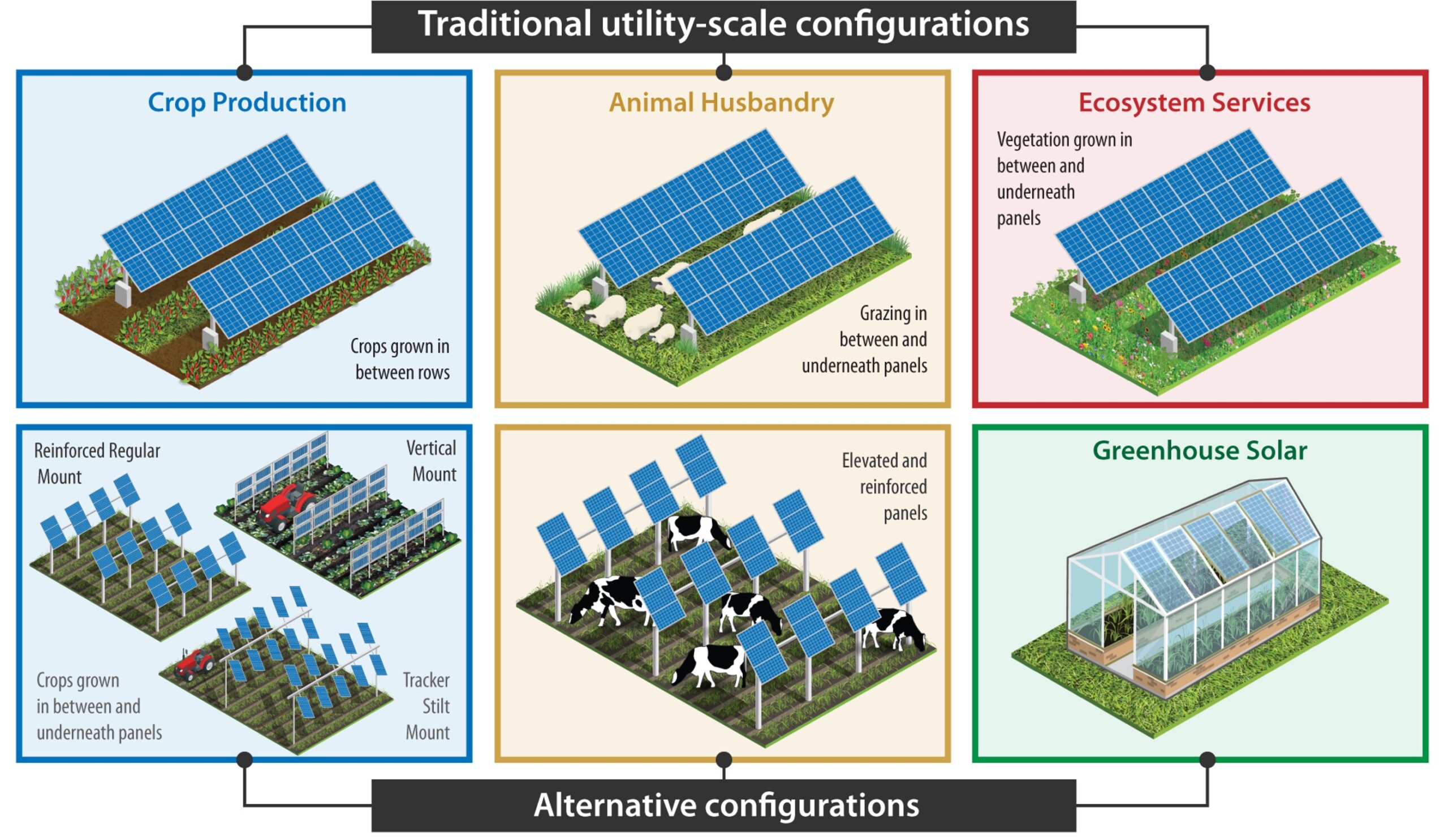
Agricultural solar mounting options range from simple fixed systems to sophisticated tracking installations. Each has distinct advantages depending on your specific farming operation, available space, and energy goals. Making the right choice requires balancing initial investment against long-term productivity and operational compatibility.
Fixed Ground Mounts: The Workhorse Solution
Fixed ground mounting systems provide the best combination of durability, cost-effectiveness, and proven performance for most agricultural applications. These systems typically use galvanized steel posts driven or embedded into concrete foundations, with aluminum or steel racking supporting the panels at a predetermined fixed angle. Their simple design minimizes moving parts that could fail while providing decades of reliable service. For more information on solar panel installation for agricultural applications, you can explore solar panels on barns and agricultural buildings.
The optimal tilt angle depends on your latitude, with most agricultural installations in the continental US using 25-35 degree angles to maximize annual production. Some farmers opt for steeper angles (35-45 degrees) to improve winter production when energy costs are highest, even though this slightly reduces annual totals. Your specific energy usage patterns should dictate this decision rather than simply maximizing production numbers.
Elevated Systems: How High Should You Go?
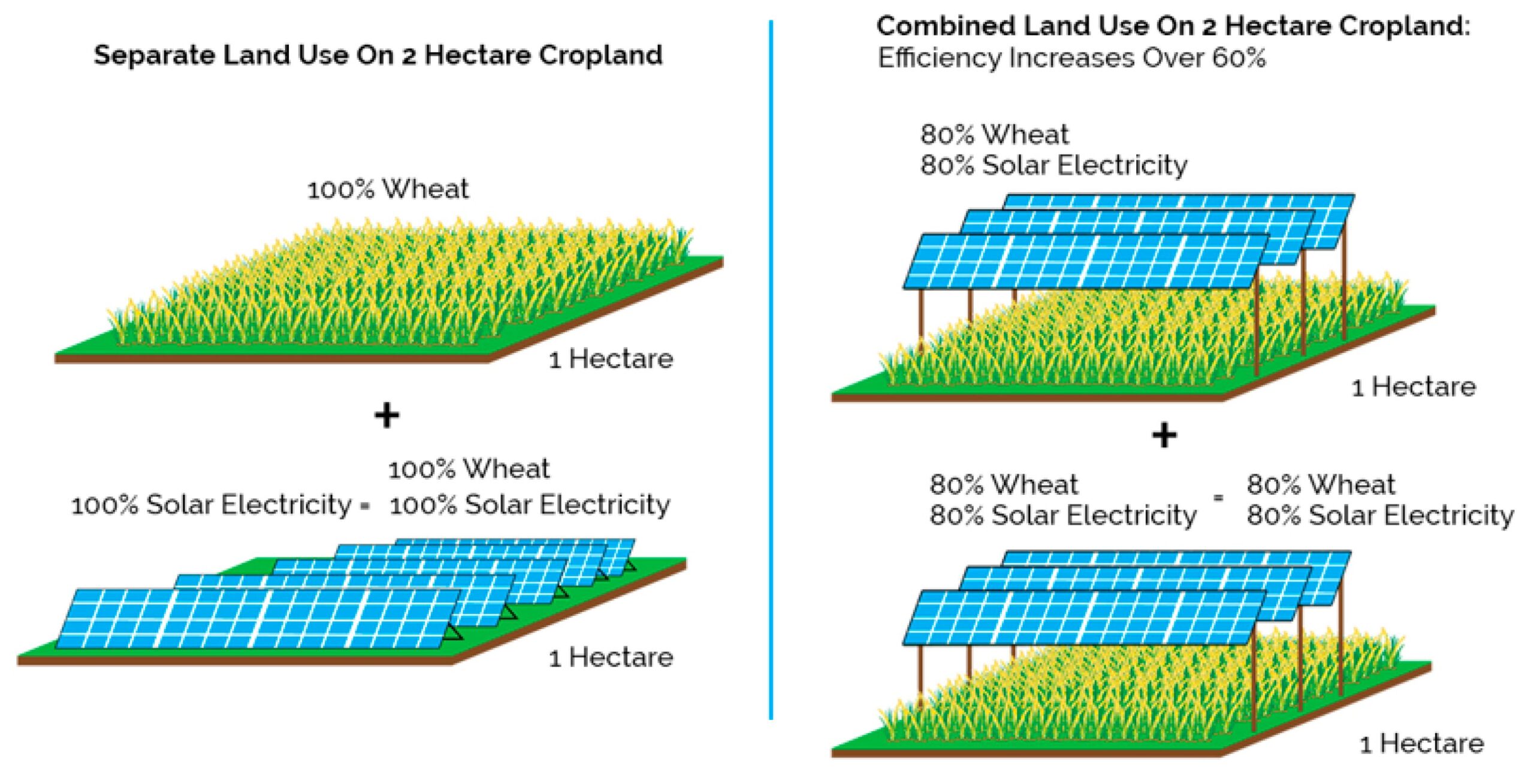
Elevated mounting systems—those raising panels 8-12 feet above ground level—create valuable dual-use land opportunities. These systems allow continued farming beneath the array, from grazing livestock to growing shade-tolerant crops. While they cost approximately 15-25% more than standard ground mounts, they can preserve nearly 80% of the land’s agricultural productivity while adding energy generation.
Structural considerations become more complex with elevation. Wind forces increase with height, requiring deeper foundations and stronger structural members. However, this investment often pays for itself through continued agricultural production. Elevated systems also improve airflow beneath panels, reducing operating temperatures and improving electrical efficiency by 2-3% in hot weather.
Tracking Systems: Are They Worth the Extra Investment?
Single-axis tracking systems, which rotate panels east to west following the sun’s daily path, can increase energy production by 15-25% compared to fixed installations. This makes them particularly valuable for operations with high daytime energy demands, such as dairy farms or irrigation pumping. However, they come with approximately 30-40% higher initial costs and introduce moving parts that require maintenance.
The ROI calculation for tracking systems hinges on electricity rates, available incentives, and your operation’s energy consumption patterns. They make most sense for farms paying premium rates for peak daytime power or those with limited installation space who need to maximize production per acre. Farms with ample installation area often achieve better returns by simply installing more fixed panels rather than fewer tracking panels.
Mobile Solutions: Flexibility for Changing Field Needs
Innovative mobile mounting systems allow for seasonal relocation of solar arrays to accommodate crop rotation or changing land use. These systems typically use ballasted foundations that sit on the ground surface rather than penetrating it, allowing relatively quick disassembly and relocation. While total capacity is usually smaller than permanent installations, they offer unparalleled flexibility for operations with changing land needs.
Mobile systems particularly benefit specialty crop operations where field usage changes annually. They can follow fallow field rotations or be positioned to provide partial shade for heat-sensitive crops during summer months. Most designs can be moved with standard farm equipment, though complete relocation typically requires a full day’s work for a small crew.
The tradeoff comes in stability and longevity. Mobile systems cannot withstand the same extreme weather conditions as permanently installed options, typically having wind ratings of 70-90 mph rather than 120+ mph. They also tend to have shorter warranty periods, reflecting their more dynamic usage patterns.
- Seasonal repositioning capability with minimal specialized equipment
- Reduced permitting requirements due to non-permanent installation
- Ability to follow crop rotation patterns and fallow fields
- Option to remove completely during extreme weather seasons
- Potential for shared use between multiple properties
Best Mounting Options for Different Farm Situations
|
Mounting Option |
Best For |
Advantages |
Considerations/Limitations |
|---|---|---|---|
|
Fixed Ground Mounts |
– Large open fields |
– Simple, robust, and cost-effective |
– Requires significant land area |
|
Elevated Systems |
– Grazing livestock |
– Allows farming/grazing beneath |
– Higher installation cost |
|
Tracking Systems |
– Maximizing energy yield |
– Increases output by 20–40% |
– Highest upfront and maintenance costs |
|
Mobile Solutions |
– Rotational grazing |
– Can be moved as field needs change |
– Lower capacity |
|
Roof Mounts |
– Limited land |
– Utilizes unused roof space |
– Limited by roof orientation/condition |
|
Vertical Modules |
– Space-constrained areas |
– Minimal land use |
– Lower overall output |
|
Solar Greenhouses |
– Crop production needing shade |
– Integrates energy and crop production |
– Higher complexity and cost |
Key Factors in Choosing the Right Mounting System
- Land Availability: Fixed ground and tracking systems need more space, while roof and vertical mounts suit limited land. 8, 5
- Operational Goals: If maximizing energy is critical, tracking systems are ideal; for dual-use (crops/livestock), elevated or mobile options excel. 1, 2, 6
- Budget: Fixed ground and roof mounts are most cost-effective; tracking and elevated systems require higher investment but may yield better returns over time. 6, 5
- Farm Activities: Elevated and mobile systems offer flexibility for ongoing agricultural work, while fixed ground mounts may limit land use beneath panels. 1, 2
- Maintenance: Simpler systems (fixed mounts) need less upkeep; tracking and mobile systems require more frequent attention. 6, 1
Material Choices That Stand Up to Farm Conditions
Agricultural environments accelerate material degradation through a combination of moisture, temperature fluctuations, and exposure to fertilizers, pesticides, and animal waste. The difference between standard and agricultural-grade mounting materials often determines whether a system lasts 10 years or 30+ years. This area represents one where cutting costs inevitably leads to premature system failure.
Galvanized Steel vs. Aluminum: What Lasts Longer in Agricultural Settings
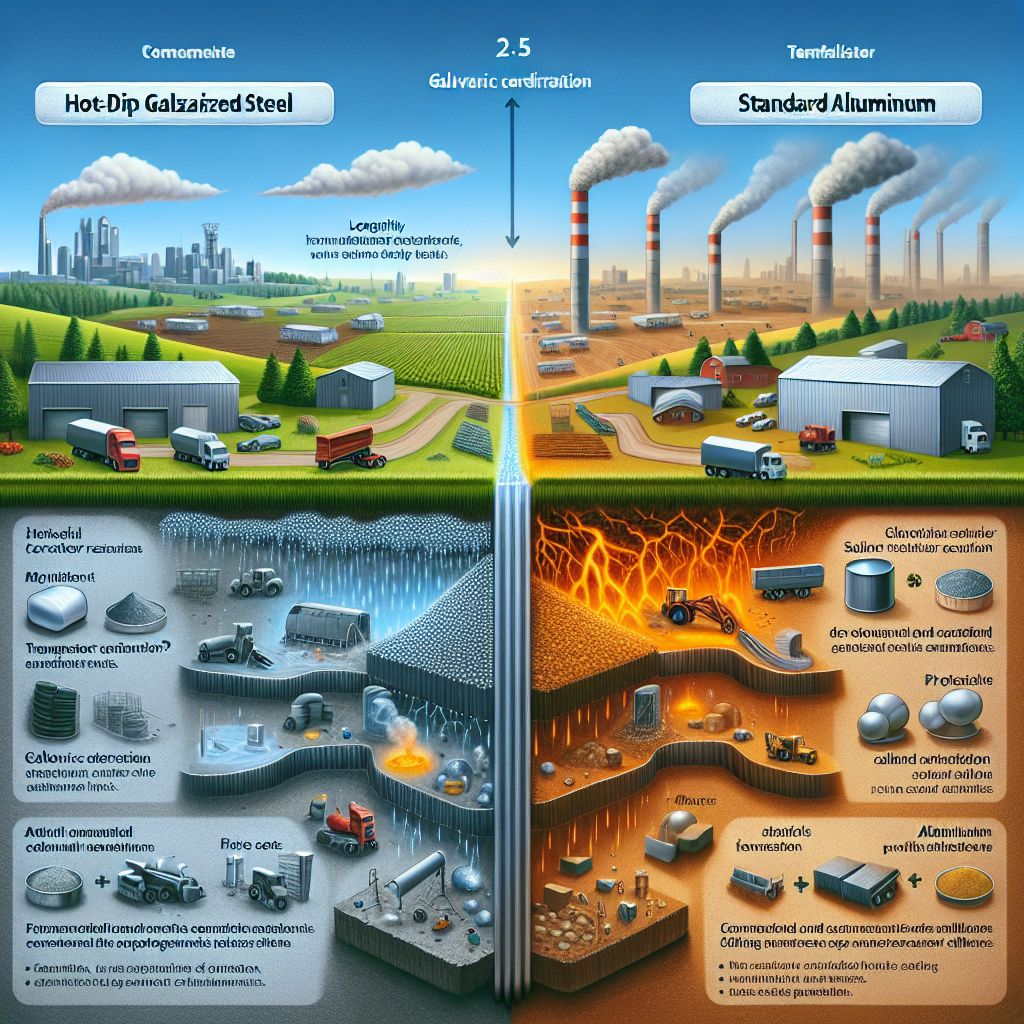
Material selection dramatically impacts system longevity in agricultural environments. Hot-dip galvanized steel typically outperforms standard aluminum in agricultural settings, offering 30+ years of protection versus 15-20 years for aluminum in corrosive farm environments. While aluminum doesn’t rust, it can suffer from galvanic corrosion when in contact with certain soil chemicals or fertilizer residues. Steel’s superior strength also provides better resistance to physical impacts from equipment or debris.
The cost difference between these materials has narrowed significantly, with high-quality galvanized steel adding only about 7-10% to mounting system costs. This premium represents one of the highest-value investments in the entire system, directly extending useful life by potentially decades. For particularly harsh environments, such as livestock operations or coastal areas, upgraded Z600 or Z700 galvanization (featuring thicker zinc coatings) provides enhanced protection with minimal additional cost.
Concrete Foundations: When They’re Necessary and When to Avoid Them
Concrete foundations provide unmatched stability but introduce permanence and additional expense to agricultural solar installations. They become necessary in areas with extremely poor soil stability, high wind loads, or in flood-prone regions where soil erosion threatens foundation integrity. However, for many agricultural applications, driven piles or helical anchors provide sufficient stability with less cost and environmental impact.
When concrete is necessary, proper drainage design prevents water pooling that can accelerate freeze-thaw damage. Reinforcing bar (rebar) configurations should account for the specific stress patterns of your mounting system rather than using generic construction standards. This thoughtful engineering can extend foundation life significantly, particularly in regions with extreme seasonal temperature variations.
Protective Coatings for Corrosive Environments
Agricultural operations using intensive fertilization or animal production create uniquely corrosive environments that standard protective coatings aren’t designed to withstand. Specialized coatings like fluoropolymer or powder-coat polyester provide superior chemical resistance for mounting hardware in these settings. These coatings add minimal weight while significantly extending component life, particularly for connection points and fasteners where corrosion typically begins.
Connection points deserve particular attention, as they experience both mechanical stress and potential water infiltration. Marine-grade stainless steel fasteners with protective coatings should be standard for agricultural installations, not an upgrade. The minimal cost difference (typically less than 1% of total system cost) pays dividends through decades of reliable operation without connection failures that could compromise entire sections of your array.
Agrivoltaic Mounting Systems: Growing Crops Under Solar
Agrivoltaics—the practice of producing both solar energy and agricultural products on the same land—represents one of the most promising advances in agricultural solar. These systems require specialized mounting designs that balance optimal solar collection with appropriate conditions for plant growth. The mounting configuration directly determines which crops will thrive beneath panels, making this a critical design consideration for dual-use installations.
Height Requirements for Different Crop Types
Crop selection dictates minimum panel height in agrivoltaic systems. Low-growing crops like lettuce, spinach, and many herbs thrive with panels as low as 6-8 feet, while taller crops like corn or orchard trees require clearances of 12-20 feet. These height requirements directly impact mounting system costs, with higher installations requiring significantly stronger structural supports and deeper foundations to maintain stability.
The ideal approach often involves matching panel height to your highest-value crops. For diversified operations, variable height installations can create microclimates suitable for different crop types within the same array. These designs cost more initially but create the greatest land-use efficiency and operational flexibility.
Light Penetration: Panel Density and Arrangement
Panel spacing dramatically impacts crop production potential beneath agrivoltaic arrays. While traditional solar installations maximize panel density, agricultural applications typically reduce density by 15-30% to allow adequate light penetration for plant growth. This spacing strategy creates distinctive light patterns that crops must adapt to, with direct sun alternating with filtered light throughout the day.
Vertical bifacial panel arrangements represent an emerging alternative that maximizes both energy and crop production. These systems mount panels in east-west facing vertical rows, creating consistent light patterns between rows while capturing both direct and reflected solar energy. While more expensive per watt than traditional installations, their superior dual-use efficiency often justifies the investment for high-value crop operations.
Successful Crop Combinations Under Different Mount Types
Research demonstrates that certain crops actually perform better under partial solar shading than in full sun, particularly in hot, dry climates. Leafy greens typically show 10-20% yield increases under 30-40% shade solar arrays, while retaining similar nutritional profiles to full-sun counterparts. Berry crops, particularly blueberries and bramble fruits, often produce higher quality fruit with reduced irrigation needs under properly designed agrivoltaic systems.
Maintenance Access: A Factor Many Farmers Overlook
Even the best solar installations require periodic maintenance, from panel cleaning to electrical component replacement. Mounting systems should facilitate this maintenance without requiring specialized equipment or creating unsafe working conditions. Access pathways between panel rows should accommodate maintenance vehicles while protecting underground wiring from potential damage.
Service Paths and Panel Cleaning Considerations
Agricultural environments generate significantly more dust, pollen, and debris than suburban settings, necessitating more frequent panel cleaning to maintain optimal production. Mounting systems should allow for efficient cleaning methods appropriate to your specific operation. For larger installations, integrated walkways between panel sections facilitate safer manual cleaning, while proper row spacing allows mechanized cleaning equipment to operate effectively.
The mounting system should include appropriate electrical raceways that protect wiring while remaining accessible for service when needed. Exposed wiring not only creates safety hazards but dramatically shortens system life in agricultural environments. The best designs integrate wire management into the structural elements, providing both protection and accessibility.
Winter Accessibility Planning
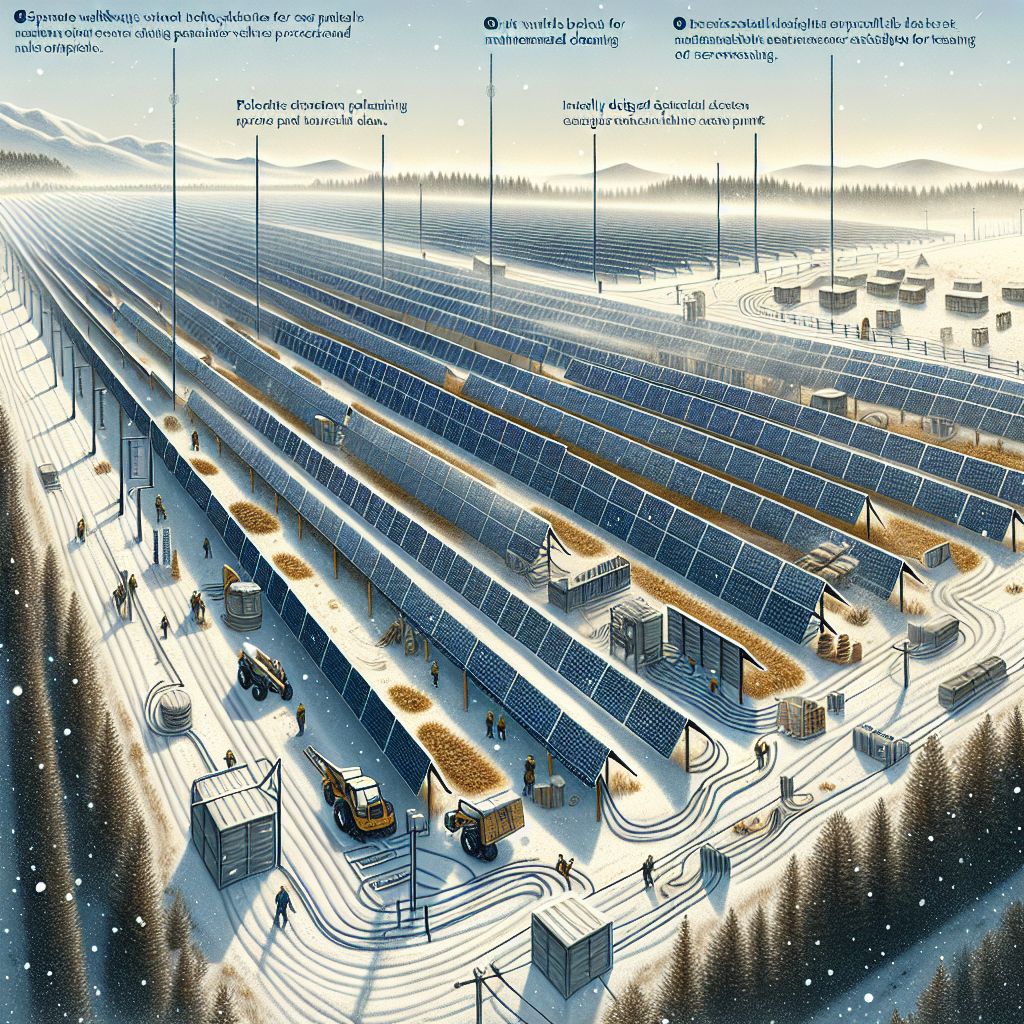
Winter brings unique maintenance challenges for agricultural solar installations. Snow removal becomes necessary when accumulation threatens structural integrity or significantly impedes production. Mounting systems should be designed with snow shedding angles appropriate for your region’s typical snowfall patterns. Additionally, access paths should remain usable during winter months, which may require specific drainage designs or elevated walkways in areas with heavy snowfall.
Panel tilt angles affect both energy production and snow management. While lower tilt angles (15-25 degrees) maximize annual production in many regions, steeper angles (30-40 degrees) promote better snow shedding. For regions with significant winter precipitation, this snow-shedding capability often justifies the slight reduction in annual production, as it minimizes manual clearing requirements and prevents extended production losses during winter months.
Future-Proofing Your Agricultural Solar Installation
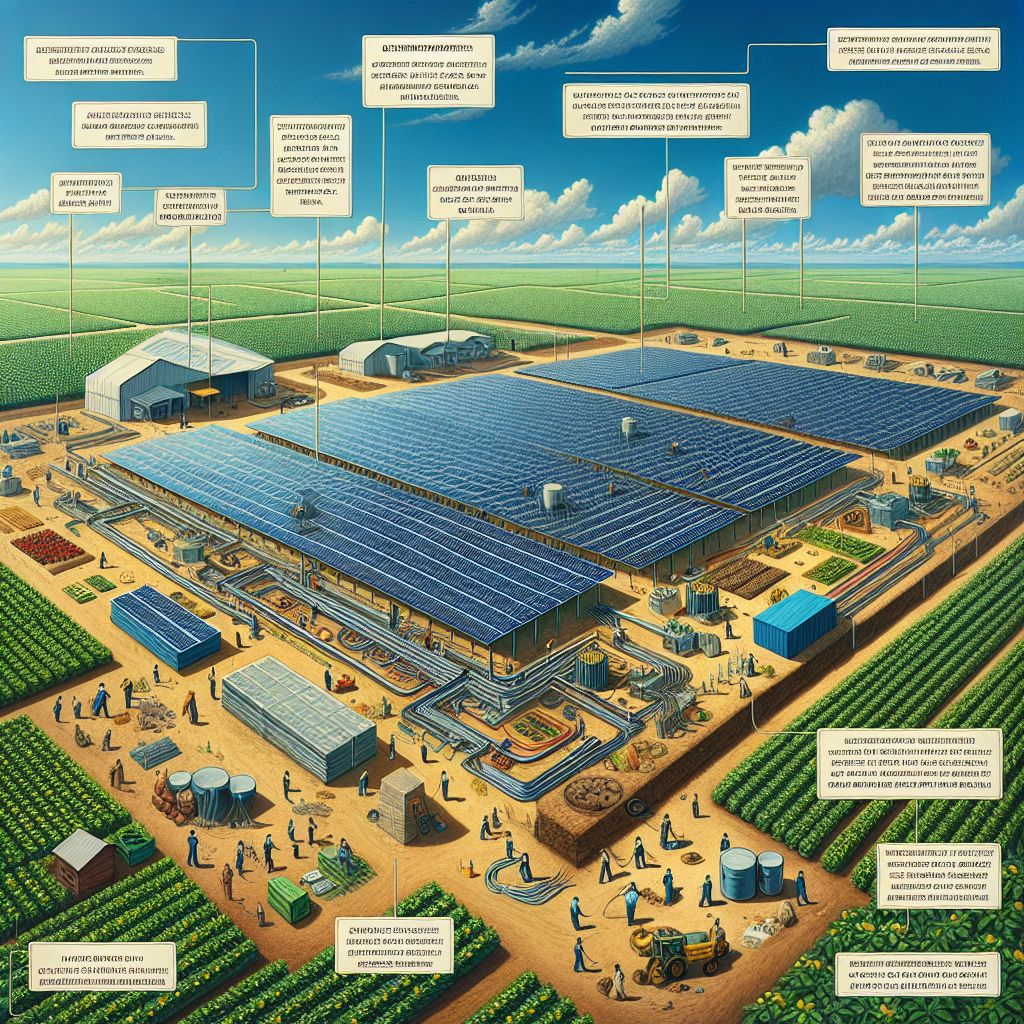
Agricultural operations evolve over time, and your solar infrastructure should accommodate this evolution. Future-proofed mounting systems incorporate flexibility for expansion, technology upgrades, and changing farm operations. While this adaptability may add 5-10% to initial costs, it often saves substantially more when modifications become necessary years later. The most effective agricultural solar strategies view mounting systems as long-term infrastructure rather than fixed, unchangeable installations.
Building in Capacity for Expansion
Most successful agricultural solar adopters find themselves wanting to expand their systems after experiencing the benefits. Mounting systems designed with expansion capacity from the beginning avoid costly retrofitting later. Practical strategies include oversizing initial electrical conduits, installing foundation points for future expansion areas, and selecting inverter systems with modular expansion capabilities. These provisions add minimal cost during initial construction but save substantially when expansion occurs.
Document potential expansion zones in your initial planning, even if immediate installation in these areas isn’t feasible. This documentation helps prevent accidentally building other structures or planting long-term crops in ideal future solar locations. It also allows for strategic placement of initial system components like combiner boxes and conduit runs to facilitate later expansion.
Mounting Systems Compatible with Energy Storage Addition
Energy storage represents the next frontier in agricultural solar, allowing farms to maximize self-consumption and provide emergency backup during grid outages. Forward-thinking mounting designs include provisions for future battery installation, including appropriately sized equipment pads, conduit pathways, and adequate clearances for battery ventilation requirements. These design elements add minimal cost during initial construction but prevent major reworking when batteries are added later.
For livestock operations or farms with critical systems requiring uninterrupted power, these energy storage provisions become particularly valuable. The ability to maintain critical operations during extended outages justifies the modest additional investment in mounting system design. Additionally, as utility rate structures evolve, storage capabilities often provide economic advantages through load shifting and demand charge reduction.
Documentation for Insurance and Warranty Protection
Proper documentation of your mounting system specifications, including engineering calculations, materials certifications, and installation photographs, provides essential protection for both warranty claims and insurance coverage. Agricultural solar systems face more intensive scrutiny during claims processes due to their exposure to farming operations and environmental conditions. Comprehensive documentation demonstrating appropriate design for these conditions protects your investment when issues arise.
Most insurance providers require specific mounting certification for agricultural installations, particularly regarding wind and snow loading capabilities. Systems lacking this documentation often face higher premiums or limited coverage. Similarly, manufacturer warranties typically require proof that mounting systems meet their specifications for panel installation. Maintaining these records throughout the system’s life ensures continued protection as ownership or insurance providers may change over the decades-long system lifespan.
Frequently Asked Questions
The following questions address common concerns farmers have when considering solar mounting options. These practical considerations often determine whether a solar installation will integrate seamlessly with farm operations or create ongoing challenges.
Understanding these nuances before installation prevents costly mistakes and ensures your agricultural solar system delivers decades of reliable service while complementing rather than hindering farm operations.
How much extra does a high-clearance mounting system cost compared to standard ground mounts?
High-clearance mounting systems typically add 15-25% to the mounting system cost compared to standard ground mounts. This translates to approximately $0.05-0.08 per watt of additional cost for the overall system. However, this premium often pays for itself through continued agricultural production beneath the array. For example, grazing livestock or growing shade-tolerant crops under elevated panels can maintain 70-80% of the land’s previous agricultural value while adding energy production.
Can I install solar mounting systems myself to save money?
While DIY installation appears tempting, agricultural solar mounting requires specialized equipment and expertise that most farms don’t possess. Foundation work must meet specific engineering requirements for depth, compaction, and alignment that directly impact system longevity. Additionally, improperly installed mounting systems typically void panel warranties, creating substantial financial risk. The best approach combines professional mounting installation with potential farm labor contribution for less technical aspects like site preparation or basic assembly tasks.
Will solar panels affect my ability to qualify for farm subsidies or conservation programs?
Most agricultural solar installations, particularly those designed for dual-use with continued farming activities, maintain land eligibility for farm programs. The 2018 Farm Bill specifically clarified that appropriate solar installations on agricultural land do not trigger conversion penalties or eligibility restrictions for most USDA programs. However, specific requirements vary by program and state. Working with an agricultural solar specialist familiar with local program requirements ensures your mounting system design maintains compliance with relevant agricultural support programs.
How do mounting systems impact insurance rates for my farm?
Properly engineered and documented mounting systems typically have minimal impact on overall farm insurance rates, though they do require specific coverage addition. Many insurance providers offer solar-specific endorsements that cover both physical damage and production losses from covered events. The key factors affecting rates include mounting system wind and snow load ratings, professional installation certification, and monitoring systems that detect production issues promptly. Investing in agricultural-specific mounting designs with proper documentation generally results in the most favorable insurance terms.
What’s the typical warranty period for agricultural solar mounting systems?
Quality agricultural solar mounting systems typically carry 20-25 year structural warranties, matching or exceeding the warranty period of the panels themselves. This coverage generally addresses structural failures but excludes damage from farm equipment impacts or extraordinary weather events exceeding design parameters. Mounting component manufacturers typically provide separate warranties from the installation company, making documentation of all components essential for long-term protection. The most comprehensive warranties include specific provisions for agricultural environments, acknowledging the unique challenges these settings present.
Choosing the right mounting system for your agricultural operation requires balancing initial investment against long-term performance and compatibility with farm operations. While standard mounting solutions may appear adequate, agricultural-specific designs deliver superior returns through extended system life, reduced maintenance, and better integration with farming activities.
When considering the installation of solar panel systems for agricultural purposes, it’s essential to understand the unique mounting requirements. For instance, the structural integrity of barns and other agricultural buildings must be assessed to ensure they can support the weight of the panels. Additionally, the orientation and tilt of the panels are crucial for maximizing energy efficiency. For more detailed guidance, you can explore installing solar panels on barns and other agricultural structures.







Leave a Reply