
Key Takeaways
Using solar energy to power irrigation systems for raspberry crops significantly cuts down on long-term energy costs.
Drip irrigation is the most efficient watering method for raspberries, reducing water wastage by up to 50%.
Monocrystalline solar panels provide the highest efficiency, making them the best choice for farms with limited space.
Switching to solar-powered irrigation can lower your farm’s carbon emissions, supporting sustainability.
The initial setup costs for solar-powered irrigation systems are balanced out by long-term savings and benefits to the environment.
Why Solar Panels and Irrigation Systems are a Winning Combination for Raspberry Cultivation
Transitioning to solar-powered irrigation for raspberry cultivation is a wise move for a multitude of reasons. Solar panels transform sunlight into electricity, which can power your irrigation system, making it more sustainable and cost-effective over time. By harnessing solar power, you reduce your reliance on conventional energy sources, decrease your carbon emissions, and help to create a greener planet.
Foremost, solar-powered irrigation systems are highly effective. They can deliver a steady and dependable water supply, making sure your raspberries receive the necessary hydration to flourish. This is especially vital during dry periods when water shortage can pose a major problem.
Decreases long-term energy expenses
Ensures a steady and dependable water source
Reduces reliance on conventional energy sources
Reduces carbon emissions
Encourages sustainable agricultural practices
Advantages of Solar-Powered Irrigation
Solar-powered irrigation systems have many advantages. They are eco-friendly, decrease energy expenses, and can be easily incorporated into existing irrigation systems. In addition, they require little maintenance once installed, making them a convenient solution for farmers.
Effect on the Environment
Employing solar power for irrigation is immensely beneficial to the environment. Solar panels produce clean energy, which decreases greenhouse gas emissions and air pollution. This aids in the fight against climate change and fosters a healthier ecosystem.
Furthermore, solar-powered irrigation systems are more efficient in their water usage, minimizing waste and preserving this valuable resource. This is especially crucial in regions that frequently experience droughts or water scarcity.
Long-Term Savings
Though the upfront cost of a solar-powered irrigation system might be steep, the savings over time are significant. The sun’s energy is free, so once your panels are up and running, your energy costs will be substantially lower. Over time, these savings can recoup the initial investment, making solar-powered irrigation a financially savvy choice.
Furthermore, a lot of governments provide financial benefits and grants for farmers who choose to use renewable energy solutions, which helps to lessen their financial responsibilities.

Top Irrigation Techniques for Raspberry Cultivation
There are a variety of ways to water raspberries, each with its own set of pros and cons. The best method for you will depend on your unique situation and requirements. Let’s take a look at the irrigation techniques most often used in raspberry farming.
Drip Irrigation: Precision Watering
Drip irrigation stands out as one of the most effective ways to water raspberries. It provides water straight to the area around the plant’s roots, reducing evaporation and runoff. This precise method guarantees that your raspberries get just the right amount of water, encouraging strong growth and cutting down on wasted water.
Creating a drip irrigation system means you’ll be setting up a series of pipes and dispensers that will distribute water evenly over your raspberry crops. It’s easy to connect this system to a solar-powered pump, making it a great option for eco-friendly farming.
“Drip irrigation can cut water usage in half, making it a very efficient and sustainable way to grow raspberries.”
On top of that, drip irrigation systems are fairly easy to maintain and can be set to run automatically, saving you time and energy.
Micro-Sprinklers: The Key to Even Water Distribution
Micro-sprinklers are a favorite among raspberry growers. They spread water over a large area, making sure each plant gets enough water. They work especially well in sandy soils, where water tends to sink in quickly.
Pairing micro-sprinklers with solar-powered pumps can improve their effectiveness and longevity. This duo enables you to utilize renewable energy while guaranteeing your raspberries get the hydration they need to flourish.
Common Hurdles and Solutions
Despite the many advantages of solar-powered irrigation systems, there are also some hurdles to consider. One of the main obstacles is the upfront cost of installation, which can be steep for some growers. However, as we previously discussed, there are government incentives and subsidies available that can help to mitigate these costs.
Here’s a table comparing the top irrigation systems for growing raspberries in an orchard:
|
Irrigation System |
Advantages |
Disadvantages |
Water Efficiency |
Suitability for Mangoes |
|---|---|---|---|---|
|
Drip Irrigation |
– Highly water-efficient. 2, 6 |
– Higher initial cost. 5, 6 | ||
|
Micro-Sprinkler Systems |
– Good coverage area. 1, 3, 7 |
– Higher water use than drip. 3, 7 |
A hurdle you might encounter is making sure your solar panels get enough sunlight to produce the energy you need. You can overcome this by carefully positioning your panels in spots that get the most sunlight and keeping them in good working order. For more tips, check out our guide on solar-powered irrigation systems.
Moreover, it’s crucial to select the appropriate solar panels and irrigation system that suits your specific requirements. By consulting with professionals and doing extensive research, you can make knowledgeable choices and optimize the effectiveness of your solar-powered irrigation system.
Now that we looked at the irrigation systems, let’s research the solar panels that can power them.

Best Solar Panels for Raspberry Irrigation Systems
Picking the perfect solar panels for your irrigation system can make a big difference in how efficient and sustainable your setup is. There are many different types of solar panels to choose from, each with their own pros and cons. Let’s take a look at the best choices for raspberry growers.
Monocrystalline Solar Panels: Maximizing Efficiency in Smaller Spaces
Monocrystalline solar panels are renowned for their superior efficiency and longevity. They are constructed from a single crystal structure, which enables them to convert sunlight into electricity more effectively than other panel types. This makes them a top choice for farms with space constraints.
Although monocrystalline panels come with a hefty price tag, their impressive efficiency and longevity make them a smart investment for many farmers despite the upfront cost. For instance, these panels are often used in solar-powered irrigation for growing lettuce, highlighting their practicality and reliability in agricultural applications.
Polycrystalline Solar Panels: A Budget-Friendly Energy Source
Polycrystalline solar panels are a cheaper option compared to monocrystalline panels. They are made from several silicon crystals, which makes them not as efficient but also cheaper to manufacture. This makes them a budget-friendly choice for farmers who want to use solar-powered irrigation without spending a fortune.
Even though polycrystalline panels are a bit less efficient, they still provide a dependable energy source for your irrigation system. If you place and maintain them properly, they can power your irrigation system effectively, making sure your raspberries get the water they need to grow.
Thin-Film Solar Panels: Adaptable and Lightweight
Thin-film solar panels are recognized for their adaptability and lightweight nature. They are created by layering one or more thin layers of photovoltaic material onto a base. This makes them adaptable and simple to install on a variety of surfaces, including curved or uneven areas.
Doesn’t perform as well as monocrystalline and polycrystalline panels
More cost-effective and simpler to install
Great for farms with unusual shapes or not a lot of space
Thin-film panels don’t perform as well as monocrystalline and polycrystalline panels, but they are still a good choice for many farmers because they are flexible and easy to install. If your farm has an unusual shape or you don’t have a lot of space for traditional solar panels, thin-film panels could be a great solution.
In addition, thin-film panels are typically more durable in high temperatures, which makes them a suitable option for farms located in warmer climates.
Here is a table showing the pros and cons of using different types of solar panels with an irrigation system on a farm:
|
Panel Type |
Pros |
Cons |
|---|---|---|
|
Monocrystalline Panels |
– High efficiency (15-22%), producing more power per square foot. 1, 2, 4 | |
|
Polycrystalline Panels |
– Lower upfront cost than monocrystalline. 1, 2 |
– Lower efficiency and shorter lifespan than monocrystalline. 2, 4 |
|
Thin-Film Solar Panels |
– Lowest upfront cost. 1, 2 |
– Lowest efficiency (7-13%). 2, 4 |
What Solar Panels Should Raspberry Farmers Use?
When selecting the ideal solar panels for your raspberry farm, you should take into account factors like efficiency, price, and the amount of space you have available. Monocrystalline panels are the most efficient, but they’re also the most expensive. Polycrystalline panels strike a balance between price and efficiency, making them a favorite choice among many farmers. Thin-film panels are flexible and easy to install, making them a good fit for farms with unusual layouts or limited space.

Comparing the Cost and Efficiency of Solar Irrigation Systems and Traditional Irrigation Systems for Raspberry Cultivation
Transitioning to a solar-powered irrigation system can provide substantial cost reductions and efficiency enhancements compared to traditional irrigation systems. Nonetheless, it’s crucial to comprehend the upfront costs, return on investment (ROI), and enduring advantages of both systems.
We’ll take a look at the costs and effectiveness of solar-powered irrigation systems as opposed to traditional irrigation systems so you can make a knowledgeable choice.
|
Factor |
Solar Irrigation |
Conventional Irrigation |
|---|---|---|
|
Initial Setup Cost |
High |
Moderate |
|
Energy Costs |
Low (after initial investment) |
High (ongoing) |
|
Maintenance |
Low |
Moderate |
|
Environmental Impact |
Low |
High |
Initial Expenses and ROI for Both Systems
The initial setup cost for a solar irrigation system can be high due to the cost of solar panels and installation. However, the long-term savings on energy costs can make up for this initial investment. On the other hand, conventional irrigation systems have a moderate initial setup cost but have ongoing energy costs, which can accumulate over time.
Traditional Irrigation vs Solar Power Irrigation: A Comparison of Water Efficiency and Conservation
When you combine solar power irrigation systems with efficient watering techniques like drip irrigation, you can drastically cut down on water waste. Traditional irrigation systems, on the other hand, tend to use and waste more water due to evaporation and runoff.
“Drip irrigation systems can cut water usage by half, making them a top pick for eco-friendly farming.”
Adding solar-powered pumps to the mix can make your irrigation system even more efficient, ensuring your raspberries get just the right amount of water without wasting any precious resources.
Comparing Energy Usage
Because they use renewable energy, solar-powered irrigation systems have very little continuing energy costs and are better for the environment. Traditional irrigation systems, on the other hand, require electricity or fossil fuels, which leads to higher energy use and more greenhouse gas emissions.
So, by changing to a solar-powered irrigation system, you’re not just saving on energy costs, but also helping to make farming more sustainable and kinder to the environment.
Choosing the Best Solar Panels and Irrigation Systems for Your Raspberry Orchard
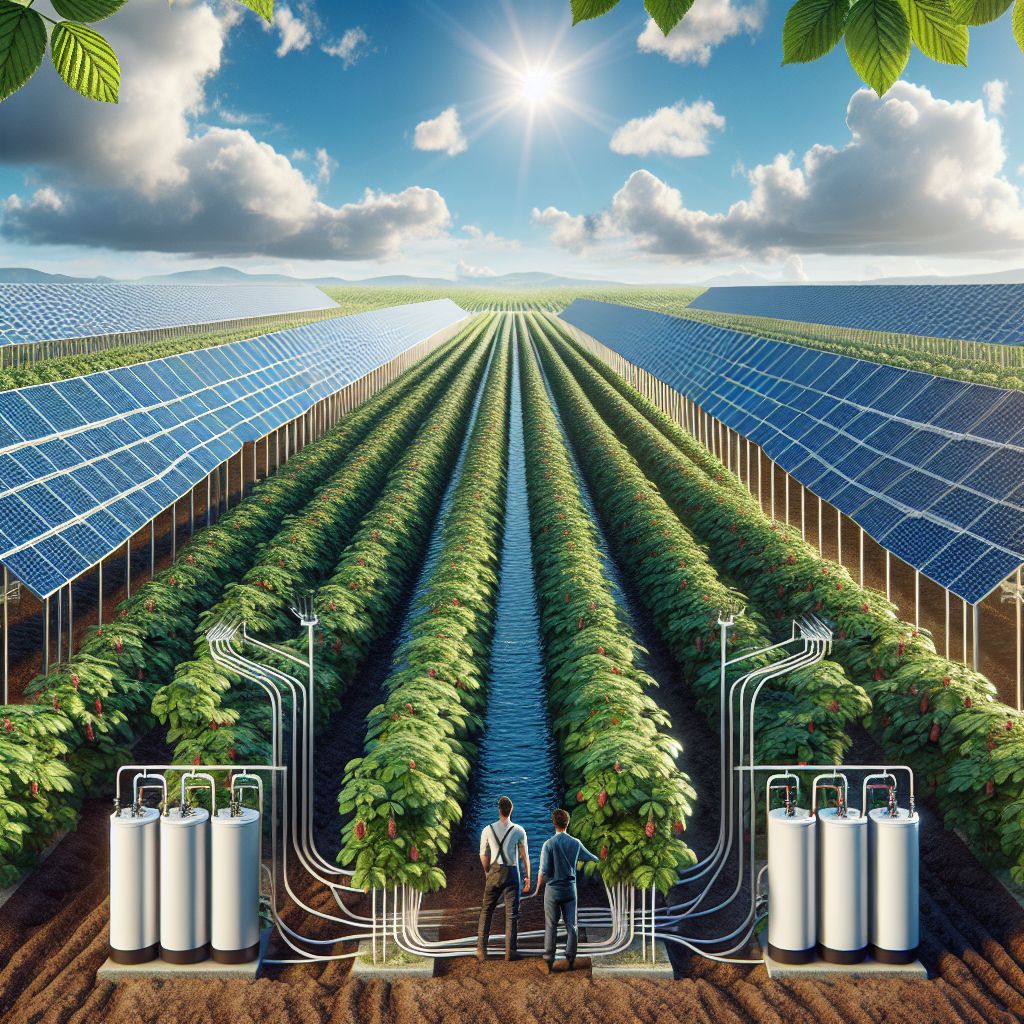
When it comes to running your raspberry orchard at peak efficiency, it’s crucial to pick the right solar panels and irrigation systems. This means finding the solar panels that best fit your needs and matching them with an irrigation method that will get the job done effectively.
Top Combinations for Optimal Productivity: Monocrystalline Solar Panels and Drip Irrigation
If you’re looking for the most productive system, try combining monocrystalline solar panels with a drip irrigation system. Monocrystalline panels provide the highest productivity, making sure that your irrigation system has a steady and reliable power source. Drip irrigation, on the other hand, supplies water straight to the root zone of the plant, cutting down on water waste and encouraging healthy growth.
Understanding Seasonal Changes
Designing your solar irrigation system requires an understanding of how seasons affect sunlight availability and raspberry water needs. In the summer, your solar panels will produce more energy, and your raspberries will likely need more water. Conversely, in the winter, there may be less sunlight, and your water requirements may be lower. For more detailed information, you can refer to this Solar Panels for Farms Irrigation System guide.
One way to handle these seasonal changes is to put in a battery storage system. This will store the extra energy produced in the summer. You can then use this stored energy in the winter when there’s not as much sunlight. This will make sure your irrigation system always has power.
Real-Life Examples of Success
There have been numerous success stories of farmers who have installed solar-powered irrigation systems in their raspberry orchards and have seen significant cost savings and efficiency improvements. For instance, a raspberry farmer in California installed a solar-powered drip irrigation system and saw a 40% decrease in water usage and a 60% decrease in energy costs in the first year alone.
“Our transition to a solar-powered irrigation system has not only cut down our energy expenses, but also boosted the wellbeing and yield of our raspberry crops.”
An additional farmer in Oregon has reported similar positive outcomes, stating that their solar-powered irrigation system provided a dependable and steady water supply, even during periods of drought.
Choosing solar-powered irrigation for raspberry cultivation can dramatically increase the efficiency and sustainability of your farm. Harnessing renewable energy sources can help you cut costs in the long run and practice farming in a way that’s kinder to the environment.
Conclusion: Is Adding Solar Power to Your Raspberry Orchard’s Irrigation System a Good Idea?
It’s a wise and eco-friendly move to add solar power to your raspberry orchard’s irrigation system. While the upfront cost may be steep, the long-term advantages such as lower energy bills, better water efficiency, and reduced carbon emissions make it a sound investment. For more information on similar systems, check out solar irrigation for growing strawberries.
The Good and the Bad
Here’s a quick rundown of the advantages and disadvantages of incorporating solar power into your watering system:
Advantages:
Significant savings on energy costs over time
Less water waste due to efficient irrigation techniques
Reduced carbon footprint and positive impact on the environment
Low maintenance requirements
Possible government incentives and subsidies
Disadvantages:
High initial cost of setup
Potential issues with availability of sunlight
Requires careful planning and consultation with experts
Final Suggestions
Based on the details provided, I highly recommend considering a solar-powered irrigation system for your raspberry farm. The combination of monocrystalline solar panels and a drip irrigation system is the most efficient and sustainable. Additionally, make use of government incentives to lower the initial cost of investment. Make sure to plan for seasonal changes and consider installing a battery storage system to keep a consistent power supply all year round.
Frequently Asked Questions (FAQ)
What is the cost of installing a solar-powered irrigation system?
The upfront cost of a solar-powered irrigation system can fluctuate greatly depending on the size of your farm and the kind of solar panels and irrigation system you select. On average, the cost can range from $10,000 to $30,000. However, these costs can be offset by government incentives and subsidies.
Do solar panels work well in various weather conditions?
Solar panels work best when it’s sunny, but they can still produce power when it’s cloudy. Solar technology has come a long way, and panels are now more efficient in low-light conditions. Plus, if you install a battery storage system, you can store the extra energy your panels produce when it’s sunny and use it when it’s cloudy or rainy.
Is it possible to convert my current irrigation system to solar power?
Indeed, it is possible to convert your current irrigation system to solar power. This usually requires the installation of solar panels and a solar-powered pump to replace your current energy source. It would be beneficial to consult with a solar energy expert to determine the most effective method for converting your system.
How long does a solar-powered irrigation system last?
The length of time a solar-powered irrigation system lasts is based on the quality of the parts used. Typically, solar panels last 25-30 years, while solar-powered pumps can last 10-15 years if they are properly maintained. The total lifespan of your system can be extended with regular maintenance and timely replacements.
Should I hire a professional for installation?
Although you can put in a solar-powered irrigation system on your own, it’s strongly suggested that you hire a professional. Pros can make sure your system is installed correctly and efficiently, which will make it work better and last longer. They can also help you get any necessary permits or approvals for installation.
Finally, choosing a solar-powered irrigation system for your raspberry farm is a progressive choice that offers many advantages. By carefully picking the correct parts and preparing for seasonal changes, you can build a sustainable and efficient irrigation system that promotes the long-term wellbeing and productivity of your farm.







Leave a Reply