

Key Takeaways
Solar irrigation systems can significantly reduce water usage, which is especially beneficial for water-intensive crops like blueberries.
Over the long term, solar-powered irrigation can lead to substantial cost savings, despite the initial investment.
Consistent and efficient watering through solar irrigation can enhance blueberry crop yield and quality.
Using solar energy for irrigation has a positive environmental impact, helping to preserve natural resources.
There are various solar panel types and irrigation methods to choose from, and finding the right combination is crucial for the best results.
Why You Should Use Solar Panels with an Irrigation System for Growing Blueberries
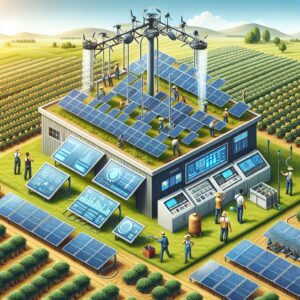
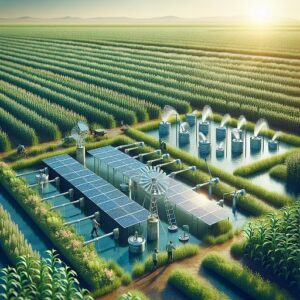
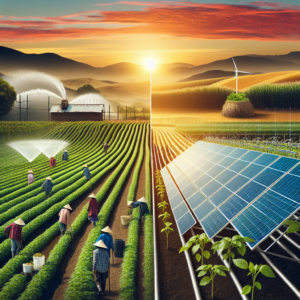
When it comes to growing blueberries, water is as essential as sunlight. But how we manage that water makes all the difference. By combining solar panels with an irrigation system, we harness the power of the sun to give blueberries just what they need, while also caring for our planet.
Minimizing Water Usage with Solar Power
Why waste water when you can use just the right amount? Solar irrigation systems are smart—they can be programmed to water your blueberry bushes at the most effective times, like early morning or late evening, to reduce evaporation. This means every drop goes further.
Long-Term Cost Savings of Solar-Powered Systems
Think about this: sunlight is free! Once you’ve set up your solar irrigation system, the energy it uses doesn’t cost a penny. Sure, there’s an upfront cost, but in the long run, you’re going to save on those hefty energy bills. It’s like putting money back in your pocket every sunny day.
Enhancing Crop Yield with Consistent Watering
Blueberries love consistency, and so do solar irrigation systems. They provide a steady supply of water, which means your blueberries get exactly what they need to grow plump and sweet. It’s all about giving your plants the best chance to thrive.
Environmental Impact: Preserving Resources for Future Generations
By choosing solar, you’re not just growing blueberries; you’re growing a better future. Solar energy is clean, renewable, and doesn’t deplete our precious resources. It’s a way to show you care about the land and the legacy you leave behind.

Top Irrigation Methods Used by Blueberry Farmers
Drip Irrigation: Precision and Efficiency
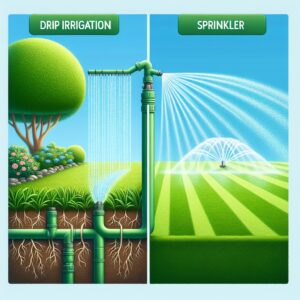
Drip irrigation is a game-changer. It delivers water directly to the base of each blueberry bush, minimizing waste and ensuring that each plant gets the attention it deserves. And because it’s so precise, it’s perfect for getting the most out of your solar-powered system.
Overhead Sprinklers: Broad Coverage for Larger Orchards
If you’ve got a lot of ground to cover, overhead sprinklers can be your best friend. They can water a wide area all at once, which is great for larger blueberry orchards. Pair them with solar power, and you’ve got an efficient system that can keep up with your demands.
Most importantly, choosing the right irrigation method depends on your specific needs. There’s no one-size-fits-all solution, but there is a perfect match for your orchard.
Micro-Sprinkler Systems: Targeted Hydration for Uniform Growth
Micro-sprinklers bring together the best of both worlds: efficiency and coverage. They provide a gentle mist that’s ideal for young blueberry plants, promoting uniform growth and helping you get the most out of every water droplet.
Might a Hybrid Irrigation System Work?
Sometimes, combining drip and overhead systems can give you the flexibility you need. This hybrid approach tailors watering to the specific needs of different parts of your orchard, ensuring that each blueberry bush gets just the right amount of water.
What is the best Irrigation System to Use in a Blueberry Orchard
The best irrigation system for your blueberry orchard is one that delivers water effectively and efficiently to your plants. Drip irrigation often comes out on top for its precision and water conservation, but the final choice should take into account the size of your orchard, your soil type, and local climate conditions.

Top Solar Panels for Your Blueberry Farmers Irrigation System
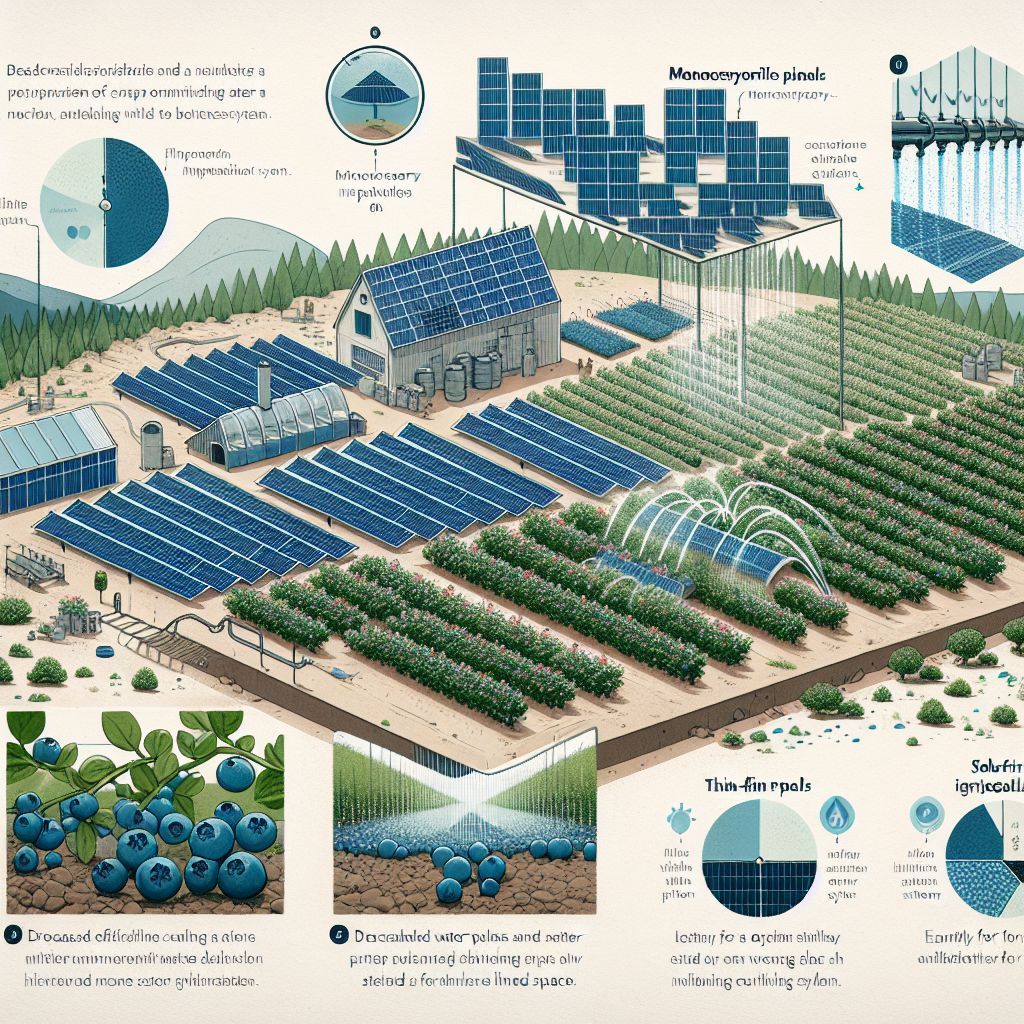
Now, let’s talk solar panels. The sun is your orchard’s best friend, and with the right solar panels, you can turn its energy into a superpower for your irrigation system. There are several types to consider, each with its own strengths.
Monocrystalline Panels: High Efficiency in Limited Space
Monocrystalline panels are the superheroes of the solar world. They’re sleek, they’re efficient, and they pack a punch in a small space. If your blueberry farm is cozy or you want the most bang for your buck, these are the panels for you. Their efficiency means fewer panels to install, and that can save you space and hassle.
Polycrystalline Panels: Cost-Effective Option for Expansive Needs
Polycrystalline panels are the trusty workhorses. They may not have the top efficiency rates like monocrystalline, but they come at a more affordable price. If you’ve got a larger area and you’re looking to get started without breaking the bank, these panels are worth a look.
Thin-Film Panels: Versatility for Various Orchard Layouts
Thin-film panels are the chameleons of the solar panel world. They can bend and flex to fit all sorts of spaces, making them a great choice if your blueberry orchard has an irregular layout. Plus, they perform better in low-light conditions, which is a bonus for those cloudy days. For more details on integrating solar panels with your farm’s irrigation, consider exploring solar panels for farm irrigation systems.
Here is a table showing the pros and cons of using different types of solar panels with an irrigation system on a farm:
|
Panel Type |
Pros |
Cons |
|---|---|---|
|
Monocrystalline Panels |
– High efficiency (15-22%), producing more power per square foot. 1, 2, 4 | |
|
Polycrystalline Panels |
– Lower upfront cost than monocrystalline. 1, 2 |
– Lower efficiency and shorter lifespan than monocrystalline. 2, 4 |
|
Thin-Film Solar Panels |
– Lowest upfront cost. 1, 2 |
– Lowest efficiency (7-13%). 2, 4 |
What is the best Solar Panel to Use in a Blueberry Orchard
Based on the factors mentioned above, monocrystalline solar panels are generally the best choice for blueberry orchards. Their high efficiency ensures maximum energy production per unit area, reducing the space required for solar system installation. Additionally, monocrystalline panels exhibit good temperature co-efficiency and shade tolerance, enabling consistent energy production in various environmental conditions. Environmental considerations also favor monocrystalline panels as they are typically more durable and have lower overall lifecycle emissions than other panel technologies.

Cost and Efficiency Comparison: Solar Irrigation Systems Versus Traditional Irrigation Systems for Growing Blueberries
Let’s get down to brass tacks. Solar irrigation systems might have a higher upfront cost compared to traditional systems, but they shine when you look at the long-term picture. They use free energy from the sun, which means they start paying for themselves the moment you switch them on.
Breaking Down Initial Investment Requirements of Both Systems
Traditional irrigation systems can be cheaper to install, often costing less upfront than solar irrigation systems. But remember, with traditional systems, you’re signing up for ongoing energy costs. Solar irrigation, on the other hand, has a higher initial price tag but leads to energy independence and lower bills over time.
The Difference in Operational Costs Over Time between the Systems
When it comes to operational costs, solar irrigation systems take the lead. The energy they use is free, and maintenance costs are typically low. Traditional systems, however, will have you watching the energy market and dreading those monthly bills.
Analyzing System Lifespans and Long-Term Benefits for Each System
Solar panels and irrigation systems are both long-term investments. Quality solar panels can last more than 25 years, and modern irrigation systems are built to endure. While both require some maintenance, the cost savings and environmental benefits of solar make it a compelling choice for the future.
Here is a table comparing the cost and efficiency of an irrigation system with and without solar panels:
|
Aspect |
Without Solar Panels |
With Solar Panels |
|---|---|---|
|
Initial Cost | ||
|
Operating Cost |
Very low or zero fuel/electricity costs after installation. 1, 4 | |
|
Efficiency |
Depends on energy source efficiency. 4 |
Depends on solar radiation, temperature, system design. 1, 4 |
|
Environmental Impact |
Higher carbon footprint. 1 |
Lower carbon footprint, renewable energy. 1 |
|
Location Flexibility |
Limited to grid-connected or fuel access areas. 3 |
Can be used in remote off-grid areas. 3 |
|
Maintenance | ||
|
Lifespan |
Shorter for fuel-based systems. 1 | |
|
Long-term Costs |
Higher due to recurring fuel/electricity bills. 1 |
Lower total 20-year costs by 50-60% compared to traditional systems. 1 |
|
Government Incentives |
Generally none |
Many governments provide tax credits, subsidies for solar irrigation. 1 |
Which Combination of Solar Panels and Irrigation Systems make the Most Efficient System for Your Blueberry Orchard
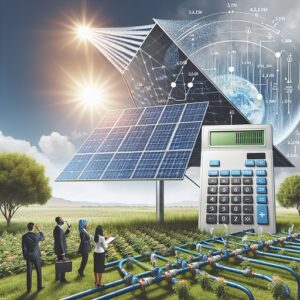
Finding the right combination of solar panels and irrigation systems is like piecing together a puzzle. It’s about understanding your orchard’s unique needs and matching them with the right technology. Here’s how you can start:
Assess your water requirements: How much water do your blueberry plants need? When do they need it?
Consider your climate: How much sun does your area get? Are there many cloudy days?
Think about your space: How much room do you have for solar panels? Is your orchard layout regular or irregular?
Once you’ve got the answers, you can begin to see which solar panels and irrigation methods will work best for you.
For example, if you have limited space and need high efficiency, you might pair monocrystalline panels with a drip irrigation system. This combination ensures that you’re getting the most out of each square foot of your solar panels and every drop of water.
If you’re in an area with less consistent sunlight but have more space, thin-film panels paired with a micro-sprinkler system could be your go-to. This setup will keep your blueberries happy, even when the sun is playing hide-and-seek.
Determining the Best Solar Panel to Irrigation System: Monocrystalline Panels Combined with Drip Irrigation
For many, the top choice is monocrystalline panels combined with drip irrigation. This duo offers maximum efficiency and precision watering, which can lead to healthier plants and better blueberry yields. Plus, it’s a setup that’s kind to both your wallet and the environment in the long run.
Case Studies: Successful Blueberry Farms with Solar Irrigation
Let’s look at real success stories. There’s a blueberry farm that made the switch to solar drip irrigation and saw their water usage drop by 30% while their crop yield increased. Another farm installed thin-film panels on their less-than-ideal land and now enjoys a reliable water supply that keeps their berries thriving.
These are just a few examples of how the right solar irrigation system can make a world of difference. The key is to tailor the system to your specific needs, and the rewards will be both sweet and sustainable.
Conclusion: Is it a Smart Decision to Add Solar-Power to an Irrigation System for Your Blueberry Orchard
After diving deep into the world of solar irrigation, it’s clear that integrating solar power with an irrigation system is a smart move for blueberry orchards. Not only does it align with the values of sustainability and resource conservation, but it also makes economic sense in the long run. By choosing solar, you’re investing in the health of your crops, the well-being of the environment, and the stability of your finances.
Reviewing the Pros and Cons Based on Real Data
Let’s weigh the options. On the plus side, solar irrigation systems offer reduced water usage, lower energy bills, and less dependency on non-renewable resources. On the downside, the initial cost can be a hurdle, and the technology does require some learning and adaptation. However, when you consider the rising costs of water and energy, along with the potential for incentives and grants, the scales tip heavily in favor of solar irrigation.
Tailoring the Decision to Specific Farm Needs
Every farm is unique, and what works for one may not work for another. It’s crucial to consider your specific situation—your location, your budget, and your long-term goals. If you’re committed to sustainable farming and ready to embrace innovation, then solar-powered irrigation is a step in the right direction. It’s about more than just growing blueberries; it’s about growing a sustainable future.
Frequently Asked Questions (FAQ)
There’s a lot to think about when considering solar irrigation for your blueberry orchard. Here are some common questions that might be on your mind:
How Does Solar Irrigation Save Water Compared to Conventional Methods?
Solar irrigation systems are incredibly efficient. They can be set up to water plants at optimal times to minimize evaporation and runoff. Drip irrigation, in particular, delivers water directly to the roots of the plants, which reduces waste. Plus, with the ability to run on timers and moisture sensors, solar irrigation ensures that water is used only when needed.
Can Solar Panels Withstand Harsh Farming Environments?
Absolutely! Modern solar panels are designed to be tough. They can endure extreme weather, from scorching heat to freezing cold, and continue to perform. They’re built to last for decades with minimal maintenance, making them perfect for the demands of farming life.
Are There Government Incentives for Using Solar Irrigation in Agriculture?
Yes, there are often government incentives available to help offset the cost of installing solar irrigation systems. These can come in the form of grants, tax credits, or rebates. It’s worth doing some research or speaking to a local agricultural extension office to find out what’s available in your area.
How Quickly Can a Solar Irrigation System Pay for Itself?
It varies, but many farmers find that their solar irrigation system pays for itself within a few years. The combination of reduced water and energy bills, along with any incentives, can make solar irrigation a financially sound investment. After the initial costs are recouped, it’s all savings and clean energy from there.
What Backup Solutions Exist for Solar Irrigation During Cloudy Days?
Even on cloudy days, solar panels can still generate power, although at reduced levels. However, it’s smart to have a backup plan. This could be a connection to the traditional power grid, a battery storage system, or even a secondary generator. The goal is to ensure that your blueberry plants never go thirsty, no matter the weather.
In conclusion, solar irrigation offers an efficient and sustainable way to water blueberry crops. By carefully considering the types of solar panels and irrigation methods, understanding the costs and benefits, and planning for various weather conditions, farmers can make informed decisions that benefit their orchards and the environment. With the right approach, solar irrigation can be a valuable investment in the future of sustainable agriculture.
Blueberries require a consistent and controlled watering schedule to thrive, which can be efficiently managed using solar irrigation systems. By harnessing the power of the sun, these irrigation systems can provide ample water to blueberry bushes without the need for manual intervention, ensuring that the plants receive the right amount of water at the right time for optimal growth.


Leave a Reply