

When it comes to nurturing papayas, one of the sweetest fruits of labor, efficient watering isn’t just a nice-to-have—it’s essential. But how do you provide enough hydration to your crops without wasting water or energy? The answer lies in the sun itself: solar irrigation. It’s a game-changer for farmers looking to grow papayas sustainably. Let’s dive in and explore how this innovative system can make a world of difference.
Key Takeaways
Solar irrigation systems can save up to 70% more water compared to traditional methods.
Initial costs for solar panels range from $0.70 to $1.50 per watt, with long-term savings outweighing upfront expenses.
Drip irrigation, when paired with solar power, enhances papaya crop yields by delivering water directly to the roots.
Monocrystalline solar panels, though pricier, offer higher efficiency and are ideal for smaller land areas.
Investing in solar irrigation could lead to a payback period of 4-6 years, after which you benefit from virtually free energy.

Why You Should Use Solar Panels with an Irrigation System for Growing Papaya
Imagine cutting down your water usage by up to 70% and significantly reducing your energy bills. Solar panels paired with an irrigation system make this a reality. They harness the power of the sun, converting it into electricity to pump water to your papaya plants. This not only conserves water but also uses a renewable energy source, slashing your carbon footprint and energy costs.
Maximizing Water Efficiency
With the right setup, your irrigation system can become a precision tool. Drip irrigation, for instance, delivers water directly to the base of your papaya plants, reducing evaporation and runoff. It’s like giving each plant a personal water bottle instead of throwing water balloons and hoping they catch enough.
Reducing Energy Bills
After the initial investment, the sun’s energy is free, and so is the power it generates for your irrigation system. This means that, over time, the cost of watering your papaya crop plummets. It’s like investing in a lifetime supply of water at a fraction of the cost.
Eco-Friendly Farming Practices
By using solar power, you’re not just saving money; you’re also protecting the planet. Solar irrigation emits zero greenhouse gases, unlike diesel or electric pumps. It’s a clean, green watering machine for your papaya farm.
Long-Term Financial Incentives
While solar panels require upfront investment, the long-term financial rewards are substantial. With the lifespan of a solar panel stretching up to 25 years, the return on investment is a gift that keeps on giving.
Enhanced Crop Yields and Health
Healthier plants produce better fruit. Solar irrigation systems provide consistent and reliable watering, which means your papayas get exactly what they need to thrive. Happy plants, happy farmer, and happy consumers—it’s a win-win-win.

Top Irrigation Methods Used by Papaya Farmers
Drip Irrigation: Precision Watering for Optimal Growth
Drip irrigation is like the sniper of watering techniques—it’s all about precision. By delivering water and nutrients directly to the root zone of your plants, it minimizes waste and maximizes growth. And when powered by solar energy, it’s not only efficient but also sustainable.
Sprinkler Systems: Covering Larger Areas Effectively
Sprinkler systems are like the sprinkles on a cupcake—they cover everything evenly. If your papaya farm is expansive, sprinklers can ensure that every plant gets its fair share of water. And with solar power, you can run your sprinklers without fretting over the electricity bill.
After looking at you to irrigation systems, let’s take a peek at the solar panels that can power them
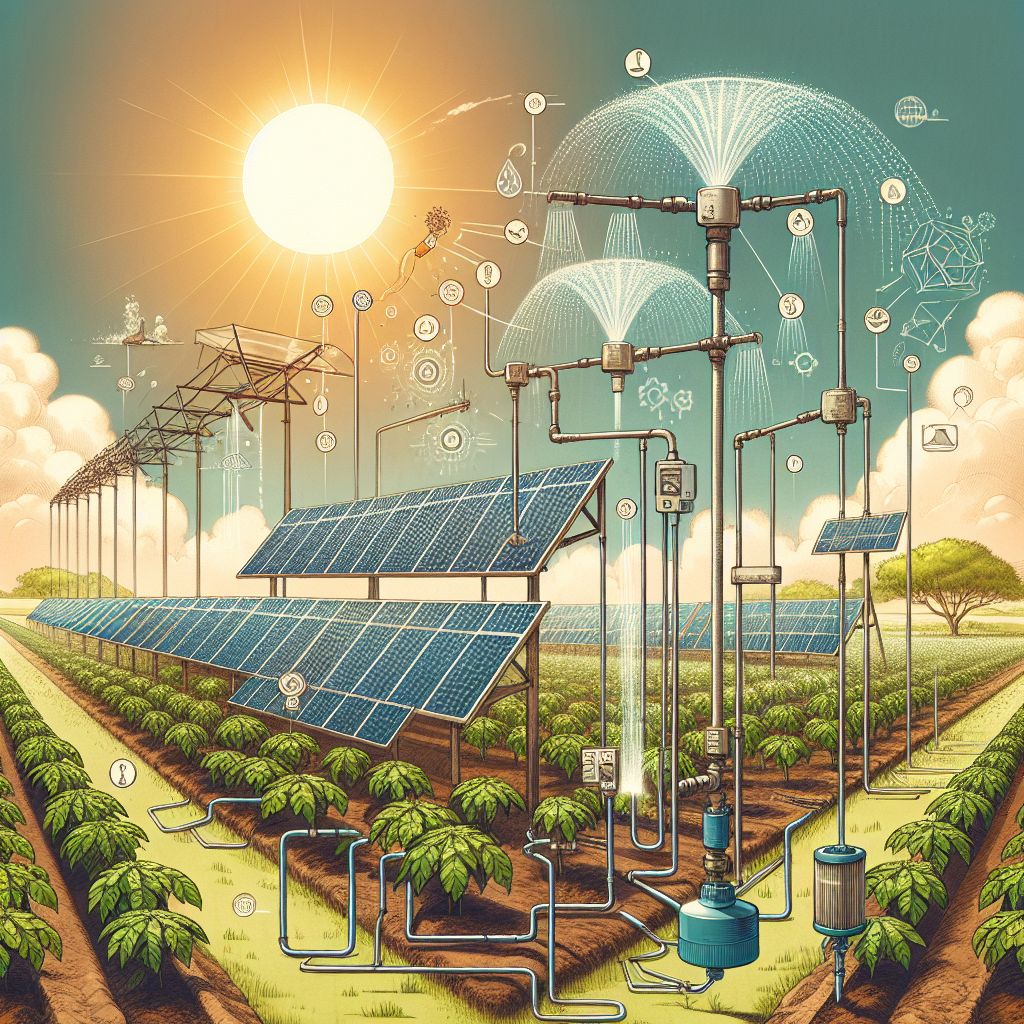
Top Solar Panels for Your Papaya Farmers Irrigation System
Now, let’s talk about the nitty-gritty of setting up a solar irrigation system. It’s not just about sticking a panel in the ground and watching it go. You need to consider the size of your farm, the amount of sunlight you get, and the type of irrigation that suits your papaya plants best. Here’s what you need to do:
Calculate your water needs: How much do your papaya plants drink on a hot day?
Assess your sunlight exposure: More sun means more power for your pump.
Choose your irrigation method: Drip, sprinkler, or a mix?
Size your solar system: How many panels will it take to quench your plants’ thirst?
Install and maintain: Set up your system and keep it running smoothly.
Remember, the goal is to provide your papayas with the hydration they need while conserving resources. It’s all about finding that sweet spot between efficiency and effectiveness.
Think of solar irrigation as the heart of your farm, pumping life-giving water through a network of veins to every papaya plant. It’s a system that not only makes sense for your wallet but also for the environment. So, let’s roll up our sleeves and get those papayas soaking up the sun. Let’s take a look at the top solar panels a farmer can use.
Monocrystalline Solar Panels: Ideal for High-Efficiency
When you’re eyeing the sun to power your farm, monocrystalline solar panels are like the high-performance athletes of solar tech. They’re sleek, they’re efficient, and they pack a punch in terms of energy output. These panels are made from single-crystal silicon, which means they can convert more sunlight into electricity than their counterparts. That’s a big deal when you’re relying on the sun to keep your papayas perfectly watered.
Let’s break it down: monocrystalline panels have an efficiency rate of around 15-20%. This means they’re perfect for smaller spaces where you need to squeeze out as much power as you can. They might come with a higher price tag, but they make up for it with their long lifespan and reliability. Plus, they perform better in low-light conditions, which is handy for those cloudy days.
Polycrystalline Solar Panels: Cost-Effective Option
If you’re budget-conscious but still want to tap into solar energy, polycrystalline panels are your go-to. They’re a little less efficient than monocrystalline panels—think 13-16% efficiency—but they’re also more affordable. These panels are made from fragments of silicon melted together, which gives them their distinctive blue hue and a slightly lower price point.
For a medium-sized papaya farm, polycrystalline panels can be a smart choice. They strike a balance between efficiency and cost, allowing you to cover more ground without breaking the bank. It’s like choosing a reliable sedan over a sports car—it gets the job done well without the flashy price tag.
When it comes to durability, polycrystalline panels are tough cookies. They can withstand harsh weather conditions, which is essential when they’re out in the field all year round. And while they might not last quite as long as monocrystalline panels, they’ll still give you a good 20-25 years of service.
Thin-Film Solar Panels: Versatility and Ease of Installation
Thin-film solar panels are the chameleons of the solar world. They’re flexible, lightweight, and can be installed on a variety of surfaces. This makes them an excellent option for farms with unconventional layouts or for temporary setups. They’re less efficient than mono and polycrystalline panels, with efficiency rates typically between 10-13%, but they have their perks.
One of the biggest advantages of thin-film panels is their ease of installation. They can be rolled out like a carpet over large areas, and they’re less affected by shading and high temperatures. Plus, they give your farm a modern, high-tech look that’s sure to impress anyone who’s paying attention.
Thin-film panels are also a good choice if you’re planning to scale up your operation. They’re relatively easy to add to, so you can start small and grow your solar array as your farm—and your energy needs—expand. It’s like building with Legos: you can keep adding pieces to create the structure that suits you best.
Here is a table showing the pros and cons of using different types of solar panels with an irrigation system on a farm:
|
Panel Type |
Pros |
Cons |
|---|---|---|
|
Monocrystalline Panels |
– High efficiency (15-22%), producing more power per square foot. 1, 2, 4 | |
|
Polycrystalline Panels |
– Lower upfront cost than monocrystalline. 1, 2 |
– Lower efficiency and shorter lifespan than monocrystalline. 2, 4 |
|
Thin-Film Solar Panels |
– Lowest upfront cost. 1, 2 |
– Lowest efficiency (7-13%). 2, 4 |
What is the Best Solar Panel A Farmer Should Use
Monocrystalline Solar Panels: High efficiency, long lifespan, higher cost
Polycrystalline Solar Panels: Medium efficiency, medium lifespan, lower cost
Thin-Film Solar Panels: Lower efficiency, shorter lifespan, easy to install and scale
So, which solar panel should a farmer choose? It depends on your specific needs. Consider your farm’s size, your budget, and how much sun your area gets. It’s a bit like picking the right tool for the job—you want the one that fits your situation perfectly. Keeping that in mind, monocrystalline solar panels are the most efficiet choice for papaya farmers.

Cost and Efficiency Comparison: Solar Irrigation Systems Versus Traditional Irrigation Systems for Growing Papaya
Different Initial Setup Costs and Long-Term Benefits Between the Systems
Let’s talk money. Setting up a solar irrigation system isn’t pocket change, but it’s an investment that pays off. Initial costs for solar panels can range from $0.70 to $1.50 per watt, depending on the type you choose. But remember, once they’re up and running, the energy they produce is free.
Comparative Water Usage and Efficiency
When it comes to water usage, solar irrigation systems are like a meticulously measured recipe. They use exactly what they need, no more, no less. Traditional systems, on the other hand, can be more like eyeballing ingredients—sometimes they use too much. And in farming, using too much water isn’t just wasteful, it can also harm your crops.
Maintenance Costs: Solar vs. Traditional
Maintenance is another area where solar wins. Solar irrigation systems have fewer moving parts, which means less that can go wrong. They’re like a trusty old tractor that just keeps chugging along. Traditional systems might have lower upfront costs, but they can nickel and dime you with repairs and energy bills over the years.
Return on Investment Analysis Comparison
Now, let’s crunch some numbers. Investing in solar irrigation could lead to a payback period of 4-6 years. After that, you’re essentially getting free energy. It’s like buying a coffee machine instead of hitting the café every day—you spend upfront but save loads in the long run.
Here is a table comparing the cost and efficiency of an irrigation system with and without solar panels:
|
Aspect |
Without Solar Panels |
With Solar Panels |
|---|---|---|
|
Initial Cost | ||
|
Operating Cost |
Very low or zero fuel/electricity costs after installation. 1, 4 | |
|
Efficiency |
Depends on energy source efficiency. 4 |
Depends on solar radiation, temperature, system design. 1, 4 |
|
Environmental Impact |
Higher carbon footprint. 1 |
Lower carbon footprint, renewable energy. 1 |
|
Location Flexibility |
Limited to grid-connected or fuel access areas. 3 |
Can be used in remote off-grid areas. 3 |
|
Maintenance | ||
|
Lifespan |
Shorter for fuel-based systems. 1 | |
|
Long-term Costs |
Higher due to recurring fuel/electricity bills. 1 |
Lower total 20-year costs by 50-60% compared to traditional systems. 1 |
|
Government Incentives |
Generally none |
Many governments provide tax credits, subsidies for solar irrigation. 1 |

Which Combination of Solar Panels and Irrigation Systems make the Most Efficient System for Growing Papaya
The dynamic duo for your papaya farm? Monocrystalline solar panels and drip irrigation. Why? Because you get the best of both worlds: high-efficiency energy conversion and precise water delivery. It’s like having the best farmer and the best gardener working together to keep your papayas happy.
But every farm is different. Some might benefit more from polycrystalline panels and sprinkler systems, especially if they have more space and a tighter budget. It’s about matching your farm’s unique needs with the right tech.
And let’s not forget about thin-film panels. If you’re just starting out or have a less conventional space, they can provide the flexibility you need. Paired with a micro-sprinkler system, they can offer a gentle and even watering for your young papaya plants.
For example, a farmer in a sunny region with limited space might opt for a high-efficiency monocrystalline setup, ensuring maximum power generation per square foot. Conversely, a larger farm in a region with moderate sunlight could go for polycrystalline panels, balancing cost and efficiency on a broader scale.
Choosing the right combination of solar panels and irrigation system is like putting together a puzzle. You need to find the pieces that fit just right to create a complete picture of efficiency and sustainability.
Determining the Right Solar Panel for Your Irrigation Method: Monocrystalline Solar Panels & Drip Irrigation
If you’ve decided that precision is key for your papaya farm, then monocrystalline solar panels and drip irrigation are your best bet. This combo is all about getting the most bang for your buck—maximum efficiency from both your panels and your watering system.
But remember, the right choice for you might be different. It’s like choosing a pair of shoes—you need the right fit for your feet, or in this case, your farm. Take the time to assess your needs, do the math, and consider the long-term benefits. Your papayas—and your wallet—will thank you.

Conclusion: Is it a Smart Decision to Add Solar-Power to an Irrigation System for Growing Papaya?
Stepping back to look at the big picture, it’s clear that integrating solar power into your irrigation system for growing papayas is not just smart; it’s a forward-thinking move towards sustainable agriculture. By investing in solar irrigation, you’re setting up your farm for success both economically and environmentally. It’s a strategic decision that aligns with the global push towards renewable energy and water conservation—vital for the long-term viability of farming practices.
Assessing the Overall Viability and Sustainability
Assessing the viability of solar irrigation involves looking at both the immediate and long-term benefits. Upfront, the costs can seem daunting, but the reduction in water and energy bills, combined with the longevity of the system, paint a different picture. The sustainability aspect is a huge plus, with solar irrigation systems significantly reducing the carbon footprint of your farming operations, conserving water, and promoting healthier crop growth.
Real-World Success Stories and Case Studies
Consider the story of a farmer in California who switched to solar irrigation for his papaya farm. Within the first year, he saw a 20% increase in his crop yield and a 60% reduction in his water usage. Not only did his papayas grow larger and sweeter, but his energy bills also dropped significantly. This is just one of many success stories that underscore the effectiveness of solar irrigation in real-world applications.
Another case study from India highlights a community of papaya farmers who banded together to install a shared solar irrigation system. The collective effort not only cut costs for each farmer but also increased their bargaining power in the market due to the higher quality and quantity of their produce.
20% increase in crop yield after switching to solar irrigation
60% reduction in water usage for a California papaya farmer
Community of Indian farmers achieving cost savings and increased market power
These stories demonstrate that solar irrigation is more than just a concept—it’s a practical solution already making waves in the agricultural sector.
Future Outlook for Solar-Powered Agriculture
The future is bright for solar-powered agriculture. With technological advancements and increased awareness of sustainable practices, more farmers are likely to adopt solar irrigation systems. As the cost of solar panels continues to drop and the efficiency of these systems improves, we can expect solar irrigation to become the norm rather than the exception.
Moreover, as water scarcity becomes an increasingly pressing issue, the importance of water-efficient farming methods like solar-powered irrigation will only grow. It’s a pivotal time for farmers to consider making the switch to ensure the longevity and productivity of their land.
Frequently Asked Questions (FAQ)
How Do Solar Panels Enhance the Irrigation of Papaya Farms?
Solar panels enhance irrigation by providing a reliable and cost-effective power source for water pumps. This allows for consistent watering schedules that are crucial for the growth of papaya plants. Additionally, solar panels can power advanced irrigation systems like drip irrigation, which delivers water directly to the roots of the plants, further improving water efficiency and crop yields.
Can Solar Irrigation Systems Work on Cloudy Days?
Yes, solar irrigation systems can work on cloudy days. While the efficiency of solar panels may decrease during overcast conditions, they can still generate electricity. Many systems are equipped with batteries to store excess energy on sunny days, ensuring a continuous power supply when sunlight is limited.
What Is the Expected Lifespan of a Solar-Powered Irrigation System?
The expected lifespan of a solar-powered irrigation system is around 20-25 years for the solar panels and around 10-15 years for the pump and other equipment. Regular maintenance can help extend the life of the system even further.
Are There Any Government Incentives for Installing Solar Irrigation?
Many governments offer incentives for installing solar irrigation systems, such as tax credits, rebates, and grants. These incentives can significantly reduce the initial cost of setting up the system and improve the return on investment.
Tax credits for a percentage of the cost of the solar system
Rebates that directly reduce the system’s upfront cost
Grants for agricultural projects that promote sustainability
It’s important to research the specific incentives available in your area as they can vary greatly by region and country.
How Do I Calculate the Return on Investment for a Solar-Powered Irrigation System?
To calculate the return on investment (ROI) for a solar-powered irrigation system, you’ll need to consider the following:
The total cost of the solar irrigation system, including installation
Annual savings on water and energy bills
Any government incentives or rebates you’re eligible for
The increased value of your crop yield due to improved irrigation
By subtracting the total cost from the sum of your savings and additional earnings, and then dividing by the total cost, you’ll get the ROI percentage. A positive ROI indicates a worthwhile investment.
In conclusion, the integration of solar power into your papaya farm’s irrigation system is not only a smart choice but a necessary step towards a sustainable agricultural future. By embracing this technology, you’re investing in the health of your crops, the environment, and the long-term success of your farming operations. With the evidence at hand and the trend towards renewable energy in agriculture, the question is not if you should adopt solar irrigation, but when.







Leave a Reply