

Key Takeaways
Solar irrigation systems are vital for sustainable farming, especially in remote locations.
Bad weather, such as rain, wind, and snow, can affect the efficiency of solar irrigation systems.
Regular maintenance and technological advancements can help lessen the negative impacts of bad weather.
Real-world examples demonstrate that with proper planning, solar irrigation systems can endure extreme weather conditions.
Future developments in weather-resistant designs will further improve the dependability of solar irrigation systems.
Performance & Examples of Solar Irrigation Systems in Bad Weather
The Importance of Solar Irrigation Systems
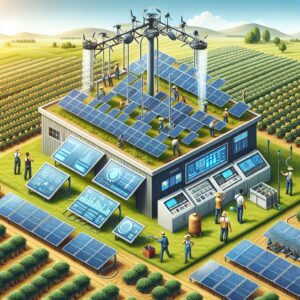
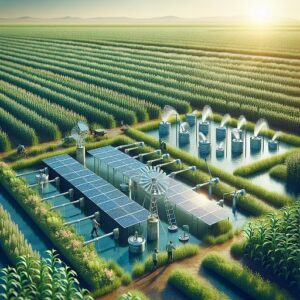
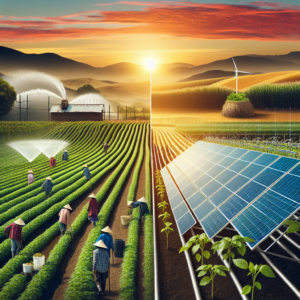
Solar irrigation systems are a key component in today’s sustainable farming practices. These systems use solar power to run water pumps, making them perfect for remote locations where regular electricity supply is either unreliable or non-existent.
Farmers can reduce their reliance on fossil fuels, decrease their operating expenses, and contribute to environmental protection by harnessing the power of the sun. Solar irrigation systems are particularly useful in areas with a lot of sun, but their efficiency can be compromised by poor weather conditions.
Key Player in Green Farming
Green farming is all about providing for today’s food and clothing demands without jeopardizing the capacity of future generations to do the same. Solar irrigation systems are a crucial part of this because they provide a green, renewable alternative to traditional irrigation methods.
Moreover, these systems are especially useful in regions where water is scarce. They allow for effective water management, minimizing waste and making sure that crops get the water they need. This is essential for keeping the soil healthy and boosting crop production.

Challenges of Bad Weather
Despite the many advantages of solar irrigation systems, they do come with their own set of difficulties. Poor weather can greatly affect their effectiveness and dependability. Being aware of these difficulties is the first step in overcoming them.
Decreased efficiency can occur when rain and cloud cover reduce the amount of sunlight reaching the solar panels.
Physical damage to the solar panels and other system components can occur from strong winds and storms.
Extreme cold and snow can also affect the performance of solar panels and irrigation equipment.
Impact of Rain and Cloud Cover
Rain and cloud cover are common weather conditions that can affect solar irrigation systems. When the sky is overcast, the amount of sunlight reaching the solar panels is reduced, which in turn lowers the energy output. This can be particularly problematic during the rainy season when cloud cover is persistent.
That said, it’s worth mentioning that solar panels can still create electricity on overcast days, although their efficiency is diminished. Typically, solar panels generate between 10% and 25% of their maximum capacity on overcast days. The precise figure is contingent on the thickness of the clouds and how long the cloudy weather lasts.
Interestingly, rain has a two-fold effect. It decreases sunlight but also cleans the solar panels by washing off dirt, dust, and pollen that can build up on the surface and reduce performance. So, regular rain can actually enhance the system’s long-term efficiency.
Damage from Wind and Storms
Solar irrigation systems are vulnerable to damage from strong winds and storms. High winds can knock solar panels off their mounts, damage the structures that hold them up, and even break the panels. In the worst cases, whole solar panel arrays can be ripped up from the ground, leading to big financial losses and time spent not working.
Storms can also produce hail, which can cause significant damage. Hailstones can crack or shatter solar panels, rendering them useless. Although most modern solar panels are built to withstand hailstones up to a certain size, severe weather events can still cause damage. For more information on how solar power can be used in various agricultural applications, check out the benefits of solar power for farms.
Intense Cold and Snow
Intense cold and snow pose a different set of problems for solar irrigation systems. Even though solar panels are generally more efficient in colder temperatures, heavy snowfall can cover the panels and block sunlight. This decreases the system’s capacity to produce electricity. For more information on how solar power can benefit agricultural applications, check out solar power usage on farms.
Moreover, the functionality of the irrigation equipment can be compromised by freezing temperatures. Water pumps and pipes can freeze, resulting in blockages and potential damage. As a result, it’s critical to take steps to safeguard the system during the winter months.
Examples of Negative Impact
Let’s look at some real-world examples to better understand how bad weather can affect solar irrigation systems:
Back in 2018, a violent hailstorm wreaked havoc on a solar farm in Colorado. The storm resulted in many panels being smashed and led to a considerable financial setback. Although the panels were built to endure hailstones up to 1 inch in diameter, the hailstones produced by the storm were larger and proved to be too much for the solar power system to handle.
In a separate case, a solar irrigation system in a remote Indian village saw a decrease in effectiveness during the monsoon season. The system’s ability to generate electricity was hindered by continuous cloud cover and heavy rain, which in turn affected the irrigation schedule. However, the system’s performance improved once the rainy season was over.
Successful Adaptation Examples
Even with the challenges of bad weather, there are many solar irrigation systems that have been able to adapt successfully to ensure they are reliable and efficient. For example, some systems use advanced weather monitoring technologies that can make real-time adjustments based on the current conditions.
A successful adaptation is the use of solar panels that can be adjusted. These panels can tilt to optimize sunlight absorption, even when it is cloudy. By adjusting the angle, the panels can capture more light, thereby maintaining a higher level of efficiency.
A further example of this is the use of energy storage solutions. These systems store any surplus energy generated on sunny days, and then use it to continue operating when there is little sunlight. This means they can provide a reliable water supply for irrigation, whatever the weather.

How Weather Impacts Performance
The effectiveness of solar irrigation systems can change based on the weather. For example, understanding solar panel durability in extreme weather can assist farmers in making educated choices and developing successful plans.
During Rain and Cloud Cover
On days with rain or significant cloud cover, the electricity production of solar panels decreases due to less sunlight. However, this does not mean that the system becomes completely ineffective. Today’s solar panels are built to capture diffuse light, which is light that is scattered by clouds. While the efficiency is lower, the system can still produce enough power to keep the irrigation system going. For more information, check out solar panels durability in extreme weather.
Energy storage systems can be used by farmers to offset the effects of rainy days. They can store surplus energy produced during sunny times to guarantee a continuous power supply for irrigation, even when the weather is less than perfect.
Dealing with Wind and Storms
Wind and storms can be a real threat to solar irrigation systems. Strong winds can knock panels loose, damage the structures they’re mounted on, and even shatter the panels themselves. That’s why it’s so important to make sure the panels are mounted securely and the installation is sturdy enough to stand up to high winds.
If you live in an area where storms are common, it’s a good idea to use solar panels that have been certified to withstand high winds. Regular maintenance checks can also help you find and fix any weak spots before a storm comes. This can save you time and money in the long run.
Chilly Temperatures and Snowfall
Chilly temperatures and snowfall may also influence the effectiveness of solar irrigation systems. Although solar panels operate more efficiently in colder temperatures, heavy snowfall can blanket the panels and obstruct sunlight. This diminishes the system’s capability to produce electricity.
Some solar irrigation systems have heating elements or snow-melting technologies to combat this. These features help to keep the panels clear of snow, ensuring that they continue to operate. Regular snow removal can also help to prevent snow from accumulating and maintain the efficiency of the system. For more information, you can read about solar panels’ durability in extreme weather.
Here is a table summarizing how different weather conditions impact the performance of solar panels on a farm:
|
Weather Condition |
Impact on Solar Panel Performance |
|---|---|
|
Temperature |
Solar panels operate more efficiently in cooler temperatures. High temperatures can reduce efficiency due to increased resistance within the photovoltaic cells, leading to decreased voltage and power output. 1, 3, 4 |
|
Cloud Cover |
Cloudy weather reduces solar panel efficiency as less sunlight reaches the panels. Production can drop by 10% to 30% on overcast days, depending on cloud density. 1, 3, 5 |
|
Rain |
While rain can decrease solar production due to cloud cover, it helps clean panels by removing dust and debris, which can improve efficiency once the skies clear. 3, 5 |
|
Snow |
Snow can block sunlight from reaching the panels, significantly reducing electricity production. However, snow often melts quickly due to the panels’ positioning and slight warmth from sunlight. 1, 3, 5 |
|
Wind |
Moderate wind can improve efficiency by cooling the panels, while strong winds may pose a risk of physical damage. 3 |
|
Humidity |
High humidity can reduce efficiency by increasing cloud cover and atmospheric water vapor, which scatters sunlight. However, it can also help cool panels through evaporation, potentially mitigating some heat effects. 4 |
|
Air Pollution |
Air pollutants scatter and reflect sunlight, increasing diffused light and reducing the amount of direct sunlight reaching the panels, thereby decreasing efficiency. 5 |
Real-World Examples of Performance Consistency
Case studies give us a great look into how solar irrigation systems perform under different weather conditions. These real-world examples show us how crucial it is to plan properly, maintain the system, and have strategies to adapt.
In a far-off Kenyan village, local farmers were supported by the installation of a solar irrigation system. The system maintained high efficiency even though the area frequently had cloudy days and occasional heavy rainfall. The system’s high efficiency was due to the use of adjustable solar panels and energy storage solutions, which ensured a consistent water supply for irrigation.
A farm in Canada provides another example of how solar irrigation systems can be adapted for extreme weather conditions. This farm experiences heavy snowfall and extremely cold temperatures. However, the solar irrigation system was outfitted with snow-melting technologies and sturdy mounting structures. This allowed the system to continue operating efficiently throughout the winter, ensuring the crops had a reliable source of water.

What’s Coming Up in Solar Irrigation Tech?
Things are looking up for solar irrigation tech, with new developments in the works to make it more robust and efficient. These improvements will help farmers deal with the issues that bad weather can cause and keep their crops watered reliably.
Designs for Weather Resilience
One of the key trends in solar irrigation technology is the development of designs that can withstand different weather conditions. These designs focus on enhancing the durability and performance of solar panels and irrigation equipment under various weather conditions.
For instance, certain modern solar panels are constructed from high-tech materials that are more resilient to hail, wind, and severe temperatures. These panels are built to endure severe weather conditions without sacrificing their performance.
Emerging Technological Innovations
Integrated Sensors: Advanced sensors that monitor weather conditions and adjust the panels or shut them down to prevent damage.
Active Cooling: Technologies that actively cool the panels during heat waves to maintain high efficiency.
Smart Irrigation Systems: Systems that use data analytics and machine learning to optimize water usage based on weather forecasts and soil conditions.
These advancements will make solar irrigation systems more resilient and efficient, ensuring a reliable water supply for crops even in adverse weather conditions. For example, efficient solar-powered irrigation systems for growing basil have shown significant improvements in water usage and crop yield.
How Innovations Improve Resilience
Advancements in solar irrigation technology are geared towards improving resilience against adverse weather conditions. With the use of sophisticated materials, intelligent technologies, and sturdy designs, these systems can endure tough conditions and still function efficiently.
For example, the system can monitor weather conditions in real-time and make necessary adjustments thanks to the use of integrated sensors. This proactive approach helps prevent damage and ensures continuous operation.
Moreover, intelligent irrigation systems leverage data analysis and machine learning to maximize water use. By taking into account weather predictions and soil conditions, these systems can deliver the appropriate quantity of water to the crops, minimizing waste and enhancing efficiency.

Conclusion: Guaranteeing Dependability and Longevity
Solar irrigation systems provide a green and effective answer to contemporary agriculture’s needs, but they are not without difficulties. Poor weather conditions like rain, wind, and snow can affect their performance. Nevertheless, with regular upkeep, technological advancements, and adequate preparation, these systems can stay dependable and efficient.
Key Points Summary
Solar irrigation systems are essential for sustainable agriculture, offering a green and renewable substitute for traditional methods. Their efficiency can be influenced by poor weather conditions, but these effects can be reduced by proactive steps and advancements in technology. Practical examples show that with appropriate modifications, solar irrigation systems can endure harsh weather and still provide a dependable water source for crops.
What’s Next for Weather-Resistant Solar Irrigation
Solar irrigation technology has a bright future, with continuous improvements targeting increased resilience and efficiency. Weather-resistant designs, integrated sensors, active cooling technologies, and intelligent irrigation systems are just some of the innovations that will boost the dependability of solar irrigation systems.
As technology continues to advance, farmers can expect their solar irrigation systems to become even more reliable and efficient, ensuring a consistent and sustainable water supply for their crops, no matter the weather.
Designs that can withstand harsh weather will improve the lifespan of solar panels and irrigation equipment.
Integrated sensors and smart technologies will improve system performance based on real-time weather conditions.
Active cooling technologies will keep the system working efficiently during heat waves.
Smart irrigation systems will use data analytics to make the most of water usage and improve efficiency.
Frequently Asked Questions (FAQ)
Knowing how solar irrigation systems perform in different weather conditions is important for farmers considering this technology. Here are some common questions to provide more insight:
What happens to solar panels when it’s cloudy or raining?
Even when it’s cloudy or raining, solar panels can still produce electricity, but not as much as they would on a sunny day. Typically, they’ll generate between 10% and 25% of their maximum output, depending on how thick the cloud cover is and how long it lasts. To help offset the lower output on cloudy or rainy days, you can use energy storage solutions to save up the extra energy produced on sunny days.
Are solar panels capable of withstanding high winds and storms?
Indeed, contemporary solar panels are built to endure high winds and storms. Nonetheless, it’s important to make sure that the panels are firmly fixed and that the setup is sturdy enough to cope with severe weather. Regular maintenance checks can assist in spotting and addressing any weak points before a storm occurs.
For regions that experience frequent stormy weather, it’s a good idea to opt for solar panels that are specifically designed to withstand high winds. This preventative measure could save you a lot of time and money down the line.
How can I safeguard my solar panels against hail damage?
If you want to safeguard your solar panels against hail damage, you might want to think about using panels that are constructed with superior materials that have a higher resistance to impact. Also, putting up protective covers or screens can offer an additional layer of safeguarding. Regular maintenance checks can assist in pinpointing any possible weak points and dealing with them prior to a hailstorm taking place. For more information on the best solar panels for barns, visit our detailed guide.
Do solar panels work after a big snowstorm?
Yes, solar panels can work after a big snowstorm, but their effectiveness might be diminished if the panels are covered in snow. Some solar irrigation systems are fitted with heaters or snow-melting technologies to keep the panels snow-free and operating at peak performance. Regular snow removal can also prevent buildup and keep the system running smoothly.
How has solar panel technology become more weather resistant?
Solar panel technology has improved greatly to become more weather resistant. This includes using advanced materials that can withstand hail, wind, and extreme temperatures. Sensors and smart technologies are integrated to make real-time adjustments based on the weather, preventing damage and allowing for continuous operation. There are also active cooling technologies and smart irrigation systems that optimize performance and efficiency, even in difficult weather.
Solar irrigation systems are designed to work efficiently even in less than ideal weather conditions. These systems can still operate during cloudy days, though their efficiency might be reduced. It is crucial to understand how solar panels perform in extreme weather to ensure the longevity and reliability of the irrigation system. By incorporating battery storage, these systems can store excess energy generated during sunny days to be used when sunlight is limited, ensuring a consistent water supply for crops.

Leave a Reply