
Key Points
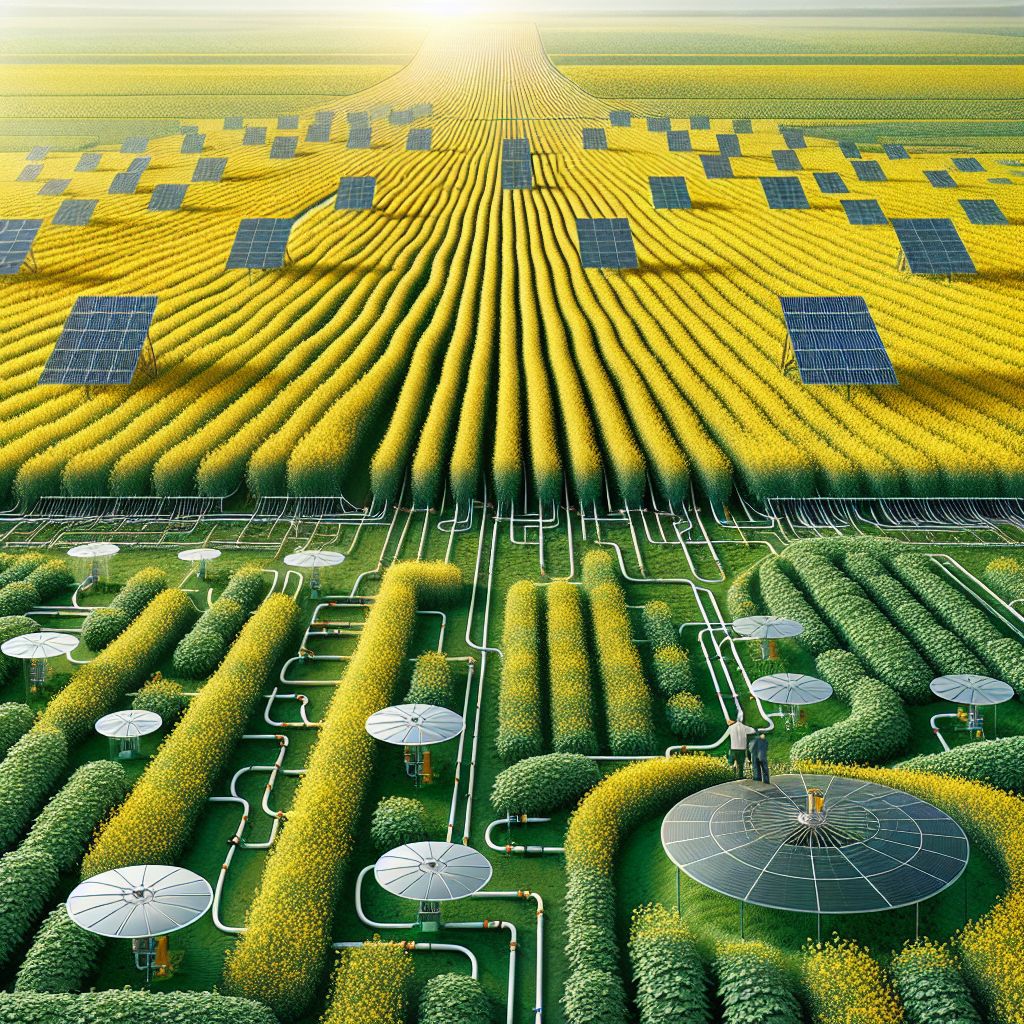
Using solar power for irrigation can significantly reduce energy costs and make your farm more sustainable.
Monocrystalline, polycrystalline, and thin-film solar panels each have unique advantages that may be more suitable for different farming needs.
Drip irrigation systems combined with solar power can be highly effective for canola farming.
The initial investment in solar-powered irrigation systems can be high, but the long-term savings and environmental benefits are substantial.
Regular maintenance and correct installation are critical to the success of solar-powered irrigation systems.
Why You Should Consider Using Solar Panels with an Irrigation System for Growing Canola
Growing canola efficiently requires a dependable and sustainable irrigation system. Using solar panels to power your irrigation can provide a number of benefits. Let’s explore why this combination is particularly beneficial for canola farming.
Why Solar Power is a Game Changer in Farming
Solar power is more than just a trend. It’s a game changer in farming. Using solar power, farmers can reduce their dependence on non-renewable energy sources. This is especially true for canola, a crop that requires regular watering to grow successfully.
Green Impact and Durability
Solar-powered watering systems are eco-friendly. They decrease the carbon emissions of farming activities and encourage green farming methods. By using renewable power, farmers can help keep the Earth clean.
Reducing Energy Costs for Farmers
One of the most persuasive arguments for transitioning to solar power is the potential for substantial energy cost reductions. Conventional irrigation systems can be costly to operate, particularly in remote areas where electricity prices are steep. Once installed, solar panels offer free energy from the sun.
While the initial setup might be expensive, the cost savings over time are significant.
It lessens the reliance on fossil fuels and electricity from the grid.
There’s a potential to sell excess power back to the grid.
Lower Carbon Footprint
In addition to saving money, using solar power also helps lower the carbon footprint of your farming operations. Traditional sources of energy contribute to greenhouse gas emissions, while solar power is a clean, renewable source of energy.

The Best Irrigation Techniques for Canola Farmers
Picking the right irrigation technique is key to using water efficiently and growing healthy canola crops. Let’s dive into the most successful irrigation techniques used by canola farmers.
Watering Systems: Drip Irrigation
Drip irrigation is a watering system that is very efficient. It works by delivering water right to the roots of the plants. It is a system that reduces water waste and makes sure that the plants get just the right amount of water they need.
Drip irrigation systems are made up of a series of tubes and emitters that slowly and evenly distribute water. This technique is especially useful for canola as it avoids waterlogging and encourages deep root growth.
Sprinkler Watering Systems
Sprinkler watering systems simulate rain by spraying water on crops. These systems are adaptable and can cover a lot of ground, making them perfect for large canola fields.
Although, sprinkler systems may not be as efficient as drip systems because of water loss from evaporation and wind drift. But, they are still commonly used because they are simple and effective.
Drip vs Sprinkler Systems: What to Consider
When deciding between a drip or sprinkler irrigation system, keep these things in mind: the efficiency of water usage, the type of crops being grown, and the specific requirements of your garden. For more information on efficient watering techniques, check out our guide on solar-powered irrigation for growing raspberries.
|
Consideration |
Sprinkler Irrigation |
Drip Irrigation |
|---|---|---|
|
Water Efficiency |
Medium |
Superior |
|
Expense |
Less expensive to start |
More expensive to start |
|
Upkeep |
Medium |
Minimal |
|
Appropriateness for Canola |
Decent |
Outstanding |
Now that we looked at irrigation systems, let’s take a look at the solar panels that will power them
Top Solar Panels for Your Canola Farmers Irrigation System
Choosing the right solar panels is crucial for the efficiency and success of your irrigation system. The type of solar panel you select will determine the amount of energy generated and, consequently, the performance of your irrigation setup. Let’s explore the different types of solar panels available and their suitability for Canola farming.
Monocrystalline Solar Panels: Making the Most Out of Small Spaces
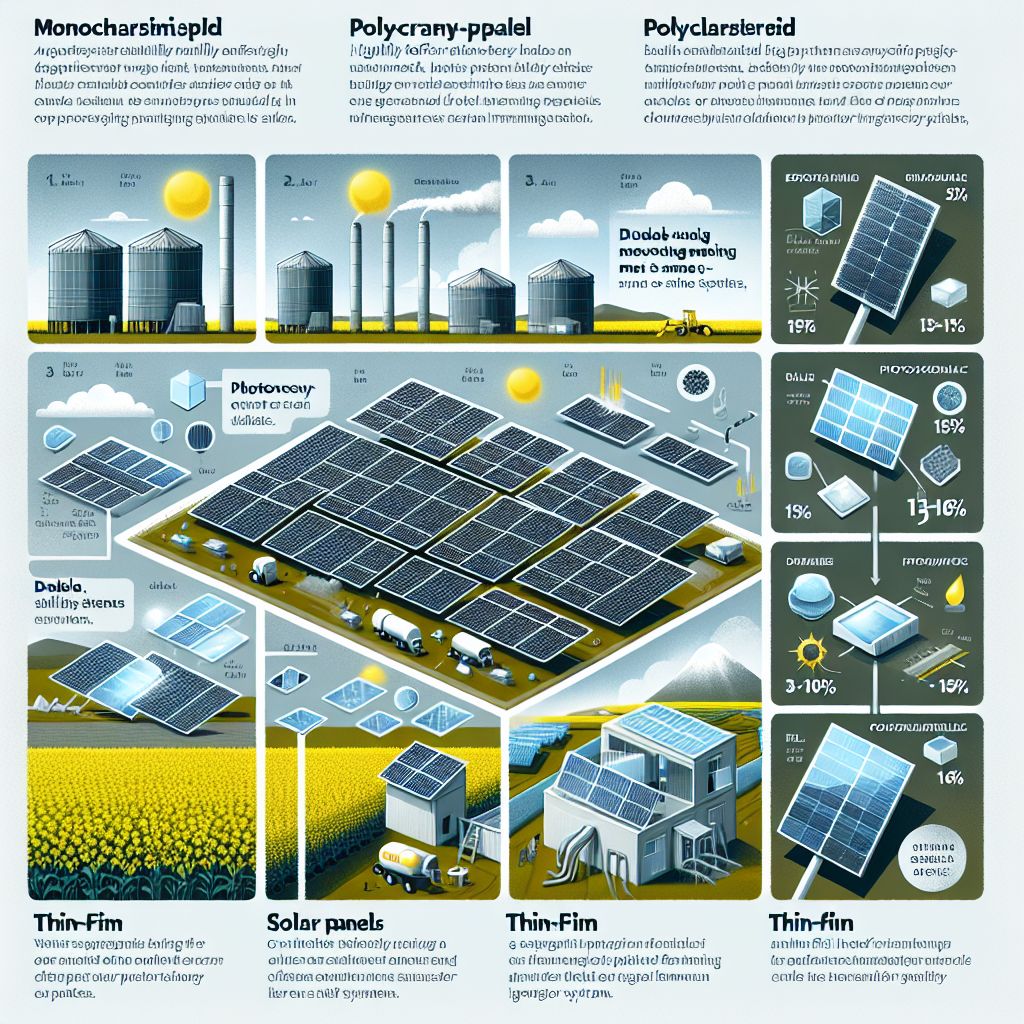
Monocrystalline solar panels are famous for their high efficiency and durability. They are constructed from a single crystal structure, enabling them to transform sunlight into electricity more efficiently than other panel types. This makes them a great option for canola farms with restricted space for solar panel setup.
The efficiency rate of these panels is 15-22%, which means they can generate more power per square foot. This is important for maximizing energy production, particularly in smaller fields or places where space is a premium.
Polycrystalline Solar Panels: A Budget-Friendly Energy Solution
Polycrystalline solar panels are created from several silicon crystals that have been melted together. They usually aren’t as efficient as monocrystalline panels, with an efficiency rate of 13-16%. However, they are also cheaper, making them a budget-friendly choice for many farmers.
Although they need more room to generate the same amount of power as monocrystalline panels, they can still be a good choice for larger canola farms where space isn’t an issue.
Thin-Film Solar Panels: Light and Adaptable
Thin-film solar panels are created by placing one or more layers of photovoltaic material on a substrate. These panels are not as efficient as monocrystalline and polycrystalline panels, having an efficiency rate of about 7-13%. However, they are light, flexible, and can be installed on various surfaces.
Thin-film panels are perfect for unconventional or hard-to-reach places. They can be incorporated into building materials or even utilized in mobile solar applications, offering a flexible energy alternative for canola growers.
Monocrystalline panels: These are the most efficient panels and are perfect if you have limited space.
Polycrystalline panels: These are the most cost-effective panels and are suitable if you have a larger area.
Thin-film panels: These are the most versatile and lightweight panels and are perfect for unconventional installations.
Here is a table showing the pros and cons of using different types of solar panels with an irrigation system on a farm:
|
Panel Type |
Pros |
Cons |
|---|---|---|
|
Monocrystalline Panels |
– High efficiency (15-22%), producing more power per square foot. 1, 2, 4 | |
|
Polycrystalline Panels |
– Lower upfront cost than monocrystalline. 1, 2 |
– Lower efficiency and shorter lifespan than monocrystalline. 2, 4 |
|
Thin-Film Solar Panels |
– Lowest upfront cost. 1, 2 |
– Lowest efficiency (7-13%). 2, 4 |
What to Think About When Choosing Solar Panels
When choosing the best solar panels for your canola farm, keep the following in mind:
Efficiency: More efficient panels can produce more power in a smaller area.
Cost: Weigh the upfront costs against the potential for long-term savings.
Space Availability: Choose panels that will fit in the space you have available for installation.
Durability: Look for panels that will last a long time and have a good warranty.
Installation: Consider how easy the panels are to install and what kind of infrastructure they require.
What is the Best Solar Panel to Use to Grow Canola
The best solar panel for growing canola depends on the specific conditions of your farm. Monocrystalline panels are usually the most efficient and are a good choice for farms with limited space. Polycrystalline panels are a cost-effective choice for larger farms. Thin-film panels are versatile and can be used in unique installations.
In the end, your decision will be based on your budget, the amount of space you have, and your energy requirements. To figure out what’s best for your farm, talk to a solar energy specialist.

What’s the Best Combination of Solar Panels and Irrigation Systems for Your Canola Farm?
Pairing the right solar panels with an efficient irrigation system can make all the difference for your canola farm. Here are some of the best combinations to consider.
Top-notch Pairing: Monocrystalline Solar Panels & Drip Irrigation Systems
Monocrystalline solar panels and drip irrigation systems are a match made in heaven. The panels are highly efficient, guaranteeing a constant flow of power to your irrigation system. Meanwhile, drip irrigation delivers water straight to the roots of your plants, reducing waste and fostering robust growth.
This mix is perfect for canola farms that are short on space and prioritize water conservation. It provides the best blend of energy efficiency and water use, leading to the best possible crop yields.
Examples of Success Stories
A canola farm in Saskatchewan, Canada, is a success story that used a solar-powered drip irrigation system powered by monocrystalline panels. The farm experienced a 30% increase in crop yield and a 50% decrease in water consumption. The system paid for itself in seven years due to energy savings and government incentives.
By selecting the right mix of solar panels and irrigation systems, you can create a sustainable and efficient solution for your canola farm. Regular maintenance and proper installation are essential to ensuring long-term success.
Pairing the proper solar panels with a high-performing irrigation system can optimize your canola farm’s advantages. Let’s look at some of the top combinations.
Optimal Pairing: Monocrystalline Solar Panels and Drip Irrigation Systems
Pairing a drip irrigation system with monocrystalline solar panels is one of the best ways to water your canola plants. Monocrystalline panels are highly efficient, providing your irrigation system with a constant source of power. Drip irrigation systems water plants directly at the roots, reducing water waste and encouraging plant health.
This is the perfect solution for canola farms that are short on space and want to conserve water. It provides the ideal mix of energy efficiency and water usage, leading to the best possible crop yields.
Examples of Successful Implementations
A canola farm in Saskatchewan, Canada, is a great example of the effectiveness of solar-powered drip irrigation systems. They used monocrystalline panels and saw a 30% increase in their crop yield and a 50% reduction in their water usage. The system was able to pay for itself within seven years due to the energy savings and government incentives.
By picking the correct mix of solar panels and irrigation systems, you can create a sustainable and efficient solution for your canola farm. Regular maintenance and proper installation are key to ensuring long-term success.
Conclusion: Should You Incorporate Solar-Power into Your Canola Farm’s Irrigation System?
Having delved into the many facets of solar-powered irrigation systems, it’s evident that adding solar power to your canola farm’s irrigation system can be a shrewd move. The advantages greatly surpass the drawbacks, making it a savvy choice for a lot of farmers.
Advantages at a Glance
Irrigating with solar power provides many benefits. For example, irrigation systems connected to solar panels offer more efficiency for the farmer.
Significant savings on energy costs over time.
Decreased carbon footprint and less environmental impact.
Enhanced water use efficiency, particularly with drip irrigation systems.
Potential for government incentives and grants.
Durability over the long-term and low maintenance requirements.
Possible Challenges and Solutions
Initial Costs are High: Consider financing options or government grants to offset the initial costs.
Requirements for Maintenance: Regular inspections and cleaning can keep the system running efficiently.
Dependence on Weather: Use battery storage or grid-tied systems to ensure a consistent supply of energy.
Final Recommendations
For canola farmers who want to improve sustainability and decrease costs, investing in a solar-powered irrigation system is a smart decision. Begin by assessing the energy needs of your farm and the available space for solar panels. Choose the right combination of solar panels and irrigation methods to maximize efficiency and crop yield. Consult with experts in solar energy to design and install the system, and take advantage of any incentives available to decrease costs.
Frequently Asked Questions
What is the price of setting up a solar-powered irrigation system?
Can solar-powered irrigation function on overcast days?
How can I take care of my solar panels and irrigation system?
What is the expected lifespan of a solar irrigation system?
Does the government offer any incentives for using solar power in farming?
What is the price of setting up a solar-powered irrigation system?
The price of setting up a solar-powered irrigation system can greatly differ based on the size and intricacy of the system. Generally, it falls between $10,000 to $30,000. This includes the price of solar panels, inverters, batteries (if required), and installation labor.
Does solar-powered irrigation function on overcast days?
Indeed, solar-powered irrigation systems do function on overcast days, though their effectiveness might be somewhat diminished. To maintain a steady energy supply, you could employ battery storage systems or grid-connected arrangements that enable you to pull power from the grid when solar output is insufficient.
Take for instance, an Oregon farm that utilizes a grid-tied solar irrigation system. When the weather is persistently cloudy, it switches to grid power, thus providing their canola crops with continuous irrigation.
What are the steps to keep my solar panels and irrigation system in good condition?
Keeping your solar panels and irrigation system in good condition requires regular check-ups and cleaning. Make sure to examine the panels for any dirt or debris and clean them using water and a soft brush if needed. Look for any leaks or blockages in the irrigation system and carry out any regular maintenance as suggested by the manufacturer. For more detailed techniques, you can refer to solar-powered irrigation systems.
How long does a solar irrigation system last?
Usually, solar panels last between 25 and 30 years. However, other parts like inverters and batteries might need to be replaced every 10 to 15 years. You can make the whole system last longer with regular maintenance.
Do governments provide incentives for the use of solar energy in agriculture?
Indeed, a variety of governments provide incentives for the adoption of renewable energy solutions in agriculture. These incentives may come in the form of grants, tax credits, or rebates. To learn about the programs available in your region, contact your local and national agricultural and energy departments.
In summary, switching to a solar-powered watering system for canola farming is a progressive move with many advantages. By thoughtfully choosing the best solar panels and irrigation techniques, you can establish a sustainable and efficient system that bolsters your farm’s output and environmental objectives.







Leave a Reply