
Key Takeaways
Significant water and cost savings can be achieved by cashew farmers through the use of solar-powered irrigation systems.
Monocrystalline solar panels are the most efficient, making them the best choice for limited spaces.
For cashew cultivation, drip irrigation systems are the most effective, providing precise water delivery.
While the initial investment in solar-powered systems is high, the long-term savings and environmental benefits are considerable.
Government incentives and grants are available to help with the adoption of solar-powered irrigation systems.
The Benefits of Using Solar Panels with an Irrigation System for Cashew Cultivation
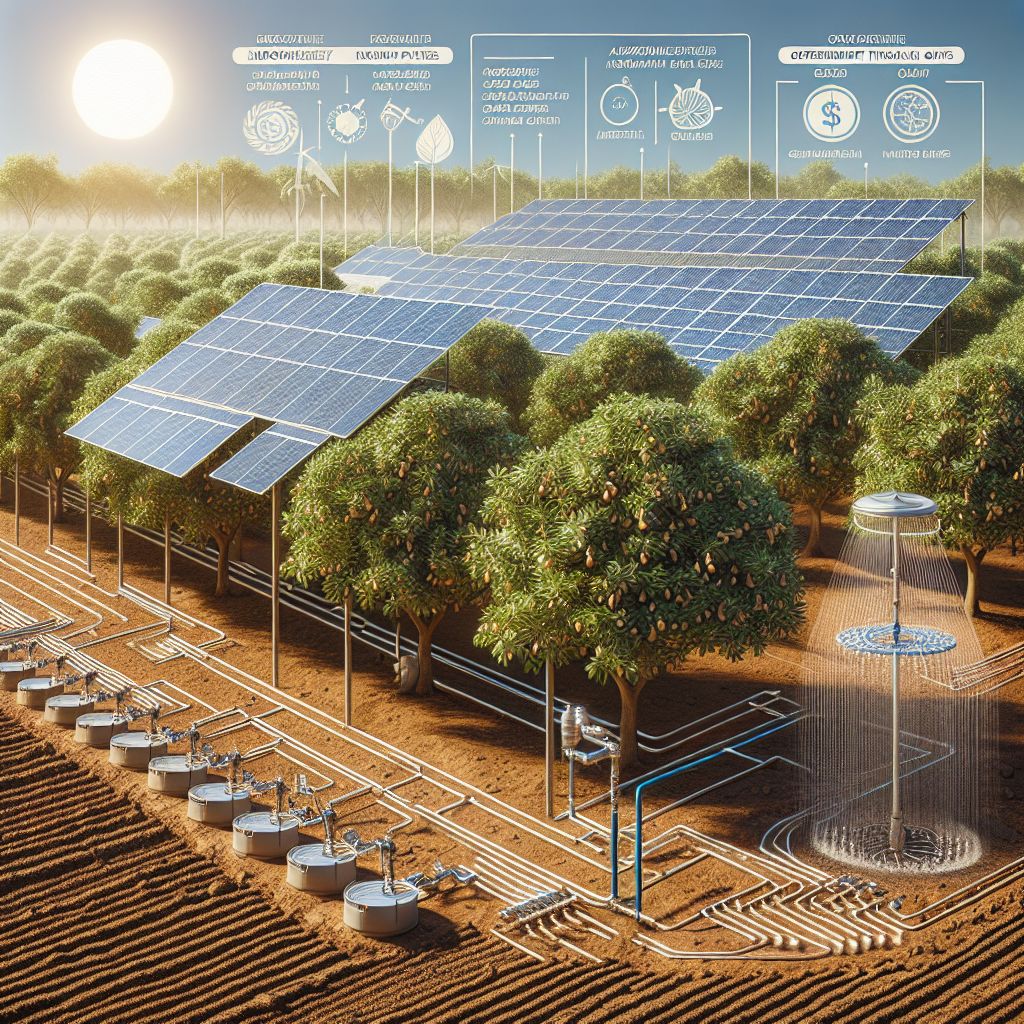
For cashew farmers, solar-powered irrigation systems are a game-changer. They provide a sustainable, cost-effective solution to water management, which is key to the health and productivity of cashew trees. Let’s explore why this combination is so beneficial.
The Advantages of Solar Energy in Farming
There are many advantages to using solar energy in farming. For one, it decreases reliance on fossil fuels, which are not only expensive but also damaging to the environment. Solar panels capture the energy of the sun and turn it into electricity to power irrigation systems. This leads to lower energy costs and less environmental impact.
Moreover, solar power systems are incredibly dependable. They can function in isolated areas where the electrical grid is hard to reach. This makes them a great option for cashew farms situated in the countryside. On top of that, solar power systems need little upkeep, guaranteeing steady operation with minimal effort.
Going Green and Staying Sustainable
Going solar is a big step towards environmental sustainability, especially when it comes to irrigation systems. Traditional irrigation often relies on electricity from non-renewable sources, which leads to greenhouse gas emissions. But, by switching to solar power, cashew farmers can reduce their carbon footprint and promote cleaner energy use.
In addition, solar-powered systems aid in water conservation. Efficient watering techniques, such as drip systems, supply water straight to the plant roots, minimizing water waste. This is especially critical in areas where there is a shortage of water.
Improved Energy Efficiency and Cost Reduction
One of the most persuasive arguments for switching to solar-powered irrigation is the opportunity for cost reduction. Although the upfront cost of solar panels and their installation can be steep, the long-term advantages more than make up for the expense. Solar panels can last for 25 years or longer, supplying energy at no cost once they’re set up.
Moreover, a lot of government bodies provide incentives, grants, and tax cuts for farmers who put their money in renewable energy solutions. These financial benefits can notably decrease the initial costs, making solar-powered irrigation systems more available to small and medium-sized farms.

Top Irrigation Techniques Used by Cashew Growers
Choosing the right watering technique is key to the growth and productivity of cashew trees. Here are some of the most efficient watering techniques used by cashew growers.
Drip Irrigation Systems: Precision Watering
Drip irrigation is a top-notch watering method. It works by carrying water straight to the base of the plants via a system of tubes and emitters. This technique reduces water waste by making sure that water gets to the roots where it’s most required. For more information on water-saving techniques, you can read about cashew tree cultivation.
Drip irrigation systems are especially good for cashew trees, which need a consistent level of moisture to grow. Drip systems provide a constant source of water, keeping the soil moisture at its best, reducing the chances of water stress and making the tree healthier.
Sprinkler Irrigation
Sprinkler irrigation is a common watering method used by cashew growers. This technique mimics natural rainfall by spraying water over the plants. Sprinkler systems are flexible and can cover a wide area, making them ideal for large cashew farms.
On the other hand, sprinkler systems do not use water as efficiently as drip systems. They can waste water through evaporation and runoff. As a result, it’s important to use them carefully and take into account factors like wind and temperature to reduce water loss. For more information on efficient watering techniques, check out our guide on solar-powered irrigation for growing limes.
Adapting Furrow/ Flood Irrigation Methods: Traditional Techniques with Modern Touches
Furrow or flood irrigation is an old-school technique that involves directing water through furrows or ditches to water the plants. While this technique is straightforward and economical, it is less efficient in terms of water consumption. For more efficient methods, consider exploring solar-powered irrigation systems.
Water distribution may be inconsistent, which can lead to over-watering or under-watering in some areas.
Too much water can cause soil erosion and nutrient loss.
Modern techniques, such as lining furrows and controlling water release, can improve water use efficiency.
Comparing Irrigation Systems
Let’s compare the different irrigation systems to help you decide which one is best for your cashew farm:
|
Technique |
Efficiency |
Water Consumption |
Price |
Appropriateness for Cashews |
|---|---|---|---|---|
|
Drip Irrigation |
High |
Low |
Medium |
Excellent |
|
Sprinkler Irrigation |
Medium |
Medium |
High |
Good |
|
Furrow/Flood Irrigation |
Low |
High |
Low |
Adequate |
What is the Most Suitable Irrigation System for Cashew Cultivation?
For those cultivating cashews, drip irrigation systems are the most suitable. They deliver water precisely where it’s needed, ensuring the trees get just the right amount of moisture without any waste. This not only saves water, but also helps cashew trees grow healthier and more productively.
What’s most important is that drip irrigation systems can be easily combined with solar-powered pumps, making them a green and cost-effective solution for cashew farmers.
Now that we looked at irrigation systems, let’s look at the solar panels that power them.
Top Solar Panels for Your Cashew Farmers Irrigation System
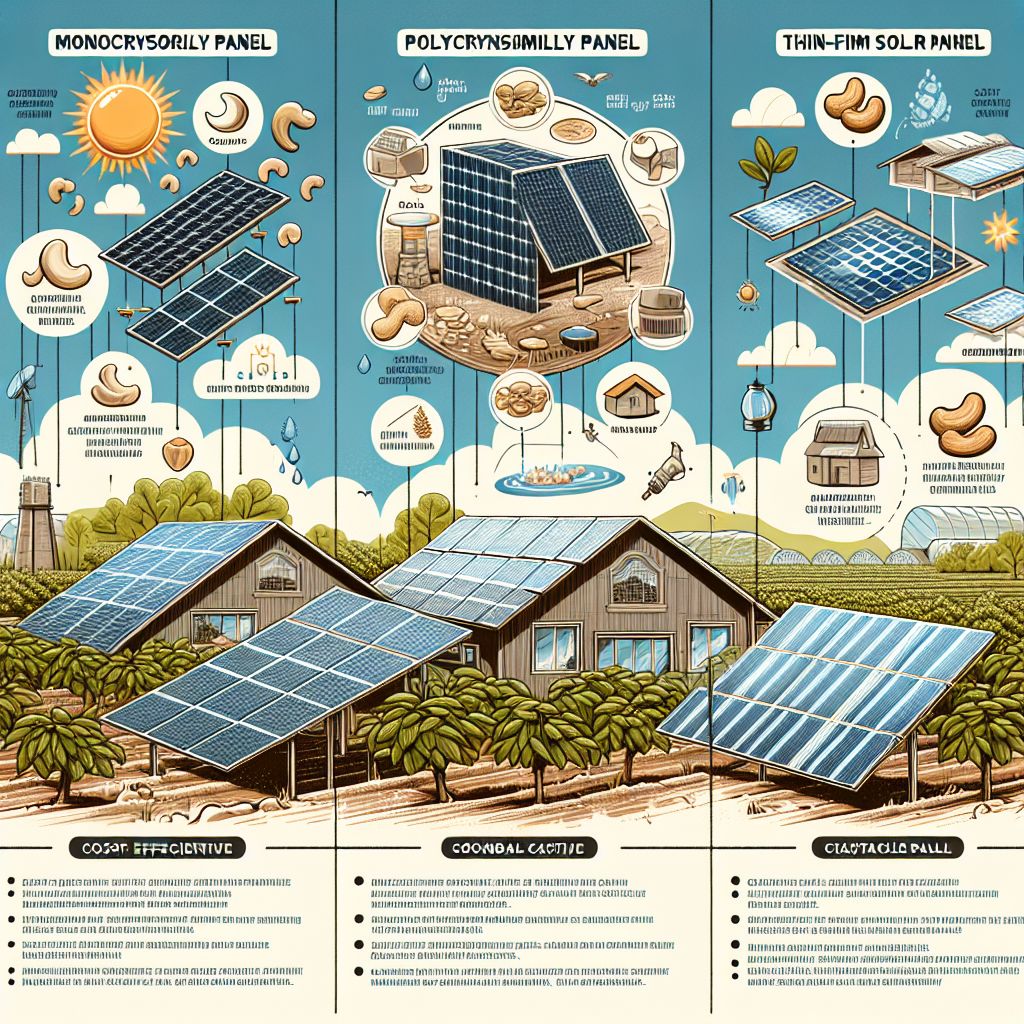
Choosing the right solar panels is crucial for the efficiency and success of your irrigation system. The type of solar panel you select will determine the amount of energy generated and, consequently, the performance of your irrigation setup. Let’s explore the different types of solar panels available and their suitability for cashew farming.
Monocrystalline Solar Panels: Maximize Energy in Small Spaces
Monocrystalline solar panels are recognized for their superior efficiency and longevity. They are constructed from a single crystal structure, which enables them to convert sunlight into electricity more efficiently than other panel types. This makes them perfect for cashew farms with limited space, as they generate more power per square foot. Learn more about solar-powered irrigation systems to enhance your farm’s efficiency.
Also, monocrystalline panels are known to function well even in low-light conditions, which means they can produce energy consistently even when the weather is cloudy. They are durable and highly efficient, making them a good investment for cashew farmers who want to improve their irrigation systems.
Polycrystalline Solar Panels: A Cost-Effective Energy Solution
Polycrystalline solar panels are a cheaper alternative to monocrystalline panels. They are constructed from multiple silicon crystals, which makes them less costly to produce. Even though they are slightly less efficient, they still offer a dependable source of power for irrigation systems.
For farmers with ample land who want to save on upfront expenses, these panels are a solid option. Polycrystalline panels are a happy medium between cost and productivity, which is why they are a favorite among cashew farmers.
Thin-Film Solar Panels: A Versatile, Flexible Option
Thin-film solar panels are celebrated for their lightweight and flexible design. They are created by placing thin layers of photovoltaic material onto a substrate, which allows them to be used in a wide range of applications. While they are not as efficient as crystalline panels, their adaptability makes them a feasible choice for certain farming setups.
Cashew farmers can use thin-film panels in greenhouses or other areas where traditional panels might not be suitable. Although these panels are less efficient and require more space to generate the same amount of energy, their adaptability can be beneficial in certain situations.
Here is a table showing the pros and cons of using different types of solar panels with an irrigation system on a farm:
|
Panel Type |
Pros |
Cons |
|---|---|---|
|
Monocrystalline Panels |
– High efficiency (15-22%), producing more power per square foot. 1, 2, 4 | |
|
Polycrystalline Panels |
– Lower upfront cost than monocrystalline. 1, 2 |
– Lower efficiency and shorter lifespan than monocrystalline. 2, 4 |
|
Thin-Film Solar Panels |
– Lowest upfront cost. 1, 2 |
– Lowest efficiency (7-13%). 2, 4 |
What to Keep in Mind When Selecting Solar Panels
There are several things you should keep in mind when picking out solar panels for your irrigation system:
Efficiency: More efficient panels produce more power per square foot, which is important for farms with limited space.
Cost: You should consider the initial investment and long-term savings. Government incentives can help offset the costs.
Durability: You should look for panels with a long lifespan and good performance in various weather conditions.
Space: You should ensure you have enough space to install the panels, especially if opting for less efficient types like thin-film.
What is the Best Solar Panels for Use with Growing Cashews
For growing cashews, monocrystalline solar panels are the best option because of their high efficiency and durability. They ensure consistent energy production, which is essential for maintaining an effective irrigation system. While they may have a higher upfront cost, their long-term benefits and reliable performance make them a smart investment for cashew farmers. For more information on setting up an efficient system, you can refer to our solar panels for farms guide.

Comparing the Cost and Efficiency of Solar Irrigation Systems and Traditional Irrigation Systems for Cashew Cultivation
Let’s take a look at the cost and operational advantages of solar-powered irrigation systems by comparing them to traditional irrigation systems.
Upfront and Setup Costs for Both Methods
There might be a higher upfront cost for solar-powered irrigation systems because of the price of solar panels and setup. However, these costs can often be balanced out by government incentives and grants that are designed to encourage the use of renewable energy in farming.
|
Method |
Initial Price |
Installation Fee |
Government Aid |
|---|---|---|---|
|
Solar-Powered Watering |
$10,000 – $30,000 |
$5,000 – $10,000 |
Available |
|
Regular Watering |
$5,000 – $15,000 |
$3,000 – $7,000 |
Not Available |
Long-term Running Costs Comparison
One of the biggest benefits of solar-powered watering systems is their low running costs. Once set up, solar panels provide free power, cutting or even eliminating electricity costs. Regular systems, however, have ongoing costs for electricity or fuel.
How Solar Systems Compare to Traditional Systems in Efficiency and Output
Modern irrigation techniques, such as drip systems, are particularly effective when used with solar-powered systems. They deliver water exactly where it is needed, reducing waste. Traditional systems may not be as efficient because of issues like evaporation and runoff, especially when using sprinkler or furrow irrigation methods.
Comparing Solar and Traditional Systems: A Look at Return on Investment (ROI)
Though the upfront costs of solar-powered systems are higher, they often yield a better return on investment (ROI) in the long run. Savings on energy costs and possible government incentives can lead to a faster payback period. Plus, the environmental benefits and better sustainability practices can boost the farm’s image and marketability. For more information on efficient setups, check out this guide on solar panels for farms.
Here is a table comparing the cost and efficiency of an irrigation system with and without solar panels:
|
Aspect |
Without Solar Panels |
With Solar Panels |
|---|---|---|
|
Initial Cost | ||
|
Operating Cost |
Very low or zero fuel/electricity costs after installation. 1, 4 | |
|
Efficiency |
Depends on energy source efficiency. 4 |
Depends on solar radiation, temperature, system design. 1, 4 |
|
Environmental Impact |
Higher carbon footprint. 1 |
Lower carbon footprint, renewable energy. 1 |
|
Location Flexibility |
Limited to grid-connected or fuel access areas. 3 |
Can be used in remote off-grid areas. 3 |
|
Maintenance | ||
|
Lifespan |
Shorter for fuel-based systems. 1 | |
|
Long-term Costs |
Higher due to recurring fuel/electricity bills. 1 |
Lower total 20-year costs by 50-60% compared to traditional systems. 1 |
|
Government Incentives |
Generally none |
Many governments provide tax credits, subsidies for solar irrigation. 1 |
What Mix of Solar Panels and Irrigation Systems is the Most Efficient for Your Cashew Orchard
Discovering the best mix of solar panels and irrigation systems is crucial for maximizing efficiency and productivity on your cashew orchard.
The Perfect Pairing: Monocrystalline Solar Panels Powering Drip Irrigation
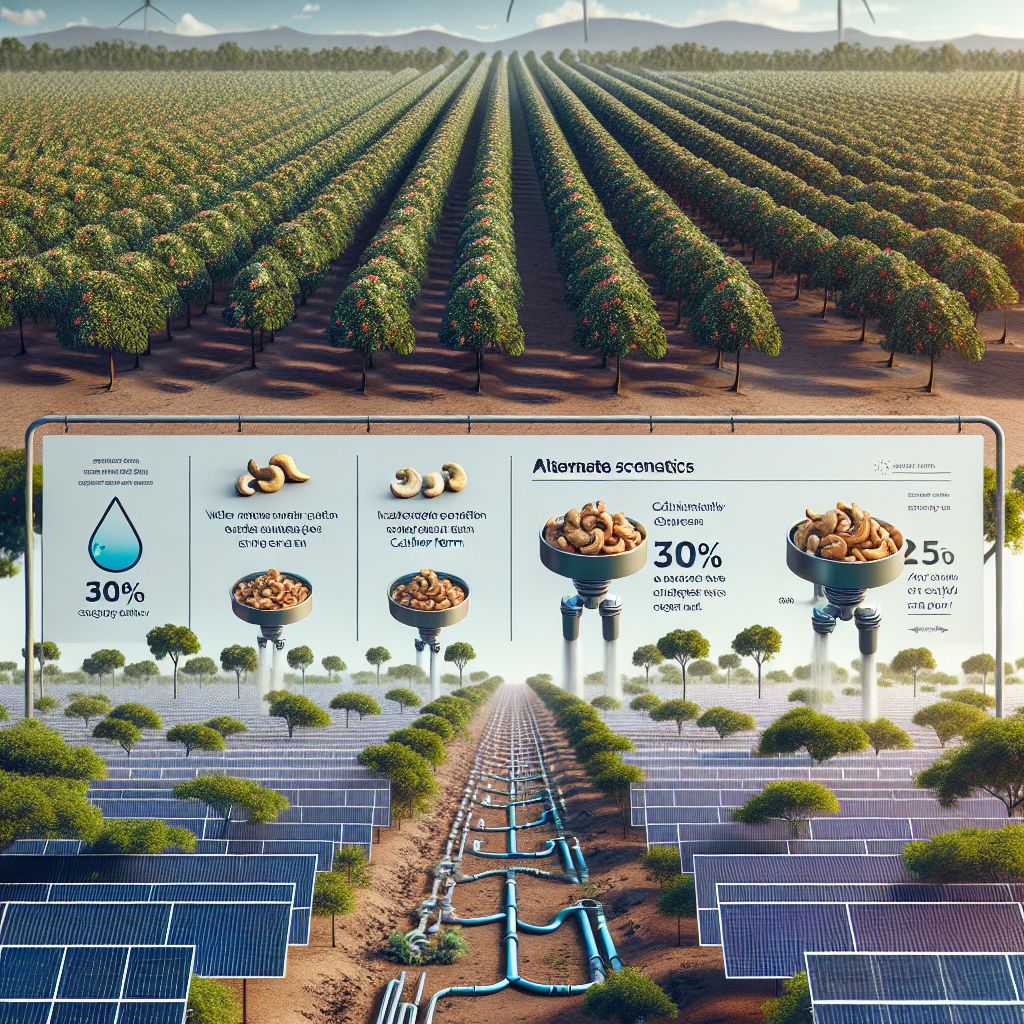
For cashew orchards, the best setup is a drip irrigation system powered by monocrystalline solar panels. This combination ensures the most efficient use of water and energy, making the most of the resources available. Drip systems provide water directly to the roots, reducing waste, and monocrystalline panels provide a steady supply of energy.
Alternate Pairings
Alternate pairings that are feasible include polycrystalline panels with sprinkler systems or thin-film panels with drip systems. These configurations can be customized according to the specific needs and budget limitations of the farm. Each pairing has its strengths and weaknesses, but the aim is to strike a balance between cost, efficiency, and sustainability.
Successful Implementations in Practice
“A cashew farm in Kerala, India, provides a case study of successful integration of a solar-powered drip irrigation system. The farm reported a 40% decrease in water usage and a 30% increase in yield in the first year. The initial investment was recouped within three years, thanks to government incentives and energy savings.”
“A cashew farm in Ghana provides another example, using polycrystalline panels with a sprinkler system. Despite the lower efficiency of polycrystalline panels, the farm managed to cut energy costs by 25% and increase water distribution efficiency by 15%.”
These practical examples show the potential benefits and success of integrating solar-powered irrigation systems into cashew farming.
Conclusion: Should You Use Solar-Powered Irrigation in Your Cashew Orchard?
Adding solar power to your irrigation system is more than just a smart decision; it’s a game-changer. Solar-powered irrigation systems come with a host of benefits, including cost savings, energy efficiency, and environmental sustainability. They decrease dependence on non-renewable energy sources and encourage water conservation, which is vital in cashew farming.
Even though the upfront cost is more, the long-term monetary and ecological advantages make solar-powered irrigation a good investment. By combining modern irrigation methods with renewable energy, you can ensure your cashew orchard stays fruitful and sustainable for many years.
Furthermore, the upfront costs can be significantly reduced with government incentives and grants, making this technology more available to farmers. Not only are you increasing the efficiency of your farm by adopting solar-powered irrigation, but you are also contributing to a more sustainable future.
Lower energy bills and less reliance on fossil fuels.
Better water conservation and efficient watering.
Long-lasting sustainability and benefits for the environment.
Possible government incentives to help with upfront costs.
Increased farm productivity and crop output.
Considering the Advantages and Disadvantages
When thinking about switching to solar-powered irrigation, it’s important to consider the advantages and disadvantages. The benefits include lower running costs, environmental advantages, and better efficiency. However, the upfront cost and installation can be high. It’s important to consider your farm’s specific needs and budget before deciding.
Conclusion
For cashew growers, the most effective method is to use drip irrigation systems in conjunction with monocrystalline solar panels. This combination offers the greatest efficiency and dependability, ensuring that your trees are adequately watered while keeping energy expenses to a minimum. Look into government incentives and grants to help offset the initial cost.
Begin by evaluating the energy and water requirements of your farm, then seek advice from professionals to create a tailored solar irrigation system. With careful planning and the right investment, you can turn your cashew farm into an example of sustainable farming.
The Future of Solar-Powered Irrigation
There’s a bright future ahead for solar-powered irrigation. As technology continues to improve and costs continue to fall, it’s likely that more and more farmers will start using these systems. Improvements in the efficiency of solar panels and irrigation techniques will only make solar-powered irrigation even more beneficial.
Moreover, the rising consciousness and government backing for renewable energy and sustainable agriculture methods will propel the acceptance of solar-powered irrigation systems. By staying ahead of the game, cashew farmers can guarantee that their operations stay sustainable and profitable for the long haul.
Frequently Asked Questions (FAQ)
Here are some questions you might have about solar-powered irrigation systems:
What is the mechanism of a solar-powered irrigation system?
A solar-powered irrigation system operates by utilizing solar panels to transform sunlight into electricity. This electricity is then used to power a water pump, which pulls water from a source, such as a well, river, or reservoir. The water is then distributed to the crops via an irrigation system, such as drip or sprinkler systems. The solar panels provide a dependable and renewable energy source for consistent irrigation.
What type of maintenance do solar panels need?
Solar panels need very little maintenance. They do need to be cleaned regularly to remove dust and other debris, which can reduce their efficiency. Additionally, the panels and connections should be checked from time to time for any signs of damage or wear. Most solar panels come with a warranty that lasts 20-25 years, so you can count on them to be reliable over the long term.
Besides cleaning, make sure to inspect the inverter and other system parts to verify they are working properly. Regular professional maintenance can help spot and fix any issues before they turn into big problems, ensuring the efficiency of your solar-powered irrigation system.
In general, the minimal upkeep needed makes solar panels a practical and economical choice for running irrigation systems.
Do solar panels work in cloudy or rainy weather?
Yes, solar panels can produce electricity in cloudy or rainy weather, but they may not be as efficient. Monocrystalline panels are especially good at working in low light conditions, so they can provide steady power even when it’s overcast. Plus, many of today’s solar power systems come with battery storage, which can save any extra power produced on sunny days for use when it’s cloudy.
You need to make sure you have the right size solar power system to account for changes in the weather. Talking to a solar power expert can help you make a system that will give your farm the energy it needs all year.
How long does a solar-powered irrigation system last?
Solar-powered irrigation systems can last a long time, with most solar panels having a lifespan of at least 25 years. Other parts of the system, like the inverter and water pump, may need to be replaced or serviced from time to time. With regular maintenance and proper care, the system can last even longer, providing reliable service for many years. For more information on efficient watering techniques, check out this article on solar-powered irrigation for growing green beans.
Choosing to spend a bit more on top-notch parts and having a professional install your solar-powered irrigation system can really pay off in terms of how long it lasts and how well it works.
Do any governments offer incentives for installing solar-powered irrigation systems?
Indeed, many governments provide incentives, grants, and tax breaks to promote the use of renewable energy in agriculture. These incentives can greatly lower the upfront investment costs for solar-powered irrigation systems. It’s crucial to investigate and utilize any available programs in your area to make the switch to solar power more cost-effective.
Speaking with your local agricultural extension office or renewable energy organization can provide helpful information about available incentives and how to apply for them. By using these resources, you can make a wise investment in solar-powered irrigation for your cashew orchard.







Leave a Reply