
Key Takeaways
Farmers can cut energy costs by up to 90% with solar-powered irrigation systems.
These systems deliver exact amounts of water to crops, helping to conserve water.
Solar panels decrease a farm’s carbon footprint, making the farm more sustainable.
Government incentives and long-term savings can offset the initial investment in solar irrigation.
There are different types of solar panels, such as monocrystalline and polycrystalline, each with its own benefits and efficiencies.
As the world shifts towards more sustainable practices, farmers are discovering new ways to incorporate renewable energy into their operations. One such way is through the use of solar panels for furrow irrigation. This system not only aids in water conservation but also significantly lowers energy costs.
Furrow Irrigation and Solar Panels: A Perfect Match
For centuries, farmers have relied on furrow irrigation, a method where water is channeled through small trenches between rows of crops. However, finding a sustainable way to power these systems has always been a challenge. That’s where solar panels come in. They capture the sun’s energy, allowing farmers to pump water in an efficient and sustainable way.
What are the Benefits of Using Solar Panels with a Furrow Irrigation System?
Water Conservation
Perhaps the most significant benefit of using solar power for furrow irrigation is that it conserves water. Traditional irrigation methods can be quite wasteful when it comes to water. However, solar-powered systems deliver water exactly where it’s needed, which cuts down on waste and ensures that crops get just the right amount of water.
A Worthwhile Long-term Investment
It may seem like a big upfront cost to install solar panels for irrigation, but it’s an investment that pays off over time. By reducing the need for fossil fuels and electricity, farmers can save a lot on energy costs over time. Plus, solar panels last 25-30 years, so the benefits are long-term.
Maintaining Soil Health
By slowly seeping water into the soil, furrow irrigation helps preserve the soil’s structure and health. When you add solar panels to the mix, the method becomes even more efficient. This combo promotes better soil health and helps to prevent erosion.
Lower Greenhouse Gas Emissions
By moving to solar-powered irrigation systems, farms can drastically lower their greenhouse gas emissions. This is because they’re using renewable energy, which is much better for the planet.
Increased Efficiency
Solar-powered systems are remarkably productive. They can function even when it’s cloudy, guaranteeing a steady water supply. This reliability results in improved crop yields and more robust plants.
Boost in Productivity
Thanks to a dependable and effective irrigation system, farmers can concentrate more on other farming tasks. This results in a boost in productivity and improved resource management.
Climate Change Resilience
With the ongoing changes in weather patterns due to climate change, it’s critical to have an irrigation system that can withstand these changes. Solar-powered furrow irrigation systems are adaptable and can ensure your crops receive the water they need even in periods of drought.
Environmentally Friendly Land Use
Pairing solar panels with furrow irrigation allows farmers to get the most out of their land. This eco-friendly method guarantees that farming techniques do not exhaust natural resources, contributing to the longevity of agricultural prosperity.
Here’s a table comparing the benefits of using solar panels with furrow irrigation versus not using solar panels:
|
Aspect |
Solar Panels with Furrow Irrigation |
No Solar Panels |
|---|---|---|
|
Energy Source |
Clean, renewable solar energy. 1 |
Fossil fuels or grid electricity. 4 |
|
Operating Costs |
Low, mainly maintenance costs. 1 |
High, ongoing fuel or electricity costs. 4 |
|
Environmental Impact |
Reduced carbon footprint. 1 |
Higher carbon emissions. 4 |
|
Water Efficiency |
Improved, with potential 15% reduction in irrigation water use. 2 |
Standard water usage. 4 |
|
Crop Productivity |
Potential increase of 100-300% for some crops. 2 |
Standard productivity. 4 |
|
Accessibility |
Viable in remote areas without grid access. 3 |
Limited by grid or fuel availability. 4 |
|
Crop Protection |
Panels provide shade and protection from intense rain or hail. 2 |
No additional protection. 4 |
|
Energy Independence |
Promotes energy self-sufficiency for farmers. 1 |
Reliant on external energy sources. 4 |
|
Long-term Sustainability |
High, with minimal ongoing costs. 1 |
Lower, subject to energy price fluctuations. 4 |
|
Initial Investment |
Higher upfront costs. 3 |
Lower initial costs. 4 |
How Furrow Irrigation Solar Panels Work
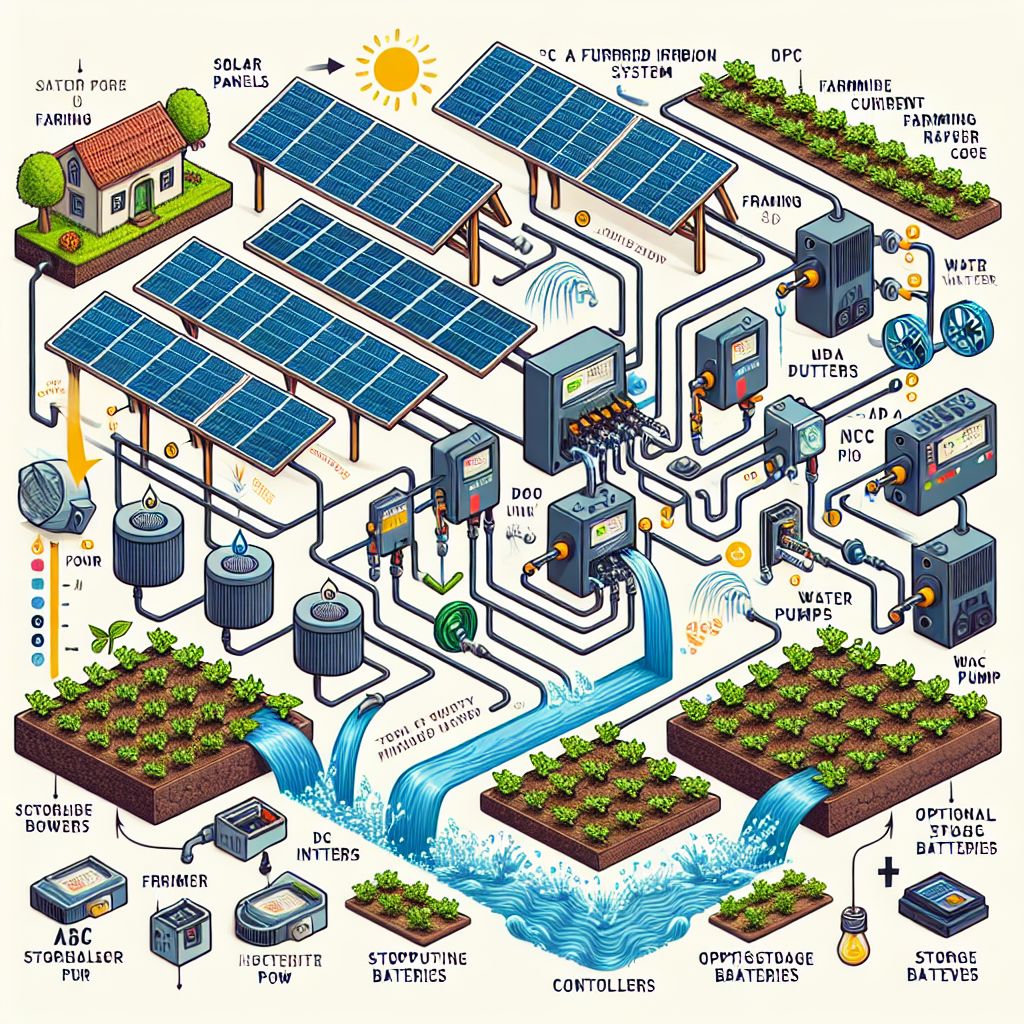
Knowing the functionality of these systems is a crucial part of their successful implementation. Essentially, solar panels change sunlight into electricity, which powers the water pumps. These pumps then carry water through the furrows, guaranteeing the crops receive the necessary hydration.
Solar Panels: Capture sunlight and convert it into electrical energy.
Inverters: Convert the direct current (DC) from the solar panels into alternating current (AC) for the pumps.
Pumps: Move water from the source to the furrows.
Controllers: Regulate the flow and distribution of water.
Each component plays a crucial role in ensuring the system operates smoothly and efficiently. For more information, check out this guide on solar panels for farms.
Selecting the Right Solar Panels for Use with a Furrow Irrigation System
It’s essential to pick the right kind of solar panels to ensure the irrigation system works as efficiently as possible. There are several different options to choose from, each with its own unique advantages.
Monocrystalline Solar Panels: Known for their high efficiency and space-saving design, these panels are ideal for farms with limited space.
Polycrystalline Solar Panels: These are more cost-effective and offer a decent efficiency, making them a popular choice among farmers.
Thin-Film Solar Panels: These panels are flexible and versatile, suitable for various applications and terrains.
Understanding the pros and cons of each type can help farmers make an informed decision that best suits their needs.
Here’s a table describing the three types of solar panels and their advantages and disadvantages for powering a furrow irrigation system on a farm:
|
Solar Panel Type |
Advantages |
Disadvantages |
|---|---|---|
|
Monocrystalline | – Highest efficiency (17-22%) 2, 3 |
– Most expensive option 2, 3 |
|
Polycrystalline |
– More affordable than monocrystalline 1, 3 |
– Lower efficiency compared to monocrystalline 3 |
|
Thin-Film |
– Cheapest option 1, 4 |
– Lowest efficiency (10-13%) 1, 4 – Shortest lifespan 4 |
What’s in the System?
There are several important parts that make up a solar-powered furrow irrigation system. Each one is crucial to making sure the system runs smoothly and does its job well.
Solar Panels: These capture sunlight and convert it into electrical energy. The type of solar panel you choose will affect the system’s efficiency and cost.
Inverters: These convert the direct current (DC) produced by the solar panels into alternating current (AC), which is used to power the water pumps.
Pumps: These are responsible for moving water from the source to the irrigation furrows. The size and type of pump will depend on the size of your farm and water needs.
Controllers: These regulate the flow and distribution of water, ensuring that the right amount is delivered to the crops.
Storage Batteries: Optional but useful for storing excess energy generated during the day, which can be used during cloudy periods or at night.
Setup and Installation
Setting up a solar-powered furrow irrigation system involves several steps. Proper planning and execution are crucial for the system’s success.
Picking the Spot: Find a spot for your solar panels that gets the most sunlight all day. This will make sure you’re getting the most energy.
Power Check: Do a power check to find out how much power your irrigation system needs. This will help you pick the right size and number of solar panels.
Putting in the Panels: Put in the solar panels at the spot you picked. Make sure they’re tilted the right way to get the most sunlight.
Putting it All Together: Hook up the solar panels to the inverters, pumps, and controllers. Make sure all the connections are good and working right.
Checking it Out: Check out the system to make sure it’s working smoothly. Look for any leaks, electrical problems, or things that aren’t working right.
Operation and Maintenance
Once the system is working, you need to take care of it regularly to keep it working right. Here are some tips for taking care of your solar-powered furrow irrigation system:
Regular Cleaning: Keep your solar panels clean by regularly removing dust, dirt, and other debris. This will help them capture the most sunlight possible.
Inspect Connections: Keep an eye on all electrical connections and check for signs of wear or damage. If you find any faulty components, replace them right away.
Check Pumps: Make sure your water pumps are working properly and efficiently. If there are any issues, address them right away to prevent any interruptions in irrigation.
Monitor Performance: Keep track of how your system is performing. Use monitoring tools to keep track of how much energy is being generated and how much water is being used.
“Regular maintenance not only helps your system last longer, but it also helps it run at peak efficiency, ensuring a steady supply of water for your crops.”
How to Integrate Solar Panels with Existing Irrigation Systems
If you’re thinking about integrating solar panels with your existing furrow irrigation system, it can be a smooth process with the right approach. Here are some steps to help ensure a smooth transition:
Check if it’s compatible: You’ll want to make sure that your current irrigation components, like pumps, controllers, and pipes, will work with the new solar-powered system.
Start small: You might find it helpful to start with a smaller section of your farm and gradually integrate the solar-powered system as you get more comfortable with the technology.
Train your staff: Make sure your staff knows how to operate and maintain the new system. This will help everyone stay on the same page and be able to handle any problems that come up.
Get professional help if needed: If you’re having trouble with the installation and integration process, don’t hesitate to get professional help. Experts can give you valuable insights and make sure everything is set up correctly.

Cost Considerations
It’s important to understand the costs involved in setting up a solar-powered furrow irrigation system so you can make an informed decision. The initial investment can be quite large, but the long-term savings and benefits often make up for the costs.
Upfront Costs
Setting up a solar-powered irrigation system for the first time can cost different amounts depending on a variety of factors. These factors can include the size of your farm, the type of solar panels and pumps you decide to use, and how complex the installation process is. On average, farmers should be prepared to spend anywhere from $10,000 to $30,000 to get their system fully set up and running.
Money Saved
One of the major benefits of using solar-powered irrigation systems is the significant amount of money that can be saved over time. By utilizing the power of the sun, farmers can cut down or even get rid of their electricity bills. This could lead to annual savings of thousands of dollars.
Government Support
There are a number of incentives provided by governments to promote the use of renewable energy systems. These may come in the form of grants, tax credits, or low-interest loans. It is advisable for farmers to look into these opportunities to help cover the initial costs of investment.
“Farmers in the United States can take advantage of a 26% tax credit for solar installations offered by the federal government, which significantly reduces the initial cost.”
Long-term Financial Benefits
In addition to the immediate cost savings, solar-powered irrigation systems provide financial benefits in the long run. Solar panels usually last between 25 and 30 years, which means they can provide a stable source of energy for many years. Moreover, by reducing dependence on fossil fuels, farmers can protect themselves from changes in energy prices.
Financing Options
For any farmers who are worried about the upfront cost, there are several payment methods available. These can include regular bank loans, farming loans, and specific payment programs for renewable energy projects. Looking into these methods can make the switch to solar power more affordable.

Effectiveness and Influence
Solar-powered furrow irrigation systems have a substantial effectiveness and influence. They have the potential to revolutionize farming operations by improving water usage and increasing crop yields at lower cost.
Maximizing Water Efficiency
With solar-powered irrigation systems, water can be delivered to crops in the exact amounts they need, which cuts down on wasted water and helps plants grow better. By using sensors and controllers, farmers can keep an eye on how moist the soil is and change the amount of water being delivered if needed.
Enhanced Crop Yields
When crops have a steady and dependable source of water, they flourish. This results in increased harvests and superior-quality produce. Farmers also have the freedom to try out various irrigation schedules to determine the best watering times for their particular crops.
Technological Advancements
Technological Advancements in solar energy and irrigation systems have simplified the process for farmers to adopt sustainable practices. Innovations like high-efficiency solar panels and smart irrigation controllers are revolutionizing traditional farming methods.
Highly efficient solar panels like monocrystalline and polycrystalline panels are able to capture more sunlight and convert it into electricity more effectively. This allows farmers to produce more power with fewer panels, making the system both more cost-effective and space-efficient.
Intelligent irrigation controllers use sensors to keep track of the moisture content in the soil and the weather. They automatically modify the water distribution, making sure that the crops get the correct amount of water at the right time. This not only saves water but also encourages healthier crop growth.
High-Efficiency Solar Panels: Capture more sunlight and convert it into electricity more effectively.
Smart Irrigation Controllers: Use sensors to monitor soil moisture and weather conditions, adjusting water delivery automatically.
Remote Monitoring: Allows farmers to monitor and control their irrigation systems from anywhere using mobile devices.
Advanced Pumps: More efficient and durable, reducing maintenance costs and improving water delivery.
These technological advancements make it easier for farmers to adopt solar-powered furrow irrigation systems and reap the benefits of sustainable farming.

Case Studies or Testimonials
Studying real-life examples and reviews from farmers who have successfully used solar-powered furrow irrigation systems can provide valuable insights and inspiration. These experiences highlight the practical benefits and challenges of adopting this technology.
Recently, a Californian farmer added solar panels to his furrow irrigation system. He found that his energy costs were halved and his crop yield increased by 20% in the first year. The cost of the solar panels was offset by government incentives and savings over time.
A farmer from Texas has also shared his experience using solar-powered irrigation to combat water scarcity. He was able to optimize water usage, reduce his reliance on fossil fuels, and as a result, he saved a significant amount of money and improved the health of his soil.
Success Stories
One of the most remarkable triumphs comes from a small farm in Iowa. The farmer, who was dealing with high energy costs and an unreliable water supply, decided to transition to a solar-powered furrow irrigation system. Within half a year, he noticed a significant improvement in the health of his crops and a considerable decrease in his energy bills.
There’s a success story that comes from a large farm in Arizona. The farm decided to use a solar-powered irrigation system to combat water shortages and increasing energy costs. Not only did the system provide a reliable source of water, but it also significantly reduced the farm’s carbon footprint.
Lessons Learned
From the farmers who have switched to solar-powered irrigation systems, we can glean some crucial insights. One of the most important lessons is that proper planning and site selection are paramount. Making sure that the solar panels get the most sunlight possible is key to the efficiency of the system.
Another take-away is the necessity of routine upkeep. Keeping solar panels clean and regularly checking the system can prevent problems and ensure the best performance. Farmers have also discovered that teaching their team how to use and maintain the system is crucial for long-term success.
Farmers’ Perspectives
Many farmers who have moved to solar-powered irrigation report that they are pleased with the results. They like the lower costs, the benefits to the environment, and the better crop yields. They also enjoy the feeling of independence and security that comes from producing their own power.
A farmer stated, “Moving to solar irrigation has transformed our farm. We’re not only saving money and water, but we’re also doing our bit for the environment. It’s a win-win.”
Conclusion
Switching to solar-powered furrow irrigation systems can revolutionize farming practices, making them more sustainable, economical, and eco-friendly. By tapping into the power of the sun, farmers can provide a steady water supply for their crops, lower energy expenses, and help to create a healthier planet.
Summary of Benefits
There are several benefits to using solar-powered furrow irrigation systems, such as:
Cost Savings: Reduce energy costs by up to 90%.
Water Conservation: Deliver precise amounts of water, reducing wastage.
Environmental Impact: Lower carbon footprint and promote sustainable farming practices.
Improved Crop Yields: Ensure consistent water supply, leading to healthier crops and higher yields.
Long-term Investment: Solar panels have a lifespan of 25-30 years, providing long-term benefits.
These benefits make solar-powered furrow irrigation systems an attractive option for farmers looking to adopt sustainable practices and improve their operations.
Final Thoughts
Transitioning to an eco-friendlier future is important, and one way to do that is by implementing renewable energy solutions like solar-powered furrow irrigation systems. These systems are a realistic and efficient method for farmers to save resources, cut down on expenses, and increase crop production. By adopting this technology, farmers can help create a greener planet and secure the future success of their farms.
Frequently Asked Questions (FAQ)
Below are some typical questions about solar-powered furrow irrigation systems, with comprehensive answers to help you make the best choices.
What is the average cost of installing a solar-powered furrow irrigation system?
The price for setting up a solar-powered furrow irrigation system can fluctuate depending on things like the size of your farm, the kind of solar panels and pumps you choose, and how complex the installation is. Typically, farmers should anticipate spending anywhere from $10,000 to $30,000 for a full system. There are government incentives and financing options available that can help reduce these costs.
How much maintenance is required for solar panels used in irrigation?
Keeping up with maintenance is crucial to ensure the system works as efficiently as possible. This involves cleaning the solar panels to get rid of dust and debris, checking the electrical connections, and looking over the pumps. Keeping an eye on how the system is performing and dealing with any problems quickly can help the system last longer and perform at its best.
Can solar panels generate enough power for large-scale irrigation?
Indeed, solar panels are capable of producing sufficient energy for large-scale irrigation systems. Farmers can ensure their system meets their irrigation energy requirements by conducting an energy audit and choosing the correct size and quantity of panels. Thanks to advancements in solar technology, it is now possible to produce substantial amounts of energy even on overcast days.
What long-term advantages can a farmer expect from a solar-powered furrow irrigation system?
The long-term advantages of using a solar-powered furrow irrigation system are substantial. They include significant cost savings on energy, better water conservation, less environmental impact, and increased crop yields. Plus, the durability of solar panels means that these advantages can be realized for many years, making it a good investment for any farm.
To sum up, solar-powered furrow irrigation systems provide a sustainable and affordable solution for modern farming. By knowing the advantages, costs, and how to implement it, farmers can make educated decisions and successfully use this technology to improve their farming methods and help create a healthier planet. For more information on the benefits and setup, check out this guide on solar irrigation systems.







Leave a Reply