
Key Takeaways
- PERC solar panels are 5-6% more efficient than conventional panels, meaning farms generate more electricity from the same roof or ground space.
- Payback periods for PERC systems on mid-sized farms typically run 4-7 years — significantly faster than the 6-9 years for standard panels — especially when federal and USDA incentives are stacked.
- Agricultural environments demand more from solar hardware, and PERC panels are engineered to handle dust, moisture, heat, and high wind loads better than most alternatives.
- Agrivoltaic systems — where solar panels and crops share the same land — are one of the most underutilized strategies in farm energy planning, and PERC technology makes them more viable than ever.
Farmers are quietly becoming some of the smartest energy investors in the country, and PERC solar technology is a big reason why.
If you run any kind of working farm — whether it’s row crops, livestock, poultry, or mixed operations — your electricity bill is one of the most unpredictable line items in your budget. Irrigation pumps, cold storage, ventilation systems, and processing equipment run constantly, and grid rates keep climbing. Farmers are cutting that cost dramatically using PERC solar panels — and the numbers are hard to ignore.
PERC Solar Panels Are Changing How Farms Run
The shift toward solar on farms isn’t just about going green. It’s about locking in predictable energy costs, reducing dependence on an unreliable grid, and converting land and roof space into long-term financial assets. PERC panels are accelerating that shift because they deliver more power per square foot than any previous mainstream solar technology.
What PERC Actually Means and Why It Matters for Farms
PERC stands for Passivated Emitter and Rear Cell. It’s a specific design upgrade applied to standard monocrystalline solar cells. A traditional solar cell only captures light that enters from the front. A PERC cell adds a passivation layer on the back of the cell that reflects unused light back through the silicon, giving it a second chance to be converted into electricity. That design change sounds simple, but the impact on energy output is significant — especially in the variable light conditions that characterize farm environments throughout the year.
How PERC Differs from Standard Solar Panels
Standard monocrystalline panels have been the agricultural solar workhorse for years, and they’re not bad — but PERC panels solve problems that older technology couldn’t. The rear passivation layer in PERC cells does two important things simultaneously: it increases light absorption and it reduces electron recombination, which is the process that causes energy to be lost as heat inside the cell. The result is a panel that converts a higher percentage of incoming sunlight into usable electricity, maintains better performance in high temperatures, and degrades more slowly over time.
For farmers, this translates directly into more kilowatt-hours produced annually from the same physical installation footprint — which means either fewer panels needed to meet your energy target, or the same number of panels producing surplus electricity you can sell back to the grid.
The Core Advantage: 5-6% Higher Energy Output
Real-World Efficiency Comparison: PERC vs. Standard Panels
Feature
Standard Monocrystalline
PERC Monocrystalline
Typical Efficiency Range
15–18%
20–23%
Real-World Output Advantage
Baseline
+5–6% higher
Low-Light Performance
Moderate
Superior
High-Temperature Tolerance
Standard
Improved
Land Area Required (per MW)
Baseline
15–20% less
Degradation Rate (annual)
~0.7%
~0.5%
That 5-6% efficiency advantage compounds significantly over a 25-year panel lifespan. On a 100kW farm installation, even a 5% output improvement can translate to tens of thousands of additional kilowatt-hours produced over the life of the system — electricity that either offsets your utility bill or generates revenue through net metering programs.
The land efficiency gain is equally important for farming operations. PERC systems require approximately 15-20% less land area than conventional panels to produce the same output. For ground-mounted systems, this preserves more of your productive farmland for what it’s actually meant for — growing crops or supporting livestock.
And because PERC panels degrade at a slower annual rate (approximately 0.5% per year versus 0.7% for standard panels), the performance gap between PERC and conventional technology actually widens over time, not shrinks.
The Real Energy Problem Farms Face Every Day
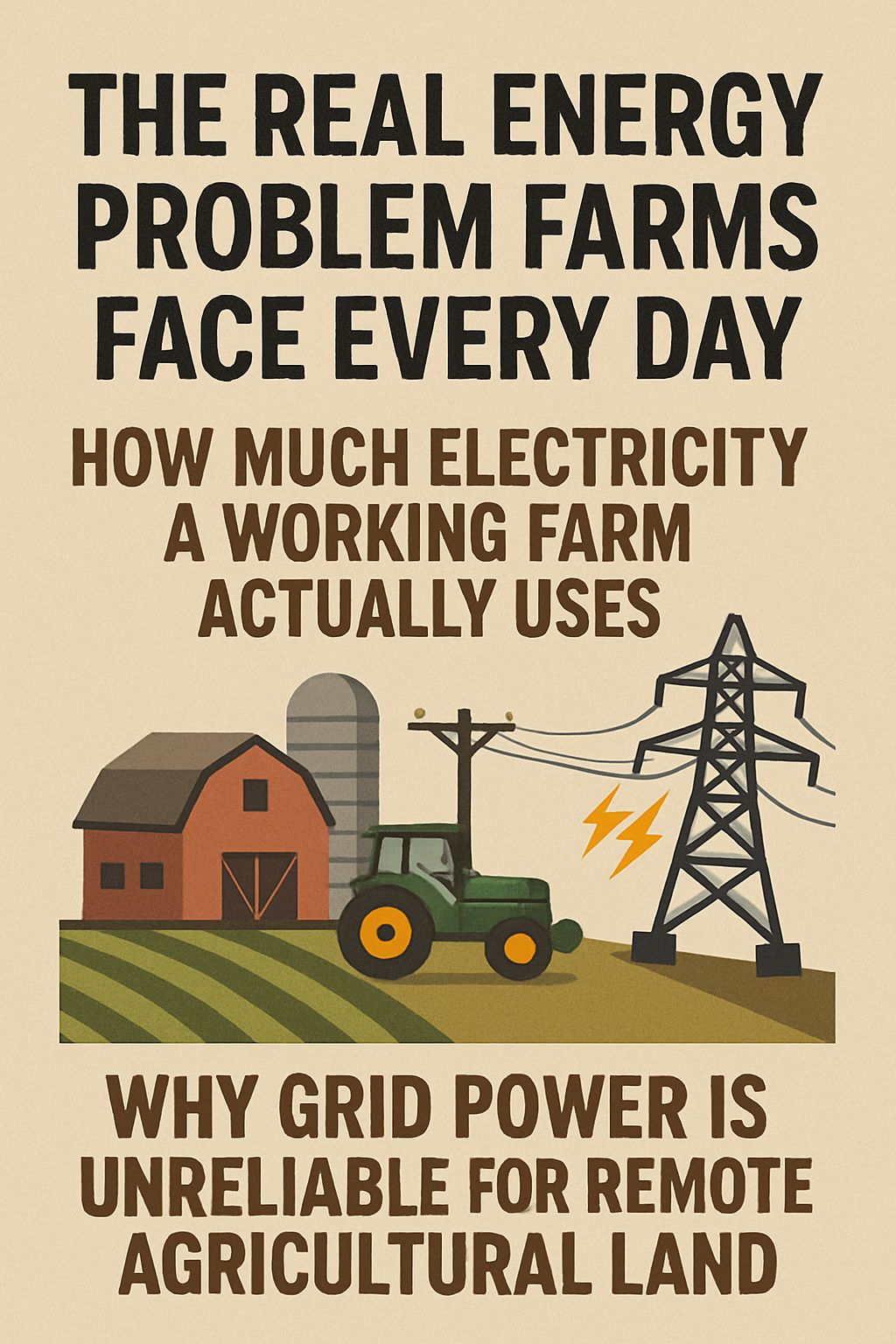
Before evaluating any solar technology, it helps to understand the scale of the energy challenge farms are actually dealing with. This isn’t a residential rooftop situation — agricultural energy demand is in a completely different category. For instance, polycrystalline solar panels are often considered for large farm installations due to their budget-friendly pricing.
How Much Electricity a Working Farm Actually Uses
A mid-sized grain operation running irrigation pumps, grain dryers, augers, and storage climate control can easily consume 50,000 to 200,000 kWh per year. Dairy farms face even heavier loads — milking equipment, milk cooling systems, ventilation, and water heating run around the clock. Poultry operations are similarly intensive, with large broiler houses requiring continuous ventilation, heating, and feeding automation. These aren’t peak-demand spikes. They’re sustained, high-volume energy draws that make electricity one of the top three operating costs on most farms.
Why Grid Power Is Unreliable for Remote Agricultural Land
Many farm properties sit far from the nearest substation or transmission infrastructure. That distance creates two problems: higher connection costs when expanding operations, and greater vulnerability to outages during storms or grid congestion. A single extended outage during a critical harvest period or a summer heat wave can cause livestock losses or crop spoilage that far exceeds an entire year’s electricity bill. PERC solar systems — particularly when paired with battery storage — eliminate that single point of failure and give farmers direct control over their most critical energy needs.
How PERC Panels Perform in Agricultural Conditions
Farm environments are genuinely harsh on equipment. Dust, humidity, temperature swings, chemical exposure from spraying operations, and physical impact from hail or debris are daily realities. Solar panels on a farm need to survive all of that while still producing reliably for 25+ years. PERC technology holds up well under these conditions — but understanding why requires a closer look at how the panels behave in specific scenarios.
Standard panels tend to underperform on days that aren’t perfectly sunny, which on a working farm is most days. PERC panels close that gap meaningfully, and that difference accumulates into real energy production advantages across an entire season.
Low-Light and Overcast Performance
The rear passivation layer in PERC cells doesn’t just help in direct sunlight — it improves diffuse light capture as well. On overcast days, scattered light enters the cell at multiple angles. The reflective rear layer captures light that would otherwise pass through the cell unused, converting more of that diffuse energy into electricity. For farms in northern climates or regions with frequent cloud cover, this characteristic alone can justify the upgrade from standard panels.
Heat Tolerance Across Seasons
Solar panels lose efficiency as temperature rises — this is measured by a specification called the temperature coefficient. Standard panels typically show efficiency losses of around -0.40% to -0.50% per degree Celsius above 25°C. PERC panels generally perform better in heat, with lower temperature coefficients that keep output higher during the peak summer months when farm energy demands are also at their highest. For irrigation-intensive operations running pumps through July and August, this heat tolerance is directly meaningful to your energy budget.
It’s worth noting that panel surface temperatures in open field agricultural installations often run higher than rooftop residential systems because ground-mounted panels can reflect heat from surrounding soil. Proper mounting height and airflow design during installation mitigates this, but the inherently better heat tolerance of PERC cells provides an additional buffer.
Durability in Dusty, Wet, and Harsh Farm Environments
PERC panels in agricultural settings are typically installed with reinforced mounting systems rated for higher wind loads than residential installations — engineering specs often call for resistance to winds exceeding 130 mph in exposed rural locations. The panels themselves are rated to IP67 or IP68 ingress protection standards, meaning they’re fully sealed against dust infiltration and capable of withstanding sustained moisture exposure. For operations near irrigation fields or in regions with heavy seasonal rainfall, this level of sealing prevents the micro-corrosion inside panel junctions that gradually degrades output in lesser-quality hardware.
Dust accumulation is a real factor on farms, particularly in dry climates or near tillage operations. PERC panels with anti-reflective coatings on the front glass surface shed dust and debris more effectively than smooth glass alternatives, and their higher base efficiency means that even a minor accumulation of dust causes a smaller proportional output loss compared to standard panels operating closer to their efficiency ceiling.

Where PERC Panels Fit on a Farm
The physical layout of an agricultural operation gives PERC solar installations far more deployment options than a standard residential or commercial property. Barns, equipment sheds, grain storage facilities, open fields, and irrigation corridors all represent viable installation surfaces — and the right combination depends entirely on your energy profile and land use priorities.
Rooftop Installations on Barns and Storage Buildings
Large agricultural buildings are ideal candidates for rooftop PERC arrays. A standard 60-foot by 120-foot dairy barn roof can accommodate 80 to 120 panels depending on pitch and orientation, generating enough electricity to cover a significant portion of daily milking, cooling, and ventilation loads. The roof structure is already built — you’re simply converting dead space into a power-generating asset without touching productive farmland below.
Metal roofing, which is common on modern agricultural buildings, actually simplifies the installation process. Standing seam metal roofs allow clamp-based mounting systems that attach directly to the seams without penetrating the roof surface, eliminating leak risk entirely. For older buildings with wood or asphalt roofing, a structural assessment before installation is recommended to confirm the roof can carry the additional load of approximately 2-4 pounds per square foot that a panel array adds.
Ground-Mounted Arrays on Non-Productive Land
Ground-Mount vs. Rooftop PERC Installation: Quick Comparison for Farmers
Ground-mounted solar arrays are an excellent choice for farmers looking to utilize non-productive land efficiently. These installations can be particularly beneficial when compared to high-efficiency monocrystalline solar panels that are typically used on rooftops. Farmers can maximize energy production without sacrificing valuable crop space, making ground-mounted arrays a viable solution for sustainable farming.
|
Factor |
Rooftop Installation |
Ground-Mounted Array |
|---|---|---|
|
Land Use Impact |
None — uses existing structure |
Requires dedicated acreage |
|
Installation Cost |
Lower per panel |
Higher due to racking and groundwork |
|
Optimal Tilt/Orientation |
Limited by roof angle |
Fully adjustable |
|
Equipment Access |
No conflict |
Requires clearance planning |
|
Scalability |
Limited by roof size |
Highly scalable |
|
Maintenance Access |
More difficult |
Easy ground-level access |
Ground-mounted systems make the most sense on farms with rocky outcroppings, steep hillsides, drainage corridors, or buffer zones that can’t be planted or grazed productively. For large-scale energy needs — dairy operations running 200,000+ kWh annually, for example — rooftop installations alone often can’t generate enough capacity, and ground-mounted arrays fill that gap.
Mounting height is a critical design variable that’s often overlooked. Standard residential ground mounts sit 18-24 inches off the ground, but agricultural installations typically require 36-48 inches of clearance minimum to allow farm equipment to pass beneath the array edges and to enable vegetation management underneath the panels without damaging equipment or the array itself. For more information on solar panel options for agriculture, consider exploring thin-film solar panels.
Single-axis tracking systems — where panels rotate to follow the sun from east to west throughout the day — can increase PERC panel output by an additional 15-25% compared to fixed-tilt ground mounts. For large-scale farming operations where the incremental energy gain justifies the added mechanical complexity, tracking systems represent a meaningful production upgrade. For smaller operations, fixed-tilt systems at the optimal angle for your latitude deliver strong performance with zero moving parts and minimal maintenance.
Ground-mounted PERC arrays on farms typically allocate 5-7 acres per megawatt of installed capacity. For context, a 500kW system serving a large mixed farming operation would occupy roughly 2.5 to 3.5 acres — a relatively small sacrifice of land area for an installation that could eliminate the majority of your annual electricity cost.
Agrivoltaic Systems: Solar Panels and Crops on the Same Land
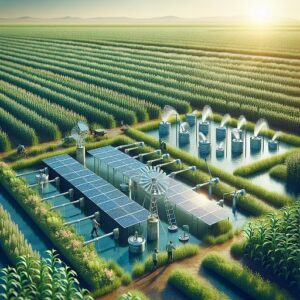
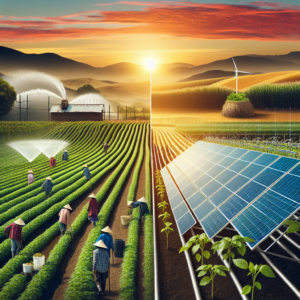
Agrivoltaics — the practice of growing crops underneath or between elevated solar panel arrays — is one of the most strategically interesting developments in agricultural solar right now. Research has shown that certain crops, including leafy greens, herbs, and some root vegetables, actually benefit from the partial shade that elevated PERC panels provide, reducing water stress during peak summer heat. The panels generate electricity above while the land continues producing food below. For farms where land scarcity is a real constraint, agrivoltaic PERC installations can generate $3,000 to $10,000+ per acre annually in combined crop and energy value — a compelling dual-use case that deserves serious consideration.
The Financial Case for PERC Solar on Farms
The financial analysis for PERC solar on agricultural operations is more favorable than most farmers realize — especially once you account for the full stack of available incentives and compare long-term production totals rather than just upfront equipment costs.
PERC panels do carry a 10-15% cost premium over standard monocrystalline panels at the point of purchase. On a 200kW farm installation, that premium might add $8,000 to $15,000 to the upfront cost. But that same efficiency advantage generates additional electricity every single year for 25+ years, and the faster payback period means you start accumulating pure savings sooner.
Up to 70% Reduction in Electricity Bills
Farms that right-size their PERC solar installations to match their actual energy consumption profile consistently report electricity bill reductions in the range of 50-70%. The exact percentage depends on your utility’s net metering policy, your consumption patterns, and how much of your usage falls during daylight hours when solar production is active. Operations like on-farm processing facilities and irrigation systems that run primarily during the day are particularly well-positioned to capture maximum self-consumption value from a solar installation. For those considering different solar technologies, understanding the benefits of bifacial solar panels can be beneficial.
For a farm spending $4,000 per month on electricity, a 60% reduction translates to $2,400 per month in direct savings — $28,800 annually. Over a 25-year panel lifespan, that’s $720,000 in avoided electricity costs at today’s rates, before accounting for utility rate inflation which has historically increased 2-4% annually. That inflation multiplier is one of the strongest arguments for locking in your own generation capacity now rather than waiting.
Agricultural Solar Incentives and Tax Benefits
The incentive landscape for farm solar installations is genuinely exceptional right now. The federal Investment Tax Credit (ITC) allows farmers to deduct 30% of the total system cost directly from their federal tax liability — not as a deduction, but as a dollar-for-dollar credit. On a $150,000 PERC installation, that’s $45,000 back from the federal government. The USDA Rural Energy for America Program (REAP) adds another layer, providing grants covering up to 25% of project costs and guaranteed loans for the remainder, specifically targeting agricultural producers and rural small businesses.
State-level incentives vary considerably by location but frequently include additional tax credits, property tax exemptions for the added value of solar installations, and sales tax exemptions on solar equipment purchases. Some states also offer accelerated depreciation schedules for farm solar assets under the Modified Accelerated Cost Recovery System (MACRS), allowing 5-year depreciation on installations that will operate for 25+ years — a significant tax advantage for profitable farm operations.
Payback Period: What Farmers Can Realistically Expect
Mid-sized farms investing in PERC solar systems typically achieve full payback on their investment in 4-7 years when federal and USDA incentives are fully applied. Compare that to 6-9 years for equivalent standard panel installations, and the efficiency premium of PERC technology starts looking like straightforward financial logic rather than a luxury upgrade. After that payback threshold, the system generates essentially free electricity for the remaining 18+ years of its rated lifespan.
The payback calculation should also factor in avoided maintenance and fuel costs for any backup generator capacity that solar replaces, the value of energy independence during grid outages, and any net metering revenue from surplus generation sold back to the utility. Farmers who integrate battery storage alongside their PERC arrays can further accelerate effective payback by capturing the full value of their generation rather than exporting surplus at wholesale rates.
How PERC Outperforms Standard Panels on Long-Term ROI
The slower degradation rate of PERC panels — approximately 0.5% annually versus 0.7% for standard panels — means that at year 25, a PERC system is still operating at roughly 88% of its original capacity while a standard system has declined to around 84%. That 4% production difference in the final years of the system’s life represents thousands of additional kilowatt-hours of free electricity. When you model the full 25-year production curve, PERC panels consistently deliver a higher total energy yield per dollar invested than their standard counterparts, making the upfront premium a sound long-term financial decision for the overwhelming majority of farming operations.
Honest Drawbacks Farmers Should Know Before Buying
PERC solar is an excellent fit for most agricultural operations, but it’s not without trade-offs. Understanding the limitations before committing to an installation helps you plan more accurately and avoid surprises during the project.
Higher Upfront Cost Compared to Standard Panels
The 10-15% price premium on PERC panels is a real consideration, particularly for smaller farm operations with tight capital budgets. On a 50kW system, the PERC premium might add $3,000 to $6,000 to the total project cost. For cash-strapped operations, that difference matters — even if the long-term economics clearly favor PERC technology. Financing options through USDA REAP loans can mitigate this barrier significantly, but it requires working with lenders who understand agricultural solar projects and can structure repayments around farm cash flow cycles.
It’s also worth noting that not every farm operation needs maximum efficiency. If you have abundant roof space and no land constraints, standard panels at lower cost per watt might achieve your energy goals at a lower total investment. The PERC premium delivers its best value when space is limited, when your energy target is aggressive, or when you’re planning a system large enough that the long-term production difference is financially material.
Installation Complexity on Large or Uneven Properties
Large agricultural properties present genuine engineering challenges for solar installations that smaller residential projects simply don’t face. Uneven terrain, multiple load centers spread across different buildings, long cable runs from remote arrays to main service panels, and the need to design around existing irrigation infrastructure and equipment traffic patterns all add complexity — and cost — to farm solar projects. Working with installers who have specific agricultural experience (not just residential or commercial solar contractors) is essential to getting the system design right the first time. Undersized wiring on long cable runs, inadequate grounding in wet soil environments, and mounting systems not rated for agricultural wind loads are the three most common installation failures on farm solar projects, and all three are entirely preventable with the right contractor and proper site assessment upfront. To explore cost-effective options, consider polycrystalline solar panels which are often suited for large farm installations.
Powering Specific Farm Operations with PERC Solar
Different farm operations have wildly different energy profiles, and one of the strongest arguments for PERC solar is how well it maps onto the specific loads that drive up electricity bills on working farms. The higher output per panel means you can design targeted systems for individual operations rather than building one massive centralized array to cover everything at once.
The timing of solar production also aligns remarkably well with peak farm energy demand. Most irrigation, processing, ventilation, and refrigeration systems run hardest during daylight hours in the summer months — exactly when a PERC array is producing at its peak. That natural alignment between production and consumption maximizes self-use of solar electricity, which is always more financially valuable than exporting surplus to the grid at wholesale rates.
Here’s how PERC solar maps onto the specific systems that consume the most electricity on a typical working farm:
Irrigation Systems and Water Pumping
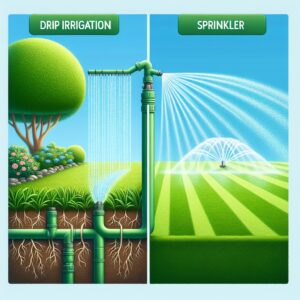
Irrigation is one of the single largest electricity consumers on crop farms, and it’s also one of the most solar-compatible loads that exists. Pumps run during daylight hours, consumption scales with sunlight intensity (the hotter and sunnier the day, the more water crops need — and the more power the PERC array is generating), and the load is relatively predictable from season to season. A properly sized PERC array can power submersible well pumps, center pivot systems, and drip irrigation infrastructure simultaneously during peak growing season, often eliminating the utility bill for irrigation entirely during the months it’s most expensive.
Cold Storage and Climate-Controlled Facilities
Refrigerated storage for produce, dairy, and meat products runs continuously and demands consistent, reliable power. A grid outage during storage isn’t just inconvenient — it can destroy an entire harvest’s worth of inventory in hours. PERC solar systems paired with battery backup provide both cost reduction and resilience for cold storage operations. The higher efficiency of PERC cells means the array can maintain storage temperatures through cloudy periods longer than standard panels before battery reserves are needed, reducing the frequency and depth of battery cycling and extending overall storage system lifespan.
Automated Feeding and Livestock Management Systems
Modern livestock operations increasingly rely on automated feeding conveyors, computerized water systems, ventilation controls, and environmental monitoring equipment that runs around the clock. These systems aren’t individually power-hungry, but their continuous operation adds up. More critically, they cannot tolerate power interruptions — a ventilation failure in a poultry house during summer heat can cause catastrophic losses within hours. PERC solar with battery storage provides the uninterrupted power supply these systems require, while the daytime generation directly offsets the grid power that would otherwise drive the continuous baseline load.
Electric Farm Equipment Charging
Electric tractors, utility vehicles, and autonomous field robots are moving from prototype to practical deployment on farms at an accelerating pace. Manufacturers including John Deere and Monarch Tractor have active electric and autonomous equipment lines that require on-farm charging infrastructure. A PERC solar installation paired with a commercial EV charging station puts farms in a position to fuel their equipment fleet from sunlight rather than diesel — a cost structure that becomes dramatically more favorable as diesel prices fluctuate and electric equipment adoption accelerates.
The charging load for electric farm equipment is well-suited to solar production timing. Most equipment charges overnight after field operations conclude, but daytime opportunity charging during equipment downtime can be handled directly from active solar production. Designing a PERC installation with sufficient capacity to handle both operational loads and equipment charging simultaneously is straightforward during the system design phase — but retrofitting an undersized system later is costly, which is why it’s worth sizing for future EV adoption when planning your initial installation.

PERC Solar Is a Sound Business Decision for Most Farmers
The evidence across efficiency, durability, financial returns, and operational fit points clearly in one direction: for the vast majority of working farms, PERC solar technology is not just a viable investment — it’s one of the highest-return capital decisions available in agriculture today. Faster payback than conventional panels, 25+ years of reliable production, a robust incentive stack that dramatically reduces net cost, and direct alignment with the energy demands of real farm operations make PERC solar a strategic asset rather than an expense. The farms that invest now lock in energy independence and predictable operating costs for the next quarter century. The ones that wait will pay increasingly higher utility rates in the meantime.
Frequently Asked Questions
Farmers evaluating PERC solar for the first time consistently run into the same set of questions before committing to an installation. The answers below address the most common concerns directly, without the marketing language that makes it hard to assess these systems objectively.
Whether you’re managing 50 acres or 5,000, understanding these fundamentals will help you have a more productive conversation with solar installers and financial advisors as you move through the evaluation process.
How Much More Efficient Are PERC Solar Panels Compared to Standard Panels?
PERC panels are 5-6% more efficient than standard monocrystalline panels in real-world farm conditions. In practical terms, this means a 400-watt PERC panel produces roughly 20-24 more watts under the same conditions as a standard 400-watt panel — a gap that compounds substantially over a full year of operation and even more so across a 25-year system lifespan. The efficiency advantage shows up most clearly in three specific scenarios:
- Overcast and low-light days — PERC’s rear passivation layer captures diffuse light that standard panels miss entirely
- Peak summer heat — PERC cells maintain higher output at elevated temperatures due to a more favorable temperature coefficient
- Late afternoon production — reflected light from soil and ground surfaces contributes meaningfully to PERC output but does almost nothing for standard panels
On a 100kW farm installation, that 5-6% efficiency advantage translates to an additional 7,500 to 10,000 kWh of electricity generated annually — enough to run a large grain auger system for an entire harvest season, completely offset by solar production.
The efficiency gap also means PERC systems require 15-20% less physical space to achieve the same energy output as a standard panel installation, which is a meaningful advantage when rooftop space is limited or when minimizing ground-mounted footprint is a priority for your operation.
Do PERC Panels Require Special Maintenance in Agricultural Environments?
PERC panels in agricultural settings don’t require dramatically different maintenance than in other environments, but the farm context does create specific priorities. Dust accumulation from tillage operations, pollen during growing season, and bird droppings from poultry or wildlife near the array are the primary output-reducing factors. Most agricultural PERC installations benefit from two to four panel cleanings per year — either with a low-pressure water rinse or automated cleaning systems on larger installations. Anti-reflective coated front glass, which is standard on quality PERC panels, helps shed loose debris between cleanings.
Mounting hardware and electrical connections in agricultural environments face more exposure to moisture, chemical spray drift, and physical vibration than residential installations. Annual inspection of mounting fasteners, junction box seals, and ground connections by a qualified technician is advisable — particularly in the first three years after installation when any installation defects are most likely to manifest. PERC panels themselves are sealed units with no serviceable internal components, so the maintenance focus is on the surrounding hardware rather than the panels themselves.
Can PERC Solar Panels Power an Entire Farm Operation?
Yes — with proper system sizing, a PERC solar installation can cover 100% of a farm’s electricity needs on an annual net basis. The practical reality is that solar production peaks during midday hours while some farm loads run overnight, so most operations use a combination of direct solar consumption during the day, battery storage for overnight critical loads, and grid connection for backup during extended low-production periods. Farms with access to net metering can effectively use the grid as a virtual battery — banking surplus daytime production as credits and drawing on those credits for nighttime or cloudy-day consumption. The key is accurate load analysis before system design, ensuring the installed PERC capacity matches your actual annual consumption rather than just your peak demand.
Are There Government Incentives Specifically for Farmers Installing Solar?
Yes, and the current incentive environment is exceptionally favorable for agricultural solar investment. The primary programs available to farmers right now include exploring different solar panel technologies, such as high-efficiency monocrystalline solar panels.
- Federal Investment Tax Credit (ITC) — 30% credit on total system cost, applied dollar-for-dollar against federal tax liability
- USDA REAP Grants — cover up to 25% of eligible project costs for agricultural producers and rural small businesses
- USDA REAP Guaranteed Loans — financing for the remaining project cost at favorable rates
- MACRS Accelerated Depreciation — 5-year depreciation schedule on solar assets that typically have 25+ year operational lifespans
- State Tax Credits — vary by state but frequently add an additional 10-25% reduction in net project cost
- Property Tax Exemptions — many states exclude the added property value from a solar installation from taxable assessed value
When the ITC, REAP grant, and MACRS depreciation are all applied to a single qualifying farm project, the effective net cost of the installation can drop to 40-50 cents on the dollar compared to the face price. That transformation of the upfront economics is what drives the 4-7 year payback periods that mid-sized farms are consistently achieving with PERC solar today. Consulting with a tax professional familiar with agricultural operations before finalizing your project budget is strongly recommended to capture every available benefit.
How Long Do PERC Solar Panels Last on a Working Farm?
Quality PERC panels from established manufacturers carry 25-year linear performance warranties guaranteeing that output will not fall below 80% of rated capacity over that period. In practice, many installations continue producing well beyond the warranty term, with degradation rates of approximately 0.5% annually meaning a 25-year-old PERC panel is still operating at roughly 88% of its original capacity.
The actual lifespan of a farm PERC installation is more often limited by the surrounding hardware — inverters typically need replacement at 10-15 years, mounting hardware may require attention in highly corrosive environments, and wiring connections benefit from periodic inspection — rather than the panels themselves. Budgeting for one inverter replacement over a 25-year system life is standard practice, and the cost of that replacement is easily absorbed within the ongoing electricity savings the system generates. For farmers with limited space, high-efficiency monocrystalline solar panels may offer a suitable alternative.
For farms planning long-term, the math is straightforward: a PERC system installed today will still be producing meaningful electricity in 2050, having paid for itself multiple times over through avoided utility costs. That combination of durability, performance, and financial return is why PERC solar technology has become the dominant choice for serious agricultural energy investment.



Leave a Reply