

Article At a Glance
- Monocrystalline solar panels are made from single-crystal silicon with purity levels up to 99.9999999% (9N), giving them the highest efficiency of any panel type — between 17–22%.
- For farms with limited roof space or high energy demands, monocrystalline panels generate more power per square foot than polycrystalline or thin-film alternatives.
- N-type silicon outperforms P-type in hot agricultural environments, with lower degradation rates and better resistance to heat-related efficiency loss.
- Agrivoltaic farming — growing crops under or alongside solar panels — is one of the fastest-growing applications of monocrystalline panels in agriculture today.
If you’re running a farm and still paying full price for electricity, monocrystalline solar panels might be the most important investment you haven’t made yet.
Modern agriculture runs on power — irrigation pumps, cold storage, barn lighting, livestock equipment. That energy bill adds up fast. Monocrystalline solar panels offer farmers a way to generate their own reliable electricity, reduce operating costs, and build long-term energy independence. But not all solar panels are built the same, and understanding what’s inside these panels and how they perform in real farm conditions makes all the difference when it comes to choosing the right system.
Monocrystalline Solar Panels Are Built for the Farm
Farms are tough environments. Dust, pollen, chemical exposure, high winds, and extreme seasonal temperatures all put solar equipment to the test. Monocrystalline panels consistently outperform other panel types in these conditions — and the reason comes down to how they’re made.
17–22% Efficiency Makes Them the Top Choice for Limited Roof Space
Efficiency is everything when your usable roof or land space is limited. Monocrystalline panels convert between 17–22% of available sunlight into electricity, compared to 15–17% for polycrystalline panels and even lower for thin-film options. On a barn roof with 1,000 square feet of usable space, that efficiency gap translates directly into kilowatts — and dollars saved. Fewer panels also means less mounting hardware, lower installation labor costs, and a simpler system overall.
99.9999999% Pure Silicon Is What Sets Monocrystalline Panels Apart
The defining characteristic of monocrystalline panels is the purity of their silicon. Premium panels use silicon refined to 9N purity — that’s 99.9999999% pure. Standard-grade panels use 6N silicon (99.9999% pure), which is still high quality, but the jump to 9N results in measurably better electron flow, less internal resistance, and higher energy output over the panel’s lifetime. The single-crystal structure allows electrons to move through the material with minimal obstruction, which is what drives that top-tier efficiency rating.
25+ Years of Reliable Power with Minimal Degradation
Monocrystalline panels are built to last. Most carry performance warranties guaranteeing at least 80% of rated output after 25 years, with many modern panels degrading at less than 0.5% per year. For a farmer, that means a system installed today is still producing meaningful power well into the 2050s. Learn more about how solar panels work on farms and their benefits.
The single-crystal structure isn’t just efficient — it’s structurally stable. Unlike polycrystalline panels, which are formed from multiple silicon fragments fused together, monocrystalline cells have no grain boundaries where stress and degradation can concentrate. This makes them more resilient against the thermal cycling that comes with hot summers and cold winters in farming regions.
Long-term reliability matters more on a farm than almost anywhere else. Irrigation schedules, cold storage, and livestock systems can’t afford unexpected power shortfalls. The consistent, predictable output of monocrystalline panels makes system planning and energy budgeting straightforward.

What Monocrystalline Solar Panels Are Made Of
Understanding what’s inside a monocrystalline panel helps farmers evaluate quality, compare products, and make purchase decisions that hold up over decades. Every layer in a monocrystalline panel serves a specific function, and in agricultural settings, each one faces unique stresses.
Single-Crystal Silicon Cells: The Core of the Panel
The silicon cell is where electricity is generated. In monocrystalline panels, each cell is cut from a single continuous silicon crystal grown using the Czochralski method — a process where a silicon seed crystal is slowly pulled from a molten silicon bath, forming a large cylindrical ingot. That ingot is then sliced into thin wafers, typically 160–200 micrometers thick, which become the individual solar cells. The uniform crystal lattice structure allows for maximum electron mobility, which is what produces that industry-leading efficiency.
Tempered Glass: The First Line of Defense
The front surface of a monocrystalline panel is covered with tempered, low-iron glass — usually 3.2mm thick. Low-iron glass transmits more light than standard glass because iron content in glass absorbs a portion of the solar spectrum. Removing most of that iron increases light transmission to around 91–93%, meaning more sunlight reaches the cells. This enhanced light transmission is one of the key benefits of using solar panels in agriculture.
In farm environments, this glass layer takes the most punishment. Hail, wind-blown debris, and equipment vibrations all impact the front surface. Tempered glass is roughly four times stronger than standard glass and, critically, when it does break, it fractures into small blunt pieces rather than sharp shards — an important safety consideration around livestock and workers.
Some premium agricultural panels also feature anti-reflective coatings on the glass surface, which reduce light bounce-back and push effective transmission even higher. This is especially valuable during low-angle winter sun when every percentage point of captured light matters for farm energy budgets.
EVA Encapsulant Layers: What Holds Everything Together
Ethylene Vinyl Acetate (EVA) is the transparent adhesive film sandwiched between the glass and the solar cells, and again between the cells and the backsheet. EVA bonds all layers together, provides electrical insulation, and protects cells from moisture infiltration. In agricultural settings where humidity, irrigation mist, and chemical vapors are common, the integrity of the EVA layer is critical to long-term panel performance.
Backsheet Materials: The Hidden Protector
The backsheet is the rearmost layer of the panel — the surface you see when looking at the back of a mounted panel. It’s typically made from a polymer composite, often using materials like polyvinyl fluoride (PVF) or polyethylene terephthalate (PET). The backsheet provides electrical insulation, blocks moisture from entering the panel from the rear, and reflects heat away from the cells. In high-temperature farm environments, a quality backsheet helps keep cell temperatures lower, which directly supports better efficiency and slower degradation.
Aluminum Frame: Strength Against Wind and Weather
The aluminum frame surrounding a monocrystalline panel does more than hold it together — it’s the structural backbone that determines how well the panel survives decades of farm weather. Most quality agricultural panels use anodized aluminum alloy frames, typically 6063 or 6061 grade, which resist corrosion from fertilizer mist, humidity, and rain far better than untreated aluminum. Frame thickness matters too: agricultural-grade panels typically feature frames 35–40mm deep, providing the rigidity needed to handle snow loads and high-wind conditions without flexing that could crack cells or compromise seals.
P-Type vs N-Type Silicon: Which Works Better on Farms
Not all monocrystalline panels use the same type of silicon, and the distinction between P-type and N-type silicon is one of the most important technical decisions a farmer can make when selecting panels. Both types start with the same single-crystal silicon base, but they’re doped with different elements during manufacturing — P-type silicon uses boron, while N-type uses phosphorus. That small difference in chemistry produces measurably different performance outcomes, especially in the demanding conditions of agricultural environments.
P-type panels have historically dominated the solar market due to their lower manufacturing cost and adequate performance in moderate climates. N-type panels, once reserved for premium and space applications, have become increasingly accessible and are now the recommended choice for farms in hot, high-irradiance regions where performance under thermal stress is a priority.
How Heat Affects P-Type Silicon Performance
Heat is the silent enemy of solar panel efficiency. Every solar panel has a temperature coefficient — a measurement of how much efficiency drops for every degree Celsius the panel rises above 25°C (77°F). For most P-type monocrystalline panels, this coefficient runs around -0.35% to -0.40% per °C. On a hot summer day when panel surface temperatures commonly reach 65–70°C on a metal barn roof, that adds up to a significant real-world efficiency reduction.
P-type silicon is also more susceptible to a phenomenon called light-induced degradation (LID), which occurs in the first hours and days of sun exposure after installation. LID can cause an immediate efficiency loss of 1–3% in P-type panels as boron-oxygen complexes form within the silicon lattice under sunlight. While this stabilizes quickly, it represents a permanent reduction from the panel’s rated output.
For farms in temperate climates with mild summers, P-type panels can still deliver strong performance and solid ROI. However, for operations in the American Southwest, Southern Europe, Australia, or other high-heat farming regions, the thermal performance limitations of P-type silicon are a real and ongoing efficiency cost across the entire panel lifespan.
Why N-Type Silicon Handles Hot Climates Better
N-type monocrystalline panels carry a lower temperature coefficient — typically around -0.30% per °C or better — meaning they lose less efficiency as temperatures climb. More importantly, N-type silicon is essentially immune to LID because it doesn’t contain the boron-oxygen pairs responsible for that initial degradation. Many N-type panels also demonstrate lower long-term degradation rates overall, often below 0.4% per year versus 0.5–0.7% for standard P-type panels, which compounds into meaningfully more energy output over a 25-year farm installation.

Top Agricultural Uses for Monocrystalline Solar Panels
The applications for monocrystalline solar on a working farm go well beyond just reducing the electricity bill. From powering water pumps in remote paddocks to shading crops in agrivoltaic systems, these panels are reshaping how farms operate and manage energy costs across every type of agricultural operation.
The key advantage in all these applications is the same: monocrystalline panels generate more energy from less space, which matters whether you’re mounting panels on a barn roof with fixed dimensions or deploying a ground-mount system where every panel represents land taken out of production. Higher efficiency means fewer panels, less structural hardware, and lower overall installation costs for the same energy output.
Powering Irrigation Systems
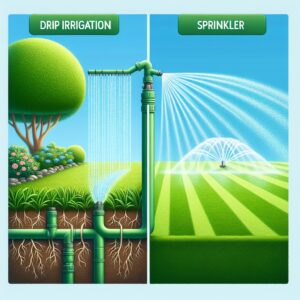
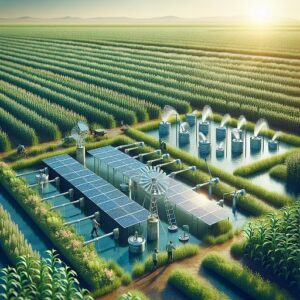
Irrigation is one of the largest energy consumers on any farm, and it’s also one of the most solar-friendly loads. Irrigation pumps typically run during daylight hours — exactly when solar panels are producing at their peak. A well-sized monocrystalline system can run drip irrigation, center-pivot systems, or submersible well pumps directly from solar generation, eliminating or dramatically reducing the grid electricity or diesel fuel costs associated with water management. For remote field locations far from grid connections, solar-powered irrigation is often the most cost-effective solution available.
Running Barn Operations and Livestock Equipment
Modern livestock operations consume significant electricity — ventilation fans, heating lamps for young animals, automatic feeders, water heaters, and milking equipment all draw continuous power. Monocrystalline panels mounted on barn rooftops convert otherwise unused surface area into a working power source, often covering a substantial portion of daily barn energy demand.
Dairy operations are a particularly strong fit for rooftop monocrystalline systems. Milking equipment, refrigerated milk storage, and barn climate control run on predictable schedules that align well with solar generation profiles. Farms that have implemented rooftop solar on dairy barns consistently report significant reductions in electricity costs, with many achieving payback periods of 6–9 years depending on local electricity rates and available incentives.
Poultry operations benefit similarly, with ventilation systems representing the single largest electrical load in most broiler and laying hen facilities. Solar generation during peak daytime hours directly offsets the peak ventilation demand during hot summer months — the exact time when both energy consumption and electricity rates tend to be highest.
Agrivoltaic Farming: Crops and Solar Panels on the Same Land
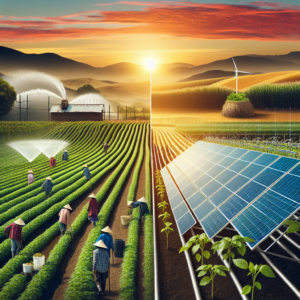
Agrivoltaics is one of the most exciting developments in agricultural solar, and monocrystalline panels are at the center of it. The concept is straightforward: mount solar panels above crop rows at a height that allows farming equipment to pass underneath, and grow shade-tolerant or heat-sensitive crops in the filtered light beneath. Research has shown that certain crops — including lettuce, spinach, peppers, and some berry varieties — can actually produce equal or greater yields under partial solar shading compared to full sun exposure, while the panels themselves benefit from the cooling effect of the vegetation below. The dual land use dramatically improves the economics of both the farming operation and the solar investment.
Cold Storage and Refrigeration for Produce
Post-harvest cold storage is one of the most energy-intensive operations on a produce farm, and it’s often the difference between profitable yields and spoiled inventory. Monocrystalline solar systems sized for cold storage loads can provide reliable, low-cost power for walk-in coolers, refrigerated packing facilities, and pre-cooling equipment.
For farms in hot climates, the alignment between solar production and refrigeration demand is near-perfect — the hottest parts of the day when cooling systems work hardest are exactly when solar panels generate the most electricity. This natural synchronization improves the effective economics of the solar system and reduces reliance on grid power or backup generators during peak rate periods.
What to Look for When Buying Panels for Agricultural Use
Buying monocrystalline panels for a farm isn’t the same as buying them for a residential rooftop. Agricultural environments introduce specific stresses — chemical exposure, mechanical vibration from nearby equipment, heavier soiling from dust and pollen, and in many cases, more extreme temperature swings. The right panel for a farm goes beyond efficiency ratings and price per watt. Frame construction, certifications, and warranty terms specific to farm conditions are just as important as the performance specifications on the data sheet.
Frame Strength Ratings for High-Wind Zones
- Wind load rating: Look for panels rated to withstand at least 2400 Pa (pascals) of wind pressure — equivalent to approximately 130 mph winds. Farm structures in open rural areas face significantly higher wind exposure than suburban rooftops.
- Snow load rating: For farms in northern climates, a minimum 5400 Pa snow load rating ensures panels won’t buckle under heavy accumulation.
- Frame depth: Agricultural-grade panels should have frames at least 35mm deep. Deeper frames provide greater rigidity and resistance to flex that can crack cells over time.
- Mounting hole reinforcement: Check that mounting points have reinforced contact areas to prevent frame deformation when panels are secured to barn roofs or ground-mount racking in high-wind conditions.
Frame integrity is the most overlooked specification in agricultural solar purchasing, and it’s often the one that determines whether a panel survives 25 years on a farm or fails at year 8. A barn rooftop or open-field ground mount exposes panels to sustained wind loads far beyond what typical residential installations experience. The aluminum frame isn’t just a border — it’s the structural system that holds every other layer in alignment through decades of thermal expansion, contraction, vibration, and weather stress. For more insights, explore why farms are ideal locations for solar panels.
When comparing panels, request the IEC 61215 certification, which verifies that panels have passed standardized mechanical load testing. For farms in regions prone to severe weather — tornado corridors, coastal areas with hurricane exposure, or high-altitude zones with significant snow — look for panels that have completed additional mechanical stress testing beyond the IEC minimum thresholds. Some manufacturers publish third-party load test results that go well above standard certification requirements, and those are the panels worth prioritizing for exposed agricultural installations.
It’s also worth asking installers about racking system compatibility. Even the strongest panel frame can be compromised by a poorly designed mounting system. The panel and racking need to be evaluated together as a complete structural assembly, not as separate components.
Chemical Resistance Certifications
Farm panels face chemical exposures that standard residential panels never encounter — fertilizer mist, herbicide and pesticide spray drift, animal waste gases like ammonia from poultry and livestock facilities, and cleaning agents used in dairy and food-handling areas. Look for panels with backsheets rated for chemical resistance and frames with anodized or coated finishes rather than bare aluminum. Ammonia resistance is a specific certification to request for any panel installation near poultry barns or hog operations, as ammonia vapor accelerates corrosion of both frame materials and junction box components. The IEC 62716 standard covers ammonia resistance testing and is the benchmark to verify for these environments.
Warranty Terms That Cover Farm-Specific Conditions
Standard solar warranties come in two forms: a product warranty covering manufacturing defects (typically 10–12 years) and a performance warranty guaranteeing output over time (typically 25 years at 80% of rated power). Both matter for farm installations, but the fine print matters more. Read carefully for exclusions related to soiling, chemical exposure, or damage from agricultural operations — some manufacturers void warranties if panels are installed in environments with elevated chemical exposure without prior written approval.
The best agricultural panel warranties include explicit language covering performance in high-soiling environments and offer degradation guarantees of 0.5% per year or less. Some premium manufacturers now offer linear performance warranties that specify output levels at every year of the panel’s life, not just at the 25-year mark. This level of transparency is a strong signal of manufacturer confidence in long-term panel performance and gives farm owners a clear, contractual expectation of energy production they can use for financial planning.
Don’t overlook the manufacturer’s financial stability when evaluating warranty value. A 25-year warranty is only as good as the company behind it. Prioritize manufacturers with at least a decade of operating history, established service networks, and a demonstrated track record of honoring warranty claims. For farm-scale investments that may run $50,000 to $500,000 or more, warranty security is a core component of the financial case, not just a footnote in the purchasing decision.
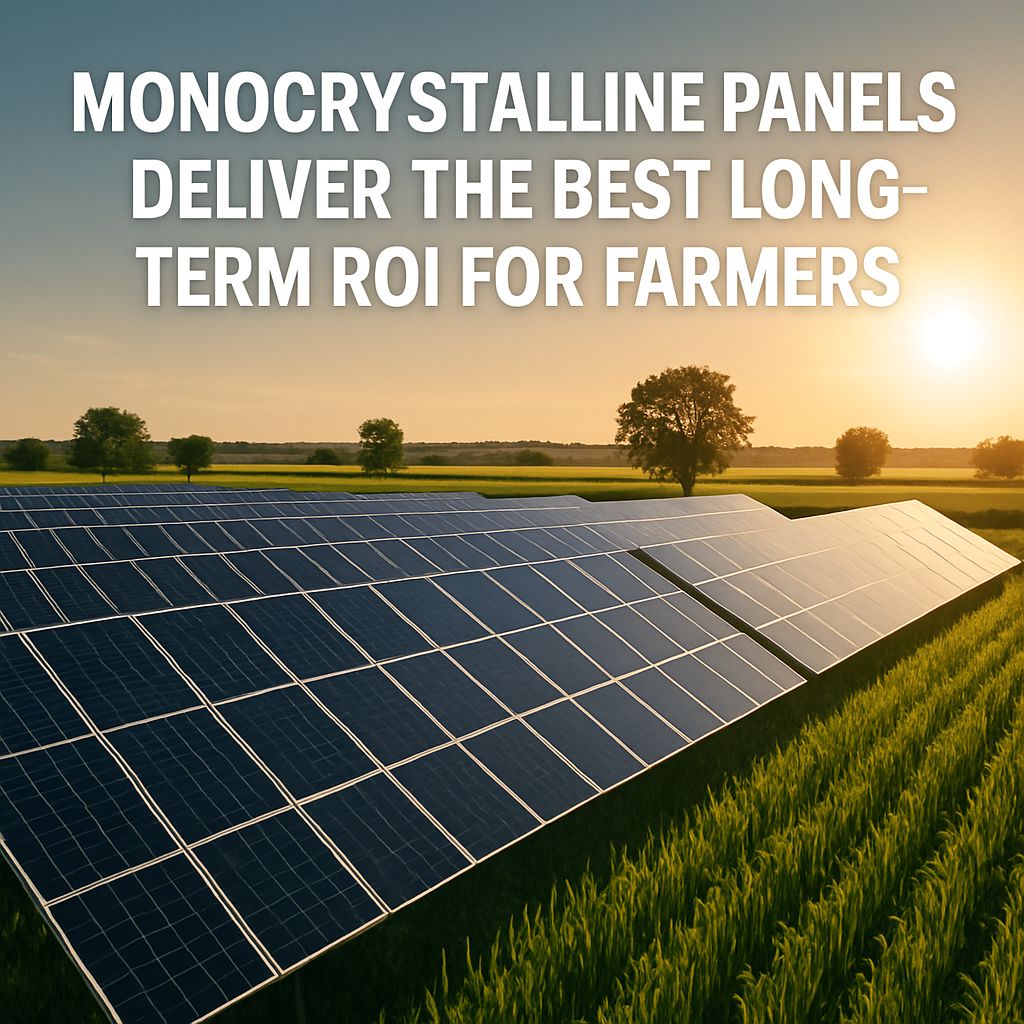
Monocrystalline Panels Deliver the Best Long-Term ROI for Farmers
The upfront cost of monocrystalline panels is higher than polycrystalline or thin-film alternatives — there’s no getting around that. But the total cost of ownership calculation over 25 years consistently favors monocrystalline, especially in agricultural settings where energy demands are high, usable space is finite, and panel reliability directly affects farm operations. Higher efficiency means fewer panels for the same output, which reduces mounting hardware, installation labor, wiring runs, and inverter capacity requirements. Lower annual degradation means more cumulative energy produced over the system’s lifetime. And better performance in heat, partial shading, and soiling conditions means the real-world output of a monocrystalline system consistently outperforms its rated specifications in ways that show up directly in reduced electricity bills year after year. For more insights on how solar panels benefit agriculture, check out how solar panels work on farms.
For most farm operations, the payback period on a well-designed monocrystalline solar system runs between 6 and 10 years depending on system size, local electricity rates, available incentives, and current energy consumption. After payback, every kilowatt-hour the system generates is essentially free electricity — for another 15 to 20 years of productive panel life. That’s the kind of long-term return on investment that no utility contract can match, and it’s why monocrystalline solar has become one of the most financially sound infrastructure investments available to modern farming operations.
Frequently Asked Questions
Farmers considering monocrystalline solar installations often have specific questions about how these panels perform in agricultural settings. The following answers address the most common questions directly.
How Long Do Monocrystalline Solar Panels Last on a Farm?
Monocrystalline solar panels typically last 25–30 years on farm installations, with many continuing to produce usable power beyond that timeframe. Most manufacturers guarantee at least 80% of rated output at 25 years, with premium panels degrading at 0.4–0.5% per year or less. Proper installation — particularly secure mounting and adequate ventilation beneath panels to prevent heat buildup — is the single biggest factor in maximizing panel lifespan in agricultural environments.
Physical damage from hail, wind events, or farm equipment is the most common cause of premature panel failure in agricultural settings, not cell degradation. Selecting panels with tempered glass rated to IEC 61215 hail impact standards (25mm ice balls at 23 m/s) provides meaningful protection against the hail events common in major farming regions. For farms in high-hail zones, some installers recommend panels with thicker 4mm glass for additional impact resistance. Learn more about best solar panels for farmers to ensure durability and efficiency in challenging environments.
Can Monocrystalline Panels Handle Exposure to Agricultural Chemicals?
Monocrystalline panels are generally well-suited to chemical-rich farm environments, but material quality and certifications matter significantly. The key components to evaluate for chemical resistance are:
- Frame finish: Anodized aluminum frames resist fertilizer and pesticide corrosion far better than untreated aluminum. Look for anodizing thickness of at least 10 microns.
- Junction box rating: The junction box should carry an IP68 waterproof rating and be constructed from UV-stabilized polycarbonate or equivalent chemical-resistant housing material.
- Backsheet material: Fluoropolymer-based backsheets (such as those using Tedlar PVF film) offer superior chemical resistance compared to standard PET-only backsheets.
- Ammonia resistance: For poultry or hog operations, verify IEC 62716 ammonia resistance certification specifically — standard corrosion ratings don’t cover ammonia exposure.
- Sealant quality: Silicone frame sealants perform better than polyurethane alternatives in environments with repeated chemical exposure and temperature cycling.
In practice, most quality monocrystalline panels from established manufacturers handle typical agricultural chemical exposure without issue over their rated lifespan. The risk of chemical-related failure is highest in intensive livestock facilities where ammonia concentrations are elevated year-round, or in orchards and vineyards where overhead spray applications directly contact panel surfaces regularly.
If your operation involves frequent direct chemical contact with panels, notify your installer and manufacturer before purchase. Some manufacturers offer agricultural-specific panel variants with enhanced chemical resistance packaging, and documenting your farm environment in writing protects your warranty coverage if chemical-related issues arise later.
Are Monocrystalline Panels Worth the Higher Upfront Cost for Small Farms?
For small farms, the question isn’t whether monocrystalline panels are better — it’s whether the efficiency premium is worth paying given your specific space and energy constraints. If your available installation area is limited (a small barn roof, for example), monocrystalline panels generate meaningfully more power from that fixed space than polycrystalline alternatives. That efficiency difference can be the deciding factor between a system that covers most of your energy needs and one that only makes a partial dent in your electricity bill.
For small farms with unlimited ground space and no roof constraints, the calculus is different. Polycrystalline panels at lower cost per watt can achieve the same total output as monocrystalline panels by simply deploying more of them. In this scenario, the decision comes down to long-term degradation rates, warranty terms, and local installer expertise — all areas where monocrystalline panels still hold real advantages, but the efficiency gap matters less than it does in space-constrained installations.
The availability of agricultural solar incentives — including the U.S. federal Investment Tax Credit (ITC), USDA REAP grants covering up to 50% of system costs for eligible rural agricultural businesses, and various state-level programs — can significantly reduce the effective upfront cost difference between panel types. For small farm operations that qualify for REAP grants, the premium cost of monocrystalline panels may represent only a modest additional investment after incentives are applied, while delivering superior long-term performance.
What Is the Difference Between Monocrystalline and Polycrystalline Panels for Agricultural Use?
Monocrystalline panels are made from a single continuous silicon crystal, giving them a uniform dark appearance, efficiency ratings of 20–22%, and superior performance in heat and low-light conditions. Polycrystalline panels are made from multiple silicon crystal fragments melted together, producing a speckled blue appearance, efficiency ratings of 15–17%, and slightly lower performance in high-temperature farm environments. For agricultural applications where space efficiency, long-term durability, and performance in demanding conditions are priorities, monocrystalline panels are the stronger choice — though polycrystalline panels remain a cost-effective option for large open-land installations where ground space is not a limiting factor.
How Many Monocrystalline Panels Does a Farm Typically Need to Power an Irrigation System?
The number of panels required depends on three variables: the power draw of your irrigation pump (measured in kilowatts), the number of daily operating hours, and the average peak sun hours at your location. A standard 5 HP (3.7 kW) submersible pump running 6 hours per day requires roughly 22 kWh of daily energy. At 4.5 peak sun hours (typical for most U.S. agricultural regions), a system producing 22 kWh per day requires approximately 5–6 kW of installed panel capacity.
Using 400-watt monocrystalline panels — a common current standard for agricultural installations — a 5 kW system requires 13 panels, while a 6 kW system requires 15 panels. For larger center-pivot irrigation systems drawing 40–75 HP, system sizes scale accordingly into the 30–150 kW range, requiring 75 to 375 panels of the same 400-watt specification. These figures assume direct solar-to-pump operation; systems with battery storage or grid-tied configurations will have different sizing requirements based on storage capacity and usage scheduling.
The most accurate sizing approach is to work from 12 months of actual electricity billing data combined with a site-specific solar irradiance assessment. Many agricultural solar installers offer free system sizing consultations that include shading analysis, seasonal production modeling, and payback calculations tailored to your farm’s actual energy consumption profile. Starting with real usage data rather than rule-of-thumb estimates consistently produces better-performing, right-sized systems that deliver the expected return on investment.


Leave a Reply