

Key Takeaways
- Saltwater batteries offer a non-toxic, fire-resistant alternative to traditional battery solutions for solar backup systems on farms
- With longer cycle life and minimal maintenance requirements, saltwater batteries can provide substantial long-term cost savings despite higher upfront investment
- These batteries perform exceptionally well in extreme temperature conditions commonly experienced in agricultural settings
- Growing Solar provides specialized saltwater battery solutions designed specifically for agricultural applications
- Integrating saltwater batteries with existing solar systems can help farmers achieve energy independence while maintaining sustainable farming practices
Why Saltwater Batteries Are Becoming Farmers’ Top Choice for Solar Backup
The agricultural sector is rapidly embracing renewable energy solutions, with solar power leading the charge. But solar panels alone can’t guarantee continuous power when the sun isn’t shining. That’s where battery backup systems become essential, and saltwater batteries are emerging as a game-changing solution for modern farming operations. Unlike conventional battery technologies, saltwater batteries utilize sodium ions in a saltwater electrolyte solution, offering a safer, more environmentally friendly alternative that aligns perfectly with sustainable farming practices. Growing Solar has been at the forefront of helping farmers transition to these innovative storage solutions that complement their solar investments.
Farmers face unique energy challenges that traditional batteries struggle to address. From powering irrigation systems during grid outages to maintaining critical climate control in livestock facilities, agricultural operations demand reliable backup power that can withstand harsh conditions without frequent maintenance. Saltwater batteries excel in precisely these scenarios, offering dependable performance even during extreme weather events that can disrupt grid power for days.
The shift toward saltwater technology reflects a broader movement in agriculture toward solutions that balance economic viability with environmental responsibility. As farmers look to reduce their carbon footprint while maintaining productivity, these innovative batteries provide a way to store renewable energy without introducing toxic materials to farmland. This technology represents not just an improvement on existing systems but a fundamental rethinking of how farms can achieve energy resilience.
How Saltwater Batteries Work on Farms
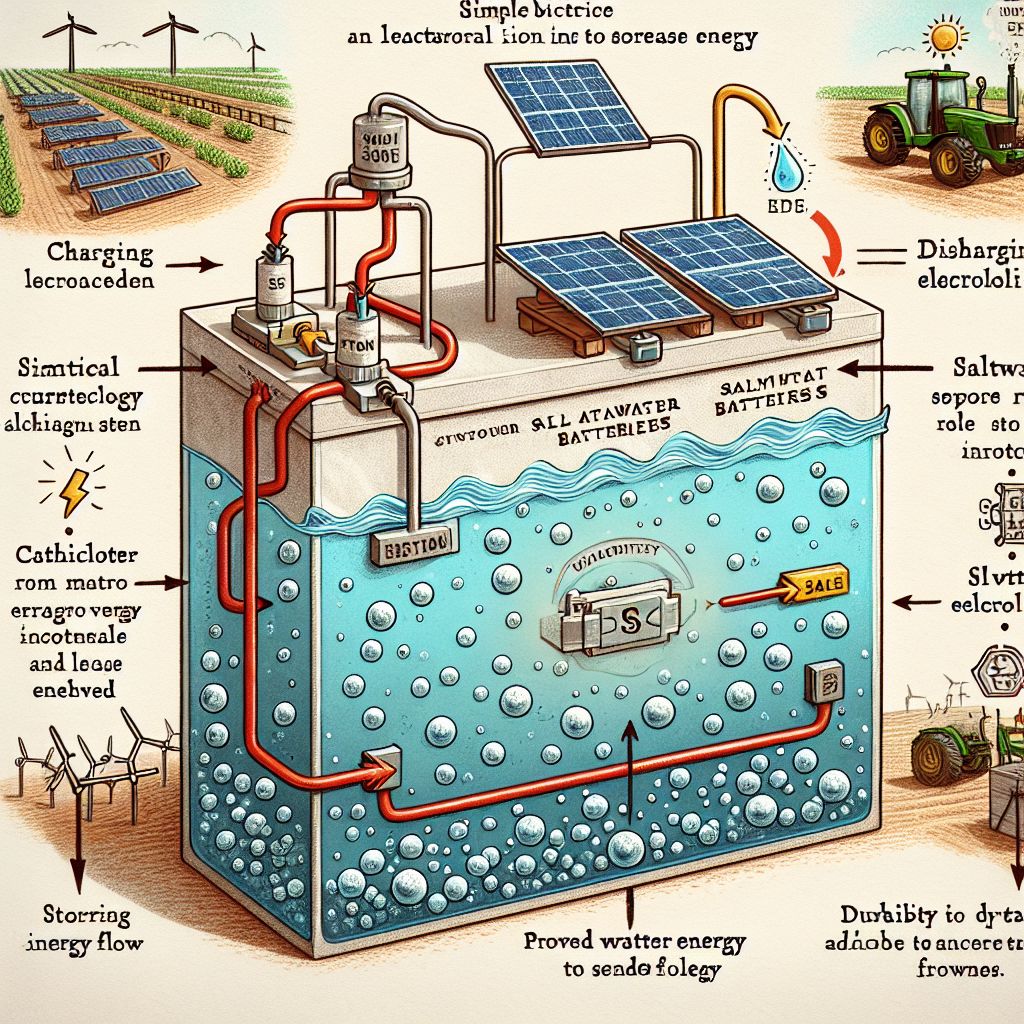
At their core, saltwater batteries function through a simple electrochemical process that uses sodium ions to store and release energy. When charging, electricity from solar panels drives sodium ions from the cathode to the anode through the saltwater electrolyte. During discharge, this process reverses, releasing the stored energy to power farm equipment and systems. This uncomplicated mechanism contributes to the technology’s reliability and longevity in demanding agricultural settings.
The Science Behind Saltwater Battery Technology
Saltwater batteries utilize a saline solution as their electrolyte, typically containing sodium sulfate. Unlike conventional batteries that rely on toxic heavy metals like lead or lithium, the chemistry of saltwater batteries centers around abundant, non-toxic materials. The electrodes are typically made of carbon and manganese oxide materials, which are environmentally benign. This chemistry not only makes the batteries safer but also addresses end-of-life concerns that plague many energy storage technologies.
The fundamental design prioritizes safety and stability over maximizing energy density. While this means saltwater batteries may require more space than lithium-ion alternatives for equivalent storage capacity, their significantly reduced fire risk and elimination of toxic components make them ideal for farm settings where safety concerns and environmental impacts carry extra weight. The technology has evolved substantially in recent years, with modern designs offering improved efficiency while maintaining the core benefits of the saltwater approach.
Comparison to Traditional Lead-Acid and Lithium-Ion Batteries
When comparing battery technologies for agricultural applications, several key factors distinguish saltwater batteries from traditional options. Lead-acid batteries, while initially less expensive, typically last only 500-1,000 cycles and require regular maintenance to check fluid levels and clean terminals. They also contain toxic materials that pose environmental hazards if improperly disposed of. Lithium-ion batteries offer excellent energy density and efficiency but come with significant fire risks, especially concerning in agricultural settings where flammable materials abound.
Here’s a comparison table of Traditional Lead-Acid, Lithium-Ion, and Saltwater Batteries:
|
Feature |
Lead-Acid Battery |
Lithium-Ion Battery |
Saltwater Battery |
|---|---|---|---|
|
Chemistry |
Sodium ions in saltwater solution 4 | ||
|
Energy Density (Wh/kg) |
30–40 6 |
100–150 5 | |
|
Lifespan (Years) |
8–12 4 | ||
|
Cycle Life |
3,000+ cycles (varies) 4 | ||
|
Depth of Discharge (DOD) |
80–100% 4 | ||
|
Charging Time |
Moderate (not as fast as Li-ion) 4 | ||
|
Efficiency (%) |
60–70% 5 | ||
|
Weight |
Heavy, but less than lead-acid 4 | ||
|
Maintenance |
Low 4 | ||
|
Cost (Initial) |
High 4 | ||
|
Cost (Lifetime) |
Medium–High 4 | ||
|
Safety | |||
|
Environmental Impact | |||
|
Operating Temp. Range |
–20°C to 50°C 2 |
–20°C to 60°C 2 |
Wide (varies, generally robust) 4 |
|
Self-Discharge Rate |
~5%/month 2 |
1–2%/month 2 |
Low 4 |
|
Applications |
Automotive, backup, solar 6 |
EVs, solar, portable electronics 6 |
Stationary storage, eco-focused 4 |
Battery Technology Comparison for Agricultural Use
Saltwater batteries strike a compelling balance between performance, safety, and environmental responsibility. While they may have a higher initial cost than lead-acid options, their significantly longer cycle life (typically 3,000-5,000 cycles) means lower lifetime cost for farm operations. They outperform both traditional technologies in temperature extremes, maintaining consistent performance in both hot summer and freezing winter conditions common in agricultural settings.
Integration with Existing Solar Panel Systems
Integrating saltwater batteries with existing farm solar installations is remarkably straightforward. Most systems utilize standard DC coupling configurations, allowing them to connect to solar arrays through charge controllers that manage the flow of electricity between panels, batteries, and farm loads. This compatibility means farmers don’t need to overhaul their entire solar setup when adding saltwater battery storage, making incremental energy upgrades more feasible.
The modular nature of saltwater battery systems provides another significant advantage for agricultural applications. Farmers can start with a smaller capacity system that meets immediate needs and expand over time as their operation grows or energy requirements change. This scalability protects the initial investment while allowing for future-proofing against increasing energy demands.
For optimal performance, farm solar-plus-storage systems typically incorporate energy management software that intelligently distributes power based on prioritized loads. These systems can be programmed to ensure critical farm operations receive power first during outages, while less essential systems are served as capacity allows. This intelligent energy management maximizes the utility of the stored energy, particularly during extended cloudy periods or nighttime operation.

6 Major Benefits of Saltwater Batteries for Farm Solar Backup
1. Non-Toxic and Environmentally Safe
The environmental credentials of saltwater batteries stand head and shoulders above conventional alternatives. Their electrolyte solution consists primarily of salt and water—substances that pose virtually no environmental threat if spilled or released. This non-toxic nature is particularly valuable on farms where groundwater protection is a priority and where battery systems might be located near food production areas or livestock housing. The absence of heavy metals and toxic chemicals means no special containment measures are required, simplifying installation and reducing potential liability.
2. No Risk of Fire or Explosion
One of the most compelling advantages of saltwater batteries is their inherent safety profile. Unlike lithium-ion batteries that can experience thermal runaway leading to fires or explosions, saltwater batteries simply cannot ignite. This fire-resistance is invaluable in agricultural settings where hay, grain dust, and other flammable materials are commonplace. The peace of mind this safety feature provides cannot be overstated—farmers can install these systems in barns, equipment sheds, and even near fuel storage without the fire concerns that accompany other battery technologies.
3. Long Cycle Life and Durability
Saltwater batteries typically deliver between 3,000 and 5,000 complete charge-discharge cycles while maintaining at least 80% of their original capacity. This exceptional longevity translates to approximately 8-12 years of daily use before significant capacity degradation occurs—far outlasting traditional lead-acid batteries that might need replacement after just 2-3 years of similar use. This extended operational life dramatically improves the economics of solar backup systems for farming operations.
The durability of these systems extends beyond just cycle count. Saltwater batteries withstand partial state of charge operation without the degradation issues that plague lead-acid batteries. This resilience is particularly valuable in agricultural applications where seasonal energy usage patterns may leave batteries partially charged for extended periods, such as during winter months when solar production decreases but demand may also be lower.
4. Maintenance-Free Operation
The minimal maintenance requirements of saltwater batteries represent a significant advantage for busy farmers who can’t afford to divert time and resources to battery upkeep. Unlike flooded lead-acid batteries that require regular watering and terminal cleaning, saltwater systems operate for years with virtually no maintenance intervention required.
- No need to check or replenish electrolyte levels
- No terminal cleaning or anti-corrosion treatments required
- No equalization charges or complex maintenance protocols
- Simple monitoring systems that can be integrated with farm management software
- Remote diagnostic capabilities that can alert to rare system issues
This hands-off operation is particularly valuable for remote farm installations where regular maintenance visits would be impractical or costly. System monitoring can typically be accomplished remotely through smartphone apps or computer interfaces, allowing farmers to check battery status alongside other farm management tasks.
The maintenance-free nature of these systems extends to their thermal management requirements as well. Unlike lithium-ion batteries that often need complex cooling systems to prevent overheating, saltwater batteries operate safely across a wide temperature range without additional climate control equipment. This simplifies installation and eliminates another potential maintenance point.
For farmers already stretched thin managing crops, livestock, equipment, and staff, the elimination of battery maintenance from their workflow represents a meaningful improvement in quality of life and operational efficiency. The time saved can be redirected to more productive farming activities or much-needed rest.
5. Performs Well in Extreme Temperatures
Farms operate in some of the most challenging environmental conditions, from scorching summer heat to bitter winter cold. Saltwater batteries demonstrate remarkable temperature resilience, maintaining effective operation from -5°F to 104°F (-20°C to 40°C) without significant capacity loss or performance degradation. This wide operating range eliminates the need for expensive climate-controlled battery rooms that other technologies might require, allowing for flexible placement throughout the farm property including unheated outbuildings or exposed areas.
6. Recyclable Components and Materials
The end-of-life scenario for saltwater batteries aligns perfectly with sustainable farming principles. When these batteries eventually reach the end of their useful life, approximately 96% of their components can be recycled or safely returned to the environment. The electrolyte solution can be diluted and used for irrigation in salt-tolerant crops, the manganese oxide components can be reclaimed for manufacturing new batteries, and the plastic housings are fully recyclable through standard channels. This closed-loop potential significantly reduces the lifetime environmental impact compared to conventional batteries that require specialized hazardous waste handling.

Real-World Applications for Farm Operations
The versatility of saltwater battery systems makes them suitable for a wide range of agricultural applications. From powering essential equipment during grid outages to enabling complete energy independence, these systems can be tailored to meet specific farm needs while providing reliable backup power exactly when and where it’s needed most. The modular nature of most saltwater battery installations allows farmers to prioritize their most critical operations first, then expand coverage as budgets allow.
Irrigation Systems Backup
Perhaps the most critical application for many farms is maintaining irrigation capabilities during power outages. Even short interruptions during critical growing periods can result in substantial crop losses, making reliable backup power for pumps and control systems essential. Saltwater batteries can be sized to maintain irrigation schedules for several days without grid power, protecting valuable crops during the most vulnerable growth stages.
Modern precision irrigation systems with variable frequency drive pumps pair particularly well with saltwater battery backup. These efficient systems require less power than conventional pumps while delivering precise water application, extending the runtime available from a given battery capacity. The steady power delivery characteristics of saltwater batteries also protect sensitive irrigation electronics from the power quality issues that can occur with some generator systems.
Livestock Facility Power Management
For livestock operations, power continuity can be a literal matter of life and death. Ventilation systems in confined animal feeding operations, temperature control in poultry houses, and automated feeding systems all require uninterrupted power to maintain animal welfare. Saltwater battery systems can be configured to automatically take over these critical functions during grid outages, maintaining optimal conditions while eliminating the need for emergency generator startup procedures that might be delayed if staff aren’t immediately available.
Cold Storage Solutions
Maintaining the cold chain for harvested produce, milk, eggs, and other perishable farm products is essential for preserving value and preventing spoilage. Saltwater battery systems can be designed to power refrigeration equipment during outages, protecting valuable inventory and preventing the financial losses associated with temperature excursions. The ability to maintain refrigeration for extended periods without fuel deliveries represents a significant advantage over generator-based backup systems, particularly during regional emergencies when fuel supplies might be limited.
The predictable discharge characteristics of saltwater batteries also make them ideal for cold storage applications where maintaining specific temperature ranges is critical. Unlike some backup power sources that may produce voltage fluctuations, saltwater batteries deliver consistent power that helps refrigeration systems maintain precise temperature control, further protecting sensitive agricultural products.

Real Farmer Success Stories
Across the agricultural landscape, innovative farmers are leading the charge in adopting saltwater battery technology to enhance their operations’ sustainability and resilience. These real-world examples demonstrate how the technology functions in practical farm settings and the tangible benefits realized by early adopters. From small family farms to large commercial operations, the versatility of saltwater batteries is proving valuable across diverse agricultural contexts.
Small-Scale Vegetable Farm Case Study
Riverdale Organic Farms: 18-Month Performance Report
System: 15kW solar array with 40kWh saltwater battery backup
Farm Type: 12-acre diversified vegetable operation with year-round greenhouse production
Location: Northern California
Installation Date: March 2022
Total System Cost: $42,000 after incentives
Estimated Annual Savings: $6,800
Payback Period: 6.2 years
When California vegetable farmer Maria Gonzalez faced increasingly frequent power outages that threatened her greenhouse operations, she turned to a saltwater battery solution. “We lost an entire greenhouse of seedlings during a three-day outage in 2021,” explains Gonzalez. “The temperature control systems went down, and we couldn’t run the irrigation. That $8,000 loss convinced me we needed energy independence.”
After installing a 15kW solar array paired with a 40kWh saltwater battery system, Riverdale Organic Farms has experienced zero crop losses due to power interruptions. The system maintains critical greenhouse functions during outages while also allowing the farm to shift most of its regular energy usage away from peak utility rate hours, significantly reducing monthly electricity costs. The batteries store excess solar production during daylight hours and discharge during evening peak rate periods when greenhouse lighting and temperature control systems require the most energy.
Beyond the financial benefits, Gonzalez notes that the system’s environmental attributes have become a marketing advantage. “Our customers appreciate that we’re growing with clean energy. We highlight our sustainable power system in our farm tours and marketing materials, which resonates strongly with our direct-market customer base. It’s become part of our farm’s story and values.”
Large Dairy Operation Energy Transformation
Hillcrest Dairy, a 500-cow operation in Wisconsin, implemented a comprehensive energy transformation using saltwater battery technology in conjunction with their existing 75kW solar array. The dairy’s critical power needs—including milk cooling, automated milking systems, and barn ventilation—required absolutely reliable backup power. After three years with their saltwater battery system, owner James Peterson reports approximately $28,000 in annual energy savings while maintaining 100% operational continuity through multiple grid outages, including a severe winter storm that left the surrounding area without power for nearly five days. “The system paid for itself faster than expected,” notes Peterson. “Between the energy cost savings, peak demand charge reductions, and avoided losses from potential milk spoilage, we’re seeing a better return than most of our other farm investments.”
Limitations to Consider Before Purchasing
While saltwater batteries offer significant advantages for agricultural applications, they’re not without limitations. Understanding these constraints is essential for farmers to make informed decisions and set realistic expectations about system performance. Most limitations can be addressed through proper system sizing and design, but they should factor into the planning process before committing to this technology.
Energy Density Constraints
The most significant limitation of saltwater batteries is their lower energy density compared to lithium-ion alternatives. This means they require more physical space to store the same amount of energy. A 10kWh saltwater battery system typically requires about 1.5-2 times the space of an equivalent lithium-ion system. For farms with limited indoor space, this larger footprint may present installation challenges or require the construction of dedicated housing for the battery system. The space requirement becomes particularly relevant for larger installations needed to power entire farm operations.
Space Requirements
Beyond just the physical footprint, saltwater batteries have specific installation requirements that must be considered. While they don’t need the elaborate fire suppression systems of lithium-ion installations, they do require protection from extreme elements and secured mounting due to their weight. Most manufacturers recommend indoor installation in structures that maintain temperatures above freezing, though premium models now feature integrated heating elements that can maintain operation in unheated buildings through winter conditions. The substantial weight of larger systems (a 10kWh unit typically weighs 600-900 pounds) may necessitate reinforced flooring in some farm buildings not originally designed for such loads.
Charging Speed Considerations
Saltwater batteries generally feature slower charging rates than their lithium-ion counterparts, which can be a limitation for farms that need rapid recharging capabilities. While most agricultural applications with predictable daily cycles align well with the charging characteristics of saltwater batteries, operations with sudden, high-power needs may find this limitation challenging. Typical charging configurations allow these batteries to reach 80% capacity in about 6-8 hours of good solar production, compared to 3-4 hours for comparable lithium systems. For farms in regions with limited winter solar production, this slower charging rate may necessitate larger battery banks to ensure sufficient energy storage during shorter solar production days.
The Future of Farm Energy Independence
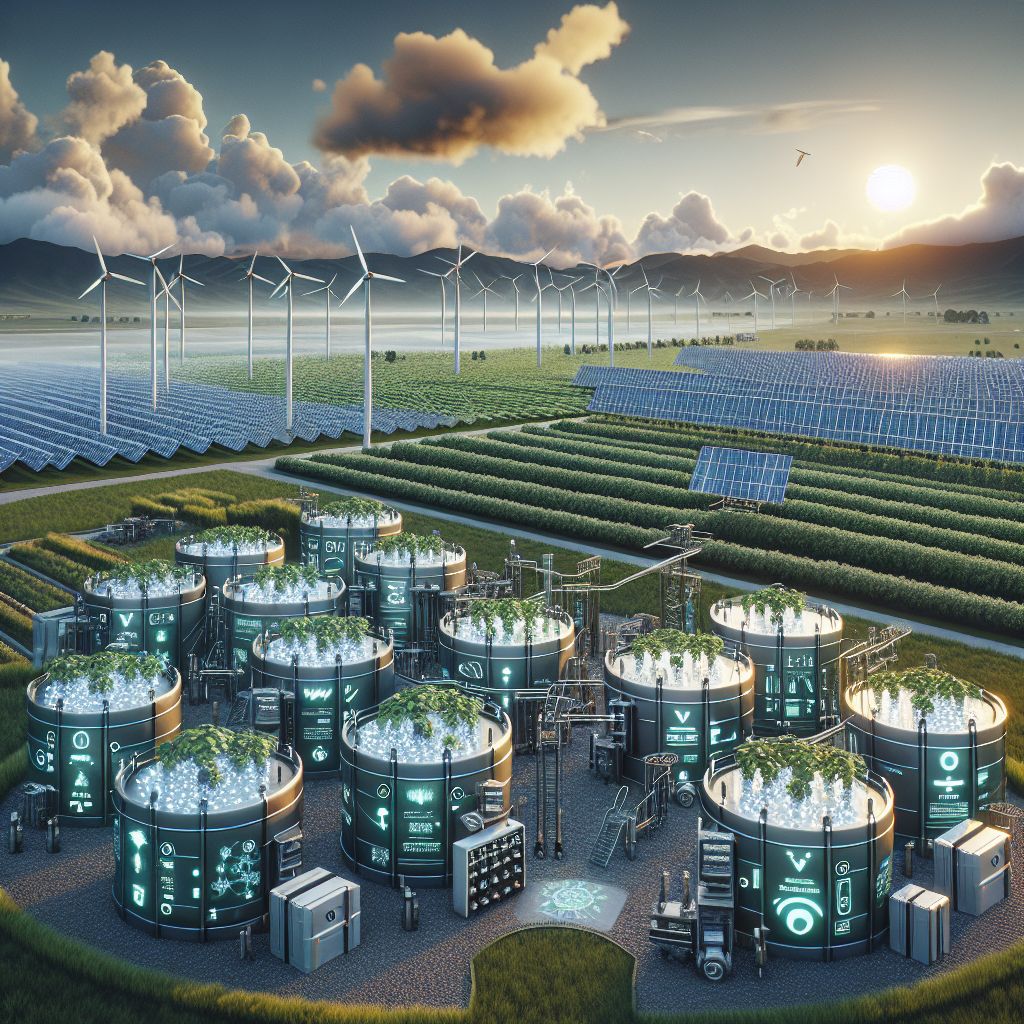
The agricultural sector stands at the frontier of a profound energy transformation. As saltwater battery technology continues to evolve, we’re witnessing the early stages of true farm energy independence becoming accessible to operations of all sizes. Ongoing research in electrode materials and electrolyte formulations promises to address current limitations while preserving the technology’s inherent safety and environmental benefits. Meanwhile, declining costs driven by increased manufacturing scale and competition are making these systems financially viable for a broader range of agricultural applications. The integration of intelligent energy management systems that can predict farm energy needs based on weather forecasts, crop growth stages, and operational schedules will further optimize these battery systems, extracting maximum value from every kilowatt-hour stored. For forward-thinking farmers, saltwater battery technology represents not just an improved power storage option, but a cornerstone of a more resilient, sustainable, and independent agricultural operation positioned to thrive amid climate uncertainty and energy market volatility.
Frequently Asked Questions
- How do saltwater batteries compare to other battery types for farm use?
- What size system do I need for my farming operation?
- Are there special installation requirements for agricultural settings?
- Can saltwater batteries integrate with my existing solar setup?
- What government incentives are available for farm energy storage?
When considering any significant investment in farm infrastructure, questions inevitably arise about suitability, implementation, and economic factors. Saltwater batteries, being relatively new to the agricultural market, generate particular interest and inquiry from farmers seeking to understand how this technology fits their specific needs. The questions above represent the most common concerns expressed by farmers evaluating these systems.
Each farm presents unique energy requirements, physical constraints, and operational priorities that influence battery system selection and design. Working with an agricultural energy specialist who understands both the technology and the specific demands of farming operations can help navigate these complexities. Many manufacturers and distributors of saltwater batteries now offer farm-specific assessment services that evaluate existing energy usage patterns and recommend appropriately sized systems.
Government incentives significantly impact the financial equation for farm battery systems. Beyond the federal Investment Tax Credit that applies to battery systems charged by renewable energy, many states and some utilities offer additional agricultural-specific incentives. Programs like USDA’s Rural Energy for America Program (REAP) can provide grants covering up to 25% of system costs and guaranteed loan financing for the remainder, substantially improving project economics.
How long do saltwater batteries typically last on a farm?
Under typical agricultural usage patterns, quality saltwater batteries maintain at least 80% of their original capacity for 3,000-5,000 complete charge-discharge cycles. This translates to approximately 8-12 years of daily use before significant capacity degradation occurs. Many manufacturers now offer 10-year warranties on their agricultural models, reflecting confidence in the technology’s longevity in farm settings. Actual lifespan varies based on depth of discharge patterns, temperature conditions, and maintenance practices, with some systems continuing to function effectively well beyond the warranty period, albeit with gradually reduced capacity.
Can saltwater batteries power heavy farm equipment?
Saltwater batteries excel at providing steady, moderate power output rather than the intense bursts required by the largest farm equipment. They can effectively power most stationary equipment like grain dryers, irrigation pumps, and ventilation systems, but may struggle with the instantaneous high-current demands of equipment like large welders or motor startups without appropriate inverter sizing. For mobile equipment like tractors or harvesters, current saltwater technology isn’t yet practical due to energy density limitations, though this remains an active area of research. Many farms successfully use saltwater batteries to power smaller electric equipment like UTVs, electric fencing, and monitoring systems while relying on other power sources for their heaviest loads.
Do saltwater batteries work in freezing temperatures?
Basic saltwater battery models experience reduced capacity and efficiency when temperatures drop below freezing, typically delivering only 50-60% of their rated capacity at 20°F (-7°C). However, premium agricultural models now incorporate internal heating elements that activate automatically when temperatures approach freezing, maintaining optimal internal operating temperatures even in unheated farm buildings. These self-heating models typically consume about 5-8% of their stored energy to maintain temperature during extreme cold, a reasonable trade-off for maintaining full capacity.
For installations in extremely cold climates, manufacturers recommend installing battery systems in insulated enclosures or temperature-controlled spaces. Many farmers repurpose existing insulated structures or incorporate battery rooms into new construction projects. The temperature resilience of saltwater batteries improves each year as manufacturers specifically address the needs of agricultural customers in varied climate regions.
It’s worth noting that saltwater batteries generally handle cold temperatures better than most lead-acid alternatives, which can suffer permanent damage if frozen. The saltwater electrolyte solution contains natural antifreeze properties that prevent catastrophic freezing damage even if optimal operating temperature cannot be maintained.
- Most basic models: Reduced performance below 32°F (0°C)
- Premium agricultural models: Full performance down to -5°F (-20°C) with self-heating
- Recommended installation in insulated spaces for coldest regions
- No permanent damage from freezing events (unlike lead-acid batteries)
- Performance returns to normal when temperatures rise
Farms in areas with seasonal temperature extremes should discuss cold-weather performance specifically with system designers to ensure appropriate models and installation approaches for their climate conditions.
What maintenance do saltwater batteries require?
One of the most appealing aspects of saltwater battery systems for busy farmers is their minimal maintenance requirements. Unlike flooded lead-acid batteries that demand regular electrolyte checks and terminal cleaning, saltwater systems require virtually no routine maintenance. Most installations include remote monitoring systems that continuously track battery health, charge status, and performance metrics, alerting owners only when attention is needed. The annual maintenance checklist typically includes only a visual inspection for physical damage, confirmation that ventilation paths remain unobstructed, and verification that monitoring systems are functioning correctly—tasks that take minutes rather than hours. This hands-off operation makes saltwater batteries particularly valuable for remote agricultural applications or for farmers already stretched thin with other maintenance responsibilities.
How do I dispose of a saltwater battery at the end of its life?
The environmentally benign composition of saltwater batteries makes end-of-life disposal remarkably straightforward compared to other battery technologies. Most manufacturers now offer take-back programs that recover spent units for component recycling. The non-toxic nature of the materials means these batteries are not classified as hazardous waste, simplifying the regulatory requirements for disposal. The electrolyte solution—primarily salt and water—can typically be diluted and used for irrigation of salt-tolerant crops or properly discharged into approved drainage systems where permitted by local regulations. The plastic housing components are recyclable through standard channels, while the manganese oxide and carbon electrodes can be reclaimed for use in new batteries or other industrial applications. This cradle-to-cradle potential aligns perfectly with the sustainability values of many agricultural operations, offering peace of mind that today’s energy solution won’t become tomorrow’s environmental problem.
For farmers concerned about the environmental impact of their operations, the recyclability of saltwater batteries represents a significant advantage over other energy storage options. Lead-acid batteries require specialized hazardous waste handling, while lithium-ion recycling infrastructure remains limited in many rural areas. By choosing saltwater technology, agricultural operations can demonstrate environmental leadership while solving practical energy storage needs.




Leave a Reply